key text: Isaiah 41:10
By: Frederick Adjei
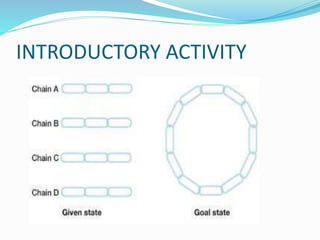
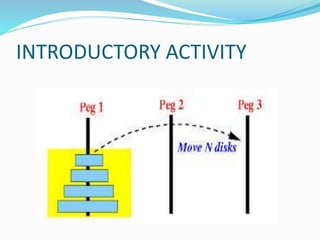
INTRODUCTORY ACTIVITY
WHAT IS ANXIETY
 Anxiety as I defined it is “the apprehension,
nervousness or the worry that seems to trouble an
individual’s health and performance in a situational
context.”
 Anxiety can be differentiated from “everyday fear”.
 However, “everyday fear” can lead to anxiety which is
treated in psychology as a mood disorder.
 Unattended anxiety can lead to depression and other
psychological disorders.
WHAT IS ANXIETY
 Stressful emotions can inhibit a student’s ability to
absorb, retain and recall information.
 Anxiety creates a kind of "noise" or "mental static" in
the brain that blocks our ability to retrieve what’s
stored in memory and also greatly impairs our ability
to comprehend and reason.
SIGNS OF ANXIETY
 Basically, signs or symptoms of anxiety (exams
anxiety) are manifested in three main domains:
Physical domain
Emotional domain
Cognitive or behavioral domain
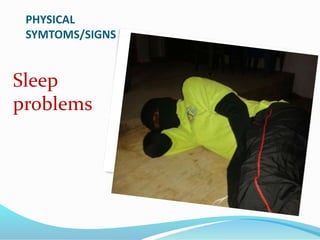
PHYSICAL
SYMTOMS/SIGNS
Sleep
problems
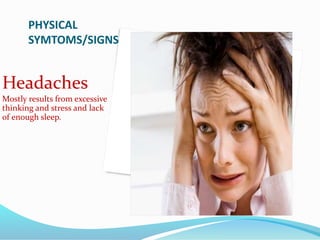
PHYSICAL
SYMTOMS/SIGNS
Headaches
Mostly results from excessive
thinking and stress and lack
of enough sleep.
PHYSICAL
SYMTOMS/SIGNS
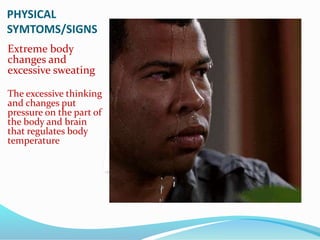
Extreme body
changes and
excessive sweating
The excessive thinking
and changes put
pressure on the part of
the body and brain
that regulates body
temperature
EMOTIONAL SIGNS
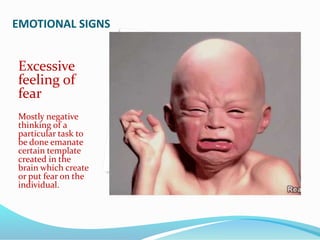
Excessive
feeling of
fear
Mostly negative
thinking of a
particular task to
be done emanate
certain template
created in the
brain which create
or put fear on the
individual.
EMOTIONAL SIGNS
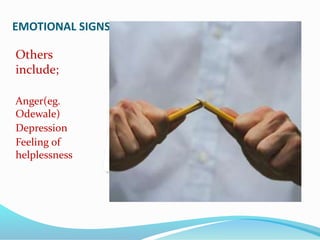
Others
include;
Anger(eg.
Odewale)
Depression
Feeling of
helplessness
COGNITIVE/BEHAVIORAL
SIGNS
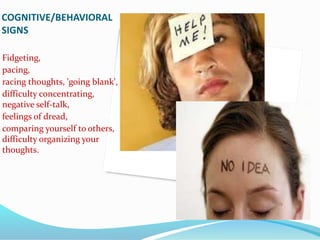
Fidgeting,
pacing,
racing thoughts, 'going blank',
difficulty concentrating,
negative self-talk,
feelings of dread,
comparing yourself to others,
difficulty organizing your
thoughts.
HOW TO DEAL WITH ANXIETY BEFORE
THE EXAMS
 Stress Inoculation
Stress inoculation is an imagined situation that is
created and intended to create stress that leads to
anxiety. This stress created is then dealt with so as to
reduce the stress during the real situation,
HOW TO DEAL WITH ANXIETY BEFORE THE
EXAMS
 Pay attention to yourself talk (thinking)
Often we are unaware of our thoughts, but
because they have such a big impact on how
we feel, it is important to start paying
attention to what we are saying to ourselves.
Psychologist will say the covert behavior
speaks more of a person than the overt.
HOW TO DEAL WITH ANXIETY BEFORE THE
EXAMS
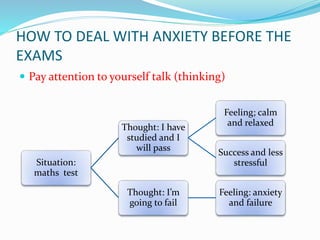
 Pay attention to yourself talk (thinking)
Situation:
maths test
Thought: I have
studied and I
will pass
Feeling; calm
and relaxed
Success and less
stressful
Thought: I’m
going to fail
Feeling: anxiety
and failure
HOW TO DEAL WITH ANXIETY
BEFORE THE EXAMS
•Challenge your
anxious thoughts.
Thinking something
doesn’t mean it’s true
or that it will happen.
Often, our thoughts
are just guesses and
not actual facts.
Therefore, it is helpful
to challenge your
anxious thoughts (eg.
Refer to diagram)
HOW TO DEAL WITH ANXIETY
BEFORE THE EXAMS
Study ahead
Being well prepared for the
test is the best way to
reduce test taking anxiety.
Space out your studying
over a few days or weeks,
and continually review
class material, don't wait
until the night before and
try to learn everything the
night before.
If you worry about being
able to finish an exam in
time, do timed practice
exams or sets of questions.
DEALING WITH ANXIETY DURING THE EXAM
 Budget your time
 Make sure you budget your time before you start the exams
and do not obsess about running out of time on the exams.
Quickly calculate how much time you should allow for each
section according to the point value. (You don't want to
spend 30 min. on an essay question that counts only 5
points.)
 Preview the test before you answer anything.
 This gets you thinking about the material. Make sure to note
the point value of each question. This will give you some
ideas on budgeting your time. As you read the questions, jot
down brief notes indicating ideas you can use later in your
answers.
DEALING WITH ANXIETY DURING THE EXAM
 Do a mind dump.
Using what you saw in the preview, make notes of
anything you think you might forget. Write down
things that you used in learning the material that
might help you remember. Outline your answers to
discussion questions.
DEALING WITH ANXIETY DURING THE
EXAM
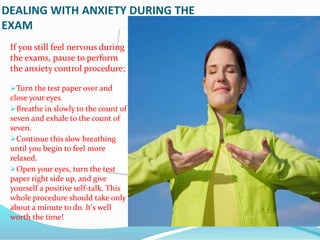
If you still feel nervous during
the exams, pause to perform
the anxiety control procedure;
Turn the test paper over and
close your eyes.
Breathe in slowly to the count of
seven and exhale to the count of
seven.
Continue this slow breathing
until you begin to feel more
relaxed.
Open your eyes, turn the test
paper right side up, and give
yourself a positive self-talk. This
whole procedure should take only
about a minute to do. It's well
worth the time!
SOME BLOCKS TO EXAMS SUCCESS
 Mental Set
This is the tendency to adopt a certain strategy or
framework instead of equally plausible. This includes
what we call functional fixedness
 Over Confidence
This is the tendency to overestimate the accuracy of
your knowledge, strength and judgment.
 Confirmation Bias
This is the tendency to believe data (apo) to be true
when it actual fact they are not.
GENERAL TEST TAKING TIPS
 Come prepared; arrive early for tests.
 Stay relaxed and confident. Don't let yourself become
anxious. Don't talk to other students before a test;
anxiety is contagious. Instead, remind yourself that you are
well-prepared and are going to do well.
 Bring all your supplies! Bring at least two pens/pencils
with good erasers, calculator with enough batteries and
any other resources that your instructor allows you to.
 Bring a watch to the test with you so that you can
better pace yourself.
GENERAL TEST TAKING TIPS
 Keep a positive attitude throughout the whole test
and try to stay relaxed. If you start to feel
 nervous take a few deep breaths to relax.
 Keep your eyes on your own paper.
 Read the directions. Never assume that you know
what the directions say.
 Answer the easy questions first. This will give you
the confidence and momentum to get through the
rest of the test. You are sure these answers are correct.
Try not to spend too much time on one question.
GENERAL TEST TAKING TIPS
 Don't rush but pace yourself, read the entire
question and look for keywords.
 Write legibly, if the grader can't read what you
wrote they'll most likely mark it wrong.
 Always read the whole question carefully. Don't
make assumptions about what the question might
be.
GENERAL TEST TAKING TIPS
 Go back to the difficult questions. While looking
over the test and doing the easy questions, your
subconscious mind will have been working on the
answers to the hardest ones. Also, later items on the
test might give you useful or needed information for
earlier items. Don't worry if others finish before you;
focus on the test in front of you.
 Answer all questions
 Circle key words in difficult questions. This will
force you to focus on the central point
GENERAL TEST TAKING TIPS
 Express difficult questions in your own words. Rephrasing
can make it clear to you, but be sure you don't change the
meaning of the question.
 Use all of the time allotted for the test. If you have extra
time, cover up your answers and
 actually rework the question.
 Reserve 10% of your test time for review. Review the test;
resist the urge to leave as soon as you have completed all the
items. Make sure you have answered all the questions.
 Proofread your writing for spelling, grammar, and punctuation.
 Don't worry if others finish before you; focus on the test in
front of you.
MULTIPLE CHOICE TEST TAKING TIPS
 Read the question before you look at the answer.
 Do all the questions you know first. Go back and try the
others after.
 Come up with the answer in your head before looking at
the possible answers. This way the choices given on the test
won't throw you off or trick you.
 Eliminate answers you know aren't right.
 Read all the choices before choosing your answer.
 If there is no guessing penalty, always take an educated guess
and select an answer..
 Since your first choice is usually correct, don’t change your
answers unless you are sure of the correction or unless you
miss-read the question.
MULTIPLE CHOICE TEST TAKING TIPS
 In "All of the above" and "None of the above" choice questions, if
you are certain one of the statements is true don't choose
"None of the above". Also, if one of the statements is false,
 don't choose "All of the above".
 In a question with an "All of the above" choice, if you see that
at least two correct statements, then "All of the above" is
probably the answer.
 A positive choice is more likely to be true than a negative
one.
 Usually the correct answer is the choice with the most
information. Be careful to read the entire question and the
answer selections regardless so you are making a thoughtful
choice.
QUESTIONS
TIME

Anxiety

  • 1.
    key text: Isaiah41:10 By: Frederick Adjei
  • 2.
  • 3.
  • 4.
    WHAT IS ANXIETY Anxiety as I defined it is “the apprehension, nervousness or the worry that seems to trouble an individual’s health and performance in a situational context.”  Anxiety can be differentiated from “everyday fear”.  However, “everyday fear” can lead to anxiety which is treated in psychology as a mood disorder.  Unattended anxiety can lead to depression and other psychological disorders.
  • 5.
    WHAT IS ANXIETY Stressful emotions can inhibit a student’s ability to absorb, retain and recall information.  Anxiety creates a kind of "noise" or "mental static" in the brain that blocks our ability to retrieve what’s stored in memory and also greatly impairs our ability to comprehend and reason.
  • 6.
    SIGNS OF ANXIETY Basically, signs or symptoms of anxiety (exams anxiety) are manifested in three main domains: Physical domain Emotional domain Cognitive or behavioral domain
  • 7.
  • 8.
    PHYSICAL SYMTOMS/SIGNS Headaches Mostly results fromexcessive thinking and stress and lack of enough sleep.
  • 9.
    PHYSICAL SYMTOMS/SIGNS Extreme body changes and excessivesweating The excessive thinking and changes put pressure on the part of the body and brain that regulates body temperature
  • 10.
    EMOTIONAL SIGNS Excessive feeling of fear Mostlynegative thinking of a particular task to be done emanate certain template created in the brain which create or put fear on the individual.
  • 11.
  • 12.
    COGNITIVE/BEHAVIORAL SIGNS Fidgeting, pacing, racing thoughts, 'goingblank', difficulty concentrating, negative self-talk, feelings of dread, comparing yourself to others, difficulty organizing your thoughts.
  • 13.
    HOW TO DEALWITH ANXIETY BEFORE THE EXAMS  Stress Inoculation Stress inoculation is an imagined situation that is created and intended to create stress that leads to anxiety. This stress created is then dealt with so as to reduce the stress during the real situation,
  • 14.
    HOW TO DEALWITH ANXIETY BEFORE THE EXAMS  Pay attention to yourself talk (thinking) Often we are unaware of our thoughts, but because they have such a big impact on how we feel, it is important to start paying attention to what we are saying to ourselves. Psychologist will say the covert behavior speaks more of a person than the overt.
  • 15.
    HOW TO DEALWITH ANXIETY BEFORE THE EXAMS  Pay attention to yourself talk (thinking) Situation: maths test Thought: I have studied and I will pass Feeling; calm and relaxed Success and less stressful Thought: I’m going to fail Feeling: anxiety and failure
  • 16.
    HOW TO DEALWITH ANXIETY BEFORE THE EXAMS •Challenge your anxious thoughts. Thinking something doesn’t mean it’s true or that it will happen. Often, our thoughts are just guesses and not actual facts. Therefore, it is helpful to challenge your anxious thoughts (eg. Refer to diagram)
  • 17.
    HOW TO DEALWITH ANXIETY BEFORE THE EXAMS Study ahead Being well prepared for the test is the best way to reduce test taking anxiety. Space out your studying over a few days or weeks, and continually review class material, don't wait until the night before and try to learn everything the night before. If you worry about being able to finish an exam in time, do timed practice exams or sets of questions.
  • 18.
    DEALING WITH ANXIETYDURING THE EXAM  Budget your time  Make sure you budget your time before you start the exams and do not obsess about running out of time on the exams. Quickly calculate how much time you should allow for each section according to the point value. (You don't want to spend 30 min. on an essay question that counts only 5 points.)  Preview the test before you answer anything.  This gets you thinking about the material. Make sure to note the point value of each question. This will give you some ideas on budgeting your time. As you read the questions, jot down brief notes indicating ideas you can use later in your answers.
  • 19.
    DEALING WITH ANXIETYDURING THE EXAM  Do a mind dump. Using what you saw in the preview, make notes of anything you think you might forget. Write down things that you used in learning the material that might help you remember. Outline your answers to discussion questions.
  • 20.
    DEALING WITH ANXIETYDURING THE EXAM If you still feel nervous during the exams, pause to perform the anxiety control procedure; Turn the test paper over and close your eyes. Breathe in slowly to the count of seven and exhale to the count of seven. Continue this slow breathing until you begin to feel more relaxed. Open your eyes, turn the test paper right side up, and give yourself a positive self-talk. This whole procedure should take only about a minute to do. It's well worth the time!
  • 21.
    SOME BLOCKS TOEXAMS SUCCESS  Mental Set This is the tendency to adopt a certain strategy or framework instead of equally plausible. This includes what we call functional fixedness  Over Confidence This is the tendency to overestimate the accuracy of your knowledge, strength and judgment.  Confirmation Bias This is the tendency to believe data (apo) to be true when it actual fact they are not.
  • 22.
    GENERAL TEST TAKINGTIPS  Come prepared; arrive early for tests.  Stay relaxed and confident. Don't let yourself become anxious. Don't talk to other students before a test; anxiety is contagious. Instead, remind yourself that you are well-prepared and are going to do well.  Bring all your supplies! Bring at least two pens/pencils with good erasers, calculator with enough batteries and any other resources that your instructor allows you to.  Bring a watch to the test with you so that you can better pace yourself.
  • 23.
    GENERAL TEST TAKINGTIPS  Keep a positive attitude throughout the whole test and try to stay relaxed. If you start to feel  nervous take a few deep breaths to relax.  Keep your eyes on your own paper.  Read the directions. Never assume that you know what the directions say.  Answer the easy questions first. This will give you the confidence and momentum to get through the rest of the test. You are sure these answers are correct. Try not to spend too much time on one question.
  • 24.
    GENERAL TEST TAKINGTIPS  Don't rush but pace yourself, read the entire question and look for keywords.  Write legibly, if the grader can't read what you wrote they'll most likely mark it wrong.  Always read the whole question carefully. Don't make assumptions about what the question might be.
  • 25.
    GENERAL TEST TAKINGTIPS  Go back to the difficult questions. While looking over the test and doing the easy questions, your subconscious mind will have been working on the answers to the hardest ones. Also, later items on the test might give you useful or needed information for earlier items. Don't worry if others finish before you; focus on the test in front of you.  Answer all questions  Circle key words in difficult questions. This will force you to focus on the central point
  • 26.
    GENERAL TEST TAKINGTIPS  Express difficult questions in your own words. Rephrasing can make it clear to you, but be sure you don't change the meaning of the question.  Use all of the time allotted for the test. If you have extra time, cover up your answers and  actually rework the question.  Reserve 10% of your test time for review. Review the test; resist the urge to leave as soon as you have completed all the items. Make sure you have answered all the questions.  Proofread your writing for spelling, grammar, and punctuation.  Don't worry if others finish before you; focus on the test in front of you.
  • 27.
    MULTIPLE CHOICE TESTTAKING TIPS  Read the question before you look at the answer.  Do all the questions you know first. Go back and try the others after.  Come up with the answer in your head before looking at the possible answers. This way the choices given on the test won't throw you off or trick you.  Eliminate answers you know aren't right.  Read all the choices before choosing your answer.  If there is no guessing penalty, always take an educated guess and select an answer..  Since your first choice is usually correct, don’t change your answers unless you are sure of the correction or unless you miss-read the question.
  • 28.
    MULTIPLE CHOICE TESTTAKING TIPS  In "All of the above" and "None of the above" choice questions, if you are certain one of the statements is true don't choose "None of the above". Also, if one of the statements is false,  don't choose "All of the above".  In a question with an "All of the above" choice, if you see that at least two correct statements, then "All of the above" is probably the answer.  A positive choice is more likely to be true than a negative one.  Usually the correct answer is the choice with the most information. Be careful to read the entire question and the answer selections regardless so you are making a thoughtful choice.
  • 29.