
GARY DESSLER
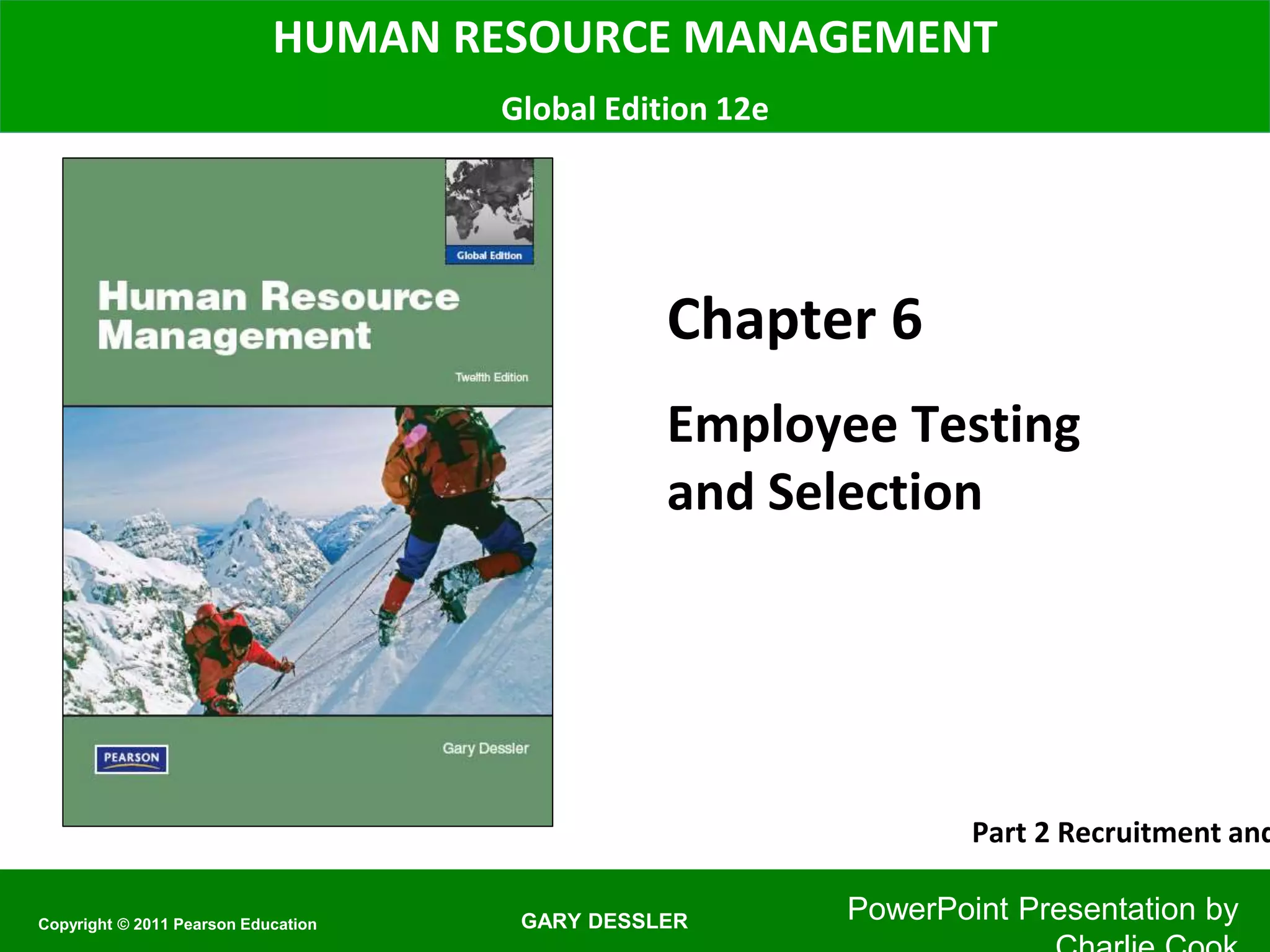
HUMAN RESOURCE MANAGEMENT
Global Edition 12e
Chapter 6
Employee Testing
and Selection
PowerPoint Presentation byCopyright © 2011 Pearson Education
Part 2 Recruitment and
c 2
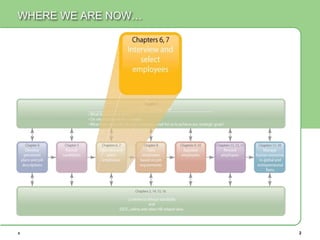
WHERE WE ARE NOW…
Copyright © 2011 Pearson Education 3
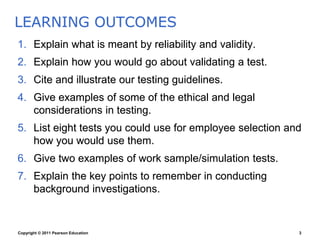
1. Explain what is meant by reliability and validity.
2. Explain how you would go about validating a test.
3. Cite and illustrate our testing guidelines.
4. Give examples of some of the ethical and legal
considerations in testing.
5. List eight tests you could use for employee selection and
how you would use them.
6. Give two examples of work sample/simulation tests.
7. Explain the key points to remember in conducting
background investigations.
LEARNING OUTCOMES
Copyright © 2011 Pearson Education 4
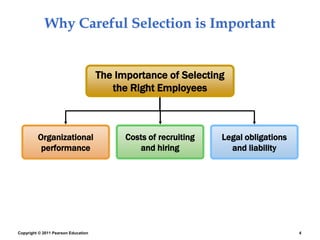
Why Careful Selection is Important
Organizational
performance
Costs of recruiting
and hiring
The Importance of Selecting
the Right Employees
Legal obligations
and liability
Copyright © 2011 Pearson Education 5
Avoiding Negligent Hiring Claims
• Carefully scrutinize information on employment
applications.
• Get written authorization for reference checks, and
check references.
• Save all records and information about the applicant.
• Reject applicants for false statements or conviction
records for offenses related to the job.
• Balance the applicant’s privacy rights with others’ “need
to know.”
• Take immediate disciplinary action if problems arise.
Copyright © 2011 Pearson Education 6
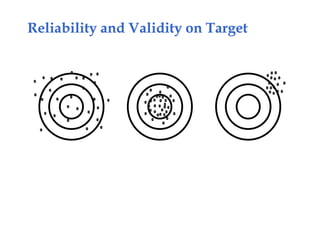
Reliability and Validity on Target
Copyright © 2011 Pearson Education 8
Basic Testing Concepts
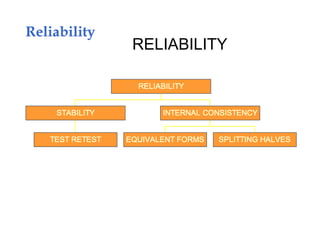
• Reliability
➢ Describes the consistency of scores obtained by the same
person when retested with the identical or alternate forms of the
same test.
➢ Are test results stable over time?
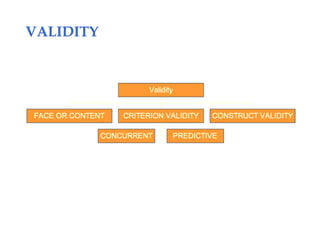
• Validity
➢ Indicates whether a test is measuring what it is supposed to be
measuring.
➢ Does the test actually measure what it is intended to measure?
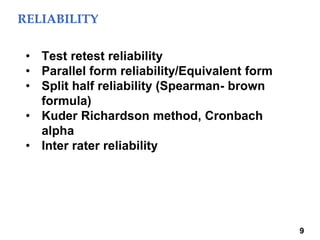
RELIABILITY
9
• Test retest reliability
• Parallel form reliability/Equivalent form
• Split half reliability (Spearman- brown
formula)
• Kuder Richardson method, Cronbach
alpha
• Inter rater reliability
Reliability
RELIABILITY
VALIDITY
Types of Validity
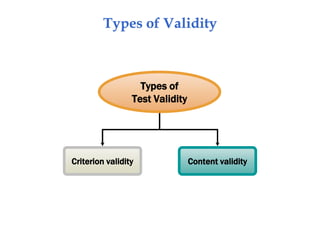
Criterion validity Content validity
Types of
Test Validity
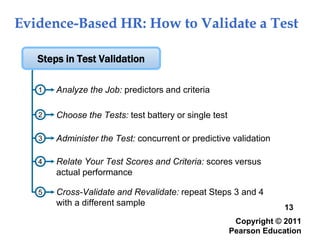
Evidence-Based HR: How to Validate a Test
Copyright © 2011
Pearson Education
13
1
Relate Your Test Scores and Criteria: scores versus
actual performance
Choose the Tests: test battery or single test
Steps in Test Validation
Analyze the Job: predictors and criteria
Administer the Test: concurrent or predictive validation
2
3
4
Cross-Validate and Revalidate: repeat Steps 3 and 4
with a different sample
5
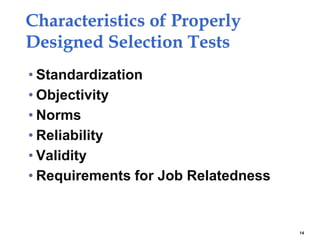
Characteristics of Properly
Designed Selection Tests
• Standardization
• Objectivity
• Norms
• Reliability
• Validity
• Requirements for Job Relatedness
14
Copyright © 2011 Pearson Education 15
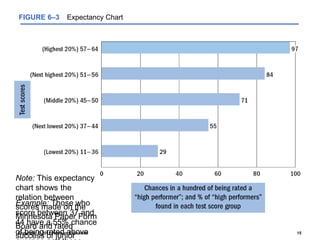
FIGURE 6–3 Expectancy Chart
Note: This expectancy
chart shows the
relation between
scores made on the
Minnesota Paper Form
Board and rated
success of junior
Example: Those who
score between 37 and
44 have a 55% chance
of being rated above
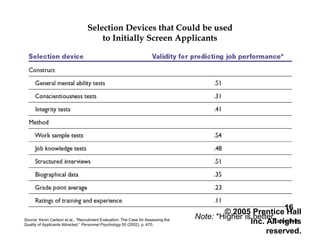
Selection Devices that Could be used
to Initially Screen Applicants
© 2005 Prentice Hall
Inc. All rights
reserved.
16
Table 5–1Source: Kevin Carlson et al., “Recruitment Evaluation: The Case for Assessing the
Quality of Applicants Attracted,” Personnel Psychology 55 (2002), p. 470.
Note: *Higher is better.
Copyright © 2011 Pearson Education 18
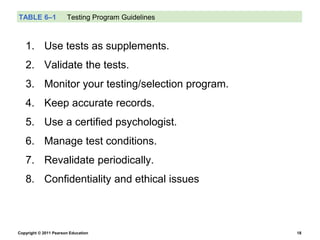
TABLE 6–1 Testing Program Guidelines
1. Use tests as supplements.
2. Validate the tests.
3. Monitor your testing/selection program.
4. Keep accurate records.
5. Use a certified psychologist.
6. Manage test conditions.
7. Revalidate periodically.
8. Confidentiality and ethical issues
Copyright © 2011 Pearson Education 19
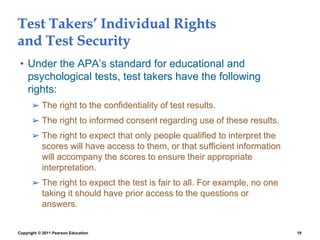
Test Takers’ Individual Rights
and Test Security
• Under the APA’s standard for educational and
psychological tests, test takers have the following
rights:
➢ The right to the confidentiality of test results.
➢ The right to informed consent regarding use of these results.
➢ The right to expect that only people qualified to interpret the
scores will have access to them, or that sufficient information
will accompany the scores to ensure their appropriate
interpretation.
➢ The right to expect the test is fair to all. For example, no one
taking it should have prior access to the questions or
answers.
Copyright © 2011 Pearson Education 20
Legal Privacy Issues
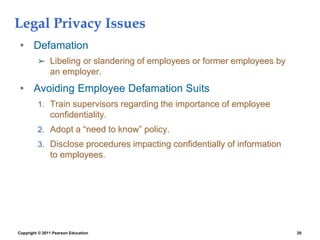
• Defamation
➢ Libeling or slandering of employees or former employees by
an employer.
• Avoiding Employee Defamation Suits
1. Train supervisors regarding the importance of employee
confidentiality.
2. Adopt a “need to know” policy.
3. Disclose procedures impacting confidentially of information
to employees.
PROJECTIVE
TECHNIQUES
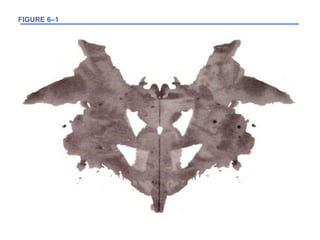
FIGURE 6–1
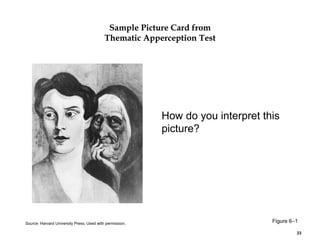
Sample Picture Card from
Thematic Apperception Test
23
Figure 6–1
How do you interpret this
picture?
Source: Harvard University Press. Used with permission.
24
JAPANESE CUBE TEST
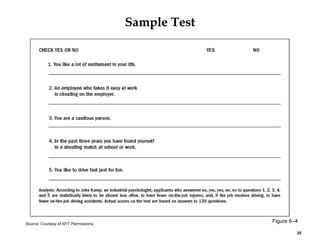
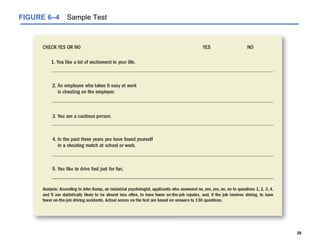
Sample Test
25
Figure 6–4Source: Courtesy of NYT Permissions.
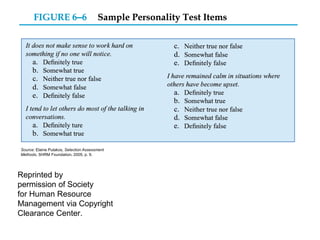
FIGURE 6–6 Sample Personality Test Items
Source: Elaine Pulakos, Selection Assessment
Methods, SHRM Foundation, 2005, p. 9.
Reprinted by
permission of Society
for Human Resource
Management via Copyright
Clearance Center.
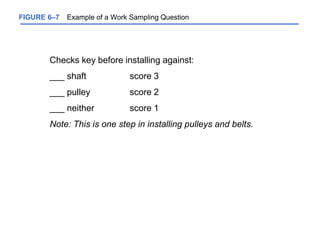
FIGURE 6–7 Example of a Work Sampling Question
Checks key before installing against:
___ shaft score 3
___ pulley score 2
___ neither score 1
Note: This is one step in installing pulleys and belts.
28
FIGURE 6–4 Sample Test
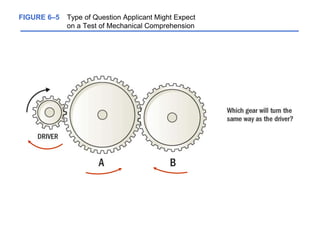
FIGURE 6–5 Type of Question Applicant Might Expect
on a Test of Mechanical Comprehension
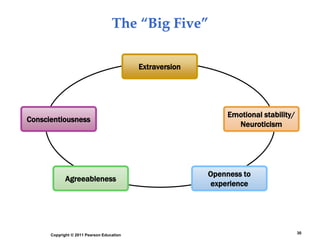
The “Big Five”
30
Copyright © 2011 Pearson Education
Extraversion
Emotional stability/
Neuroticism
Agreeableness
Openness to
experience
Conscientiousness
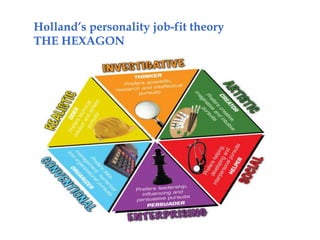
Holland’s personality job-fit theory
THE HEXAGON
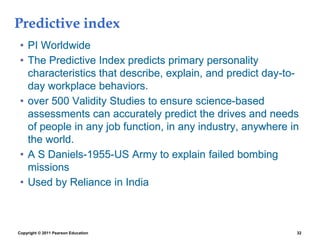
Predictive index
• PI Worldwide
• The Predictive Index predicts primary personality
characteristics that describe, explain, and predict day-to-
day workplace behaviors.
• over 500 Validity Studies to ensure science-based
assessments can accurately predict the drives and needs
of people in any job function, in any industry, anywhere in
the world.
• A S Daniels-1955-US Army to explain failed bombing
missions
• Used by Reliance in India
Copyright © 2011 Pearson Education 32
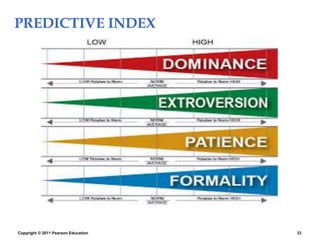
PREDICTIVE INDEX
Copyright © 2011 Pearson Education 33
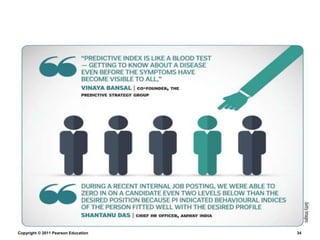
Copyright © 2011 Pearson Education 34
Copyright © 2011 Pearson Education 35
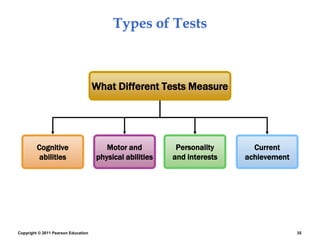
Types of Tests
Cognitive
abilities
Motor and
physical abilities
Personality
and interests
What Different Tests Measure
Current
achievement
Copyright © 2011 Pearson Education 36
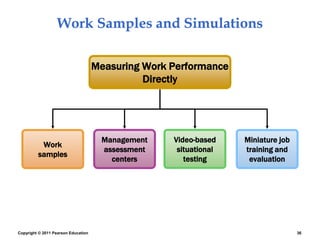
Work Samples and Simulations
Work
samples
Management
assessment
centers
Video-based
situational
testing
Measuring Work Performance
Directly
Miniature job
training and
evaluation
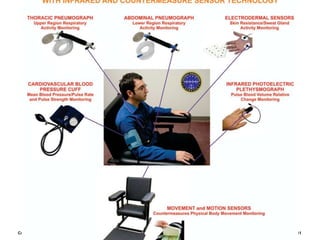
• Employment integrity tests
• Polygraph tests-banned by law
• Employee Polygraph Protection Act of 1988
• Industries with national defense or security contracts;
certain businesses with nuclear power related contracts
with the Department of Energy; businesses and
consultants with access to highly classified information;
those with counter intelligence related contracts with the
FBI or departments of Justice;
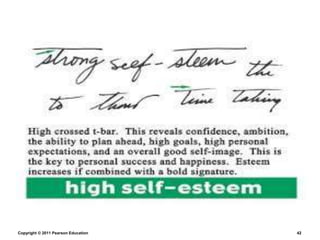
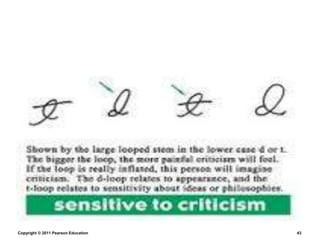
• Graphology
Copyright © 2011 Pearson Education 37
38
39
40
INTERVIEW MOCHA
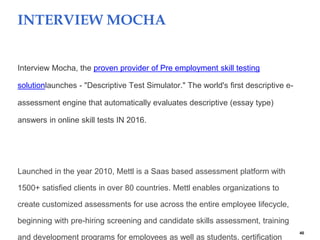
Interview Mocha, the proven provider of Pre employment skill testing
solutionlaunches - "Descriptive Test Simulator." The world's first descriptive e-
assessment engine that automatically evaluates descriptive (essay type)
answers in online skill tests IN 2016.
Launched in the year 2010, Mettl is a Saas based assessment platform with
1500+ satisfied clients in over 80 countries. Mettl enables organizations to
create customized assessments for use across the entire employee lifecycle,
beginning with pre-hiring screening and candidate skills assessment, training
and development programs for employees as well as students, certification
Copyright © 2011 Pearson Education 41
Copyright © 2011 Pearson Education 42
Copyright © 2011 Pearson Education 43
Copyright © 2011 Pearson Education 44
How Do Employers Use Tests at Work?
• Major Types of Tests
➢ Basic skills tests
➢ Job skills tests
➢ Psychological tests
• Why Use Testing?
➢ Increased work demands = more testing
➢ Screen out bad or dishonest employees
➢ Reduce turnover by personality profiling
Copyright © 2011 Pearson Education 45
Computerized and Online Testing
• Online tests
➢ Telephone prescreening
➢ Offline computer tests
➢ Virtual “inbox” tests
➢ Online problem-solving tests
• Types of Tests
➢ Specialized work sample tests
➢ Numerical ability tests
➢ Reading comprehension tests
➢ Clerical comparing and checking tests
Copyright © 2011 Pearson Education 46
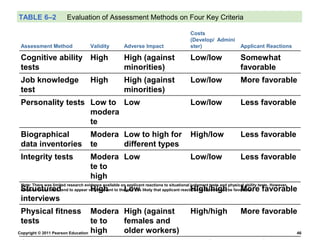
TABLE 6–2 Evaluation of Assessment Methods on Four Key Criteria
Assessment Method Validity Adverse Impact
Costs
(Develop/ Admini
ster) Applicant Reactions
Cognitive ability
tests
High High (against
minorities)
Low/low Somewhat
favorable
Job knowledge
test
High High (against
minorities)
Low/low More favorable
Personality tests Low to
modera
te
Low Low/low Less favorable
Biographical
data inventories
Modera
te
Low to high for
different types
High/low Less favorable
Integrity tests Modera
te to
high
Low Low/low Less favorable
Structured
interviews
High Low High/high More favorable
Physical fitness
tests
Modera
te to
high
High (against
females and
older workers)
High/high More favorable
Note: There was limited research evidence available on applicant reactions to situational judgment tests and physical ability tests. However,
because these tests tend to appear very relevant to the job, it is likely that applicant reactions to them would be favorable.
The curious case of Bitty Mohanthy
➢ First he befriended a German woman and then raped her in
Rajasthan.
➢ Next he jumped parole and has been on run since 2006.
➢ He forged all his academic certificates and managed to
acquire a job in State Bank of Trivancore (SBT) in Kerala.
➢ Biiti even after his arrest maintained the identity of Raghav
Rajan. But now he seems to have been cornered by a joint
group of Rajasthan and Kerala police.
➢ fingerprinting test verified that Bitti and Raghav Rajan is the
same person.
•
Companies reject 20% candidates per month post reference check'
➢ According to a TimesJobs Study (2017), despite the fact
that HR managers rely significantly on them for quality
hires, 20-30 per cent candidates fake references in their
resumes.
➢ 40 per cent hiring managers said it ensures better,
informed hiring decisions while 30 per cent say it helps
exclude applicants with inappropriate workplace behaviour.
A good 21 per cent believe it helps them check the cultural
fit of the candidate.
Copyright © 2011 Pearson Education 49
Background Investigations and
Other Selection Methods
• Investigations and Checks
➢ Reference checks
➢ Background employment checks
➢ Criminal records
➢ Driving records
➢ Credit checks
• Why?
➢ To verify factual information provided by applicants
➢ To uncover damaging information
Copyright © 2011 Pearson Education 50
Background Investigations and
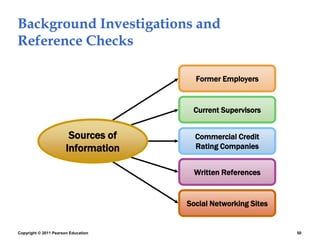
Reference Checks
Former Employers
Current Supervisors
Written References
Social Networking Sites
Commercial Credit
Rating Companies
Sources of
Information
Copyright © 2011 Pearson Education 51
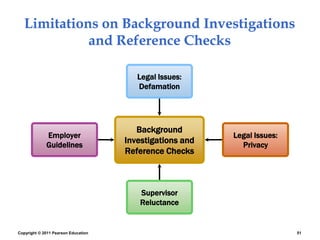
Limitations on Background Investigations
and Reference Checks
Background
Investigations and
Reference Checks
Supervisor
Reluctance
Employer
Guidelines
Legal Issues:
Privacy
Legal Issues:
Defamation
Copyright © 2011 Pearson Education 52
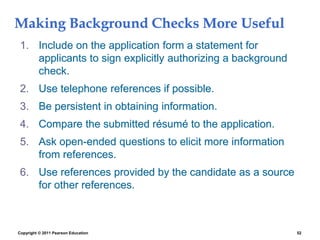
Making Background Checks More Useful
1. Include on the application form a statement for
applicants to sign explicitly authorizing a background
check.
2. Use telephone references if possible.
3. Be persistent in obtaining information.
4. Compare the submitted résumé to the application.
5. Ask open-ended questions to elicit more information
from references.
6. Use references provided by the candidate as a source
for other references.

employee testing and selection-HRM

  • 1.
    GARY DESSLER HUMAN RESOURCEMANAGEMENT Global Edition 12e Chapter 6 Employee Testing and Selection PowerPoint Presentation byCopyright © 2011 Pearson Education Part 2 Recruitment and
  • 2.
    c 2 WHERE WEARE NOW…
  • 3.
    Copyright © 2011Pearson Education 3 1. Explain what is meant by reliability and validity. 2. Explain how you would go about validating a test. 3. Cite and illustrate our testing guidelines. 4. Give examples of some of the ethical and legal considerations in testing. 5. List eight tests you could use for employee selection and how you would use them. 6. Give two examples of work sample/simulation tests. 7. Explain the key points to remember in conducting background investigations. LEARNING OUTCOMES
  • 4.
    Copyright © 2011Pearson Education 4 Why Careful Selection is Important Organizational performance Costs of recruiting and hiring The Importance of Selecting the Right Employees Legal obligations and liability
  • 5.
    Copyright © 2011Pearson Education 5 Avoiding Negligent Hiring Claims • Carefully scrutinize information on employment applications. • Get written authorization for reference checks, and check references. • Save all records and information about the applicant. • Reject applicants for false statements or conviction records for offenses related to the job. • Balance the applicant’s privacy rights with others’ “need to know.” • Take immediate disciplinary action if problems arise.
  • 6.
    Copyright © 2011Pearson Education 6
  • 7.
  • 8.
    Copyright © 2011Pearson Education 8 Basic Testing Concepts • Reliability ➢ Describes the consistency of scores obtained by the same person when retested with the identical or alternate forms of the same test. ➢ Are test results stable over time? • Validity ➢ Indicates whether a test is measuring what it is supposed to be measuring. ➢ Does the test actually measure what it is intended to measure?
  • 9.
    RELIABILITY 9 • Test retestreliability • Parallel form reliability/Equivalent form • Split half reliability (Spearman- brown formula) • Kuder Richardson method, Cronbach alpha • Inter rater reliability
  • 10.
  • 11.
  • 12.
    Types of Validity Criterionvalidity Content validity Types of Test Validity
  • 13.
    Evidence-Based HR: Howto Validate a Test Copyright © 2011 Pearson Education 13 1 Relate Your Test Scores and Criteria: scores versus actual performance Choose the Tests: test battery or single test Steps in Test Validation Analyze the Job: predictors and criteria Administer the Test: concurrent or predictive validation 2 3 4 Cross-Validate and Revalidate: repeat Steps 3 and 4 with a different sample 5
  • 14.
    Characteristics of Properly DesignedSelection Tests • Standardization • Objectivity • Norms • Reliability • Validity • Requirements for Job Relatedness 14
  • 15.
    Copyright © 2011Pearson Education 15 FIGURE 6–3 Expectancy Chart Note: This expectancy chart shows the relation between scores made on the Minnesota Paper Form Board and rated success of junior Example: Those who score between 37 and 44 have a 55% chance of being rated above
  • 16.
    Selection Devices thatCould be used to Initially Screen Applicants © 2005 Prentice Hall Inc. All rights reserved. 16 Table 5–1Source: Kevin Carlson et al., “Recruitment Evaluation: The Case for Assessing the Quality of Applicants Attracted,” Personnel Psychology 55 (2002), p. 470. Note: *Higher is better.
  • 17.
    Copyright © 2011Pearson Education 18 TABLE 6–1 Testing Program Guidelines 1. Use tests as supplements. 2. Validate the tests. 3. Monitor your testing/selection program. 4. Keep accurate records. 5. Use a certified psychologist. 6. Manage test conditions. 7. Revalidate periodically. 8. Confidentiality and ethical issues
  • 18.
    Copyright © 2011Pearson Education 19 Test Takers’ Individual Rights and Test Security • Under the APA’s standard for educational and psychological tests, test takers have the following rights: ➢ The right to the confidentiality of test results. ➢ The right to informed consent regarding use of these results. ➢ The right to expect that only people qualified to interpret the scores will have access to them, or that sufficient information will accompany the scores to ensure their appropriate interpretation. ➢ The right to expect the test is fair to all. For example, no one taking it should have prior access to the questions or answers.
  • 19.
    Copyright © 2011Pearson Education 20 Legal Privacy Issues • Defamation ➢ Libeling or slandering of employees or former employees by an employer. • Avoiding Employee Defamation Suits 1. Train supervisors regarding the importance of employee confidentiality. 2. Adopt a “need to know” policy. 3. Disclose procedures impacting confidentially of information to employees.
  • 20.
  • 21.
  • 22.
    Sample Picture Cardfrom Thematic Apperception Test 23 Figure 6–1 How do you interpret this picture? Source: Harvard University Press. Used with permission.
  • 23.
  • 24.
    Sample Test 25 Figure 6–4Source:Courtesy of NYT Permissions.
  • 25.
    FIGURE 6–6 SamplePersonality Test Items Source: Elaine Pulakos, Selection Assessment Methods, SHRM Foundation, 2005, p. 9. Reprinted by permission of Society for Human Resource Management via Copyright Clearance Center.
  • 26.
    FIGURE 6–7 Exampleof a Work Sampling Question Checks key before installing against: ___ shaft score 3 ___ pulley score 2 ___ neither score 1 Note: This is one step in installing pulleys and belts.
  • 27.
  • 28.
    FIGURE 6–5 Typeof Question Applicant Might Expect on a Test of Mechanical Comprehension
  • 29.
    The “Big Five” 30 Copyright© 2011 Pearson Education Extraversion Emotional stability/ Neuroticism Agreeableness Openness to experience Conscientiousness
  • 30.
  • 31.
    Predictive index • PIWorldwide • The Predictive Index predicts primary personality characteristics that describe, explain, and predict day-to- day workplace behaviors. • over 500 Validity Studies to ensure science-based assessments can accurately predict the drives and needs of people in any job function, in any industry, anywhere in the world. • A S Daniels-1955-US Army to explain failed bombing missions • Used by Reliance in India Copyright © 2011 Pearson Education 32
  • 32.
    PREDICTIVE INDEX Copyright ©2011 Pearson Education 33
  • 33.
    Copyright © 2011Pearson Education 34
  • 34.
    Copyright © 2011Pearson Education 35 Types of Tests Cognitive abilities Motor and physical abilities Personality and interests What Different Tests Measure Current achievement
  • 35.
    Copyright © 2011Pearson Education 36 Work Samples and Simulations Work samples Management assessment centers Video-based situational testing Measuring Work Performance Directly Miniature job training and evaluation
  • 36.
    • Employment integritytests • Polygraph tests-banned by law • Employee Polygraph Protection Act of 1988 • Industries with national defense or security contracts; certain businesses with nuclear power related contracts with the Department of Energy; businesses and consultants with access to highly classified information; those with counter intelligence related contracts with the FBI or departments of Justice; • Graphology Copyright © 2011 Pearson Education 37
  • 37.
  • 38.
  • 39.
    40 INTERVIEW MOCHA Interview Mocha,the proven provider of Pre employment skill testing solutionlaunches - "Descriptive Test Simulator." The world's first descriptive e- assessment engine that automatically evaluates descriptive (essay type) answers in online skill tests IN 2016. Launched in the year 2010, Mettl is a Saas based assessment platform with 1500+ satisfied clients in over 80 countries. Mettl enables organizations to create customized assessments for use across the entire employee lifecycle, beginning with pre-hiring screening and candidate skills assessment, training and development programs for employees as well as students, certification
  • 40.
    Copyright © 2011Pearson Education 41
  • 41.
    Copyright © 2011Pearson Education 42
  • 42.
    Copyright © 2011Pearson Education 43
  • 43.
    Copyright © 2011Pearson Education 44 How Do Employers Use Tests at Work? • Major Types of Tests ➢ Basic skills tests ➢ Job skills tests ➢ Psychological tests • Why Use Testing? ➢ Increased work demands = more testing ➢ Screen out bad or dishonest employees ➢ Reduce turnover by personality profiling
  • 44.
    Copyright © 2011Pearson Education 45 Computerized and Online Testing • Online tests ➢ Telephone prescreening ➢ Offline computer tests ➢ Virtual “inbox” tests ➢ Online problem-solving tests • Types of Tests ➢ Specialized work sample tests ➢ Numerical ability tests ➢ Reading comprehension tests ➢ Clerical comparing and checking tests
  • 45.
    Copyright © 2011Pearson Education 46 TABLE 6–2 Evaluation of Assessment Methods on Four Key Criteria Assessment Method Validity Adverse Impact Costs (Develop/ Admini ster) Applicant Reactions Cognitive ability tests High High (against minorities) Low/low Somewhat favorable Job knowledge test High High (against minorities) Low/low More favorable Personality tests Low to modera te Low Low/low Less favorable Biographical data inventories Modera te Low to high for different types High/low Less favorable Integrity tests Modera te to high Low Low/low Less favorable Structured interviews High Low High/high More favorable Physical fitness tests Modera te to high High (against females and older workers) High/high More favorable Note: There was limited research evidence available on applicant reactions to situational judgment tests and physical ability tests. However, because these tests tend to appear very relevant to the job, it is likely that applicant reactions to them would be favorable.
  • 46.
    The curious caseof Bitty Mohanthy ➢ First he befriended a German woman and then raped her in Rajasthan. ➢ Next he jumped parole and has been on run since 2006. ➢ He forged all his academic certificates and managed to acquire a job in State Bank of Trivancore (SBT) in Kerala. ➢ Biiti even after his arrest maintained the identity of Raghav Rajan. But now he seems to have been cornered by a joint group of Rajasthan and Kerala police. ➢ fingerprinting test verified that Bitti and Raghav Rajan is the same person. •
  • 47.
    Companies reject 20%candidates per month post reference check' ➢ According to a TimesJobs Study (2017), despite the fact that HR managers rely significantly on them for quality hires, 20-30 per cent candidates fake references in their resumes. ➢ 40 per cent hiring managers said it ensures better, informed hiring decisions while 30 per cent say it helps exclude applicants with inappropriate workplace behaviour. A good 21 per cent believe it helps them check the cultural fit of the candidate.
  • 48.
    Copyright © 2011Pearson Education 49 Background Investigations and Other Selection Methods • Investigations and Checks ➢ Reference checks ➢ Background employment checks ➢ Criminal records ➢ Driving records ➢ Credit checks • Why? ➢ To verify factual information provided by applicants ➢ To uncover damaging information
  • 49.
    Copyright © 2011Pearson Education 50 Background Investigations and Reference Checks Former Employers Current Supervisors Written References Social Networking Sites Commercial Credit Rating Companies Sources of Information
  • 50.
    Copyright © 2011Pearson Education 51 Limitations on Background Investigations and Reference Checks Background Investigations and Reference Checks Supervisor Reluctance Employer Guidelines Legal Issues: Privacy Legal Issues: Defamation
  • 51.
    Copyright © 2011Pearson Education 52 Making Background Checks More Useful 1. Include on the application form a statement for applicants to sign explicitly authorizing a background check. 2. Use telephone references if possible. 3. Be persistent in obtaining information. 4. Compare the submitted résumé to the application. 5. Ask open-ended questions to elicit more information from references. 6. Use references provided by the candidate as a source for other references.

Editor's Notes

  • #3 The purpose of Chapter 6 is to explain how to use various tools to select the best candidates for the job. The main topics covered include the selection process, basic testing techniques, background and reference checks, ethical and legal questions in testing, types of tests, and work samples and simulations.
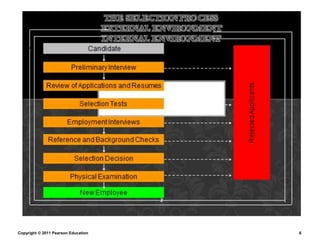
  • #5 Once you review your applicants’ résumés, the next step is selecting the best candidates for the job. This usually means whittling down the applicant pool by using the screening tools we cover in this chapter. Nothing is more important than hiring the right employees. It is important for three main reasons: performance, costs, and legal obligations.
  • #6 Avoiding negligent hiring claims means taking “reasonable steps” to avoid hiring employees with criminal records or other problems who commit crimes or other acts for which the employer can be held liable.
  • #9 A test is, basically, a sample of a person’s behavior. Using a test (or any selection tool) assumes the tool is both reliable and valid. Few things illustrate evidence-based HR—the deliberate use of the best-available evidence in making decisions about the human resource management practices you are focusing on—as do checking for reliability and validity.
  • #13 In employment testing, there are two main ways to demonstrate a test’s validity: criterion validity and content validity. Criterion validity means demonstrating that those who do well on the test also do well on the job, and that those who do poorly on the test do poorly on the job. In psychological measurement, a predictor is the measurement (in this case, the test score) that you are trying to relate to a criterion, such as performance on the job. Employers demonstrate the content validity of a test by showing that the test constitutes a fair sample of the job’s content. The basic procedure here is to identify job tasks that are critical to performance, and then randomly select a sample of those tasks to test.
  • #14 Anyone using tests (or test results) should know something about validation. The validation process consists of the five steps listed in the slide.
  • #16 If there is a correlation between test and job performance, you can develop an expectancy chart that presents the relationship between test scores and job performance graphically. The expectancy chart in Figure 6-3 shows the percentage of high job performers in each of five test score groups.
  • #19 Table 6-1 summarizes important testing guidelines, such as “use tests as supplements.”
  • #20 Test takers have rights to privacy and feedback under the American Psychological Association’s (APA) standard for educational and psychological tests; these guide psychologists but are not legally enforceable.
  • #21 Common law also provides some protection against disclosing information about employees to people outside the company. The main application here involves defamation (either libel or slander), but there are privacy issues, too.
  • #23 In the Rorschach Test sample in Figure 6-1, the psychologist asks the person to explain how he or she interprets an ambiguous picture. In such projective tests, it is more difficult to prove that the tests are measuring what they are said to measure, in this case, some trait of the person’s personality—that they’re valid.
  • #28 Figure 6-7 shows one of the steps required for installing pulleys and belts—“checks key before installing.” As the figure shows, possible approaches here include checking the key against (1) the shaft, (2) the pulley, or (3) neither. The right of the figure lists the weights (scores) reflecting the worth of each method. The applicant performs the task, and the observer checks off the approach used.
  • #29 The short test in Figure 6-4 is intended to find out how prone you might be to on-the-job accidents.
  • #30 The Test of Mechanical Comprehension in Figure 6-5 tests applicants’ understanding of basic mechanical principles.
  • #31 Industrial psychologists often focus on the “big five” personality dimensions: extraversion, emotional stability/neuroticism, agreeableness, conscientiousness, and openness to experience.
  • #36 Cognitive tests include tests of general reasoning ability (intelligence) and tests of specific mental abilities like memory and inductive reasoning. Tests of motor and physical abilities measure motor abilities, such as finger dexterity, manual dexterity, and reaction time. Personality tests measure basic aspects of an applicant’s personality, such as introversion, stability, and motivation. Achievement tests measure what someone has learned. Most of the tests you take in school are achievement tests. They measure your “job knowledge” in areas like economics, marketing, or human resources.
  • #37 With work samples, examinees are presented with situations representative of the job for which they’re applying, and are evaluated on their responses. Experts consider these (and simulations, like the assessment centers we also discuss in this section) to be tests. However, they differ from most test forms, because they measure job performance directly.
  • #45 Firms test applicants for basic skills (defined as the ability to read instructions, write reports, and do arithmetic adequate to perform common workplace tasks). Many others require employees to take job skills tests and require some form of psychological measurement. Employers don’t use tests just to find good employees, but also to screen out bad ones.
  • #46 Computerized and/or online testing is increasingly replacing conventional paper-and-pencil and manual tests. Many firms have applicants take online or offline computerized tests—sometimes by phone, using the touch-tone keypad, sometimes online—to prescreen applicants quickly prior to more in-depth interviews and background checks.
  • #47 Table 6-2 summarizes the validity, cost, and potential adverse impact of several popular assessment methods.
  • #50 To avoid negligent hiring mistakes, employers must check the candidate’s background thoroughly.
  • #51 Most employers check and verify the job applicant’s background information and references. Commonly verified data include legal eligibility for employment (in compliance with immigration laws), dates of prior employment, military service (including discharge status), education, identification (including date of birth and address to confirm identity), county criminal records (current residence, last residence), motor vehicle record, credit, licensing verification, Social Security number, and reference check.
  • #52 In practice (as most people instinctively know), giving someone a bad reference can drag you into a legal mess. A communication is defamatory if it is false and tends to harm the reputation of another by lowering the person in the estimation of the community or by deterring other persons from associating or dealing with him or her. Employees can sue employers for disclosing true but embarrassing private facts about the employee. In practice, many firms have a policy of not providing any information about former employees except for their dates of employment, last salary, and position titles. To avoid potential invasion of privacy issues, employers should obtain the applicant’s written permission before checking into the applicant’s background information, even if that information is publicly available (e.g., published on social networking sites).
  • #53 To obtain better information on an applicant’s background, employers can follow these guidelines.