





Terabit/s Superchannels: needs, challenges and beyond
Fatima Gunning
Photonic Systems Group
Photonics Centre, IPIC
Outlook
□ IPIC and Tyndall
□ Capacity crunch: is this happening?
□ Superchannels for efficient use of bandwidth
□ Challenges
□ Alternatives
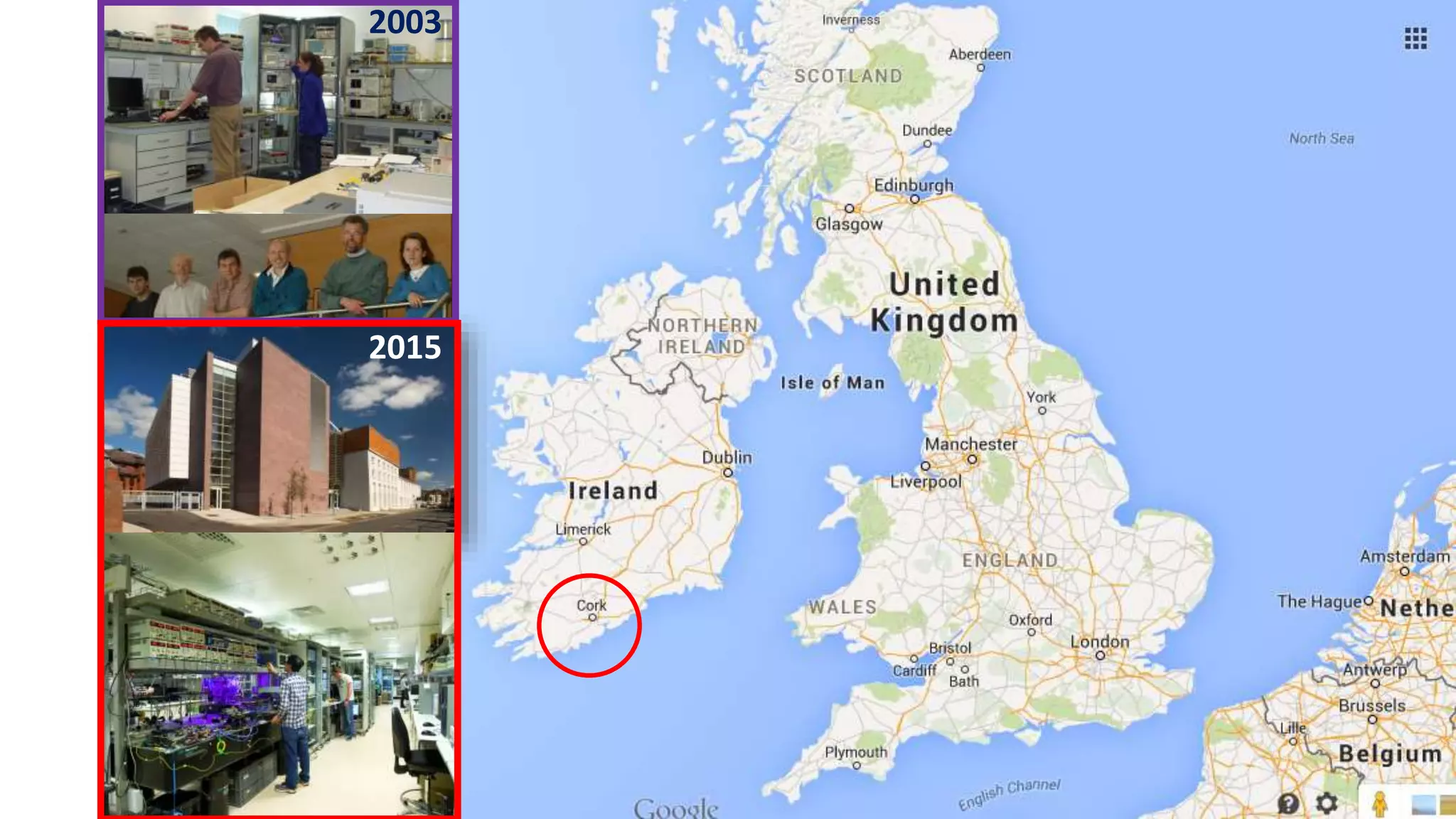
This is who we are…
2003
2015
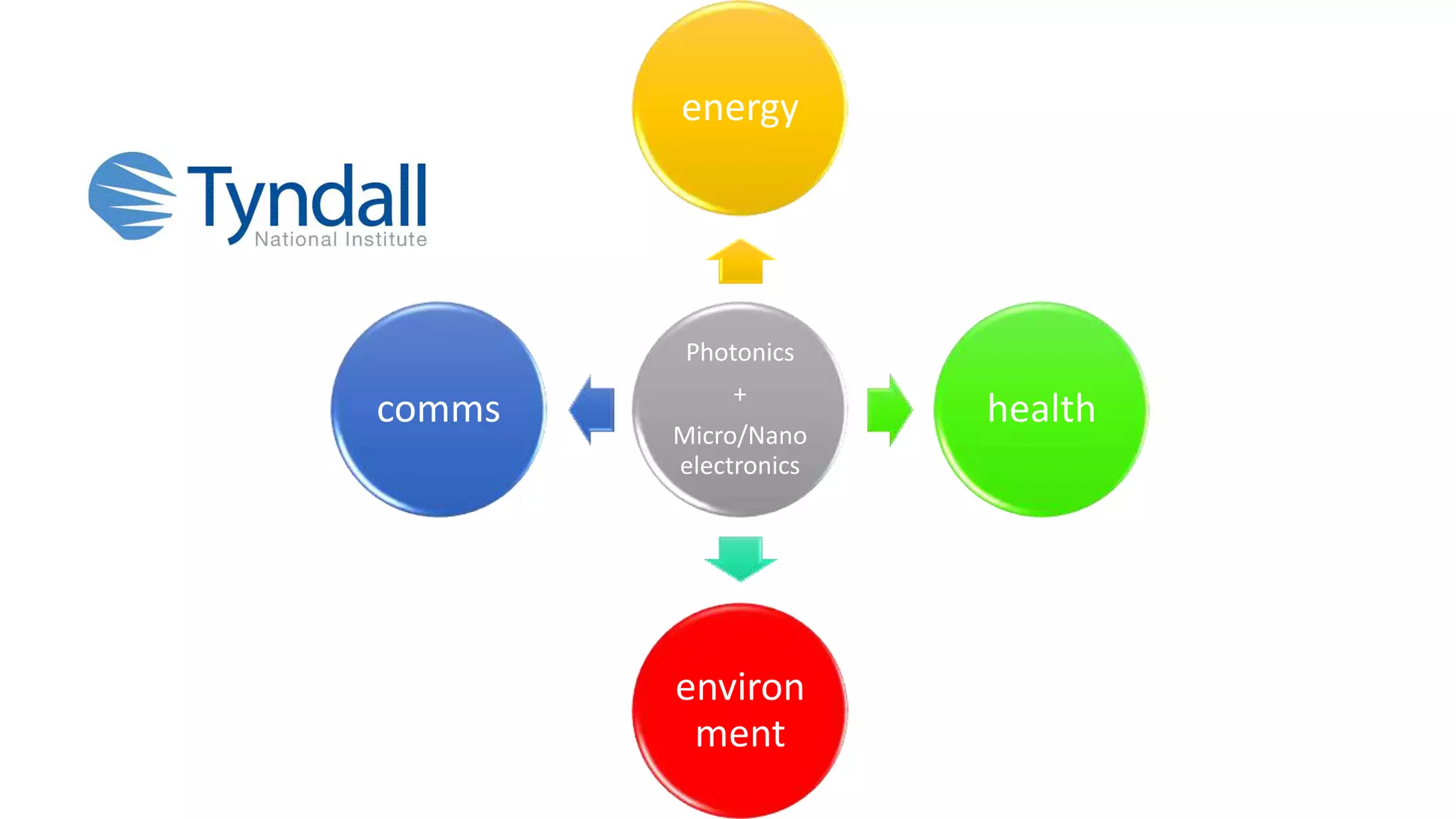
Photonics
+
Micro/Nano
electronics
energy
health
environ
ment
comms
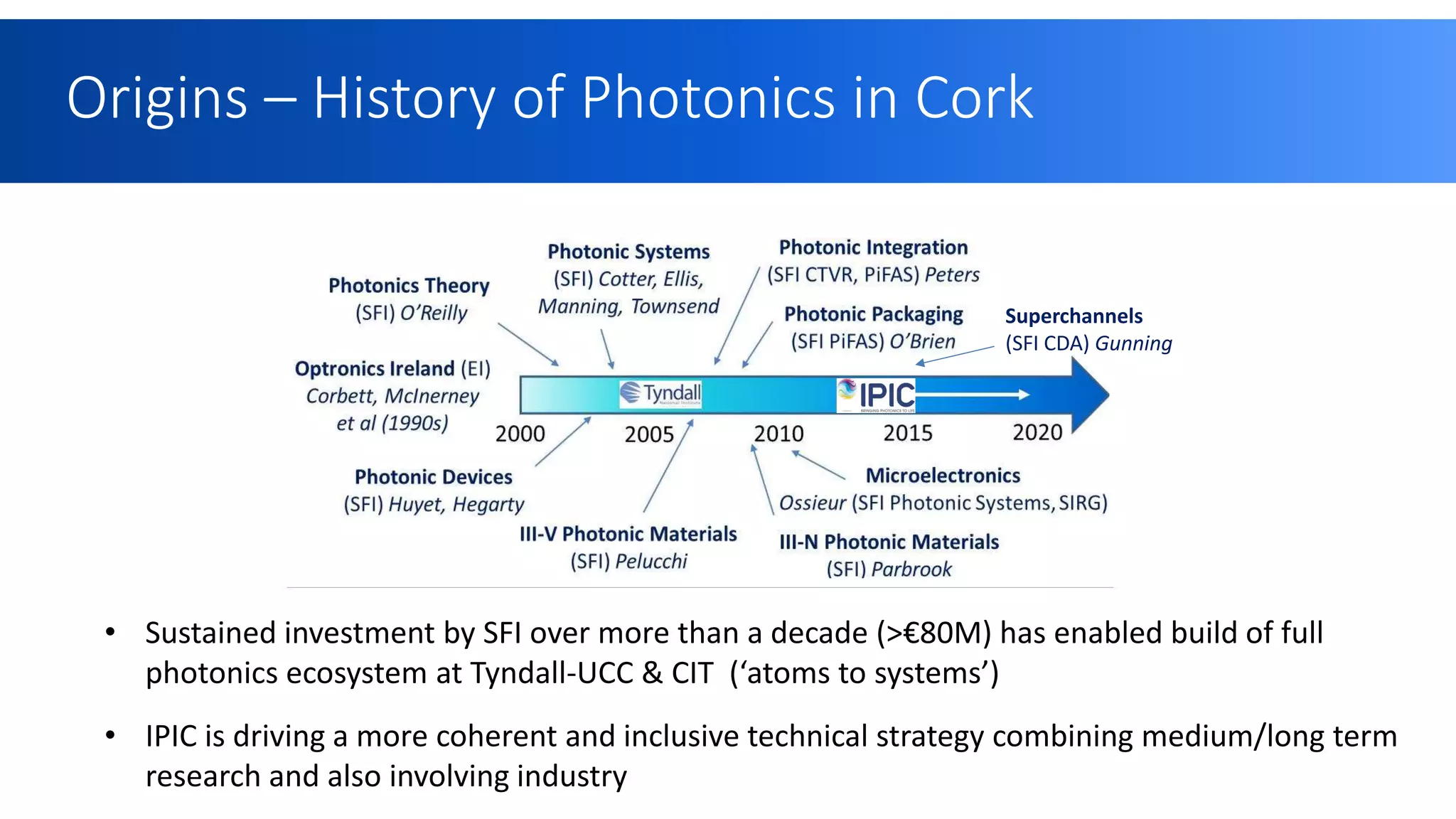
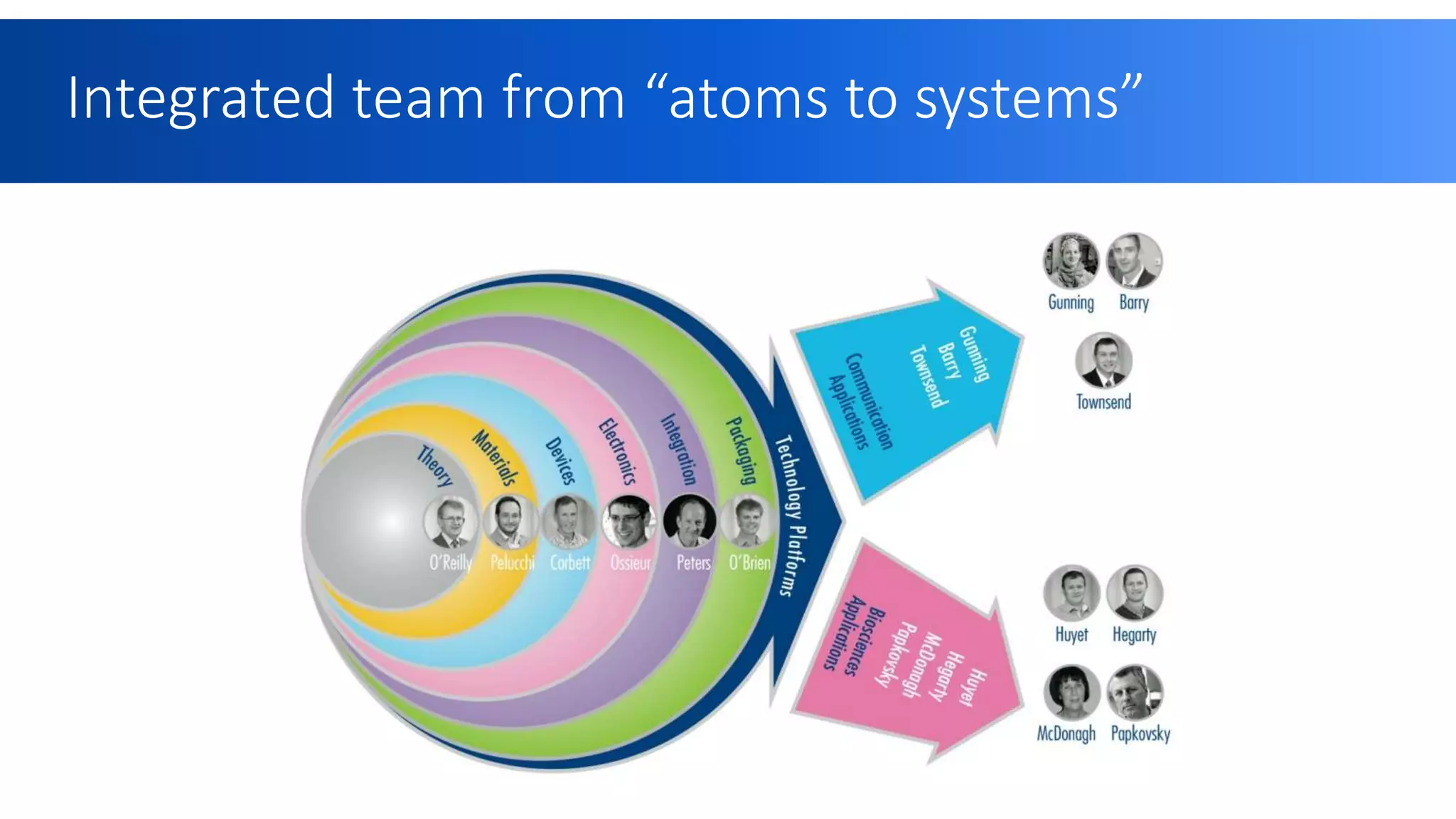
• Sustained investment by SFI over more than a decade (>€80M) has enabled build of full
photonics ecosystem at Tyndall-UCC & CIT (‘atoms to systems’)
• IPIC is driving a more coherent and inclusive technical strategy combining medium/long term
research and also involving industry
Origins – History of Photonics in Cork
Superchannels
(SFI CDA) Gunning
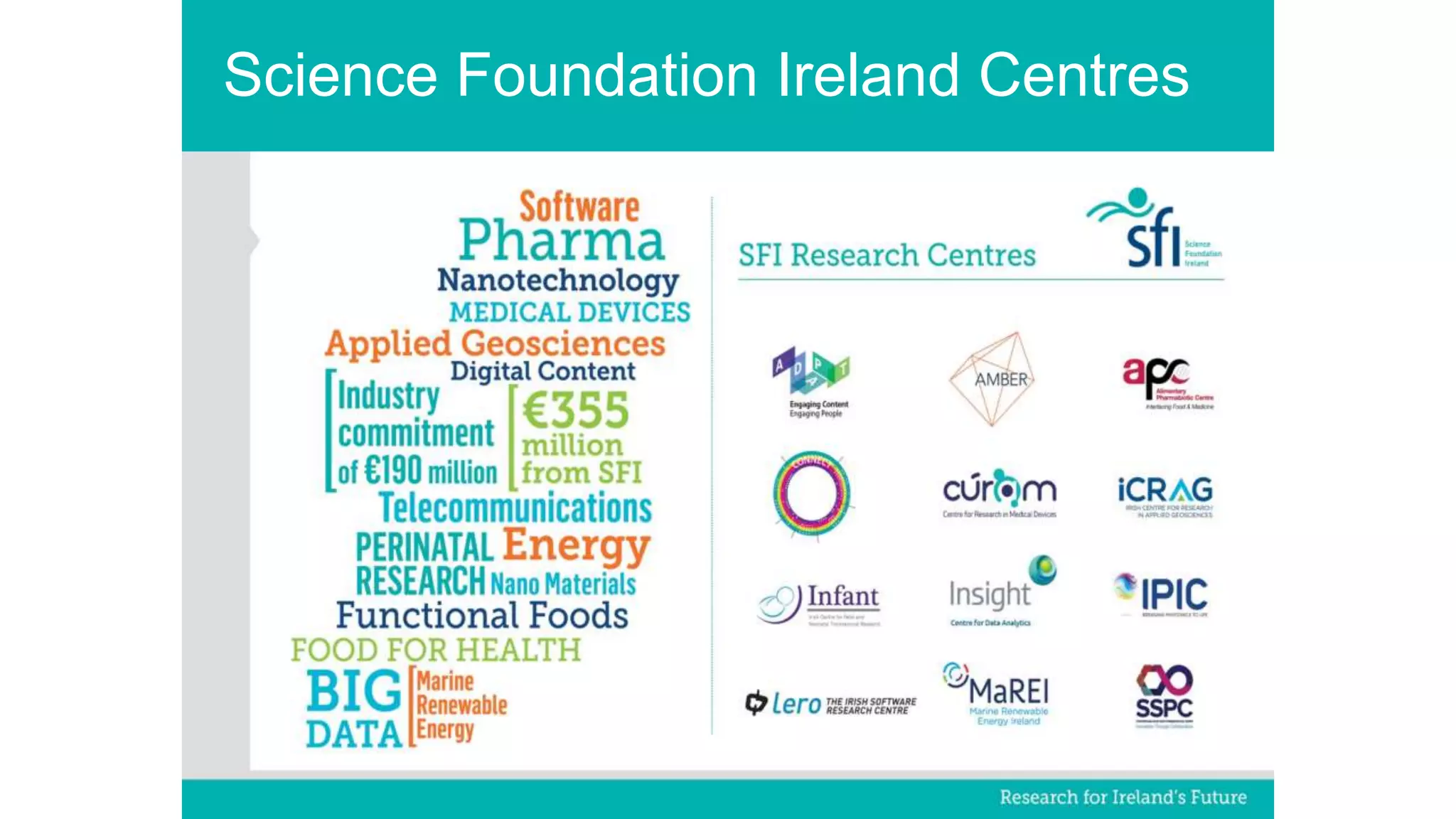
Science Foundation Ireland Centres
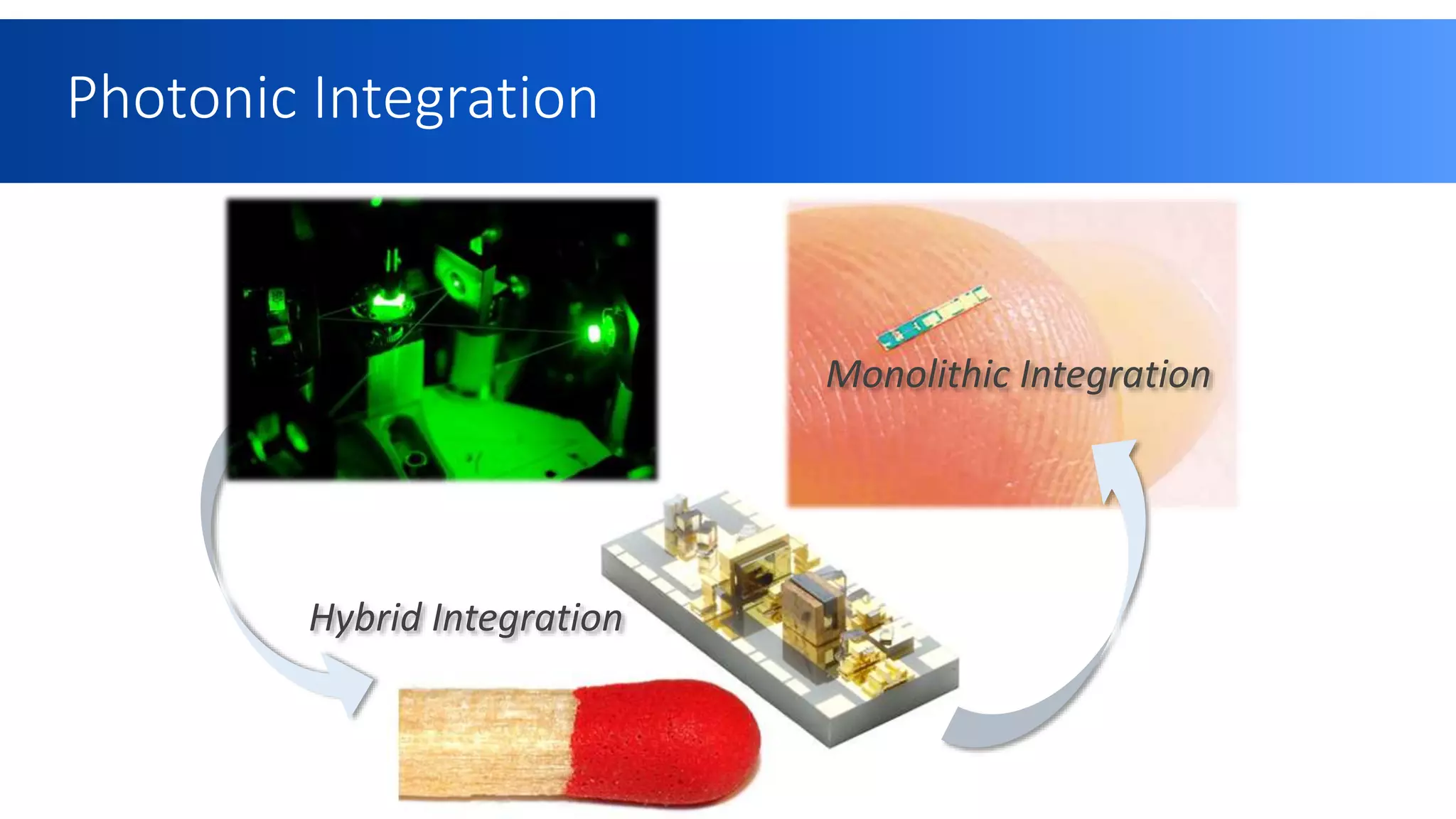
Hybrid Integration
Monolithic Integration
Photonic Integration
Integrated team from “atoms to systems”
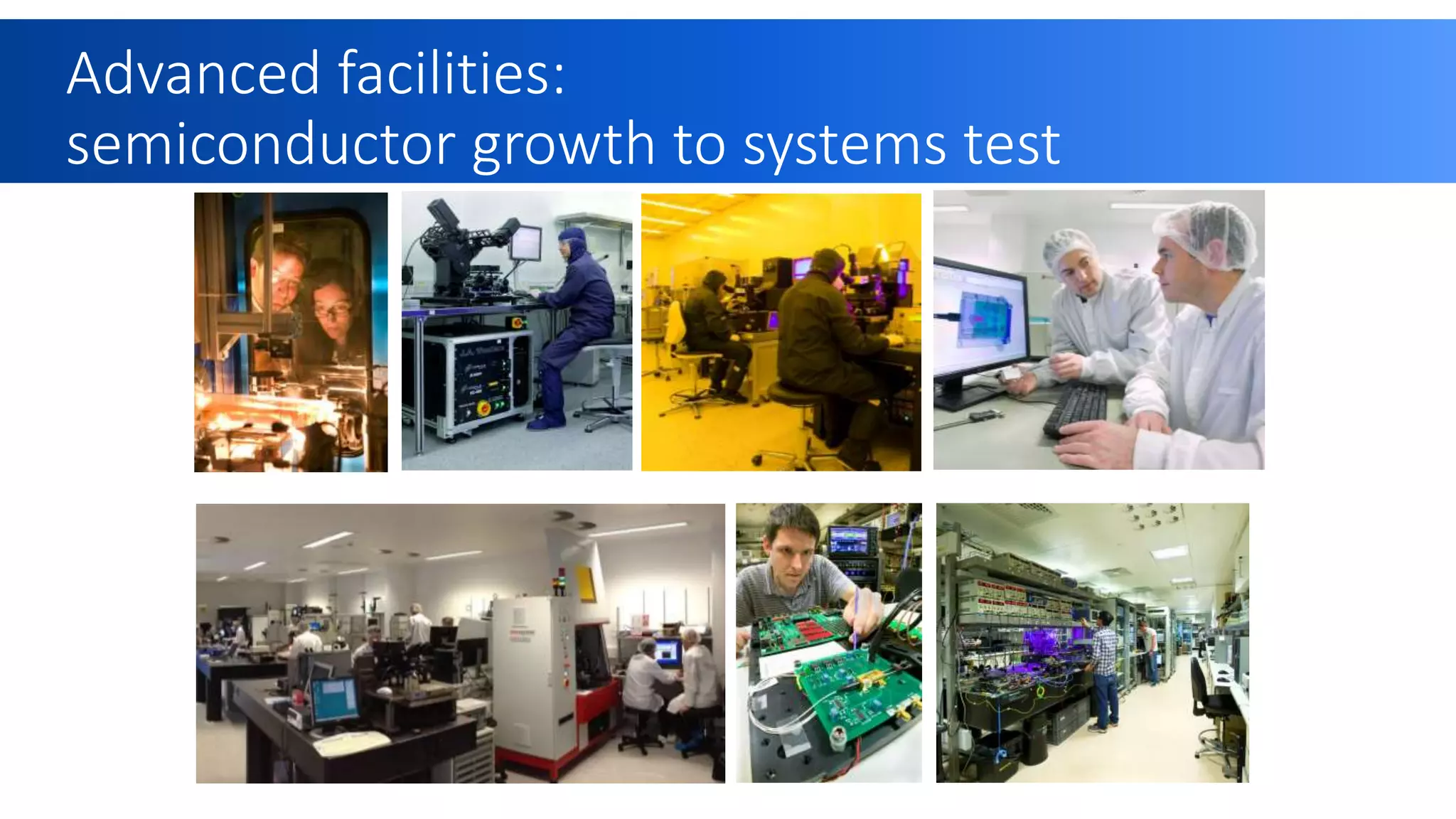
Advanced facilities:
semiconductor growth to systems test
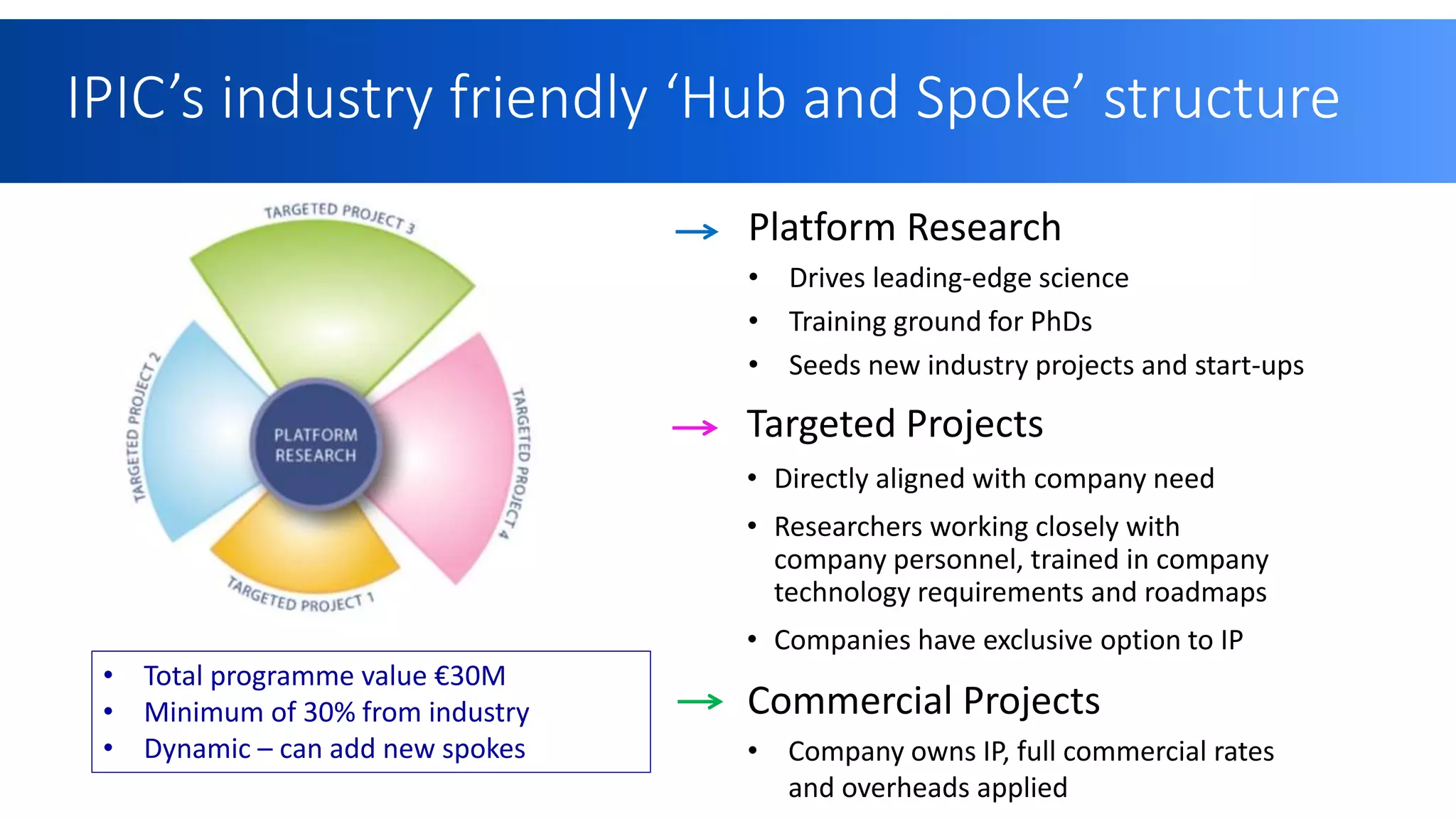
• Total programme value €30M
• Minimum of 30% from industry
• Dynamic – can add new spokes
IPIC’s industry friendly ‘Hub and Spoke’ structure
Targeted Projects
• Directly aligned with company need
• Researchers working closely with
company personnel, trained in company
technology requirements and roadmaps
• Companies have exclusive option to IP
Platform Research
• Drives leading-edge science
• Training ground for PhDs
• Seeds new industry projects and start-ups
Commercial Projects
• Company owns IP, full commercial rates
and overheads applied
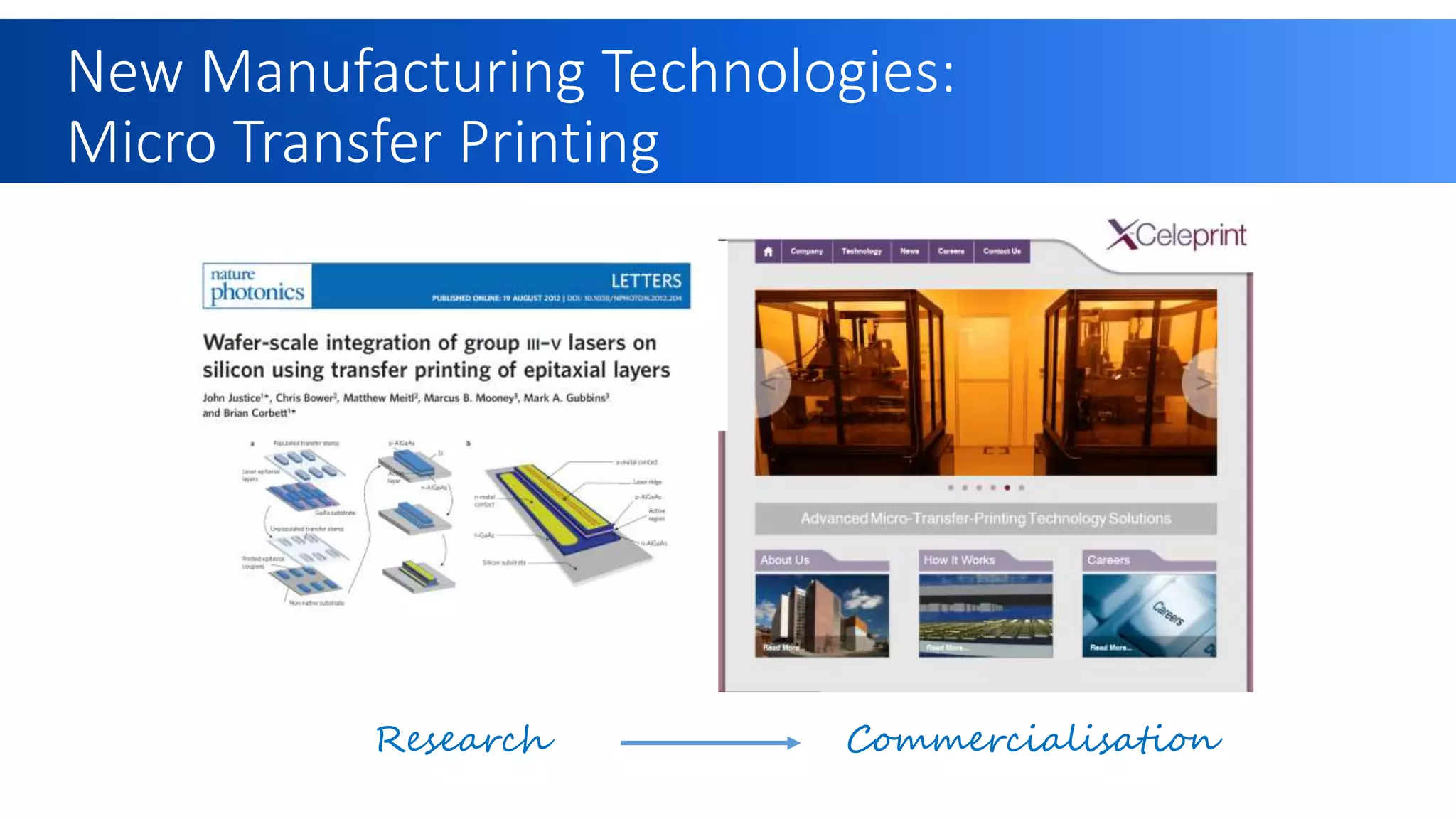
Research Commercialisation
New Manufacturing Technologies:
Micro Transfer Printing
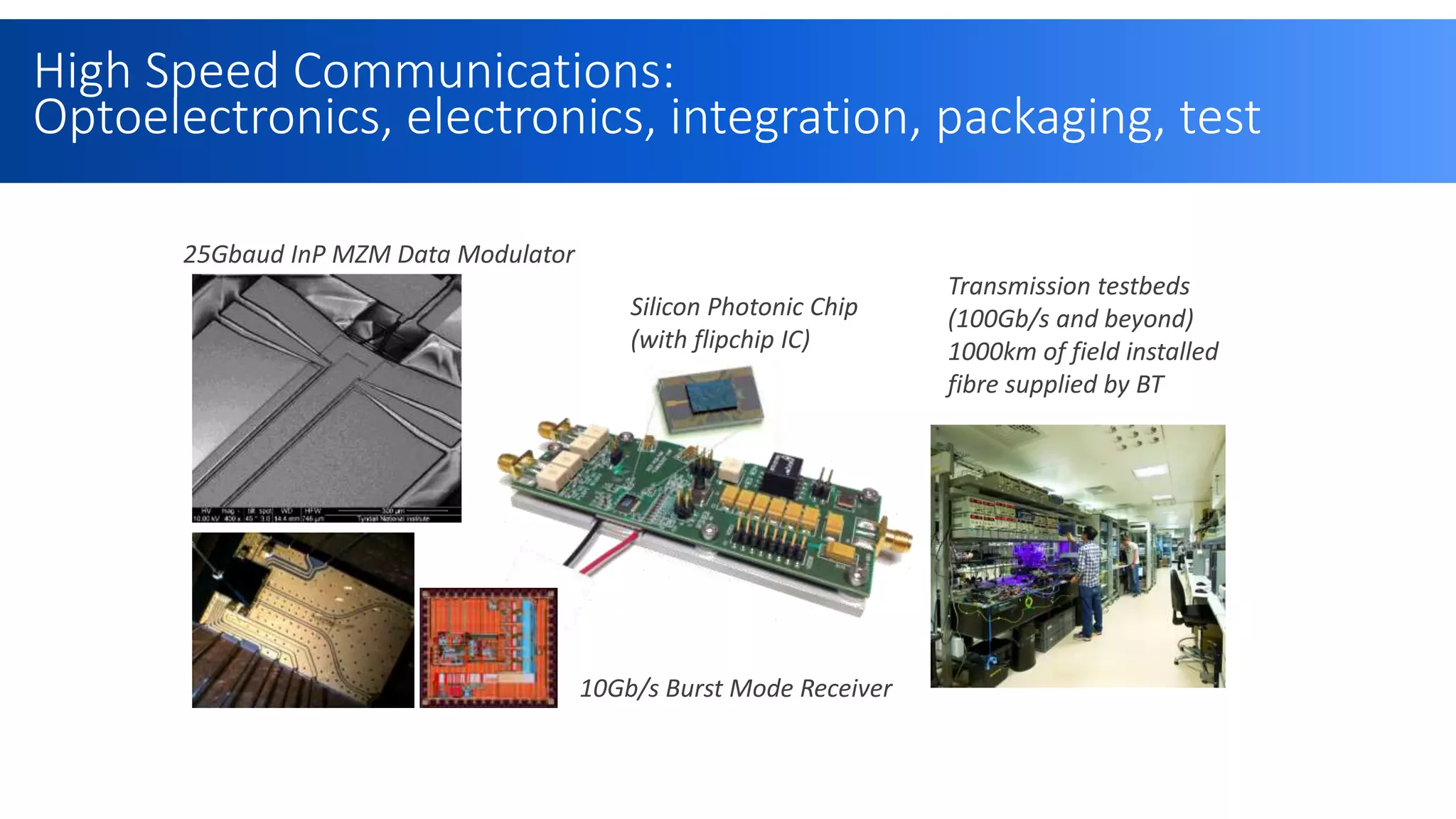
Silicon Photonic Chip
(with flipchip IC)
25Gbaud InP MZM Data Modulator
10Gb/s Burst Mode Receiver
Transmission testbeds
(100Gb/s and beyond)
1000km of field installed
fibre supplied by BT
High Speed Communications:
Optoelectronics, electronics, integration, packaging, test
Smart, small, flexible, high functionality
integrated devices are key to the future of
the Internet.
And this is why…
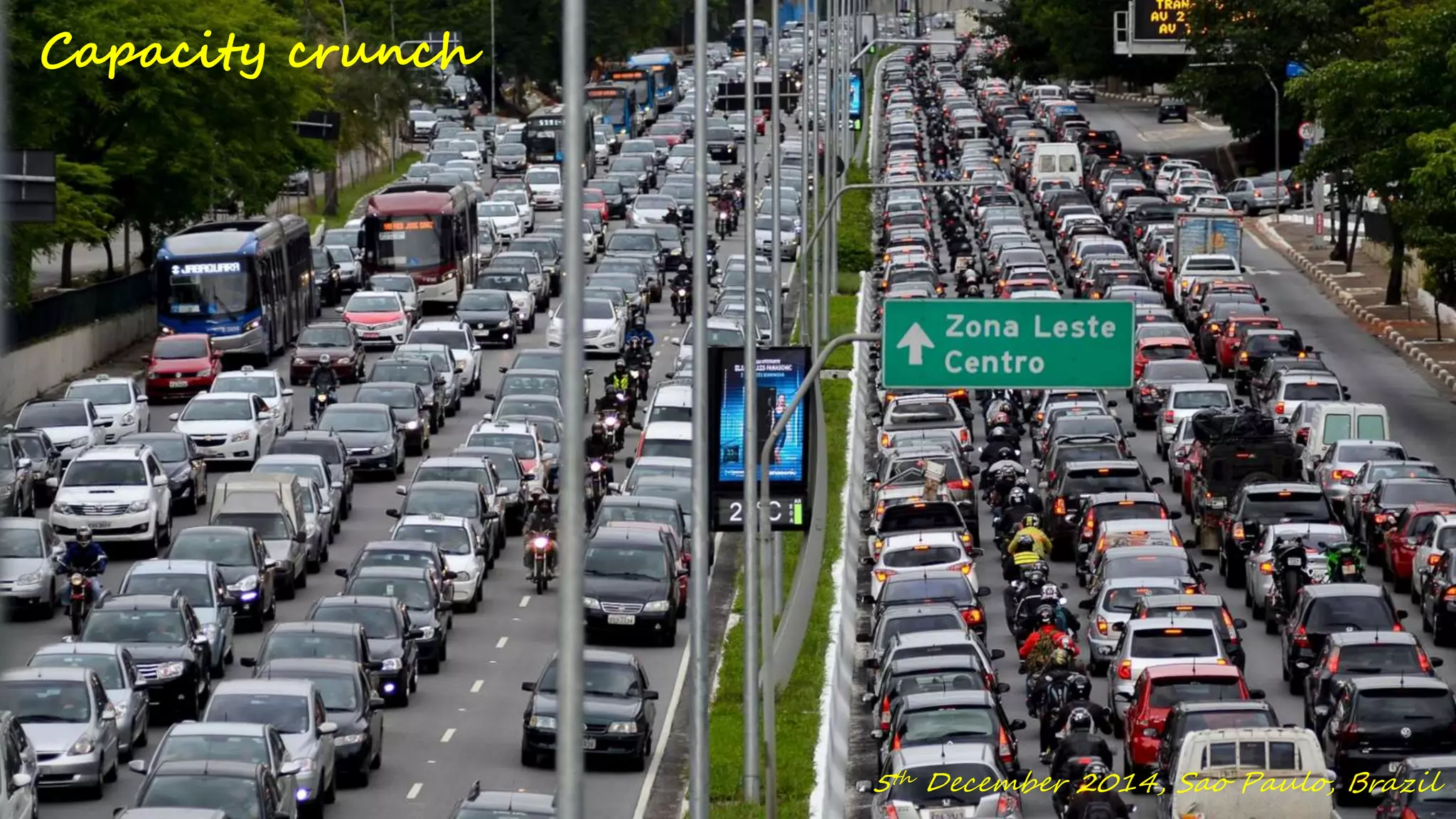
Capacity crunch
5th December 2014, Sao Paulo, Brazil
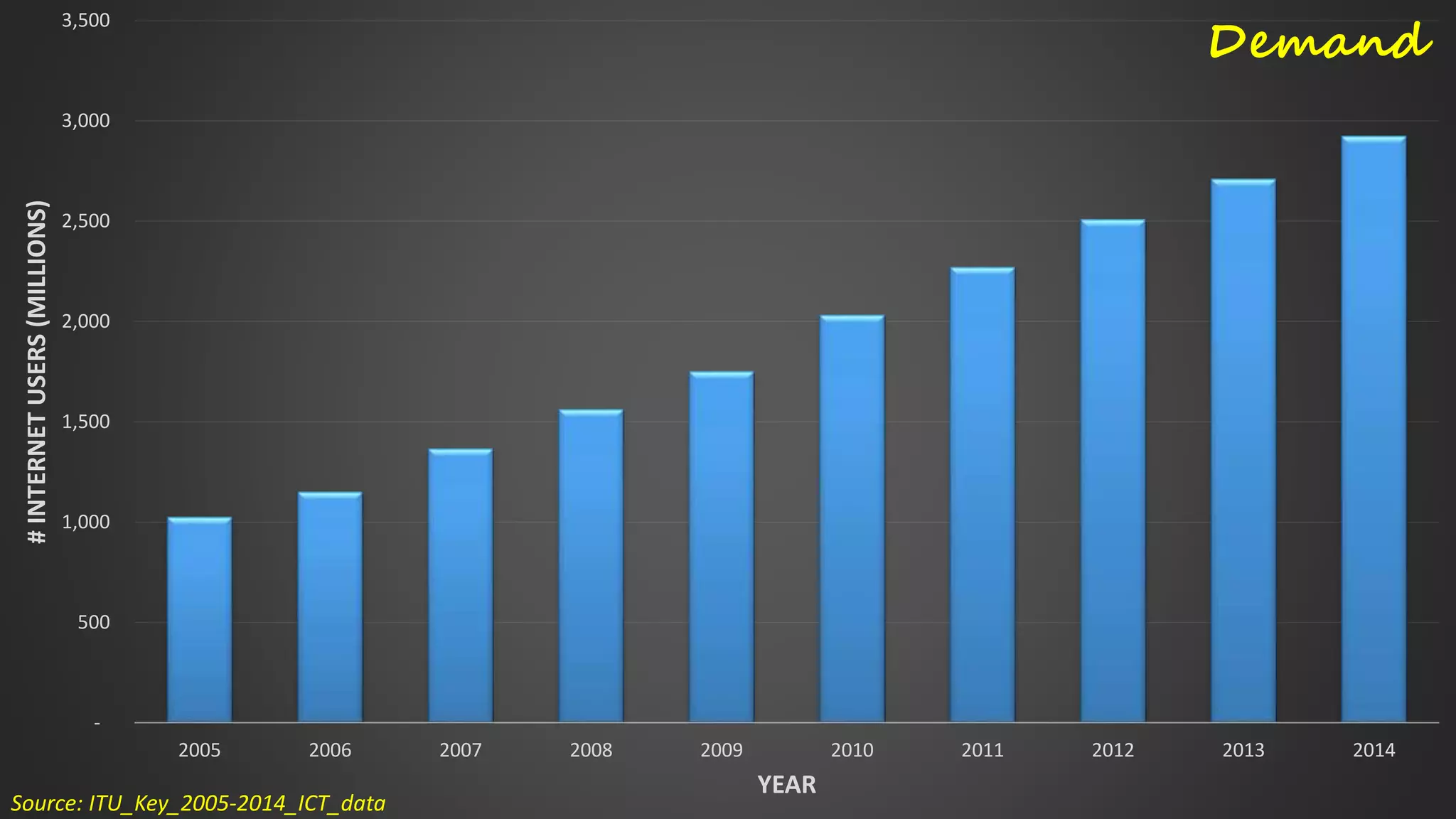
-
500
1,000
1,500
2,000
2,500
3,000
3,500
2005 2006 2007 2008 2009 2010 2011 2012 2013 2014
#INTERNETUSERS(MILLIONS)
YEAR
Demand
Source: ITU_Key_2005-2014_ICT_data
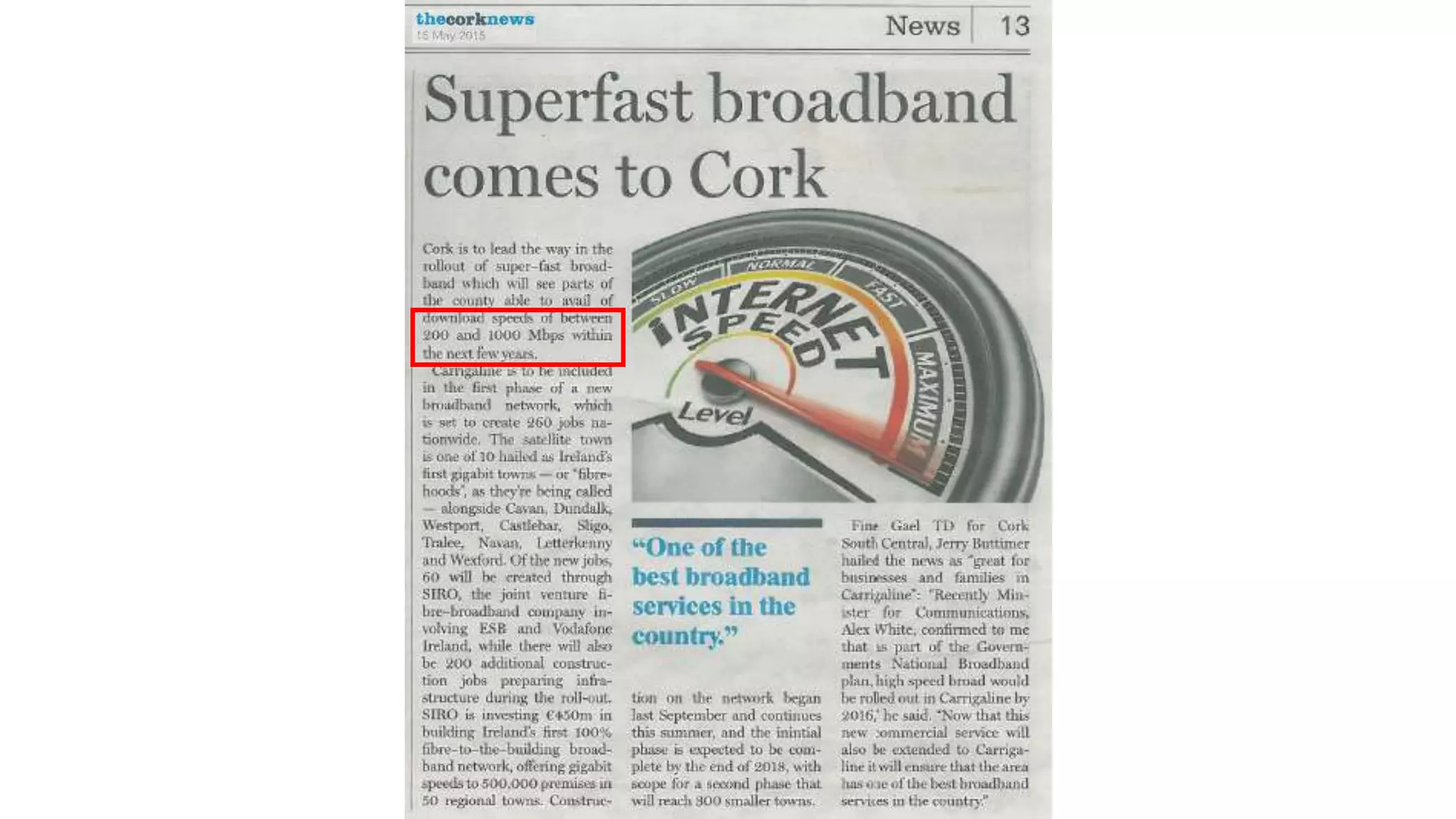
Kurt Michel, Akamai - https://blogs.akamai.com/2014/07/welcome-to-the-future.html
Limited bandwidth?
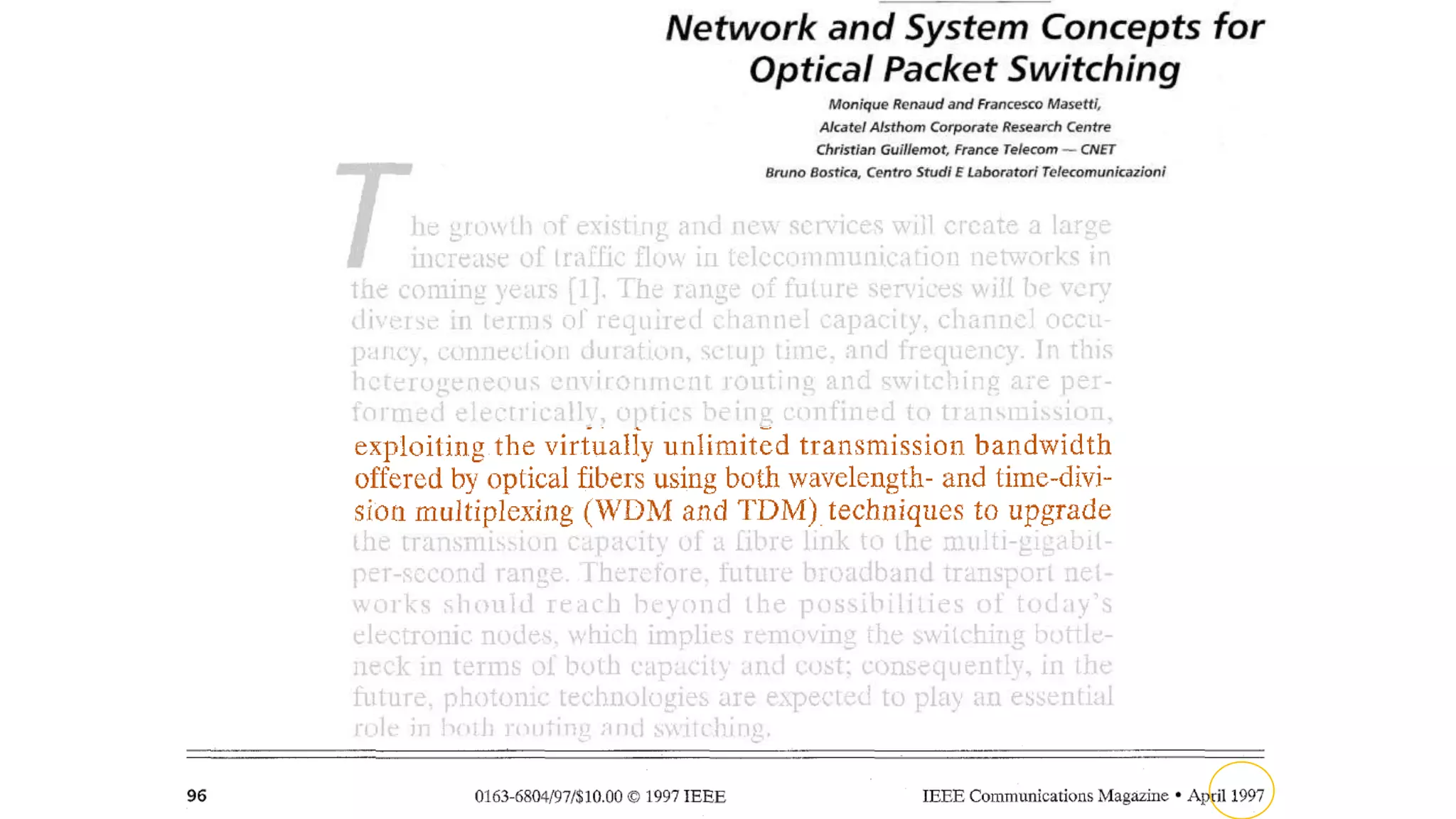
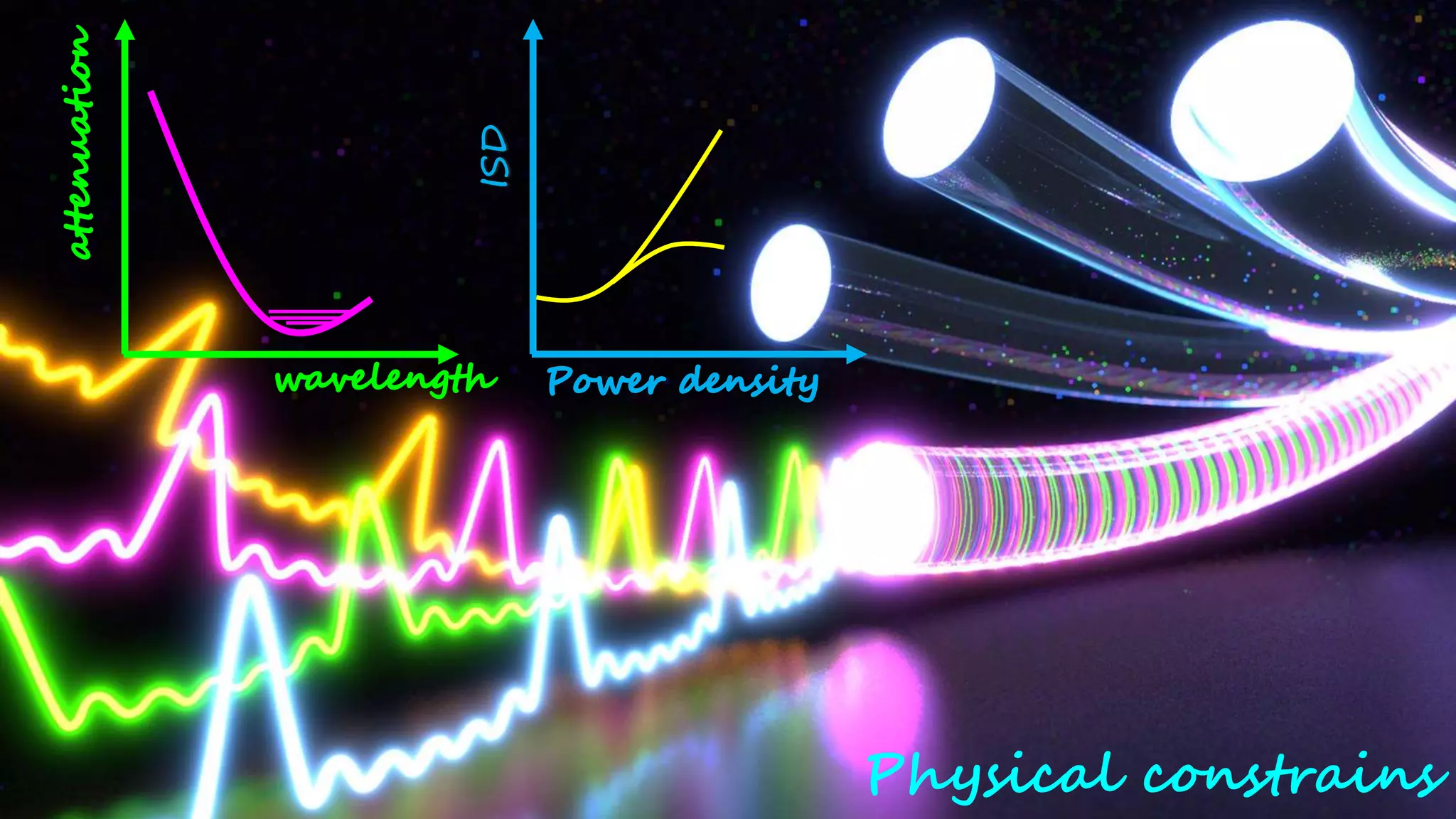
Physical constrains
Optimising the use of bandwidth…
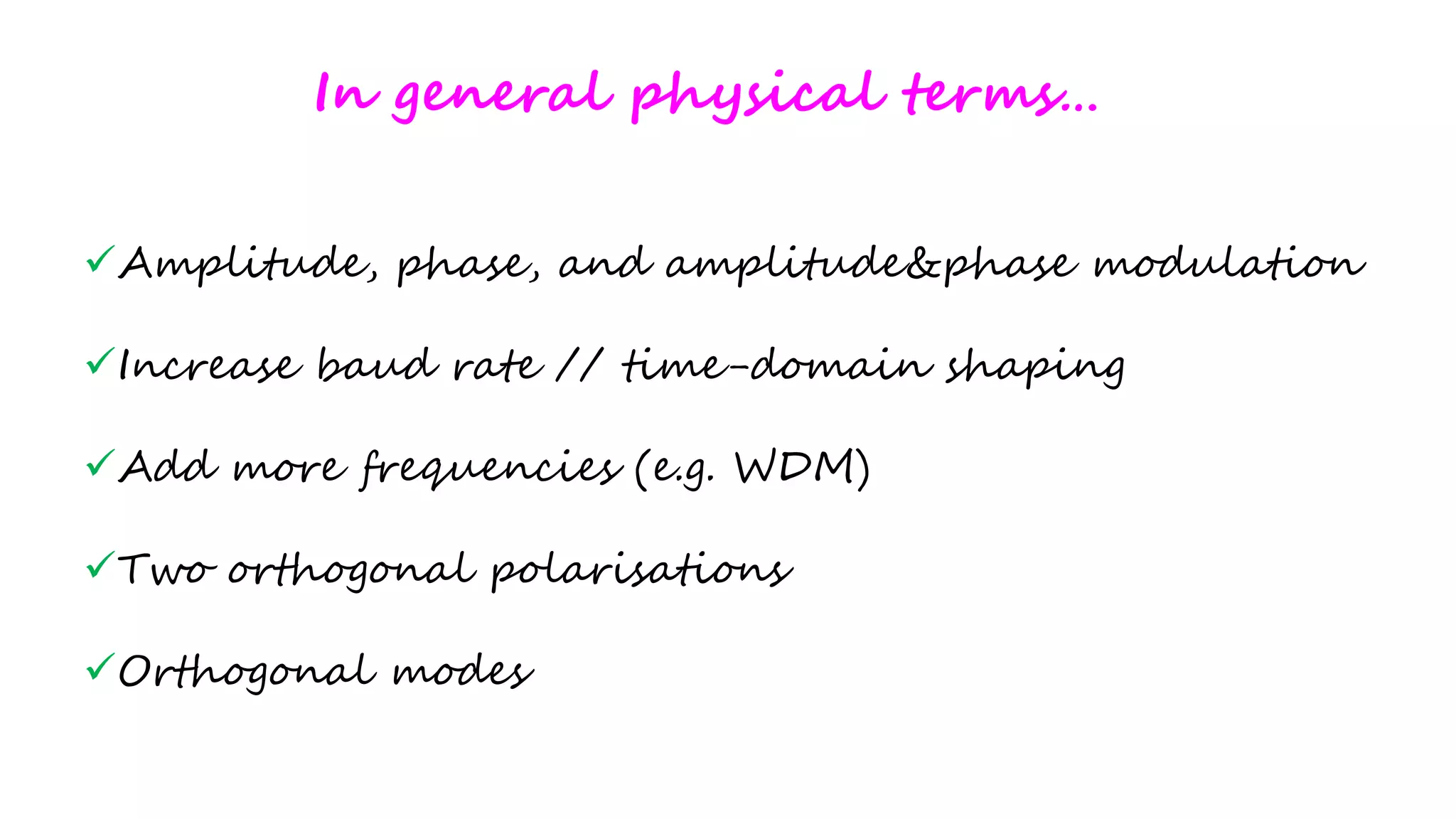
In general physical terms…
Amplitude, phase, and amplitude&phase modulation
Increase baud rate // time-domain shaping
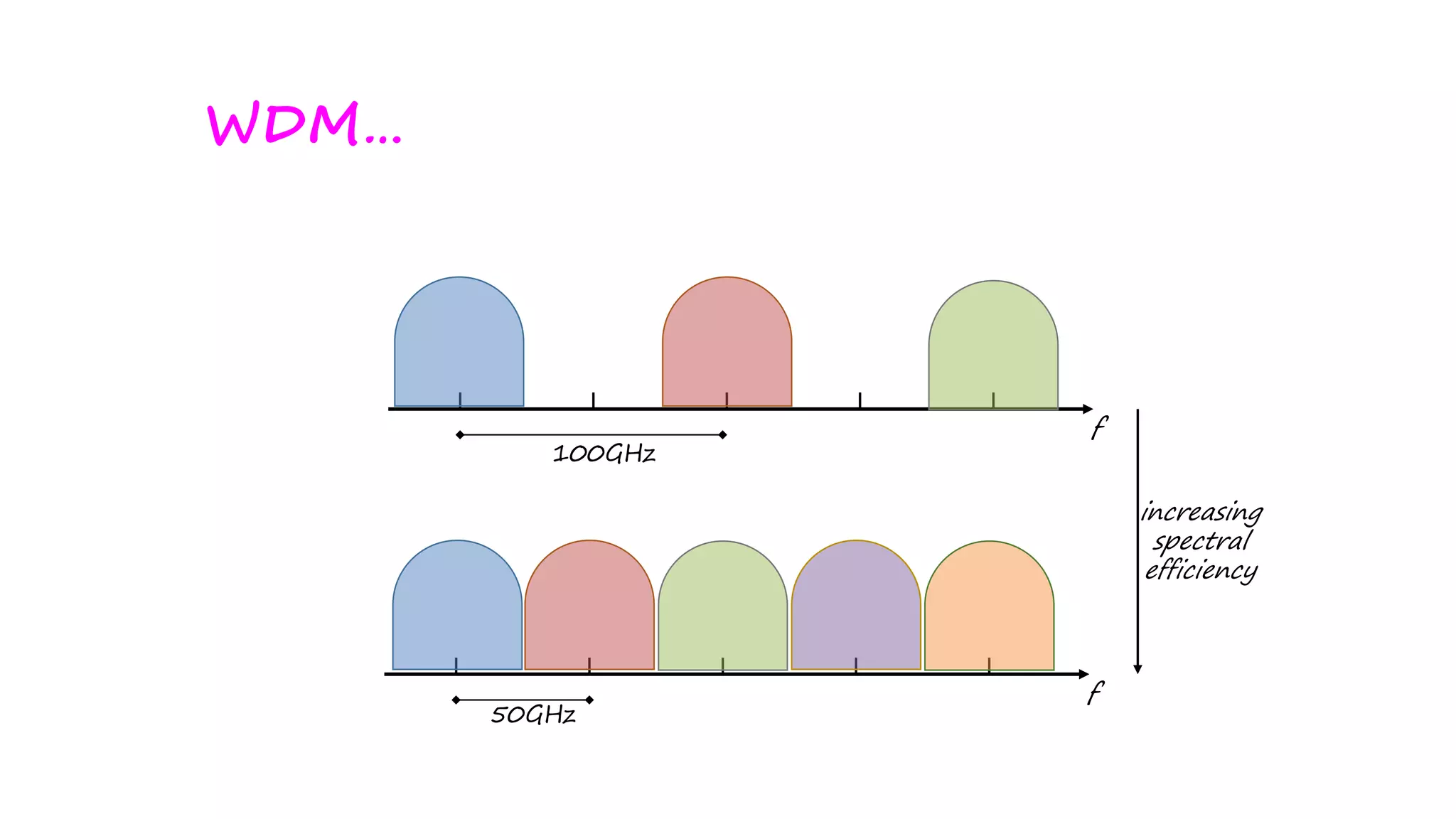
Add more frequencies (e.g. WDM)
Two orthogonal polarisations
Orthogonal modes
50GHz
f
100GHz
f
increasing
spectral
efficiency
WDM…
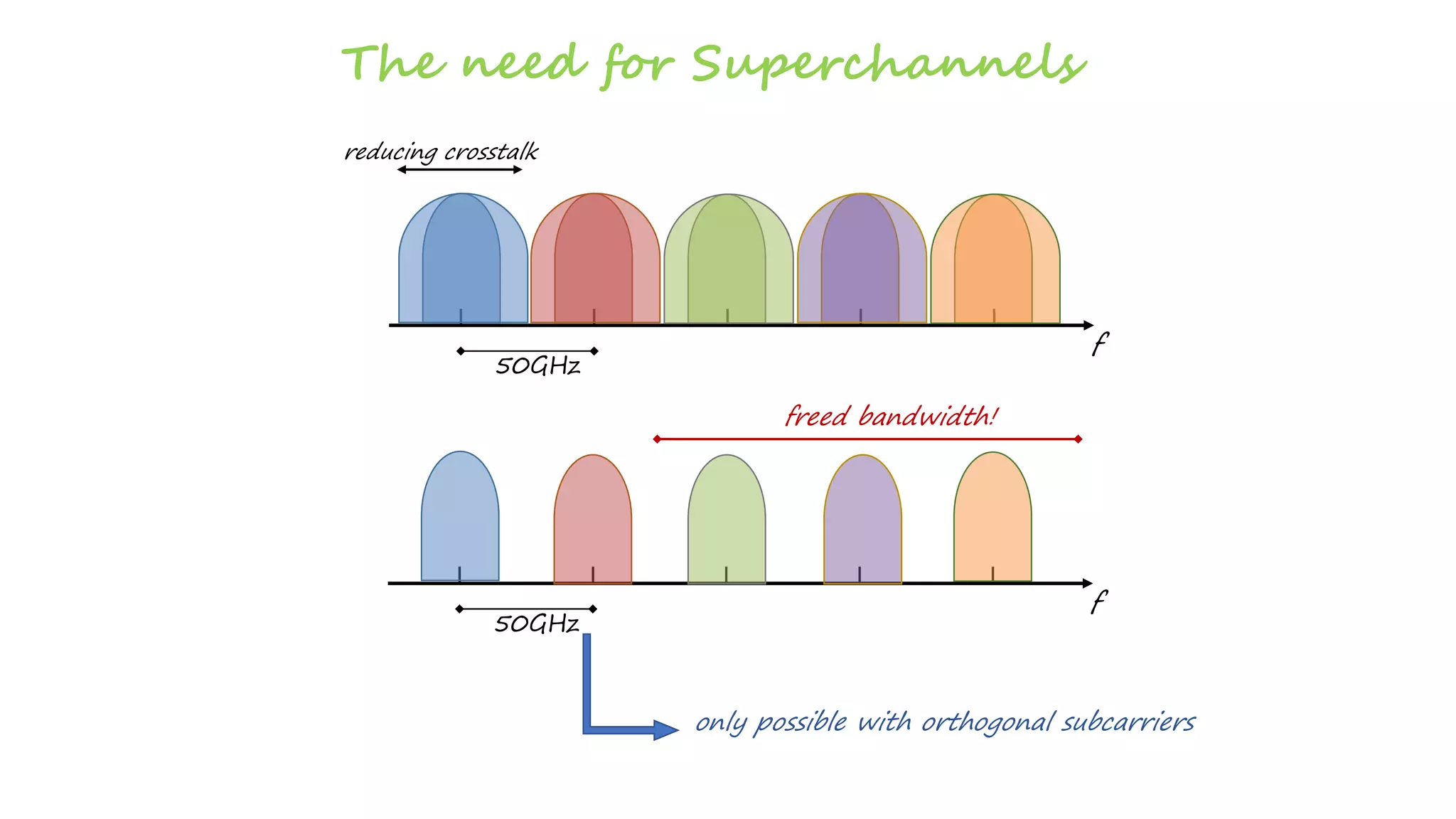
The need for Superchannels
50GHz
f
50GHz
f
freed bandwidth!
only possible with orthogonal subcarriers
reducing crosstalk
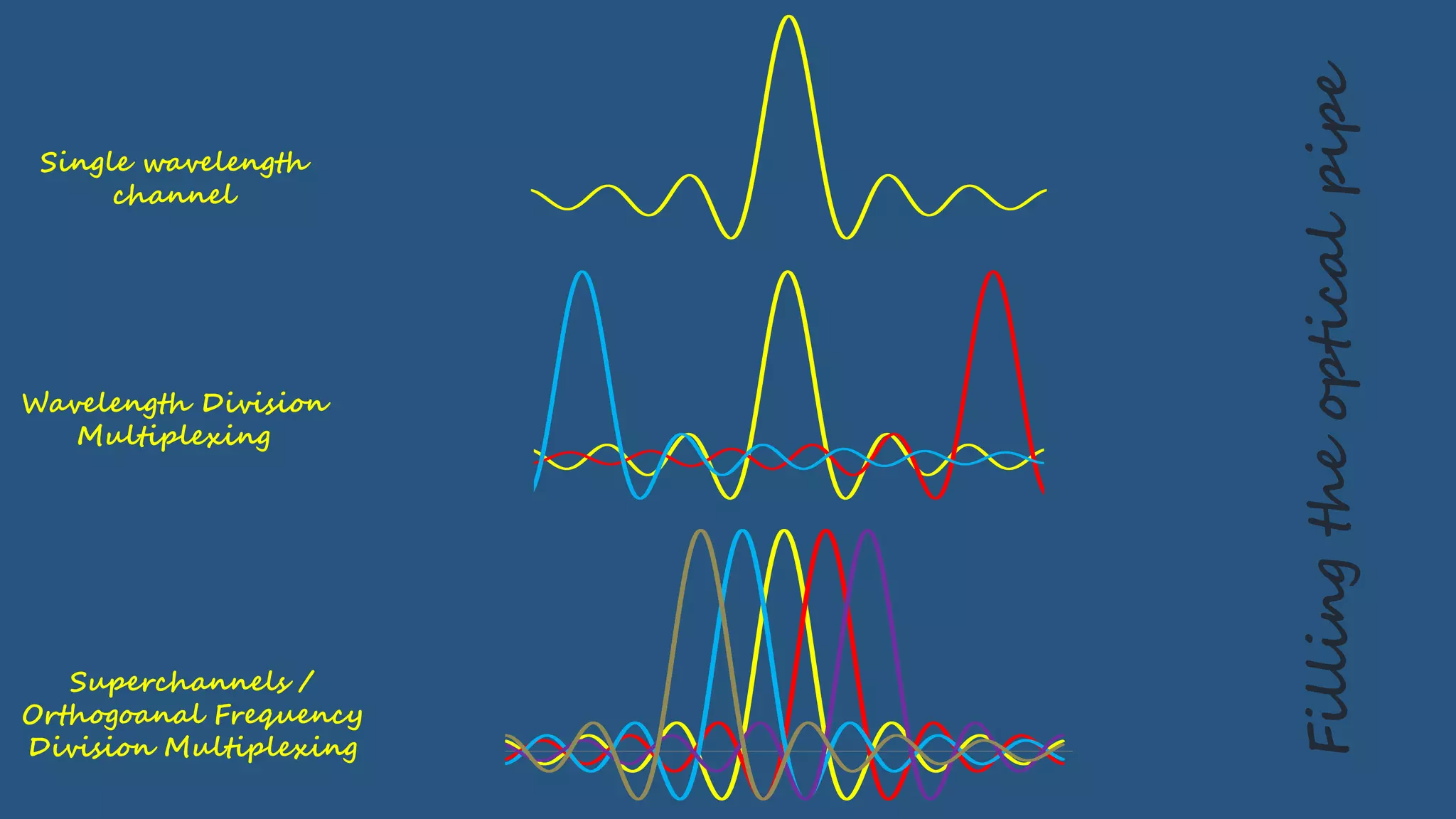
Single wavelength
channel
Wavelength Division
Multiplexing
Superchannels /
Orthogoanal Frequency
Division Multiplexing
Fillingtheopticalpipe
$$$
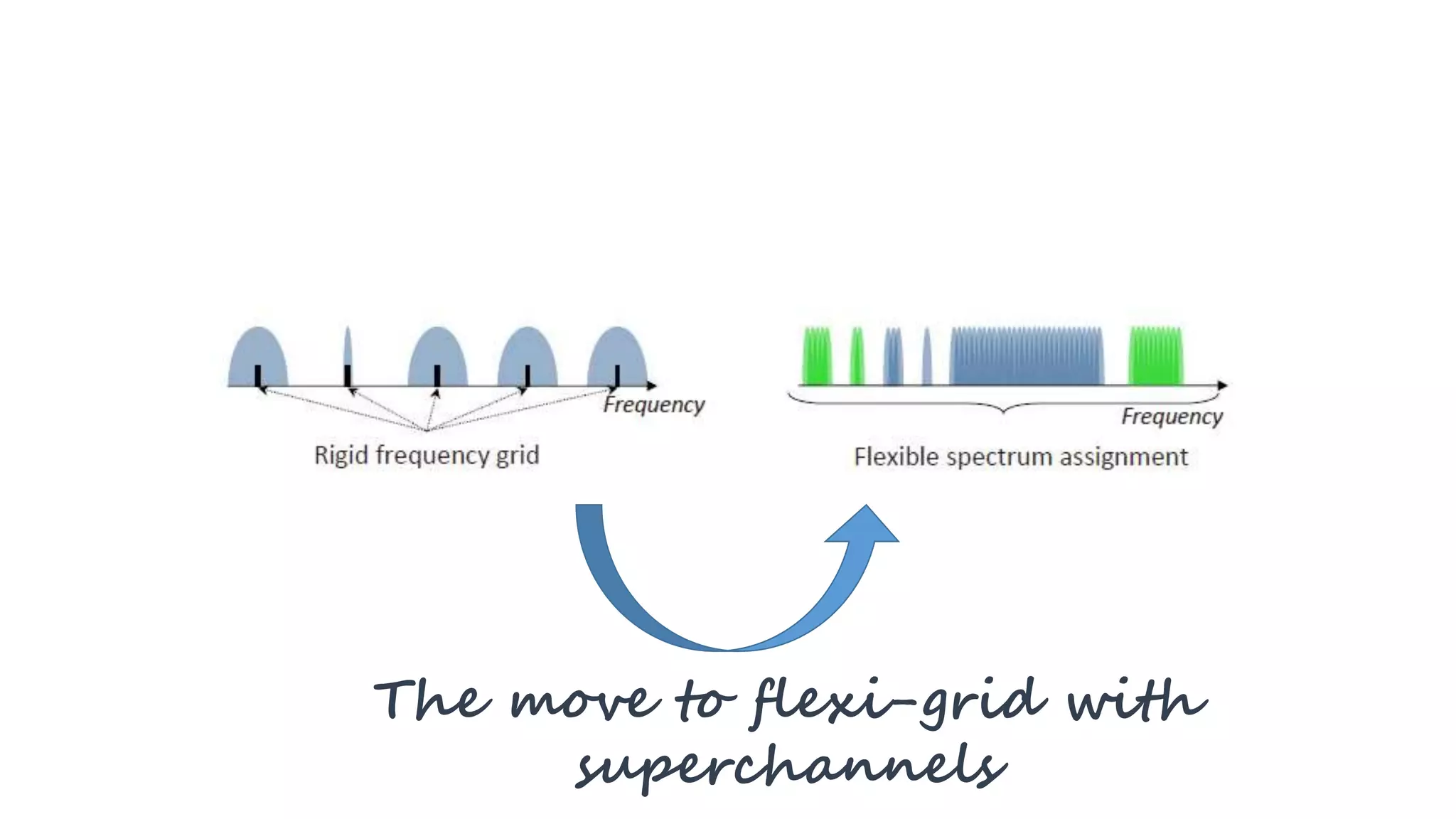
The need for flexibility
The move to flexi-grid with
superchannels
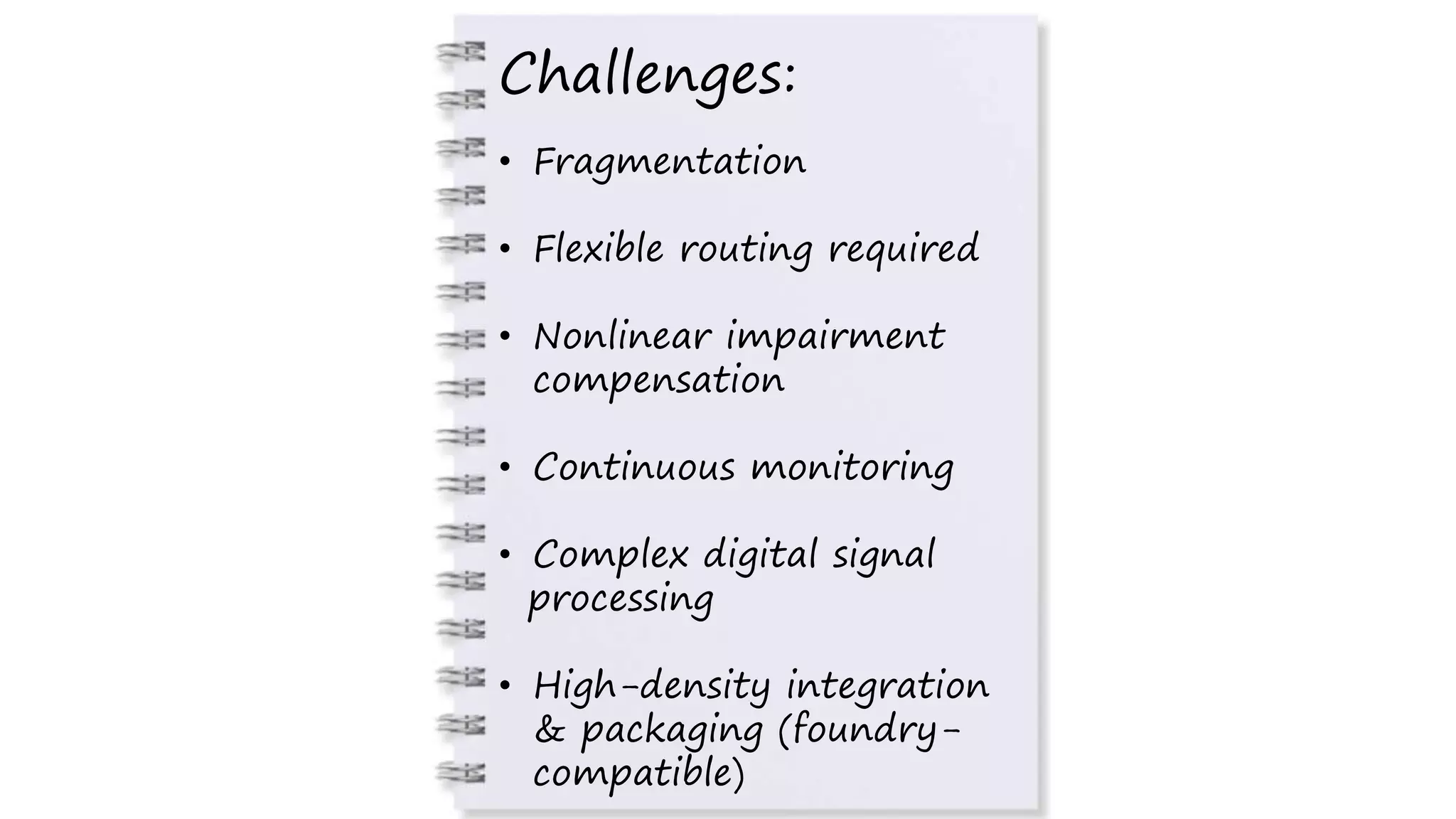
Challenges:
• Fragmentation
• Flexible routing required
• Nonlinear impairment
compensation
• Continuous monitoring
• Complex digital signal
processing
• High-density integration
& packaging (foundry-
compatible)
0
1
Phase(rads/)
0
1
2
Phase(rads/)
2π 0 0 0 2π
Time
I
Q
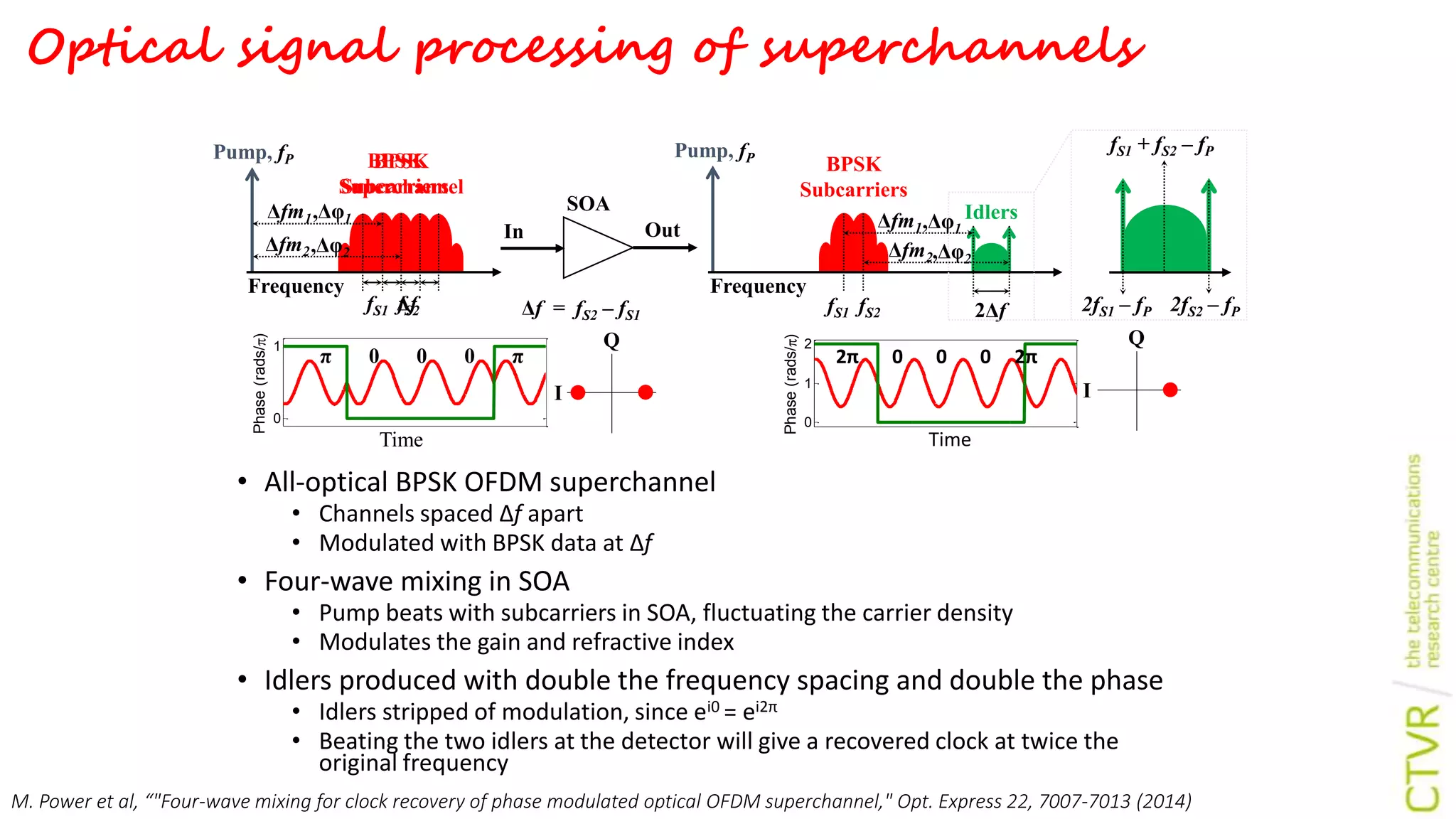
• All-optical BPSK OFDM superchannel
• Channels spaced Δf apart
• Modulated with BPSK data at Δf
• Four-wave mixing in SOA
• Pump beats with subcarriers in SOA, fluctuating the carrier density
• Modulates the gain and refractive index
• Idlers produced with double the frequency spacing and double the phase
• Idlers stripped of modulation, since ei0 = ei2π
• Beating the two idlers at the detector will give a recovered clock at twice the
original frequency
fS2Δf
BPSK
Subcarriers
BPSK
Superchannel
Pump, fP
Idlers
2Δf
Frequency
Out
SOA
In
Frequency
Pump, fP
BPSK
Subcarriers
Δfm2
Δfm1
Δf = fS2 – fS1
fS1 2fS1 – fP 2fS2 – fP
fS1 + fS2 – fP
Δfm2
Δfm1
fS2fS1
0
1
Phase(rads/)
0
1
2
Phase(rads/)
π 0 0 0 π
I
Q
Time
,Δφ1
,Δφ2
,Δφ1
,Δφ2
Optical signal processing of superchannels
M. Power et al, “"Four-wave mixing for clock recovery of phase modulated optical OFDM superchannel," Opt. Express 22, 7007-7013 (2014)
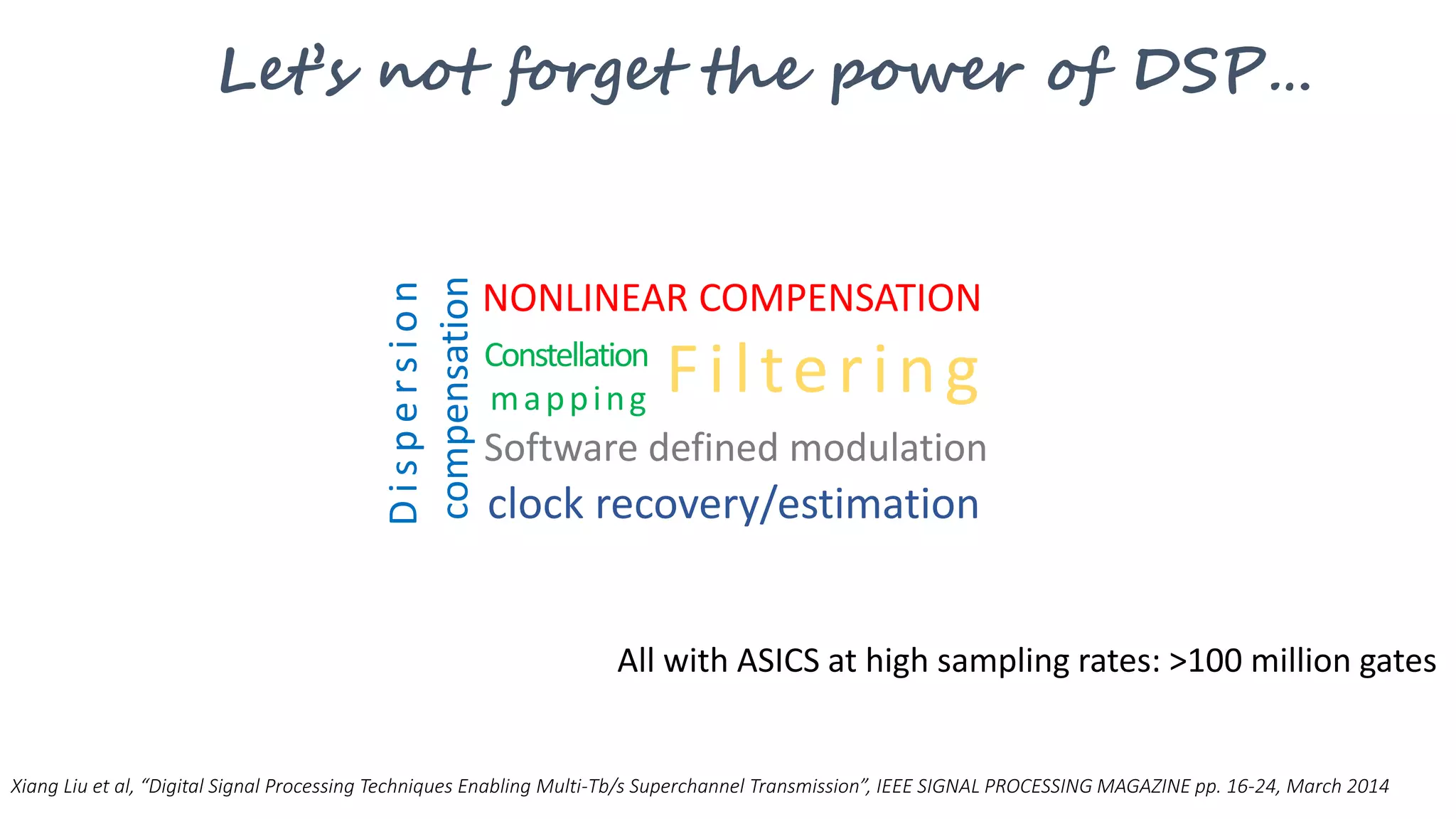
Let’s not forget the power of DSP…
NONLINEAR COMPENSATION
Dispersion
compensation
Constellation
mapping
clock recovery/estimation
Software defined modulation
Filtering
All with ASICS at high sampling rates: >100 million gates
Xiang Liu et al, “Digital Signal Processing Techniques Enabling Multi-Tb/s Superchannel Transmission”, IEEE SIGNAL PROCESSING MAGAZINE pp. 16-24, March 2014
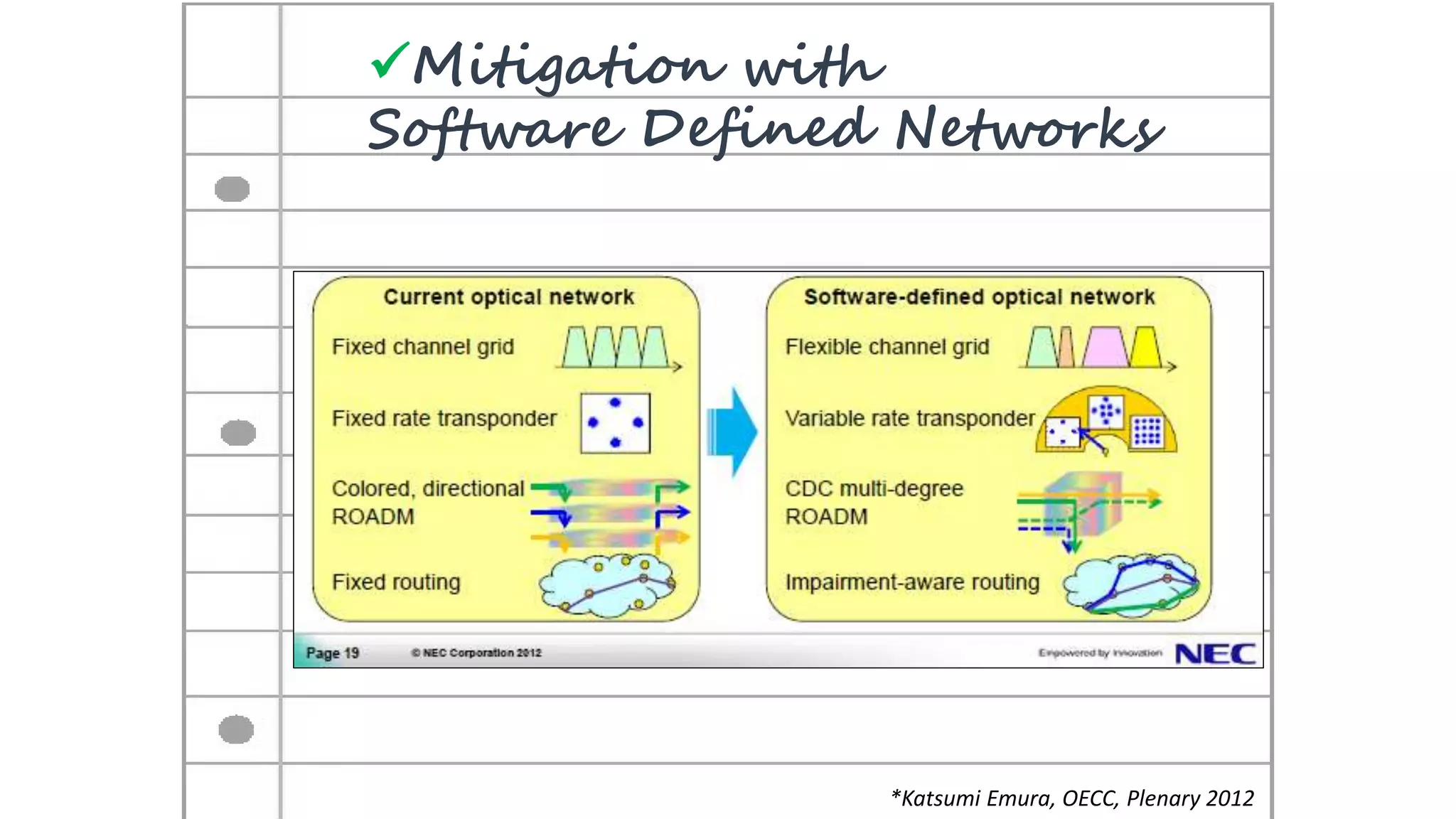
Mitigation with
Software Defined Networks
*Katsumi Emura, OECC, Plenary 2012
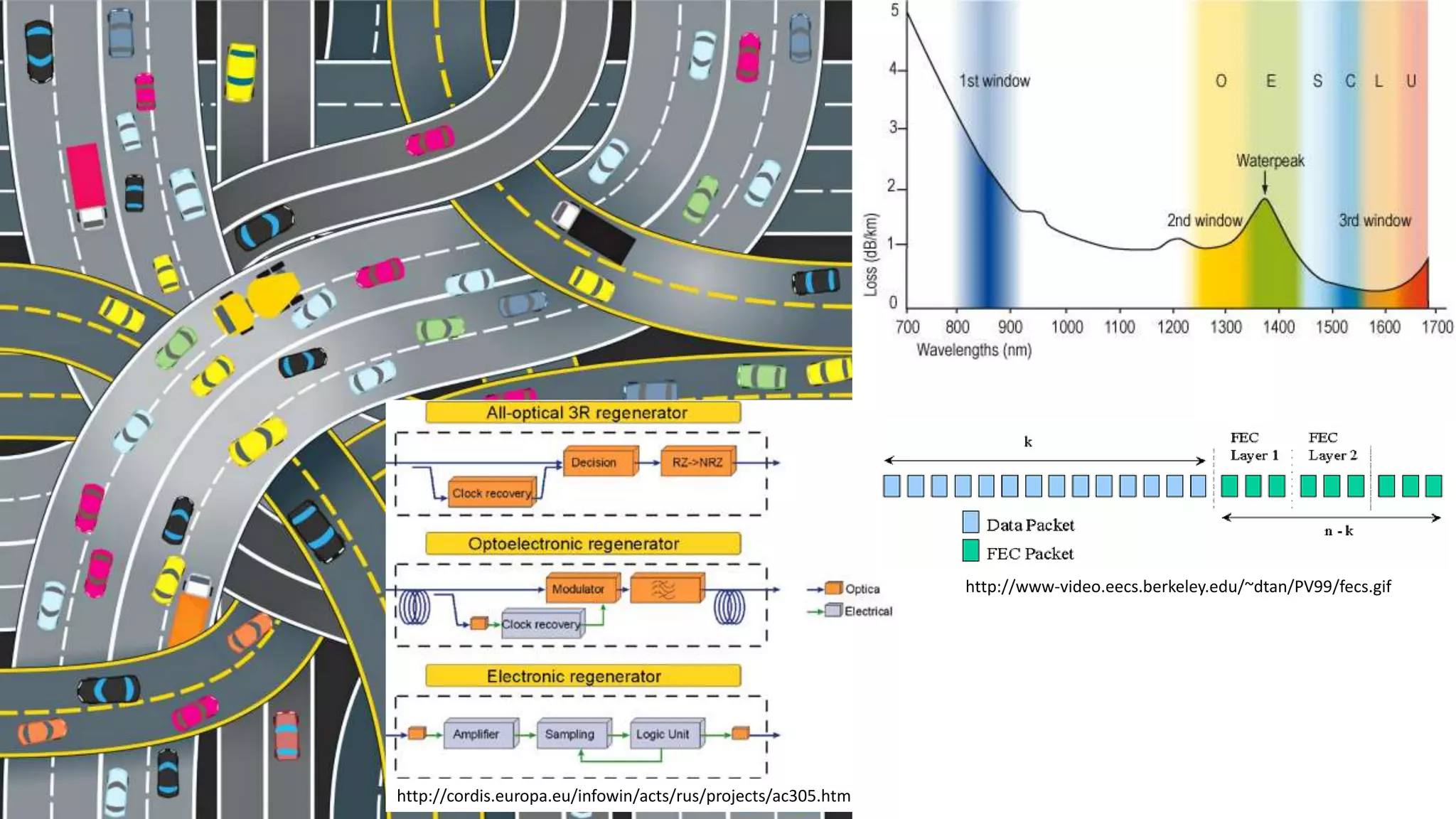
http://cordis.europa.eu/infowin/acts/rus/projects/ac305.htm
http://www-video.eecs.berkeley.edu/~dtan/PV99/fecs.gif
Creative HD wallpapers
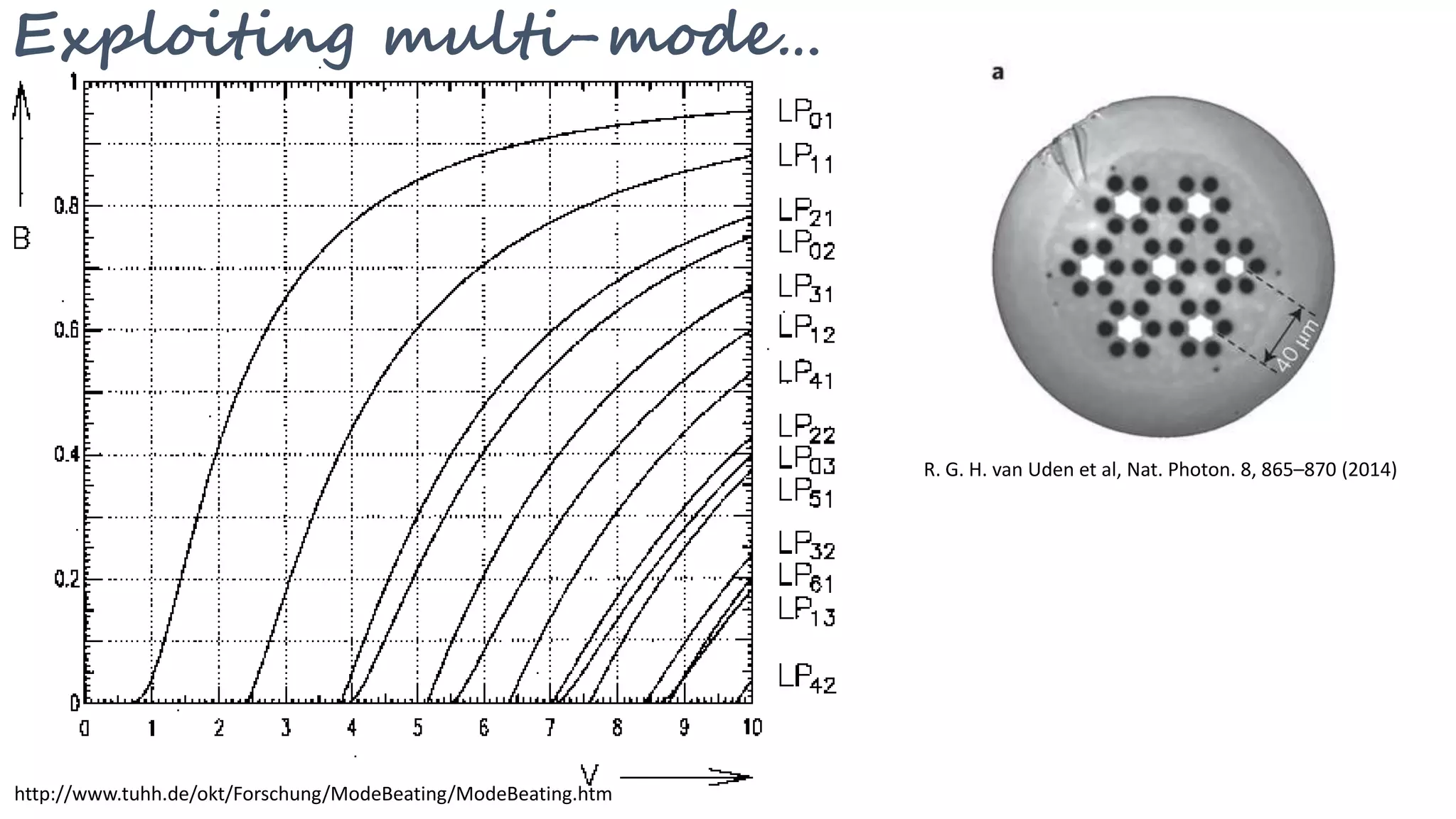
Alternatives solutions to SMF…
http://www.tuhh.de/okt/Forschung/ModeBeating/ModeBeating.htm
Exploiting multi-mode…
R. G. H. van Uden et al, Nat. Photon. 8, 865–870 (2014)
detectorslasers
passives modulators
optical
Amplifiers
filters
1mm
slotted FP laser
HC-PBGF AWGfilter
photodetector
optical amplifier
[6]
[7]
[8]
[9]
…or perhaps being adventurous with HC-PBGF
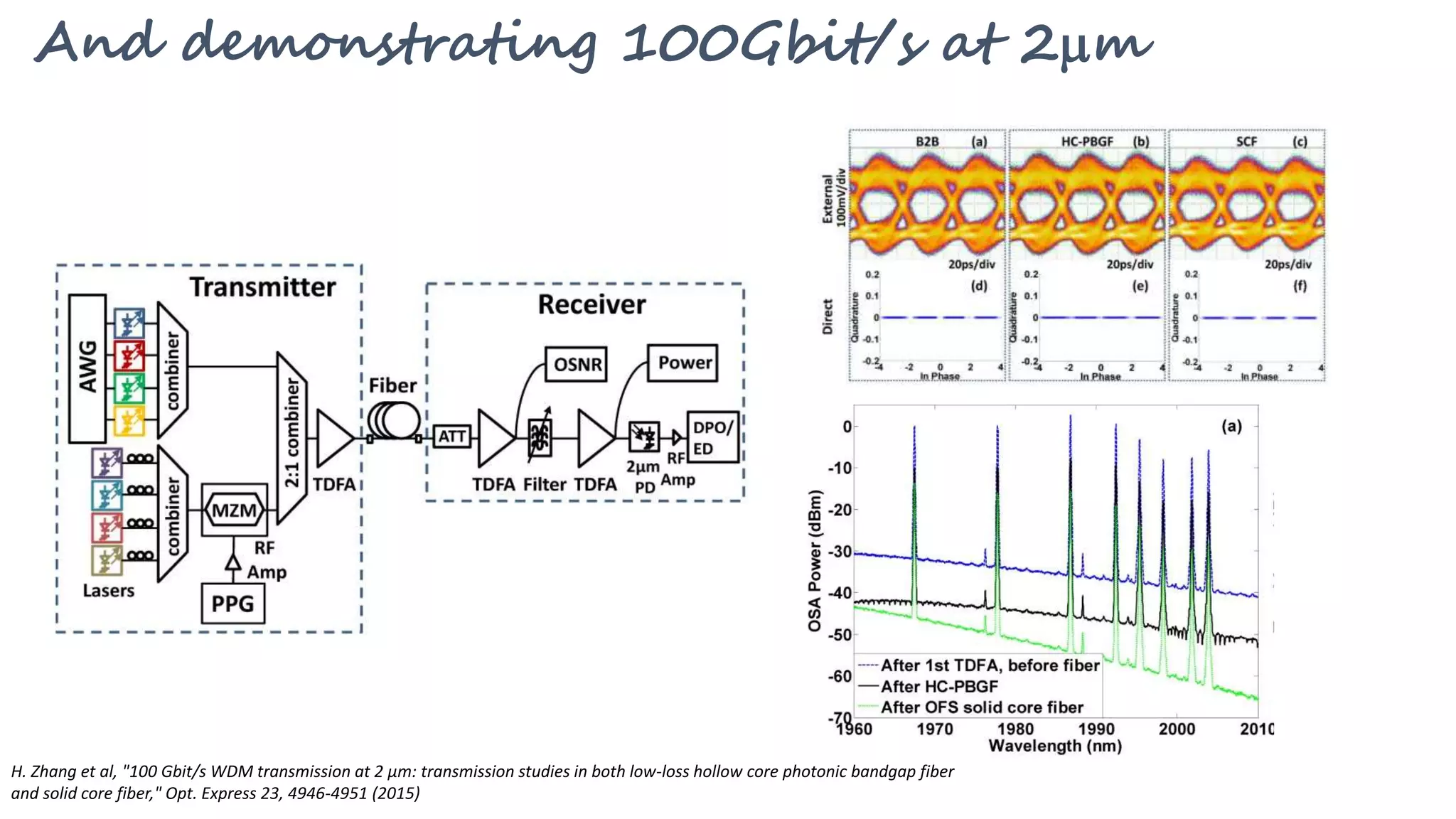
And demonstrating 100Gbit/s at 2m
H. Zhang et al, "100 Gbit/s WDM transmission at 2 µm: transmission studies in both low-loss hollow core photonic bandgap fiber
and solid core fiber," Opt. Express 23, 4946-4951 (2015)
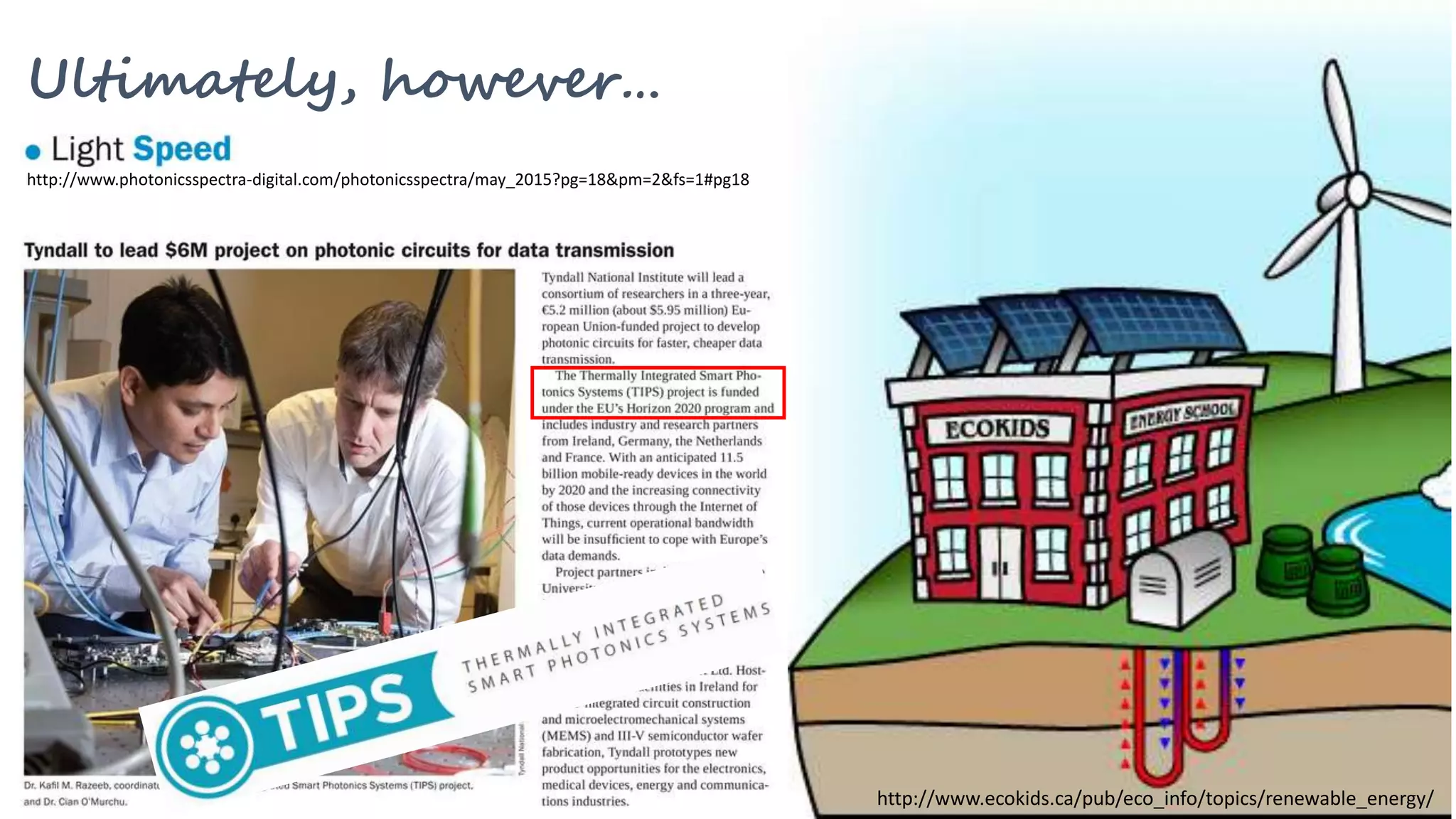
Ultimately, however…
http://www.ecokids.ca/pub/eco_info/topics/renewable_energy/
Energy is and will be finite, hence
- We need energy efficient components
& networks
- We need to look into efficient/passive
device cooling
http://www.photonicsspectra-digital.com/photonicsspectra/may_2015?pg=18&pm=2&fs=1#pg18
• Thank You
•
•
•
Photonic Systems Group, Tyndall National Institute, University College Cork, Ireland.
http://ie.linkedin.com/in/fatimagunning/
http://research.ucc.ie/profiles/E025/fatimagunning
http://www.tyndall.ie/users/fatimagunning
Acknowledgements:
H. Zhang
N. Kavanagh
Z. Li
J. Zhao
N. Ye
Y. Chen
N. V. Wheeler
J. P. Wooler
J. R. Hayes
S. R. Sandoghchi
F. Poletti
M. N. Petrovich
S. U. Alam
R. Phelan
J. O’Carroll
B. Kelly
L. Grüner-Nielsen
D. J. Richardson
B. Corbett
P. Gunning
A. Ellis
B. Manning
M. Power
P. Townsend
K. Razeeb
and many others!

Terabit/s Superchannels: needs, challenges and beyond