Downloaded 37 times


















![A] CONGENITAL AND DEVELOPMENTAL TMJ ANOMALIES
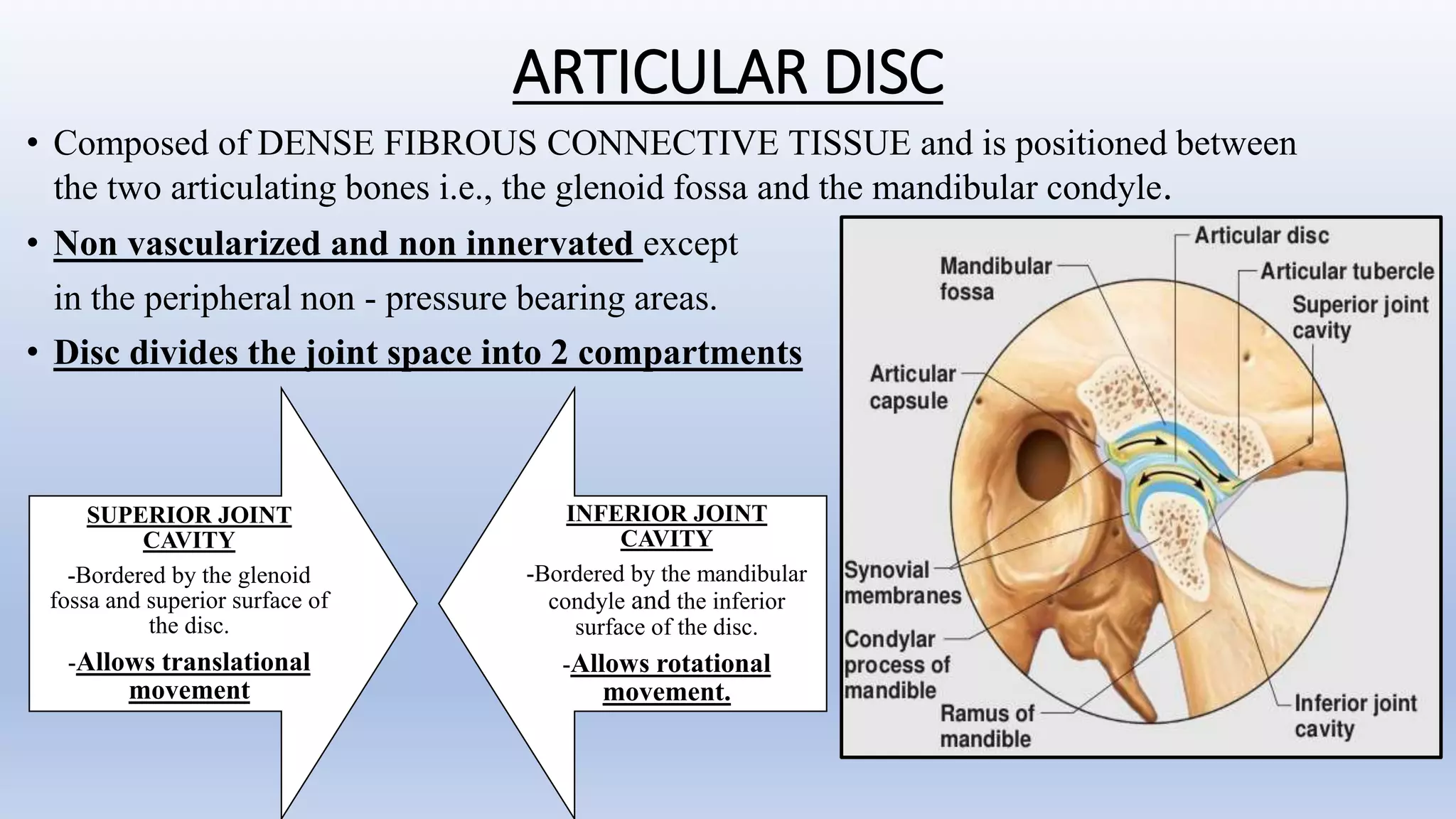
Condylar aplasia or hypoplasia
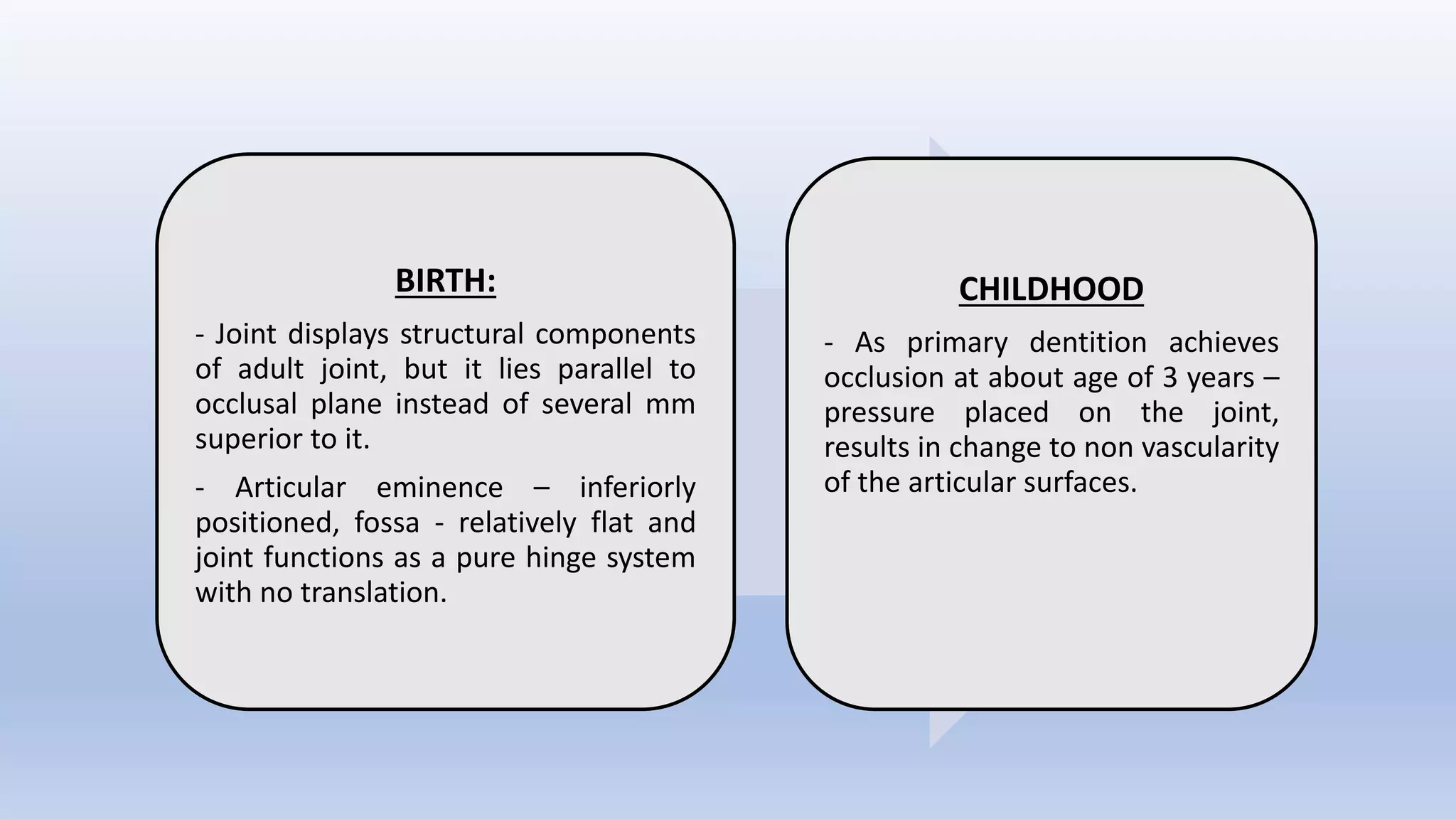
• Failure of the condyle to develop
• May occur unilaterally or bilaterally
• Shift of the mandible towards affected side
• Alters occlusion and mastication
• In bilateral cases, the shift is not evident
Condylar hyperplasia
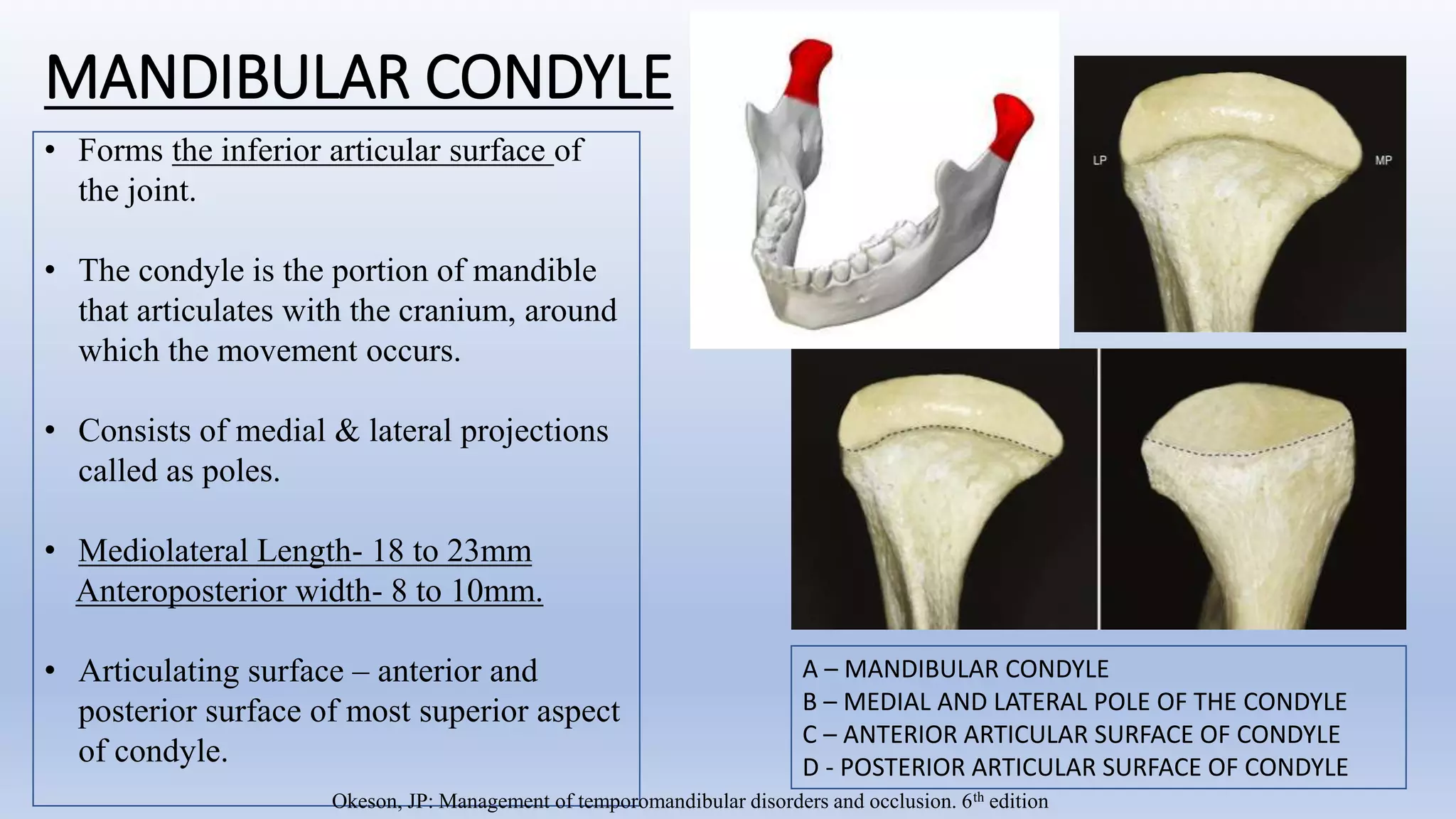
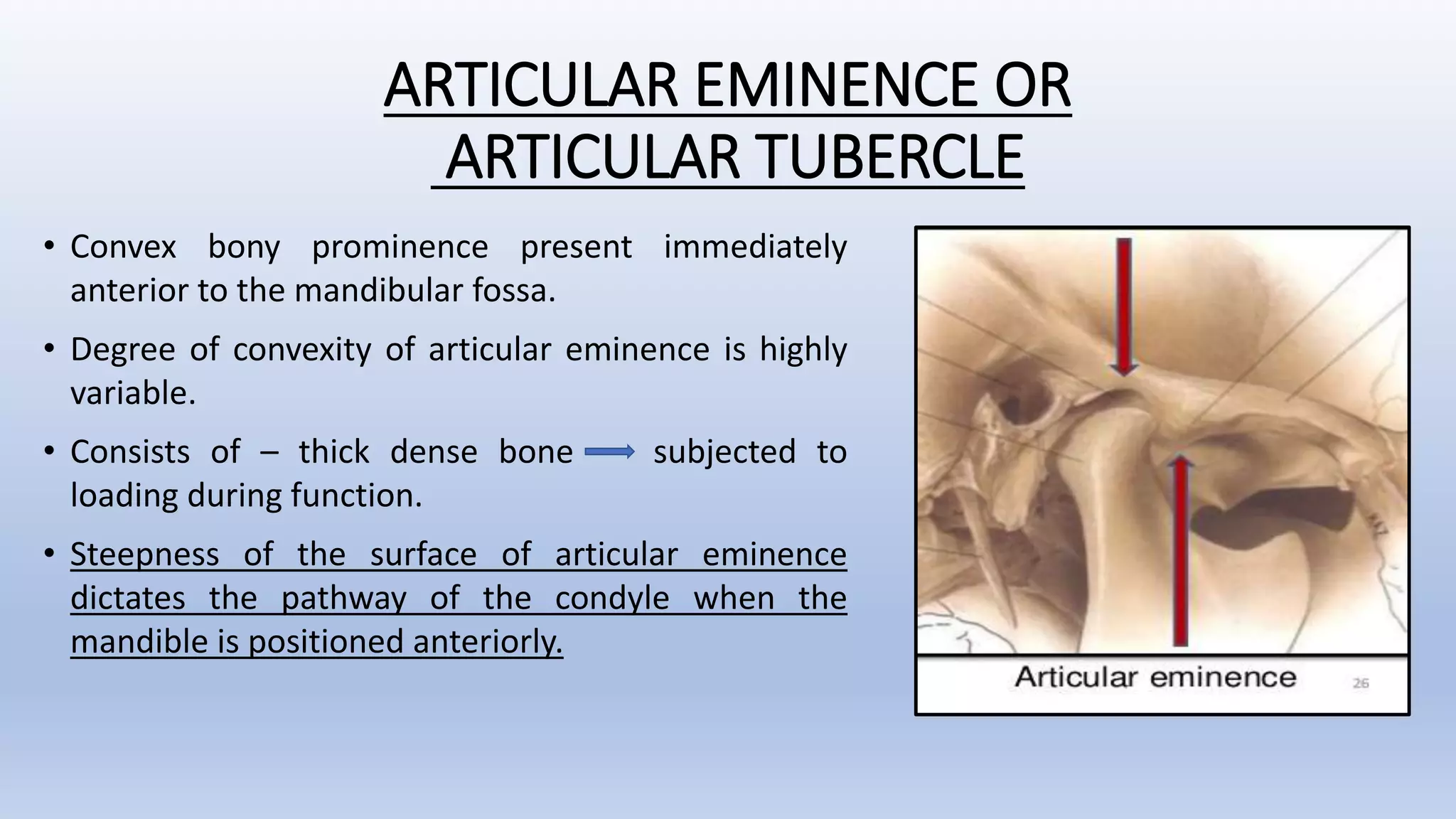
• Gradual enlargement of the mandibular condyle,
• progressive unilateral enlargement of the mandible,
• facial asymmetry and shifting of the midline of the chin to the
unaffected side, with resulting cross-bite malocclusion.
Keiseki Kaneyama: Congenital deformities and developmental abnormalities of the mandibular condyle in the temporomandibular joint , Congenital Anomalies](https://image.slidesharecdn.com/seminar1st-210319195706/75/Temporomandibular-Joint-Anatomy-54-2048.jpg)
![B] JOINT DISORDERS
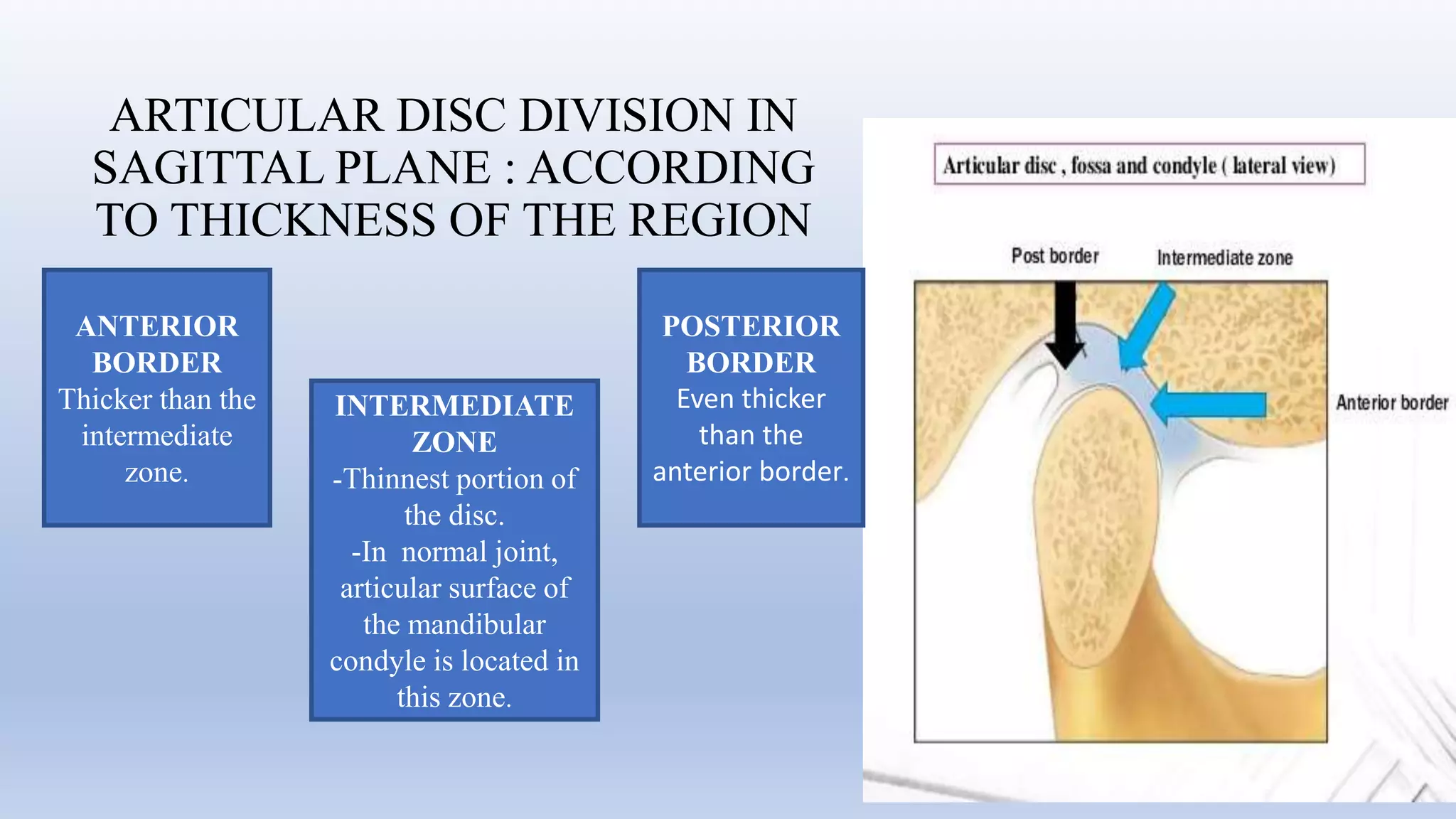
a) Disc displacement with reduction:
Treatment : 1. if recent and painless, sometimes possible to
reduce the dislocated by manipulation.
2. If painful, a modified occlusal bite plane can be used to
reduce displacement.
b) Disc Displacement without reduction:
Treatment: 1. Patient education and self care
2. Pharmacotherapy
3. Occlusal therapy
William 6. Farrar, Differentiation of temporomandibular joint dysfunction to simplify treatment, J. Prosthet. Dent. December, 1972](https://image.slidesharecdn.com/seminar1st-210319195706/75/Temporomandibular-Joint-Anatomy-55-2048.jpg)
![C] TRAUMA
UNILATERAL DISLOCATED CONDYLAR
FRACTURE:
TREATMENT : mandibular repositioning
splint using acrylic resin guiding ramp.](https://image.slidesharecdn.com/seminar1st-210319195706/75/Temporomandibular-Joint-Anatomy-56-2048.jpg)


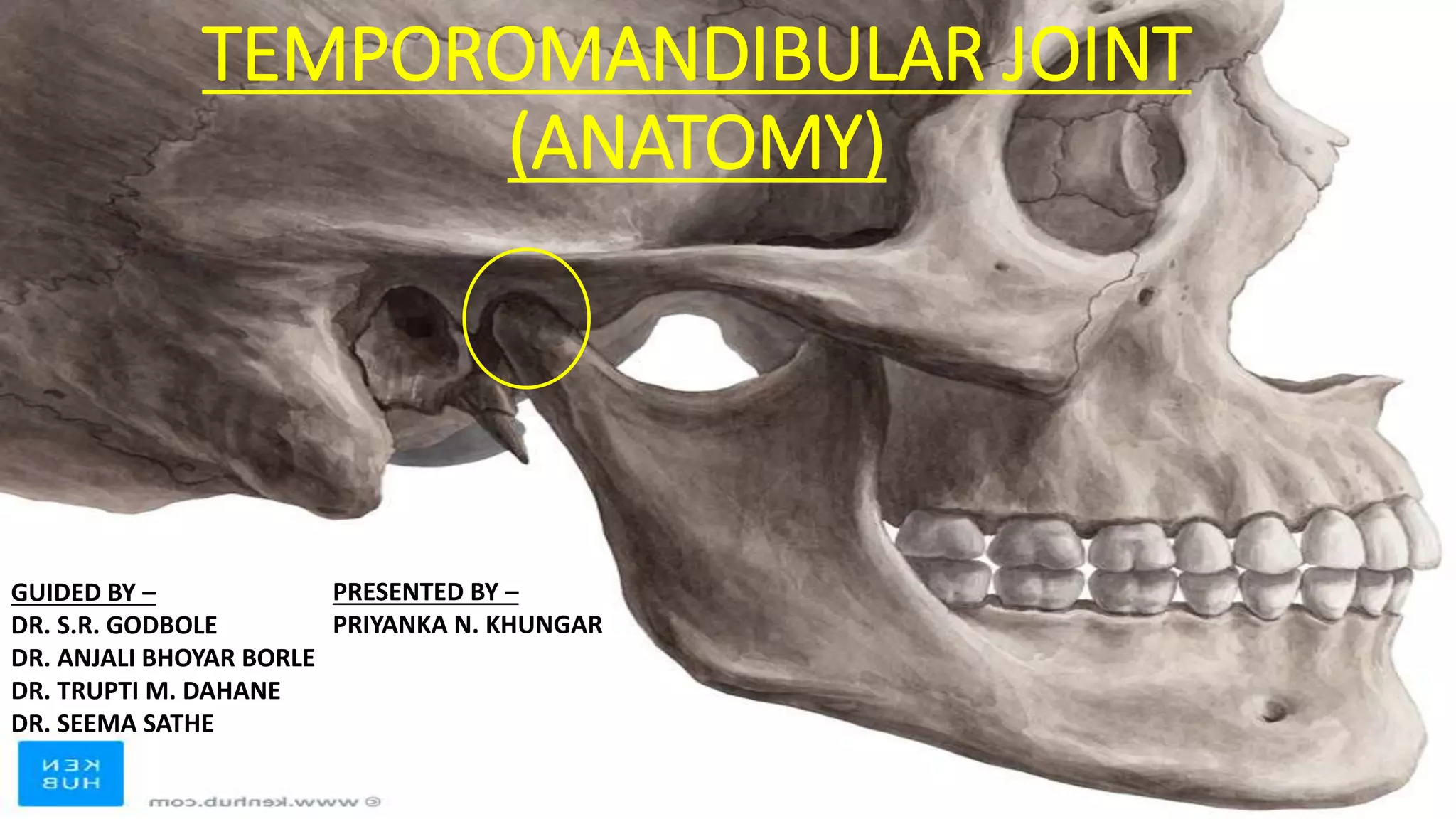
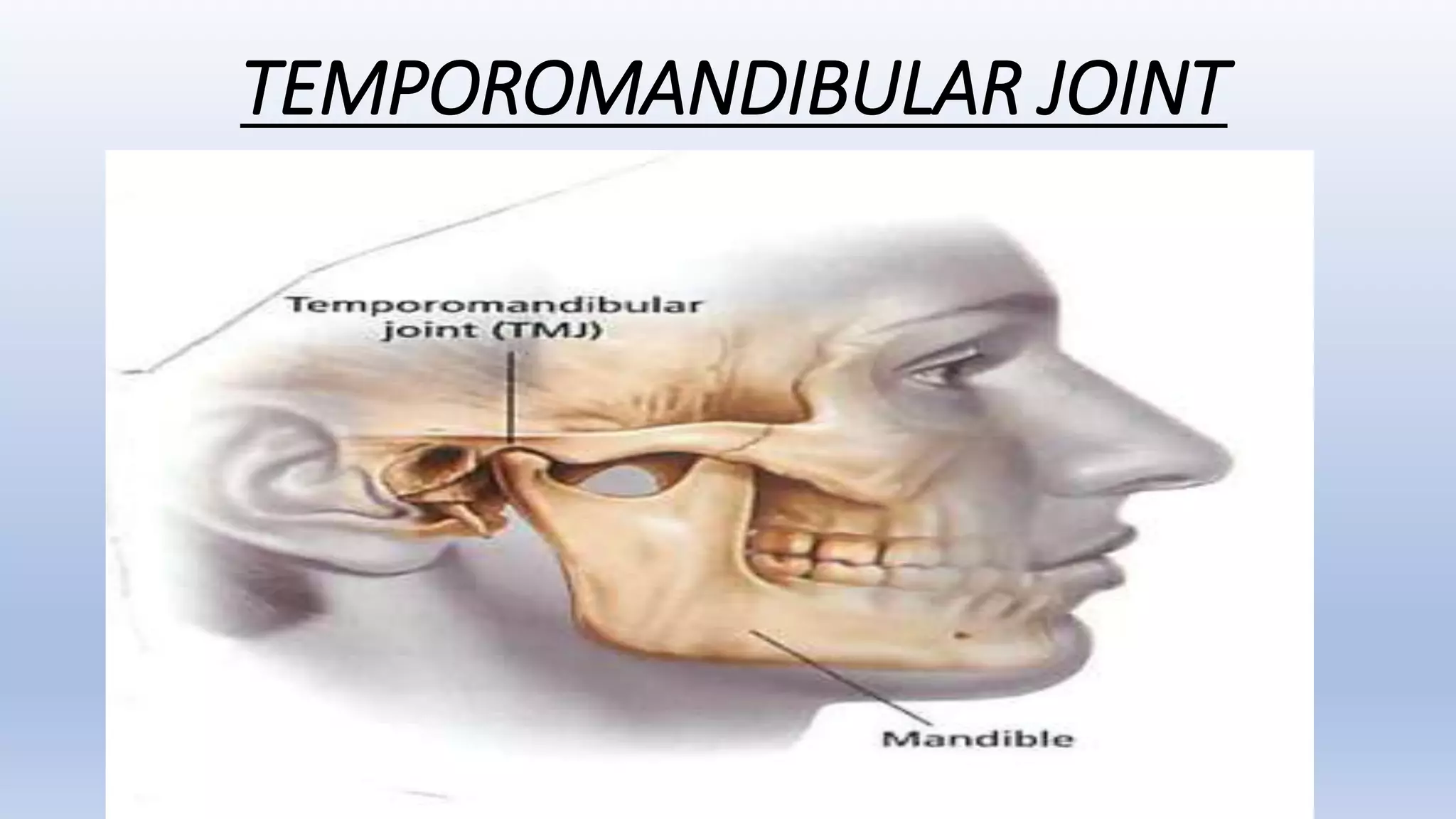
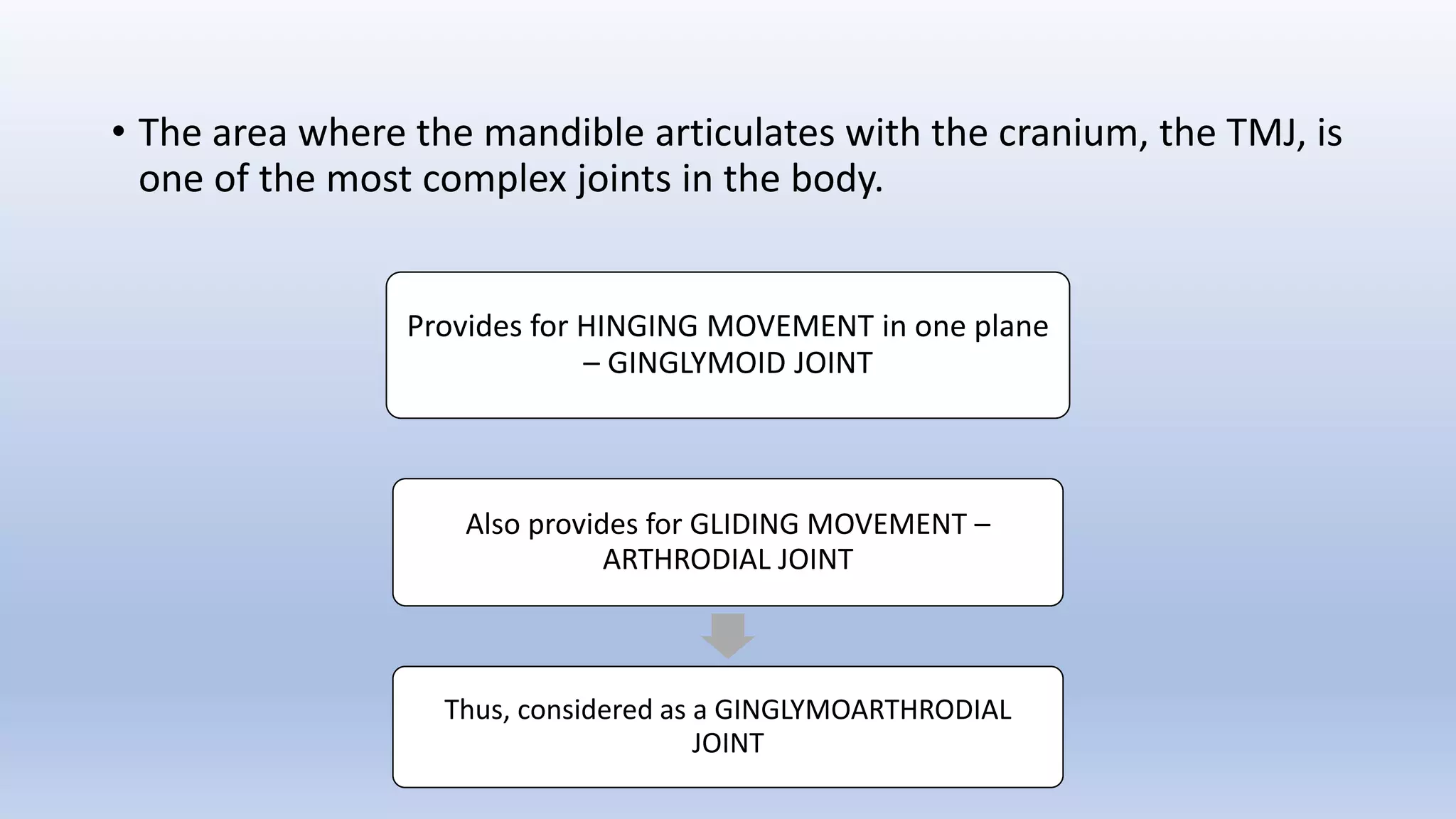
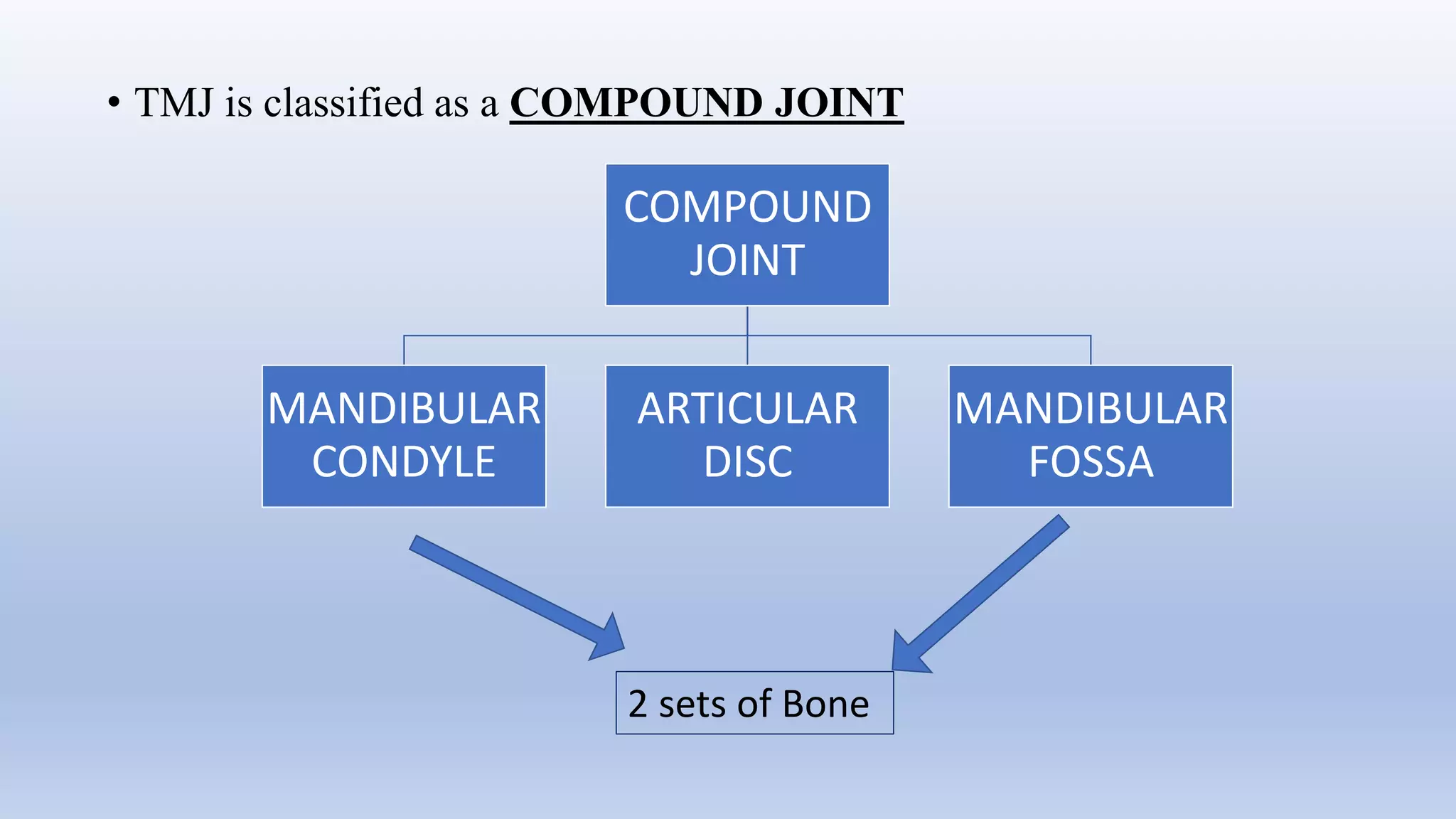
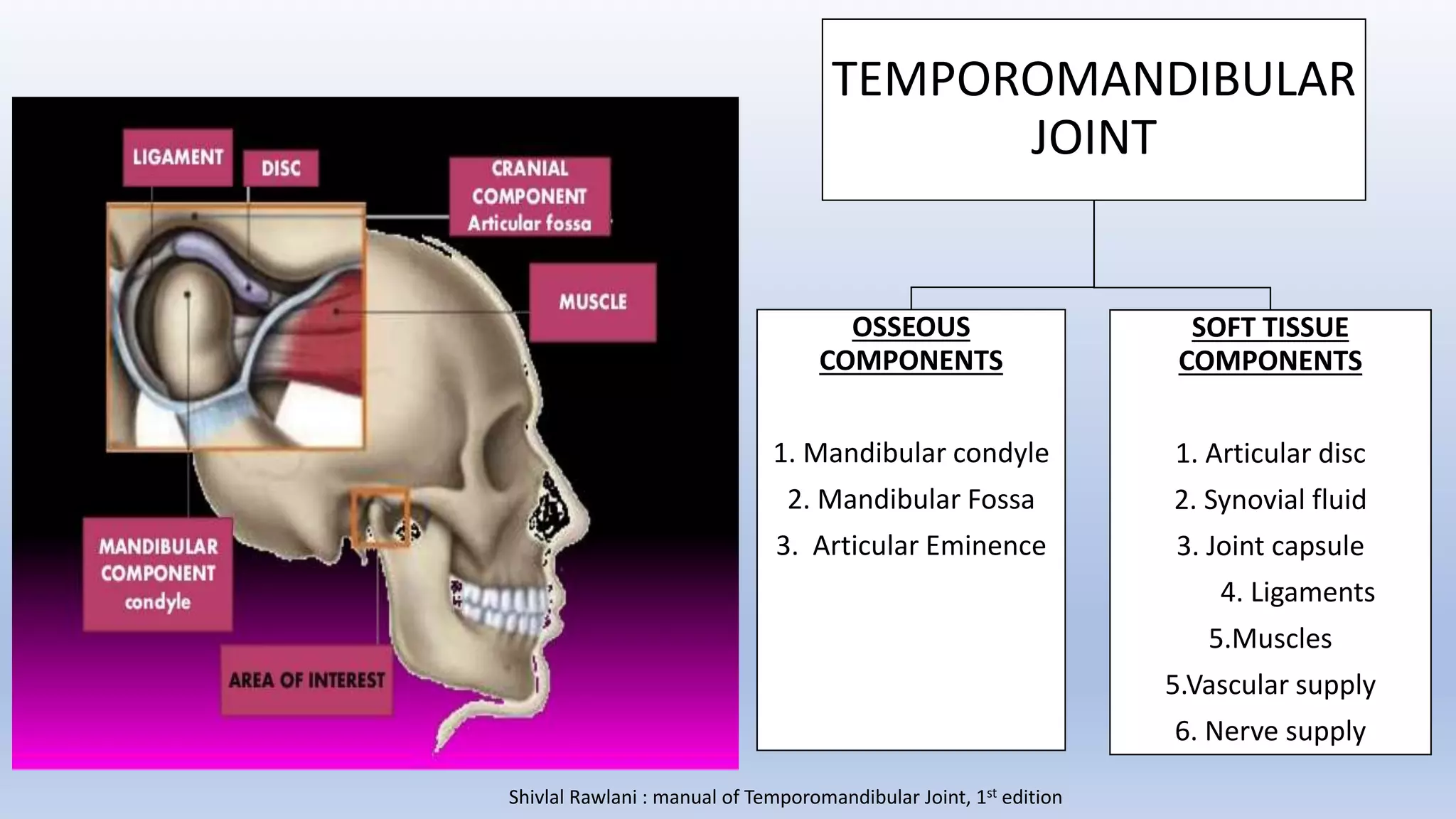
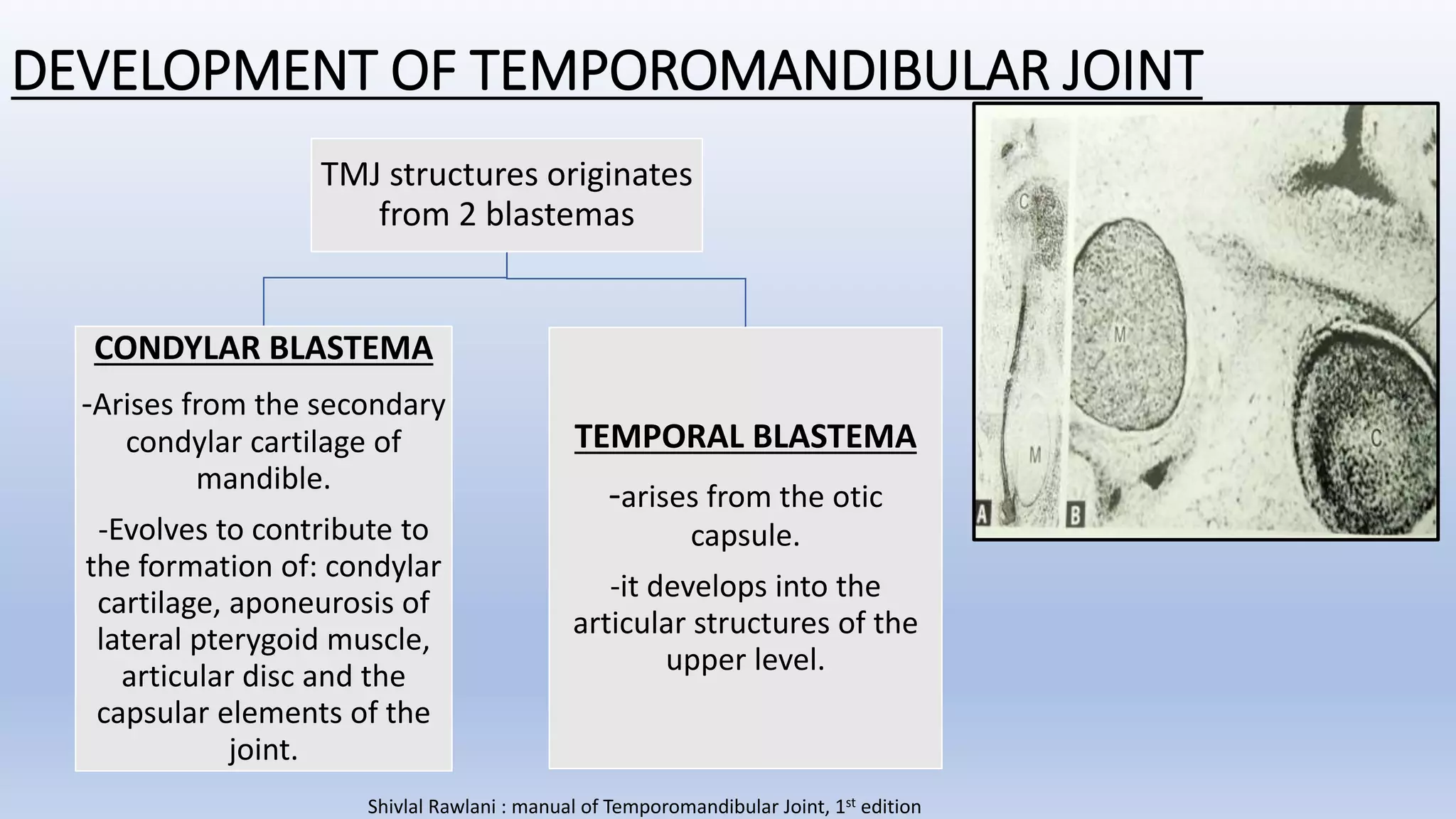
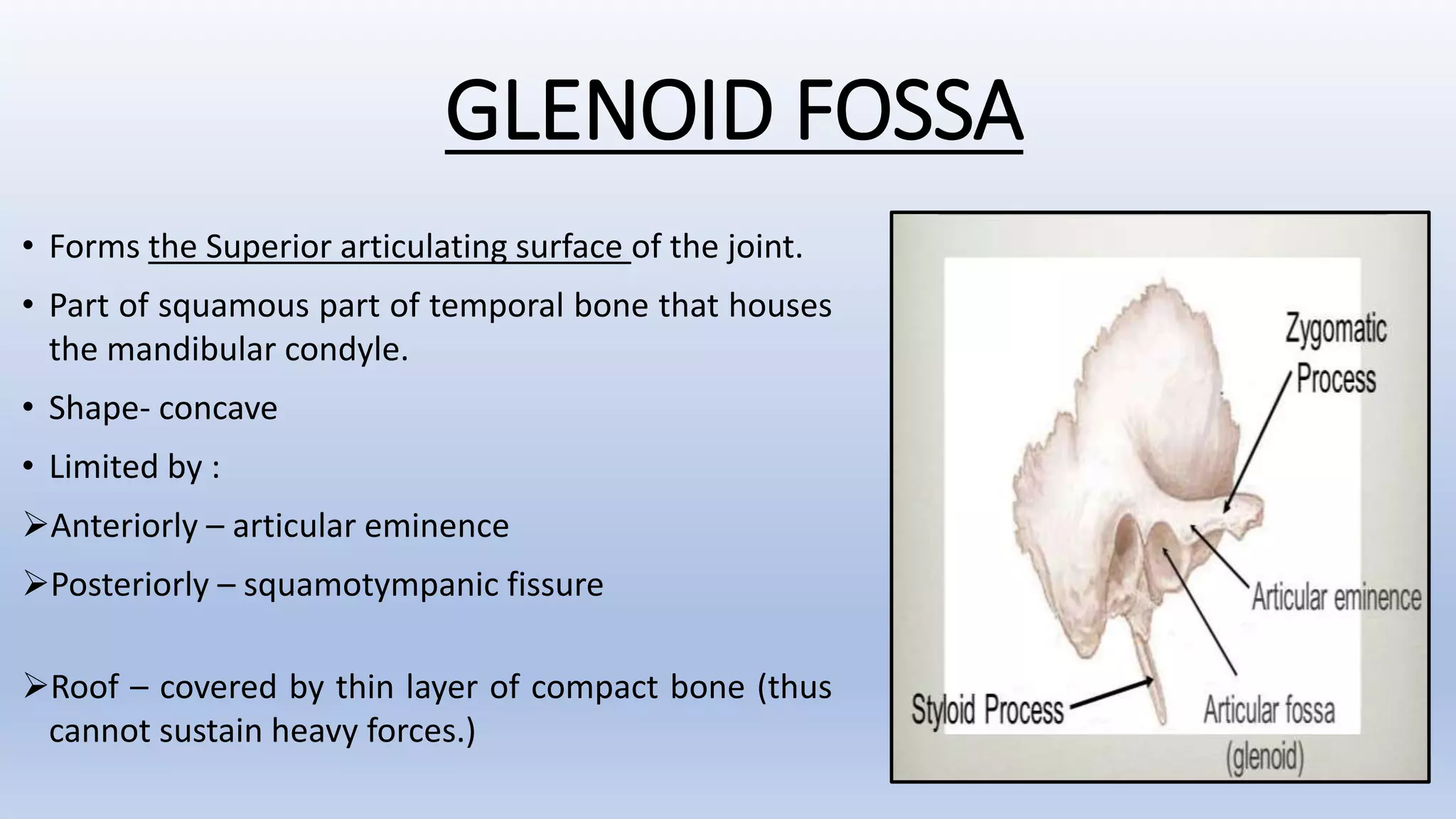
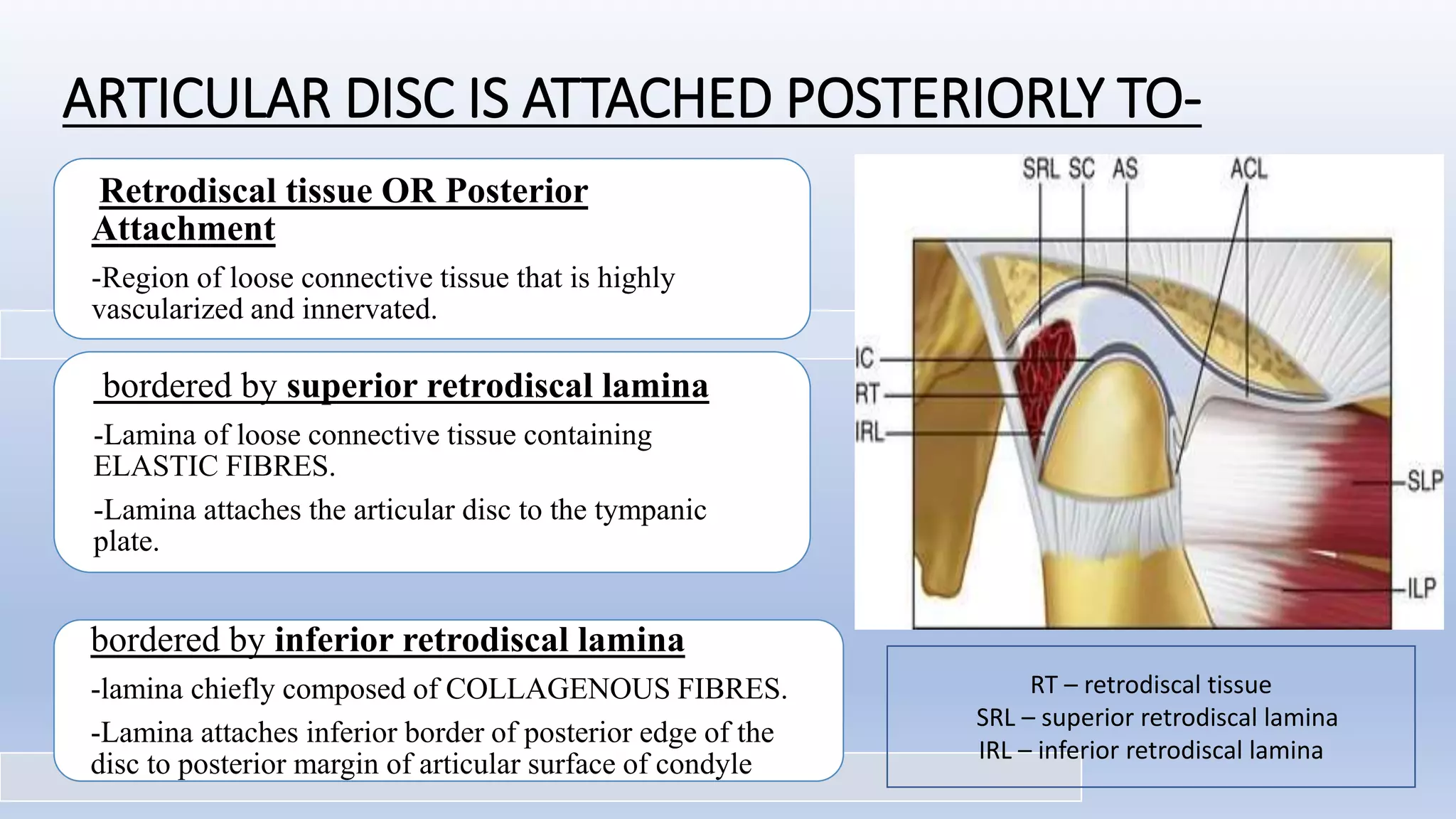
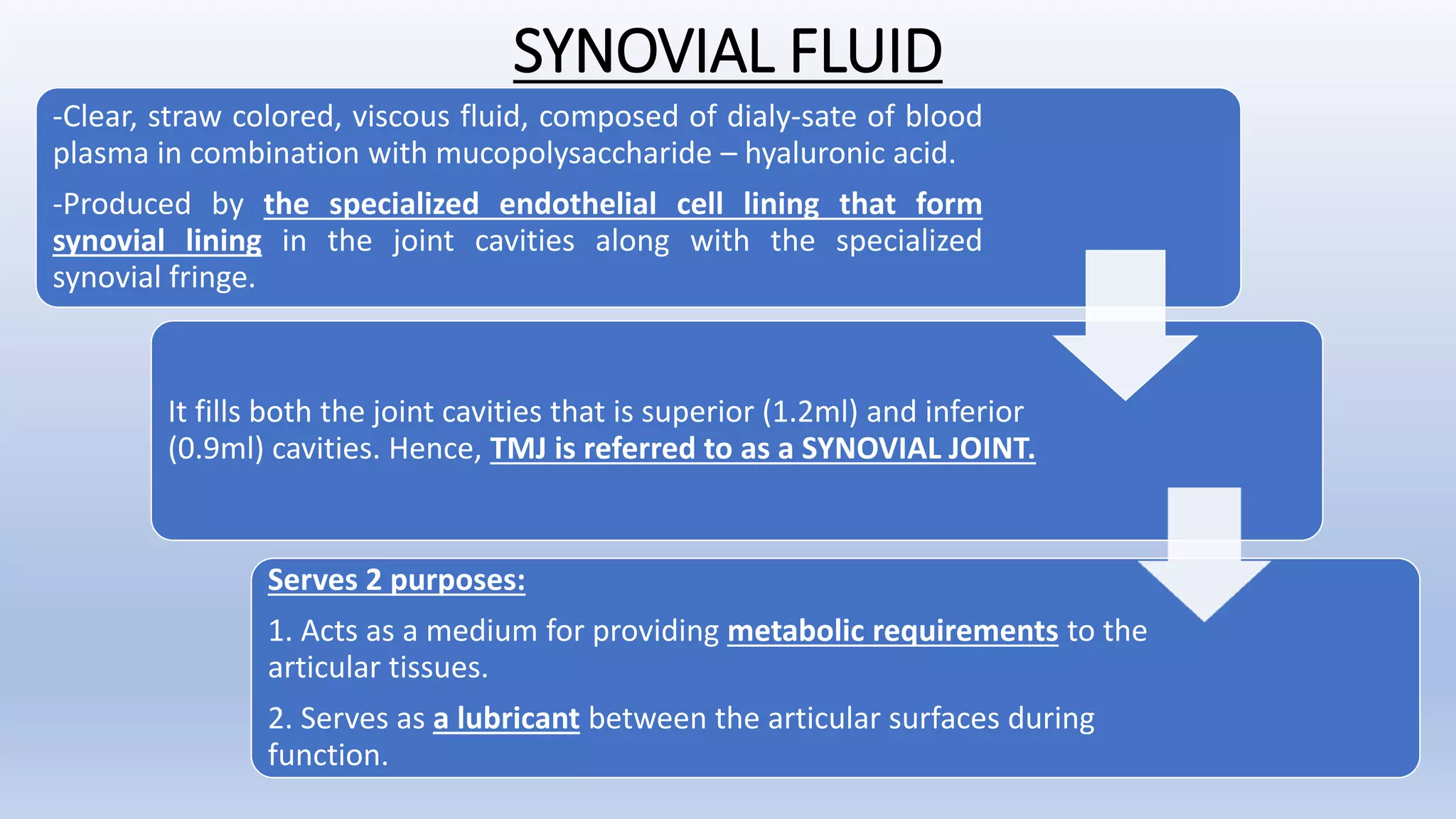
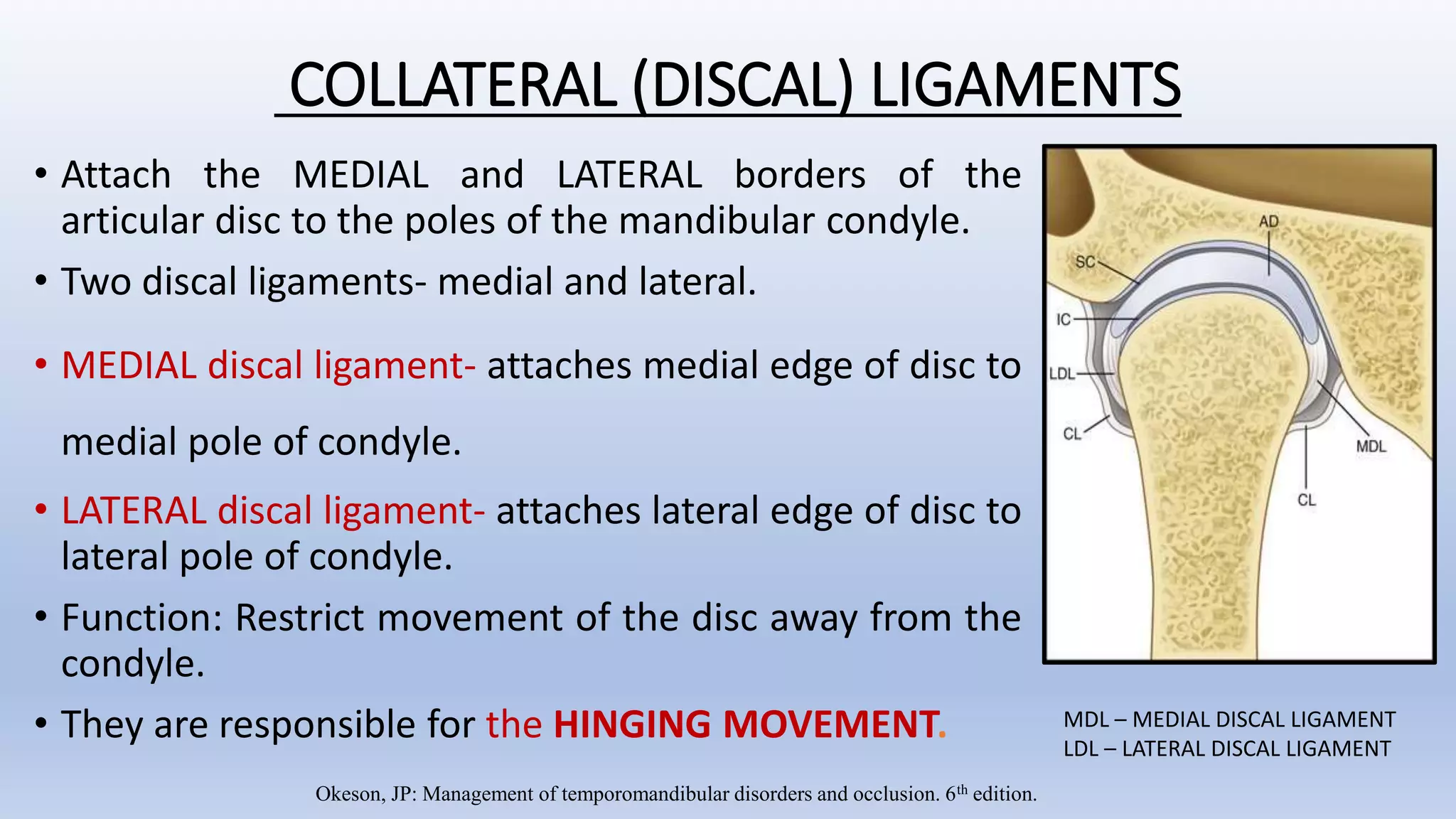
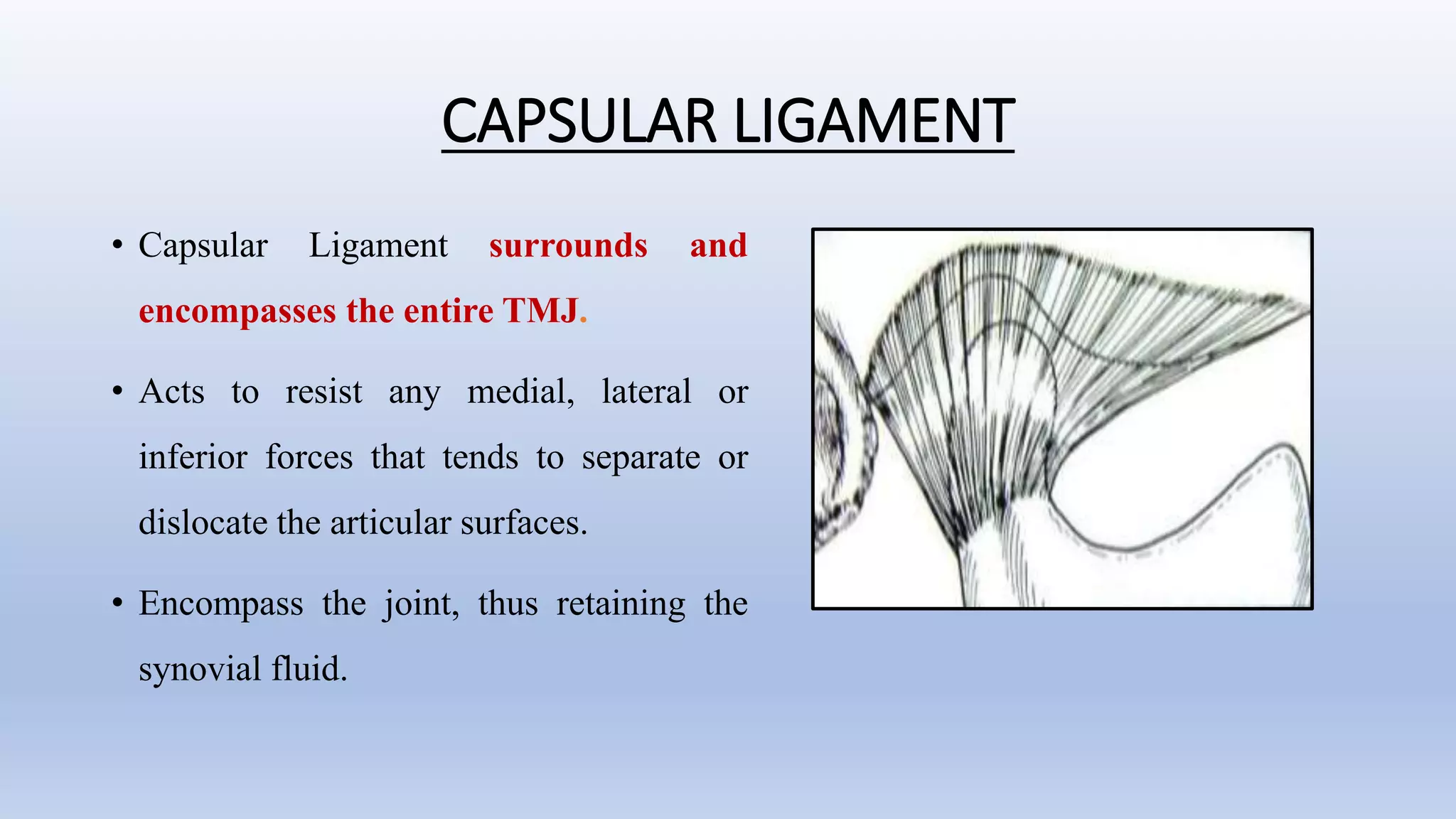
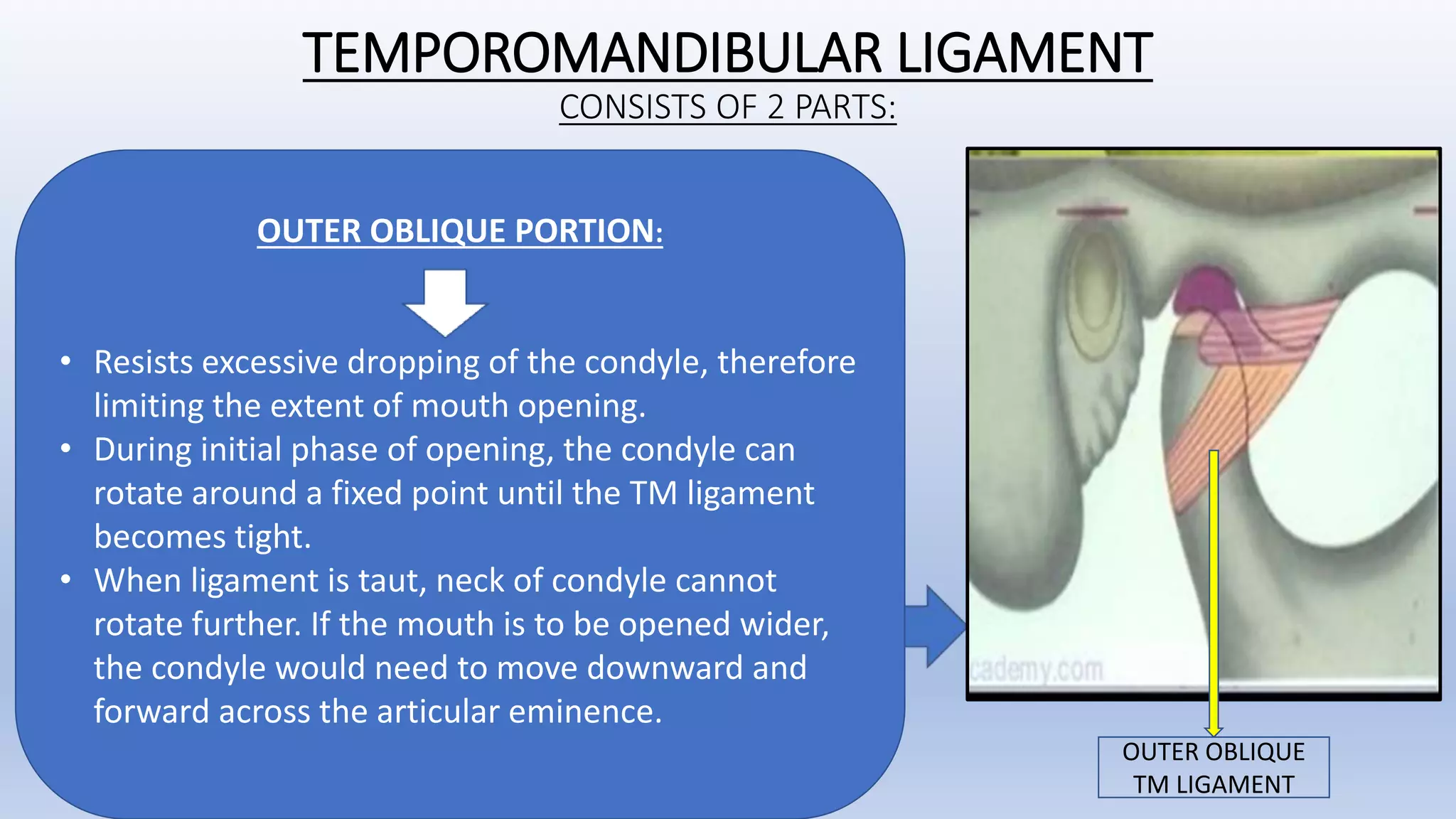
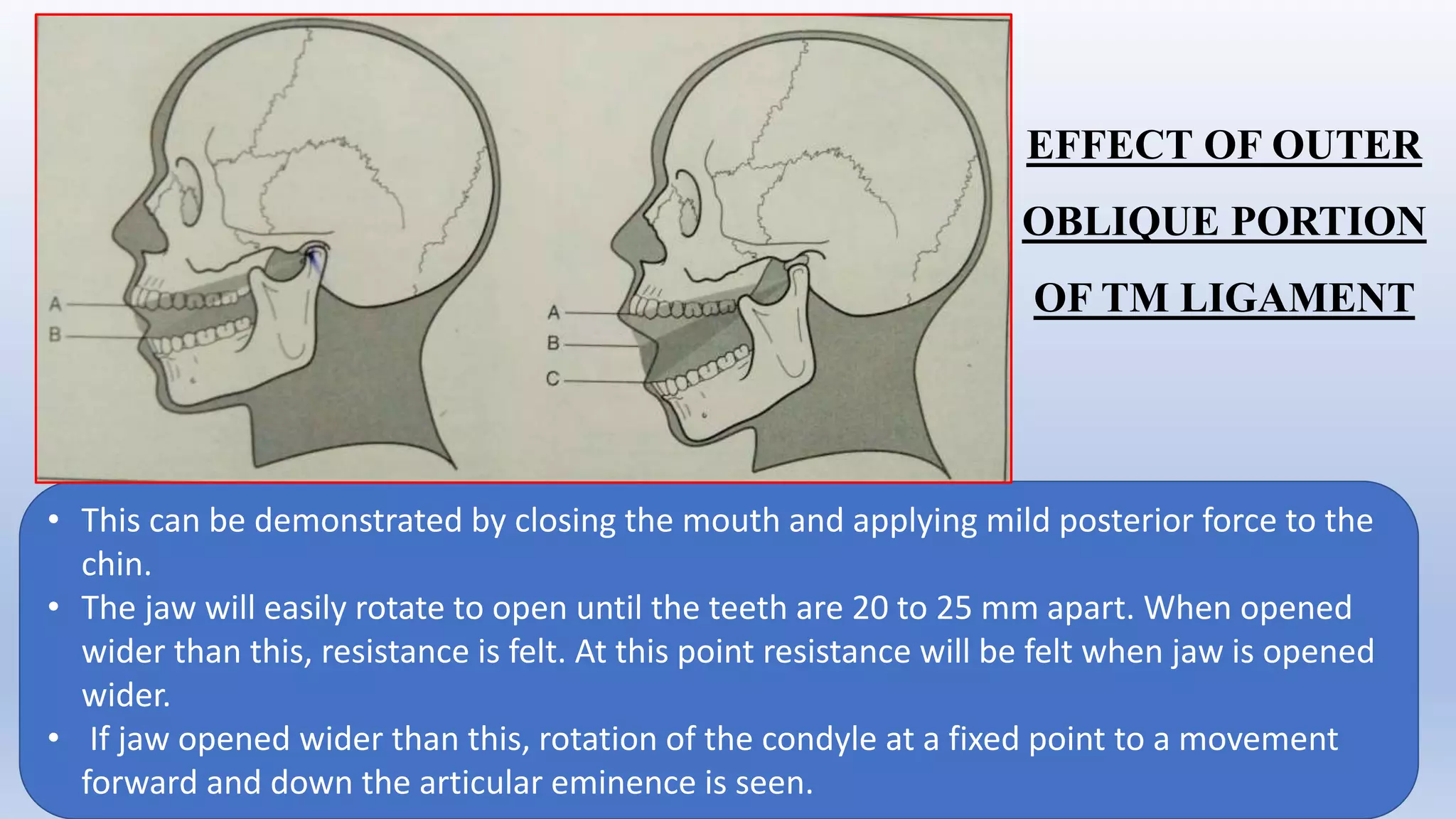
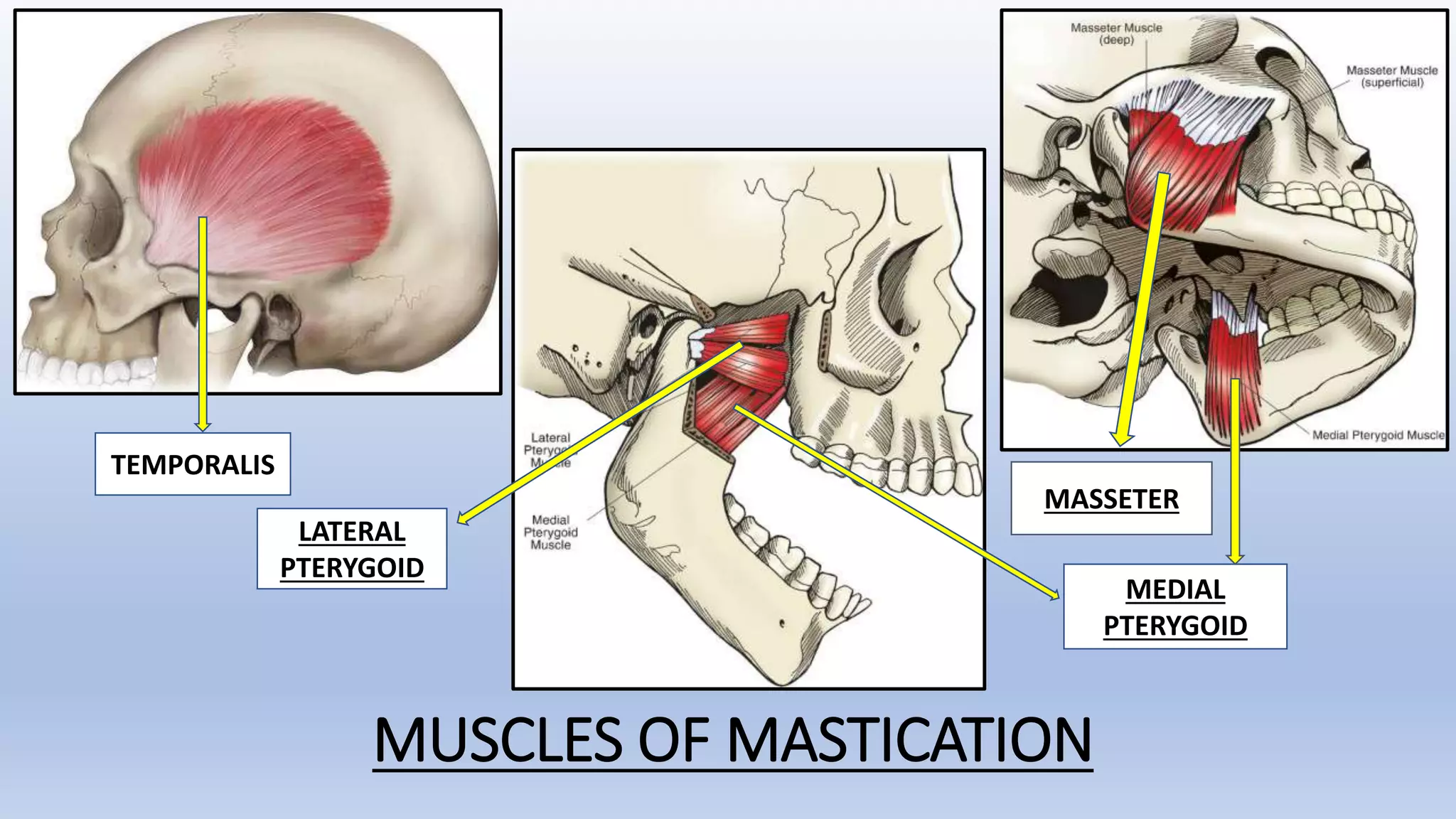
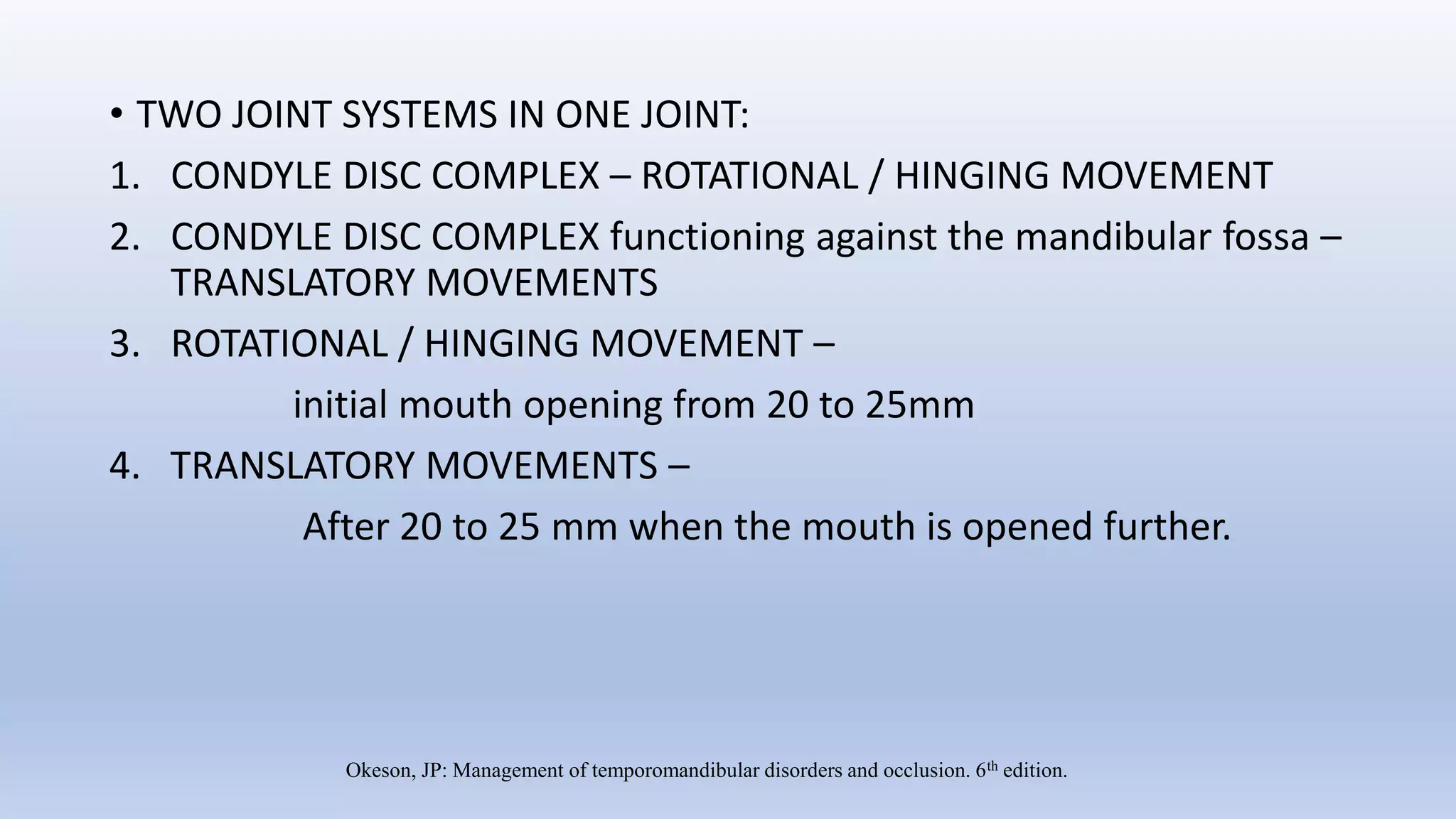
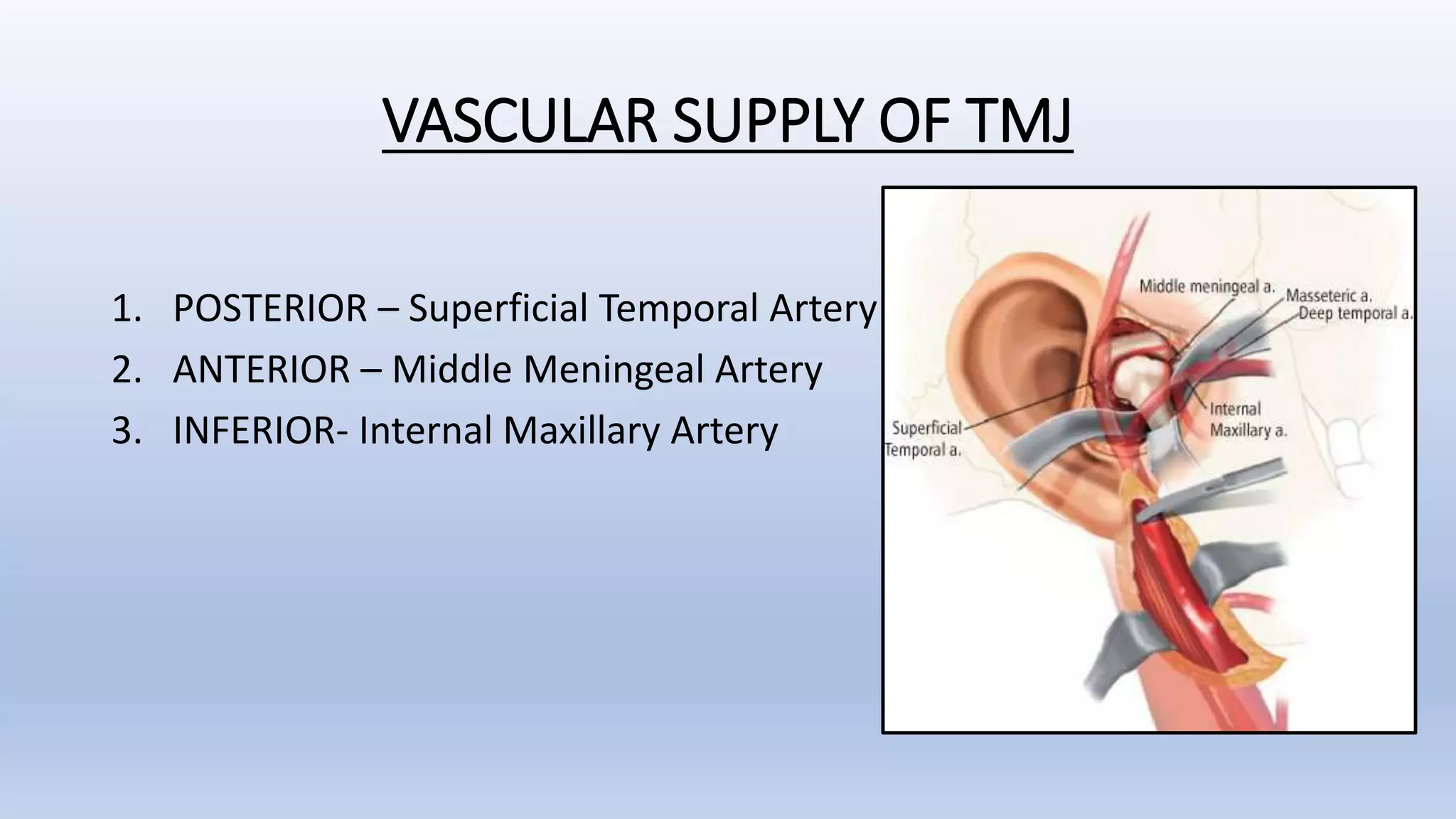
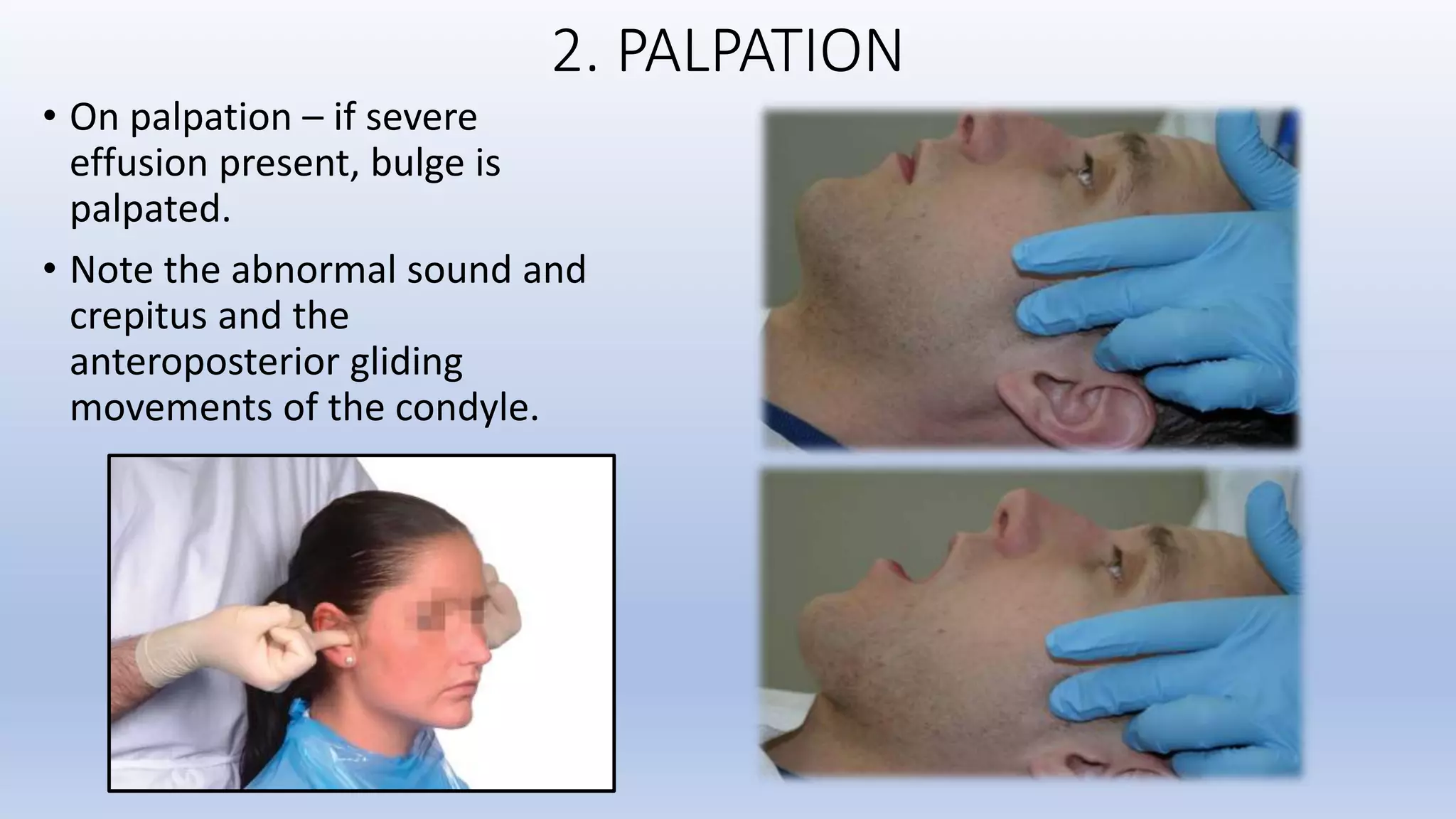
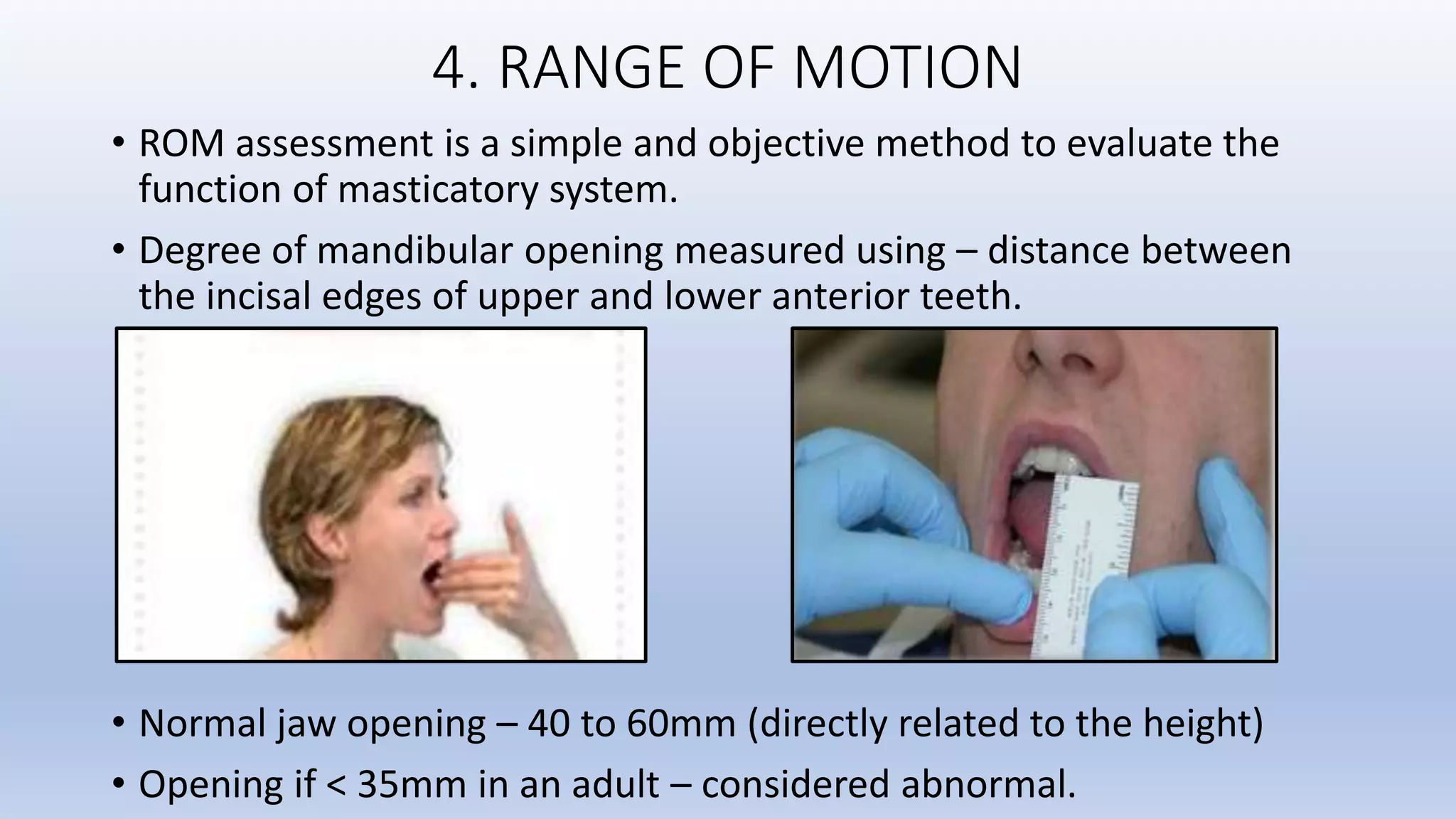
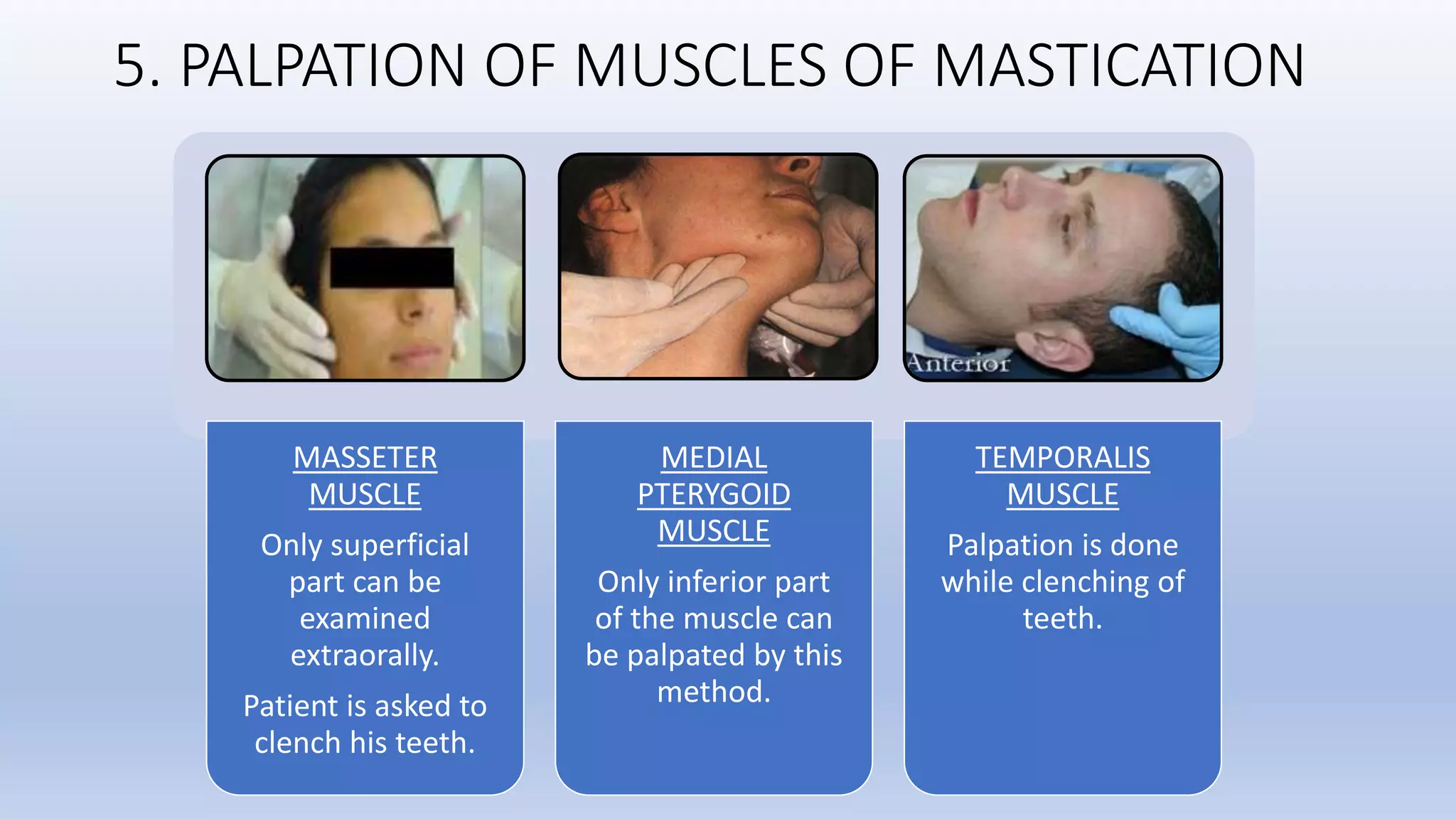
The temporomandibular joint (TMJ) connects the mandible to the temporal bone. It is a compound joint composed of bone and soft tissue structures. The TMJ develops from condylar and temporal blastemas and its structures allow for both hinging and gliding movements. Clinically, the TMJ is examined through inspection, palpation, auscultation and assessment of range of motion. Abnormal findings may include swelling, crepitus, limited movement or clicking sounds.


![Temporomandibular joint [Autosaved].pptx](https://cdn.slidesharecdn.com/ss_thumbnails/temporomandibularjointautosaved-230521065437-1cbd4148-thumbnail.jpg?width=640&height=640&fit=bounds)


