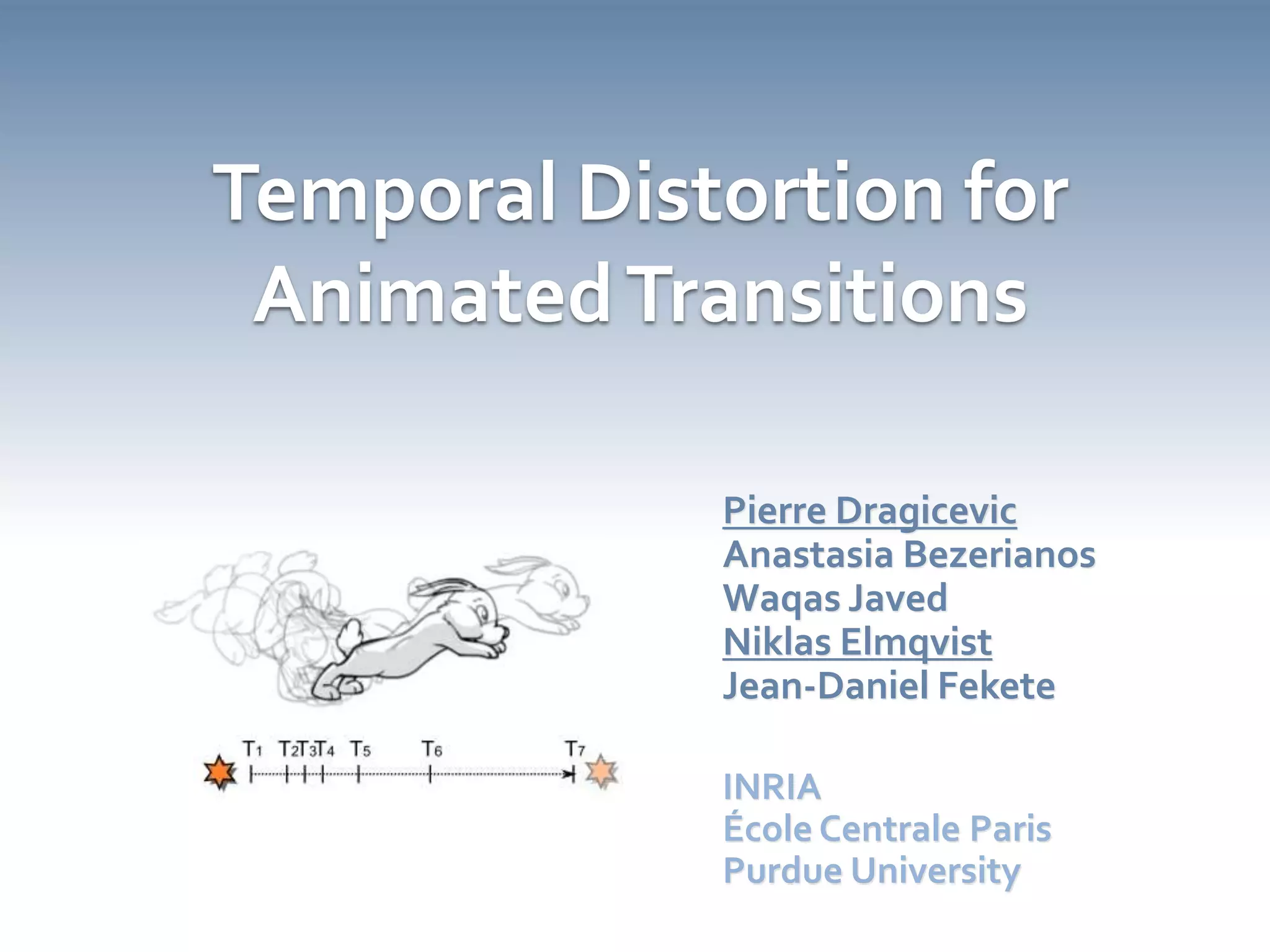



Temporal Distortion for Animated TransitionsPierre DragicevicAnastasia BezerianosWaqasJavedNiklasElmqvistJean-Daniel FeketeINRIAÉcoleCentrale ParisPurdue University
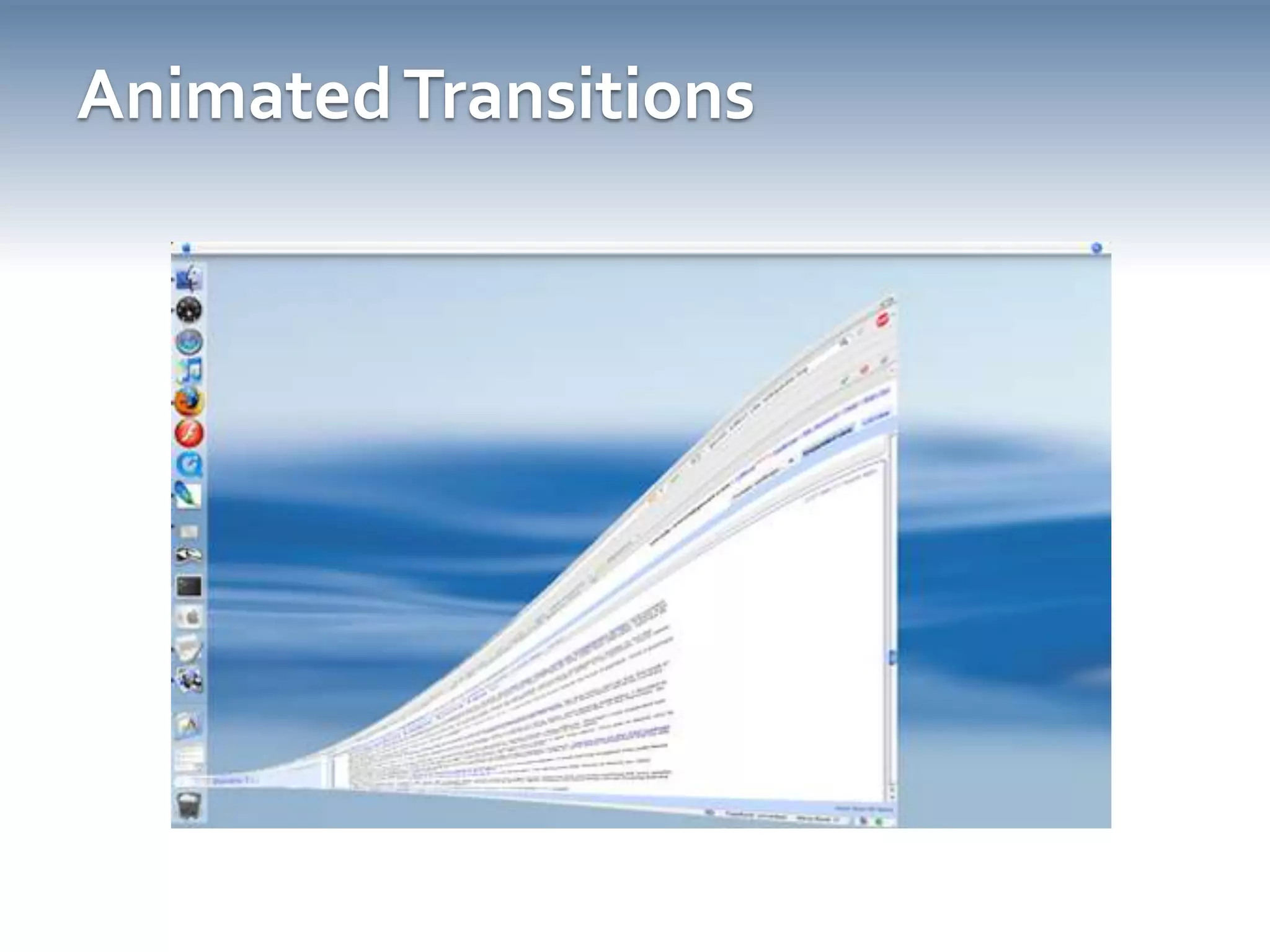
Animated Transitions
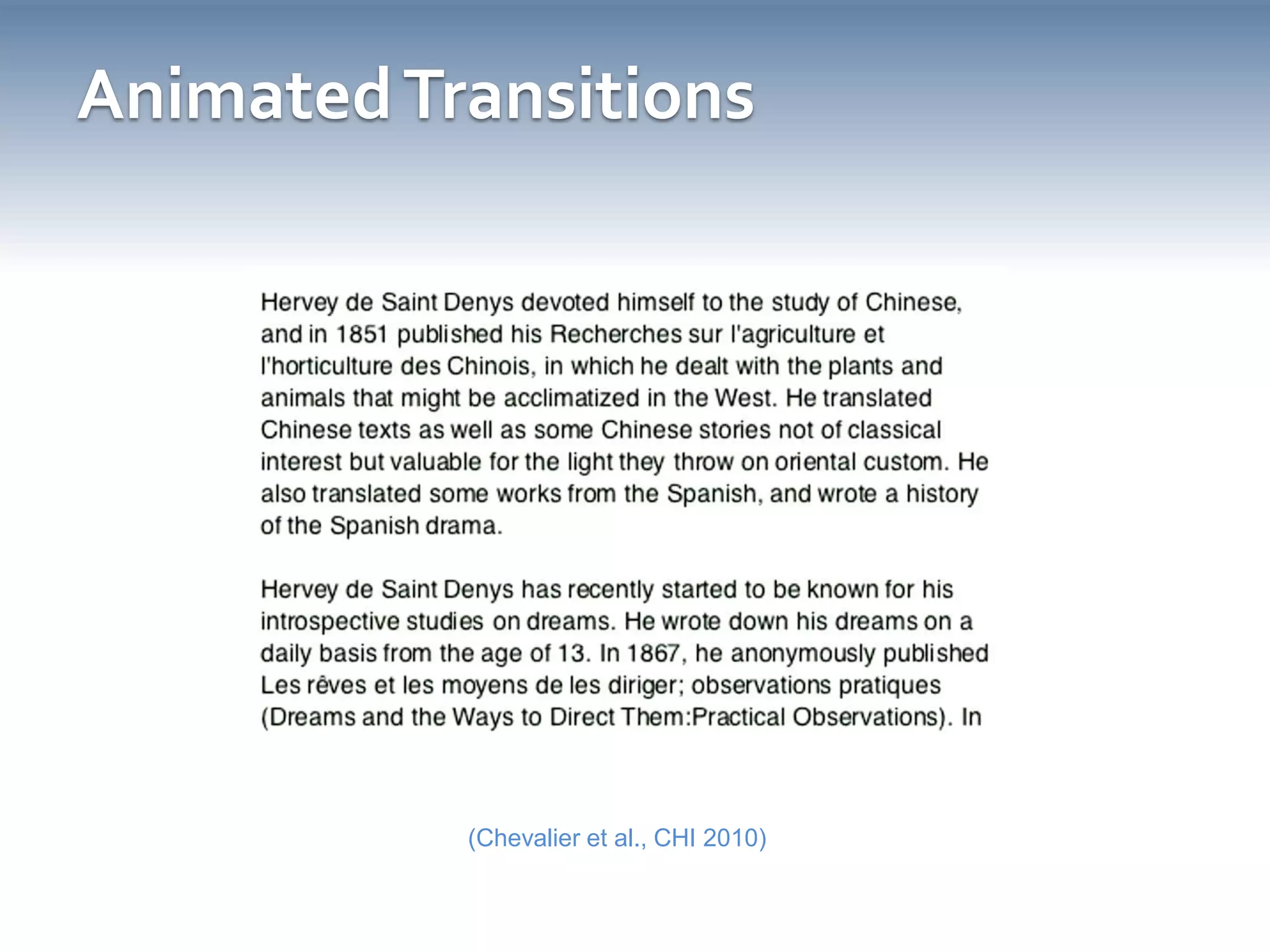
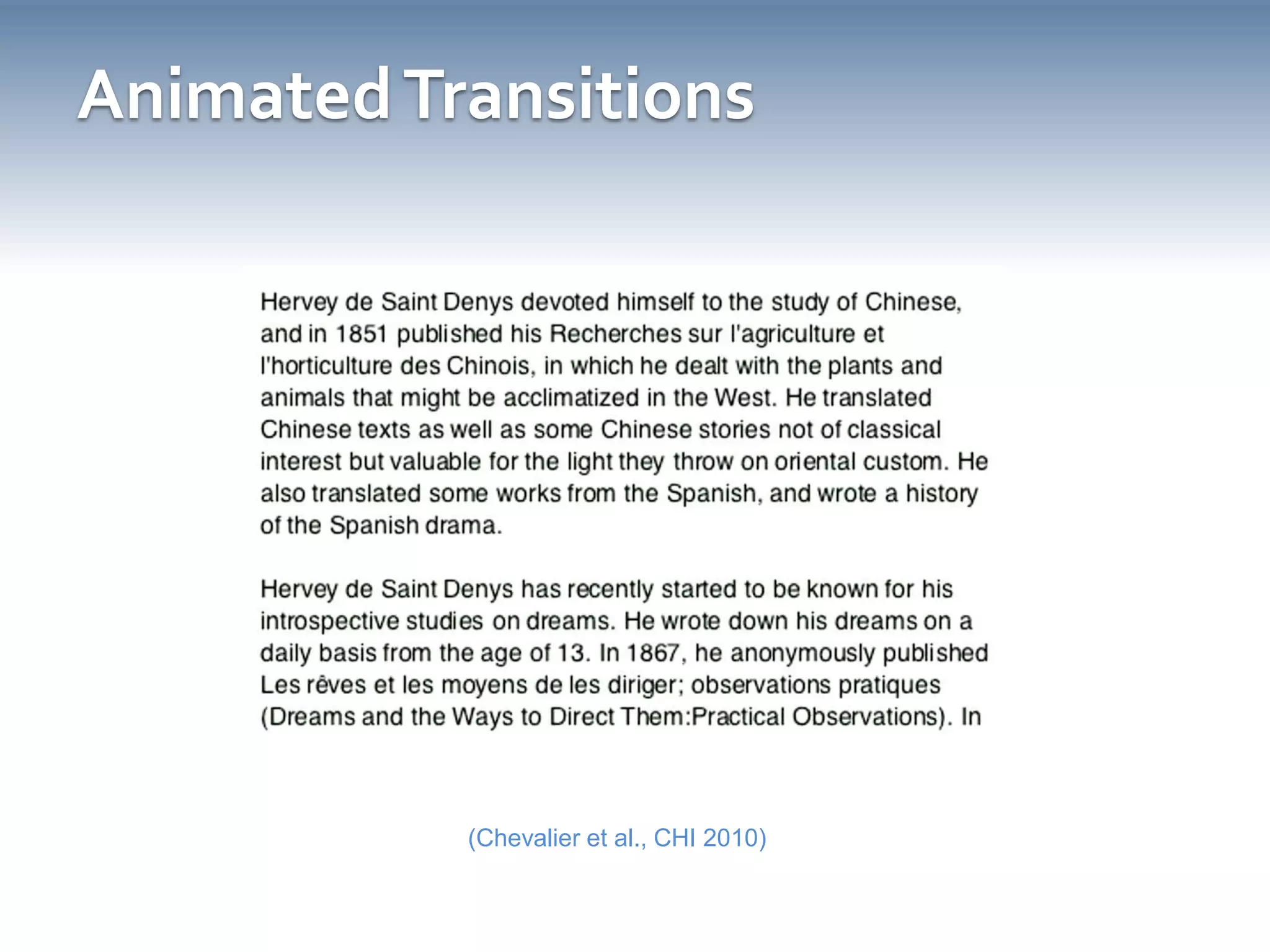
Animated Transitions(Chevalier et al., CHI 2010)
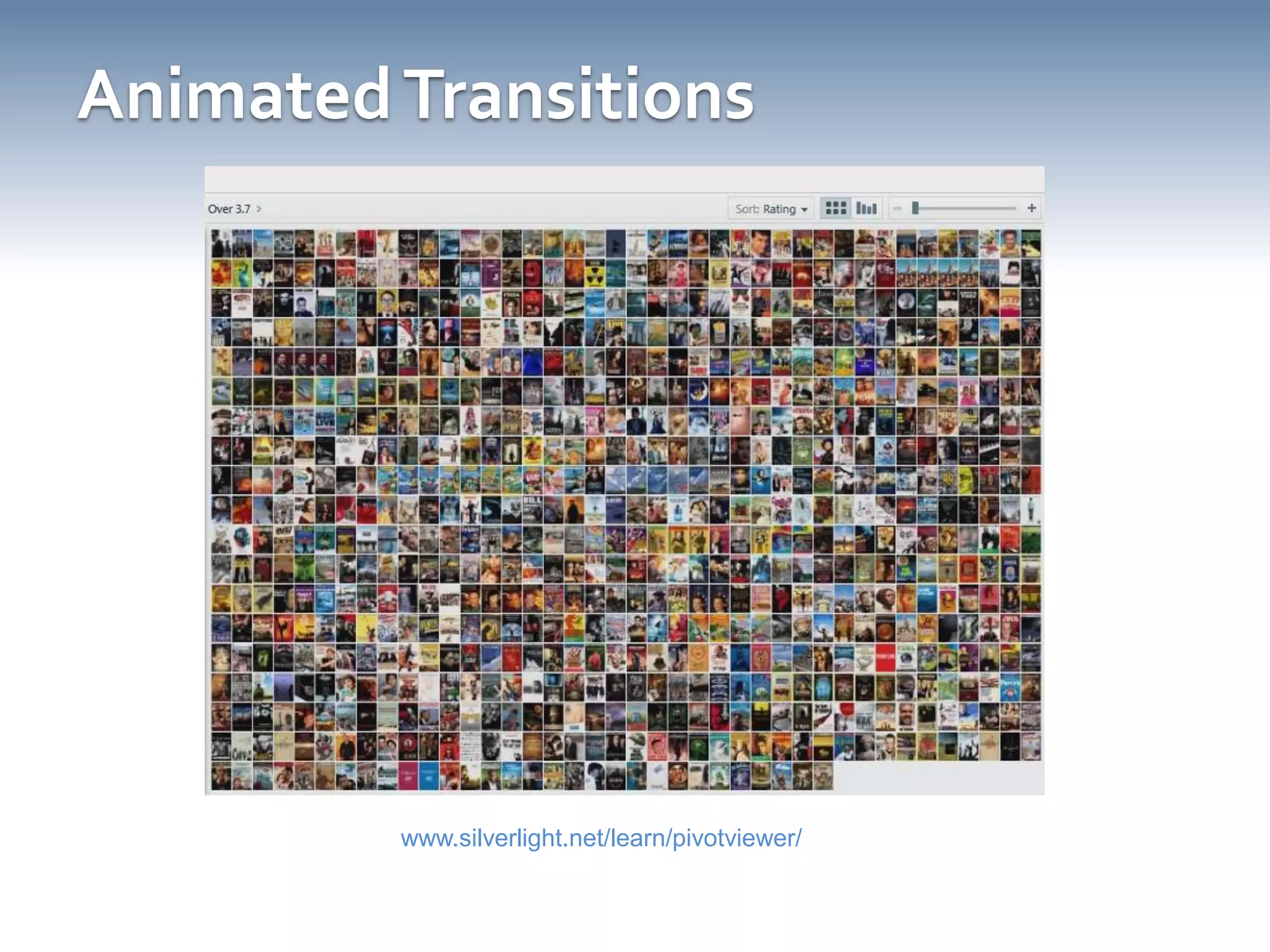
Animated Transitionswww.silverlight.net/learn/pivotviewer/
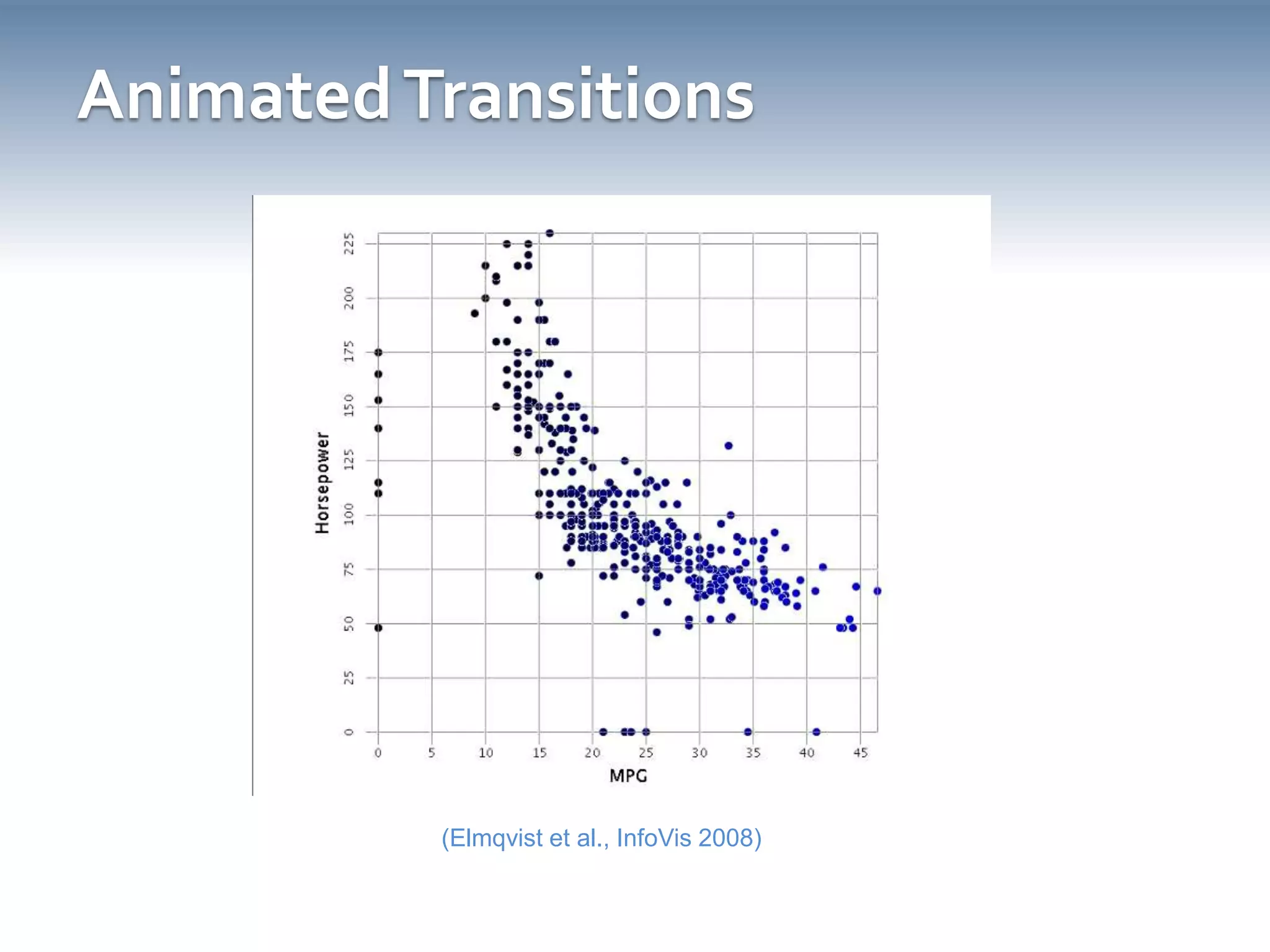
Animated Transitions(Elmqvist et al., InfoVis 2008)
How to Design Them?
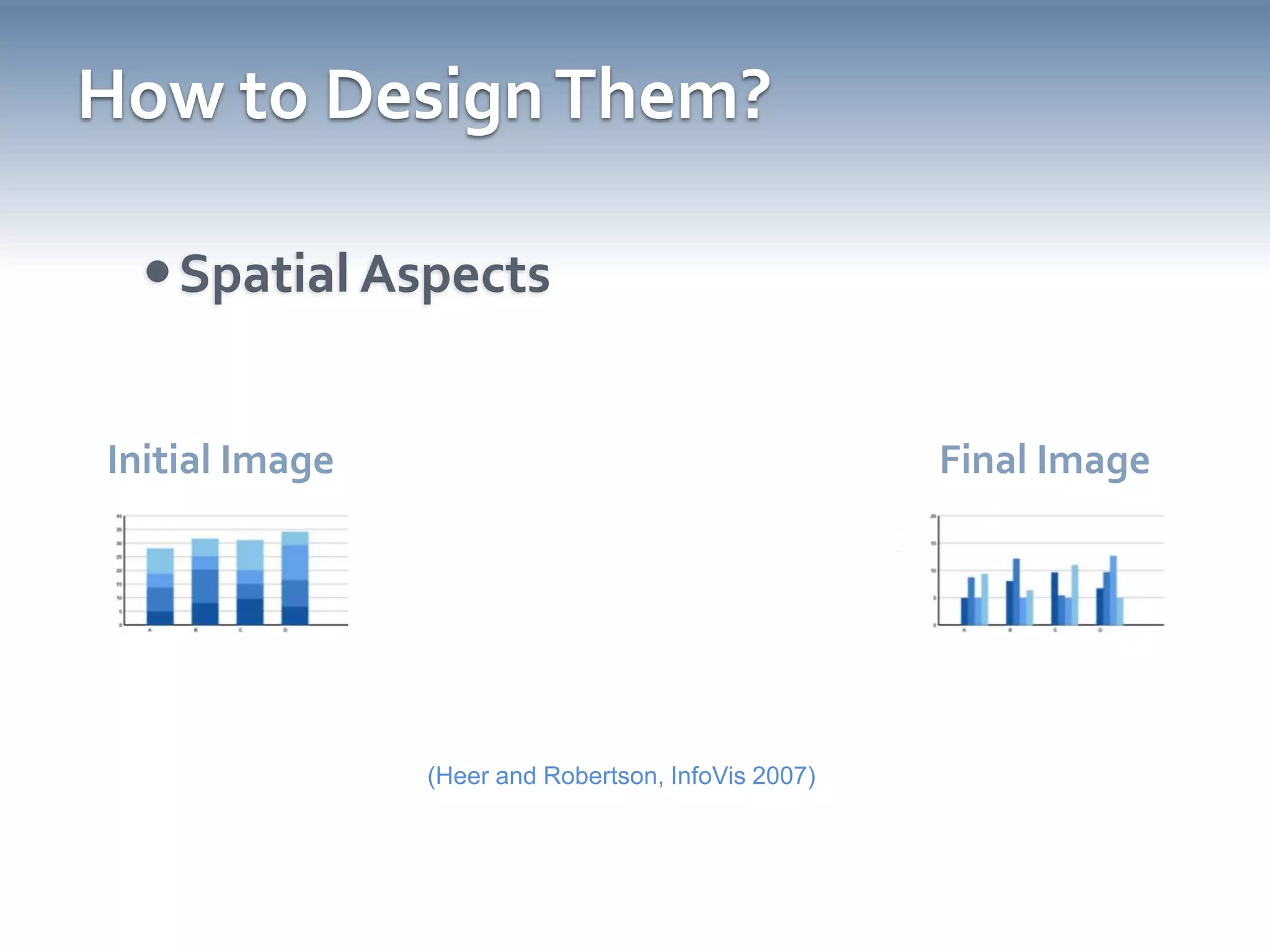
How to Design Them?Spatial AspectsInitial ImageFinal Image??(Heer and Robertson, InfoVis 2007)
How to Design Them?Temporal AspectsInternal TimingDurationPacing
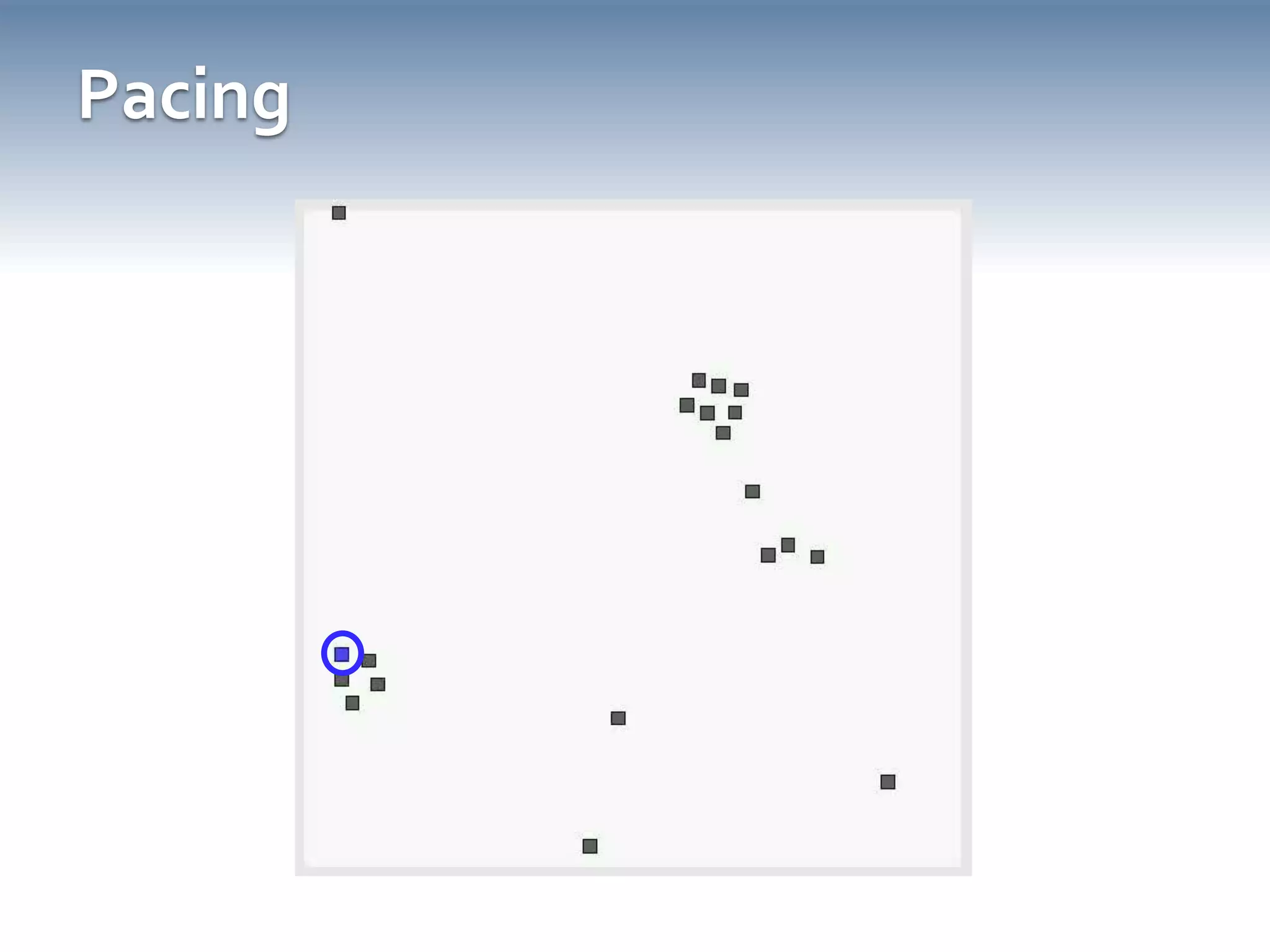
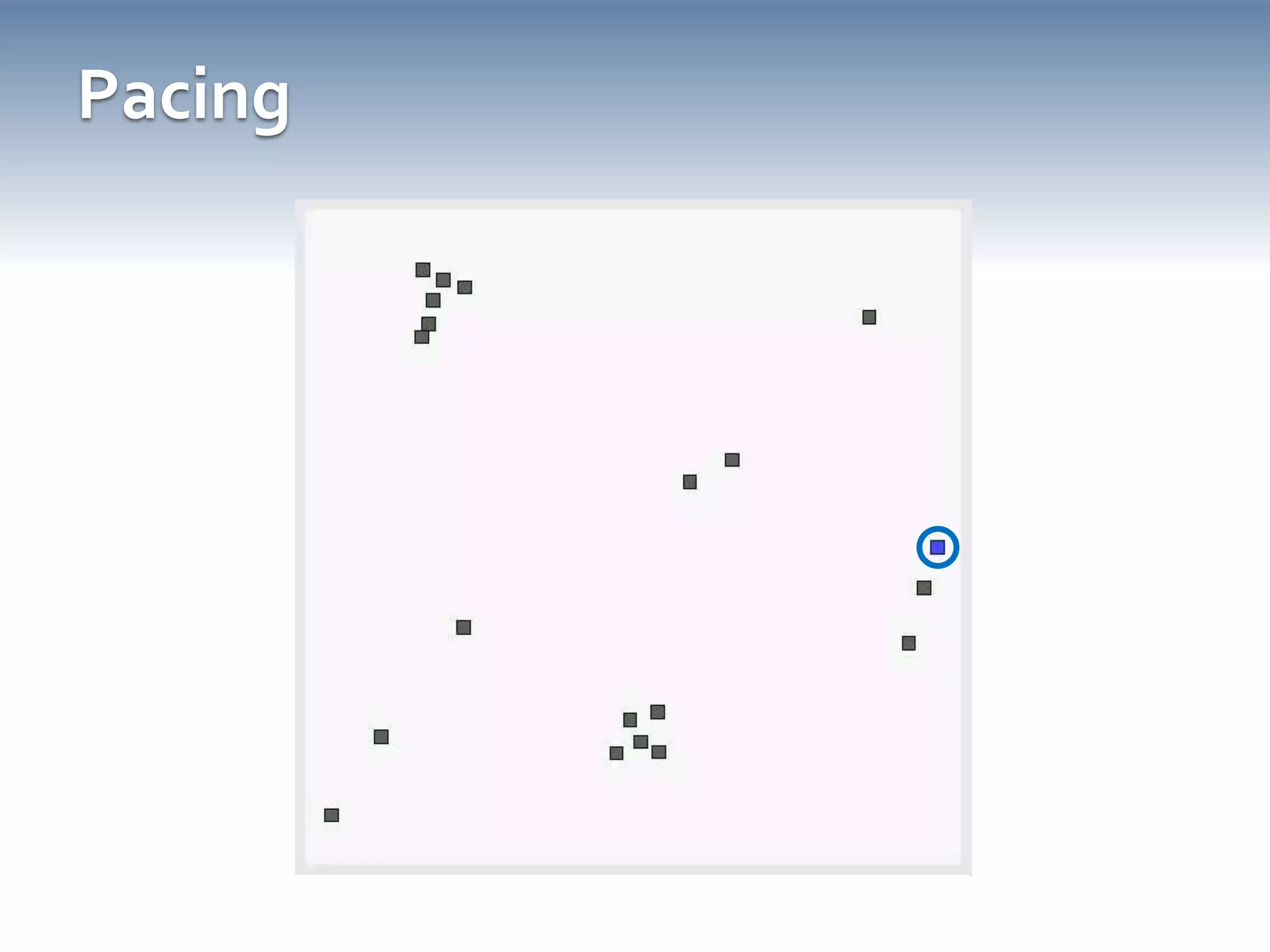
Pacing
Pacing
Pacing
Pacing
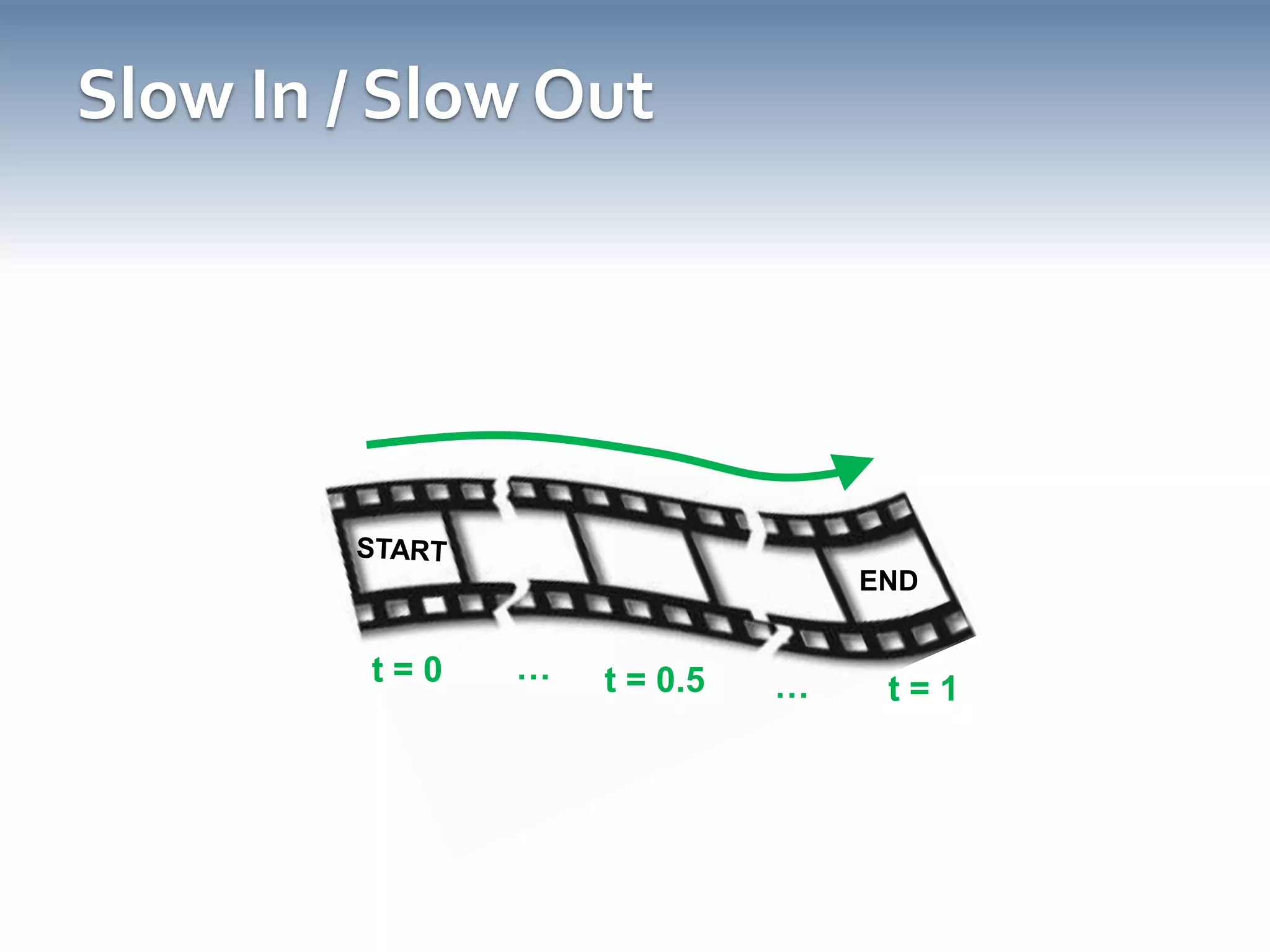
Slow In / Slow OutSTART…t = 0t = 0.5…t = 1END
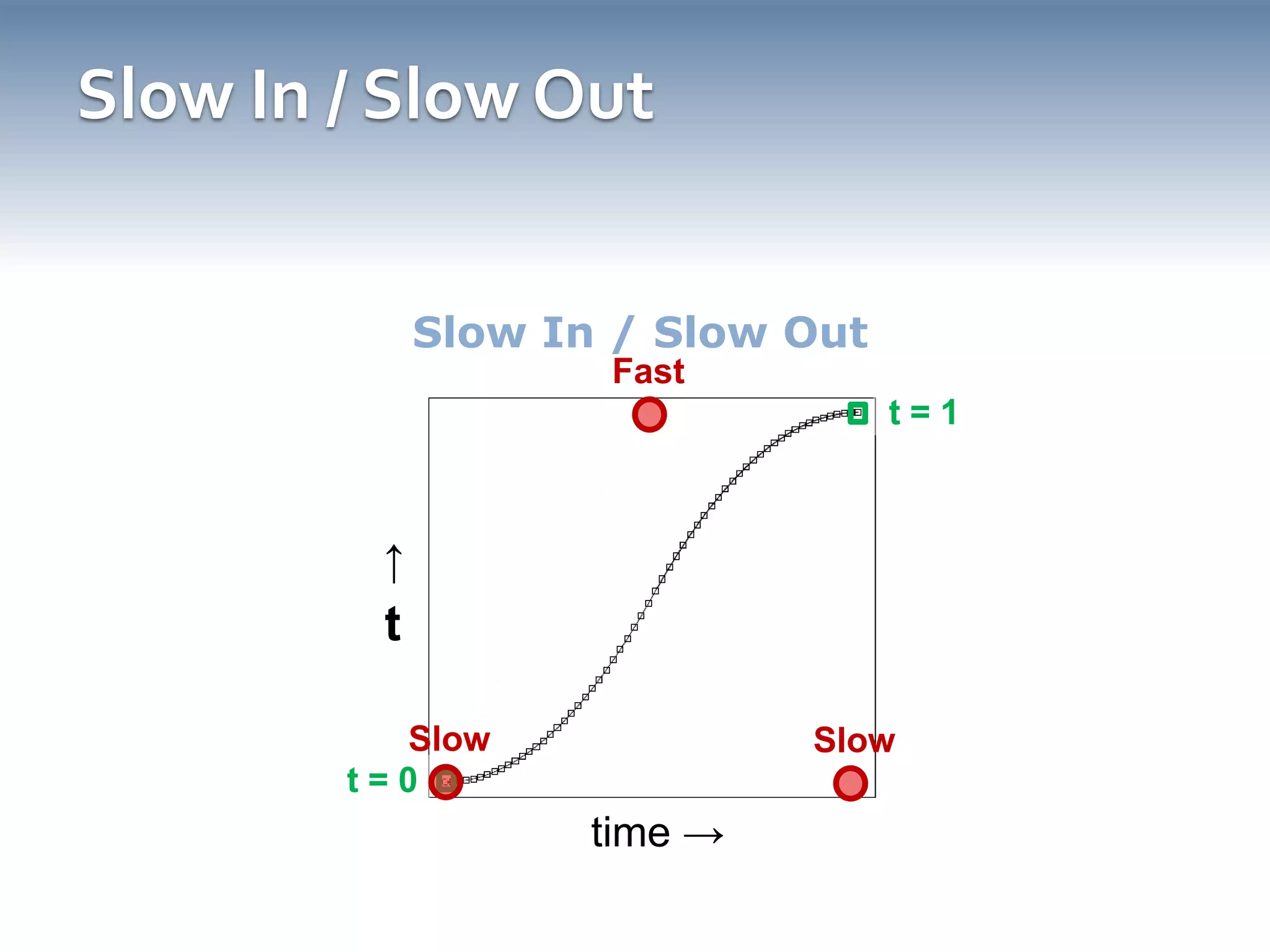
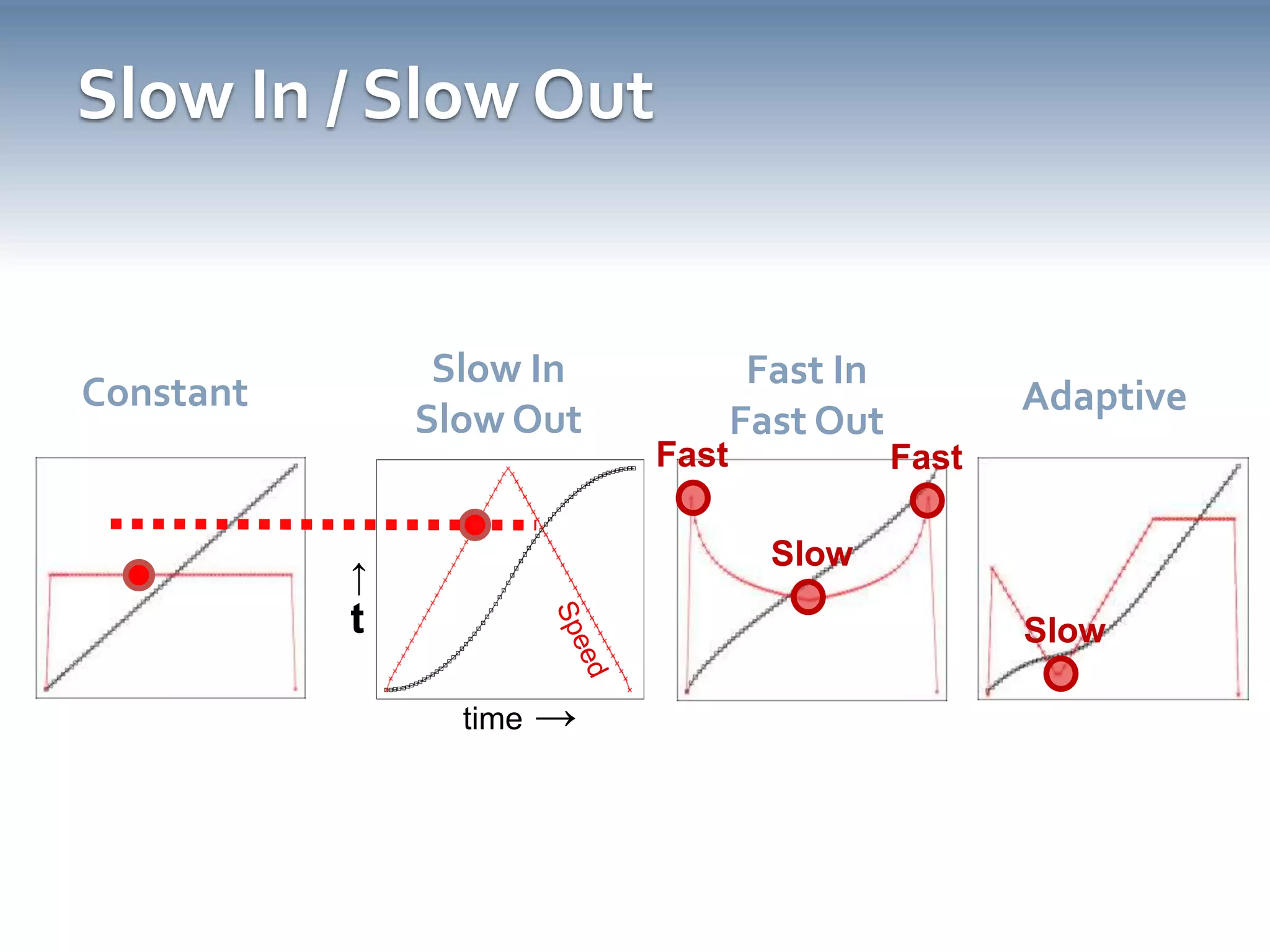
Slow In / Slow OutSlow In / Slow Outt = 1SlowFastSlow->tSpeedt = 0time ->
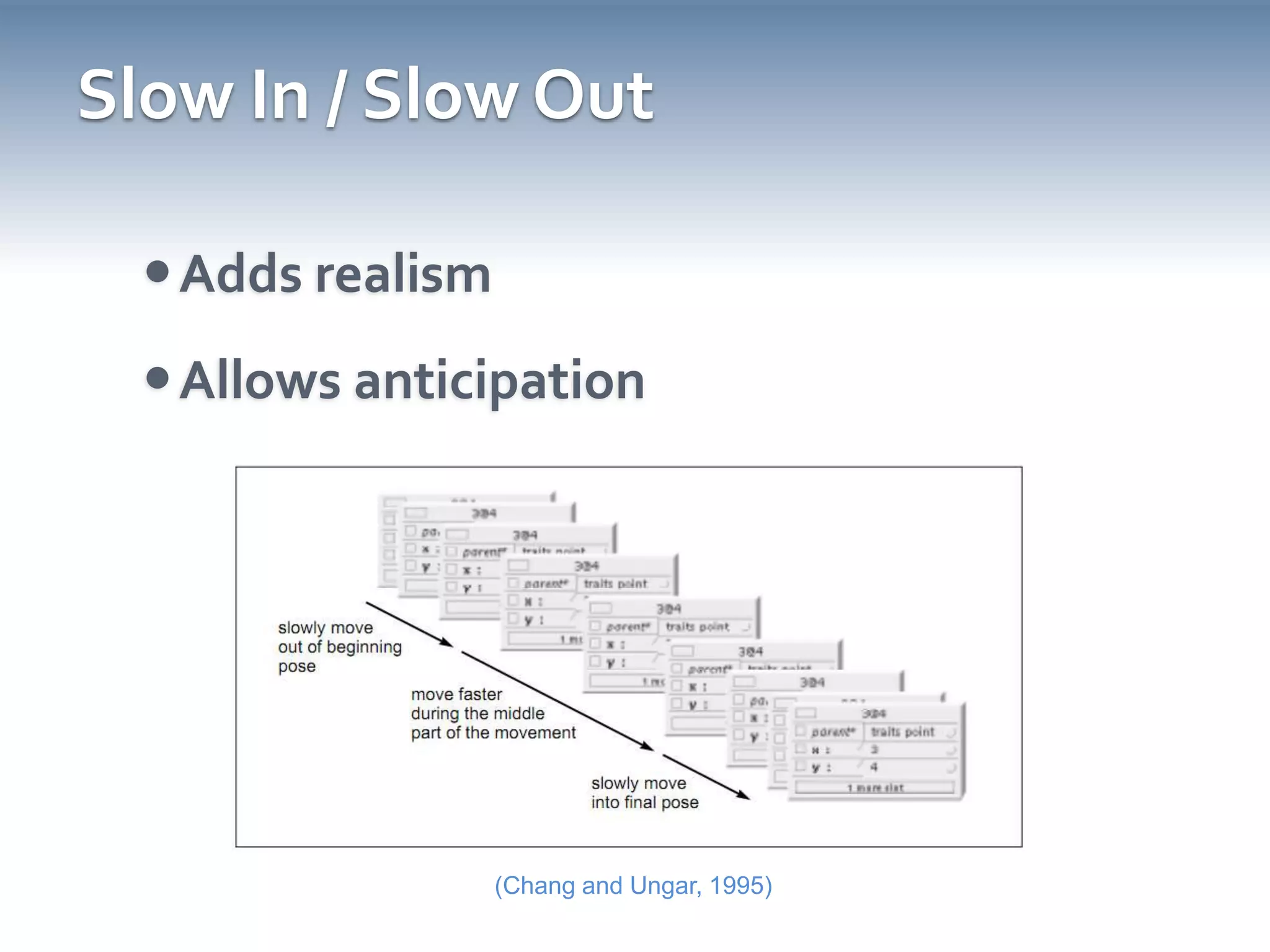
Slow In / Slow OutAdds realismAllows anticipation(Chang and Ungar, 1995)
Slow In / Slow OutFast InFast OutConstantAdaptiveSlow InSlow OutFastSlowFastSlow->tSpeedtime->
User Study
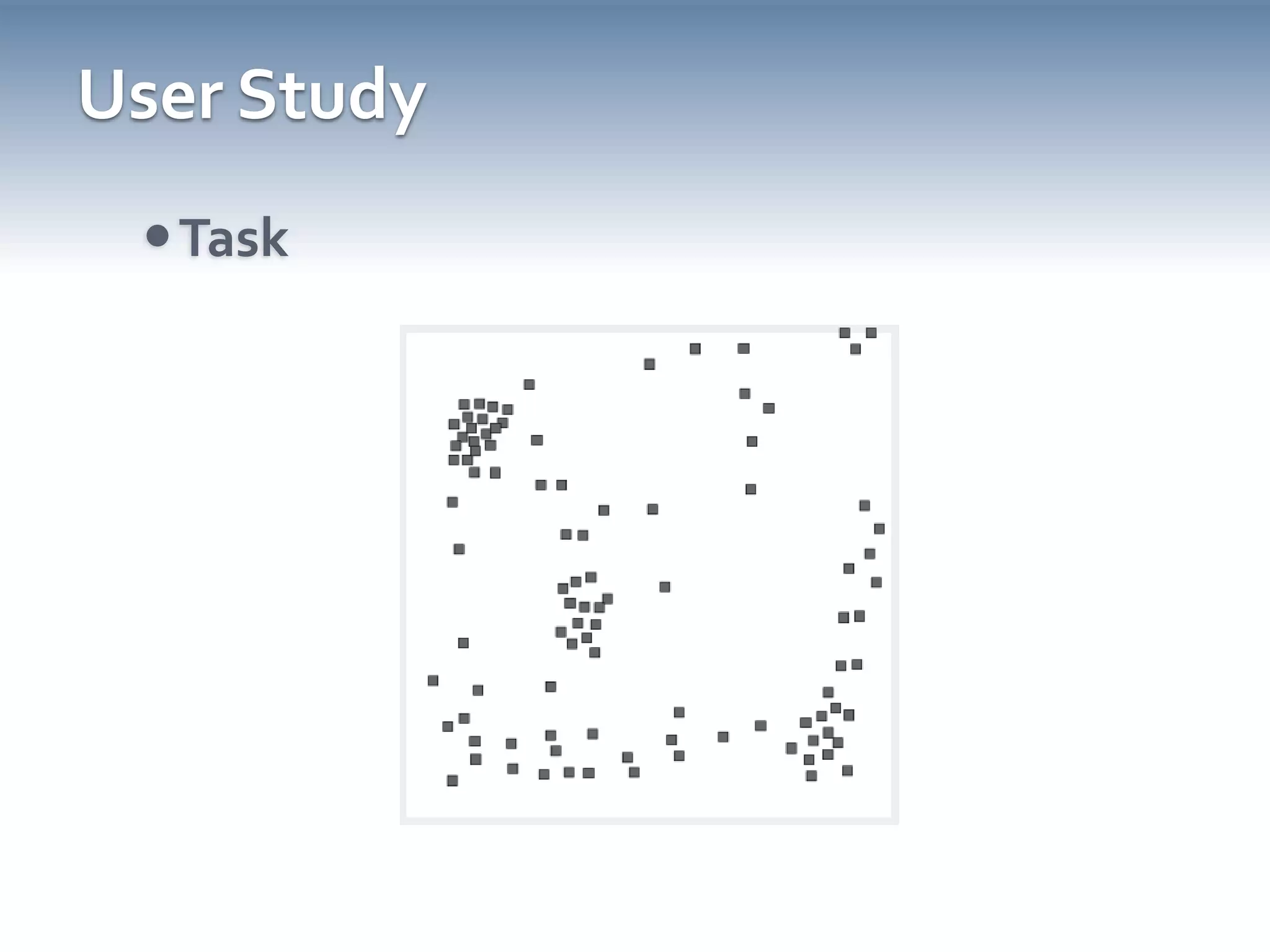
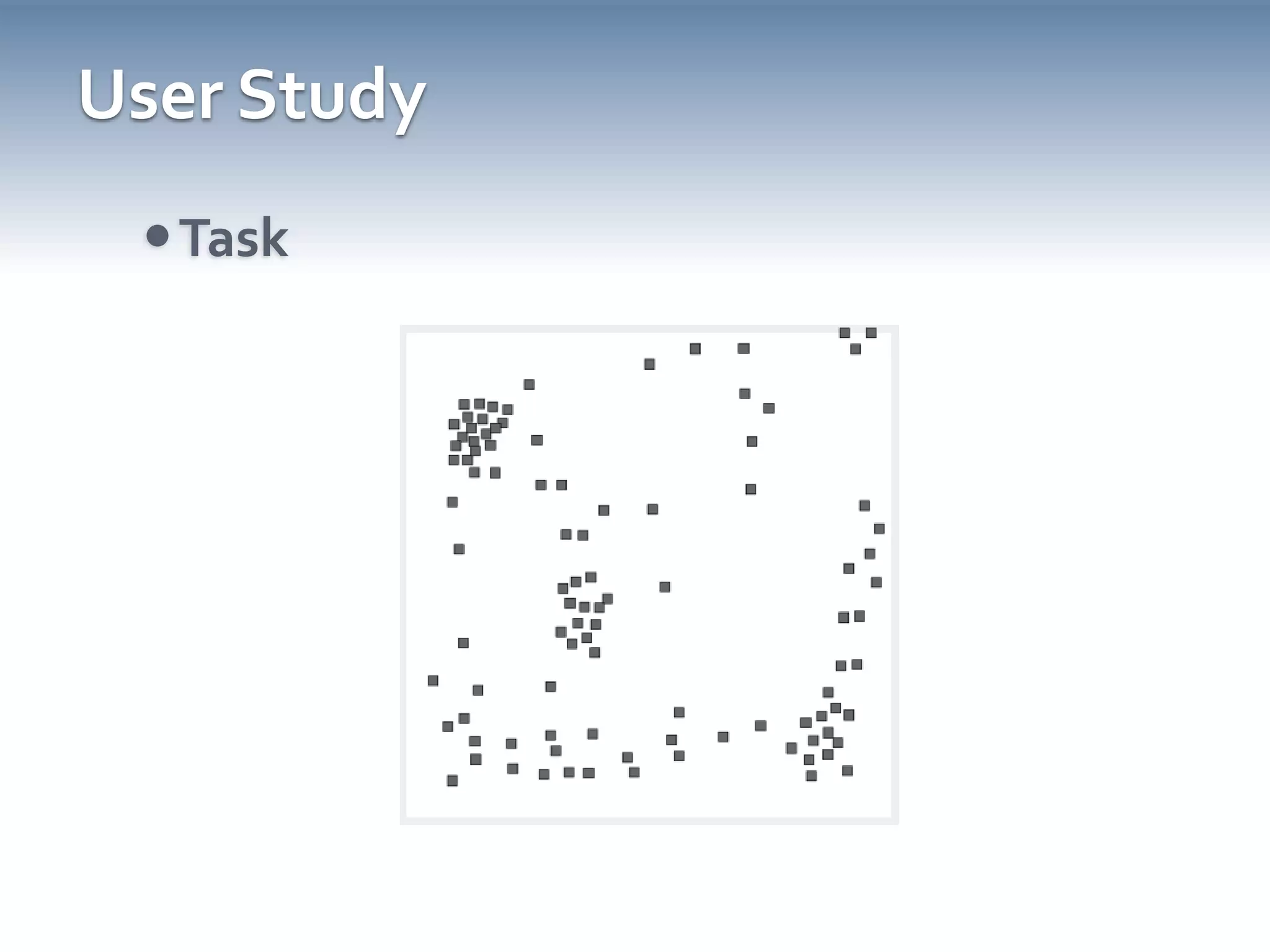
User StudyTask
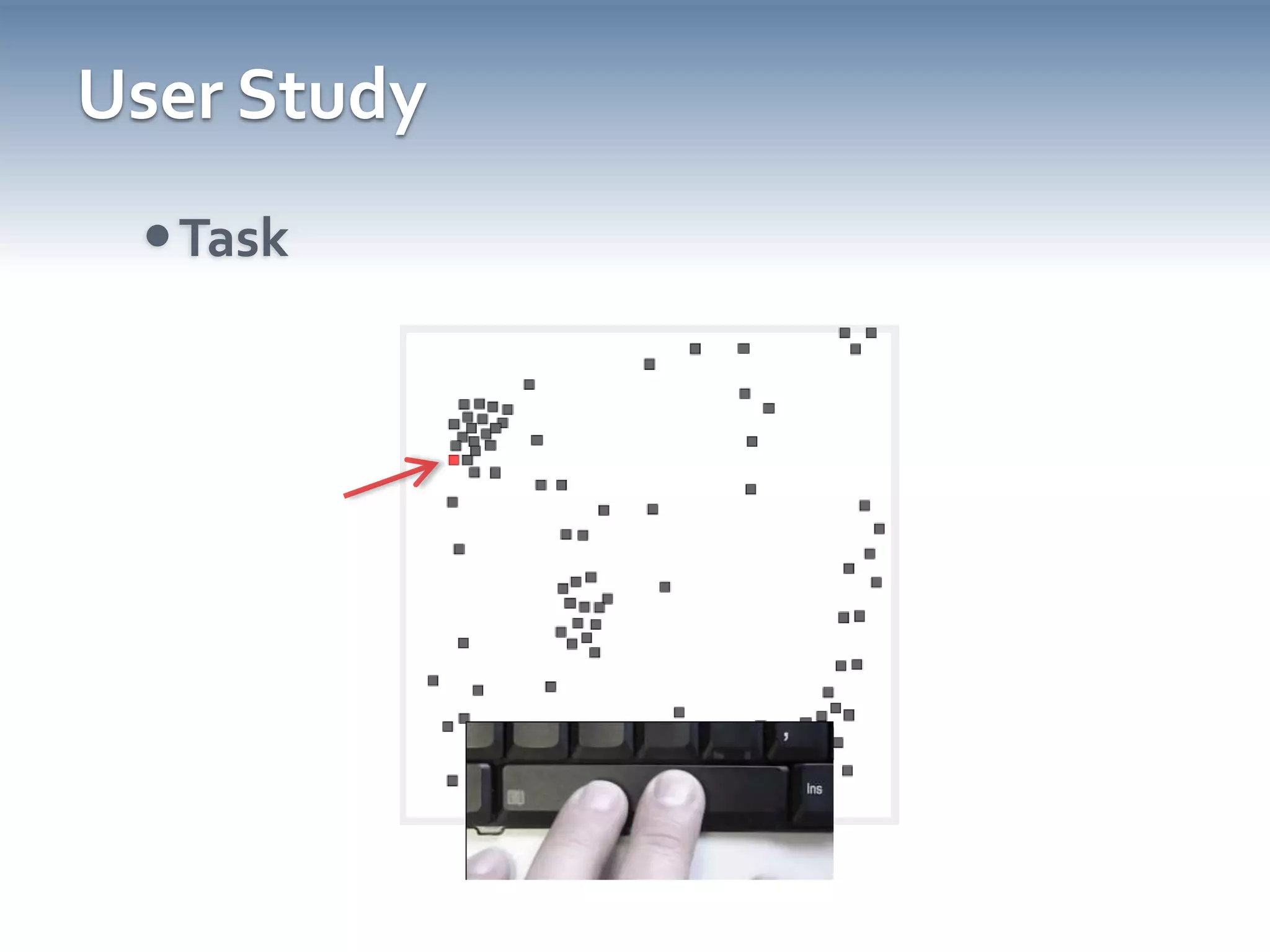
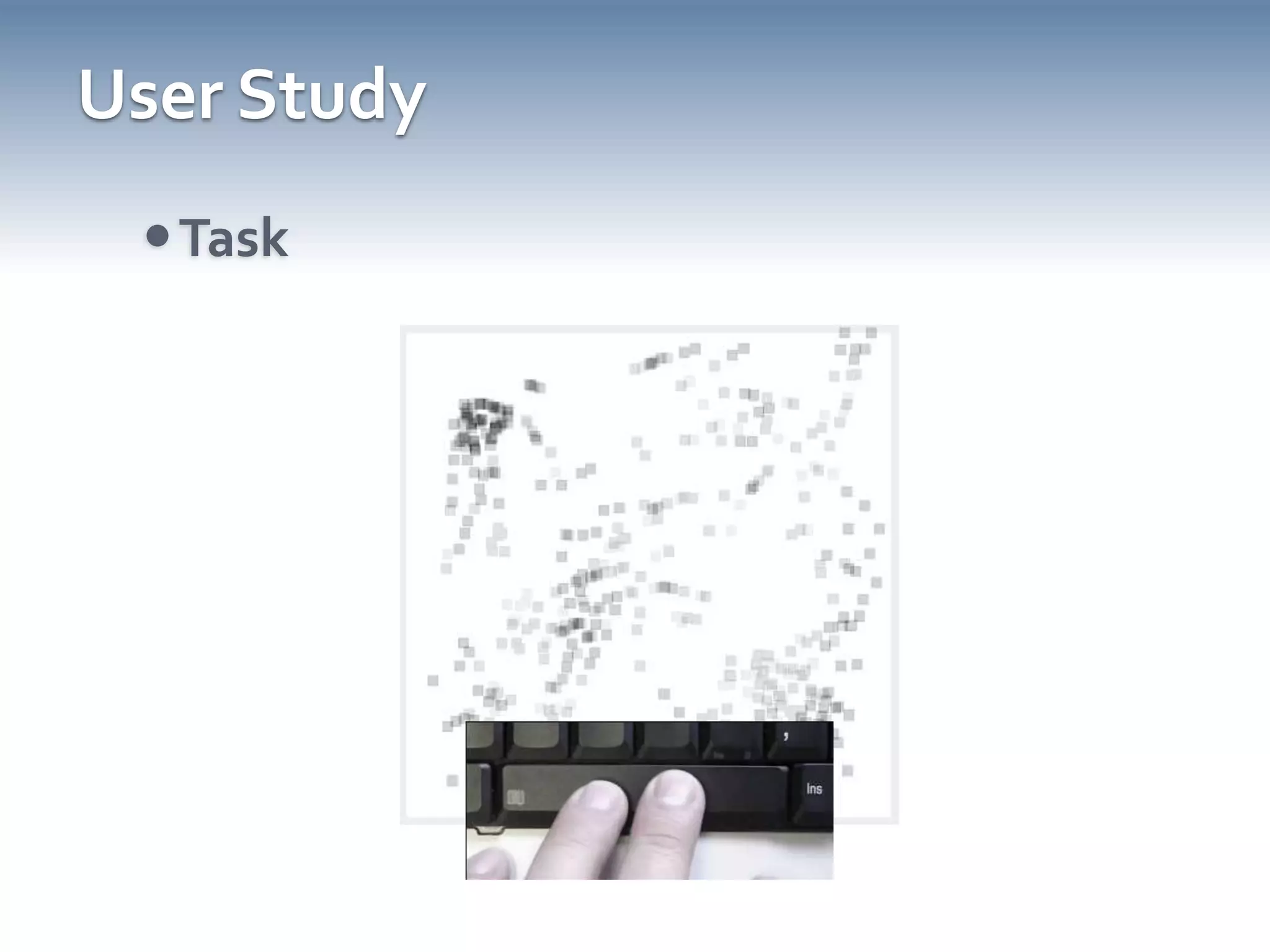
User StudyTask
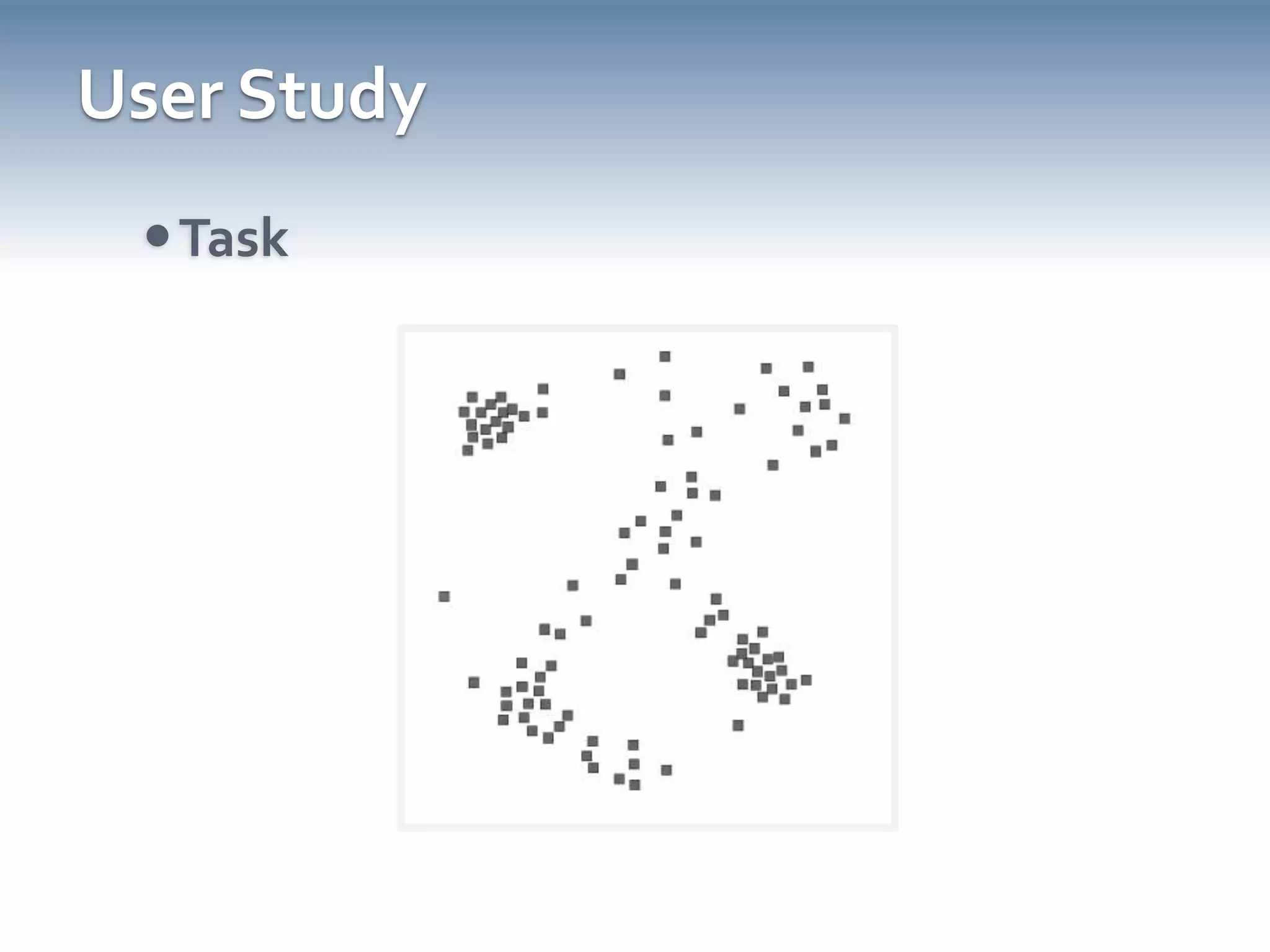
User StudyTask
User StudyTask
User StudyTask
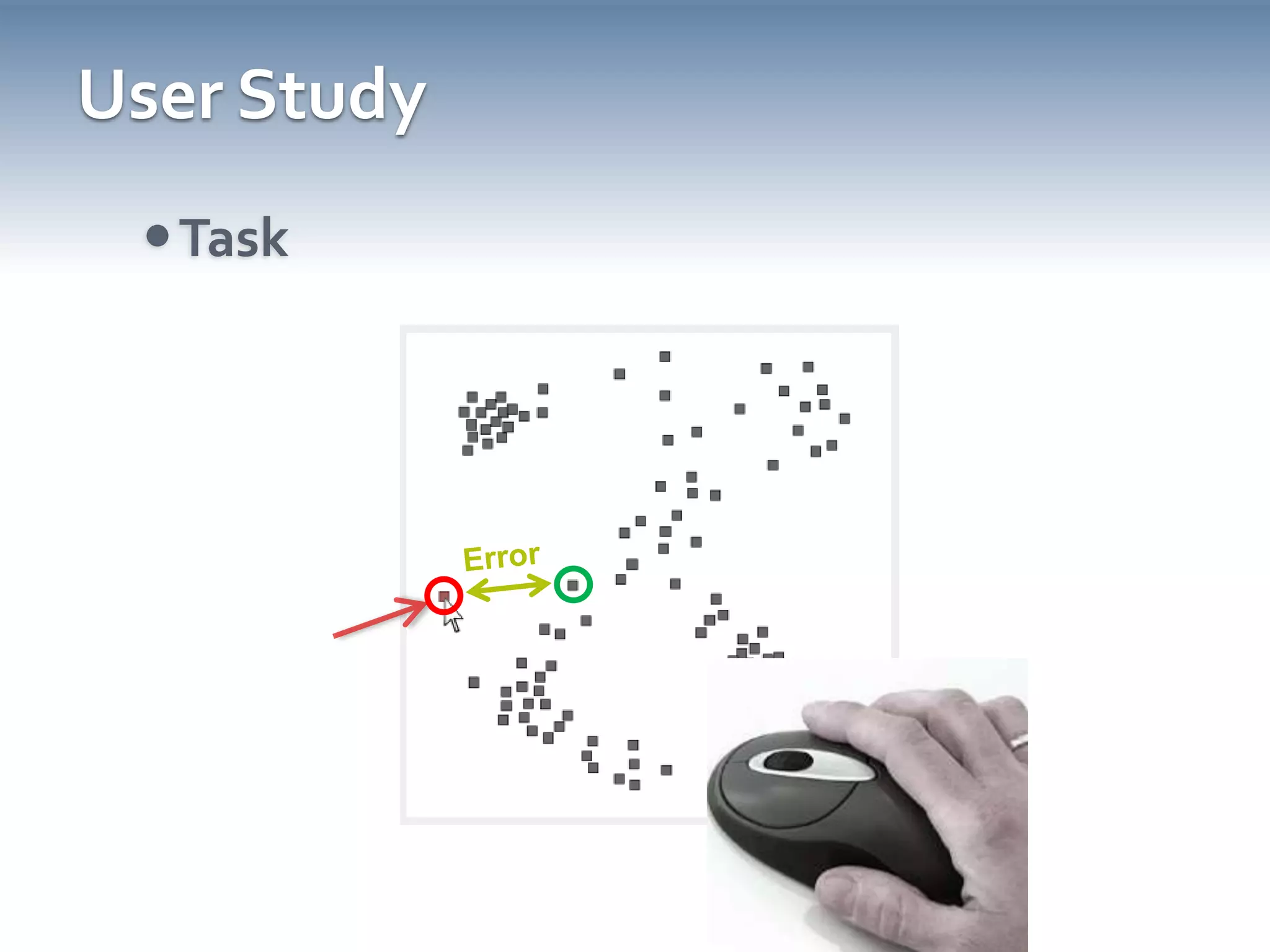
User StudyTaskError
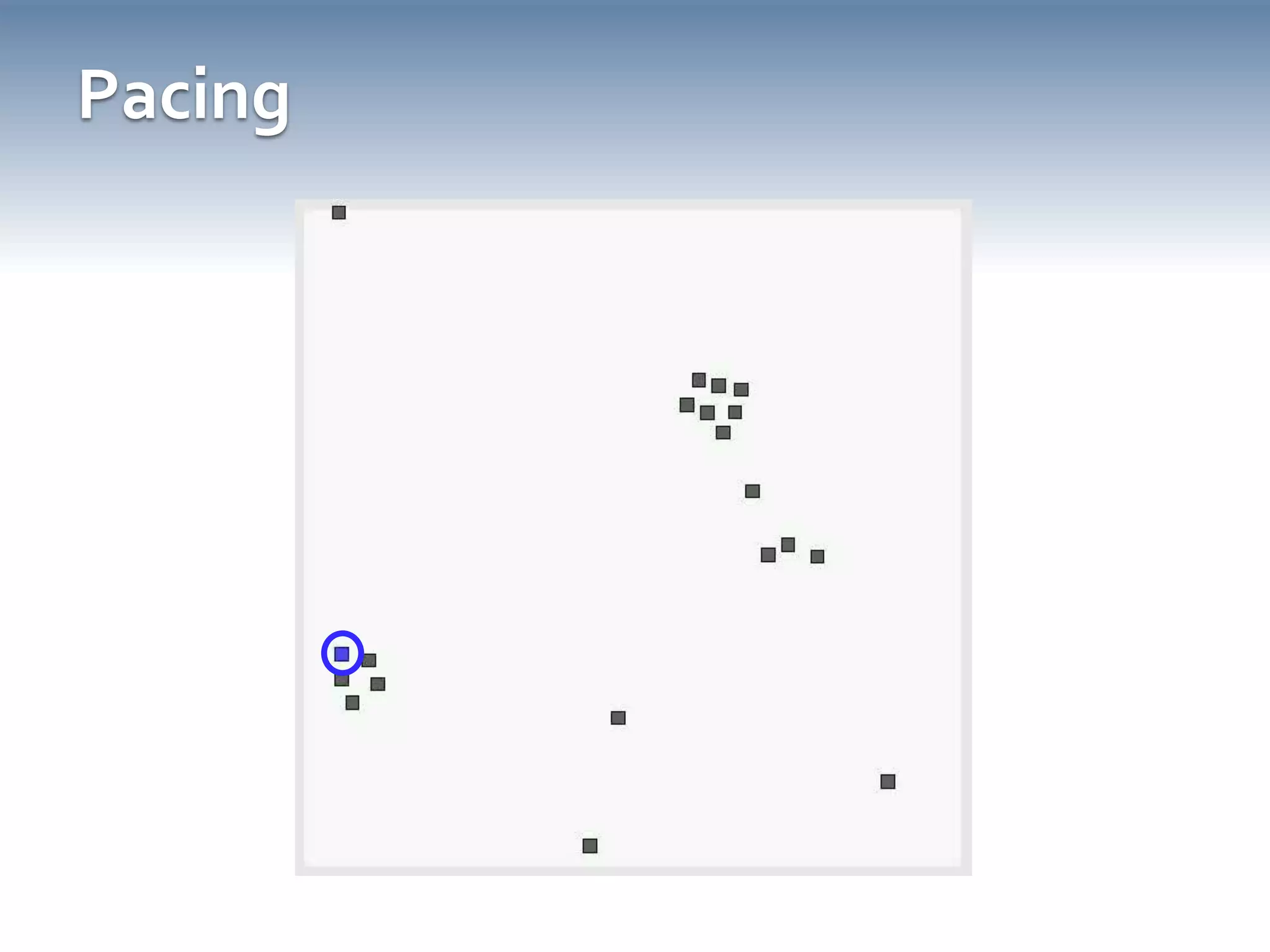
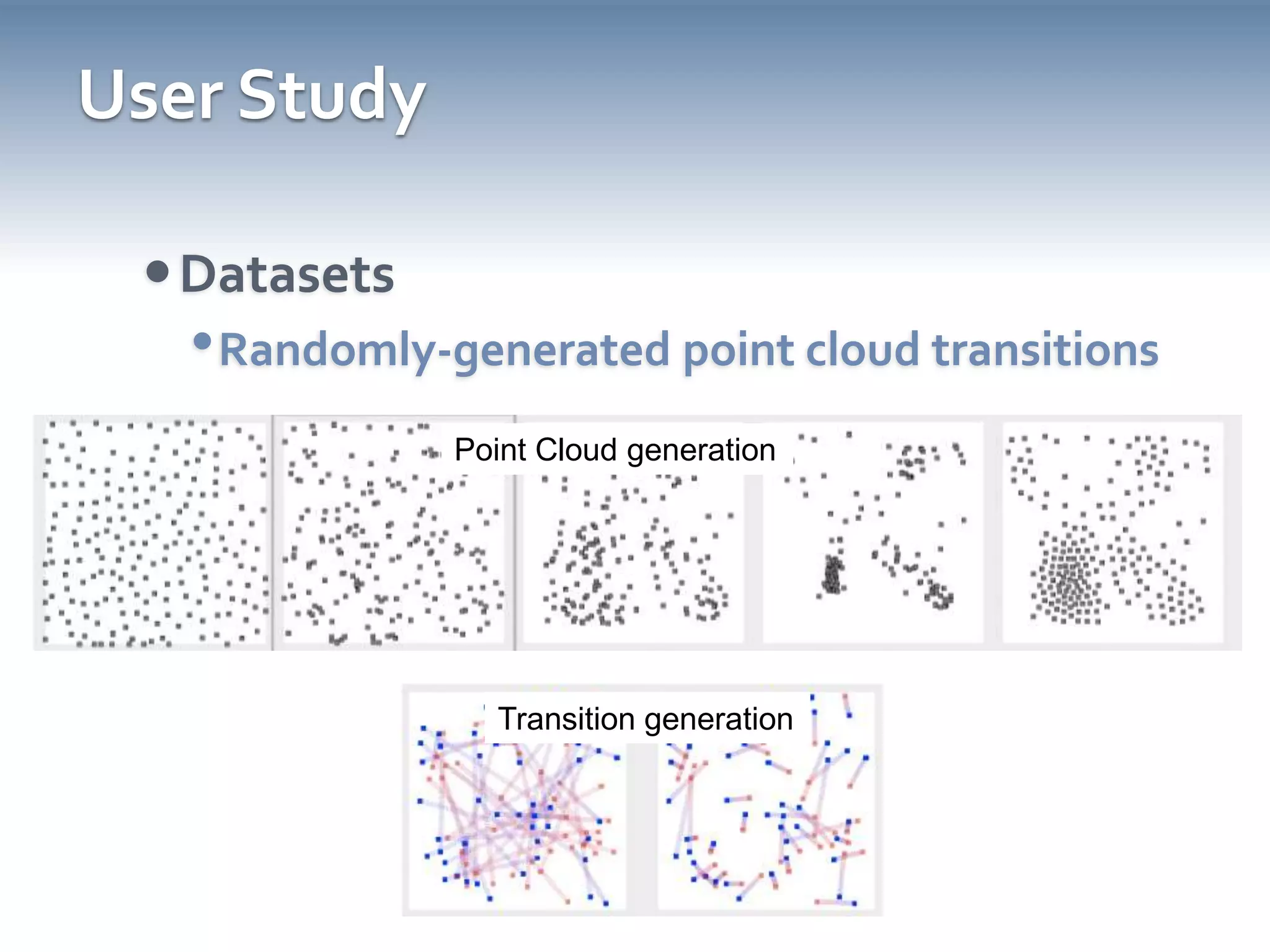
User StudyDatasetsRandomly-generated point cloud transitionsPoint Cloud generationTransition generation
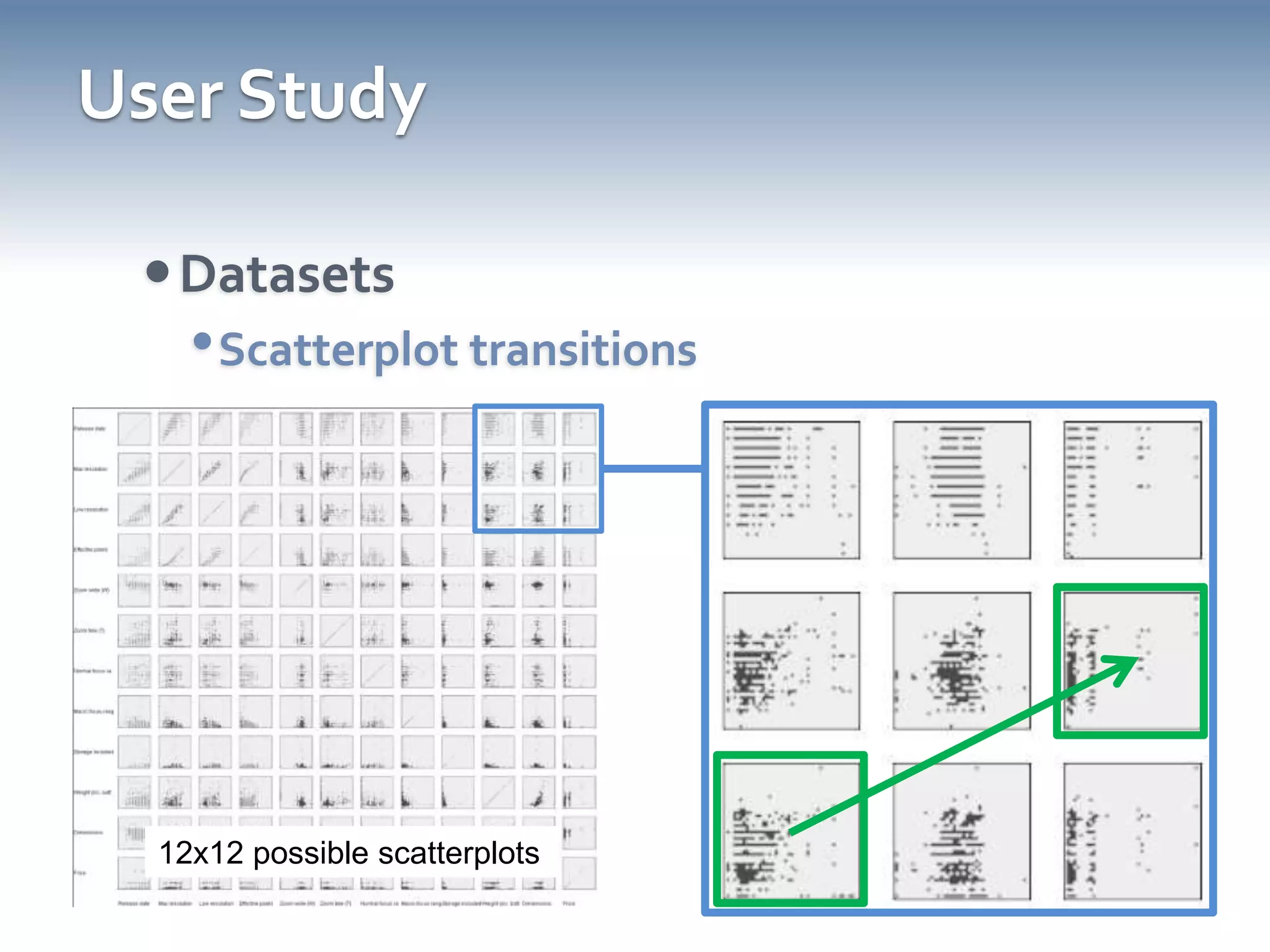
User StudyDatasetsScatterplot transitions12x12 possible scatterplots
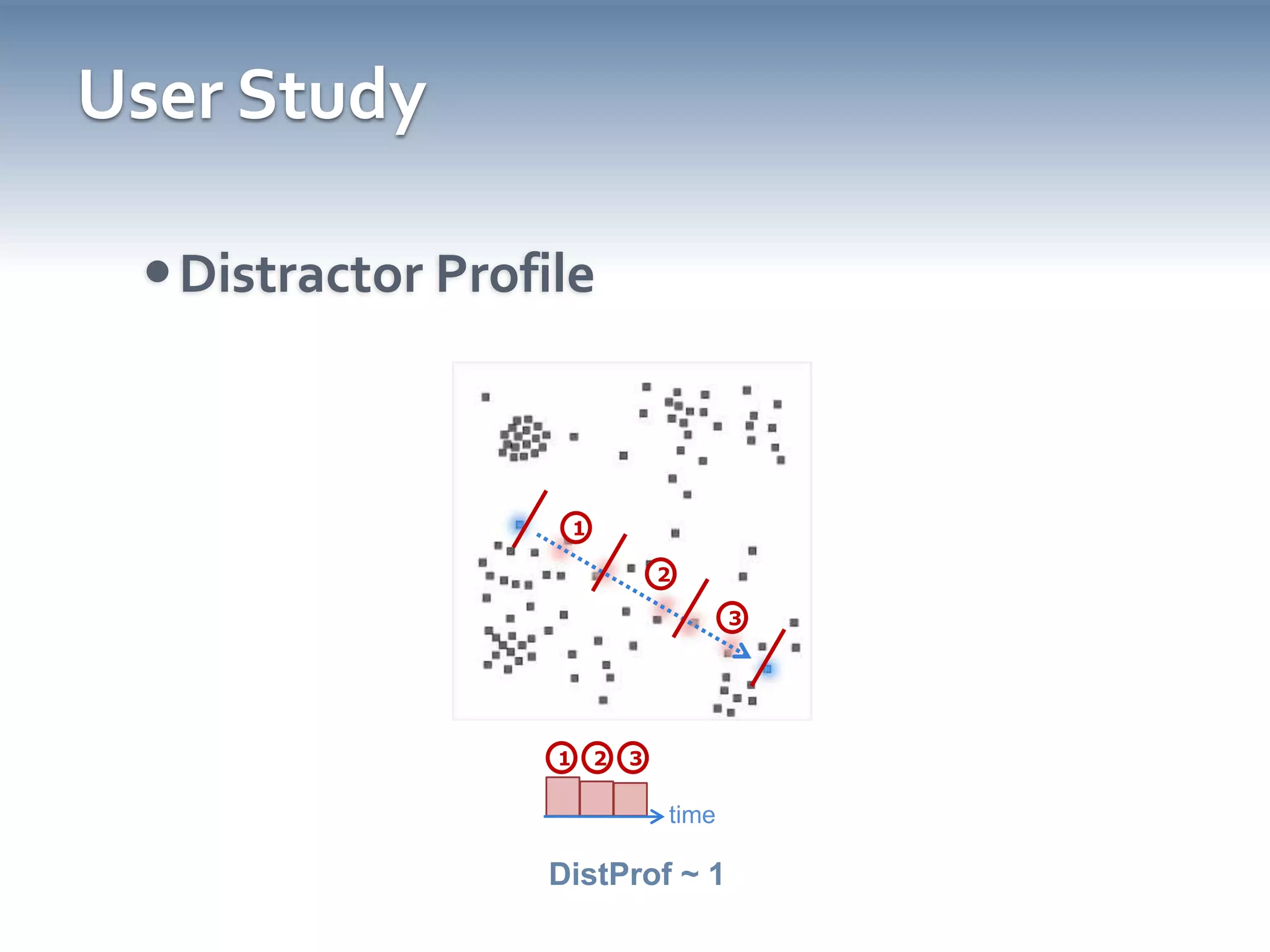
User StudyDistractor Profile123123timetimetimeDistProf > 1DistProf < 1DistProf ~ 1
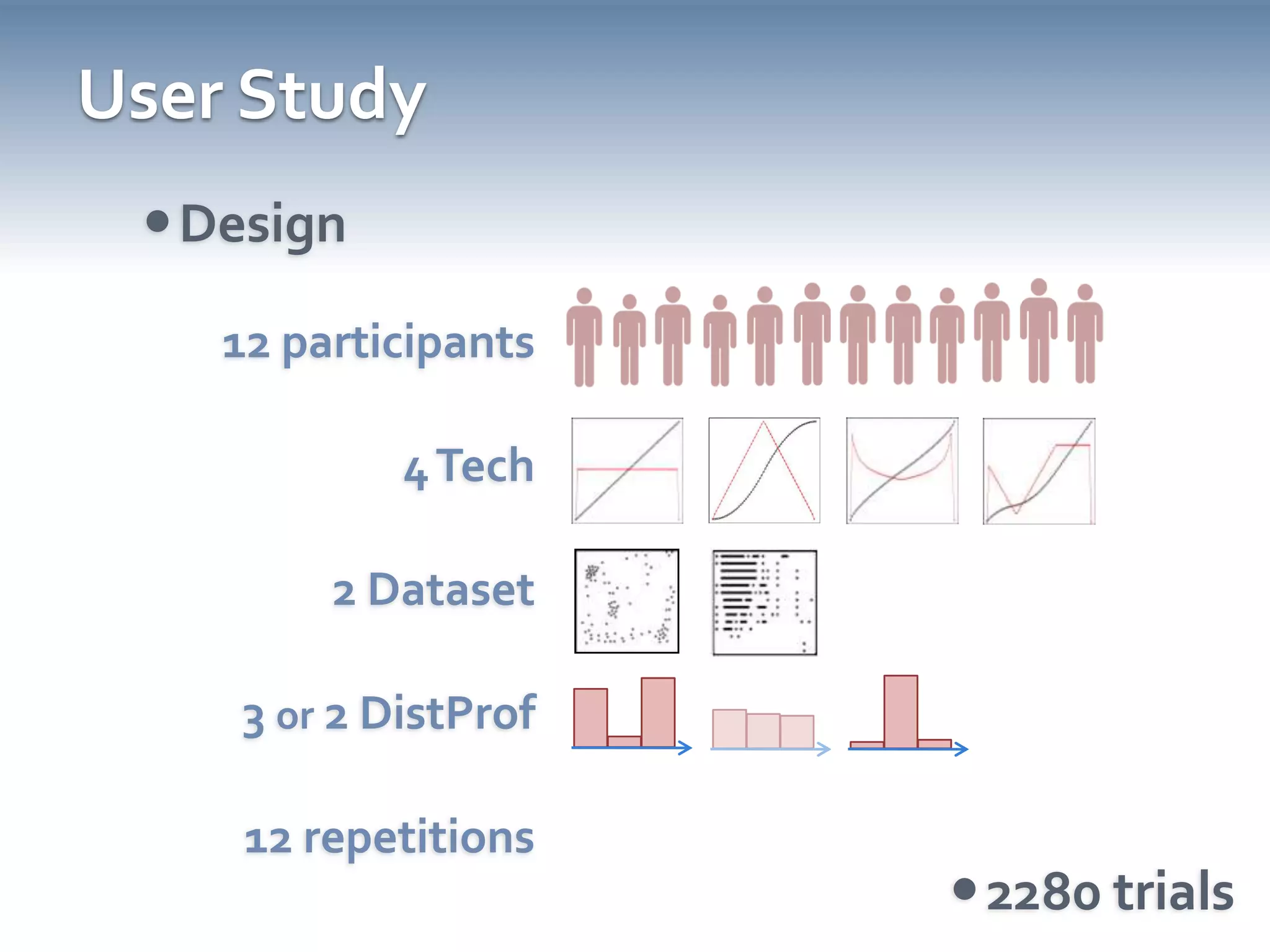
User StudyDesign12 participants4 Tech2 Dataset3 or 2 DistProf12 repetitions2280 trialsUser Study
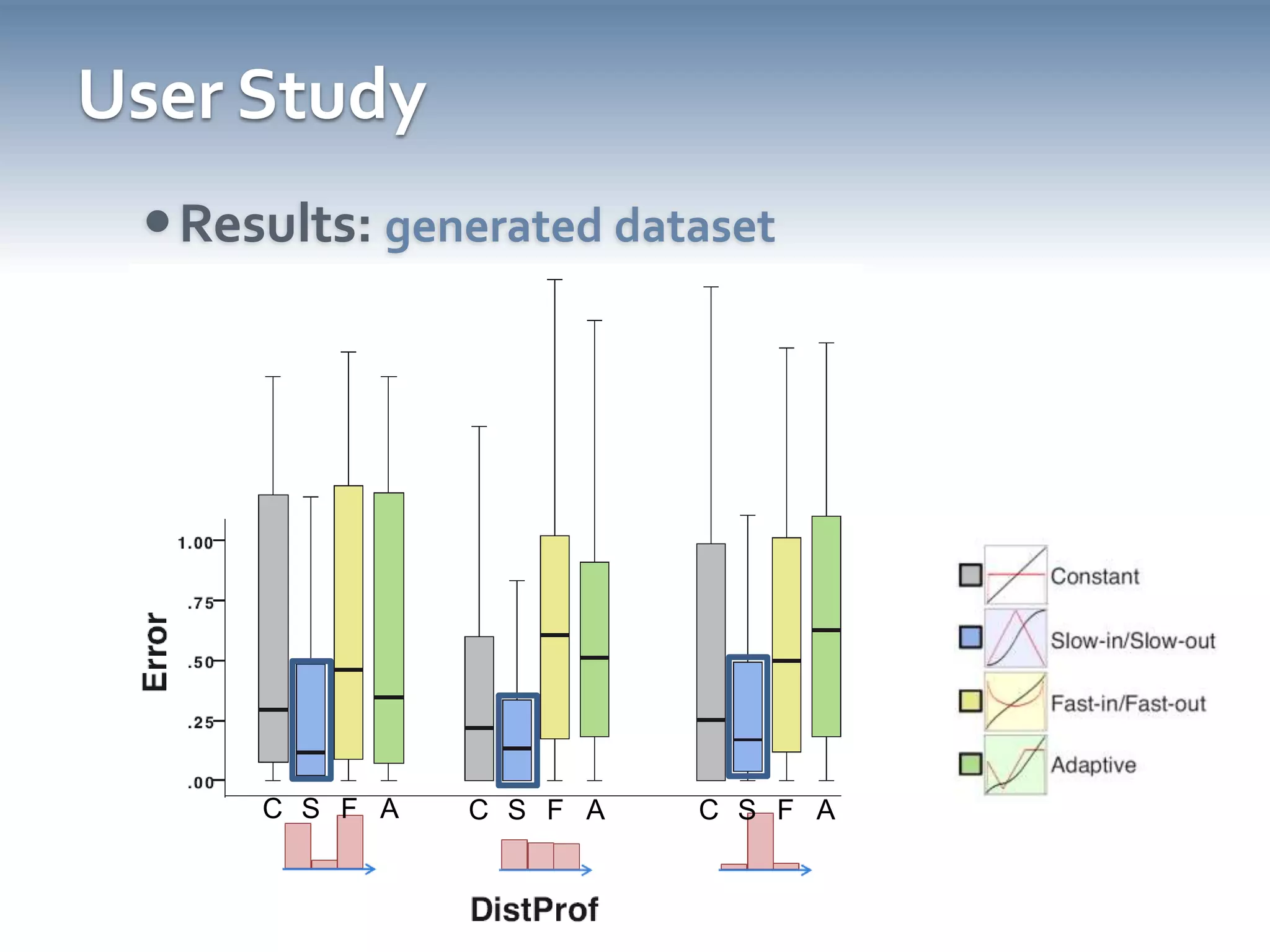
User StudyResults: generated dataset CSFACSFACSFA
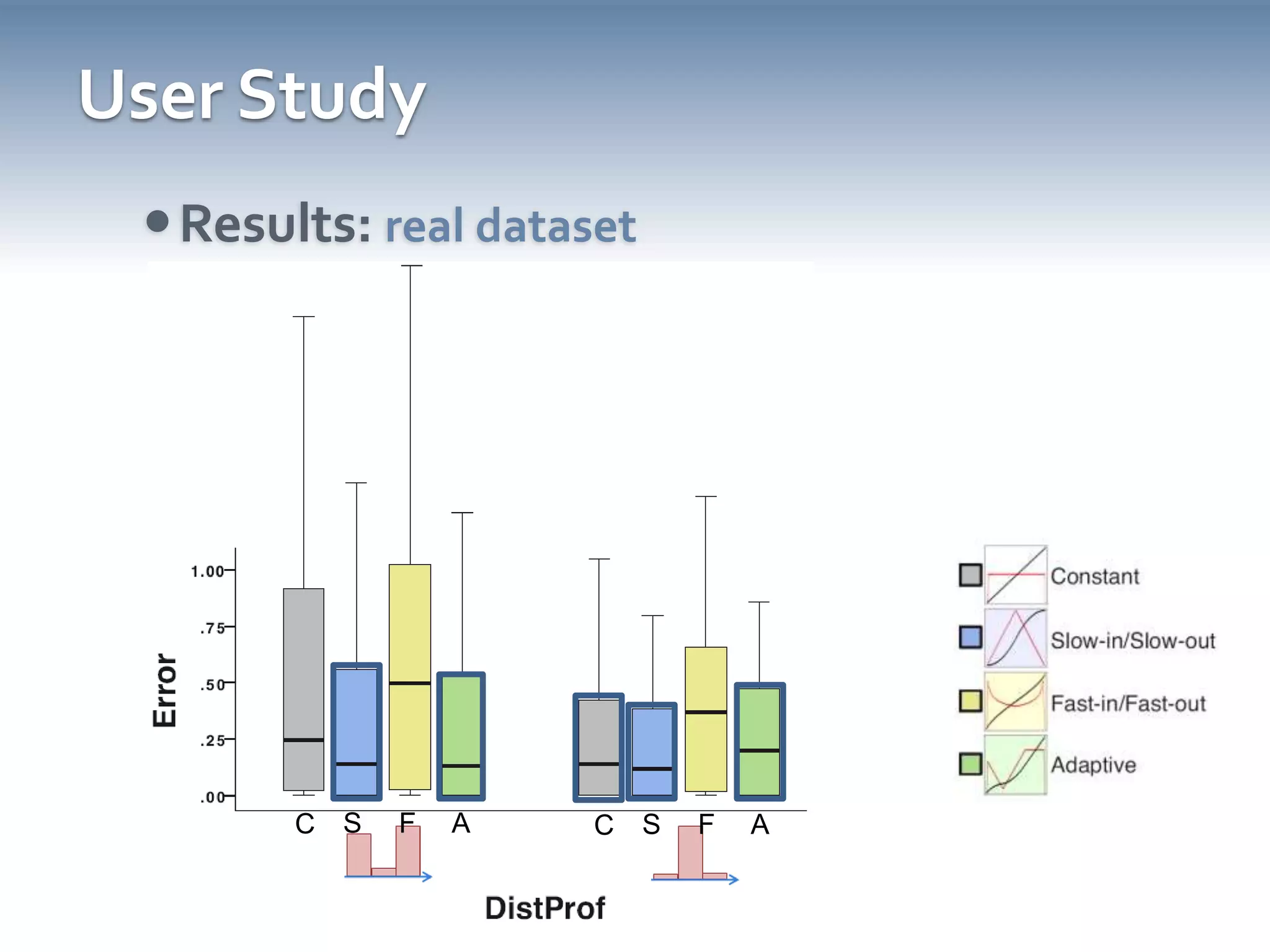
User StudyResults: real datasetSFACSFAC
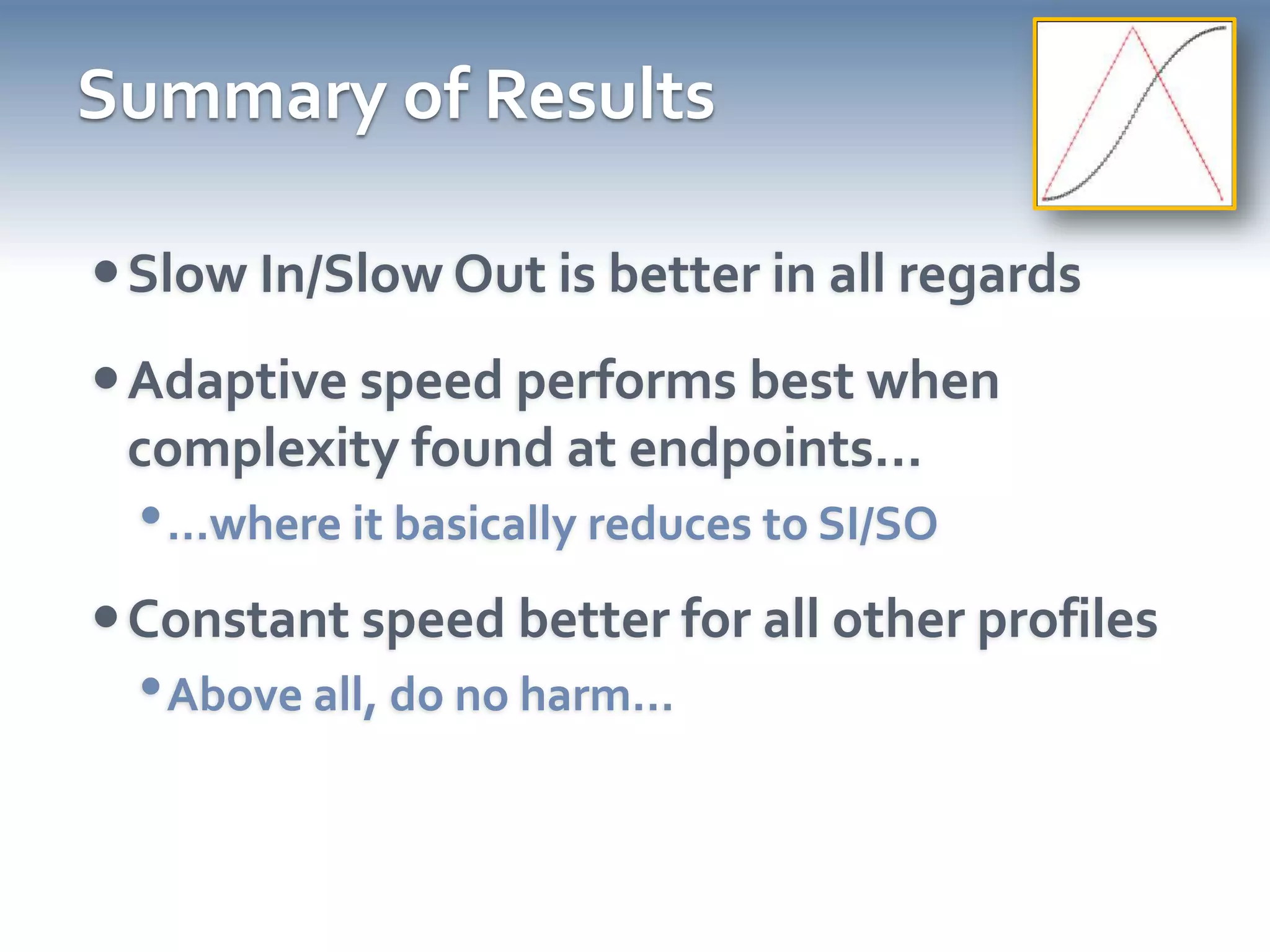
Summary of ResultsSlow In/Slow Out is better in all regardsAdaptive speed performs best when complexity found at endpoints……where it basically reduces to SI/SOConstant speed better for all other profilesAbove all, do no harm…
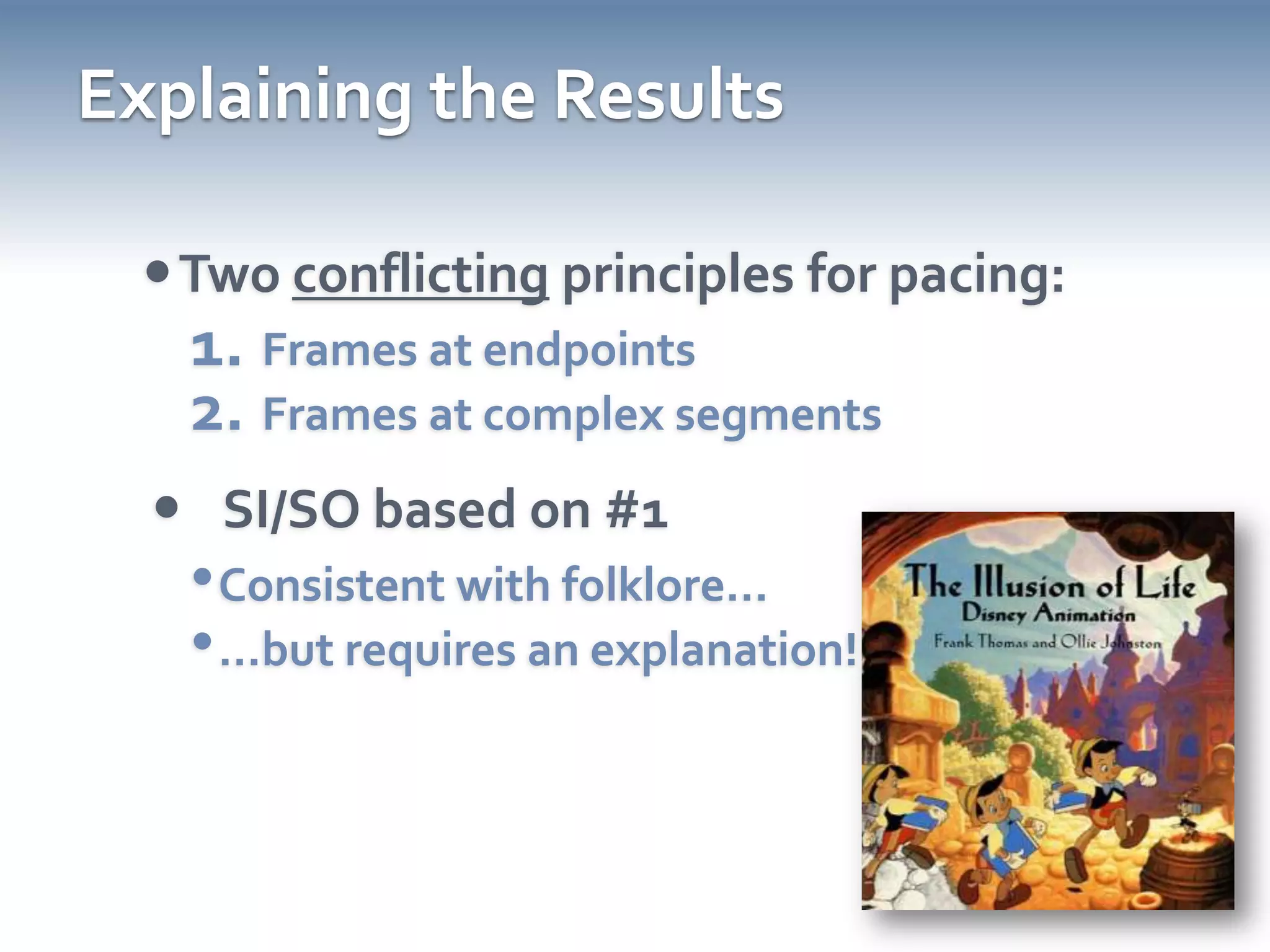
Explaining the ResultsTwoconflictingprinciples for pacing:Frames atendpointsFrames atcomplex segmentsSI/SO based on #1Consistent with folklore……but requires an explanation!
Explanation v1.0Gradual start and stop aid predictabilityDetecting startPredicting stopAgrees with common sense……but why is predictability important?
Human Vision and Perception
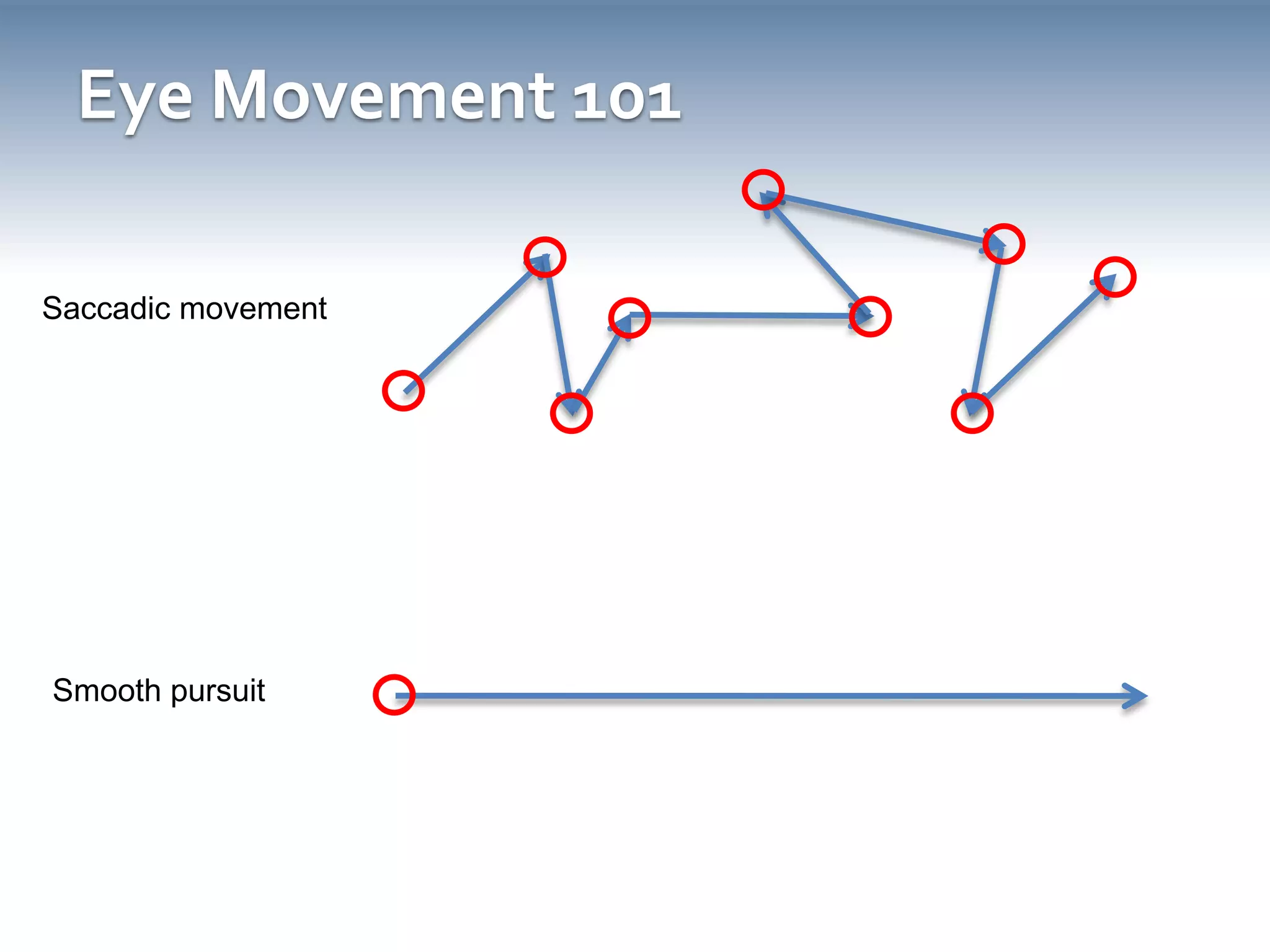
Eye Movement 101Saccadic movementSmooth pursuit
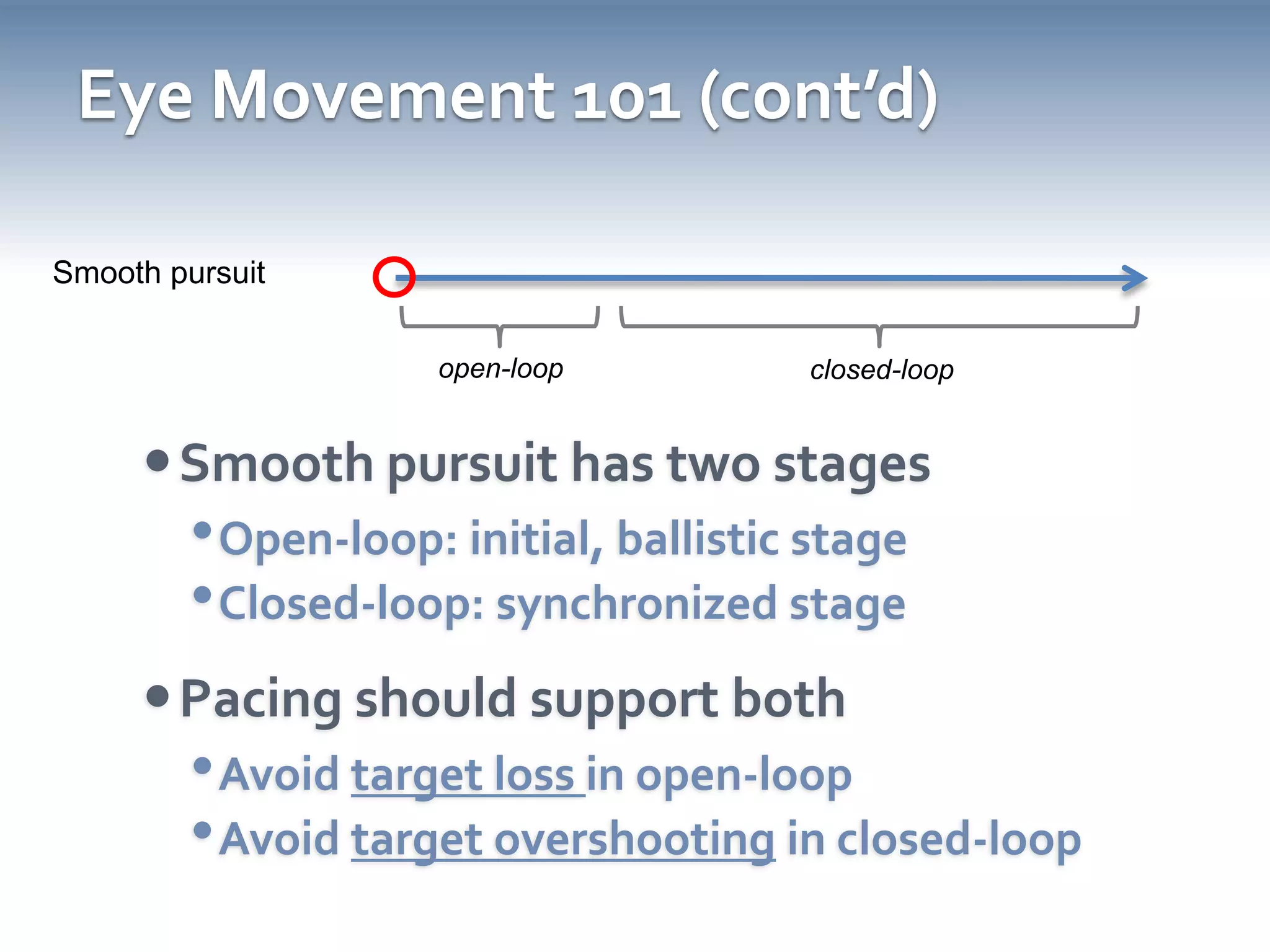
Eye Movement 101 (cont’d)Smooth pursuitopen-loopclosed-loopSmooth pursuit has two stagesOpen-loop: initial, ballistic stageClosed-loop: synchronized stagePacing should support bothAvoid target loss in open-loopAvoid target overshooting in closed-loop
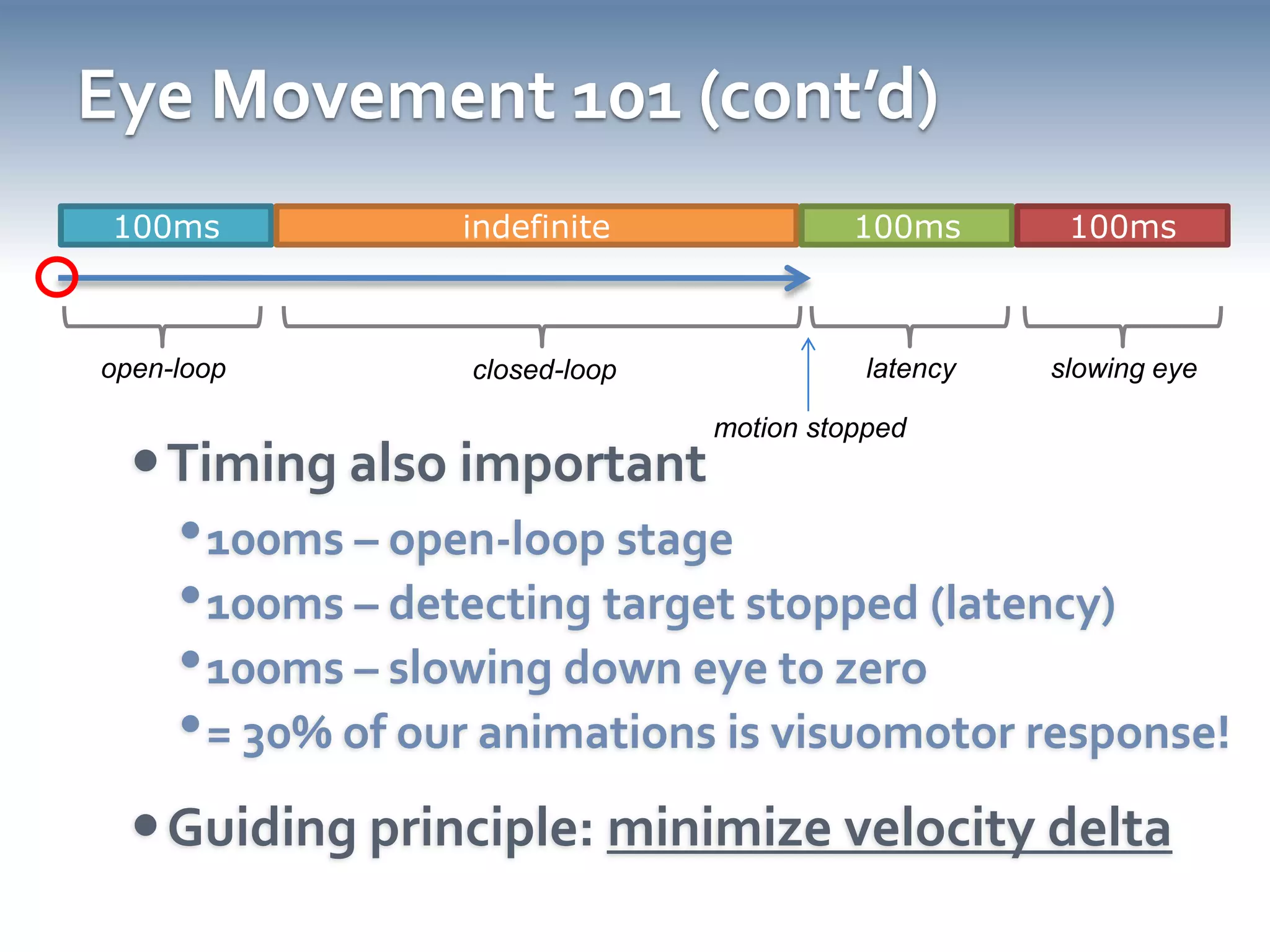
Eye Movement 101 (cont’d)100msindefinite100ms100msopen-looplatencyslowing eyeclosed-loopmotion stoppedTiming also important100ms – open-loop stage100ms – detecting target stopped (latency)100ms – slowing down eye to zero= 30% of our animations is visuomotor response!Guiding principle: minimize velocity delta
Conclusions
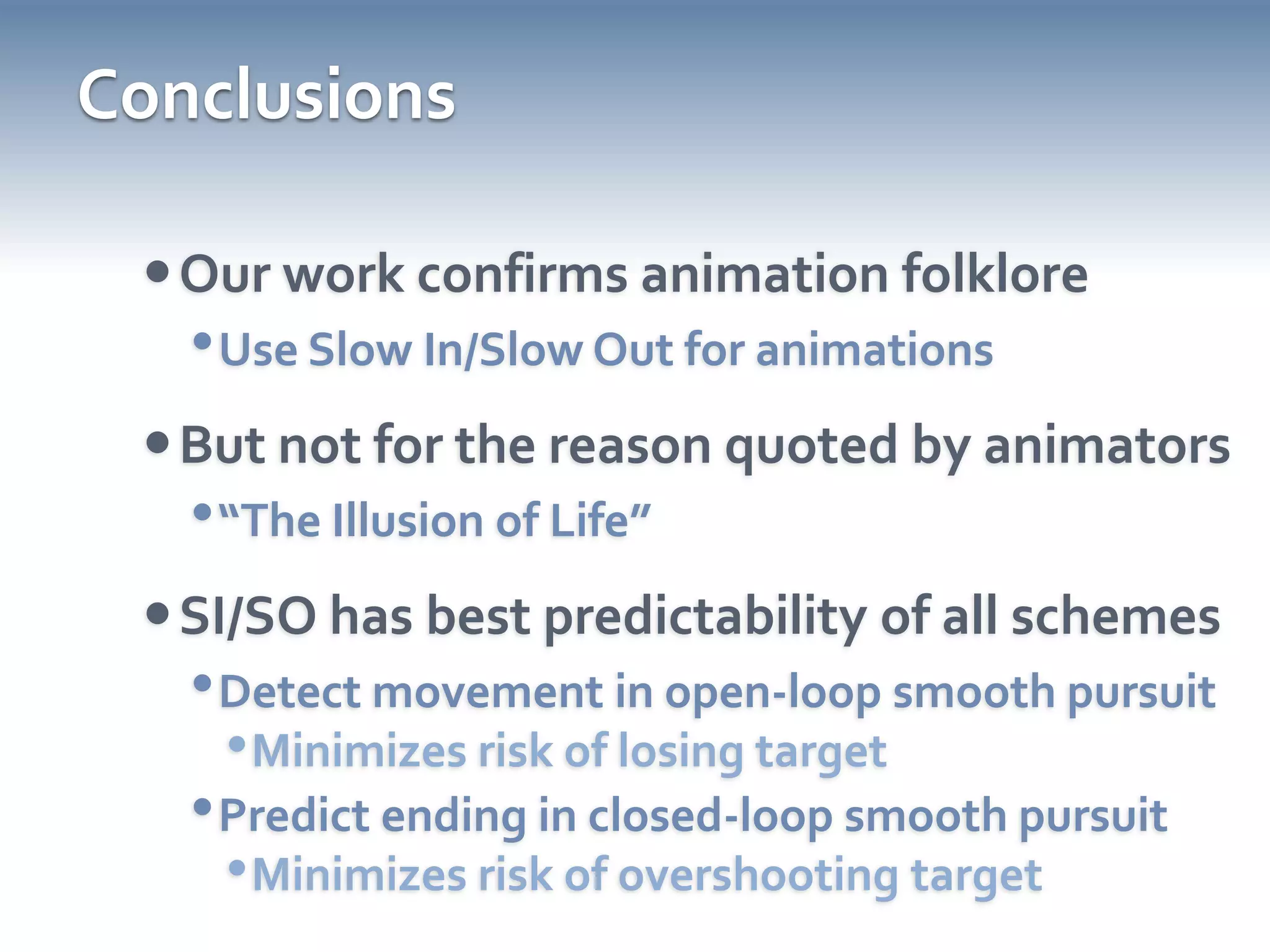
ConclusionsOur work confirms animation folkloreUse Slow In/Slow Out for animationsBut not for the reason quoted by animators“The Illusion of Life”SI/SO has best predictability of all schemesDetect movement in open-loop smooth pursuitMinimizes risk of losing targetPredict ending in closed-loop smooth pursuitMinimizes risk of overshooting target
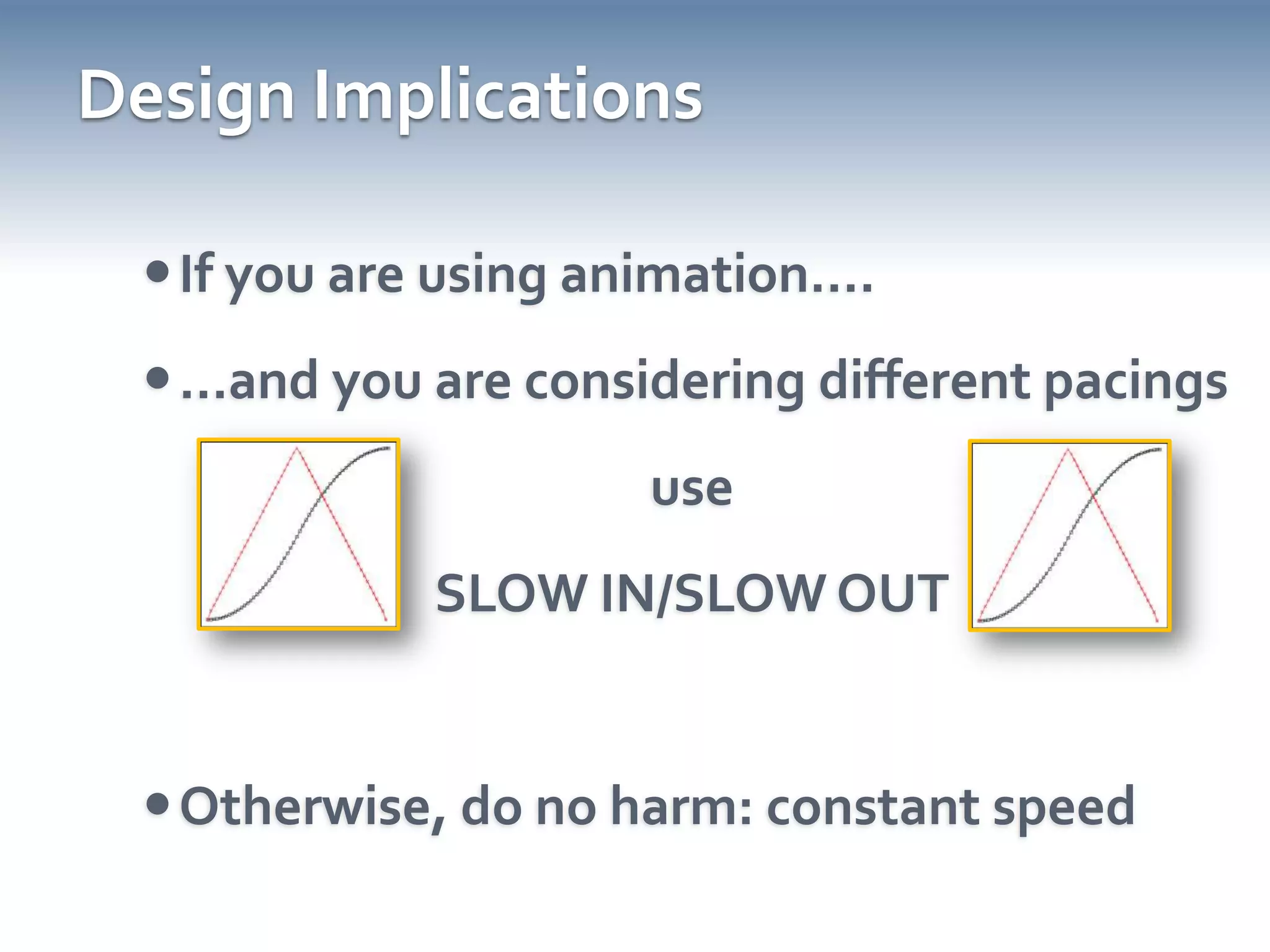
Design ImplicationsIf you are using animation….…and you are considering different pacingsuseSLOW IN/SLOW OUTOtherwise, do no harm: constant speed
Questions?Pierre Dragicevic		INRIAAnastasia BezerianosEcoleCentrale ParisWaqasJaved		Purdue UniversityNiklas Elmqvist		Purdue UniversityJean-Daniel Fekete	INRIAE-mail: dragice@lri.fr, elm@purdue.edu
Temporal Distortion for Animated Transitions

Temporal Distortion for Animated Transitions

Editor's Notes

  • #3 In GUIs and infovis applications
  • #4 In GUIs and infovis applications
  • #5 In GUIs and infovis applications
  • #6 In GUIs and infovis applications
  • #29 1,038 objects and 13 dimensions per object