Telling Your Impact Story

       December 11, 2012
  Washington D.C NeighborWorks
        Training Institute
Presenters


Alexandra Chaikin           Sarah Parmenter
   achaikin@nw.org           sparmenter@nw.org
     Online Media,          Community Building and
Public Relations division     Organizing Program
Agenda for this Workshop
•   Why stories matter
•   Who cares about our stories
•   Elements of good storytelling
•   Practice writing
•   Feedback
Introductions
• Your name

• Name of your organization

• Your role in organization

• A story (novel, tv ad, video) you think is powerful
“Stories are more convincing than sets
of data…numbers numb, jargon jars,
and no one ever marched on
Washington because of a pie chart.”

                 Andy Goodman
                 Story Telling as a Best Practice
Why Stories Matter
• For millennia, humans have told stories to help
  us convey important messages/morals to one
  another
• Marketing is modern storytelling. It’s used to
  convince people to spend money and/or take
  particular actions
• Nonprofits can use stories to convey the
  effectiveness of their work and to motivate
  others to join the cause
Audience
• Who needs to hear your story?
  –   Community members
  –   Board members
  –   Funders
  –   Local and national media
  –   Policy makers
What Makes a Good Story?
• A good storyteller makes the audience feel like
  s/he is part of the story
• A good story leaves the audience ready to take
  action
• Your work in the community leads to great
  stories every day.
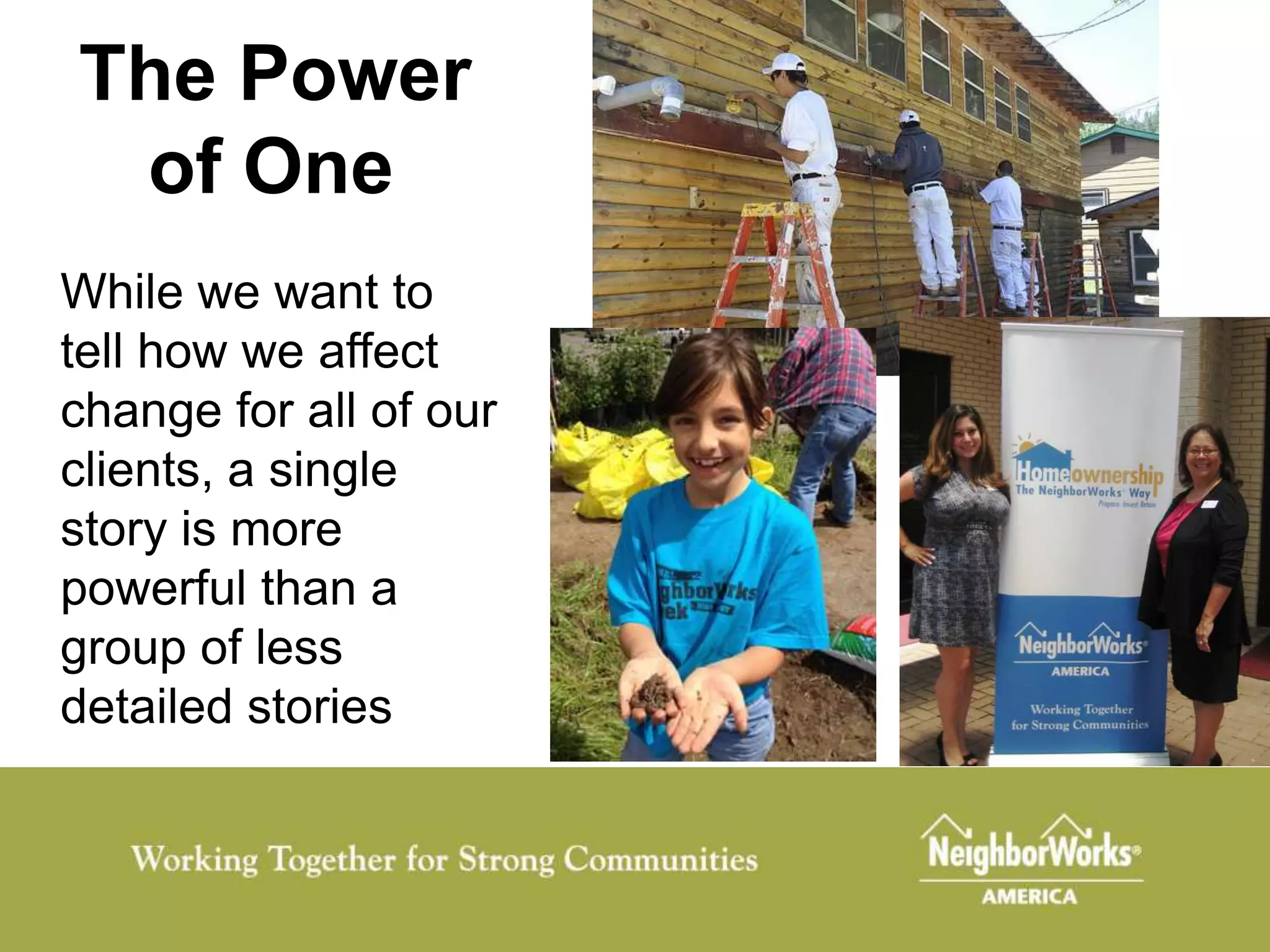
The Power
 of One
While we want to
tell how we affect
change for all of our
clients, a single
story is more
powerful than a
group of less
detailed stories
The Power of One - continued
Eduardo used                   We taught 20
knowledge from our       VS.   foreclosure prevention
foreclosure classes to         classes in 2012 that
renegotiate his                helped 52 residents
elderly mother’s               save their homes from
mortgage and she               foreclosure.
can now remain in
the home she’s lived
in for 25 years.
Story Length
• Stories don’t have to be long to be powerful.
  Think of Nike’s “Just do it” slogan or Apple’s
  “Think Different” campaign.
• What matters to a story’s effectiveness is how
  the audience feels after reading it. Addressing
  four core story elements can make a powerful
  story in only one paragraph.
Four Elements of a Great
              Story
1.   Hero
2.   Obstacle
3.   “Magic Tool”
4.   Happy ending/Outcome
Story Example
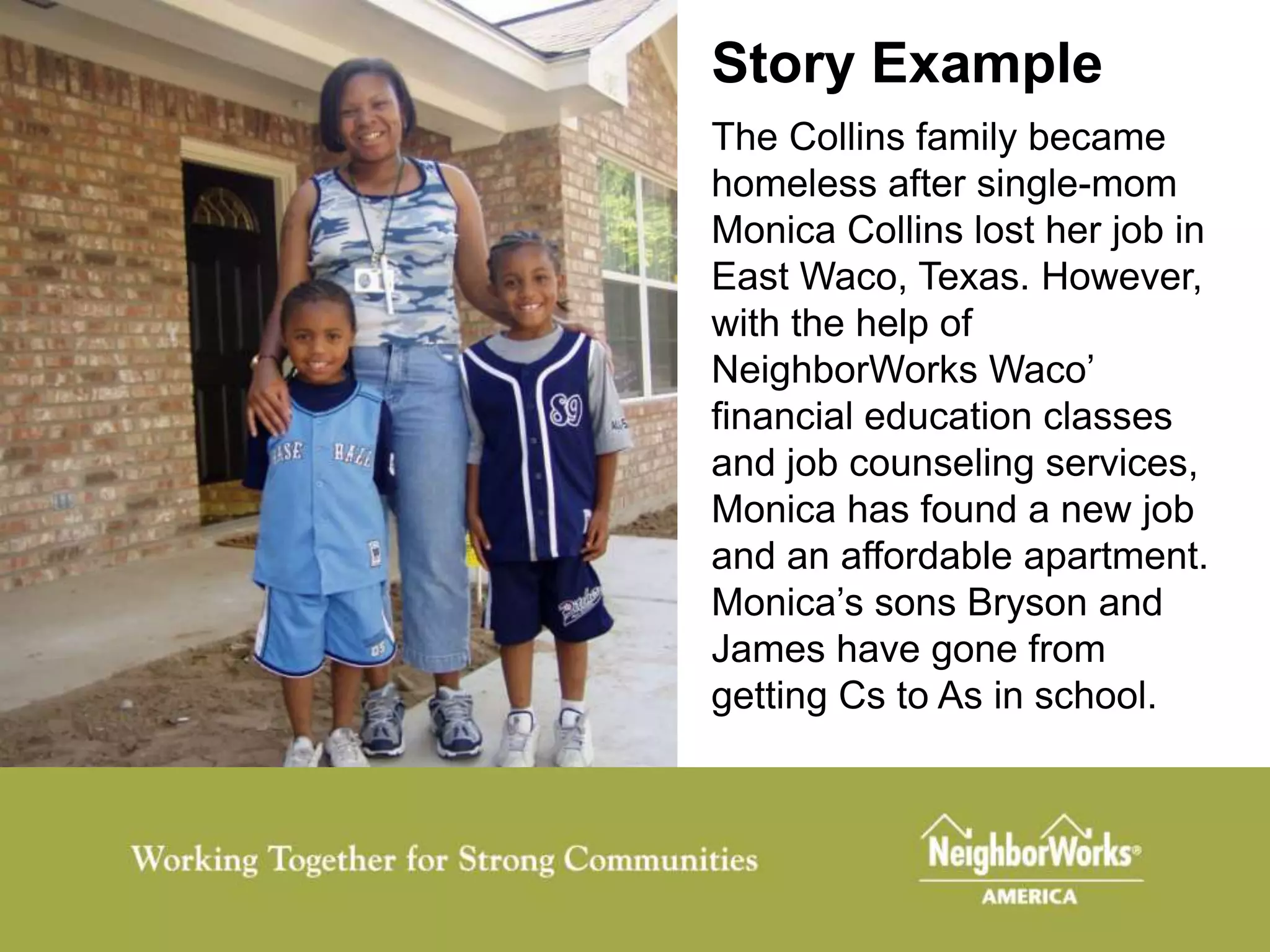
The Collins family became
homeless after single-mom
Monica Collins lost her job in
East Waco, Texas. However,
with the help of
NeighborWorks Waco’
financial education classes
and job counseling services,
Monica has found a new job
and an affordable apartment.
Monica’s sons Bryson and
James have gone from
getting Cs to As in school.
Practice Writing Stories
Think of a client your organization has helped
and let’s practice turning their story into a
powerful message that will resonate with your
key audiences.
4 Steps for Powerful Stories
1. Describe the hero-client
2. Describe the obstacle
3. Describe how your organization provided a
   “magic tool” to empower our hero
4. Describe the happy ending for our hero (and
   the community)
Writing Your Story: Step 1
• Describe the hero
  – Tell about the family/individual so we can actually
    “know” them—for example, married, retired, Latino,
    three children, single mom, new to the community,
    disabled family member, etc.
Writing Your Story: Step 2
• Describe the obstacle
  – Be specific about our hero’s situation. It doesn’t have
    to be a long description, just one that will feel familiar
    to the audience. Ex: natural disaster, job loss,
    community violence, poverty
Writing Your Story: Step 3
• Describe how your organization empowered our
  hero
  – Tell about the products, services, knowledge,
    experience, and/or resources you used to address
    their situation.
  – What unique gifts or assets did you offer that they
    may not have found elsewhere?
Writing Your Story: Step 4
• The happy ending. Say what happens to our
  hero (and the community, if appropriate)
  – What was the outcome for the hero? A new home?
    New skills and confidence?
  – Tie the hero’s success to broader success in the
    community. Ex: Martha’s community garden now
    serves 50 residents, providing them with fresh
    carrots, beets and other nutritious vegetables.
Where You Can Share This
             Story
•   Newsletters
•   Annual Reports
•   Website, blogs and social media
•   Staff/board meetings (case studies)
•   News articles and press releases
•   On the walls and reception areas of your offices
•   Editor@nw.org
Examples of How to Share a
          Story
  Grant            Social
 Proposal          Media


 Website            Social
                    Media
Feedback
• What did you think of this exercise?
• How will this workshop affect the way you tell
  stories going forward?
APPENDIX
Resources
• Winning the Story Wars by Jonah Sachs
http://winningthestorywars.com/
• Nonprofit Storytelling
http://ow.ly/gaXGb
• Using Storytelling to Engage and Motivate
  Constituents
http://ow.ly/gaXJm

Telling your story

  • 1.
    Telling Your ImpactStory December 11, 2012 Washington D.C NeighborWorks Training Institute
  • 2.
    Presenters Alexandra Chaikin Sarah Parmenter achaikin@nw.org sparmenter@nw.org Online Media, Community Building and Public Relations division Organizing Program
  • 3.
    Agenda for thisWorkshop • Why stories matter • Who cares about our stories • Elements of good storytelling • Practice writing • Feedback
  • 4.
    Introductions • Your name •Name of your organization • Your role in organization • A story (novel, tv ad, video) you think is powerful
  • 5.
    “Stories are moreconvincing than sets of data…numbers numb, jargon jars, and no one ever marched on Washington because of a pie chart.” Andy Goodman Story Telling as a Best Practice
  • 6.
    Why Stories Matter •For millennia, humans have told stories to help us convey important messages/morals to one another • Marketing is modern storytelling. It’s used to convince people to spend money and/or take particular actions • Nonprofits can use stories to convey the effectiveness of their work and to motivate others to join the cause
  • 7.
    Audience • Who needsto hear your story? – Community members – Board members – Funders – Local and national media – Policy makers
  • 8.
    What Makes aGood Story? • A good storyteller makes the audience feel like s/he is part of the story • A good story leaves the audience ready to take action • Your work in the community leads to great stories every day.
  • 9.
    The Power ofOne While we want to tell how we affect change for all of our clients, a single story is more powerful than a group of less detailed stories
  • 10.
    The Power ofOne - continued Eduardo used We taught 20 knowledge from our VS. foreclosure prevention foreclosure classes to classes in 2012 that renegotiate his helped 52 residents elderly mother’s save their homes from mortgage and she foreclosure. can now remain in the home she’s lived in for 25 years.
  • 11.
    Story Length • Storiesdon’t have to be long to be powerful. Think of Nike’s “Just do it” slogan or Apple’s “Think Different” campaign. • What matters to a story’s effectiveness is how the audience feels after reading it. Addressing four core story elements can make a powerful story in only one paragraph.
  • 12.
    Four Elements ofa Great Story 1. Hero 2. Obstacle 3. “Magic Tool” 4. Happy ending/Outcome
  • 13.
    Story Example The Collinsfamily became homeless after single-mom Monica Collins lost her job in East Waco, Texas. However, with the help of NeighborWorks Waco’ financial education classes and job counseling services, Monica has found a new job and an affordable apartment. Monica’s sons Bryson and James have gone from getting Cs to As in school.
  • 14.
    Practice Writing Stories Thinkof a client your organization has helped and let’s practice turning their story into a powerful message that will resonate with your key audiences.
  • 15.
    4 Steps forPowerful Stories 1. Describe the hero-client 2. Describe the obstacle 3. Describe how your organization provided a “magic tool” to empower our hero 4. Describe the happy ending for our hero (and the community)
  • 16.
    Writing Your Story:Step 1 • Describe the hero – Tell about the family/individual so we can actually “know” them—for example, married, retired, Latino, three children, single mom, new to the community, disabled family member, etc.
  • 17.
    Writing Your Story:Step 2 • Describe the obstacle – Be specific about our hero’s situation. It doesn’t have to be a long description, just one that will feel familiar to the audience. Ex: natural disaster, job loss, community violence, poverty
  • 18.
    Writing Your Story:Step 3 • Describe how your organization empowered our hero – Tell about the products, services, knowledge, experience, and/or resources you used to address their situation. – What unique gifts or assets did you offer that they may not have found elsewhere?
  • 19.
    Writing Your Story:Step 4 • The happy ending. Say what happens to our hero (and the community, if appropriate) – What was the outcome for the hero? A new home? New skills and confidence? – Tie the hero’s success to broader success in the community. Ex: Martha’s community garden now serves 50 residents, providing them with fresh carrots, beets and other nutritious vegetables.
  • 20.
    Where You CanShare This Story • Newsletters • Annual Reports • Website, blogs and social media • Staff/board meetings (case studies) • News articles and press releases • On the walls and reception areas of your offices • Editor@nw.org
  • 21.
    Examples of Howto Share a Story Grant Social Proposal Media Website Social Media
  • 22.
    Feedback • What didyou think of this exercise? • How will this workshop affect the way you tell stories going forward?
  • 23.
  • 24.
    Resources • Winning theStory Wars by Jonah Sachs http://winningthestorywars.com/ • Nonprofit Storytelling http://ow.ly/gaXGb • Using Storytelling to Engage and Motivate Constituents http://ow.ly/gaXJm

Editor's Notes

  • #9 The “mission’” - the big picture. “What do you do at…”These tools can be used for any type of storytelling. Now we will look at the elements needed to tell a good story.
  • #14 This story is smaller than the big picture, but just as important – the “little picture.” It’s about our customers and their stories.
  • #21 List how stories are currently being shared formally or informally
  • #25 Additional storytelling resources