Storytelling
For Community Change:
Tools You can Use
Andy Goodman
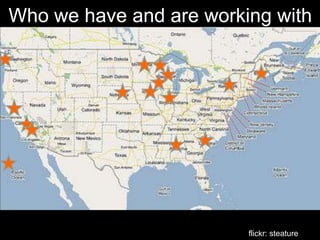
Who we have and are working with


                         flickr: steature
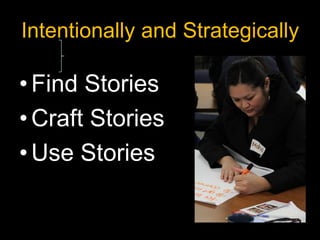
Intentionally and Strategically

• Find Stories
• Craft Stories
• Use Stories
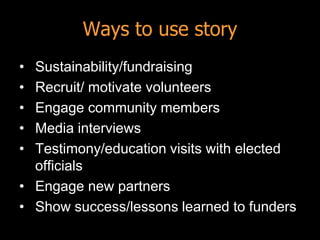
Ways to use story
• Sustainability/fundraising
• Recruit/ motivate volunteers
• Engage community members
• Media interviews
• Testimony/education visits with elected
  officials
• Engage new partners
• Show success/lessons learned to funders
But , not all stories are
       powerful.
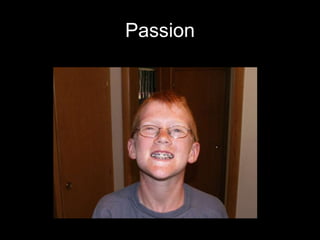
Passion
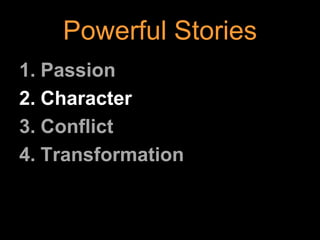
Powerful Stories
1. Passion
2. Character
3. Conflict
4. Transformation
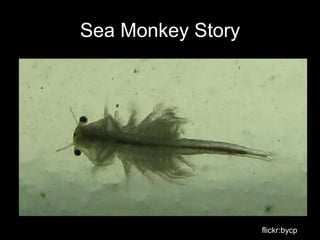
Sea Monkey Story


                   flickr:bycp
Mother Theresa


“If I look at the mass, I
will never act. If I look at
the one, I will.”
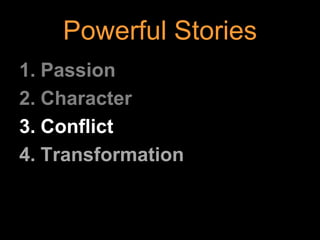
Powerful Stories
1. Passion
2. Character
3. Conflict
4. Transformation
Audience should ask


What happens next?
How will this end?
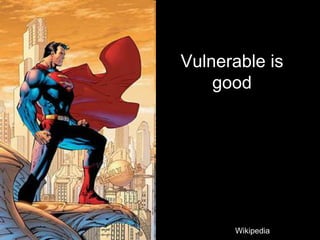
Vulnerable is
    good


      Wikipedia
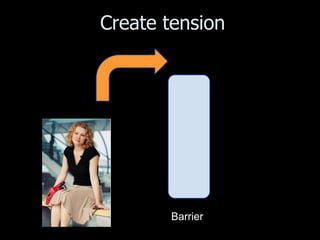
Create tension


       Barrier
Powerful Stories
1. Passion
2. Character
3. Conflict
4. Transformation
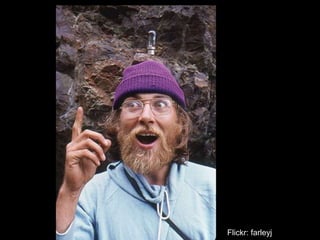
Flickr: farleyj
Powerful Stories
1. Passion
2. Character
3. Conflict
4. Transformation
Stories for a Purpose
Endings
Pivot
Action
Portrait


           Flickr: cliff1066
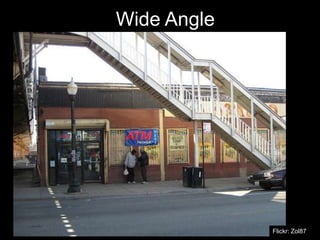
Wide Angle


             Flickr: Zol87
Pivot


           Portrait       Wide Angle


Flickr: cliff 1066                     Flickr: Zol87
Endings
Pivot
Action
“Think about
what you want
people to do.”


  Lori Silverman
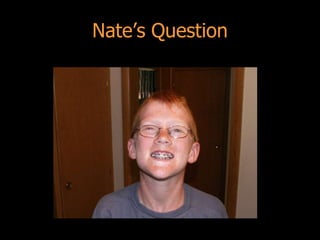
Nate’s Question
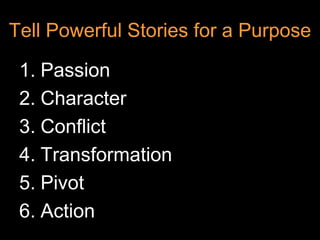
Tell Powerful Stories for a Purpose

 1. Passion
 2. Character
 3. Conflict
 4. Transformation
 5. Pivot
 6. Action
Your Turn
Hannah’s Story
Story Use
Planning
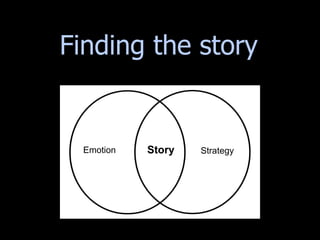
Finding the story


  Emotion   Story   Strategy
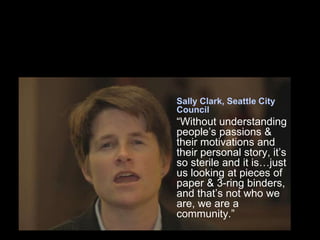
Sally Clark, Seattle City
Council
“Without understanding
people’s passions &
their motivations and
their personal story, it’s
so sterile and it is…just
us looking at pieces of
paper & 3-ring binders,
and that’s not who we
are, we are a
community.”
Ways to use story
• Sustainability/fundraising
• Recruit/ motivate volunteers
• Engage community members
• Media interviews
• Testimony/education visits with elected
  officials
• Engage new partners
• Show success/lessons learned to funders
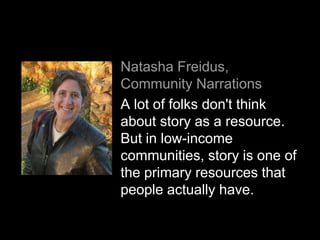
Natasha Freidus,
Community Narrations
A lot of folks don't think
about story as a resource.
But in low-income
communities, story is one of
the primary resources that
people actually have.
Stories take many forms
• Oral
• Video (Storybooth)
• Video (Produced community
  story)
• Photoquote
• Written
• Artistic
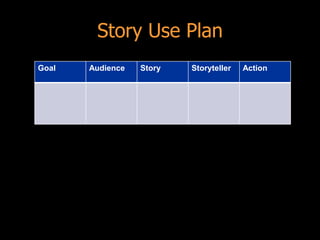
Story Use Plan
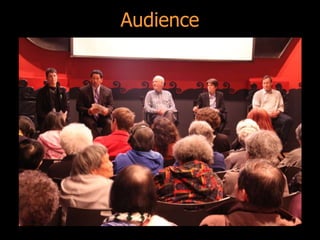
Goal   Audience   Story   Storyteller   Action
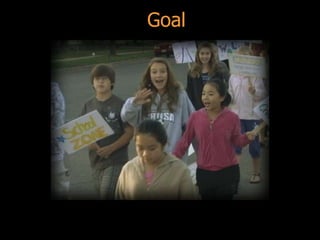
Goal
Audience
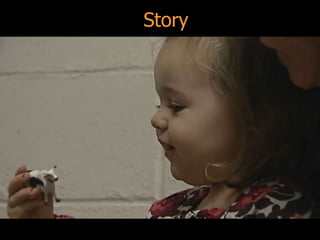
Story
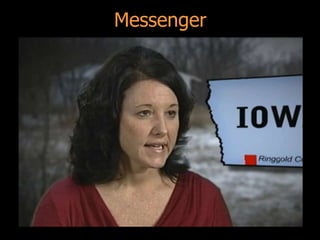
Messenger
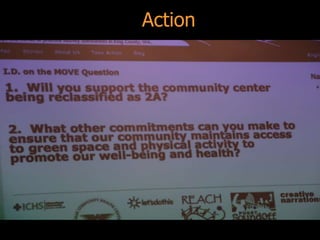
Action
Goal   Audience   Story   Storyteller   Action
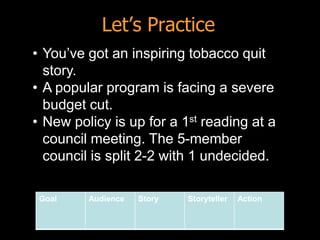
Let’s Practice
• You’ve got an inspiring tobacco quit
  story.
• A popular program is facing a severe
  budget cut.
• New policy is up for a 1st reading at a
  council meeting. The 5-member
  council is split 2-2 with 1 undecided.

 Goal    Audience   Story   Storyteller   Action
How do you
find stories?
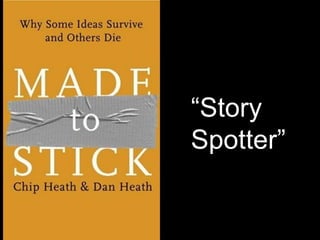
“Story
Spotter”
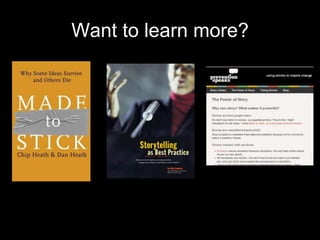
Want to learn more?
Pair Share

   What have you learned about telling and
    listening to stories?

   What are your most useful take aways from
    this session?


Flickr: born1945
Questions?   Comments?
“Because
there are
stories only
you can tell”
Storytelling tools for community change

Storytelling tools for community change

Editor's Notes

  • #2 Any one testified at a public hearing…at 2 am…the night before I was going to testify for the first time…I sat bolt upright in bedMy story, What I learned: easier to testify, made a connection with legilators..my story was rememberedMy first introduction to the power of story
  • #3 Our mission….help you use the power of your voice to influence change
  • #4 What is it about story that makes it so powerful…and how can we use that power strategically?
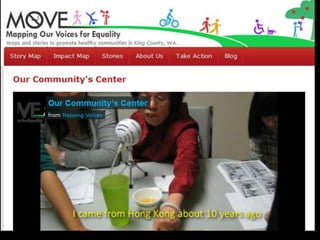
  • #5 The stories communities are telling at
  • #6 Who we have and are working with: Lacrosse, Wood, GLITC, Santa Clara, LA, Hawaii, South Carolina, Iowa, Jefferson Cty, Portland MN, Seattle King Cty, Omaha N….communities, mentors, and TA partnersflickr:steature
  • #7 What we do
  • #11 The result…ten hours were restored
  • #13 This is a list that was created by other training groups..it is in your notes, you can add to it as we go along. Let’s look at a couple of ways that public health I using story
  • #15 You number 1 tip is whether the story touches emotions….Yours and your listeners..do you care…does your audienceI tellnate’s story a lot because it is a powerful story for me…did it touch emotion in any of you?Use your real voicePick a story that you care aboutSpeak from the heart
  • #17 Class got sea monkeys and there were a lot of them..and they were not healthy..and they died…a lot of them…and none of the kids were concerned..didn’t even notice…until..they got down to the very last sea monkey…and then there was a lot of concern…every day they came in the first thing they did was check on sea monkeyWe can care about one…
  • #18 Remember Rokia…remember Nate…remember one angry momOne of the most powerful things you can do..is give me someone I can care about
  • #20 You story needs to be unpredictable…if you want to hold people’s interestWhat are some ways we can create tension?
  • #22 Yourcharacter..or you…want something…and there is something in the way…a barrier to overcomeThis is the most common shape of a story..walking up stairs
  • #24 http://www.flickr.com/photos/farleyj/2768941171/sizes/m/in/photostream/Somethingchanges..the character has an aha moment and…there is a transformation
  • #27 Let’s look at two things that can help you frame your powerful story so that telling it has a purpose..it moves you towards your goalLets start with pivot..if you have had messaging training..you will have heard the term pivot..let’s talk about pivot in the context of moving a powerful story toward a purposeful end
  • #29 http://www.flickr.com/photos/zol87/5577793684/sizes/m/in/photostream/Would it make a difference if I told you her family lives in this neighborhood..this is the only place they can buy food Would where she lives change how you think about the problem and possible solutions?
  • #30 One of the most important things we have to do…is to help our communities and decision makers pivot between the emotional impact of individual stories ( portraits) to the context of place ( where we live, work and play matters ) We need to tell stories that help our listeners move to the wide angle view…
  • #32 The end of your story should have a call to action or a key message…you are telling the story to that audience for a reason…don’t make your audience guess what the reason is
  • #33 The first way I used Nate’s story was in JFC testimony for a statewide SFA law in WIHere is how I ended itI am here today because I couldn’t answer Nate’s question..it’s not OK. All people in WI deserve to breath clean air at work. I’m hear to ask you to support a statewide smokefree air law in WIWhat was the pivot..what was the actionMany core stories can be used more than once..or for more than one purpose
  • #35 Find a corestory..this is a story that is powerful to you..that you may be able to use in multiple ways….like Nate’s story for meFind your story…promptsWrite your story on an index card ( two reasons…can help you think through your story, keeps it short..two minutes)Practice- tell it for the first time multiple times…pay attention if you change the way you tellListen_ how you listen helps people craft or shape their story
  • #43 Small groups
  • #49 Teresa BarbarGLITC Wi Tobacco ControlTestifying at JFC
  • #52 The health brothers advise you to become a story spotterRather than begging for stories…train yourself and your staff to always look and listen for stories…and collect them as you go. You may only need a handful of well told stories.
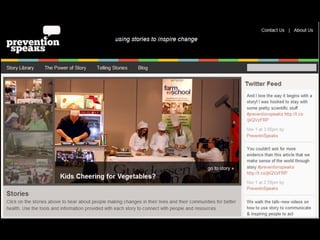
  • #53 You can check out preventionspeaks.org
  • #55 And prevention speaks tool kit
  • #58 You do important work…it is important that you tell your stories..because