It’s not you. It’s your
stories.
Why fundraisers are failing at
storytelling and what they need to
change.
#12NTCNPStory
Sue Citro
Steve Daigneault
Evaluate This Session!
Each entry is a chance to win an NTEN engraved iPad!

                         INSERT
                        QR CODE
                          HERE


or Online at www.nten.org/ntc/eval
Version 1: Institutional approach
 outlining accomplishments and need.

Version 2: Story of one young person
 diagnosed with a debilitating disease.
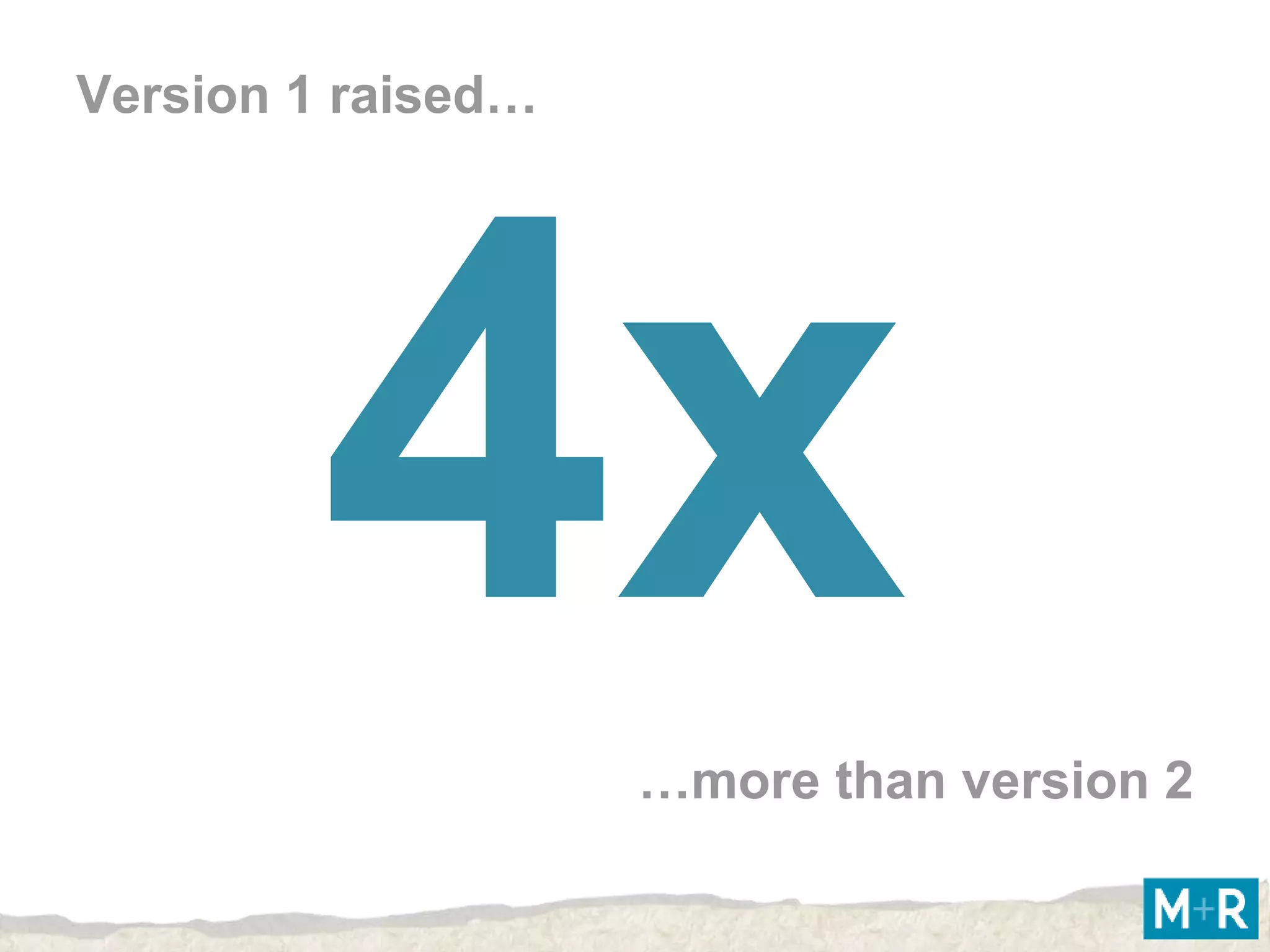
Version 1 raised…


                    …more than version 2
For a national civil rights organization,
 the story version lost by 25%

For an international aid organization,
 there was no statistical difference

In countless other cases, story-based
  appeals have under-performed industry
  and client benchmarks
Science tells us
stories are powerful…
 ̶   They are universal
 ̶   Mirror human thought
 ̶   Shape our identities
 ̶   Define our social community


…so what’s going on?
Two Types of Stories:


     1) Stories that explain

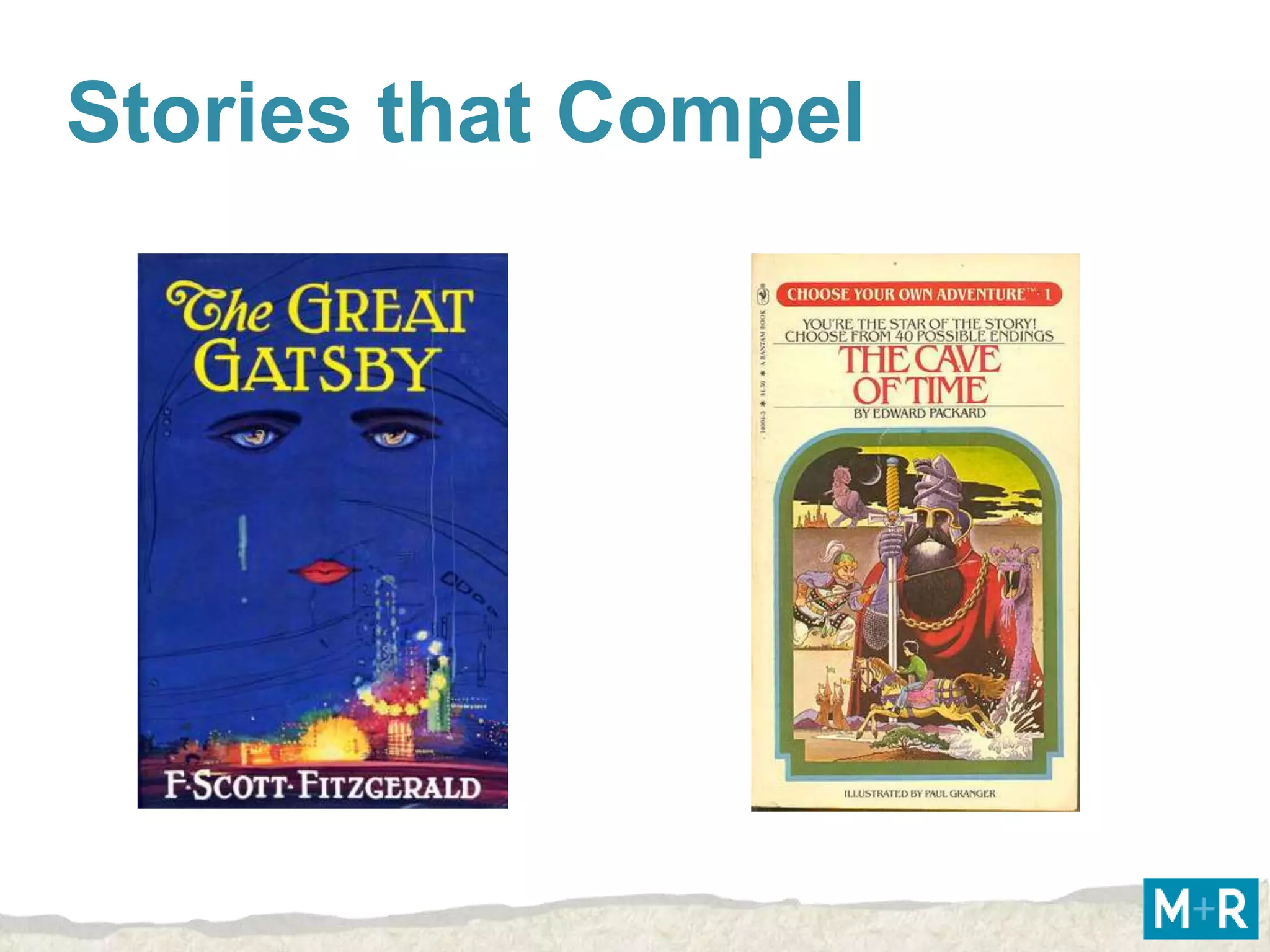
     2) Stories that compel
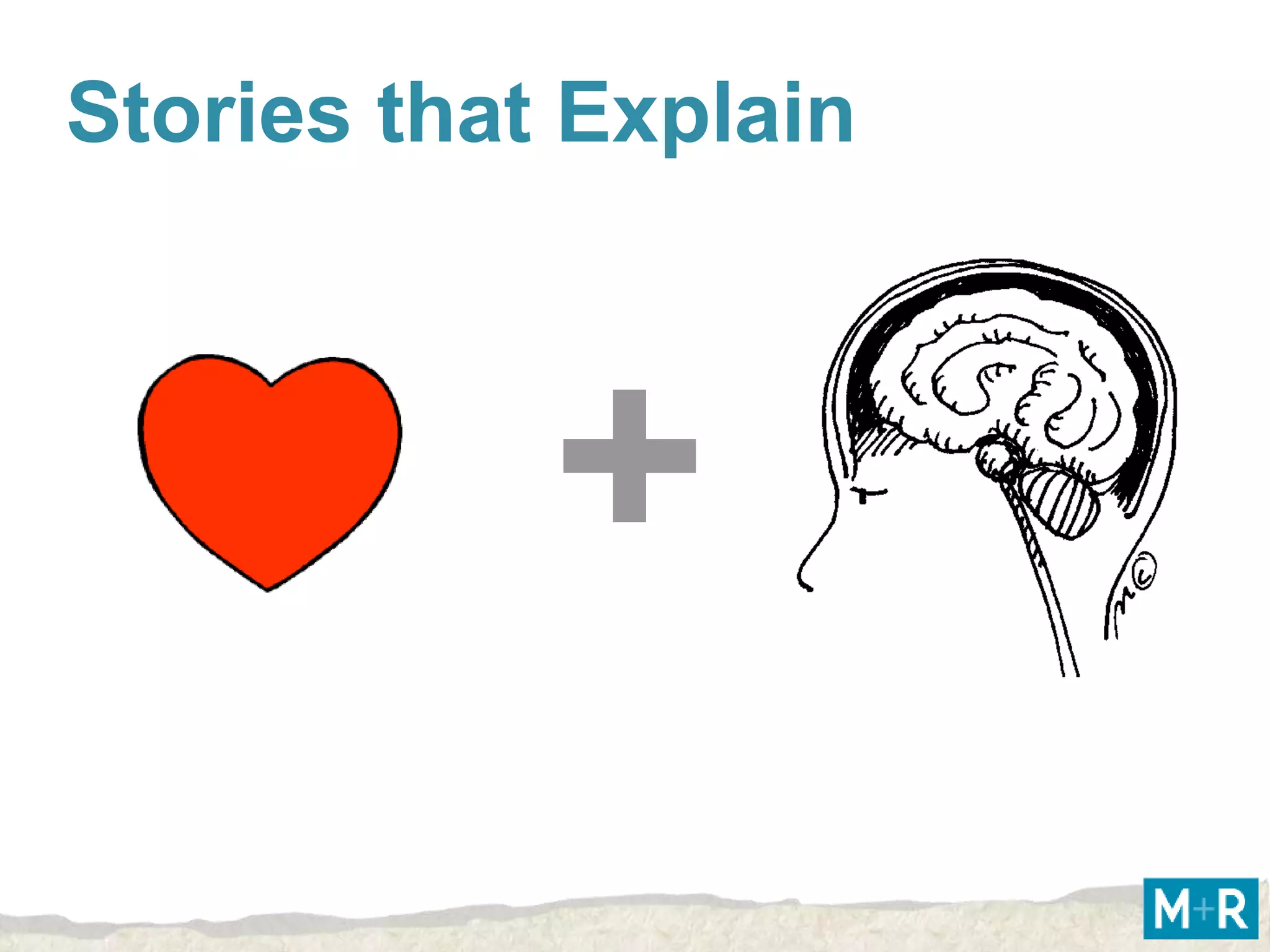
Stories that Explain


            +
Explaining stories don’t,
         by themselves,
  compel readers to act.
Why do people give?
1. “You’ll not onlylife” our work – you’ll know
   To changed a fund
   you
       be happy

2. “Give todayand updates.”
   To feel importantmember and get
   insider info
                to become a


3. “We be Asian savannahtoo.”
   To saved the elephant elephant . story
   save the
            part of a success We can

4. “From Marthaeveryone’s doing it
   Because JimaT., a construction worker
   Tennessee to
                L., grandmother in

    in Florida, Americans everywhere have
    already committed to our fight.”
Stories that Compel
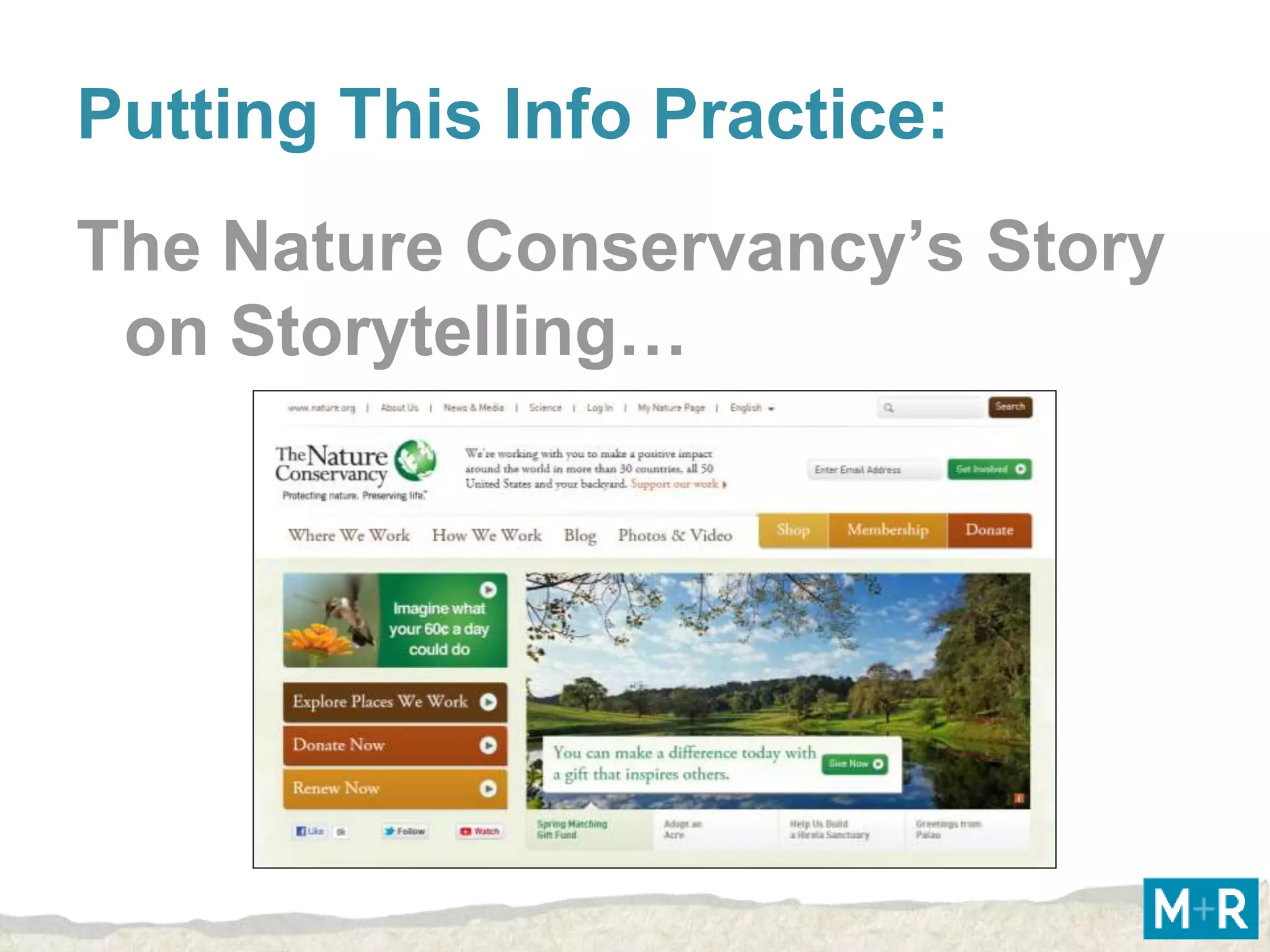
Putting This Info Practice:
The Nature Conservancy’s Story
 on Storytelling…
What I’ve Learned:


Just like U2, I Still Haven’t Found
What I’m Looking for….
We’ve Made Progress
BEFORE:
The Nature Conservancy's efforts to preserve
 the diversity of life on Earth depends solely
 on the support of its members.
AFTER:
Becoming a member can put you at the center
 of critical conservation projects underway all
 across the globe.
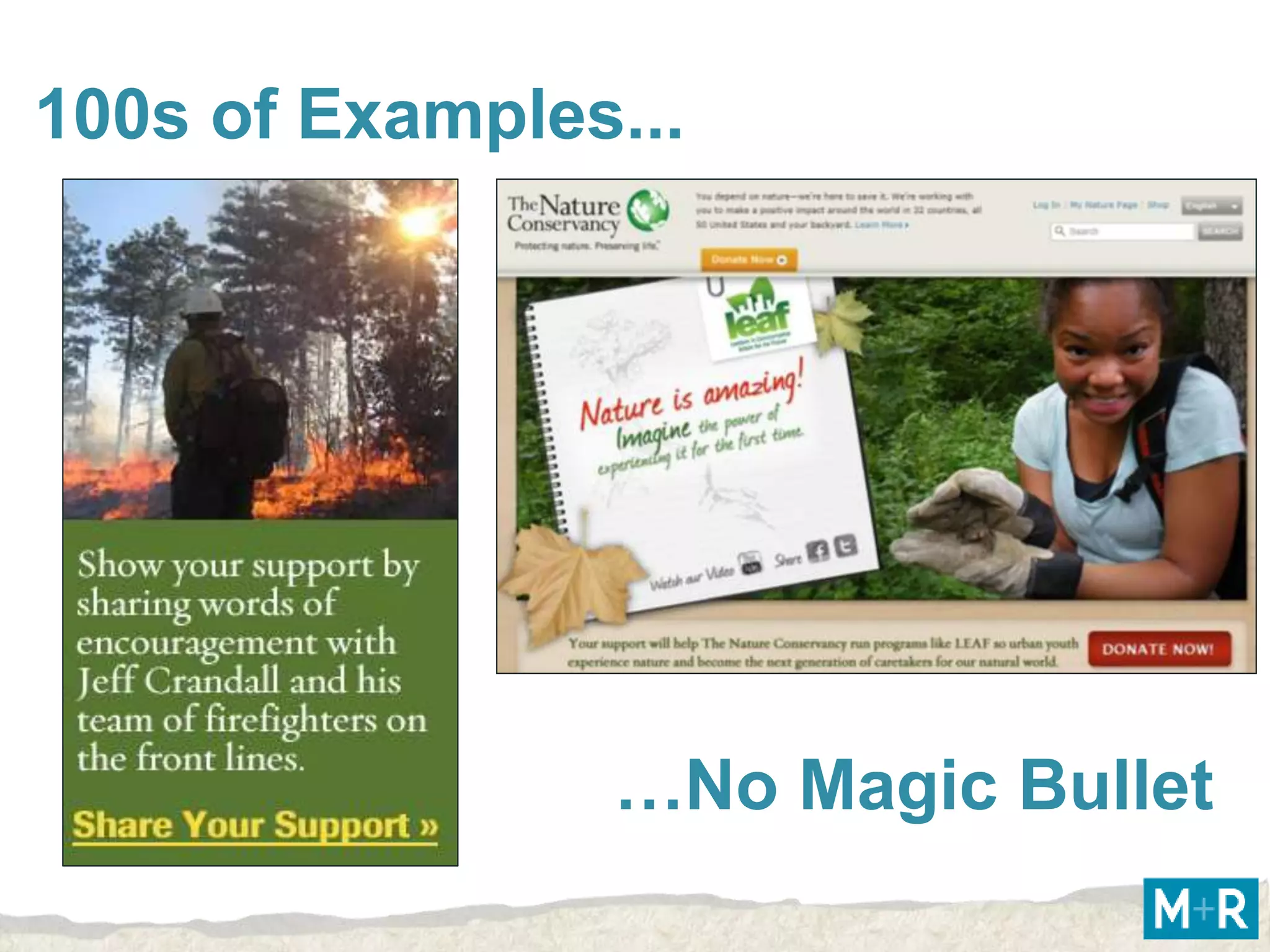
100s of Examples...


                …No Magic Bullet
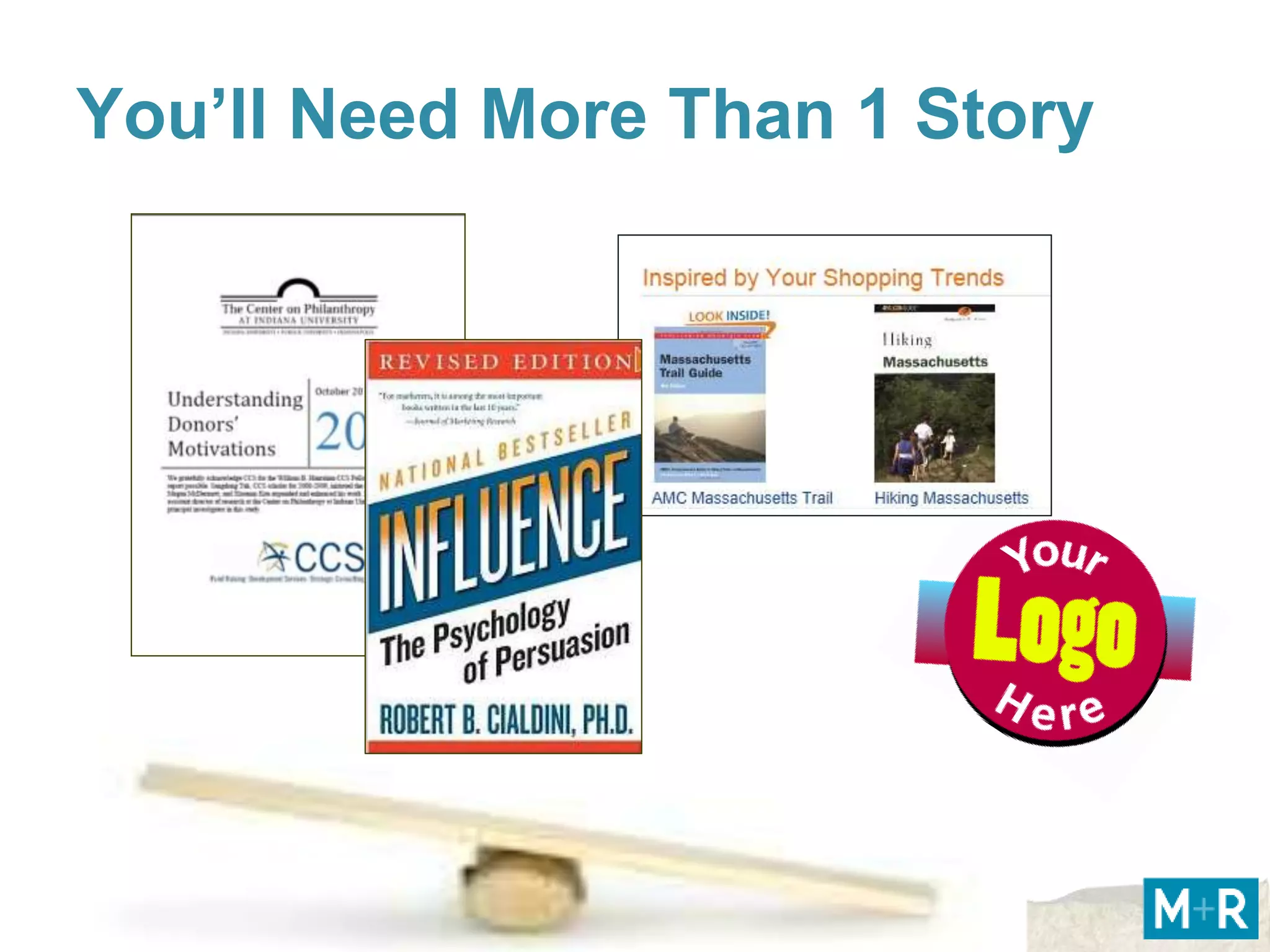
You’ll Need More Than 1 Story
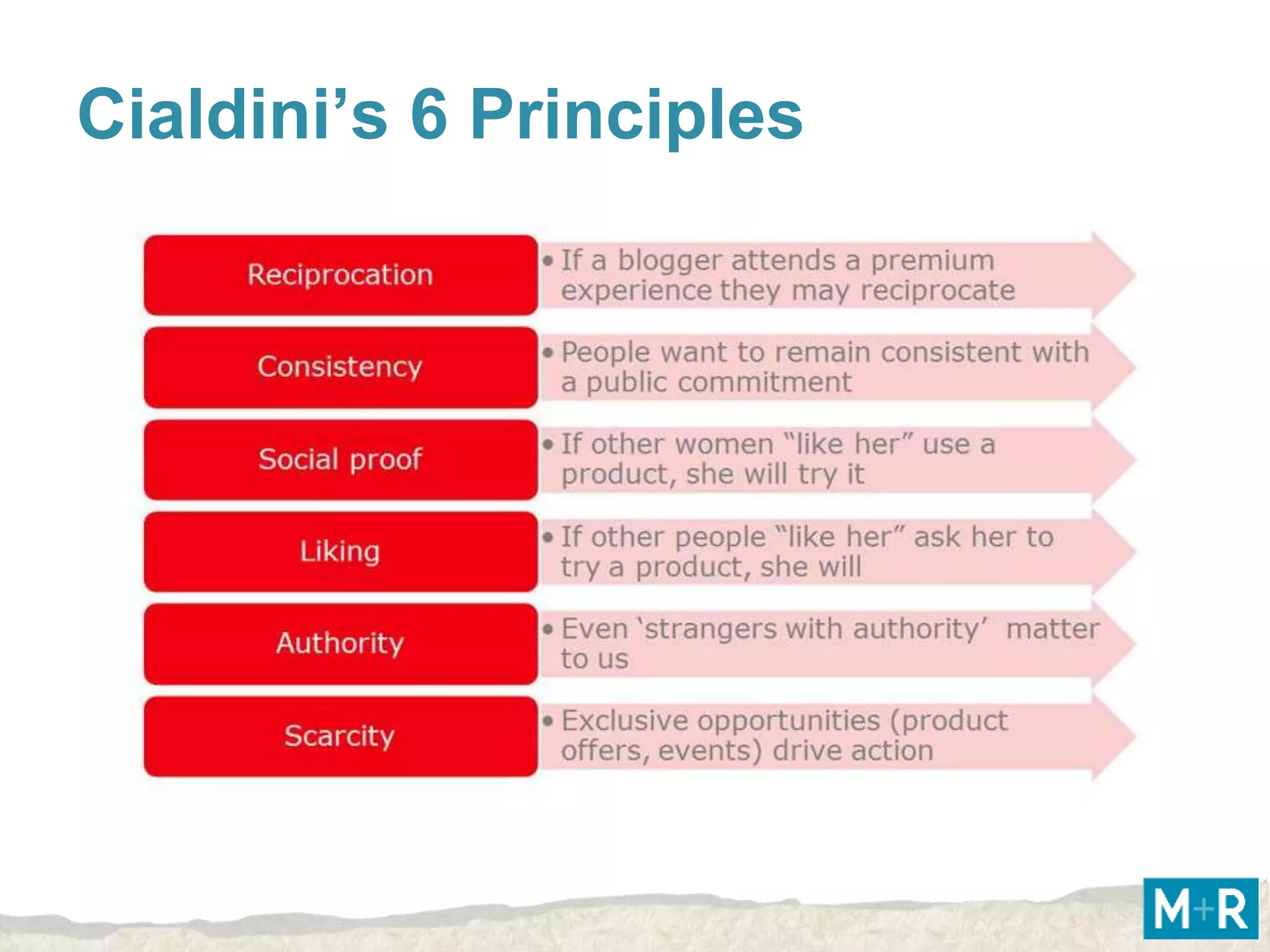
Cialdini’s 6 Principles
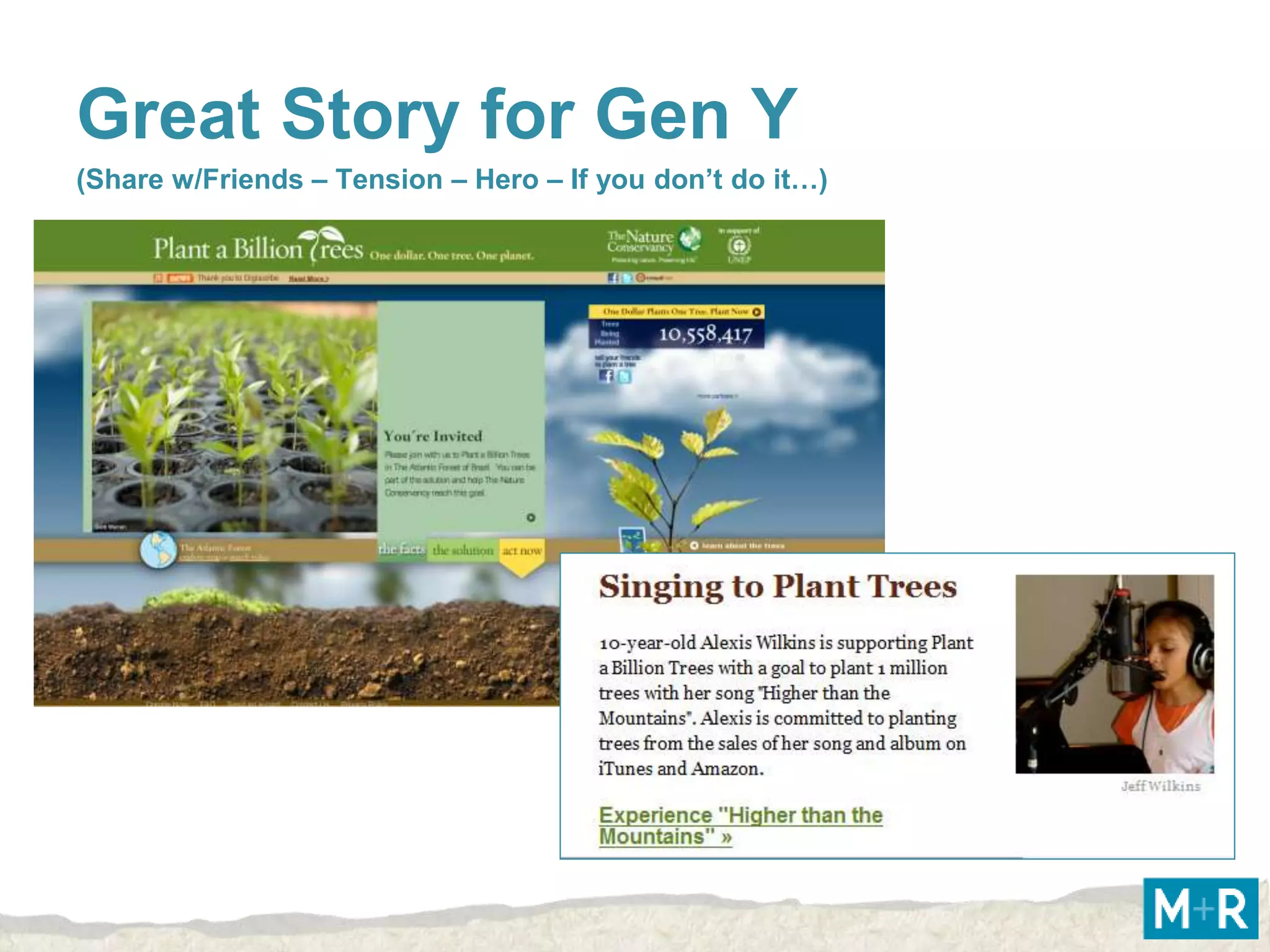
Great Story for Gen Y
(Share w/Friends – Tension – Hero – If you don’t do it…)
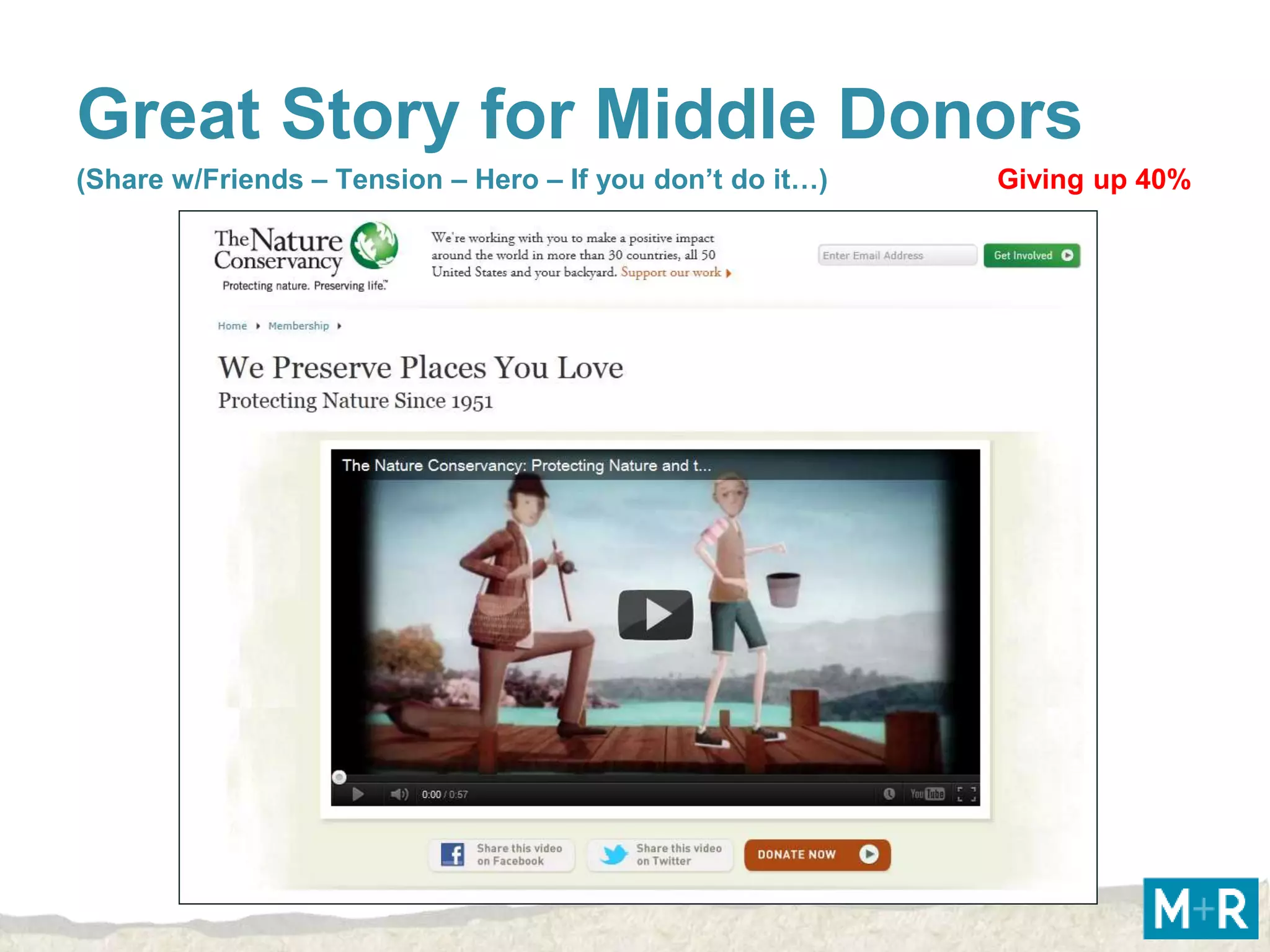
Great Story for Middle Donors
(Share w/Friends – Tension – Hero – If you don’t do it…)   Giving up 40%
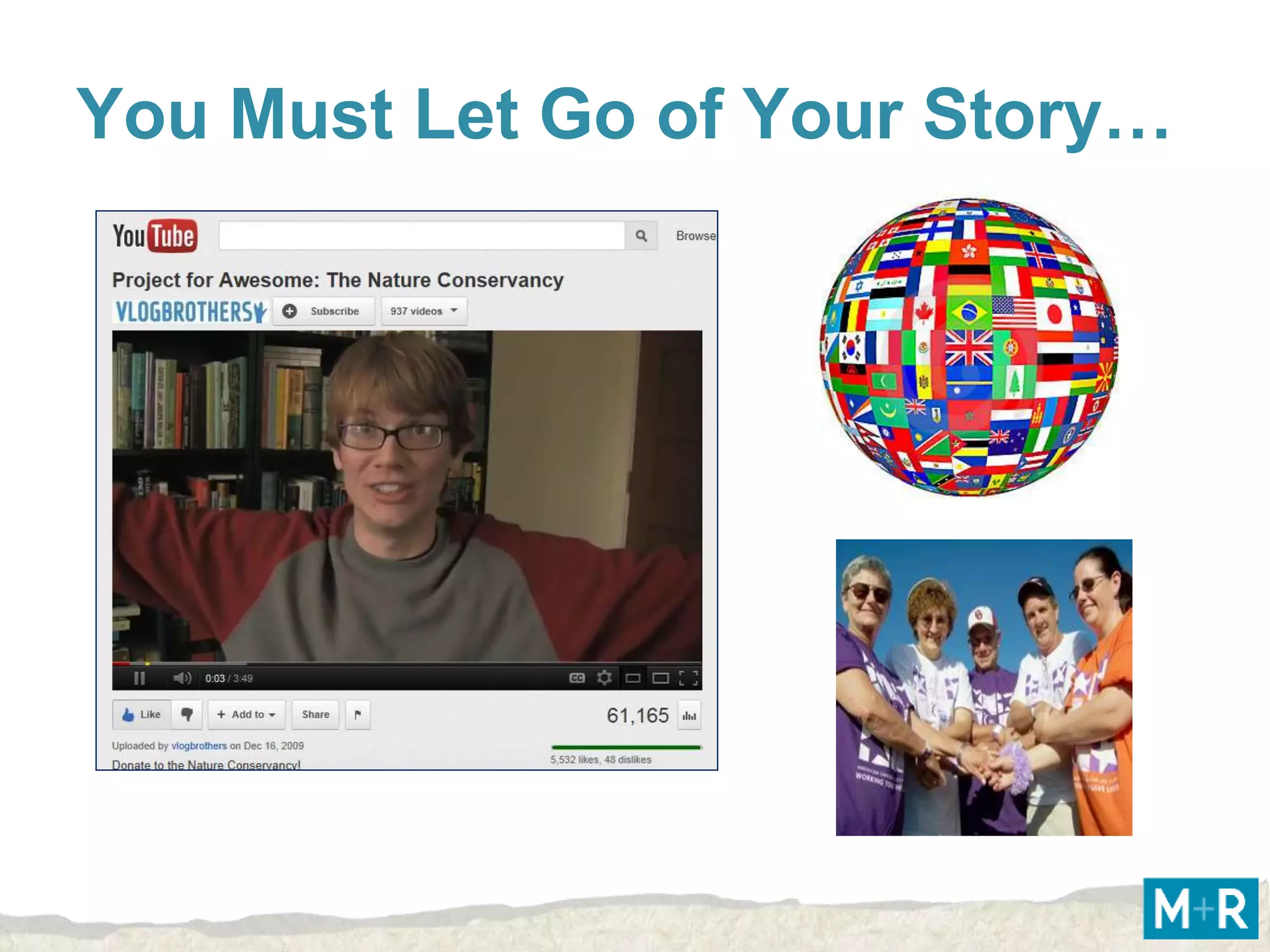
You Must Let Go of Your Story…
The Story is Just the
  Beginning…


Ultimately, you’re building a relationship
and that will never change.
Tips +
Gut Checks
Details matter
Use rich details to make your story feel
 credible.
Try using sensory details about how it
 looks, smells, feels, sounds, or tastes.
Details matter
“He’s only one-and-a-half, but
   Abdirizaq’s hair has turned almost
   white.”
“It comes in easy to hold, crinkly foil
   packets that kids can use to feed
   themselves.”
Use the right “we”
Use “we” or “us” to refer to both your
 organization & supporters – not just
 your organization working alone.
Use the right “we”
“It’s a team effort. It has to be, if we’re
   going to put people back on their feet
   — build clean water systems, teach
   farmers better ways to grow food...”
Create a donor identity
Explain who your donor is – why they
 are special.
Frame “giving” as a chance to be that
 kind of person.
Create a donor identity
“A gift to WCS is something much
   bigger than one donation –
It's a signal that you believe in a future
   where tigers, elephants, and gorillas
   still roam free – and that such a future
   is worth fighting for.”
Make the consequences clear

Explain the consequences of the
 donor’s choice to give or not.
They have a choice to become a
 hero – or not.
Make the consequences clear

“Millions of other children with special
  needs are hoping for a story like
  Shannon's – but right now, their fates
  hang in the balance.
Will you let them continue down the path
  to an uncertain future…or will you step
  in and help?”
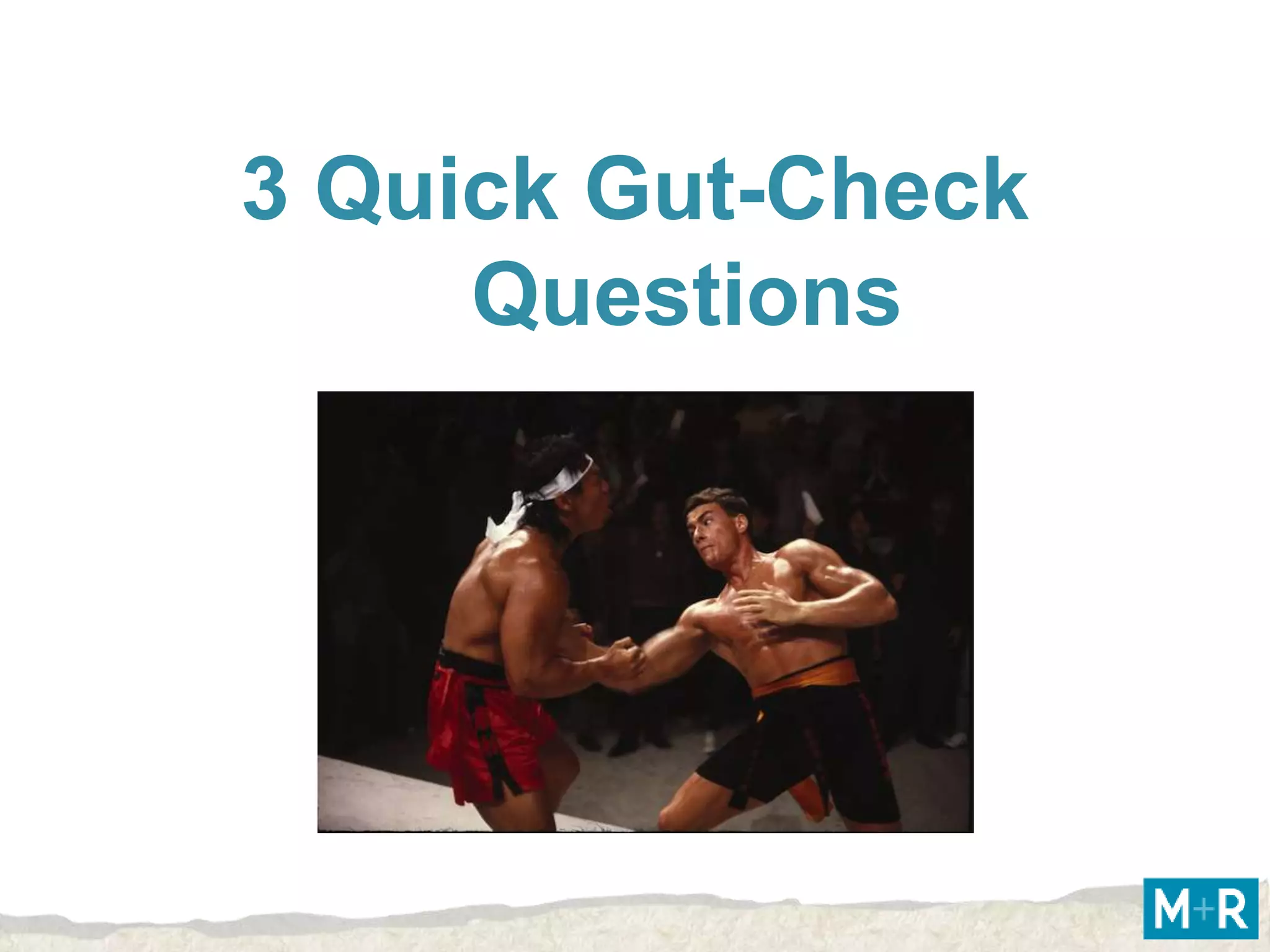
3 Quick Gut-Check
     Questions
1.
 Would I share this story
 whether or not it’s in an
          email?
2.
 Is your story about how
   awesome you are, or
    how awesome your
         donor is?
3.
      Is there unresolved
     tension in the story? Is
       there a role for the
             reader?
Q&A
Contact Us:
Sue Citro – @suecitro
scitro@tnc.org

Steve Daigneault
sdaigneault@mrss.com

Read more at: labs.mrss.com

It's not you. It's your stories.

  • 1.
    It’s not you.It’s your stories. Why fundraisers are failing at storytelling and what they need to change. #12NTCNPStory Sue Citro Steve Daigneault
  • 2.
    Evaluate This Session! Eachentry is a chance to win an NTEN engraved iPad! INSERT QR CODE HERE or Online at www.nten.org/ntc/eval
  • 4.
    Version 1: Institutionalapproach outlining accomplishments and need. Version 2: Story of one young person diagnosed with a debilitating disease.
  • 5.
    Version 1 raised… …more than version 2
  • 6.
    For a nationalcivil rights organization, the story version lost by 25% For an international aid organization, there was no statistical difference In countless other cases, story-based appeals have under-performed industry and client benchmarks
  • 7.
    Science tells us storiesare powerful… ̶ They are universal ̶ Mirror human thought ̶ Shape our identities ̶ Define our social community …so what’s going on?
  • 9.
    Two Types ofStories: 1) Stories that explain 2) Stories that compel
  • 10.
  • 11.
    Explaining stories don’t, by themselves, compel readers to act.
  • 12.
    Why do peoplegive? 1. “You’ll not onlylife” our work – you’ll know To changed a fund you be happy 2. “Give todayand updates.” To feel importantmember and get insider info to become a 3. “We be Asian savannahtoo.” To saved the elephant elephant . story save the part of a success We can 4. “From Marthaeveryone’s doing it Because JimaT., a construction worker Tennessee to L., grandmother in in Florida, Americans everywhere have already committed to our fight.”
  • 13.
  • 14.
    Putting This InfoPractice: The Nature Conservancy’s Story on Storytelling…
  • 15.
    What I’ve Learned: Justlike U2, I Still Haven’t Found What I’m Looking for….
  • 16.
    We’ve Made Progress BEFORE: TheNature Conservancy's efforts to preserve the diversity of life on Earth depends solely on the support of its members. AFTER: Becoming a member can put you at the center of critical conservation projects underway all across the globe.
  • 17.
    100s of Examples... …No Magic Bullet
  • 18.
    You’ll Need MoreThan 1 Story
  • 19.
  • 20.
    Great Story forGen Y (Share w/Friends – Tension – Hero – If you don’t do it…)
  • 21.
    Great Story forMiddle Donors (Share w/Friends – Tension – Hero – If you don’t do it…) Giving up 40%
  • 22.
    You Must LetGo of Your Story…
  • 23.
    The Story isJust the Beginning… Ultimately, you’re building a relationship and that will never change.
  • 24.
  • 25.
    Details matter Use richdetails to make your story feel credible. Try using sensory details about how it looks, smells, feels, sounds, or tastes.
  • 26.
    Details matter “He’s onlyone-and-a-half, but Abdirizaq’s hair has turned almost white.” “It comes in easy to hold, crinkly foil packets that kids can use to feed themselves.”
  • 27.
    Use the right“we” Use “we” or “us” to refer to both your organization & supporters – not just your organization working alone.
  • 28.
    Use the right“we” “It’s a team effort. It has to be, if we’re going to put people back on their feet — build clean water systems, teach farmers better ways to grow food...”
  • 29.
    Create a donoridentity Explain who your donor is – why they are special. Frame “giving” as a chance to be that kind of person.
  • 30.
    Create a donoridentity “A gift to WCS is something much bigger than one donation – It's a signal that you believe in a future where tigers, elephants, and gorillas still roam free – and that such a future is worth fighting for.”
  • 31.
    Make the consequencesclear Explain the consequences of the donor’s choice to give or not. They have a choice to become a hero – or not.
  • 32.
    Make the consequencesclear “Millions of other children with special needs are hoping for a story like Shannon's – but right now, their fates hang in the balance. Will you let them continue down the path to an uncertain future…or will you step in and help?”
  • 33.
  • 34.
    1. Would Ishare this story whether or not it’s in an email?
  • 35.
    2. Is yourstory about how awesome you are, or how awesome your donor is?
  • 36.
    3. Is there unresolved tension in the story? Is there a role for the reader?
  • 37.
  • 38.
    Contact Us: Sue Citro– @suecitro scitro@tnc.org Steve Daigneault sdaigneault@mrss.com Read more at: labs.mrss.com