KbebebewAssefa (EIAR)
Berga Lemaga (ATA)
Tareke Berhe (ATA)
TEF RESEARCH 4 DEVELOPMENT
WHAT DO WE WANT TO BREED FOR?
 High Grain & StrawYield
 Quality Grain and Straw
 Climate Friendly/Resilient
Grain and StrawYield
Resistance 2 Biotic Factors
Resistance toAbiotic
Factors
 Erect, Non-lodging Plants
Conventional Breeding
Non-conventional Breeding
1. Mutation Breeding
2. Intra-species Breeding
3. Biotechnology
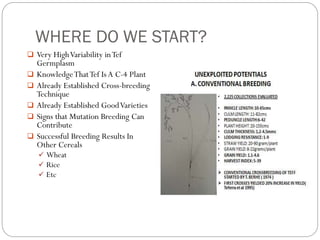
WHERE DO WE START?
 Very HighVariability inTef
Germplasm
 KnowledgeThatTef Is A C-4 Plant
 Already Established Cross-breeding
Technique
 Already Established GoodVarieties
 Signs that Mutation Breeding Can
Contribute
 Successful Breeding Results In
Other Cereals
 Wheat
 Rice
 Etc
IN THE NATIONAL TEF STRATEGY
 BREEDING CHALLENGES
 Insufficient priority is given to tef research,
resulting in limited institutional and
resource capacity
 Limited basic research on tef exists to serve
as a basis for further exploration
 Limited basic research on tef exists to serve
as a basis for further exploration
 Genetic resource collection and
management is insufficient
 Tef varieties released so far do not
adequately address lodging, biotic/abiotic
stress, shattering, food products, etc.
 Limited applied research in many areas
such as socioeconomics, soil, physiology,
food chemistry, crop protection and
mechanization
 PROPOSED INTERVENTIONS
 Enhance institutional system and capacity in
financial, human and material capital
 Strengthen basic research (physiology, genetics,
cytogenetics and genomics) on tef
 Strengthen basic research (physiology, genetics,
cytogenetics and genomics) on tef
 Develop comprehensive genetic resources
collection and characterization
 Strengthen and accelerate varietal development
through breeding /Biotechnology
 Enhance applied research in areas such as
socioeconomics, soil, physiology, food
chemistry, crop protection and mechanization
 Strengthen research related to other value chain
steps
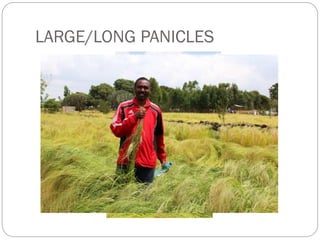
LARGE/LONG PANICLES
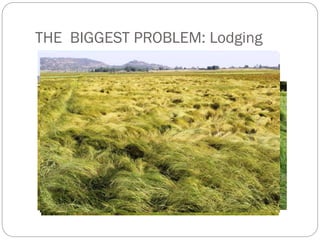
THE BIGGEST PROBLEM: Lodging
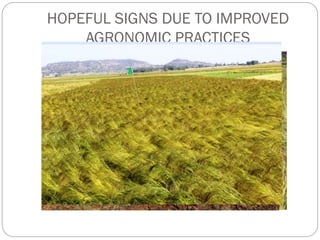
HOPEFUL SIGNS DUE TO IMPROVED
AGRONOMIC PRACTICES
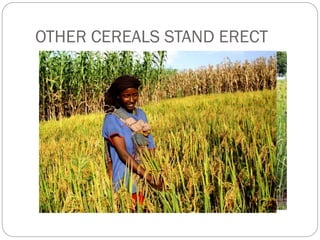
OTHER CEREALS STAND ERECT
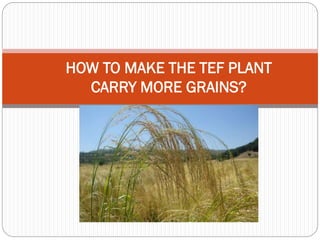
HOW TO MAKE THE TEF PLANT
CARRY MORE GRAINS?
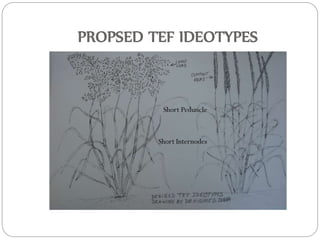
PROPSED TEF IDEOTYPES
Short Peduncle
Short Internodes
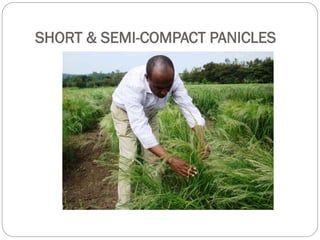
SHORT & SEMI-COMPACT PANICLES
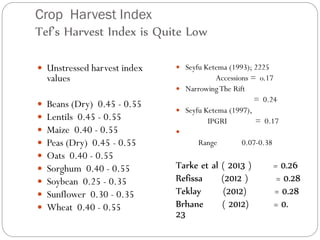
Crop Harvest Index
Tef’s Harvest Index is Quite Low
 Unstressed harvest index
values
 Beans (Dry) 0.45 - 0.55
 Lentils 0.45 - 0.55
 Maize 0.40 - 0.55
 Peas (Dry) 0.45 - 0.55
 Oats 0.40 - 0.55
 Sorghum 0.40 - 0.55
 Soybean 0.25 - 0.35
 Sunflower 0.30 - 0.35
 Wheat 0.40 - 0.55
 Seyfu Ketema (1993); 2225
Accessions = o.17
 NarrowingThe Rift
= 0.24
 Seyfu Ketema (1997),
IPGRI = 0.17

Range 0.07-0.38
Tarke et al ( 2013 ) = 0.26
Refissa (2012 ) = 0.28
Teklay (2012) = 0.28
Brhane ( 2012) = 0.
23
Source:
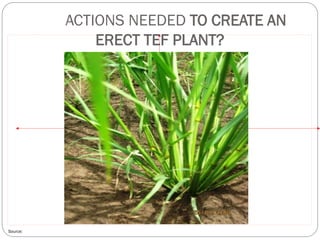
ACTIONS NEEDED TO CREATE AN
ERECT TEF PLANT?
RECOMMENDATIONS
CREATE CENTER OF EXCELLENCE FORTEF-DZ?
HAVE MANY SCIENTISTS (DIFFERENT DESCIPLINES)
WORKING 24/7
PROVIDEADEQUATE INFRASTRUCTURE- LAND,
GREENHOUSES, LABORATORIES, EQUIPMENT, ETC.
ALLOCATE PLENTY MONEY
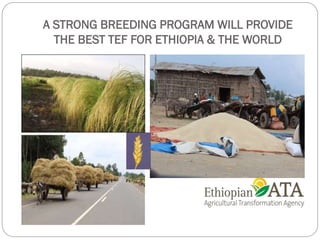
A STRONG BREEDING PROGRAM WILL PROVIDE
THE BEST TEF FOR ETHIOPIA & THE WORLD

Tef research 4 development

  • 1.
    KbebebewAssefa (EIAR) Berga Lemaga(ATA) Tareke Berhe (ATA) TEF RESEARCH 4 DEVELOPMENT
  • 2.
    WHAT DO WEWANT TO BREED FOR?  High Grain & StrawYield  Quality Grain and Straw  Climate Friendly/Resilient Grain and StrawYield Resistance 2 Biotic Factors Resistance toAbiotic Factors  Erect, Non-lodging Plants Conventional Breeding Non-conventional Breeding 1. Mutation Breeding 2. Intra-species Breeding 3. Biotechnology
  • 3.
    WHERE DO WESTART?  Very HighVariability inTef Germplasm  KnowledgeThatTef Is A C-4 Plant  Already Established Cross-breeding Technique  Already Established GoodVarieties  Signs that Mutation Breeding Can Contribute  Successful Breeding Results In Other Cereals  Wheat  Rice  Etc
  • 4.
    IN THE NATIONALTEF STRATEGY  BREEDING CHALLENGES  Insufficient priority is given to tef research, resulting in limited institutional and resource capacity  Limited basic research on tef exists to serve as a basis for further exploration  Limited basic research on tef exists to serve as a basis for further exploration  Genetic resource collection and management is insufficient  Tef varieties released so far do not adequately address lodging, biotic/abiotic stress, shattering, food products, etc.  Limited applied research in many areas such as socioeconomics, soil, physiology, food chemistry, crop protection and mechanization  PROPOSED INTERVENTIONS  Enhance institutional system and capacity in financial, human and material capital  Strengthen basic research (physiology, genetics, cytogenetics and genomics) on tef  Strengthen basic research (physiology, genetics, cytogenetics and genomics) on tef  Develop comprehensive genetic resources collection and characterization  Strengthen and accelerate varietal development through breeding /Biotechnology  Enhance applied research in areas such as socioeconomics, soil, physiology, food chemistry, crop protection and mechanization  Strengthen research related to other value chain steps
  • 5.
  • 6.
  • 7.
    HOPEFUL SIGNS DUETO IMPROVED AGRONOMIC PRACTICES
  • 8.
  • 9.
    HOW TO MAKETHE TEF PLANT CARRY MORE GRAINS?
  • 10.
    PROPSED TEF IDEOTYPES ShortPeduncle Short Internodes
  • 11.
  • 12.
    Crop Harvest Index Tef’sHarvest Index is Quite Low  Unstressed harvest index values  Beans (Dry) 0.45 - 0.55  Lentils 0.45 - 0.55  Maize 0.40 - 0.55  Peas (Dry) 0.45 - 0.55  Oats 0.40 - 0.55  Sorghum 0.40 - 0.55  Soybean 0.25 - 0.35  Sunflower 0.30 - 0.35  Wheat 0.40 - 0.55  Seyfu Ketema (1993); 2225 Accessions = o.17  NarrowingThe Rift = 0.24  Seyfu Ketema (1997), IPGRI = 0.17  Range 0.07-0.38 Tarke et al ( 2013 ) = 0.26 Refissa (2012 ) = 0.28 Teklay (2012) = 0.28 Brhane ( 2012) = 0. 23
  • 13.
    Source: ACTIONS NEEDED TOCREATE AN ERECT TEF PLANT?
  • 14.
    RECOMMENDATIONS CREATE CENTER OFEXCELLENCE FORTEF-DZ? HAVE MANY SCIENTISTS (DIFFERENT DESCIPLINES) WORKING 24/7 PROVIDEADEQUATE INFRASTRUCTURE- LAND, GREENHOUSES, LABORATORIES, EQUIPMENT, ETC. ALLOCATE PLENTY MONEY
  • 15.
    A STRONG BREEDINGPROGRAM WILL PROVIDE THE BEST TEF FOR ETHIOPIA & THE WORLD