1. Who should use Teeth
whitening?
The ideal candidates for teeth whitening
are those who have healthy teeth
without fillings or restorations and healthy
gum tissues. Patients who have
teeth with mild to moderate yellow tones are
more likely to respond to the treatment.
2. Does the whitening system
work on Dentures or Veneers?
The answer is NO. Teeth whitening agents do not
work on porcelain or most bonding agents,
making it effectively impossible to whiten teeth,
dentures, crowns or implants once they are in
your mouth.
3. Is tooth whitening bad for
your Teeth?


Teeth whitening methods have been implemented
and evaluated for decades. Millions of people use
teeth whitening products. The American Dental
Association (ADA) states that safe and effective teeth
whitening options are available for both in-office and
at-home applications and over-the-counter (OTC)
treatments. However, several minor side effects are
sometimes associated with teeth whitening. These
include gum irritation, tooth sensitivity, and impact on
dental restoration.
4. How many shades whiter
can I expect my Teeth to get?
The amount of whitening that can be achieved
by the treatment will depend greatly on the
original condition of your teeth when you come
into the clinic. However most of the teeth
whitening products can make your teeth
anywhere from two to seven or eight shades
lighter.
5. How long do the Teeth
whitening effects last?
The effects of teeth whitening can last up to 2-3 years
or as little as 6 months. Tooth whitening treatments
are designed to reduce stains, not repel them. If you
have good oral habits and keep your teeth clean, at-
home products and dental procedures will last longer.
6. How long does the Teeth
whitening Treatment take?
The average tooth whitening procedure takes about
30 to 90 minutes. Depending on the amount of
lightening your smile needs, it may take several
sessions before you reach your desired shade. With
whitening several times a week, you should begin to
see a difference after one week and reach your
optimum whiteness after two to three weeks,
depending on your level of staining.
7. What questions should I ask
my Dentist to whiten my
teeth?
Don’t be afraid to ask simple questions about the
types of whitening treatment available, what results
you can expect and whether the work is guaranteed
for a certain period of time. You may also want to ask
them whether there are any risks involved – for
example, increasing the sensitivity of your teeth. Try to
talk to other people who’ve had the same treatment
or visit another dentist for a second opinion until you
feel confident. Always ask for a written treatment plan
and price estimate before going a head.
8. Can teeth whitening
damage your Teeth?
Incorrect use of whitening products can result in
damage. Over whitening or having teeth whitening
procedures performed too often can damage teeth.
However if used in correct manner, it doesn’t cause
any damage to the enamel of the teeth.
9. Why do my Teeth not stay
white after whitening?
Teeth whitening is not permanent. The whitening
products applied to your teeth may get the job done
immediately, but their effects will not last forever. While
the whitening and shine tend to stay for a period of
time, even months, foods and beverages that cause
staining can cause the whiteness to fade away. Take
coffee as an example.
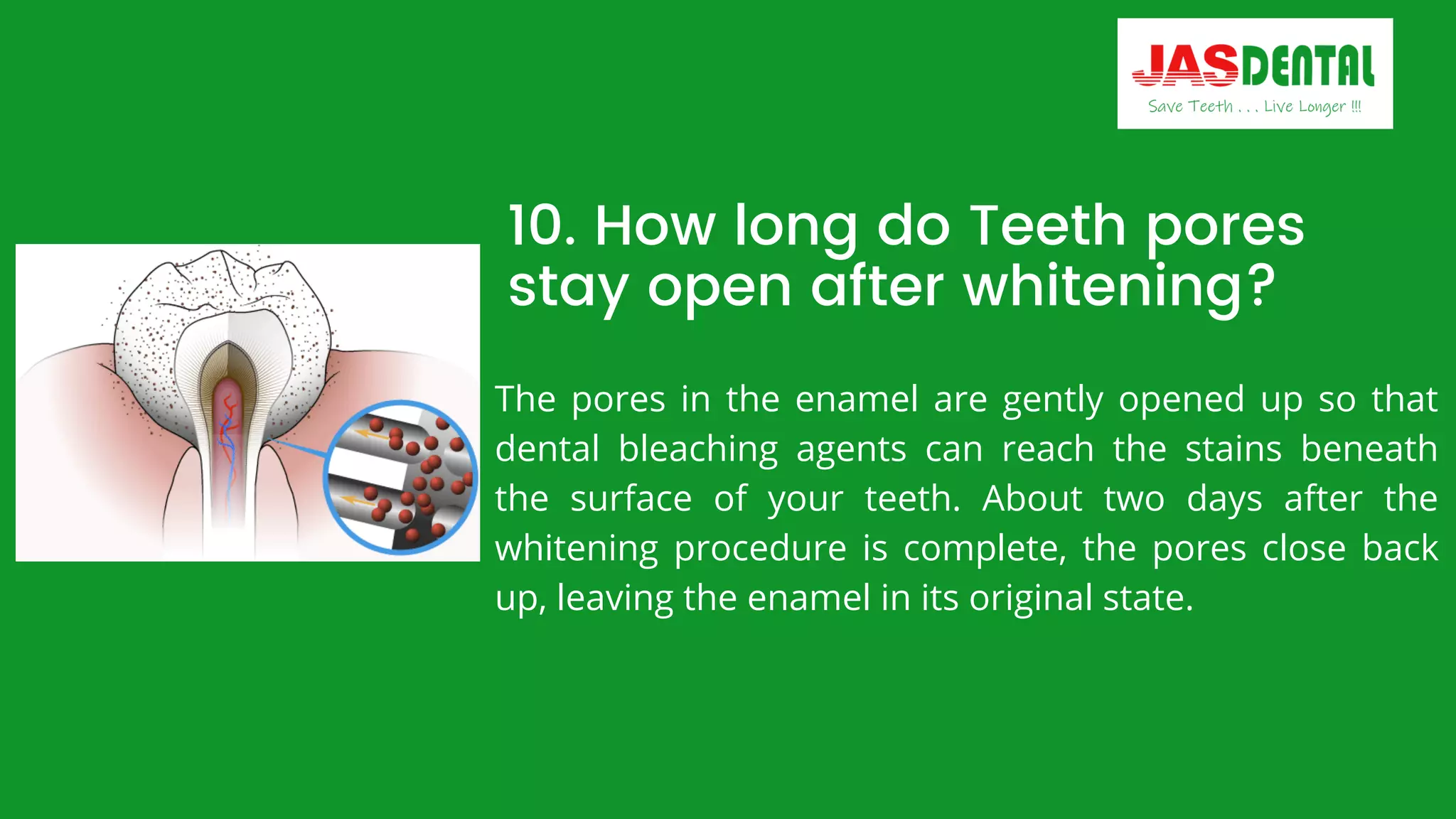
10. How long do Teeth pores
stay open after whitening?
The pores in the enamel are gently opened up so that
dental bleaching agents can reach the stains beneath
the surface of your teeth. About two days after the
whitening procedure is complete, the pores close back
up, leaving the enamel in its original state.
11. When shouldn’t you Whiten
your Teeth?
If you are younger than 16, you are not a candidate for
teeth whitening. This is because the pulp chamber in
young teeth is larger than that of an adult, and
whitening treatments could cause irritation. If you are
pregnant or lactating, teeth whitening is not
recommended. People with gum recession and exposed,
highly sensitive root surfaces may find the whitening
ingredients further irritate their teeth.
12. Can teeth whitening
damage gums?
Whitening your teeth will not cause any permanent damage to
your gums; however temporary gum irritation is among the risk
factors of using professional teeth whitening. Soft tissue or
gum irritation caused by teeth whitening gel is considered a
chemical burn, very comparable to a sunburn. When a
chemical burn occurs, the area becomes mildly sore, turns
white, and will eventually flake off. The tissue will return to
normalcy within twenty-four hours.
13. Can you whiten Teeth too
much?
Excessive use of bleaching products leads to damage and erosion of
the teeth, extreme tooth sensitivity, irritation of the gingiva, or gums
and also leaving you with a higher risk of tooth decay. Whitening
your teeth too much is a serious condition and needs to be
prevented before the symptoms begin.
14. Is Teeth whitening
permanent?
Unfortunately, teeth whitening is not permanent. The length of
your results will depend on your unique case, but typically teeth
whitening can last anywhere from a few months to 3 years. There
are many factors that can affect your results, such as the type of
staining, the thickness of enamel on your teeth, drinking colored
drinks like coffee, red wine or sodas and smoking.
15. Is laser Teeth whitening
better than zoom?
The laser used in Laser teeth whitening procedure is small, so it
can only cover a small amount of the tooth at a time, resulting in
more exposure to whiten the whole smile. This can lead to
unwanted infrared emissions. Laser whitening is better at targeting
specific teeth compared to Zoom.
Whereas in Zoom teeth whitening the light used for the process
filters out infrared emissions to limit the extra heat your teeth are
exposed to. The Zoom light can also hit the entire mouth at once,
which greatly reduces the amount of time it takes to whiten and
leads to a shorter appointment.
16. Does baking soda whiten
Teeth?
Baking soda is good for teeth whitening because it is a very mild
abrasive, which helps remove stains from the surface of your teeth.
In addition, baking soda is alkaline and salty, which helps lighten
acid-based food stains – such as those from coffee, tea, and red
wine – on teeth.
17. What is the difference
between teeth whitening and
teeth bleaching?
It is easy to think of teeth whitening and bleaching as the same
thing, however there is a technical difference:
• A teeth whitening product may restore the colour of your teeth by
removing surface staining, but does not bleach.
• A teeth bleaching product uses hydrogen peroxide to chemically
whiten the teeth beyond their natural shade. Teeth bleaching
products use a food safe hydrogen peroxide or carbamide
peroxide as the active ingredient. These chemicals permeate your
teeth, removing both surface staining and deeper discolouration in
the enamel.
18. Is teeth whitening covered
by Insurance?
Most dental insurance policies do not cover any costs for cosmetic
procedures, such as teeth whitening, tooth shaping, veneers, and
gum contouring. Because these procedures are intended to simply
improve the look of your teeth, they are not considered medically
necessary and must be paid for entirely by the patient.
19. What is the best way to
whiten teeth?


In-office bleaching provides the quickest way to whiten teeth. With
in-office bleaching, the whitening product is applied directly to the
teeth. These products can be used in combination with heat, a
special light, or a laser in order to intensify the whitening process.
The bleaching solution is usually much stronger than at-home kits.
Results are generally seen in only one, 30- to 60-minute treatment.
Some dentists use techniques that can be done in a single 2-hour
appointment (e.g. the Zoom system).
20. Is Zoom whitening
permanent?
The effects of Zoom whitening should last between 12 to 24
months, but with a significant specifications – the length of the
benefits for will vary hugely depending on how well you treat
your teeth afterwards.
21. Can a Dental assistant do
Zoom whitening?
Non-professional teeth whitening services aren’t regulated.
Only trained professional dentists and hygienists are permitted
to use products with higher concentrations of hydrogen
peroxide.
Teeth Whitening Questions

Teeth Whitening Questions

  • 1.
    1. Who shoulduse Teeth whitening? The ideal candidates for teeth whitening are those who have healthy teeth without fillings or restorations and healthy gum tissues. Patients who have teeth with mild to moderate yellow tones are more likely to respond to the treatment.
  • 2.
    2. Does thewhitening system work on Dentures or Veneers? The answer is NO. Teeth whitening agents do not work on porcelain or most bonding agents, making it effectively impossible to whiten teeth, dentures, crowns or implants once they are in your mouth.
  • 3.
    3. Is toothwhitening bad for your Teeth? Teeth whitening methods have been implemented and evaluated for decades. Millions of people use teeth whitening products. The American Dental Association (ADA) states that safe and effective teeth whitening options are available for both in-office and at-home applications and over-the-counter (OTC) treatments. However, several minor side effects are sometimes associated with teeth whitening. These include gum irritation, tooth sensitivity, and impact on dental restoration.
  • 4.
    4. How manyshades whiter can I expect my Teeth to get? The amount of whitening that can be achieved by the treatment will depend greatly on the original condition of your teeth when you come into the clinic. However most of the teeth whitening products can make your teeth anywhere from two to seven or eight shades lighter.
  • 5.
    5. How longdo the Teeth whitening effects last? The effects of teeth whitening can last up to 2-3 years or as little as 6 months. Tooth whitening treatments are designed to reduce stains, not repel them. If you have good oral habits and keep your teeth clean, at- home products and dental procedures will last longer.
  • 6.
    6. How longdoes the Teeth whitening Treatment take? The average tooth whitening procedure takes about 30 to 90 minutes. Depending on the amount of lightening your smile needs, it may take several sessions before you reach your desired shade. With whitening several times a week, you should begin to see a difference after one week and reach your optimum whiteness after two to three weeks, depending on your level of staining.
  • 7.
    7. What questionsshould I ask my Dentist to whiten my teeth? Don’t be afraid to ask simple questions about the types of whitening treatment available, what results you can expect and whether the work is guaranteed for a certain period of time. You may also want to ask them whether there are any risks involved – for example, increasing the sensitivity of your teeth. Try to talk to other people who’ve had the same treatment or visit another dentist for a second opinion until you feel confident. Always ask for a written treatment plan and price estimate before going a head.
  • 8.
    8. Can teethwhitening damage your Teeth? Incorrect use of whitening products can result in damage. Over whitening or having teeth whitening procedures performed too often can damage teeth. However if used in correct manner, it doesn’t cause any damage to the enamel of the teeth.
  • 9.
    9. Why domy Teeth not stay white after whitening? Teeth whitening is not permanent. The whitening products applied to your teeth may get the job done immediately, but their effects will not last forever. While the whitening and shine tend to stay for a period of time, even months, foods and beverages that cause staining can cause the whiteness to fade away. Take coffee as an example.
  • 10.
    10. How longdo Teeth pores stay open after whitening? The pores in the enamel are gently opened up so that dental bleaching agents can reach the stains beneath the surface of your teeth. About two days after the whitening procedure is complete, the pores close back up, leaving the enamel in its original state.
  • 11.
    11. When shouldn’tyou Whiten your Teeth? If you are younger than 16, you are not a candidate for teeth whitening. This is because the pulp chamber in young teeth is larger than that of an adult, and whitening treatments could cause irritation. If you are pregnant or lactating, teeth whitening is not recommended. People with gum recession and exposed, highly sensitive root surfaces may find the whitening ingredients further irritate their teeth.
  • 12.
    12. Can teethwhitening damage gums? Whitening your teeth will not cause any permanent damage to your gums; however temporary gum irritation is among the risk factors of using professional teeth whitening. Soft tissue or gum irritation caused by teeth whitening gel is considered a chemical burn, very comparable to a sunburn. When a chemical burn occurs, the area becomes mildly sore, turns white, and will eventually flake off. The tissue will return to normalcy within twenty-four hours.
  • 13.
    13. Can youwhiten Teeth too much? Excessive use of bleaching products leads to damage and erosion of the teeth, extreme tooth sensitivity, irritation of the gingiva, or gums and also leaving you with a higher risk of tooth decay. Whitening your teeth too much is a serious condition and needs to be prevented before the symptoms begin.
  • 14.
    14. Is Teethwhitening permanent? Unfortunately, teeth whitening is not permanent. The length of your results will depend on your unique case, but typically teeth whitening can last anywhere from a few months to 3 years. There are many factors that can affect your results, such as the type of staining, the thickness of enamel on your teeth, drinking colored drinks like coffee, red wine or sodas and smoking.
  • 15.
    15. Is laserTeeth whitening better than zoom? The laser used in Laser teeth whitening procedure is small, so it can only cover a small amount of the tooth at a time, resulting in more exposure to whiten the whole smile. This can lead to unwanted infrared emissions. Laser whitening is better at targeting specific teeth compared to Zoom. Whereas in Zoom teeth whitening the light used for the process filters out infrared emissions to limit the extra heat your teeth are exposed to. The Zoom light can also hit the entire mouth at once, which greatly reduces the amount of time it takes to whiten and leads to a shorter appointment.
  • 16.
    16. Does bakingsoda whiten Teeth? Baking soda is good for teeth whitening because it is a very mild abrasive, which helps remove stains from the surface of your teeth. In addition, baking soda is alkaline and salty, which helps lighten acid-based food stains – such as those from coffee, tea, and red wine – on teeth.
  • 17.
    17. What isthe difference between teeth whitening and teeth bleaching? It is easy to think of teeth whitening and bleaching as the same thing, however there is a technical difference: • A teeth whitening product may restore the colour of your teeth by removing surface staining, but does not bleach. • A teeth bleaching product uses hydrogen peroxide to chemically whiten the teeth beyond their natural shade. Teeth bleaching products use a food safe hydrogen peroxide or carbamide peroxide as the active ingredient. These chemicals permeate your teeth, removing both surface staining and deeper discolouration in the enamel.
  • 18.
    18. Is teethwhitening covered by Insurance? Most dental insurance policies do not cover any costs for cosmetic procedures, such as teeth whitening, tooth shaping, veneers, and gum contouring. Because these procedures are intended to simply improve the look of your teeth, they are not considered medically necessary and must be paid for entirely by the patient.
  • 19.
    19. What isthe best way to whiten teeth? In-office bleaching provides the quickest way to whiten teeth. With in-office bleaching, the whitening product is applied directly to the teeth. These products can be used in combination with heat, a special light, or a laser in order to intensify the whitening process. The bleaching solution is usually much stronger than at-home kits. Results are generally seen in only one, 30- to 60-minute treatment. Some dentists use techniques that can be done in a single 2-hour appointment (e.g. the Zoom system).
  • 20.
    20. Is Zoomwhitening permanent? The effects of Zoom whitening should last between 12 to 24 months, but with a significant specifications – the length of the benefits for will vary hugely depending on how well you treat your teeth afterwards.
  • 21.
    21. Can aDental assistant do Zoom whitening? Non-professional teeth whitening services aren’t regulated. Only trained professional dentists and hygienists are permitted to use products with higher concentrations of hydrogen peroxide.