Technology Integration: how to achieve it
Colin Harrison, University of Nottingham
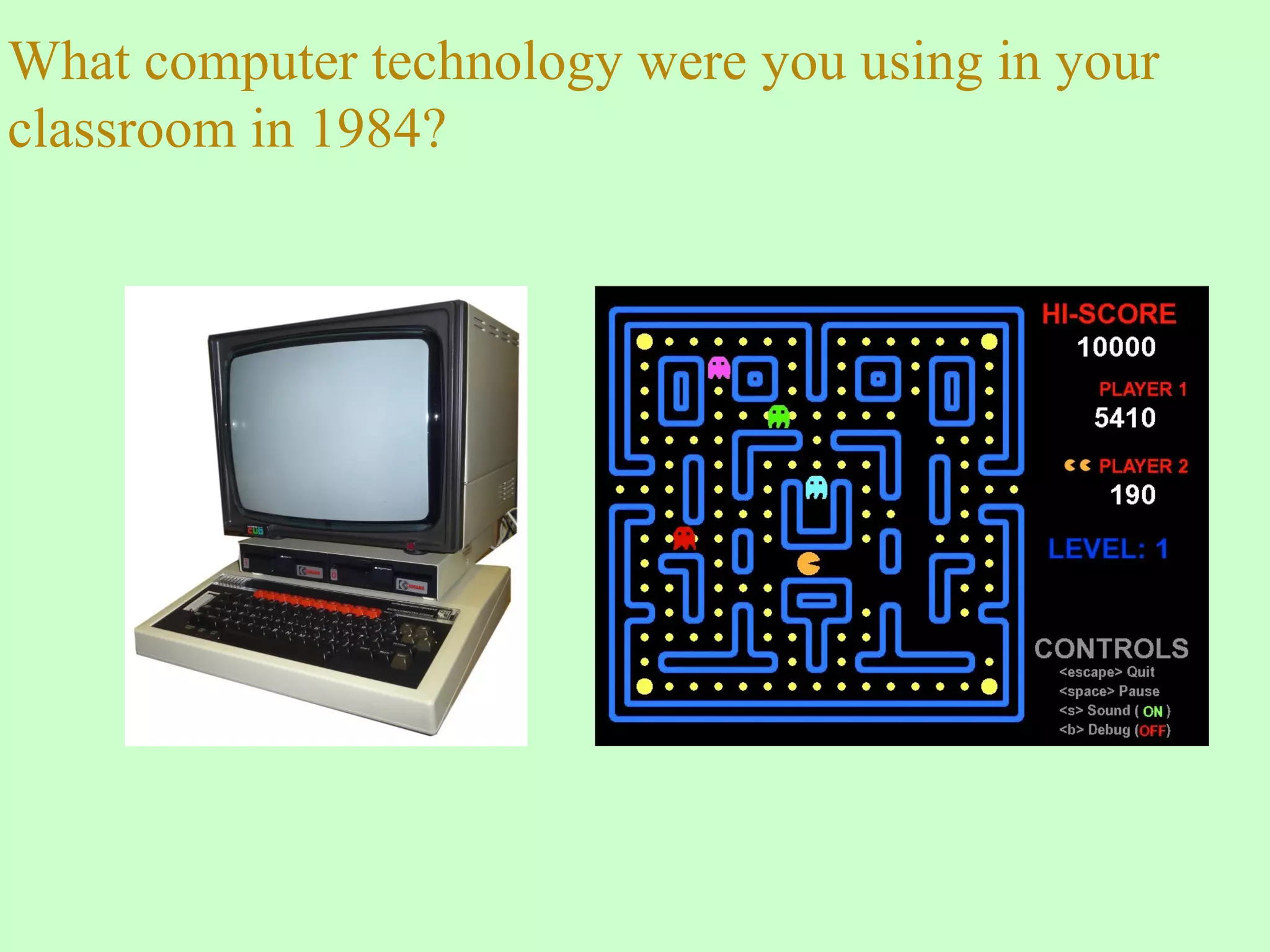
What computer technology were you using in your
classroom in 1984?
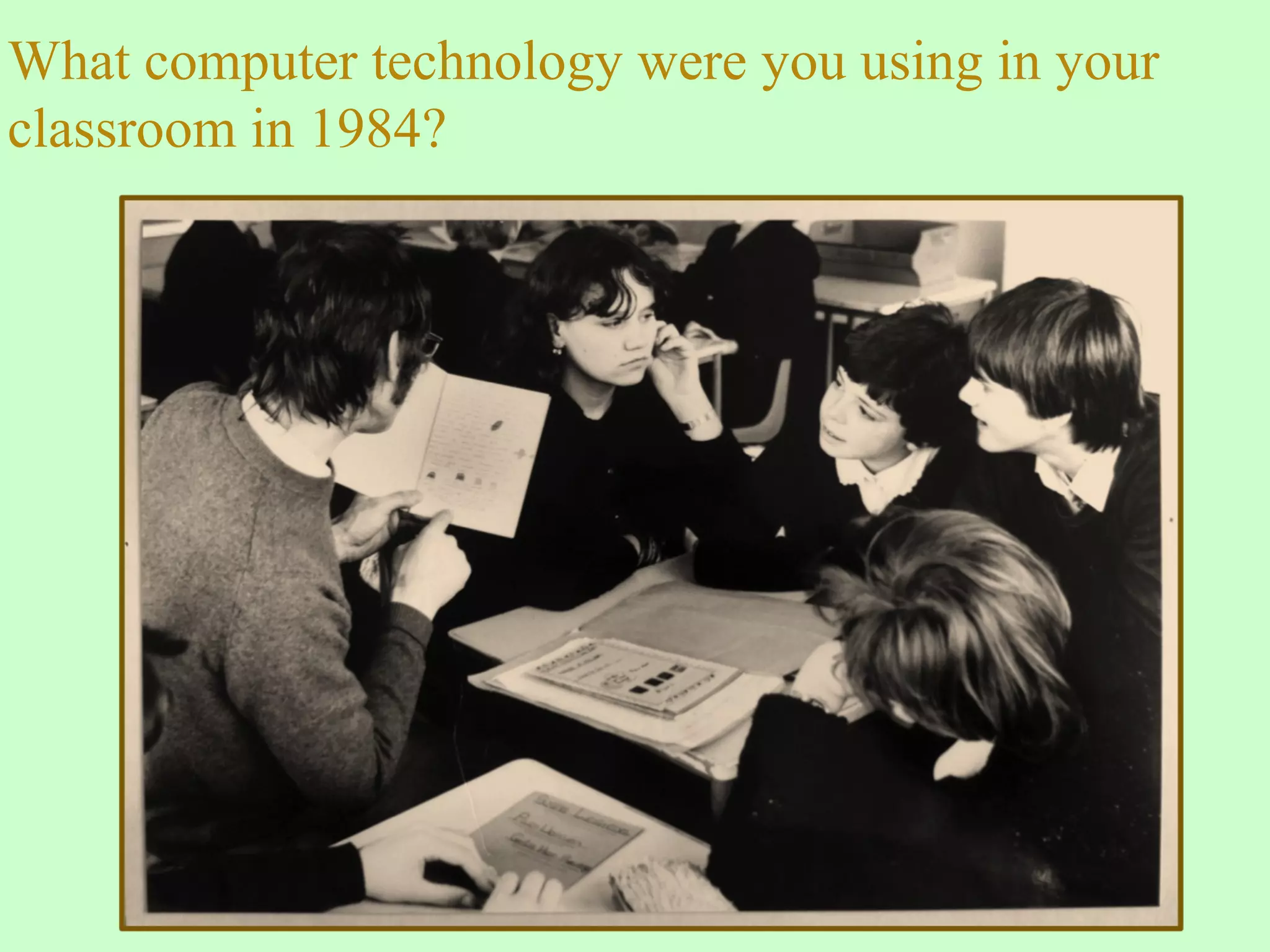
What computer technology were you using in your
classroom in 1984?
1988- 1998
1998-2010
Role:
•Procurement (hardware/infrastructure)
•Promoting national e-learning strategy
•Researching good practice
• 1995 Twenty ‘Education Superhighways’ Projects
• 2002 ImpaCT2 (n=2500; impact on learning)
• 2007 Becta e-portfolios Assessment Project
• 2008 Web 2.0 Technologies Project
• 2009 ImpaCT09 (technology integration)
Five days after the Conservatives took office in 2010…
Becta to close ‘to reduce wasteful spending’….
Current UK government policy in relation to ICT:
•There is no policy on ICT integration
•Schools are encouraged to develop their own policy
•The teaching of computer programming
is now compulsory for all from ages 5-16
•The computing curricular focus is on
• Logic and data analysis
• Programming (at least 2 languages)
• Problem solving using new technologies
• Competence and creativity using ICT
• Internet safety taught from age 5
• [Critical Internet Literacy research needed]
What did Becta learn about technology integration?
ImpaCT09 (Harrison, Tomas, Crook, 2014)
What conditions led to full technology integration?
•Head teacher vision- coupled with determined policy
•A clear understanding of the need for
anytime-anywhere learning
•Emphasis on student self-regulation
When does technology integration fail?
•Senior leaders disagree on end-state goals
•Poor staff development model leaves stragglers behind
•Staff not on board with leader’s vision
Harrison, C., Tomás, C., & Crook, C. (2014). An e-maturity analysis explains
intention–behavior disjunctions in technology adoption in UK schools. Computers in
Human Behavior, 34, 345-351.
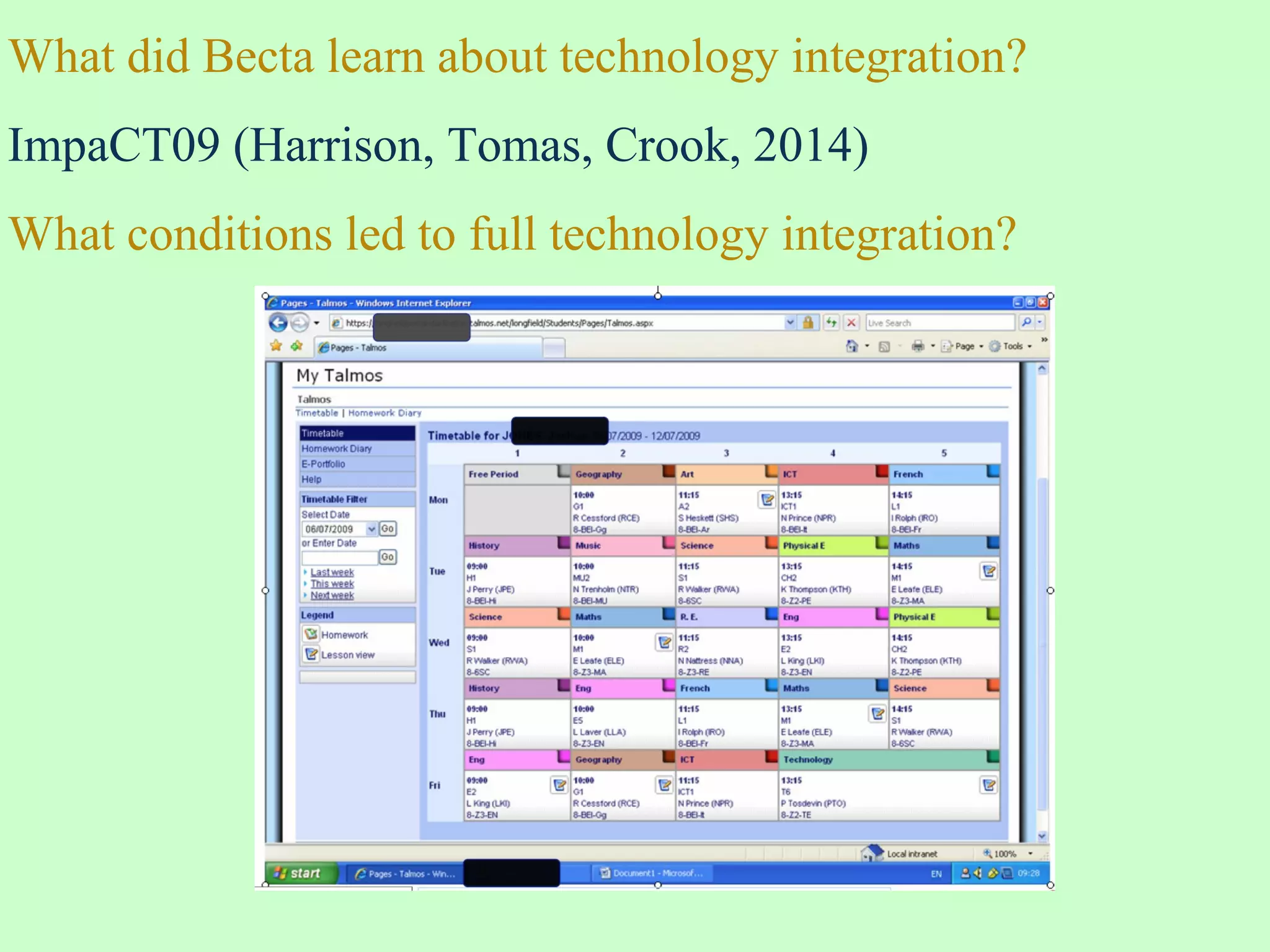
What did Becta learn about technology integration?
ImpaCT09 (Harrison, Tomas, Crook, 2014)
What conditions led to full technology integration?
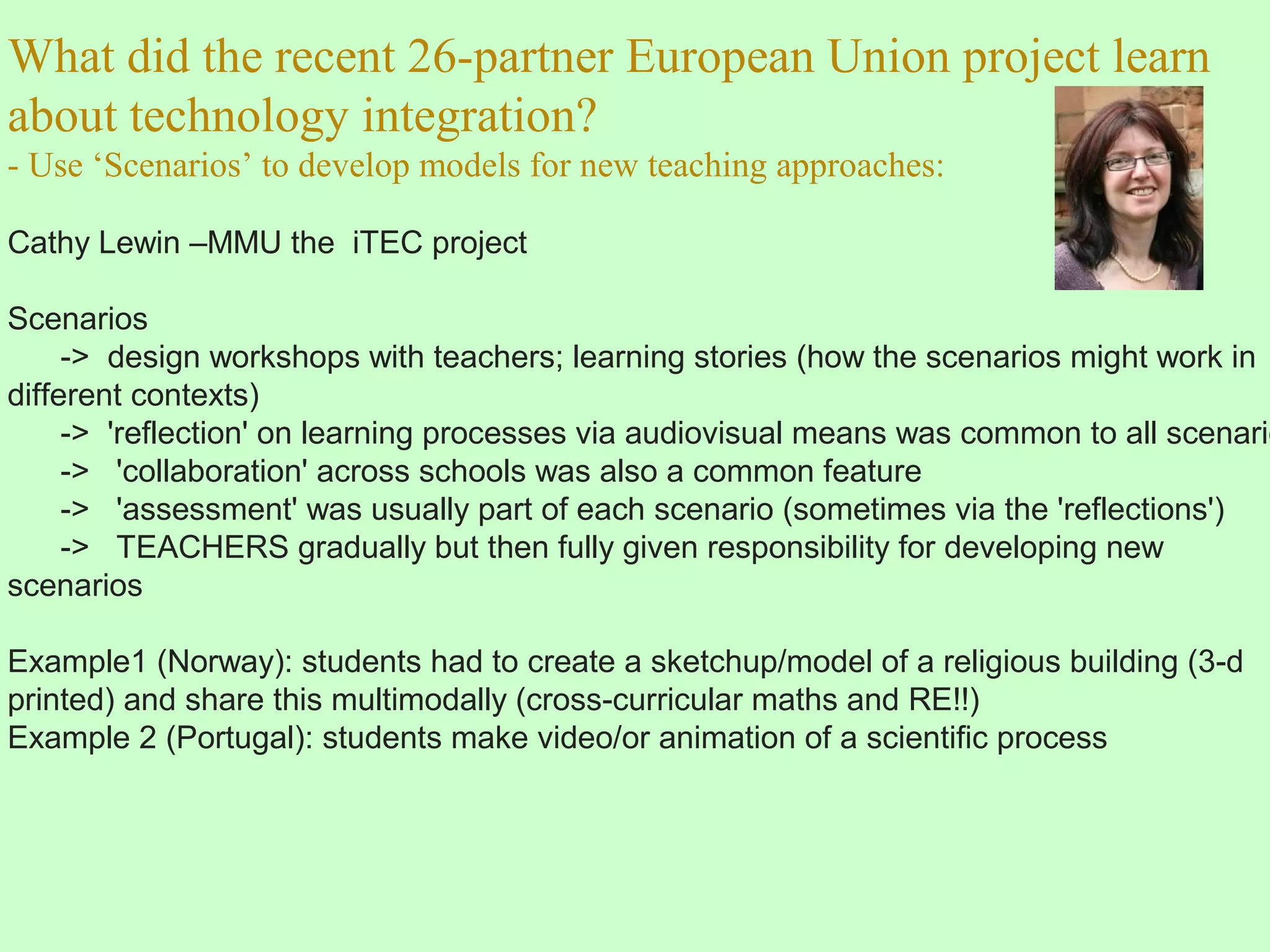
What did the recent 26-partner European Union project learn
about technology integration?
- Use ‘Scenarios’ to develop models for new teaching approaches:
Cathy Lewin –MMU the iTEC project
Scenarios
-> design workshops with teachers; learning stories (how the scenarios might work in
different contexts)
-> 'reflection' on learning processes via audiovisual means was common to all scenario
-> 'collaboration' across schools was also a common feature
-> 'assessment' was usually part of each scenario (sometimes via the 'reflections')
-> TEACHERS gradually but then fully given responsibility for developing new
scenarios
Example1 (Norway): students had to create a sketchup/model of a religious building (3-d
printed) and share this multimodally (cross-curricular maths and RE!!)
Example 2 (Portugal): students make video/or animation of a scientific process
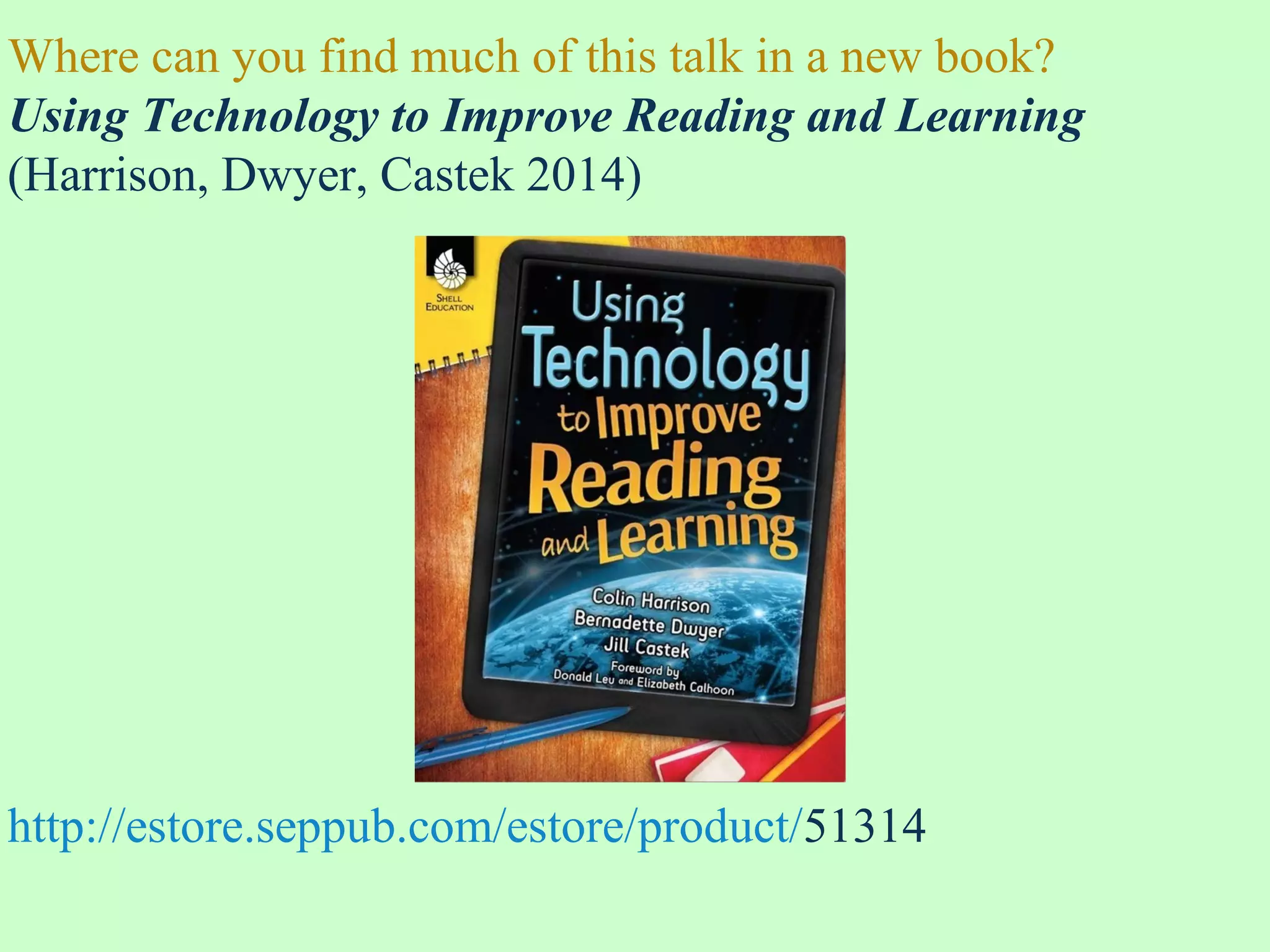
Where can you find much of this talk in a new book?
Using Technology to Improve Reading and Learning
(Harrison, Dwyer, Castek 2014)
http://estore.seppub.com/estore/product/51314
Technology Integration: how to achieve it
Colin Harrison, University of Nottingham

Technology Integration: how to achieve it

  • 1.
    Technology Integration: howto achieve it Colin Harrison, University of Nottingham
  • 2.
    What computer technologywere you using in your classroom in 1984?
  • 3.
    What computer technologywere you using in your classroom in 1984?
  • 4.
    1988- 1998 1998-2010 Role: •Procurement (hardware/infrastructure) •Promotingnational e-learning strategy •Researching good practice
  • 5.
    • 1995 Twenty‘Education Superhighways’ Projects • 2002 ImpaCT2 (n=2500; impact on learning) • 2007 Becta e-portfolios Assessment Project • 2008 Web 2.0 Technologies Project • 2009 ImpaCT09 (technology integration)
  • 6.
    Five days afterthe Conservatives took office in 2010… Becta to close ‘to reduce wasteful spending’….
  • 7.
    Current UK governmentpolicy in relation to ICT:
  • 8.
    Current UK governmentpolicy in relation to ICT: •There is no policy on ICT integration •Schools are encouraged to develop their own policy •The teaching of computer programming is now compulsory for all from ages 5-16 •The computing curricular focus is on • Logic and data analysis • Programming (at least 2 languages) • Problem solving using new technologies • Competence and creativity using ICT • Internet safety taught from age 5 • [Critical Internet Literacy research needed]
  • 9.
    What did Bectalearn about technology integration? ImpaCT09 (Harrison, Tomas, Crook, 2014) What conditions led to full technology integration? •Head teacher vision- coupled with determined policy •A clear understanding of the need for anytime-anywhere learning •Emphasis on student self-regulation When does technology integration fail? •Senior leaders disagree on end-state goals •Poor staff development model leaves stragglers behind •Staff not on board with leader’s vision Harrison, C., Tomás, C., & Crook, C. (2014). An e-maturity analysis explains intention–behavior disjunctions in technology adoption in UK schools. Computers in Human Behavior, 34, 345-351.
  • 10.
    What did Bectalearn about technology integration? ImpaCT09 (Harrison, Tomas, Crook, 2014) What conditions led to full technology integration?
  • 11.
    What did therecent 26-partner European Union project learn about technology integration? - Use ‘Scenarios’ to develop models for new teaching approaches: Cathy Lewin –MMU the iTEC project Scenarios -> design workshops with teachers; learning stories (how the scenarios might work in different contexts) -> 'reflection' on learning processes via audiovisual means was common to all scenario -> 'collaboration' across schools was also a common feature -> 'assessment' was usually part of each scenario (sometimes via the 'reflections') -> TEACHERS gradually but then fully given responsibility for developing new scenarios Example1 (Norway): students had to create a sketchup/model of a religious building (3-d printed) and share this multimodally (cross-curricular maths and RE!!) Example 2 (Portugal): students make video/or animation of a scientific process
  • 12.
    Where can youfind much of this talk in a new book? Using Technology to Improve Reading and Learning (Harrison, Dwyer, Castek 2014) http://estore.seppub.com/estore/product/51314
  • 13.
    Technology Integration: howto achieve it Colin Harrison, University of Nottingham