The Department of Basic
Education Circular requiring
proprietary office & programming
technologies:
An excellent example of how
not to do IT in education in
South African schools
Derek Keats, PhD
derek@dkeats.com
http://dkeats.com
Derek Keats, PhD
derek@dkeats.com
http://dkeats.com
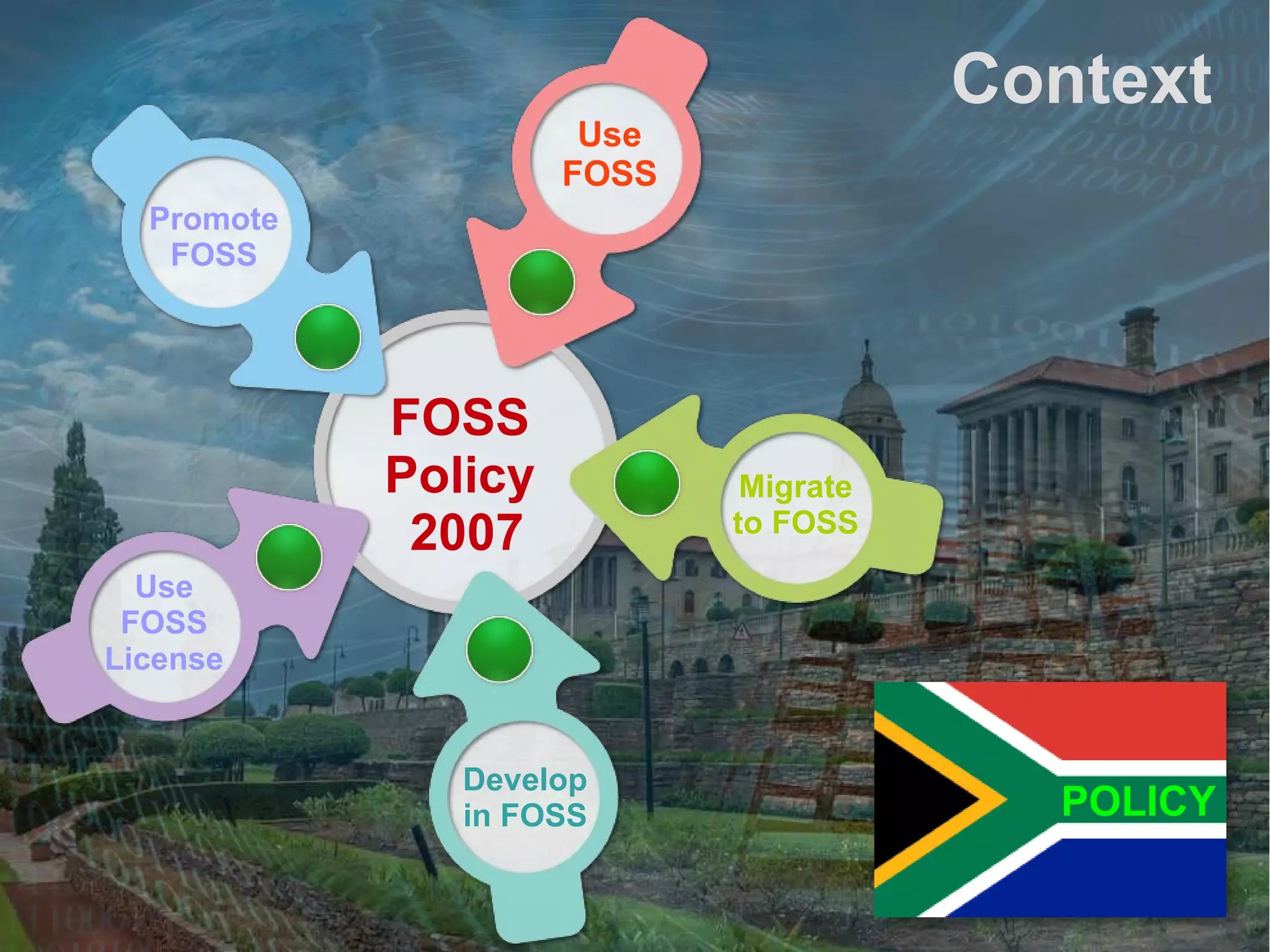
Context

Use
FOSS
Promote
FOSS

FOSS
Policy
2007

Migrate
to FOSS

Use
FOSS
License

Develop
in FOSS

POLICY
MINIMUM INTEROPERABILITY
STANDARDS (MIOS)
for Government Information Systems

Office Document formats
Open Document Format (ODF)
[SANS 26300]
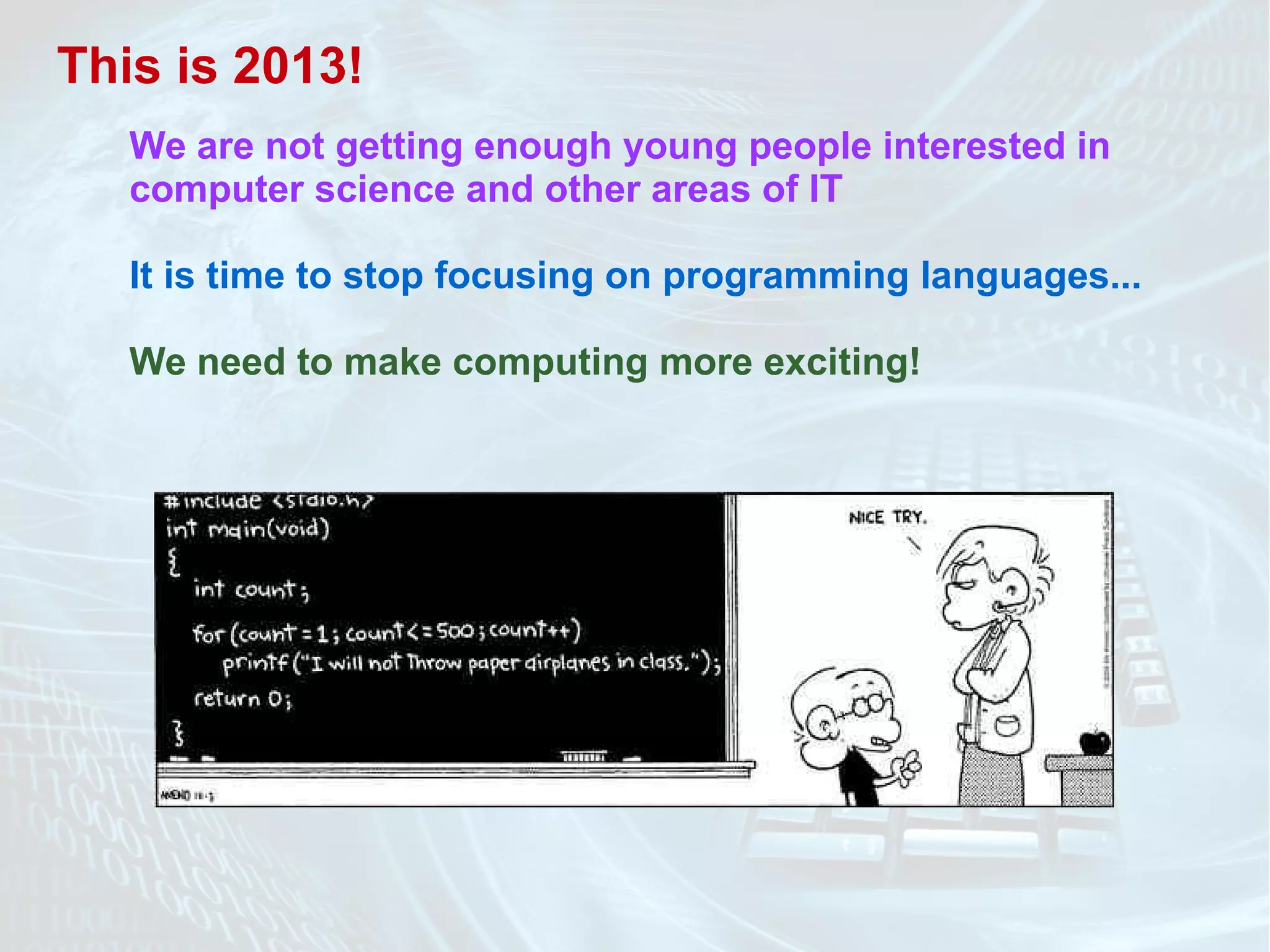
This is 2013!
We are not getting enough young people interested in
computer science and other areas of IT
It is time to stop focusing on programming languages...
We need to make computing more exciting!
Injecting vision into the curriculum:
Free and Open Technologies

platforms

Free Software
(Open Source)

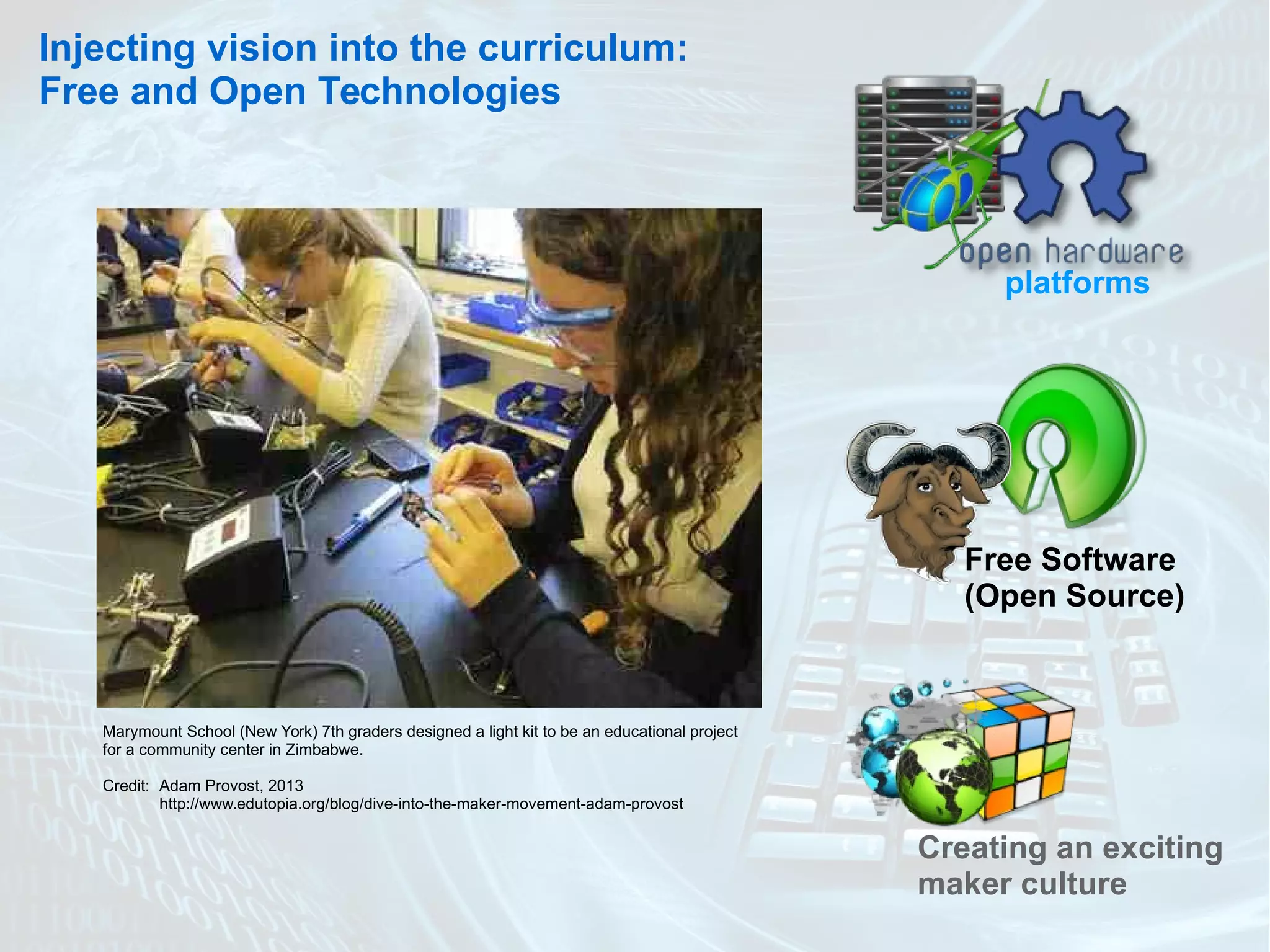
Marymount School (New York) 7th graders designed a light kit to be an educational project
for a community center in Zimbabwe.
Credit: Adam Provost, 2013
http://www.edutopia.org/blog/dive-into-the-maker-movement-adam-provost

Creating an exciting
maker culture
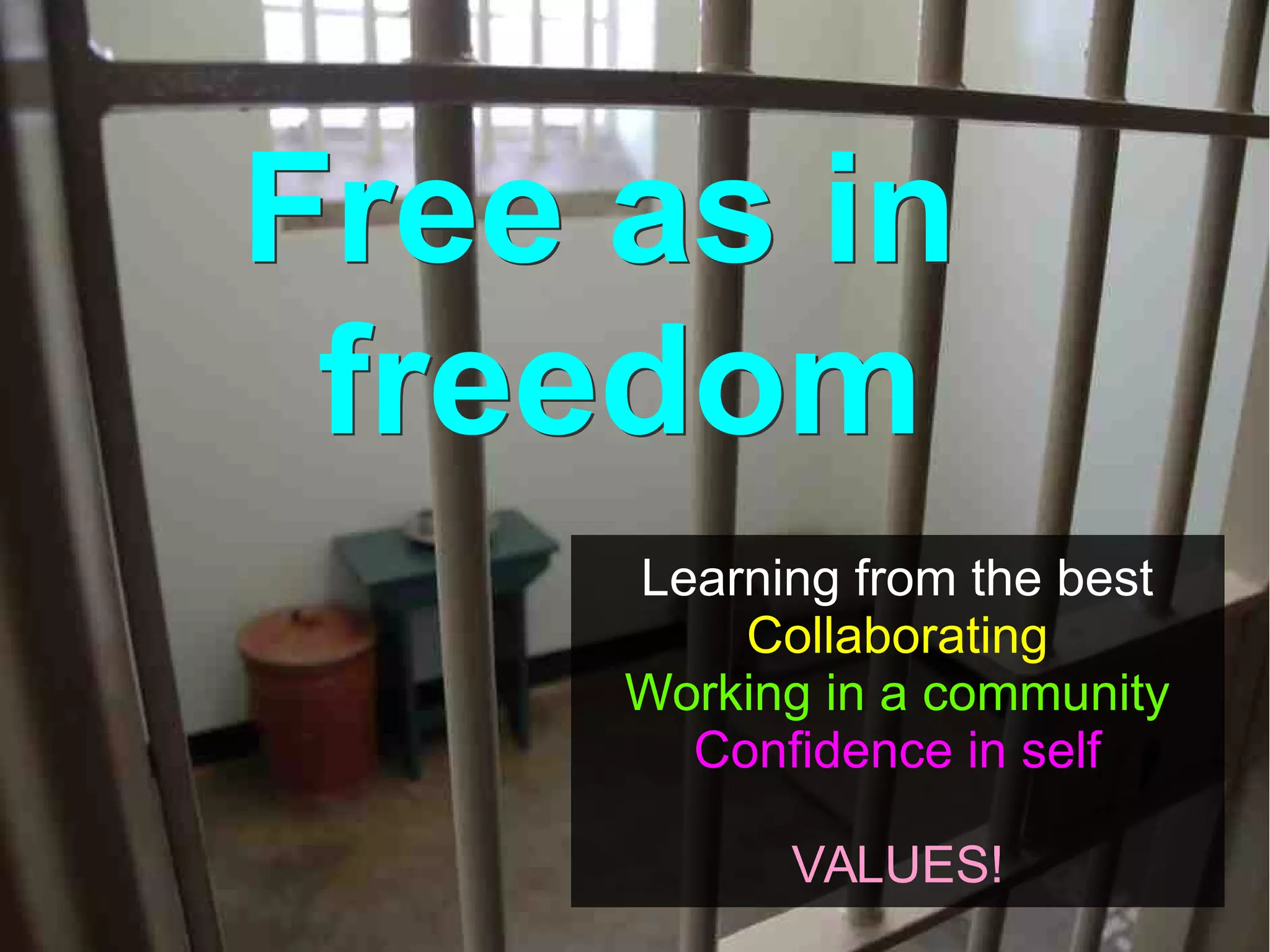
Free as in
freedom
Learning from the best
Collaborating
Working in a community
Confidence in self
VALUES!
Recommendations
The implementation of Circular S9 should be suspended
pending further investigation, hence the status quo remains
for now
During 2014-2015, the DBE examining panel needs to
review the current assessment practice so as to make the
IT practical paper language independent.
An independent group should be appointed to review both
the CAT and IT curriculum to make them more current
and more exciting so as to attract learners to the subjects
The revised curricula should be phased in in Grade 10
in 2016 and the IT curriculum should not have a
prescribed programming language
Both CAT and IT must be compliant with the
Government FOSS policy and the Minimum
Interoperability Standards

The DBE Circular requiring proprietary office & programming technologies: An excellent example of how not to do IT in SA schools

  • 1.
    The Department ofBasic Education Circular requiring proprietary office & programming technologies: An excellent example of how not to do IT in education in South African schools Derek Keats, PhD derek@dkeats.com http://dkeats.com
  • 2.
  • 3.
  • 4.
    MINIMUM INTEROPERABILITY STANDARDS (MIOS) forGovernment Information Systems Office Document formats Open Document Format (ODF) [SANS 26300]
  • 5.
    This is 2013! Weare not getting enough young people interested in computer science and other areas of IT It is time to stop focusing on programming languages... We need to make computing more exciting!
  • 6.
    Injecting vision intothe curriculum: Free and Open Technologies platforms Free Software (Open Source) Marymount School (New York) 7th graders designed a light kit to be an educational project for a community center in Zimbabwe. Credit: Adam Provost, 2013 http://www.edutopia.org/blog/dive-into-the-maker-movement-adam-provost Creating an exciting maker culture
  • 7.
    Free as in freedom Learningfrom the best Collaborating Working in a community Confidence in self VALUES!
  • 8.
    Recommendations The implementation ofCircular S9 should be suspended pending further investigation, hence the status quo remains for now During 2014-2015, the DBE examining panel needs to review the current assessment practice so as to make the IT practical paper language independent. An independent group should be appointed to review both the CAT and IT curriculum to make them more current and more exciting so as to attract learners to the subjects The revised curricula should be phased in in Grade 10 in 2016 and the IT curriculum should not have a prescribed programming language Both CAT and IT must be compliant with the Government FOSS policy and the Minimum Interoperability Standards