TechnologiesThatCanDestroy
theenvironment
Social Impact of Technology - Nicola Saturno
Prosofnuclearenergy
★ Is it Renewable?
○ No. Nuclear energy is not renewable resource, because of its
operating fuel source of uranium.
○ Uranium is the nuclear fuel that is used to produce energy, it is
limited and cannot be produced again and again.
○ However, by developing new systems such as fusion reactors, we are
able to produce another element, such as, plutonium.
○ Plutonium is produced by the by-products of the chain-reactions.
○ If engineers and scientists can develop a safe system that is able to
control atomic fusion, the same reactions that fuel the sun, we can
have “unlimited energy”.
Prosofnuclearenergy
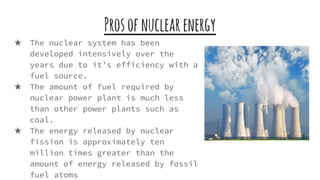
★ The nuclear system has been
developed intensively over the
years due to it’s efficiency with a
fuel source.
★ The amount of fuel required by
nuclear power plant is much less
than other power plants such as
coal.
★ The energy released by nuclear
fission is approximately ten
million times greater than the
amount of energy released by fossil
fuel atoms
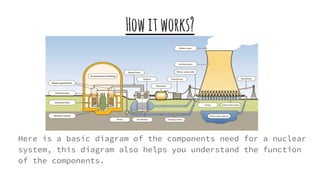
Howitworks?
Here is a basic diagram of the components need for a nuclear
system, this diagram also helps you understand the function
of the components.
Negative implications from nuclear energy
★ A large nuclear power plant creates 20 metric tons of
nuclear fuel per year, with that comes nuclear waste.
★ This waste transmits radiation and high temperature,
implying that it will inevitably consume any compartment
that holds it.
★ It causes damage and health risks to living things around
the nuclear power plant
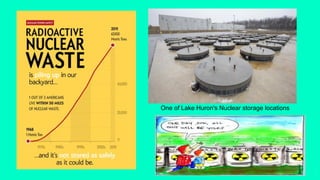
One of Lake Huron's Nuclear storage locations
Nuclearpower
Is it worth the change?
Through research I believe
Nuclear power is an
efficient source on
developing energy.
However, I do believe
storage/use for nuclear
waste needs to be further
developed so it is not
harming the environment
and the life around the
power plant.
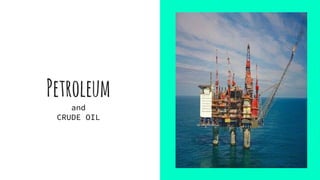
Petroleum
and
CRUDE OIL
Pros of Petroleum/Crude oil
★ Oil is abundant within the Earth
★ Easy to use, handle and transport
★ Oil has created numerous jobs in many industries
★ Many technologies have been developed due to its many
uses
★ Propelles vehicles for longer and faster than any other
energy source
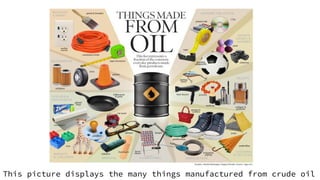
This picture displays the many things manufactured from crude oil
ConsofCRUDEOIL/PETROLEUM
★ Releases approximately 20 pounds per 1 Gallon of Gasoline
of Carbon Dioxide when burned.
★ Drilling can lead to spills and environmental hazards
★ Endangers species by the pollution of air, and the
destruction of the environment
★ Expensive to process and to purchase
★ Dangerous; explosive, toxic, poisonous etc.
★ U.S. petroleum consumption averages between 20.5 and 21
million barrels per day
★ 1 oil barrel is equal to 159 liters
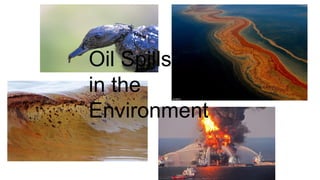
Oil Spills
in the
Environment
Crudeoil:Energysourceormoneymaker?
Crude oil refinement for things such as fuel, like
gasoline, is unnecessary. There are many alternative fuels
such as ethanol, which is developed from biomass, plant
material. Which are cleaner burning and a more
environmentally friendly process.
I think we are still using crude oil based fuels today to
compensate for the investments made in oil over the years,
and the marketplace it has in the world today. If we are
forced to demand oil from the products we use, the supply
will keep coming and their wont be a change.
Risks of technology-Humans & the environment
★ Risks to humans from
environmental damage through
technology include;
○ Inhalation of dangerous
chemicals in air pollution,
contamination of water and food
sources, and risk of infections
and diseases through exposure
to toxic wastes.
○ Greenhouse gases affect
atmosphere and weather systems,
causing global warming and
chlorofluorocarbons that
deplete the Earth's ozone
layer.
★ Technology consumes resources which
are not necessarily renewable,
○ Such as; living resources, like
forests and populations of
fish, and inanimate resources,
such as natural chemicals and
minerals
Sourcesofinformation
➔ Ethanol Fuel Basics. (n.d.). Retrieved July 28, 2016, from http://www.
afdc.energy.gov/fuels/ethanol_fuel_basics.html
➔ Petroleum Energy RRR. (n.d.). Retrieved July 28, 2016, from http:
//palaeolimnologypetroleumrrr.weebly.com/index.html
➔ http://www.tampabay.
com/resources/images/dti/rendered/2015/04/oilspill6_15051551_8col.jpg
➔ http://cdn.thinkprogress.org/wp-content/uploads/2015/03/AP100603119007-
1024x682.jpg
➔ Schulte, B. (n.d.). Oil Spill Spotlights Keystone XL Issue: Is Canadian
Crude Worse? Retrieved July 28, 2016, from http://news.nationalgeographic.
com/news/energy/2013/04/130405-arkansas-oil-spill-is-canadian-crude-worse/
Thanksforviewing!
Completed by Nicola Saturno

Technologies that can destroy the environment (1)

  • 1.
  • 2.
    Prosofnuclearenergy ★ Is itRenewable? ○ No. Nuclear energy is not renewable resource, because of its operating fuel source of uranium. ○ Uranium is the nuclear fuel that is used to produce energy, it is limited and cannot be produced again and again. ○ However, by developing new systems such as fusion reactors, we are able to produce another element, such as, plutonium. ○ Plutonium is produced by the by-products of the chain-reactions. ○ If engineers and scientists can develop a safe system that is able to control atomic fusion, the same reactions that fuel the sun, we can have “unlimited energy”.
  • 3.
    Prosofnuclearenergy ★ The nuclearsystem has been developed intensively over the years due to it’s efficiency with a fuel source. ★ The amount of fuel required by nuclear power plant is much less than other power plants such as coal. ★ The energy released by nuclear fission is approximately ten million times greater than the amount of energy released by fossil fuel atoms
  • 4.
    Howitworks? Here is abasic diagram of the components need for a nuclear system, this diagram also helps you understand the function of the components.
  • 5.
    Negative implications fromnuclear energy ★ A large nuclear power plant creates 20 metric tons of nuclear fuel per year, with that comes nuclear waste. ★ This waste transmits radiation and high temperature, implying that it will inevitably consume any compartment that holds it. ★ It causes damage and health risks to living things around the nuclear power plant
  • 6.
    One of LakeHuron's Nuclear storage locations
  • 7.
    Nuclearpower Is it worththe change? Through research I believe Nuclear power is an efficient source on developing energy. However, I do believe storage/use for nuclear waste needs to be further developed so it is not harming the environment and the life around the power plant.
  • 8.
  • 9.
    Pros of Petroleum/Crudeoil ★ Oil is abundant within the Earth ★ Easy to use, handle and transport ★ Oil has created numerous jobs in many industries ★ Many technologies have been developed due to its many uses ★ Propelles vehicles for longer and faster than any other energy source
  • 10.
    This picture displaysthe many things manufactured from crude oil
  • 11.
    ConsofCRUDEOIL/PETROLEUM ★ Releases approximately20 pounds per 1 Gallon of Gasoline of Carbon Dioxide when burned. ★ Drilling can lead to spills and environmental hazards ★ Endangers species by the pollution of air, and the destruction of the environment ★ Expensive to process and to purchase ★ Dangerous; explosive, toxic, poisonous etc. ★ U.S. petroleum consumption averages between 20.5 and 21 million barrels per day ★ 1 oil barrel is equal to 159 liters
  • 12.
  • 13.
    Crudeoil:Energysourceormoneymaker? Crude oil refinementfor things such as fuel, like gasoline, is unnecessary. There are many alternative fuels such as ethanol, which is developed from biomass, plant material. Which are cleaner burning and a more environmentally friendly process. I think we are still using crude oil based fuels today to compensate for the investments made in oil over the years, and the marketplace it has in the world today. If we are forced to demand oil from the products we use, the supply will keep coming and their wont be a change.
  • 14.
    Risks of technology-Humans& the environment ★ Risks to humans from environmental damage through technology include; ○ Inhalation of dangerous chemicals in air pollution, contamination of water and food sources, and risk of infections and diseases through exposure to toxic wastes. ○ Greenhouse gases affect atmosphere and weather systems, causing global warming and chlorofluorocarbons that deplete the Earth's ozone layer. ★ Technology consumes resources which are not necessarily renewable, ○ Such as; living resources, like forests and populations of fish, and inanimate resources, such as natural chemicals and minerals
  • 15.
    Sourcesofinformation ➔ Ethanol FuelBasics. (n.d.). Retrieved July 28, 2016, from http://www. afdc.energy.gov/fuels/ethanol_fuel_basics.html ➔ Petroleum Energy RRR. (n.d.). Retrieved July 28, 2016, from http: //palaeolimnologypetroleumrrr.weebly.com/index.html ➔ http://www.tampabay. com/resources/images/dti/rendered/2015/04/oilspill6_15051551_8col.jpg ➔ http://cdn.thinkprogress.org/wp-content/uploads/2015/03/AP100603119007- 1024x682.jpg ➔ Schulte, B. (n.d.). Oil Spill Spotlights Keystone XL Issue: Is Canadian Crude Worse? Retrieved July 28, 2016, from http://news.nationalgeographic. com/news/energy/2013/04/130405-arkansas-oil-spill-is-canadian-crude-worse/
  • 16.