Techniques of Scientific
Management
Member:
Lexter Dave N. Corpuz
Ly Ann Jade N. Ambrosio
Johnwayne F. Cabanongan
INTRODUCTION
• Scientific management is a theory of management
that analyzes and synthesizes workflows. Its main
objective is improving economic efficiency,
especially labor productivity.
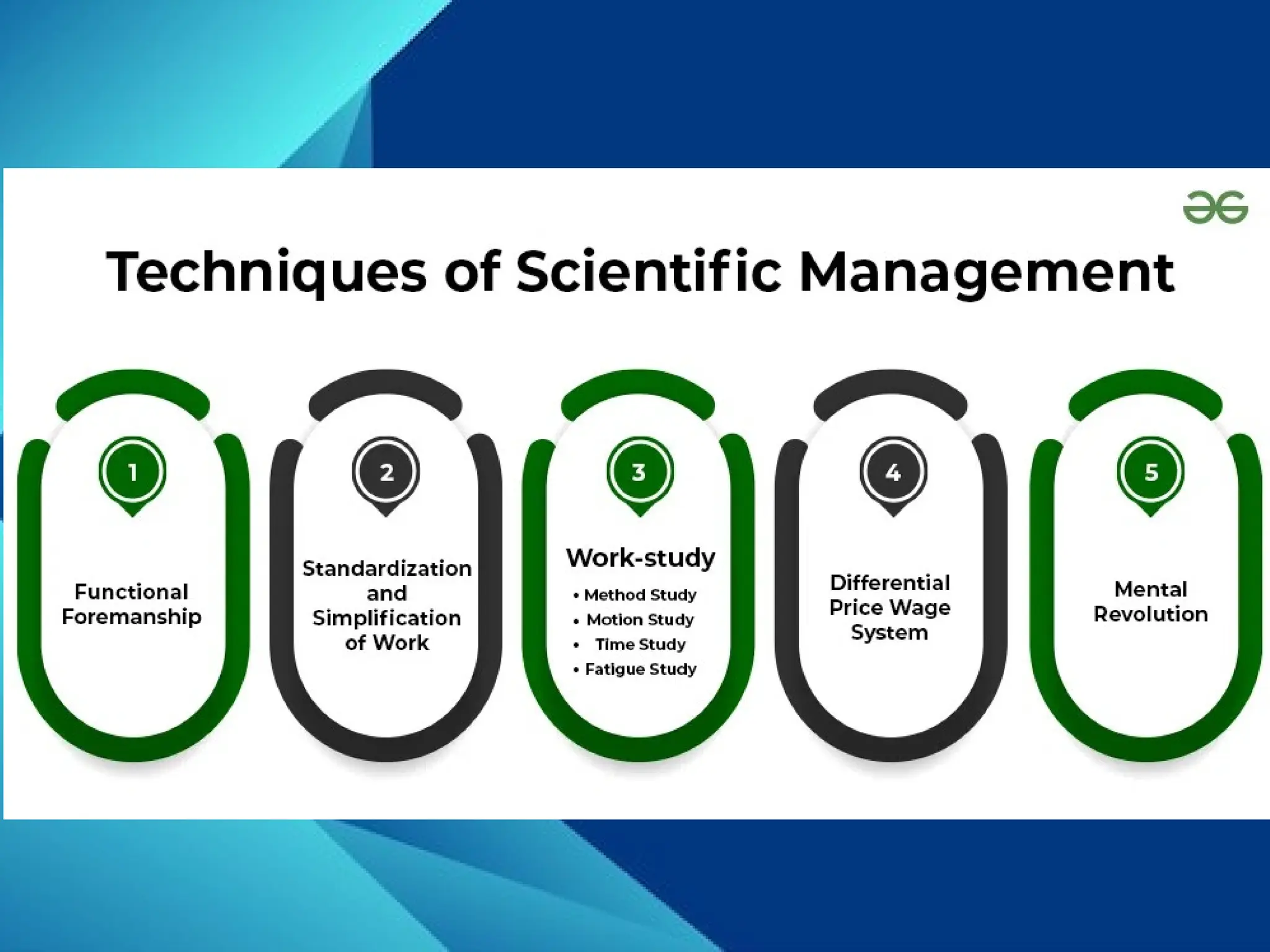
Functional Foremanship
• According to this technique, the work of supervision
is divided into several specialized foremen. Taylor
believes that one foreman is not an expert in all
aspects of work. Therefore, each worker should be
supervised by several foremen. Those who are
specialized in their field. This technique will improve
the quality of supervision and will also improve the
quality of work and efficiency of workers. Taylor
suggested that 8 specialists out of these 4 will be
responsible for looking after the planning work.
Planning Incharge
• Route clerk: This foreman lays down the sequence
of operation in which work is to be carried out.
Workers are expected to do their work strictly
according to the route sheet.
• Disciplinarian: This clerk is responsible for
maintaining discipline and systematic performance
of the job. He enforces the rules and regulations in
the organization.
• Instruction card clerk This foreman prepare the
instruction card for the workers and the gang boss.
These cards contain information about the nature
of the work, the procedure of doing work, the
material to be used, and detail about the machine.
• Time and cost clerk This foreman fines the standard
time for completion of work and he also keeps a
record of the cost of operation.
• Production InchargeSpeed boss: He is responsible for
ensuring the work is done well on time. To get the work
completed in time, he examines that all the workers are
performing their job at the required speed.
• Gang boss: He is responsible for arranging and keeping
tools, machines and materials ready for operation.
• Repair boss: He is responsible to ensure the proper
working condition of the machine and tools.
• Inspector: He is responsible for the quality of work. He
brings a quality consciousness to the mind of workers.
Standardization and Simplification
of Work
• Standardization means fixing standards for
everything. To attain standard production, the
standard of performance is established for the
workers. Standard of work means standard set for
material, machine method, and condition of work.
Work study
• Method Study This technique focuses on
identifying the most efficient way to perform a
task by analyzing the sequence of operations, the
tools and equipment used, and the layout of the
workplace.
• Motion study involves observing and analyzing the
movements of workers during a task, identifying
and eliminating unnecessary or wasteful motions
Time Study This technique involves meticulously
analyzing the time taken to perform a specific job,
breaking it down into its individual components.
The goal is to determine the standard time required
for an average worker with reasonable skills and
abilities to complete the task
Fatigue study focuses on understanding and
mitigating the physical and mental tiredness
experienced by workers during their tasks [2].
Differential Piece Wage System
• This system rewards efficient workers with higher
wages than those who are less efficient By
establishing a standard output level and offering
different piece rates based on performance, this
system incentivizes workers to improve their
efficiency and increase their earnings
Mental Revolution
• This principle emphasizes the importance of
changing the mindset of both management and
workers from competition to cooperation.
Conclusion
• Scientific management techniques have been
instrumental in transforming industrial processes
and improving efficiency and productivity across
various industries. While some of the original
techniques have evolved or been replaced by more
modern approaches, the core principles of
scientific analysis, process optimization, and
worker development remain relevant.

TECHNIQUES OF SCIENTIFIC MANAGEMENT.pptx

  • 1.
    Techniques of Scientific Management Member: LexterDave N. Corpuz Ly Ann Jade N. Ambrosio Johnwayne F. Cabanongan
  • 2.
    INTRODUCTION • Scientific managementis a theory of management that analyzes and synthesizes workflows. Its main objective is improving economic efficiency, especially labor productivity.
  • 4.
    Functional Foremanship • Accordingto this technique, the work of supervision is divided into several specialized foremen. Taylor believes that one foreman is not an expert in all aspects of work. Therefore, each worker should be supervised by several foremen. Those who are specialized in their field. This technique will improve the quality of supervision and will also improve the quality of work and efficiency of workers. Taylor suggested that 8 specialists out of these 4 will be responsible for looking after the planning work.
  • 5.
    Planning Incharge • Routeclerk: This foreman lays down the sequence of operation in which work is to be carried out. Workers are expected to do their work strictly according to the route sheet. • Disciplinarian: This clerk is responsible for maintaining discipline and systematic performance of the job. He enforces the rules and regulations in the organization.
  • 6.
    • Instruction cardclerk This foreman prepare the instruction card for the workers and the gang boss. These cards contain information about the nature of the work, the procedure of doing work, the material to be used, and detail about the machine. • Time and cost clerk This foreman fines the standard time for completion of work and he also keeps a record of the cost of operation.
  • 7.
    • Production InchargeSpeedboss: He is responsible for ensuring the work is done well on time. To get the work completed in time, he examines that all the workers are performing their job at the required speed. • Gang boss: He is responsible for arranging and keeping tools, machines and materials ready for operation. • Repair boss: He is responsible to ensure the proper working condition of the machine and tools. • Inspector: He is responsible for the quality of work. He brings a quality consciousness to the mind of workers.
  • 8.
    Standardization and Simplification ofWork • Standardization means fixing standards for everything. To attain standard production, the standard of performance is established for the workers. Standard of work means standard set for material, machine method, and condition of work.
  • 9.
    Work study • MethodStudy This technique focuses on identifying the most efficient way to perform a task by analyzing the sequence of operations, the tools and equipment used, and the layout of the workplace. • Motion study involves observing and analyzing the movements of workers during a task, identifying and eliminating unnecessary or wasteful motions
  • 10.
    Time Study Thistechnique involves meticulously analyzing the time taken to perform a specific job, breaking it down into its individual components. The goal is to determine the standard time required for an average worker with reasonable skills and abilities to complete the task Fatigue study focuses on understanding and mitigating the physical and mental tiredness experienced by workers during their tasks [2].
  • 11.
    Differential Piece WageSystem • This system rewards efficient workers with higher wages than those who are less efficient By establishing a standard output level and offering different piece rates based on performance, this system incentivizes workers to improve their efficiency and increase their earnings
  • 12.
    Mental Revolution • Thisprinciple emphasizes the importance of changing the mindset of both management and workers from competition to cooperation.
  • 13.
    Conclusion • Scientific managementtechniques have been instrumental in transforming industrial processes and improving efficiency and productivity across various industries. While some of the original techniques have evolved or been replaced by more modern approaches, the core principles of scientific analysis, process optimization, and worker development remain relevant.