CHEST X RAY
MAW MAW OO
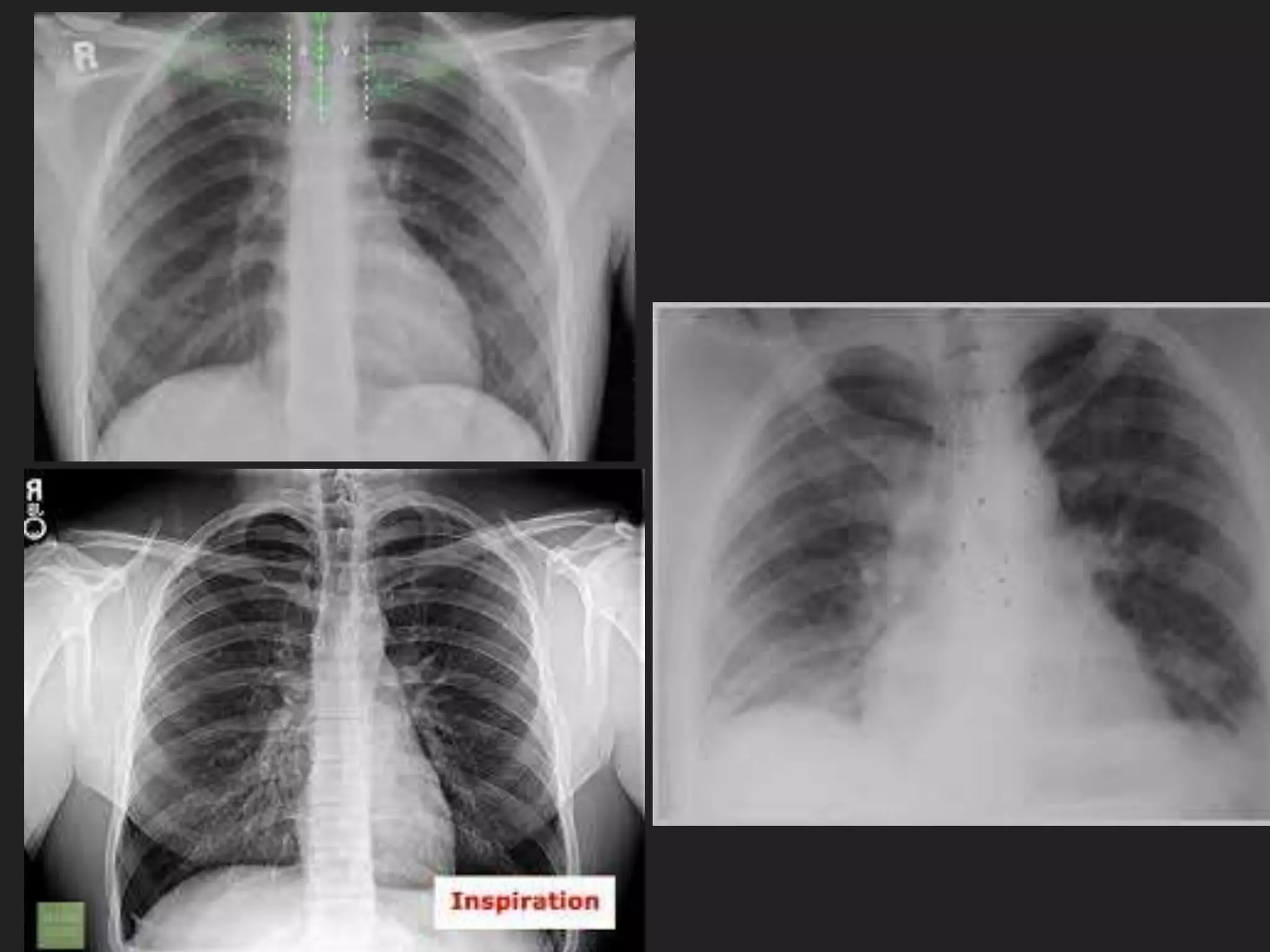
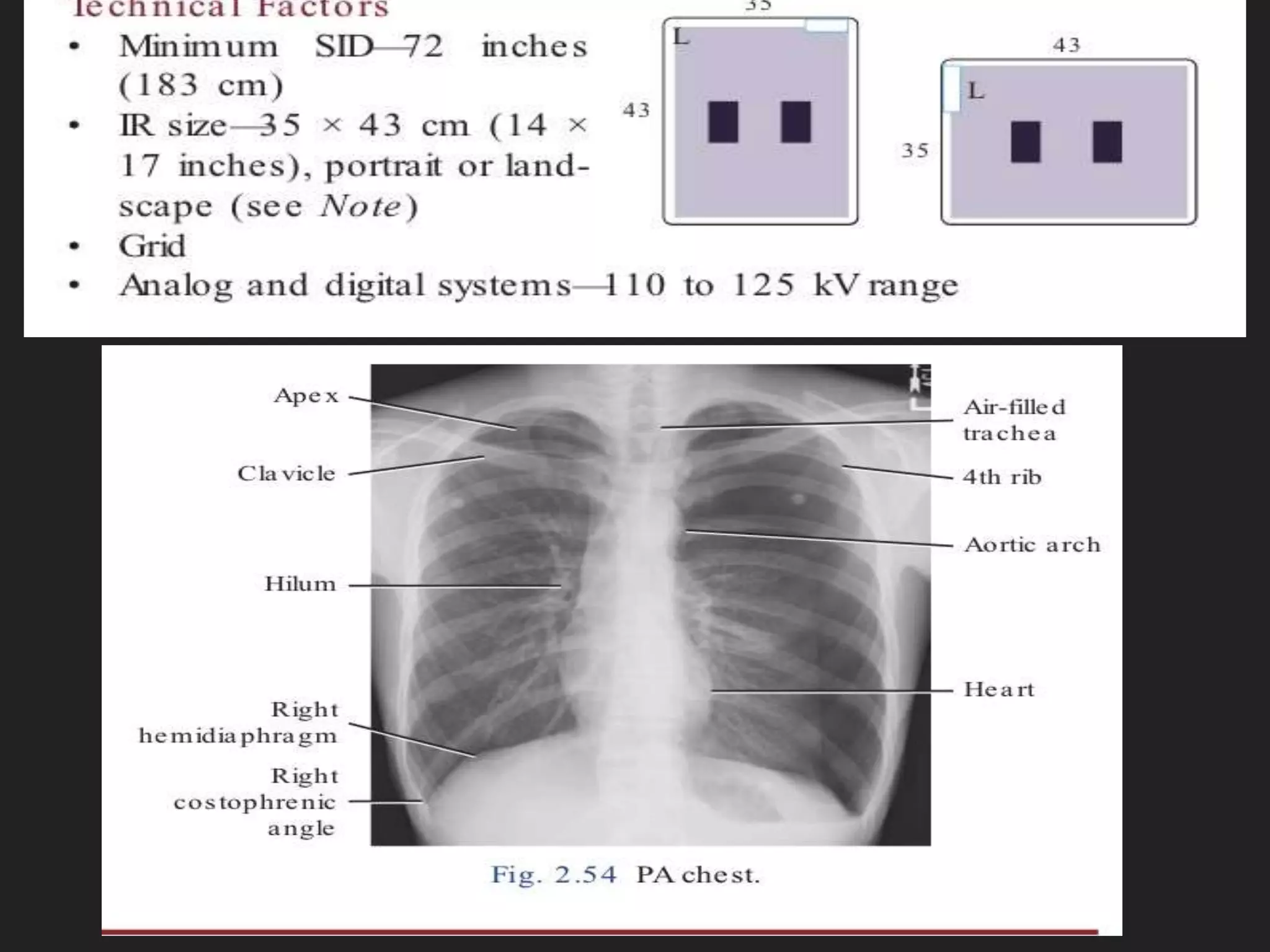
Good quality
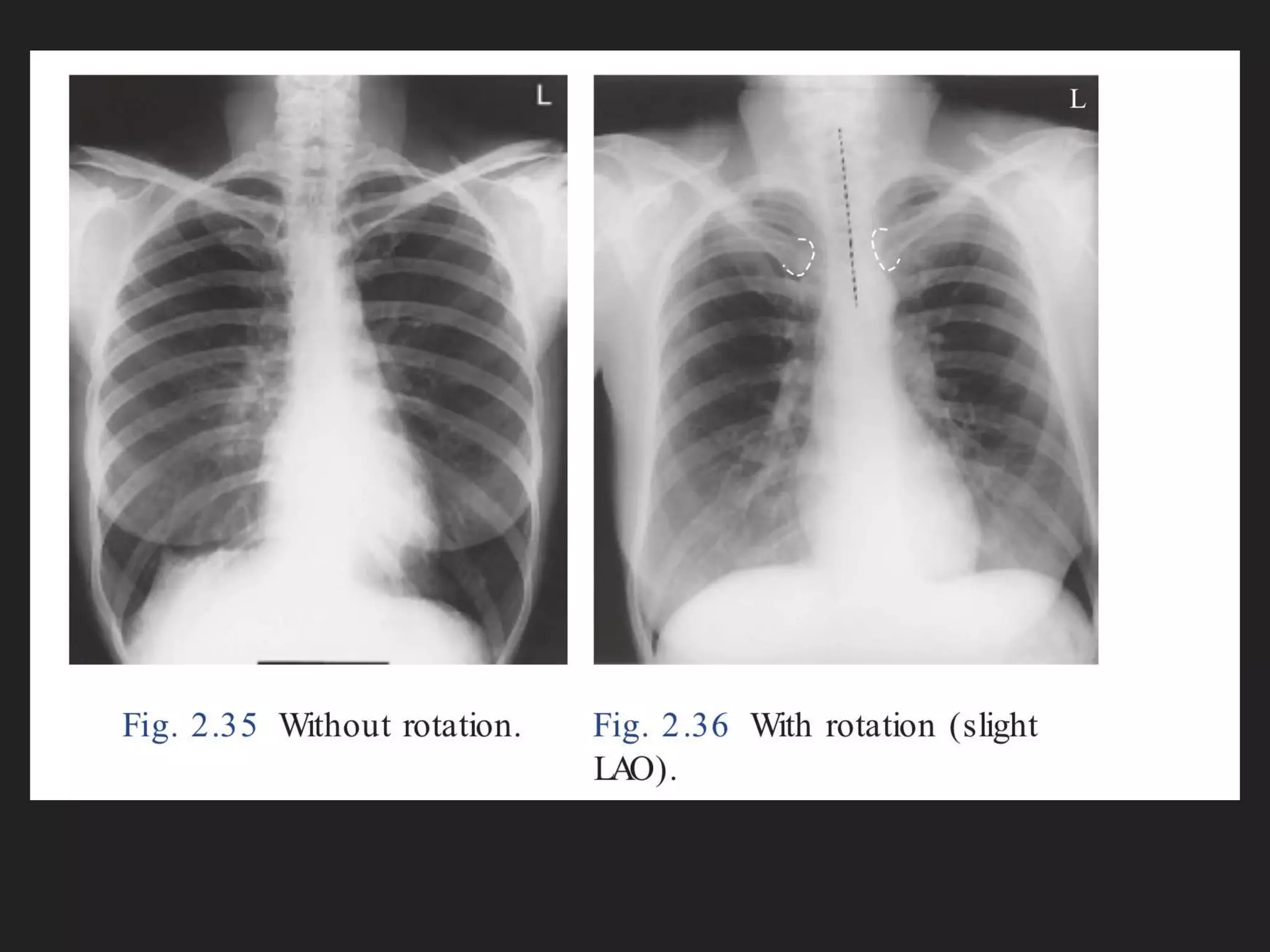
trachea is centered
equidistant from the head of the clavicle on both
sides
the spine is visible as a transparent structure
through the heart shadow,
full inspiratory effort
( the right 6th rib is at the midpoint of the
hemidiaphragm on that side)
Both Apices, costophrenic angles and the lower
parts of the diaphragm should be visible.
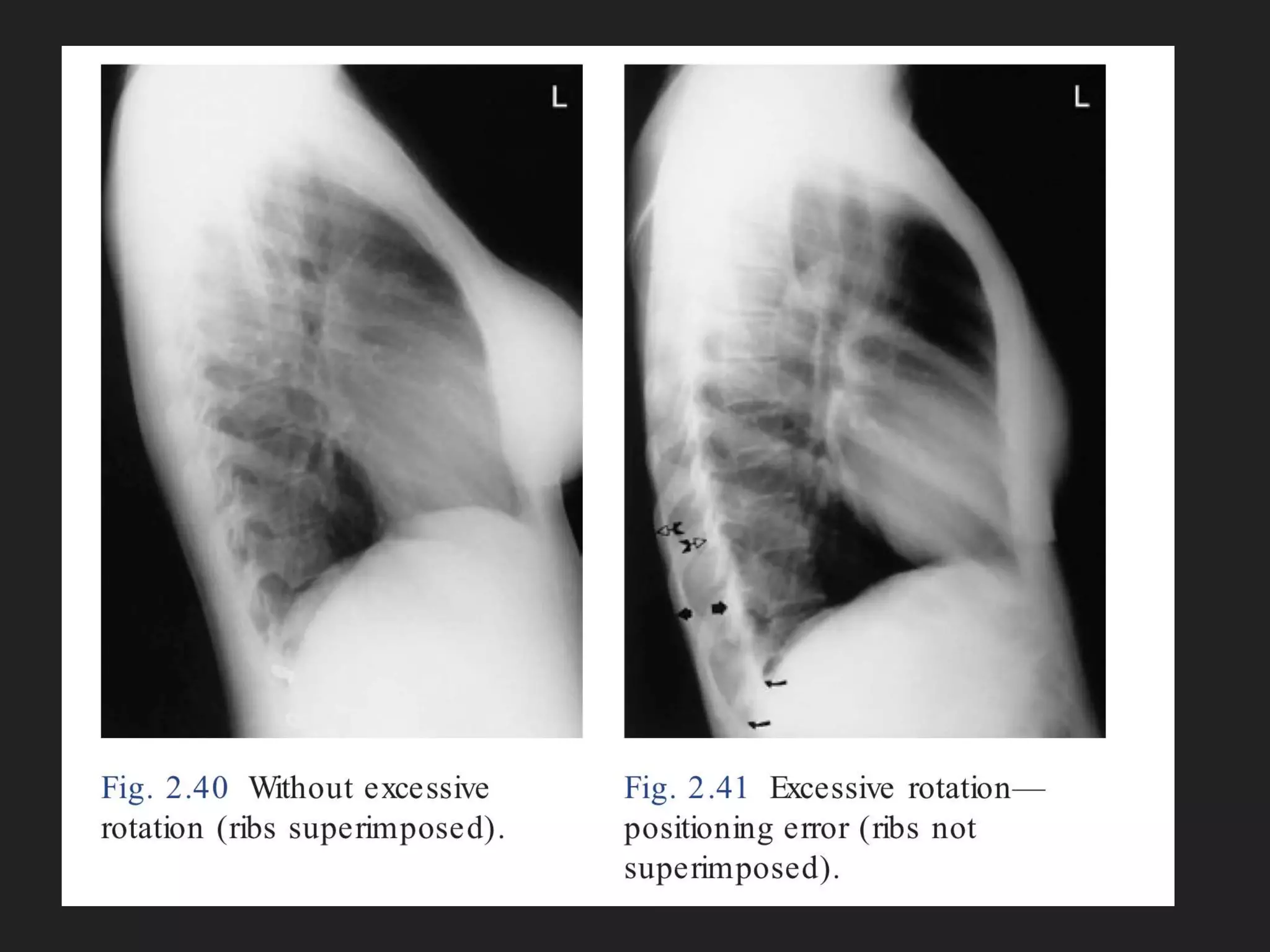
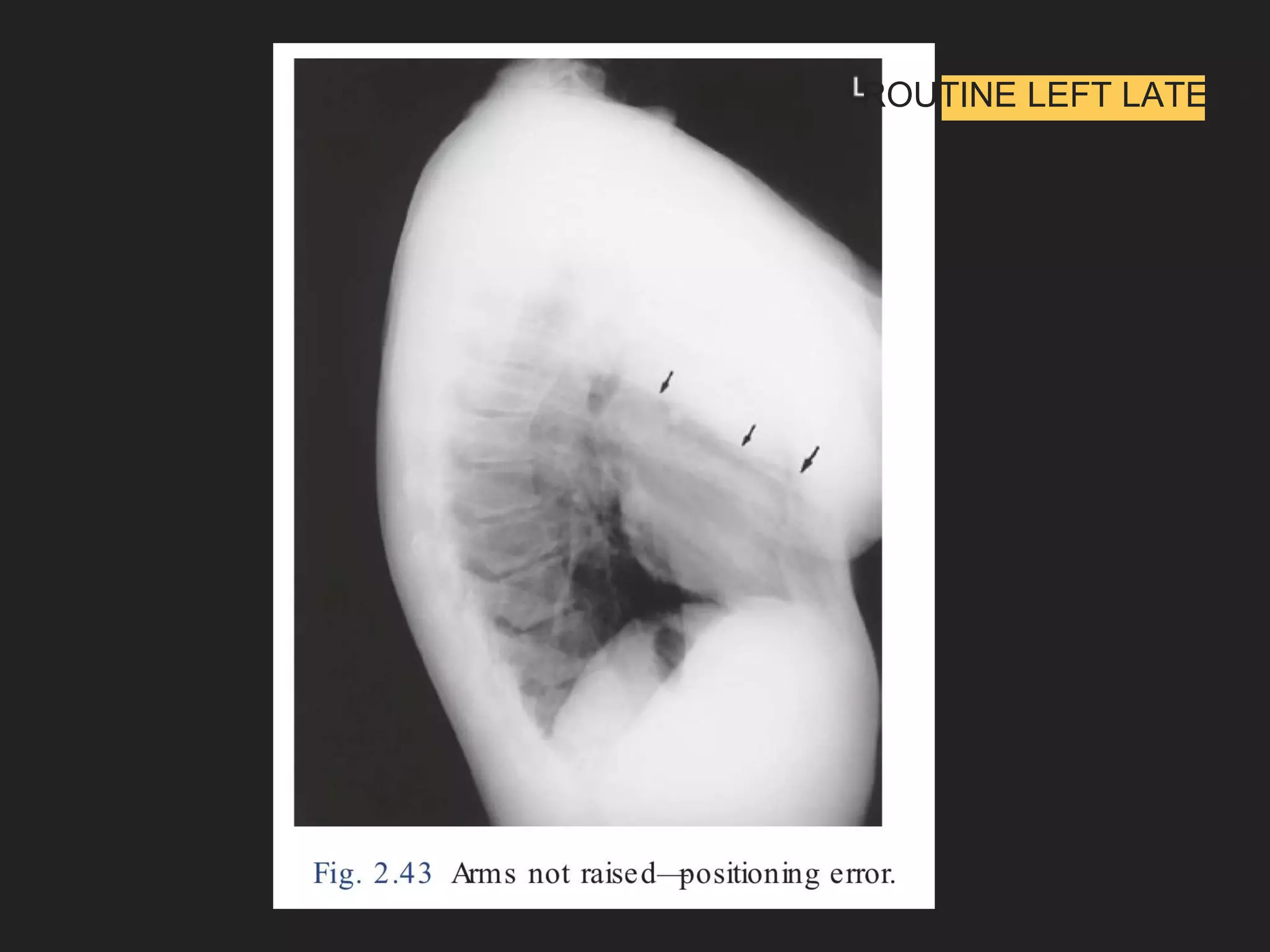
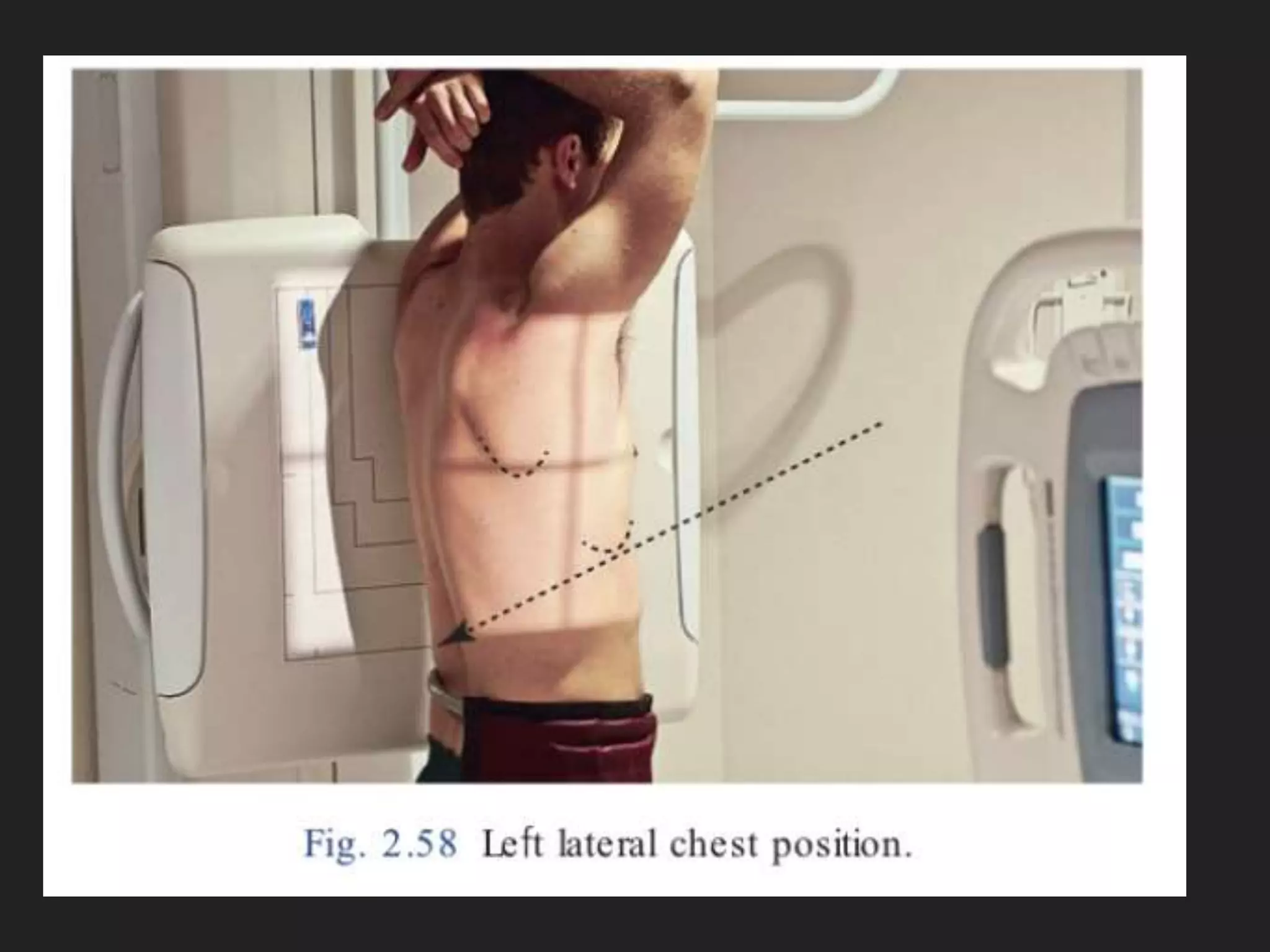
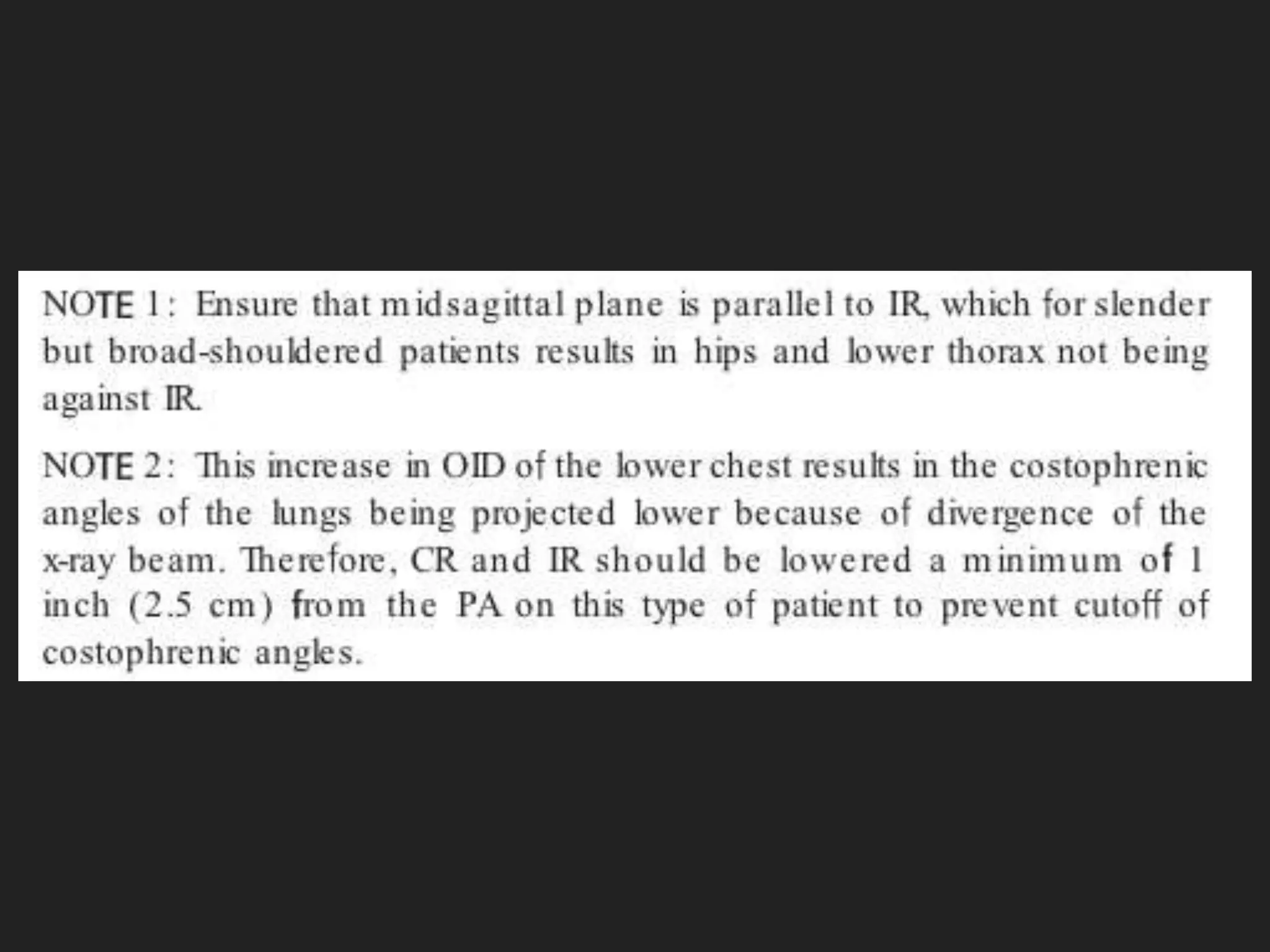
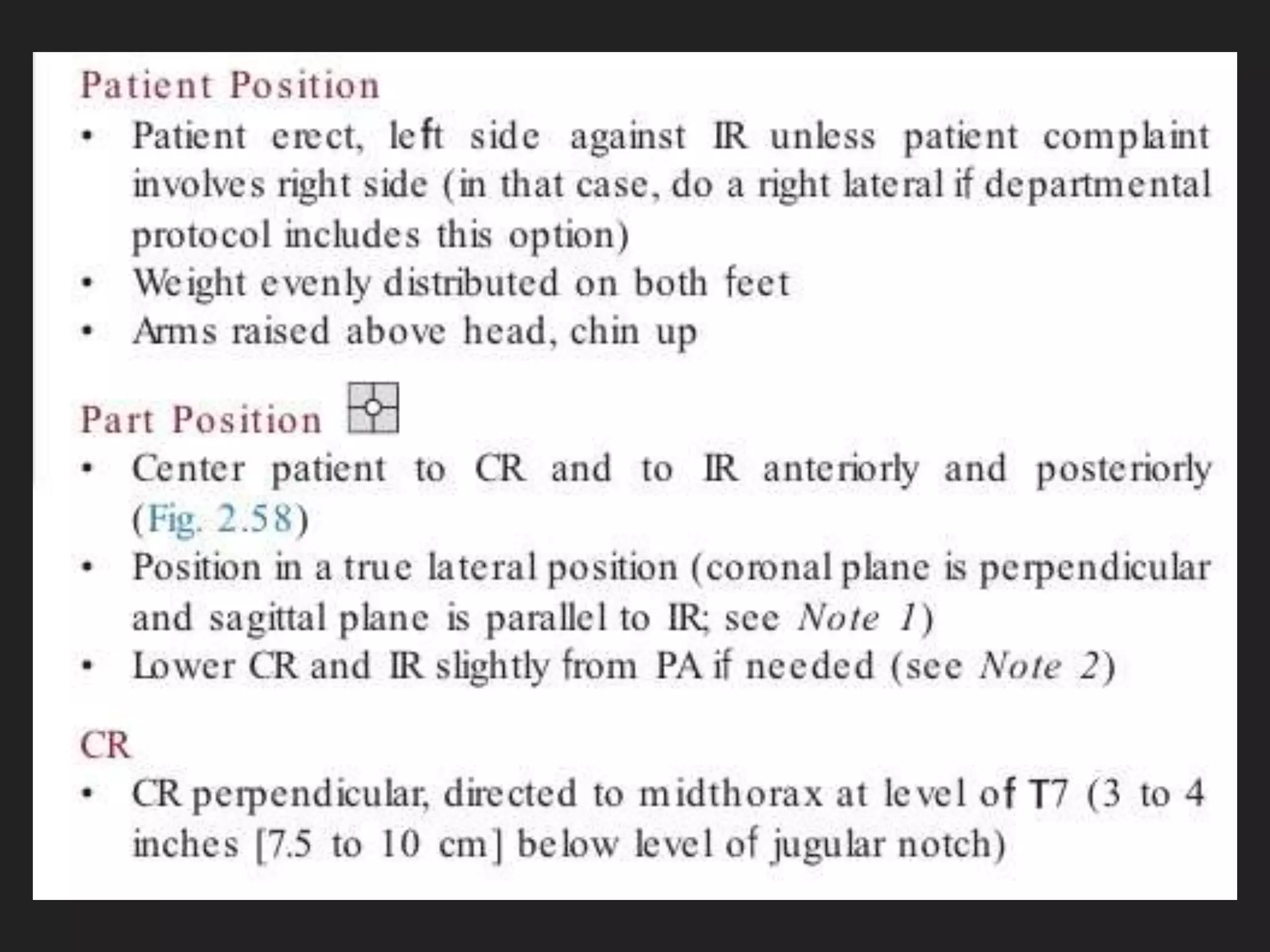
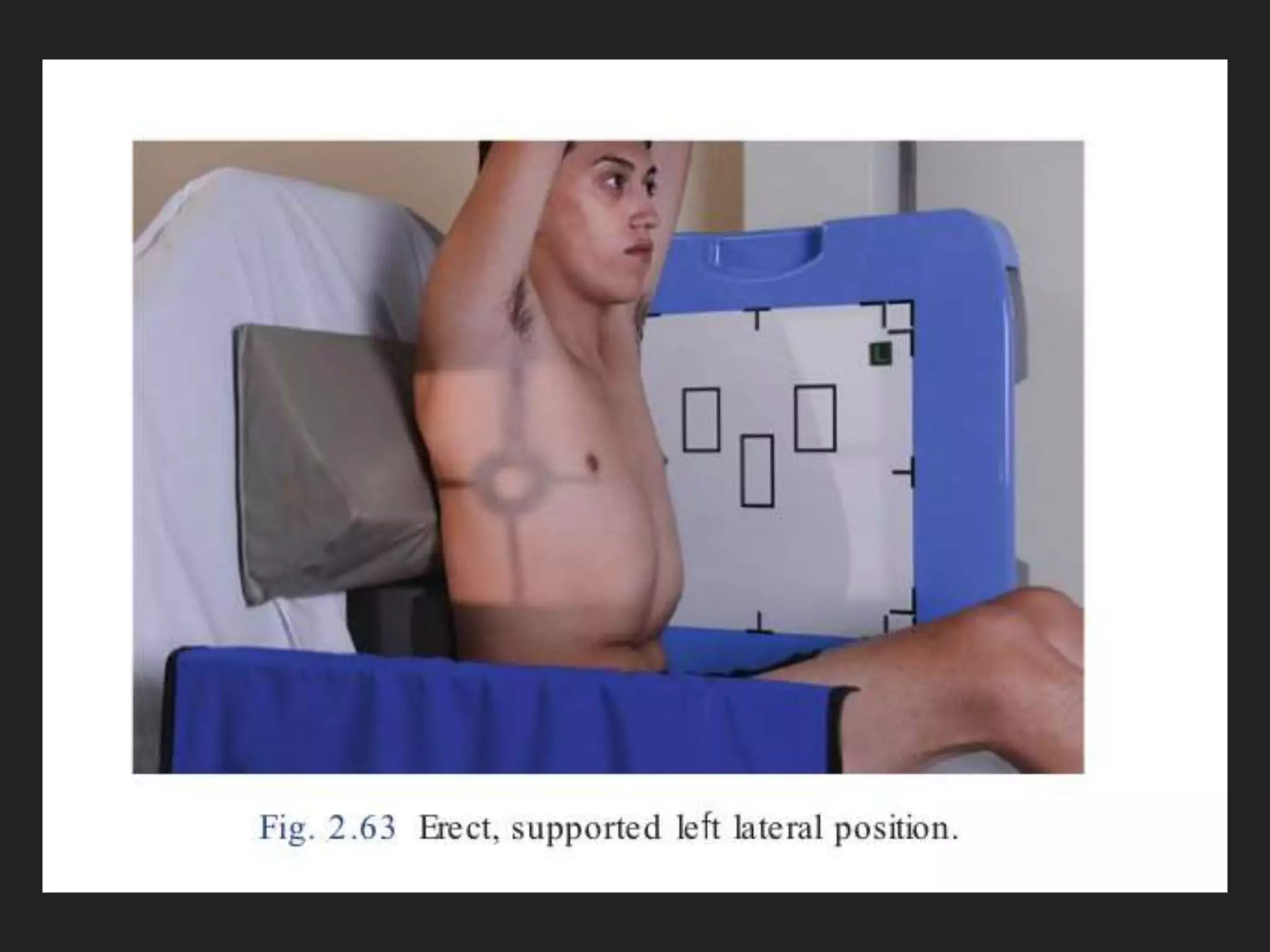
ROUTINE LEFT LATERAL
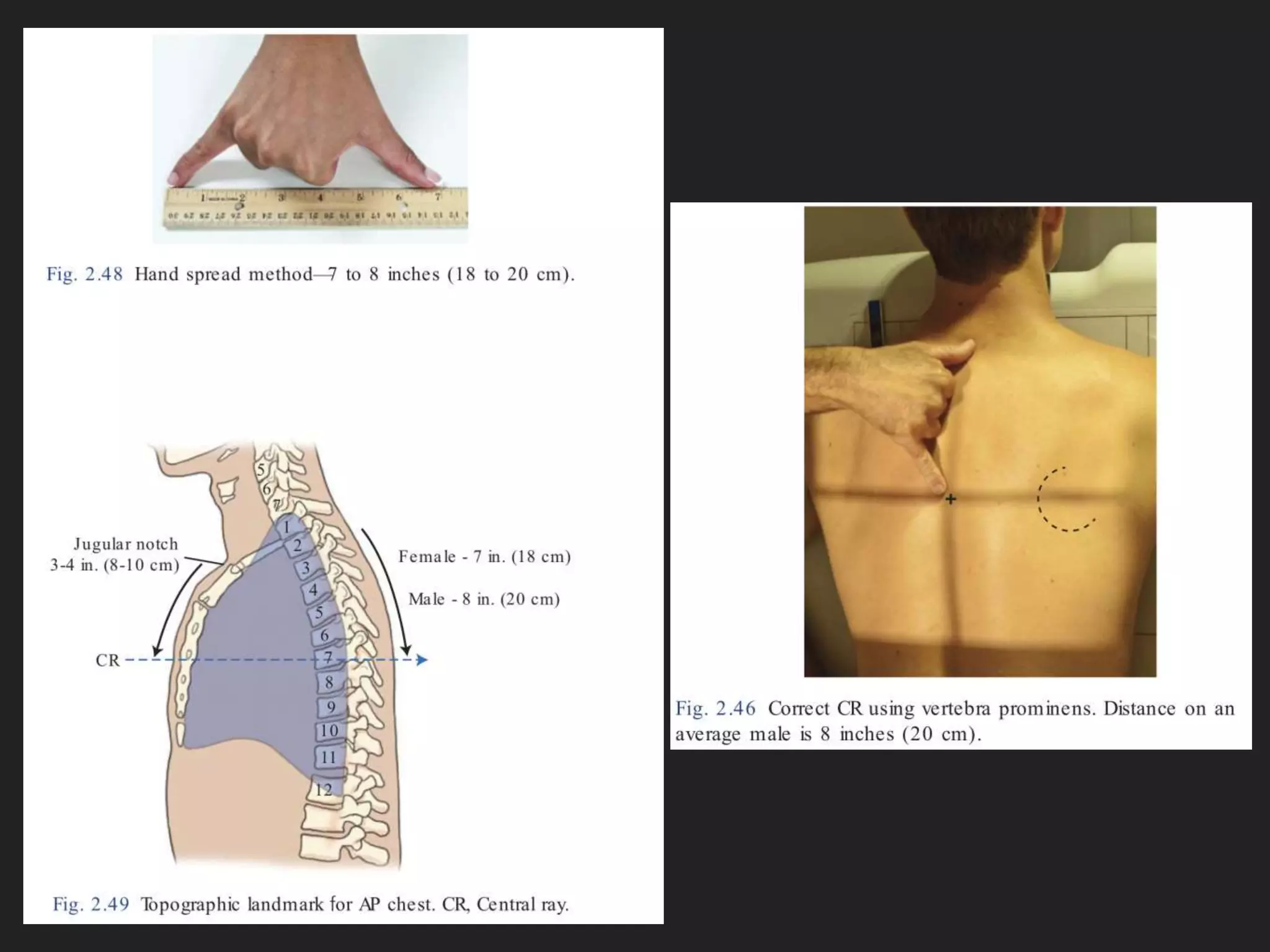
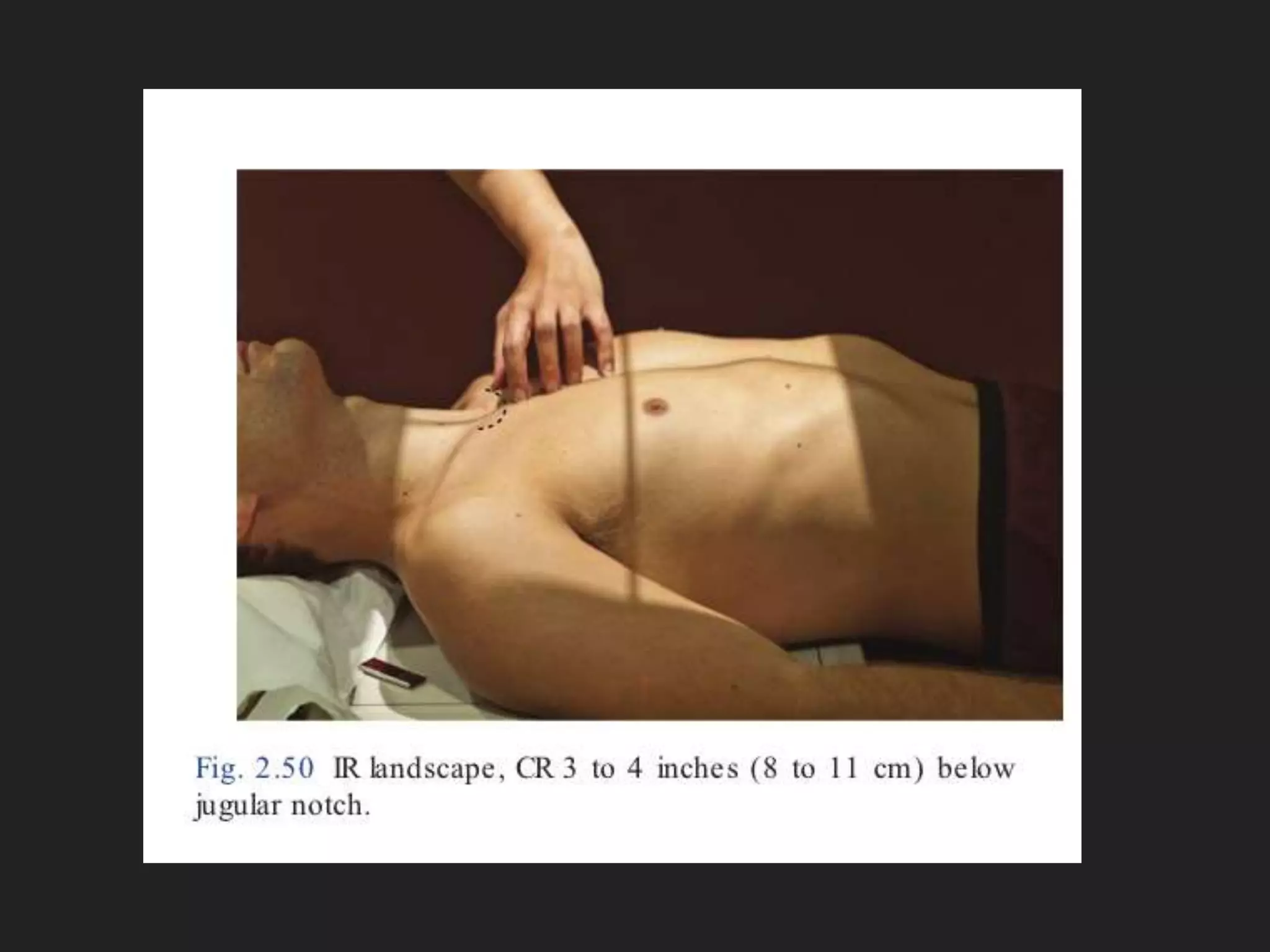
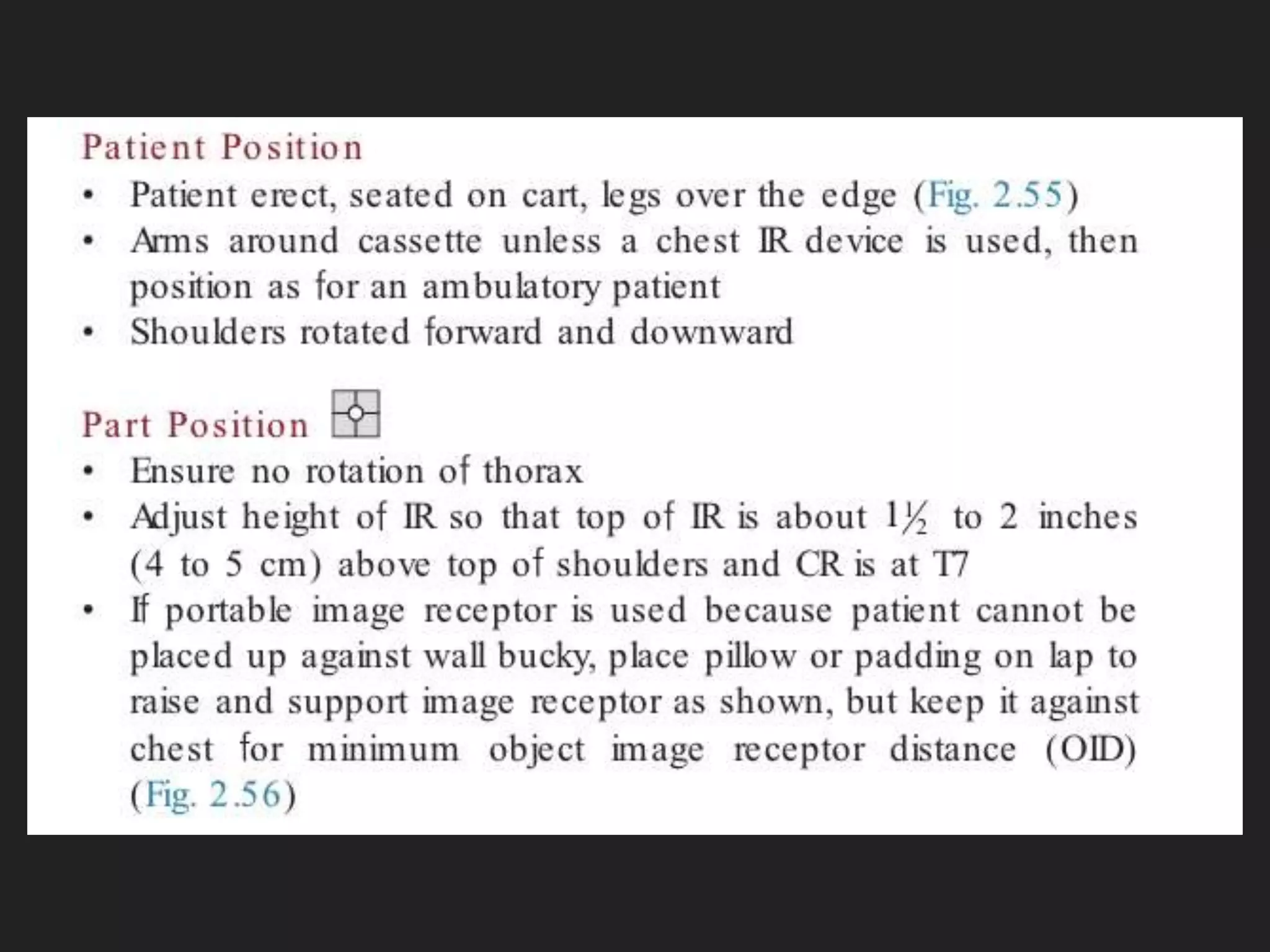
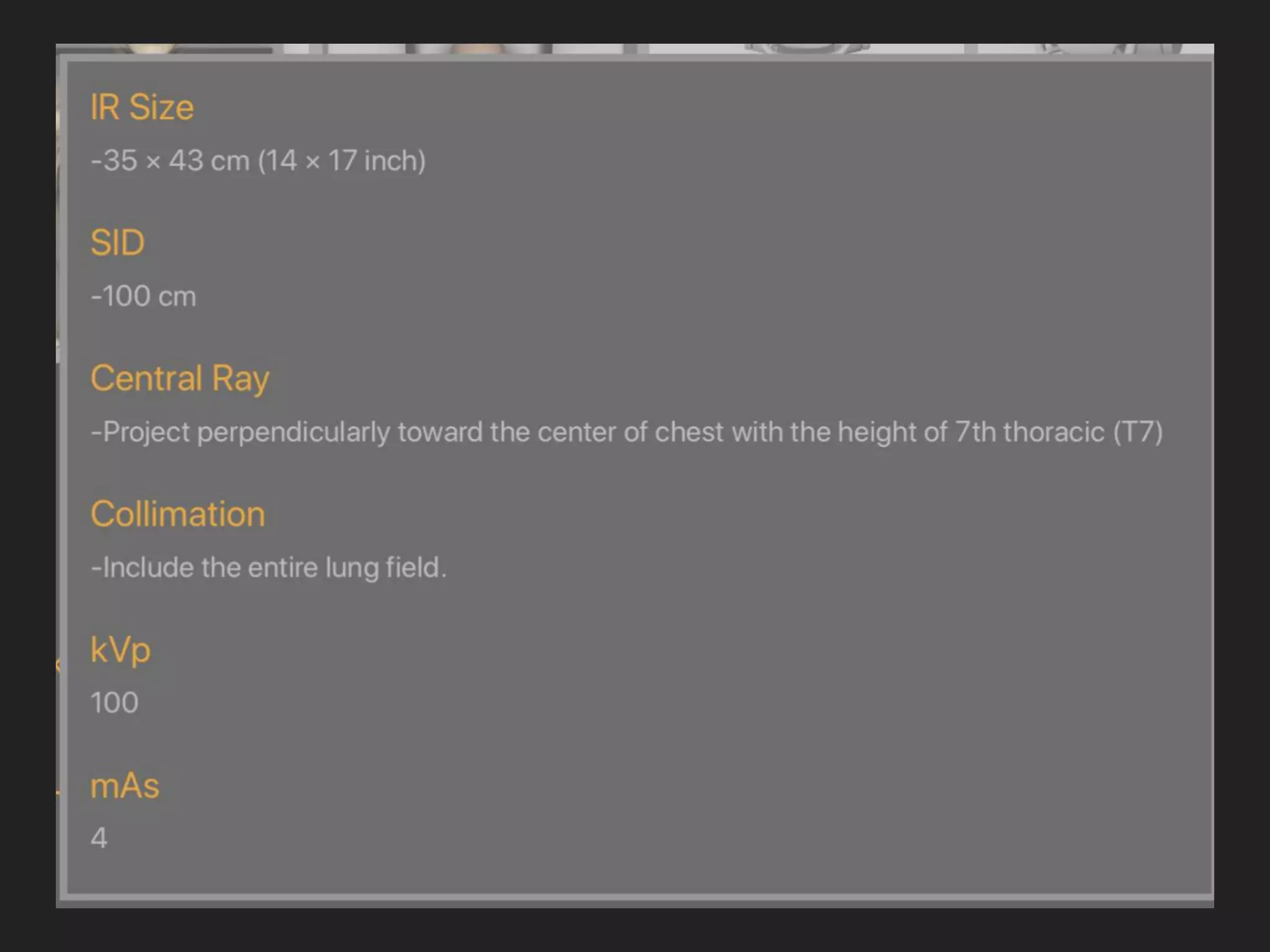
portrait (lengthwise) or landscape (crosswise)
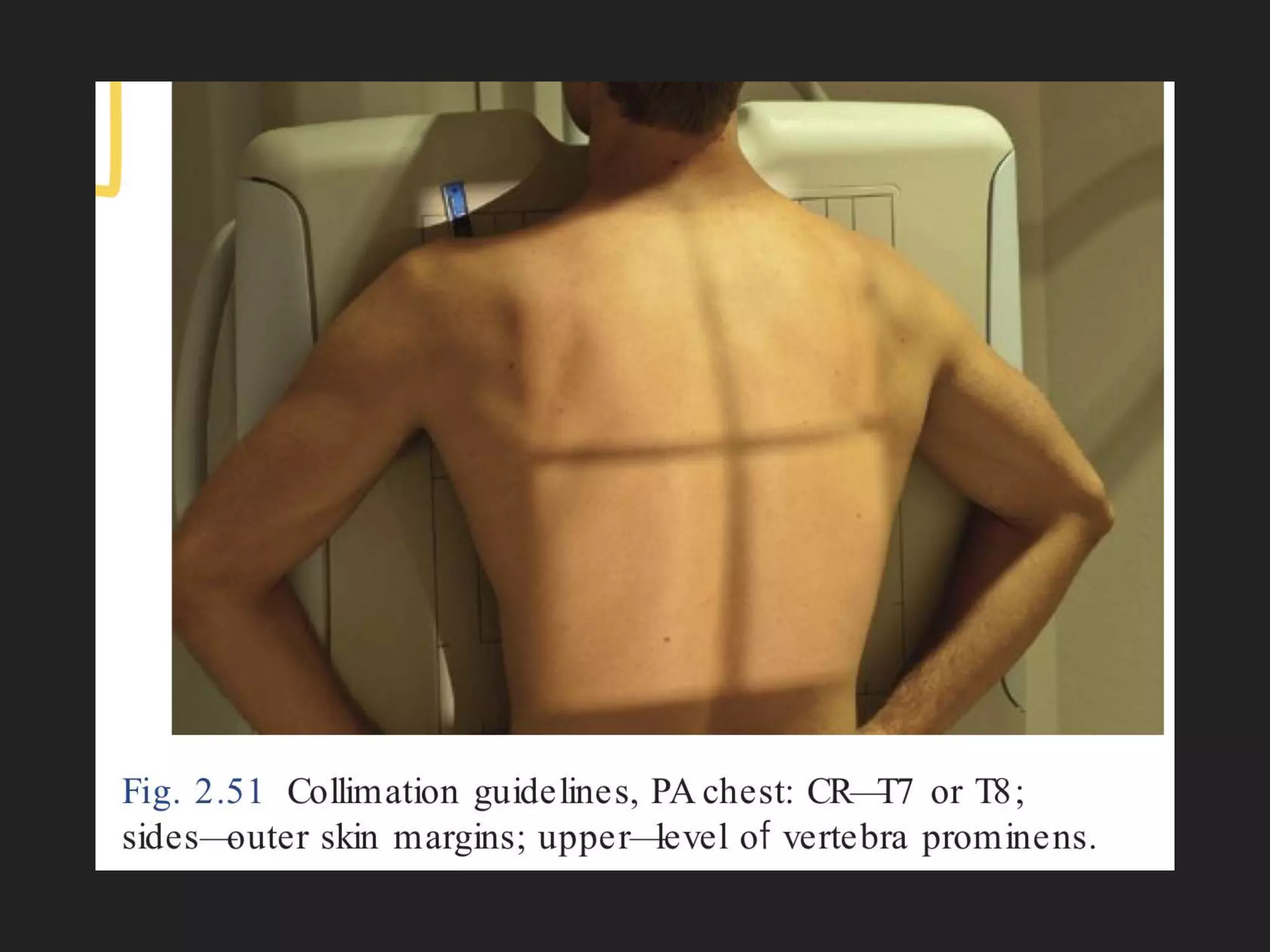
upper collimation margin on the IR of about 1 -1.2
inches, or 4 cm, above the vertebra prominens
The level of T7 on an average adult is 3 to 4
inches (8 to 10 cm) below the jugular notch.
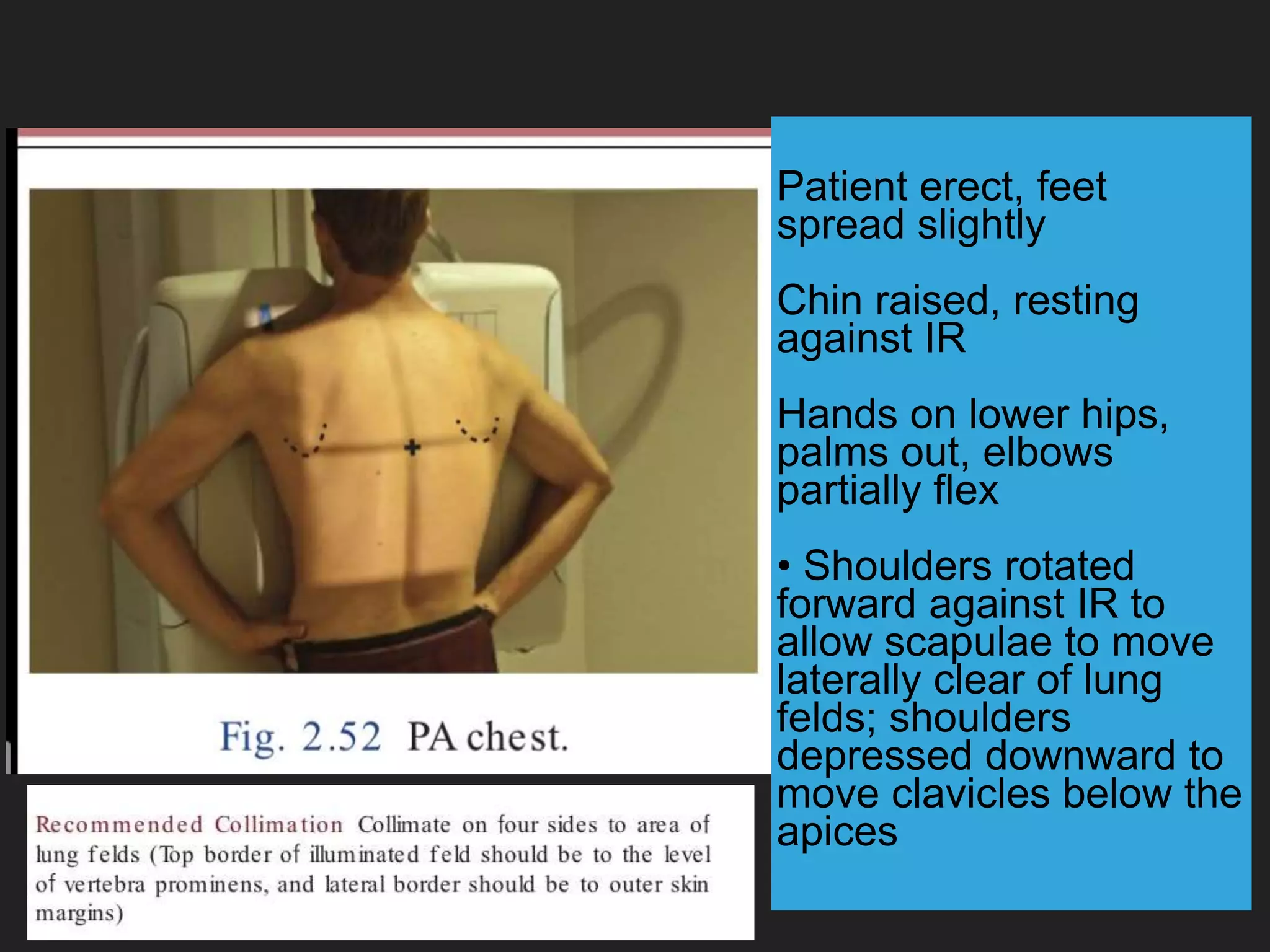
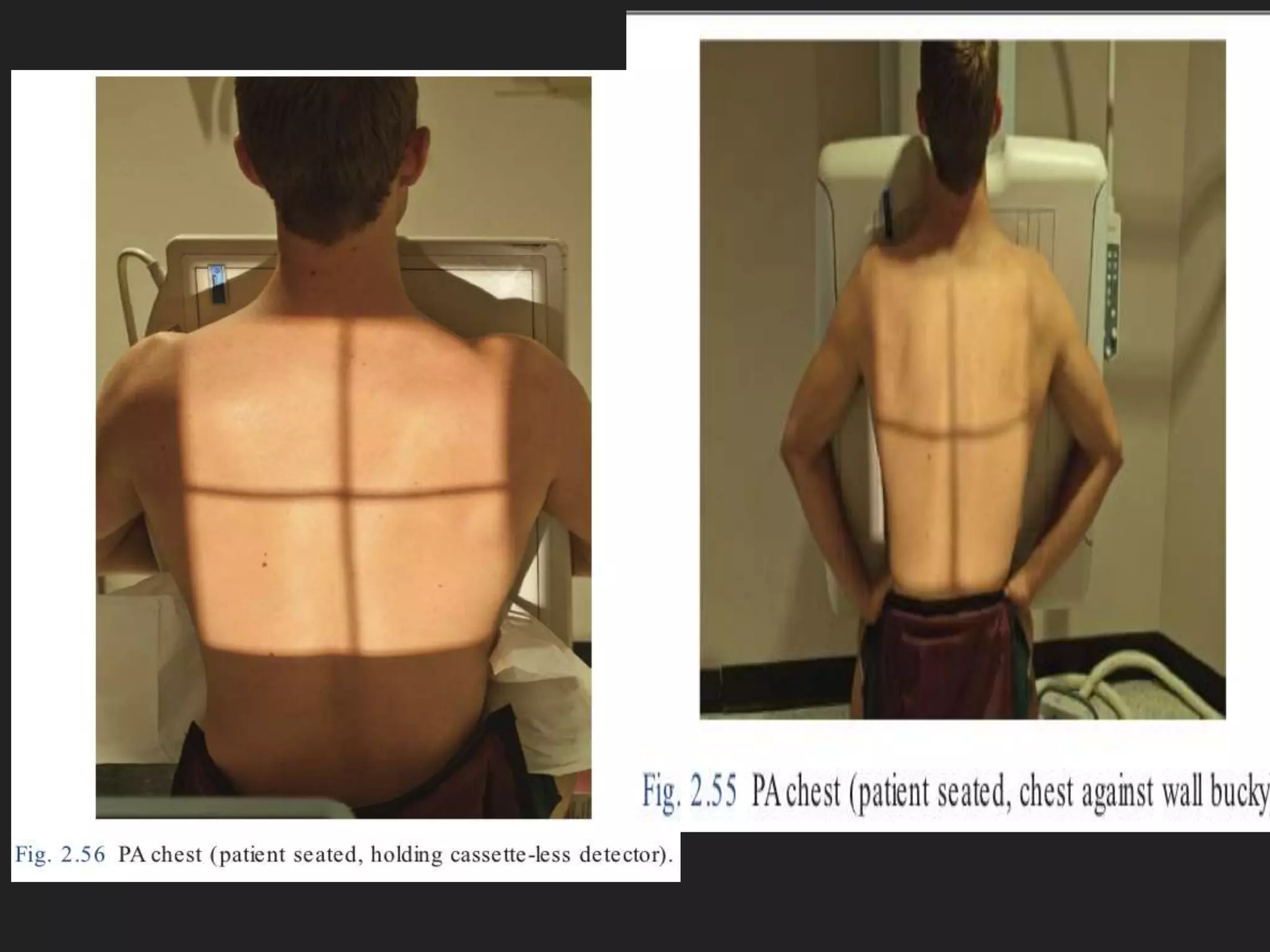
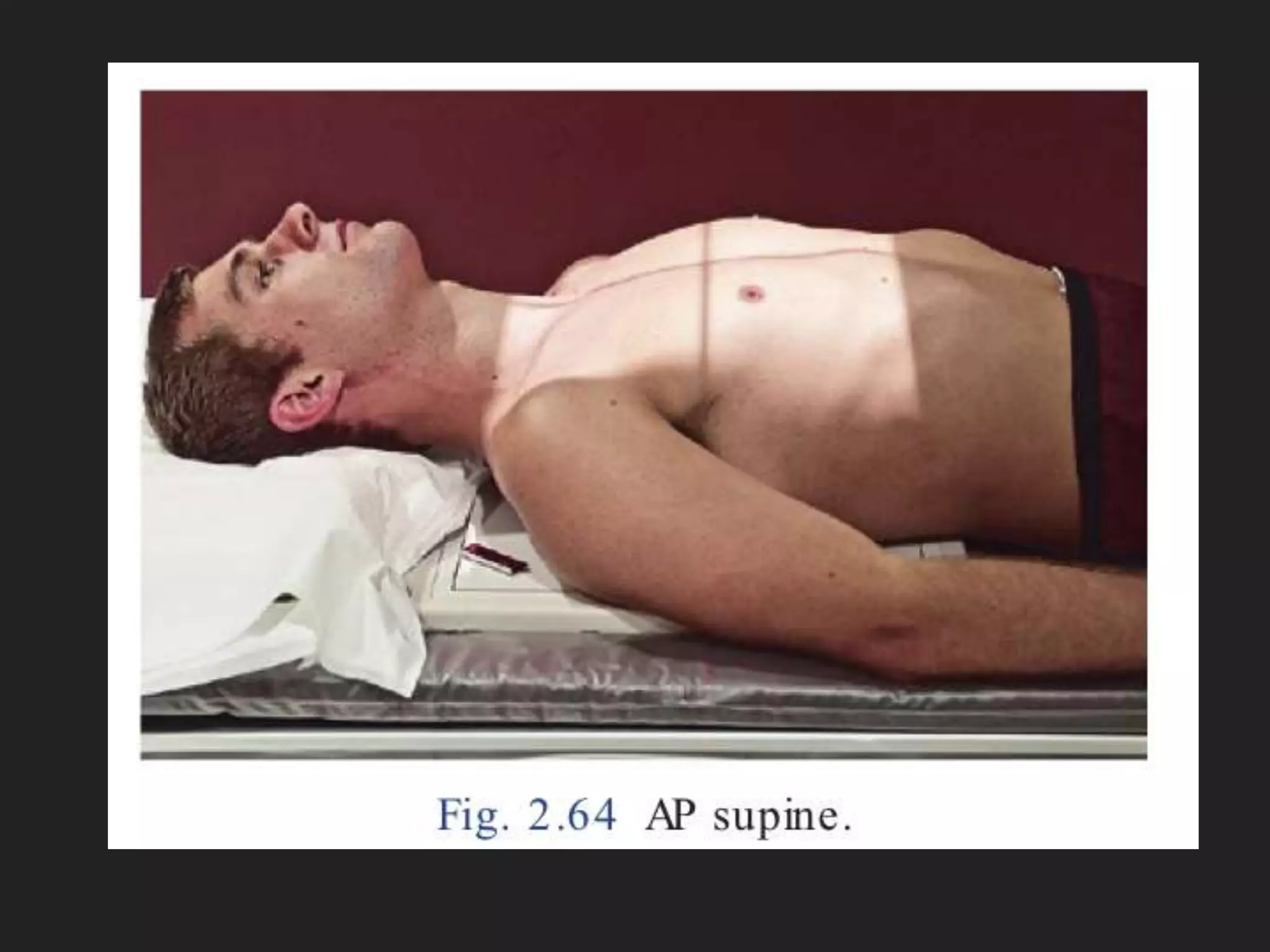
Patient erect, feet
spread slightly
Chin raised, resting
against IR
Hands on lower hips,
palms out, elbows
partially flex
• Shoulders rotated
forward against IR to
allow scapulae to move
laterally clear of lung
felds; shoulders
depressed downward to
move clavicles below the
apices
Technique cxr
Technique cxr
Technique cxr
Technique cxr
Technique cxr
Technique cxr
Technique cxr
Technique cxr
Technique cxr

Technique cxr

  • 1.
  • 8.
    Good quality trachea iscentered equidistant from the head of the clavicle on both sides the spine is visible as a transparent structure through the heart shadow, full inspiratory effort ( the right 6th rib is at the midpoint of the hemidiaphragm on that side) Both Apices, costophrenic angles and the lower parts of the diaphragm should be visible.
  • 12.
  • 14.
    portrait (lengthwise) orlandscape (crosswise) upper collimation margin on the IR of about 1 -1.2 inches, or 4 cm, above the vertebra prominens The level of T7 on an average adult is 3 to 4 inches (8 to 10 cm) below the jugular notch.
  • 17.
    Patient erect, feet spreadslightly Chin raised, resting against IR Hands on lower hips, palms out, elbows partially flex • Shoulders rotated forward against IR to allow scapulae to move laterally clear of lung felds; shoulders depressed downward to move clavicles below the apices