In	
  a	
  video	
  posted	
  to	
  Youtube	
  last	
  
night,	
  Google	
  has	
  revealed	
  it's	
  latest	
  
innova7on;	
  the	
  driverless	
  car.	
  
No	
  steering	
  wheel	
  and	
  no	
  pedals	
  -­‐-­‐	
  
Google's	
  new	
  car	
  has	
  li>le	
  in	
  
common	
  with	
  your	
  four-­‐door	
  sedan.	
  
Google's	
  new	
  car	
  doesn't	
  drive	
  
faster	
  than	
  25	
  miles	
  per	
  hour	
  and	
  
comfortably	
  sits	
  two	
  passengers.	
  
The	
  vehicle	
  uses	
  sensors	
  and	
  
cameras	
  to	
  eliminate	
  blind	
  spots	
  and	
  
iden7fy	
  objects	
  as	
  far	
  as	
  200	
  yards	
  
away	
  -­‐-­‐	
  a	
  valuable	
  ability	
  on	
  
crowded	
  streets	
  and	
  intersec7ons.	
  
It	
  must	
  truly	
  be	
  an	
  odd	
  experience	
  -­‐-­‐	
  
being	
  a	
  passenger	
  in	
  a	
  driverless	
  car.	
  
But	
  is	
  it	
  silly	
  to	
  be	
  wary	
  of	
  this	
  
new	
  breed	
  of	
  transporta7on?	
  
Are	
  the	
  doubts	
  people	
  have	
  about	
  
this	
  technology	
  similar	
  to	
  the	
  doubts	
  
of	
  those	
  who	
  thought	
  we	
  would	
  
never	
  move	
  past	
  animal	
  powered	
  
vehicles?	
  
A	
  driverless	
  car	
  feels	
  like	
  the	
  future	
  
s7ll	
  but	
  Google	
  is	
  beLng	
  that	
  will	
  
change	
  soon.	
  
Google	
  is	
  planning	
  on	
  making	
  100	
  
prototypes	
  of	
  this	
  queer	
  new	
  car	
  
and	
  plans	
  to	
  have	
  them	
  be	
  available	
  
to	
  the	
  public	
  in	
  2020.	
  
The	
  future	
  of	
  transporta7on?	
  
What's	
  unclear	
  is	
  how	
  exactly	
  the	
  
car	
  will	
  work.	
  
Do	
  you	
  type	
  in	
  the	
  address	
  of	
  the	
  
place	
  you	
  want	
  to	
  go?	
  
Do	
  you	
  select	
  a	
  des7na7on	
  off	
  a	
  list	
  
of	
  approved	
  parking	
  loca7ons?	
  
Either	
  way,	
  the	
  prospect	
  of	
  a	
  self-­‐
driving	
  car	
  has	
  a	
  lot	
  of	
  people	
  
excited.	
  
Though	
  Google's	
  car	
  tops	
  out	
  at	
  25	
  
mph,	
  imagine	
  a	
  highway	
  where	
  self-­‐
driven	
  all	
  the	
  cars	
  are	
  self-­‐driven,	
  
communica7ng	
  with	
  each	
  other.	
  
Conceivably,	
  these	
  cars	
  could	
  travel	
  
much	
  faster	
  then	
  whats	
  safe	
  for	
  the	
  
average	
  human.	
  
Computers'	
  reac7on	
  7mes	
  are	
  far	
  
faster	
  and	
  can	
  communicate	
  
between	
  themselves	
  far	
  faster	
  than	
  
humans	
  -­‐-­‐	
  so	
  the	
  vehicles	
  could	
  be	
  
much	
  closer	
  together	
  as	
  they	
  travel	
  
down	
  the	
  highway.	
  
Though	
  Google's	
  technology	
  isn't	
  
focused	
  on	
  these	
  aspects	
  of	
  travel,	
  
I'm	
  sure	
  they	
  are	
  working	
  towards	
  
these	
  applica7ons.	
  
Another	
  benefit	
  of	
  a	
  self-­‐driving	
  
car	
  is	
  accessibility.	
  
In	
  the	
  video,	
  a	
  blind	
  man	
  rides	
  
around	
  around	
  in	
  the	
  car	
  and	
  
marvels	
  about	
  how	
  being	
  able	
  to	
  get	
  
around	
  on	
  his	
  own	
  7me	
  would	
  vastly	
  
improve	
  his	
  life.	
  
This	
  is	
  an	
  aspect	
  of	
  the	
  driverless	
  car	
  
that	
  hadn't	
  occurred	
  to	
  me	
  -­‐-­‐	
  the	
  
visually	
  impaired	
  could	
  now	
  navigate	
  
with	
  much	
  more	
  freedom.	
  
An	
  end	
  to	
  the	
  dreaded	
  commute.	
  
Not	
  being	
  responsible	
  for	
  driving	
  the	
  
car	
  also	
  allows	
  much	
  more	
  free	
  
7me.	
  
If	
  your	
  commute	
  7me	
  becomes	
  free	
  
7me,	
  you	
  can	
  effec7vely	
  gain	
  an	
  
hour	
  of	
  the	
  day.	
  
Instead	
  of	
  being	
  a	
  distracted,	
  
frustrated	
  driver,	
  you	
  could	
  leisurely	
  
read	
  the	
  paper,	
  eat	
  your	
  breakfast,	
  
apply	
  your	
  makeup	
  or	
  get	
  a	
  jump	
  on	
  
the	
  days	
  work.	
  
Self-­‐driving	
  cars	
  have	
  the	
  poten7al	
  
to	
  dras7cally	
  change	
  the	
  way	
  
human's	
  travel.	
  
In	
  a	
  country	
  where	
  over	
  600,000	
  
people	
  have	
  commutes	
  to	
  work	
  over	
  
90	
  minutes,	
  reclaiming	
  that	
  7me	
  for	
  
business,	
  pleasure,	
  or	
  family	
  is	
  a	
  
huge	
  benefit.	
  

Tech Musings: the Self-driving Car

  • 1.
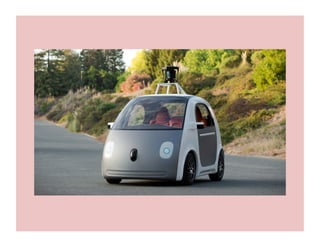
    In  a  video  posted  to  Youtube  last   night,  Google  has  revealed  it's  latest   innova7on;  the  driverless  car.  
  • 3.
    No  steering  wheel  and  no  pedals  -­‐-­‐   Google's  new  car  has  li>le  in   common  with  your  four-­‐door  sedan.  
  • 4.
    Google's  new  car  doesn't  drive   faster  than  25  miles  per  hour  and   comfortably  sits  two  passengers.  
  • 5.
    The  vehicle  uses  sensors  and   cameras  to  eliminate  blind  spots  and   iden7fy  objects  as  far  as  200  yards   away  -­‐-­‐  a  valuable  ability  on   crowded  streets  and  intersec7ons.  
  • 6.
    It  must  truly  be  an  odd  experience  -­‐-­‐   being  a  passenger  in  a  driverless  car.  
  • 7.
    But  is  it  silly  to  be  wary  of  this   new  breed  of  transporta7on?  
  • 8.
    Are  the  doubts  people  have  about   this  technology  similar  to  the  doubts   of  those  who  thought  we  would   never  move  past  animal  powered   vehicles?  
  • 9.
    A  driverless  car  feels  like  the  future   s7ll  but  Google  is  beLng  that  will   change  soon.  
  • 10.
    Google  is  planning  on  making  100   prototypes  of  this  queer  new  car   and  plans  to  have  them  be  available   to  the  public  in  2020.  
  • 11.
    The  future  of  transporta7on?  
  • 12.
    What's  unclear  is  how  exactly  the   car  will  work.  
  • 13.
    Do  you  type  in  the  address  of  the   place  you  want  to  go?  
  • 14.
    Do  you  select  a  des7na7on  off  a  list   of  approved  parking  loca7ons?  
  • 15.
    Either  way,  the  prospect  of  a  self-­‐ driving  car  has  a  lot  of  people   excited.  
  • 16.
    Though  Google's  car  tops  out  at  25   mph,  imagine  a  highway  where  self-­‐ driven  all  the  cars  are  self-­‐driven,   communica7ng  with  each  other.  
  • 17.
    Conceivably,  these  cars  could  travel   much  faster  then  whats  safe  for  the   average  human.  
  • 18.
    Computers'  reac7on  7mes  are  far   faster  and  can  communicate   between  themselves  far  faster  than   humans  -­‐-­‐  so  the  vehicles  could  be   much  closer  together  as  they  travel   down  the  highway.  
  • 19.
    Though  Google's  technology  isn't   focused  on  these  aspects  of  travel,   I'm  sure  they  are  working  towards   these  applica7ons.  
  • 20.
    Another  benefit  of  a  self-­‐driving   car  is  accessibility.  
  • 21.
    In  the  video,  a  blind  man  rides   around  around  in  the  car  and   marvels  about  how  being  able  to  get   around  on  his  own  7me  would  vastly   improve  his  life.  
  • 22.
    This  is  an  aspect  of  the  driverless  car   that  hadn't  occurred  to  me  -­‐-­‐  the   visually  impaired  could  now  navigate   with  much  more  freedom.  
  • 23.
    An  end  to  the  dreaded  commute.  
  • 24.
    Not  being  responsible  for  driving  the   car  also  allows  much  more  free   7me.  
  • 25.
    If  your  commute  7me  becomes  free   7me,  you  can  effec7vely  gain  an   hour  of  the  day.  
  • 26.
    Instead  of  being  a  distracted,   frustrated  driver,  you  could  leisurely   read  the  paper,  eat  your  breakfast,   apply  your  makeup  or  get  a  jump  on   the  days  work.  
  • 27.
    Self-­‐driving  cars  have  the  poten7al   to  dras7cally  change  the  way   human's  travel.  
  • 28.
    In  a  country  where  over  600,000   people  have  commutes  to  work  over   90  minutes,  reclaiming  that  7me  for   business,  pleasure,  or  family  is  a   huge  benefit.