A Rough Draft
of
Proposed
Presentations
to
Teachers
ConstructionZone—Be careful!
Work in progress.
DISCLAIMER: No one knows all the
answers to how to teach or how
students learn.
Teachers must find or develop a style
of their own that works with their
strengths, abilities and personality.
Try new techniques and methods, but,
if they don’t work for you, try
something else. We cannot tell you how
to teach; we can only give suggestions
that have worked for us or others
whom we know.
READY TO TRY SOME THINGS?
learn by doing!
I would like for Bill and you to go to the movies with Sue
and I/me.
I am good/well.
The lady who/that writes novels is here.
Now that I think about it, if I was/were rich I would move to
Costa Rica.
Please, drive slow/slowly.
When it’s time to board the train, to which stop should I tell
the conductor I’m going to?
Jim: Hello. Is this Bill?
Bill: It’s me/I.
Who/whom do you believe?
How many of these contain errors?
Peace Corps Volunteers become fluent in a
foreign language in 2.5 months, while students in
US foreign language classes generally don’t reach
fluency in 4 years.
WHY?
Everyone learned their primary language the same
way, by watching, listening, mimicking, touching,
smelling, tasting.
American students are taught from textbooks,
worksheets, grammar lessons, etc.
 Use their best English speakers as teaching
assistants to reduce student/teacher ratios.
 Spend the first five minutes of every class with
their most fluent students and themselves
moving through the classroom talking to each
student for a few minutes in English.
 Listen to these student English conversations.
This is one of the best ways to assess skill levels
and language development.
Teachers Should:
Have students practice conversational skills with
each other during every class period.
Use questions that come from previous lessons
and have upperclassmen visit and assist.
Dialogues
Have students write dialogues using the
current lesson vocabulary and grammar.
Then have them speak the dialogue aloud
during the next class.
NOTE: Make sure you correct the dialogues
before they practice or memorize them at
home.
You don’t want them to practice and state
aloud incorrect sentence structures and
grammar.
Speaking Outside of Class
When you see students outside of class, greet
them in English.
Encourage them to answer you in English and ask
you a question if you have time.
Also, explain to them how important it is for them
to greet classmates outside of class in English.
They should be able to use English with any
teacher or student in Khazar University.
Using classmates’ English names will also help
them with pronunciation.
Better Pair Conversations
Shy students get lost during dialogues. So,
supply them with cues on the board or a
worksheet. Then they can look to see what
to say next.
D1st Person 2nd Person
Greet Respond
Ask name. Respond and ask about name back.
Ask about age Respond and ask back about age
Ask about home town Respond and ask about brothers and sisters.
Respond about siblings Tell about siblings.
Ask about breakfast. Respond and ask back about breakfast.
Simple Conversation Prompts
If you meet someone new, how do you start
a conversation and keep it going? Students
often aren’t taught how to avoid long
awkward silences when in company.
Hi, how are you? Have you seen any good movies?
Where is you house? What sports do you follow?
Are you married? Tell me about you hobbies.
Do you have children? What kind of car do you own?
Are you in school or college? What do you do with your friends?
What kind of work do you like? Have you traveled lately?
Do you like your work?
Tell me about it? is a good open-ended follow-up question for
most of the responses to the inquiries above.
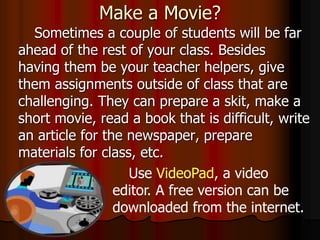
Make a Movie?
Sometimes a couple of students will be far
ahead of the rest of your class. Besides
having them be your teacher helpers, give
them assignments outside of class that are
challenging. They can prepare a skit, make a
short movie, read a book that is difficult, write
an article for the newspaper, prepare
materials for class, etc.
Use VideoPad, a video
editor. A free version can be
downloaded from the internet.
SIMULATIONS
How do you train pilots, doctors,
engineers, builders, and many
other professionals?
Simulations
For example, Try One to Practice
Shopping Language
Students Prepared for this Lesson by Bringing
in Empty Boxes and Adding Price Tags
Bankers Changed Large Bills
Giving Change with School Dollars
Bargaining in English
Students Practice for Months
Can you name other possible
simulations?
Simulated Trial: Who’s Most At Fault?
A married couple live in a house on one side of a river. The wife has a lover
who lives on the other side. The only way to get across the river is to walk
across the bridge or to pay the boatman.
The husband has to go on an overnight business trip to a faraway town.
The wife pleads with him to take her with him. She knows if that he doesn't
she will be unfaithful to him. The husband absolutely refuses to take her
because she will only be in the way of his important business. So the husband
goes alone.
That night, the wife goes over the bridge and stays with her lover. Dawn is
almost up when the wife leaves because she must be back home before her
husband returns. She starts walking across the bridge but sees an assassin
waiting for her on the other side. She knows if she tries to cross, he will
murder her. In terror, she runs up the side of the river and asks the boatman
to take her across the river, but he wants too much money. She doesn't have
enough, so he refuses to take her.
The wife runs back to the lover's house and explains her predicament and
asks him to pay the boatman. The lover refuses, telling her it's her own fault
for getting into this situation. As dawn comes up the wife decides to dash
across the bridge. She comes face to face with the assassin and he kills her.
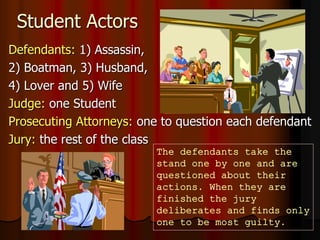
Student Actors
Defendants: 1) Assassin,
2) Boatman, 3) Husband,
4) Lover and 5) Wife
Judge: one Student
Prosecuting Attorneys: one to question each defendant
Jury: the rest of the class
The defendants take the
stand one by one and are
questioned about their
actions. When they are
finished the jury
deliberates and finds only
one to be most guilty.
Here are some other possible
simulations:
• Ordering and eating at a restaurant?
Here are some other possible
simulations:
• Ordering and eating at a restaurant?
• Interviewing for a job?
Here are some other possible
simulations:
• Ordering and eating at a restaurant?
• Interviewing for a job?
• Giving and receiving directions?
Here are some other possible
simulations:
• Ordering and eating at a restaurant?
• Interviewing for a job?
• Giving and receiving directions?
• Teaching a class in geography,
or other subject, using English?
READ, Write, Listen and Speak
Short Writing Exercises
• Daily Journal or Diary—Write one sentence
about the most important event from
yesterday.
• Describe the last wedding you attended.
• Write about your favorite aunt or uncle.
• What would your dream future spouse be
like?
Don’t ask them to write about what they did
during the summer. Narrow the topic.
One of the problems with English classes is
teachers and students often spend much of
the class period speaking Azerbaijani.
Dərslərdən sonra
hara gedirsən?
Bilmirəm. Mən
bir fincan çay
içmək istərdim.
Is this an
English
Class?
Then
Speak
English!
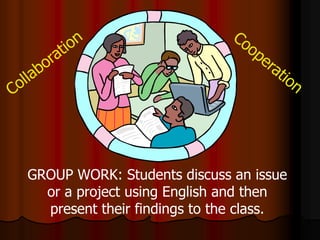
GROUP WORK: Students discuss an issue
or a project using English and then
present their findings to the class.
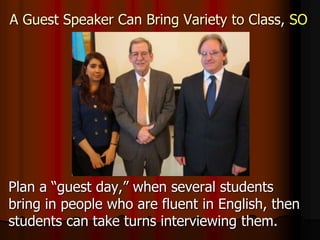
A Guest Speaker Can Bring Variety to Class, SO
Plan a “guest day,” when several students
bring in people who are fluent in English, then
students can take turns interviewing them.
Real-world work—
Students write an
English language
university
newspaper.
Newspapers are not only practical
writing exercises for students,
they help young people
understand how a free press (free
speech) is one of the
cornerstones of a
democracy.
Qələm qılıncdan daha kəskin
olur.
The Fourth Estate
How important is writing?
Consider the role of the Fourth Estate in any
country’s freedom and stability.
Students Write Skits in English,
Make Puppets and Put on Shows
Role-plays,
Skits
&
Dramas
Allow
Students
to Be
Creative while
practicing
their English.
How Well Do You Understand
Verbal Directions in English?
Could You Run a Maze Blindfolded?
Students Use Their Visual
Aids During Oral Reports in English.
Speak English with Your Students
Use a Homemade Clock with Movable Hands to
Review Telling Time In English
Writing for Contests
Local, national
or
international
essay contests
can be
motivators for
Repetition
Write a sheet of sentences you want your
students to know and use them in class often.
Teacher Students
Welcome to class. I am glad to be here.
Is the window open? Yes, the window is open.
What day is it? It is Friday.
Did you do your homework? Yes, I did my homework.
Stand up. I am standing up.
Did you come to school today? Yes, I came to school.
Did you drink tea for breakfast? Yes, I drank tea.
Have you eaten at the café? No , I have not eaten there.
How Children andolder
students Can Learn while
playing
For homework, have students write their
own children’s book in English. Have them
peer critique the books before using ink.
They can illustrate it with magazine
clippings or drawings.
When they’re done, they can read it to a
child they know and give it to them.
For Children, try nursery rhymes.
“Here’s the way we
walk to school, walk
to school, walk to
school; this is the
way we walk to
school, on a cold and
windy morning.”
Replace the following
for “walk to school.”
--comb our hair
--wash our hands
--button our shirt
--brush our teeth
--eat our food
Students act out the motions.
OR Dance the Hokey Pokey
“Put your right
foot in, put your
right foot out,
put your right
foot in and you
shake it all
about. You do
the hokey pokey
and you turn
yourself around,
that’s what it’s all
about.” Substitute hand, elbow, hip,
head, knee, etc. for foot.
Simon Says
Students stand up. Then they are given
commands. If “Simon says,” the students must
follow the command.
If a student doesn’t follow directions he
becomes Simon and tries to catch other
students not listening carefully.
Sample commands:
Simon says, “Touch your right ear.” (not left ear)
Simon says, “Turn around.”
Simon says, “Lift your left foot.”
“Put your left foot down.” (Simon didn’t say to
do this.)
Word Race!
As many pairs of student as will fit should
go to the board. The tallest one writes an
English word on the board. The other student
must use the last letter of that word as the
first letter of his word.
The contest goes on until one student
unintentionally repeats a word or can’t think
of a new word within five seconds.
Winners compete against other winners
and losers sit down. You can compete until
you have a class champion. See next slide.
GUNAY KAMRAN
Horse Elephant
Team Mirror
Really Yes
Scurry
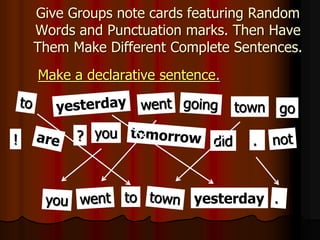
Give Groups note cards featuring Random
Words and Punctuation marks. Then Have
Them Make Different Complete Sentences.
Make a declarative sentence.
did
town
you
go
.
?
!
to yesterday
Arranging words to make complete
sentences.
are yesterday ? did town ! going go went not
. tomorrow to you
Put the sentence into the form of a command.
Go to town tomorrow.
Which group can make a complete sentence
the fastest? The longest sentence? The
shortest sentence? A compound sentence?
are coat yesterday ? did town ! going go a is
to went not . tomorrow , wants will to you
and he hat buy shop to
EXAMPLES
You are going to shop tomorrow, and he will
buy a coat.
Or
Buy a hat.
A
version
of
musical
chairs
Place one fewer chairs in a circle than there are students. Every one
stands. The person who is IT, gives a command in English, such as,
“Everyone who is wearing a watch, stand and find a different chair.” Of
course IT wants to sit down, so he/she must give a command that allows
him/her to run for a chair. The person who can’t find a chair is IT.
Then everyone stands and the new IT gives a different command.
Use things such as, “wearing a watch” or “wearing red” or “wearing
sandals” or “over 20” or “is a girl” or “likes dolma” etc.
Work sheets, exercises
AND
examinations.
$ 14.17
$ 8.25
$ 75.99 $ 5.75
Pair Work: Students are given worksheets with
information missing that they have to acquire from
their partner by speaking in English. Put 12 items on
each worksheet. Tell them: “NO PEEKING.”
Sharing
Information
in
English
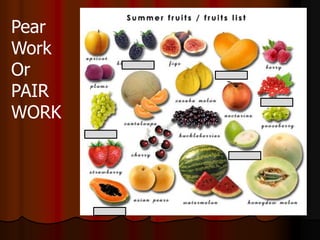
Pear
Work
Or
PAIR
WORK
Back-
to-
Back
Work
1
1
5
5
20 10
10
20
Copy these and print your own “school” money to
practice numbers, counting, making and giving change.
What are
they
feeling or
thinking?
Written Tests and Quizzes Keep
Students on their Toes
Make your own puzzles and
worksheets.
Assign a student to use the new vocabulary
list and a free Internet program to create an
educational puzzle for the next day’s class.
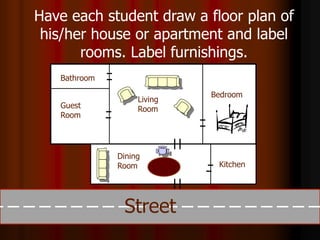
Have each student draw a floor plan of
his/her house or apartment and label
rooms. Label furnishings.
Guest
Room
Bathroom
Bedroom
Living
Room
Kitchen
Dining
Room
Street
Have
students
choose a
country,
research
it and
give a
report in
English.
Make and label a map of your campus
or neighborhood.
Auditorium
Administration
Football Field
Dormitory
Use a city map to teach the names of buildings and typical
streets, then add a toy car to teach following directions—
turn right, stop, go three blocks, go west, turn around, etc.
It can be a miniature simulation.
learn by Going!
The world is the best
classroom. USE IT!
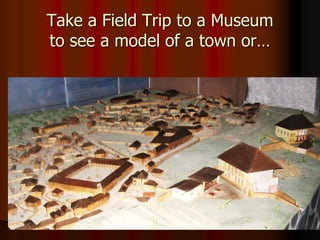
Take a Field Trip to a Museum
to see a model of a town or…
Have the students study local, historical and
national personages,
then present oral reports on them in
English.
The photos on the next page are examples
of statues or busts that were in Sheki.
Students were required to identify the
persons, where the statues are located and
why these people are important to
Azerbaijan.
‘TREASURE HUNT’ Type of Assignment
Or
family
life of
early
Azeris
Or Traveling Exhibits at the
University
You and good students can assist a Teacher
in an English Classroom at a Local School.
Hike to a local
beautiful natural
wonder to talk
about geology
and history in
English.
Let your students practice English at
a Market during a field trip
Special Occasions Can Be Used to Practice
English and Share Cultures—Christmas
Local Cultural
Does Baku have opera and drama theaters,
history museums, historic buildings, music
halls, art museums, recitals, a circus,
botanical garden, etc.?
Most museums will have exhibits with
descriptions in both Azeri and English.
Have you taken any of your students to
them?
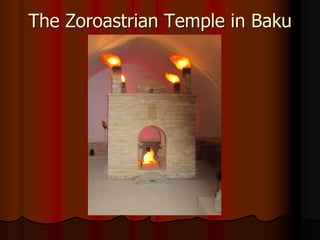
The Zoroastrian Temple in Baku
Increase
Improve Listening Skills by Scheduling
a Saturday Movie Club
LEARNING STYLES
Learning Styles
 Kinesthetic or Tactile = learn by
touching, interacting, etc.
 Auditory = learn from hearing lectures,
directions, discussions, etc.
 Visual = learn by seeing, demonstrations,
movies, others’ actions, etc.
 Combined = most learn by two or three
Addressing Symbolism
Remember that all words are symbols,
as are photographs, dance moves, inflections
and tone of voice, videos, paintings, musical notes,
body language, facial expressions, etc.
They evoke emotions and communicate on a
subliminal level. Make sure students who excel in
dance, drama, speaking, music, creative writing,
visual arts and other symbolic forms of
communication are allowed to use these
during some assignments.
Learning Styles
 Kenisthetic or Tactile = learn by
touching, interacting, hands-on
experiences, etc.

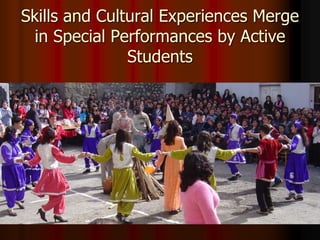
Skills and Cultural Experiences Merge
in Special Performances by Active
Students
Learning Styles
 Auditory = learn from hearing lectures,
discussions,
directions, etc.
Learning Styles
 Visual = learn by seeing, demonstrations,
movies, others’ actions, etc.
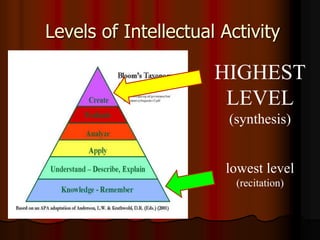
Levels of Intellectual Activity
lowest level
(recitation)
HIGHEST
LEVEL
(synthesis)
Designing Curriculum and
Individual Lessons
Excellent teachers make sure
students have the opportunity to
function on the
highest levels of
intellectual activity
during as many
assignments and tests as possible.
It doesn’t hurt students at times
if teachers require them to be
creative, to think for
themselves, to debate a topic,
to solve a problem or to
question the status quo.
Types of Test Questions
Some teachers only ask WHAT questions, which
require students to use only their memory, the
lowest level of intellectual activity. Other types
require using memory plus higher levels of
intellectual activity.
Participation Styles
Competitive = wants to test skill
level against others
 Likes to play games in class
 May or may not be prepared
 Sits in the middle of the class
 May be bored with lectures,
silent reading, filling in
worksheets unless students race to finish
 Is satisfied with low level memorization
assignments
Avoidant = doesn’t want to
participate
 Is shy, academically lost, clinically depressed or lazy
 Sits in the back of the room
 Won’t make eye contact with teacher
 Slumps and hides behind other students
 Doesn’t raise hand or volunteer
 Misses class for any reason
 Doesn’t complete homework
 Goes to the restroom a lot
 Is not prepared for class
Participative = loves to be
involved
 Sits in front row if possible
 Raises hand
 Is prepared for class
 Volunteers to help teacher and students
 Loves to come to class
 Asks for more homework
 Likes memorization but also flourishes
with higher levels of intellectual activity
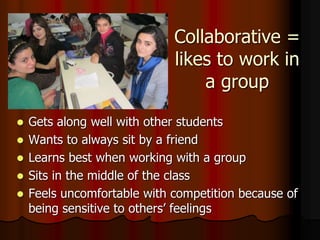
Collaborative =
likes to work in
a group
 Gets along well with other students
 Wants to always sit by a friend
 Learns best when working with a group
 Sits in the middle of the class
 Feels uncomfortable with competition because of
being sensitive to others’ feelings
Dependent = has trouble working
without supervision
 Sits close to the front
 Continually seeks teacher’s approval and
help
 Has difficulty finishing homework
 Obviously lacks self confidence
 Likes low-level memory work because there
is a supposedly “correct” answer
 May have trouble with higher levels of
intellectual activity
Independent = likes to
solve problems without
others’ help
 Likes to work alone
 Feels pride in being able to complete
assignments without cheating and seeking
teacher or another student’s help
 Will sit in the front two-thirds of the
classroom
 May become bored if assignments are
strictly memorization
Avoid Self-Fulfilling Prophecies
 If you say about a student, “He’s a lazy
boy,” guess what? He’s very likely to fulfill
your preconceived opinion.
 Treat a student the way you want him to
behave and he may rise to your
expectations.
Try: “You’re going to be one of my best students.”
Lesson Ideas
Have Fun Discussing Idioms
 Think outside the
box.
 Don’t go postal.
 I’ll have to pull some
strings.
 Pass the buck.
 She’s still on the
fence.
Collaboration and Competition
 Peer critique fellow student’s notes,
essays, pretests etc.
 Panel discussions and Debates
 Blackboard work
 Daily journal writing about lessons
Students make and play
educational board games
Practice handling money, counting,
reading instructions, making deals,
etc. in English. If you speak
Azerbaijani,
you lose
5 Monopoly
dollars per
word.
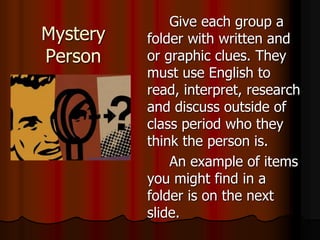
Mystery
Person
Give each group a
folder with written and
or graphic clues. They
must use English to
read, interpret, research
and discuss outside of
class period who they
think the person is.
An example of items
you might find in a
folder is on the next
slide.
“Talk” on paper by “asking” questions in writing
in your notebook, trading notebooks, answering
on the other person’s notebook, responding,
and trading, and so on.
Silent
English
Language
Practice
Back-to-
Back
Guess Who or What I Am.
Answers are written and clipped
on each person’s back. Students ask
yes-or-no questions in English
to find out what they are.
Brad
Pitt
hotdo
g
puppy
taxi
Fill the classroom
shelves with PROPS.
Then use them to
teach vocabulary or
positions: for
example, where are
the binoculars? Put
the robot behind the
table.
What’s in the Bag?
Put a dozen
household or office
items in several
sacks. In pairs or
groups of three,
have the students
pull one object from
the bag at a time
and name it, then
use its name in a
complete sentence.
No sentence can use
“This is…” or any
simple construction.
When done with a
bag, groups can
trade.
nail clippers,
comb, paper
clip, rubber
band, key
ring, plug
adapter,
book mark,
fork, dice,
shoe horn,
match,
scotch tape,
stapler,
magnet,
magnifying
glass, flash
drive,
Velcro,
shoelace,
corkscrew,
etc.
Twenty Questions
A noun is secretly told to the
entire class. Then one student
is supposed to ask yes-or-no
questions in English to
different class members until
he guesses that
noun. He has 20
questions.
Learn new English words and discuss
stories from newspapers and
magazines in the first floor library.
Oil prices.
Weather.
Elections.
Eurovision.
Drought.
Materials that Suit the Students
Make sure vocabulary, articles,
graphics for discussion and oral
report assignments include
materials interesting and relevant to
the students’ department.
Pictures of construction sites for
engineering students and photos
of body language for psychology
students will make your lessons
more interesting for them.
REMINDER: If a student gives an incorrect answer in
English, don’t supply the correct answer and don’t let
other students jump in and answer. Instead say,
Repeat that, please.
Or
That’s not quite right. Try again.
That gives him/her the chance to think about
and correct a mistake just as people do when
they make a mistake speaking their own
language.
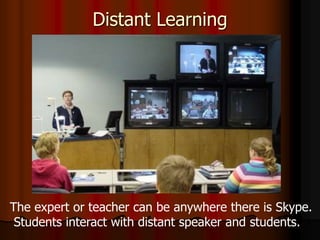
Distant Learning
The expert or teacher can be anywhere there is Skype.
Students interact with distant speaker and students.
There are thousands of short videos on Vimeo
or Youtube that can be used to improve
listening skills, initiate student discussion or
practice pronunciation.
GENDER ISSUES
WORLD TRAVEL
WORK
EDUCATION
How Many Different Kinds of
Active Lessons Are There?
As Many as Creative
Teachers and Students
Can Think Of.
REVIEW
 Inspire your students
 Utilize the entire class period
 Teach actively
 Keep everyone involved
 Be creative with challenging lessons
 Be aware of students’ learning styles
 Speak English most of the time
 Control the seating in your classroom
 Test for understanding and progress
REVIEW
1. Classes should be student focused, not
teacher focused.
2. When only one student at a time recites, the
rest of the students are not always engaged.
3. Make sure the largest number of students are
involved during the majority of the period.
4. Don’t do any classroom work that your
students can do for you or themselves.
Who Needs the Experience Most,
You or the Students?
Students can and should:
 Hand out and take up papers.
 Grade simple homework.
 Prepare and/or bring in flashcards, quizzes,
word puzzles, relevant Youtube videos, etc.
 Write vocabulary or directions on the board.
 Bring in songs and lyrics to sing.
 Clip or copy news in English to use in class.
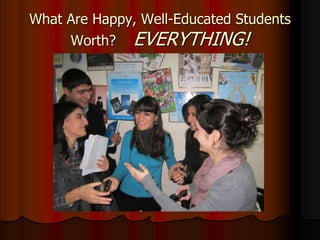
What Are Happy, Well-Educated Students
Worth? EVERYTHING!
You’re Remembered Forever
Good teachers will always be remembered.
Their students will have learned to be:
 Altruistic
 Knowledgeable
 Skillful
 Reasonable
 Adaptable
 Curious
 Honest
 Independent
 Responsible
 Hard Working
 Respectful
 Good Citizens
Use The Library
or
Internet
Research in the library or on the
internet will insure that students
gain added knowledge that is up
to date and varied.
Believe nothing that you hear,
a quarter of what you read
and half of what you see.
How do you know what you read in the
library or on the internet is creditable?
1. Is the publisher well established?
2. What are the author’s credentials?
3. Is the author associated with a group who can
benefit from this information?
4. Is it peer critiqued?
5. Is there a bibliography?
6. Is the document objective or one-sided?
7. Does the author exaggerate?
8. When was it written?
Critique this News Release for Validity
The population of endangered spotted owls of the
American Northwest is being reduced further by the lumber
industry. Only 50 spotted owls have been recorded as still in
existence.
The lumber industry doesn’t care. They would seem to be
satisfied to cut down every tree on earth.
Members of STOP (Save The Owls Project) are the only
group interested in saving the spotted owl from extinction.
It’s spotted owls today and the timber wolf tomorrow.
If you are interested in saving the world of nature, then
you need to act now.
Brad Pitt, STOP Founder, P.O. 487, Seattle, WA 23412
STOP Newsletter, August 2004
Wisdom from the Past
Use small groups to discuss and explain what
the following quotations mean to them.
1. “Those who Know they do not Know that to
Know is to Know what they do not Know!
-- (Aveccina) Ali Sina
2. “You don’t need fancy highbrow traditions or
money to really learn. You just need people
with the desire to better themselves.”
– Adam Cooper and Bill Collage
3. It is possible to store the mind with a million
facts and still be entirely uneducated.
–Alec Bourne
1. "Liberty without learning is always in peril;
and learning without liberty is always in
vain.” –John F. Kennedy
2. A person who won't read has no advantage
over one who can't read. ― Mark Twain
3. “The mind is not a vessel to be filled, but a
fire to be kindled.” ― Plutarch
4. “Children must be taught how to think, not
what to think.” ― Margaret Mead
1. “To educate a person in the mind but not in
morals is to educate a menace to society.”
― Theodore Roosevelt
2. “You educate a man; you educate a man.
You educate a woman; you educate a
generation.”
― Brigham Young
3. “Students remember what they think and
say in class better than what they hear the
teacher say.” –Joel H. Robbins
1. The ultimate goal of the educational system is
to shift to the individual the burden of pursuing
his education.
--John W. Gardner
2. Tell me and I'll forget. Show me, and I may not
remember. Involve me, and I'll understand.
--Native American Saying
3. What we learn with pleasure we never forget.
--Alfred Mercier
1. Bilməmək ayιb deyil, soruşmamaq ayιbdιr.
–Azeri Proverb
2. "It's not shameful not to know, but it's
shameful not to ask." –Azeri Proverb
3. Knowledge is not what is memorized.
Knowledge is what benefits.- Imam Shafi‘
4. Bir ǝldǝ iki qarpιz tutmaq olmaz. –Azeri
Proverb
1. “Well, one never really thinks about what one
has done, only what is to be done.” --Madame
Curie
2. “Yesterday’s glory is past. You're only as good
as you are today.”
3. “As a professor, I was paid to spew out as
many facts as possible. That’s what the
university’s model has been for a thousand
years.” Since “facts” change, starting from
ignorance is a better approach in science.--
Stuart Firestein
Class Management
Is the Teacher Prepared?
Does class progress like the outline below?
1. Spends 5 minutes with the assistance of helpers to
practice conversation with all the students.
2. Takes up homework.
3. Passes back yesterday’s homework and quiz.
4. Gives students a chance to ask questions about homework.
5. Gives students a quiz on homework material.
6. Hands out worksheet or assignment sheet for classwork
and/or homework.
7. Explains, demonstrates, illustrates and models homework
assignment.
8. Gives students time to start assignment under teacher
supervision.
Give Specific
Directions
Which is better?
“What can you say about this picture?”
or
“Tell me five things about the this picture.”
To learn Azerbaijani, did you memorize
passages from a textbook and recite them
to your parents?
NO!
If you want to be fluent in English, watch
movies, go to conversation clubs, speak it
with friends, listen to songs in English,
participate in class, etc.
When questioned about student
abilities, teachers often answer:
“They know. They know.”
And students prespond:
“I know. I know.”
When examined, you’ll find that
some have taught or been taught
the material, but they can’t use it.
Verify Skill Levels
When students say, “I know,” give them a
quick oral test. Students will nod their heads
that they understand, then when asked to
explain, they can’t, even in Azerbaijani.
The test of the success of a lesson is not if
your best students have mastered it; it’s
how well your average or poor students
have.
TEACHING DOES NOTEQUALLEARNING
Just because a teacher has presented a
lesson doesn’t mean a student has mastered
the material or learned the skill.
Do teachers move on to
new skills and material
before the previous
ones have been
assimilated and shown
to be mastered?
?
Make Sure Students Are Working
Almost all classroom activities require
teacher monitoring.
If the teacher does not walk among the
students, how does she know they’re
following directions for the activity: taking
notes, not copying, speaking English, writing
in their workbook or notebook, on topic or
task, manipulating learning tools correctly,
etc.?
Do Teachers Admit Students
to Class When:
They come in making loud noises and
continue to disrupt the educational process
during class?
They arrive not ready to study or learn and
without books, notepaper and pens?
They are late more than 5 minutes?
Unruly students should not be allowed to
interfere with the serious students’ learning.
Teachers learn more than the students
because they have to teach, use and
demonstrate skills, knowledge, etc.
Students can sit back and let the
teachers do the work for them.
If this is true, how does that
change your approach to student
learning?
1. “Education without values, as useful as it is,
seems rather to make man a more clever
devil.”
― C.S. Lewis
2. “No man who worships education has got the
best out of education... Without a gentle
contempt for education no man's education is
complete.”
― G.K. Chesterton
3. “What a school thinks about its library is a
measure of what it feels about education.”
― Harold Howe
Training Students
Students who must have lots of
attention are often insecure. They will
get attention one way or another--by
being good students or by showing off
to other students and interfering with
your lesson.
Make sure you give them adequate
attention, but only for positive behavior.
That will help them with their insecurity.
Sometimes you have to, that’s right,
CATCH these students doing something
good until you get them to understand
your classroom etiquette.
Insecure Students Need Attention
You may have to ask an especially
insecure student easy questions each day
so that he learns to enjoy receiving positive
attention.
Also ask students like this to help you
arrange the desks before class, get the
room ready for a video, run errands, hand
out materials, etc. That makes them a part
of the class and its goals.
When students aren’t included in the
teacher’s discussion, completing a
worksheet, active on a project or
otherwise involved in
classwork, guess what?
They’re bored.
When you’re bored, what do you do?
Talk to a friend, make jokes and have
fun.
What is the most interesting aspect of
your major field?
What activities motivate you
to work more on a certain project or
subject?
Is there any way you can make those a part
of your teaching style so students are more
interested and motivated to learn too?
Your enthusiasm for the subject will help
spark their interest.
Make Your Intentions Clear
Let students know what the
assignment is and how it will be
graded.
No surprises!
Sample Assignment Sheet & Rubric
Assignment: Write an essay on a famous scientist.
Requirements: A minimum of 750 Words typed.
3 sources (one each from a magazine, book, internet)
¼ about family, education and other early experiences.
¾ about contributions to the science world, honors, etc.
Due Date: One week from today.
Possible Actual Comments
Length 10 % 8% 100 words short
Adequate
Sources
10 % 10 % Excellent—three good, varied
sources
Content 70% 68 % Very good, but left out
honors and awards.
Organization 10% 10 % Excellent
5 % off for
each day late
-0 % On Time
Total 96 % Very informative essay.
Reasonable Rules
for the Benefit of All Students
Set your rules for classroom behavior and then
stick to them. Most teachers would rather be
pleasantly and regularly reminding students about
infractions of minor classroom rules than letting
students slowing work their way up to big ones
that are more difficult to deal with.
It’s kind of like the proverb: “Take care of
the pennies and the dollars will take care of
themselves.”
Due Process
 State major rules clearly. Even better, have
them written and handed out or posted.
 Explain how disciplinary action will follow a
process with each infraction of major rules.
For example:
1. First warning and reminder of the rule
2. Second warning and conference with
teacher and/or dean
3. Removal from class and failure in course
ROUTINES make most people feel comfortable
and secure. Try to set a routine for class so
the students know what to expect. Some
teachers post this weekly or daily routine on
the board or wall. For example:
Daily Schedule
9:00-9:10—Practical oral conversation exercises
9:10-9:20—Review of yesterday’s lesson
9:20-9:30--Quiz on homework
9:30-10:00—Explanation of new vocab & material
10:00-10:20--Interaction with new material
10:20-10:30—Explanation of homework assignment
As part of the routine, tell students at the
end of each period:
1. Who’s to make the flashcards for the
vocabulary to be used the next day
2. Who are to be teacher helpers during oral
conversation practice during the next class
period
3. Which student will grade the homework or
quizzes during the next class period
4. Who will arrange desks before class for a video,
discussion or demonstration
5. Other……..
1. Teachers should post on the wall the due date and
subject of any important exams, student
presentations, special projects, essays, etc.
2. Teachers should provide students regular
feedback on their progress, potential course
grade, etc. You don’t want to surprise a student
with a bad grade at the end of the semester when
there is nothing he can do about it.
3. A teacher should avoid handling a single student’s
complaints during class time. She should tell the
student to meet her individually after class to
discuss it. Otherwise the class may turn into a
mob griping about the class or the teacher.
Your Approach Dictates their Response
Dictatorial – “Shut up, you bad children.”
Too rude and bossy!
Reasonable – “Please be quiet while others
are speaking and they will listen when you
speak.” Common courtesy and common
sense.
Passive – “Why aren’t you students ever
quiet? I get so sick and tired of telling you
to be quiet.” Weak and whiney.
The dictatorial or childish student statements
usually elicit negative responses from teachers.
But it’s hard for teachers to respond negatively to
a reasonable student’s statements.
Examples:
1. Jones, you’d better provide me with extra help
and then give me a good grade!
2. Mr. Jones, please let me know what I need to
do to get the most out of this class and earn a
good grade.
3. Mr. Jones, you play favorites and probably
won’t give me any help getting a good grade
because you don’t like me.
PATIENCE
It takes patience and willpower for
teachers to answer dictatorial and whiney
student comments without being dictatorial
themselves. But, teachers must be calm and
reasonable. Sometimes you have to move to
the disruptive student, look him in the eye,
wait for him to look at you and then calmly
say, “Please don’t ______. Thank you.”
Having said that, an excessively rude
and/or inappropriate remark or behavior
must not be tolerated.
Busy Hands As a last resort, keep
lectures extremely short
and, instead, assign
continuous paperwork to
keep them busy. Make
them take lots of notes.
Don’t give students time
to misbehave.
“Idle hands are the
devil’s workshop.”
“Busy hands are happy
hands.”
REMINDER: If a student gives an incorrect answer in
English, don’t criticize him, don’t supply the correct
answer and don’t let other students jump in and answer.
Instead say,
Repeat that, please.
Or
That’s not quite right. Try again.
That gives him the chance to think about and
correct his own mistake just as people do when
they make a mistake speaking their own
language.
REVIEW
 Tell students how to behave and what you
expect before each new type of activity.
 Give students responsibilities and then
praise them for successes.
 Work with the students and they won’t
work against you.
 Establish a routine.
 Be patient, positive and reasonable.
Student/Parent/Teacher Goals
Sometimes it’s good to suggest to a poorly
motivated or disruptive student that he sit
down with the teacher and maybe together
with a parent to discuss his educational and
occupational goals.
Privately ask for his parents’ phone numbers
and suggest setting up a conference as soon
as possible before it’s too late to get him
back on a productive track.
TEACHERS ARE SPECIAL
If teaching were easy, then everyone could
be a professional teacher.
Since it’s so hard,
it takes intelligent,
hardworking, well-
educated, patient,
creative, dedicated
people like us.
Searching for
Learning Projects
Other Ideas
 Talent show to feature poem recitations, skits,
dialogues, monologues and songs in English.
 Discussion Forum—An article or guest speaker
highlights an educational, business or social
philosophy and then the group discusses it in
English.
 Volunteer Projects related to promoting speaking
and writing in English in area public schools.
 English essay and poetry writing contest. Peace
Corps’ Trans-Caucasus Writing Contest.
 Speech, Debate, Book, Movie or Drama club.
 Academic Competitions—local and city-wide.
Becoming
an
Active Learner
How to Train Students to Be Active
If students are reluctant to become
involved, start with small steps.
1.Raise your hand if you’re a young lady.
2.Stand up if you like Mugham.
3.Show your cell phone to your seat mate.
4.Take a step forward if you live in Baku.
Also use Icebreakers.
SAMPLE ICEBREAKER
The students move the desks away from middle
of the room. Each is blindfolded with heavy cloth.
The teacher secretly assigns each student a
number.
Then they are asked by the teacher to form
themselves into a straight line in numerical order.
The students are only allowed to use English.
Next the students are each
given a letter of the alphabet.
This time they must align
themselves in alphabetical order
speaking only English.
What’s in a NAME?
Two-Minute Icebreakers
Take your notebook and write down as
many names of your classmates as you
can and add what the names mean in
English. Joel means ‘Jehovah is God.’
Take your notebook and write down each
person’s favorite sounding English word.
Mine is cacophony.
Another Icebreaker
The teacher prepares tiny pieces
of paper with each student’s name on it.
The students are then given a name and asked
to find that student in the class. Then they must
ask them three questions:
1. What are your parents names?
2. Who is your favorite American singer?
3. How far do you live from the university?
They must write the answers in complete
English sentences and turn them in to the Teacher
with their name at the top.
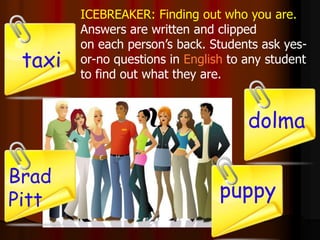
ICEBREAKER: Finding out who you are.
Answers are written and clipped
on each person’s back. Students ask yes-
or-no questions in English to any student
to find out what they are.
Brad
Pitt
dolma
puppy
taxi
Introduction Icebreaker
1. Clear the middle of the room.
2. Arrange chairs in a circle.
3. The teacher randomly tells students where to sit. Friends
should not sit next to each other for this activity.
4. The teacher tells students that they are going to have to
introduce the person to their right.
5. The teacher gives the students a few minutes to ask
questions and to take notes in English.
6. Then the teacher starts with one student. He introduces
his neighbor to the right, then the neighbor introduces
the next person and so on until all the students have
been introduced.
7. After a few of the introductions, the teacher can stop the
introductions and pick a student to repeat the last
introduction. That will keep all the students listening.
8. Then resume the introductions.
TEACHING
COLORS
AND
SHAPES
The Color Wheel
Primary —Red, Blue,
Secondary–Violet, Green,
Tertiary—mixtures of primary and
secondary colors
Black and White are not colors, but
we often referee to them as such.
What color is
the _______
shape?
Computerized Knowledge Bowl
Use a Jeopardy-like game in class to add
some variety and excitement.
Since they game is made on the PowerPoint
platform, the teacher can change the
questions to fit the students.
$10
$20
$50
$100
$10
$20
$50
$100 $100 $100
$100
$50 $50 $50
$20 $20 $20
$10 $10
$10
Money
Drinks Sports Science Math
Wine is made from
grapes.
$50
Grapes are fermented to
make what beverage?
Meeting
2 am
What’s on the desk and in the drawers? How many of each item?
THE END
(really the beginning)
Prepared
by
Joel Robbins
Peace Corps Response Volunteer 2012
for
The English Language and Literature Department
Calvin Tiessen, Chair
Khazar University
Hamlet Isaxanli, founder

Teaching Methods 1.pptx

  • 1.
  • 3.
    DISCLAIMER: No oneknows all the answers to how to teach or how students learn. Teachers must find or develop a style of their own that works with their strengths, abilities and personality. Try new techniques and methods, but, if they don’t work for you, try something else. We cannot tell you how to teach; we can only give suggestions that have worked for us or others whom we know. READY TO TRY SOME THINGS?
  • 4.
  • 5.
    I would likefor Bill and you to go to the movies with Sue and I/me. I am good/well. The lady who/that writes novels is here. Now that I think about it, if I was/were rich I would move to Costa Rica. Please, drive slow/slowly. When it’s time to board the train, to which stop should I tell the conductor I’m going to? Jim: Hello. Is this Bill? Bill: It’s me/I. Who/whom do you believe? How many of these contain errors?
  • 6.
    Peace Corps Volunteersbecome fluent in a foreign language in 2.5 months, while students in US foreign language classes generally don’t reach fluency in 4 years. WHY? Everyone learned their primary language the same way, by watching, listening, mimicking, touching, smelling, tasting. American students are taught from textbooks, worksheets, grammar lessons, etc.
  • 7.
     Use theirbest English speakers as teaching assistants to reduce student/teacher ratios.  Spend the first five minutes of every class with their most fluent students and themselves moving through the classroom talking to each student for a few minutes in English.  Listen to these student English conversations. This is one of the best ways to assess skill levels and language development. Teachers Should:
  • 8.
    Have students practiceconversational skills with each other during every class period. Use questions that come from previous lessons and have upperclassmen visit and assist.
  • 9.
    Dialogues Have students writedialogues using the current lesson vocabulary and grammar. Then have them speak the dialogue aloud during the next class. NOTE: Make sure you correct the dialogues before they practice or memorize them at home. You don’t want them to practice and state aloud incorrect sentence structures and grammar.
  • 10.
    Speaking Outside ofClass When you see students outside of class, greet them in English. Encourage them to answer you in English and ask you a question if you have time. Also, explain to them how important it is for them to greet classmates outside of class in English. They should be able to use English with any teacher or student in Khazar University. Using classmates’ English names will also help them with pronunciation.
  • 11.
    Better Pair Conversations Shystudents get lost during dialogues. So, supply them with cues on the board or a worksheet. Then they can look to see what to say next. D1st Person 2nd Person Greet Respond Ask name. Respond and ask about name back. Ask about age Respond and ask back about age Ask about home town Respond and ask about brothers and sisters. Respond about siblings Tell about siblings. Ask about breakfast. Respond and ask back about breakfast.
  • 12.
    Simple Conversation Prompts Ifyou meet someone new, how do you start a conversation and keep it going? Students often aren’t taught how to avoid long awkward silences when in company. Hi, how are you? Have you seen any good movies? Where is you house? What sports do you follow? Are you married? Tell me about you hobbies. Do you have children? What kind of car do you own? Are you in school or college? What do you do with your friends? What kind of work do you like? Have you traveled lately? Do you like your work? Tell me about it? is a good open-ended follow-up question for most of the responses to the inquiries above.
  • 13.
    Make a Movie? Sometimesa couple of students will be far ahead of the rest of your class. Besides having them be your teacher helpers, give them assignments outside of class that are challenging. They can prepare a skit, make a short movie, read a book that is difficult, write an article for the newspaper, prepare materials for class, etc. Use VideoPad, a video editor. A free version can be downloaded from the internet.
  • 14.
  • 15.
    How do youtrain pilots, doctors, engineers, builders, and many other professionals? Simulations
  • 16.
    For example, TryOne to Practice Shopping Language
  • 17.
    Students Prepared forthis Lesson by Bringing in Empty Boxes and Adding Price Tags
  • 18.
  • 19.
    Giving Change withSchool Dollars
  • 20.
    Bargaining in English StudentsPractice for Months
  • 21.
    Can you nameother possible simulations?
  • 22.
    Simulated Trial: Who’sMost At Fault? A married couple live in a house on one side of a river. The wife has a lover who lives on the other side. The only way to get across the river is to walk across the bridge or to pay the boatman. The husband has to go on an overnight business trip to a faraway town. The wife pleads with him to take her with him. She knows if that he doesn't she will be unfaithful to him. The husband absolutely refuses to take her because she will only be in the way of his important business. So the husband goes alone. That night, the wife goes over the bridge and stays with her lover. Dawn is almost up when the wife leaves because she must be back home before her husband returns. She starts walking across the bridge but sees an assassin waiting for her on the other side. She knows if she tries to cross, he will murder her. In terror, she runs up the side of the river and asks the boatman to take her across the river, but he wants too much money. She doesn't have enough, so he refuses to take her. The wife runs back to the lover's house and explains her predicament and asks him to pay the boatman. The lover refuses, telling her it's her own fault for getting into this situation. As dawn comes up the wife decides to dash across the bridge. She comes face to face with the assassin and he kills her.
  • 23.
    Student Actors Defendants: 1)Assassin, 2) Boatman, 3) Husband, 4) Lover and 5) Wife Judge: one Student Prosecuting Attorneys: one to question each defendant Jury: the rest of the class The defendants take the stand one by one and are questioned about their actions. When they are finished the jury deliberates and finds only one to be most guilty.
  • 24.
    Here are someother possible simulations: • Ordering and eating at a restaurant?
  • 25.
    Here are someother possible simulations: • Ordering and eating at a restaurant? • Interviewing for a job?
  • 26.
    Here are someother possible simulations: • Ordering and eating at a restaurant? • Interviewing for a job? • Giving and receiving directions?
  • 27.
    Here are someother possible simulations: • Ordering and eating at a restaurant? • Interviewing for a job? • Giving and receiving directions? • Teaching a class in geography, or other subject, using English?
  • 28.
  • 29.
    Short Writing Exercises •Daily Journal or Diary—Write one sentence about the most important event from yesterday. • Describe the last wedding you attended. • Write about your favorite aunt or uncle. • What would your dream future spouse be like? Don’t ask them to write about what they did during the summer. Narrow the topic.
  • 30.
    One of theproblems with English classes is teachers and students often spend much of the class period speaking Azerbaijani. Dərslərdən sonra hara gedirsən? Bilmirəm. Mən bir fincan çay içmək istərdim.
  • 31.
  • 32.
    GROUP WORK: Studentsdiscuss an issue or a project using English and then present their findings to the class.
  • 33.
    A Guest SpeakerCan Bring Variety to Class, SO Plan a “guest day,” when several students bring in people who are fluent in English, then students can take turns interviewing them.
  • 34.
    Real-world work— Students writean English language university newspaper.
  • 35.
    Newspapers are notonly practical writing exercises for students, they help young people understand how a free press (free speech) is one of the cornerstones of a democracy. Qələm qılıncdan daha kəskin olur.
  • 36.
    The Fourth Estate Howimportant is writing? Consider the role of the Fourth Estate in any country’s freedom and stability.
  • 37.
    Students Write Skitsin English, Make Puppets and Put on Shows
  • 38.
  • 39.
    How Well DoYou Understand Verbal Directions in English? Could You Run a Maze Blindfolded?
  • 40.
    Students Use TheirVisual Aids During Oral Reports in English.
  • 41.
    Speak English withYour Students
  • 42.
    Use a HomemadeClock with Movable Hands to Review Telling Time In English
  • 43.
    Writing for Contests Local,national or international essay contests can be motivators for
  • 44.
    Repetition Write a sheetof sentences you want your students to know and use them in class often. Teacher Students Welcome to class. I am glad to be here. Is the window open? Yes, the window is open. What day is it? It is Friday. Did you do your homework? Yes, I did my homework. Stand up. I am standing up. Did you come to school today? Yes, I came to school. Did you drink tea for breakfast? Yes, I drank tea. Have you eaten at the café? No , I have not eaten there.
  • 45.
    How Children andolder studentsCan Learn while playing
  • 46.
    For homework, havestudents write their own children’s book in English. Have them peer critique the books before using ink. They can illustrate it with magazine clippings or drawings. When they’re done, they can read it to a child they know and give it to them.
  • 47.
    For Children, trynursery rhymes. “Here’s the way we walk to school, walk to school, walk to school; this is the way we walk to school, on a cold and windy morning.” Replace the following for “walk to school.” --comb our hair --wash our hands --button our shirt --brush our teeth --eat our food Students act out the motions.
  • 48.
    OR Dance theHokey Pokey “Put your right foot in, put your right foot out, put your right foot in and you shake it all about. You do the hokey pokey and you turn yourself around, that’s what it’s all about.” Substitute hand, elbow, hip, head, knee, etc. for foot.
  • 49.
    Simon Says Students standup. Then they are given commands. If “Simon says,” the students must follow the command. If a student doesn’t follow directions he becomes Simon and tries to catch other students not listening carefully. Sample commands: Simon says, “Touch your right ear.” (not left ear) Simon says, “Turn around.” Simon says, “Lift your left foot.” “Put your left foot down.” (Simon didn’t say to do this.)
  • 50.
    Word Race! As manypairs of student as will fit should go to the board. The tallest one writes an English word on the board. The other student must use the last letter of that word as the first letter of his word. The contest goes on until one student unintentionally repeats a word or can’t think of a new word within five seconds. Winners compete against other winners and losers sit down. You can compete until you have a class champion. See next slide.
  • 51.
    GUNAY KAMRAN Horse Elephant TeamMirror Really Yes Scurry
  • 52.
    Give Groups notecards featuring Random Words and Punctuation marks. Then Have Them Make Different Complete Sentences. Make a declarative sentence. did town you go . ? ! to yesterday
  • 53.
    Arranging words tomake complete sentences. are yesterday ? did town ! going go went not . tomorrow to you Put the sentence into the form of a command. Go to town tomorrow.
  • 54.
    Which group canmake a complete sentence the fastest? The longest sentence? The shortest sentence? A compound sentence? are coat yesterday ? did town ! going go a is to went not . tomorrow , wants will to you and he hat buy shop to EXAMPLES You are going to shop tomorrow, and he will buy a coat. Or Buy a hat.
  • 55.
    A version of musical chairs Place one fewerchairs in a circle than there are students. Every one stands. The person who is IT, gives a command in English, such as, “Everyone who is wearing a watch, stand and find a different chair.” Of course IT wants to sit down, so he/she must give a command that allows him/her to run for a chair. The person who can’t find a chair is IT. Then everyone stands and the new IT gives a different command. Use things such as, “wearing a watch” or “wearing red” or “wearing sandals” or “over 20” or “is a girl” or “likes dolma” etc.
  • 56.
  • 57.
    $ 14.17 $ 8.25 $75.99 $ 5.75 Pair Work: Students are given worksheets with information missing that they have to acquire from their partner by speaking in English. Put 12 items on each worksheet. Tell them: “NO PEEKING.” Sharing Information in English
  • 58.
  • 59.
  • 60.
    1 1 5 5 20 10 10 20 Copy theseand print your own “school” money to practice numbers, counting, making and giving change.
  • 61.
  • 62.
    Written Tests andQuizzes Keep Students on their Toes
  • 63.
    Make your ownpuzzles and worksheets. Assign a student to use the new vocabulary list and a free Internet program to create an educational puzzle for the next day’s class.
  • 64.
    Have each studentdraw a floor plan of his/her house or apartment and label rooms. Label furnishings. Guest Room Bathroom Bedroom Living Room Kitchen Dining Room Street
  • 65.
  • 66.
    Make and labela map of your campus or neighborhood. Auditorium Administration Football Field Dormitory
  • 67.
    Use a citymap to teach the names of buildings and typical streets, then add a toy car to teach following directions— turn right, stop, go three blocks, go west, turn around, etc. It can be a miniature simulation.
  • 68.
  • 69.
    The world isthe best classroom. USE IT!
  • 70.
    Take a FieldTrip to a Museum to see a model of a town or…
  • 71.
    Have the studentsstudy local, historical and national personages, then present oral reports on them in English. The photos on the next page are examples of statues or busts that were in Sheki. Students were required to identify the persons, where the statues are located and why these people are important to Azerbaijan. ‘TREASURE HUNT’ Type of Assignment
  • 73.
  • 74.
    Or Traveling Exhibitsat the University
  • 75.
    You and goodstudents can assist a Teacher in an English Classroom at a Local School.
  • 76.
    Hike to alocal beautiful natural wonder to talk about geology and history in English.
  • 77.
    Let your studentspractice English at a Market during a field trip
  • 78.
    Special Occasions CanBe Used to Practice English and Share Cultures—Christmas
  • 79.
    Local Cultural Does Bakuhave opera and drama theaters, history museums, historic buildings, music halls, art museums, recitals, a circus, botanical garden, etc.? Most museums will have exhibits with descriptions in both Azeri and English. Have you taken any of your students to them?
  • 80.
  • 81.
    Increase Improve Listening Skillsby Scheduling a Saturday Movie Club
  • 82.
  • 83.
    Learning Styles  Kinestheticor Tactile = learn by touching, interacting, etc.  Auditory = learn from hearing lectures, directions, discussions, etc.  Visual = learn by seeing, demonstrations, movies, others’ actions, etc.  Combined = most learn by two or three
  • 84.
    Addressing Symbolism Remember thatall words are symbols, as are photographs, dance moves, inflections and tone of voice, videos, paintings, musical notes, body language, facial expressions, etc. They evoke emotions and communicate on a subliminal level. Make sure students who excel in dance, drama, speaking, music, creative writing, visual arts and other symbolic forms of communication are allowed to use these during some assignments.
  • 85.
    Learning Styles  Kenistheticor Tactile = learn by touching, interacting, hands-on experiences, etc. 
  • 86.
    Skills and CulturalExperiences Merge in Special Performances by Active Students
  • 87.
    Learning Styles  Auditory= learn from hearing lectures, discussions, directions, etc.
  • 88.
    Learning Styles  Visual= learn by seeing, demonstrations, movies, others’ actions, etc.
  • 89.
    Levels of IntellectualActivity lowest level (recitation) HIGHEST LEVEL (synthesis)
  • 91.
    Designing Curriculum and IndividualLessons Excellent teachers make sure students have the opportunity to function on the highest levels of intellectual activity during as many assignments and tests as possible.
  • 92.
    It doesn’t hurtstudents at times if teachers require them to be creative, to think for themselves, to debate a topic, to solve a problem or to question the status quo.
  • 93.
    Types of TestQuestions Some teachers only ask WHAT questions, which require students to use only their memory, the lowest level of intellectual activity. Other types require using memory plus higher levels of intellectual activity.
  • 94.
  • 95.
    Competitive = wantsto test skill level against others  Likes to play games in class  May or may not be prepared  Sits in the middle of the class  May be bored with lectures, silent reading, filling in worksheets unless students race to finish  Is satisfied with low level memorization assignments
  • 96.
    Avoidant = doesn’twant to participate  Is shy, academically lost, clinically depressed or lazy  Sits in the back of the room  Won’t make eye contact with teacher  Slumps and hides behind other students  Doesn’t raise hand or volunteer  Misses class for any reason  Doesn’t complete homework  Goes to the restroom a lot  Is not prepared for class
  • 97.
    Participative = lovesto be involved  Sits in front row if possible  Raises hand  Is prepared for class  Volunteers to help teacher and students  Loves to come to class  Asks for more homework  Likes memorization but also flourishes with higher levels of intellectual activity
  • 98.
    Collaborative = likes towork in a group  Gets along well with other students  Wants to always sit by a friend  Learns best when working with a group  Sits in the middle of the class  Feels uncomfortable with competition because of being sensitive to others’ feelings
  • 99.
    Dependent = hastrouble working without supervision  Sits close to the front  Continually seeks teacher’s approval and help  Has difficulty finishing homework  Obviously lacks self confidence  Likes low-level memory work because there is a supposedly “correct” answer  May have trouble with higher levels of intellectual activity
  • 100.
    Independent = likesto solve problems without others’ help  Likes to work alone  Feels pride in being able to complete assignments without cheating and seeking teacher or another student’s help  Will sit in the front two-thirds of the classroom  May become bored if assignments are strictly memorization
  • 101.
    Avoid Self-Fulfilling Prophecies If you say about a student, “He’s a lazy boy,” guess what? He’s very likely to fulfill your preconceived opinion.  Treat a student the way you want him to behave and he may rise to your expectations. Try: “You’re going to be one of my best students.”
  • 102.
  • 103.
    Have Fun DiscussingIdioms  Think outside the box.  Don’t go postal.  I’ll have to pull some strings.  Pass the buck.  She’s still on the fence.
  • 104.
    Collaboration and Competition Peer critique fellow student’s notes, essays, pretests etc.  Panel discussions and Debates  Blackboard work  Daily journal writing about lessons
  • 105.
    Students make andplay educational board games
  • 106.
    Practice handling money,counting, reading instructions, making deals, etc. in English. If you speak Azerbaijani, you lose 5 Monopoly dollars per word.
  • 107.
    Mystery Person Give each groupa folder with written and or graphic clues. They must use English to read, interpret, research and discuss outside of class period who they think the person is. An example of items you might find in a folder is on the next slide.
  • 109.
    “Talk” on paperby “asking” questions in writing in your notebook, trading notebooks, answering on the other person’s notebook, responding, and trading, and so on. Silent English Language Practice Back-to- Back
  • 110.
    Guess Who orWhat I Am. Answers are written and clipped on each person’s back. Students ask yes-or-no questions in English to find out what they are. Brad Pitt hotdo g puppy taxi
  • 111.
    Fill the classroom shelveswith PROPS. Then use them to teach vocabulary or positions: for example, where are the binoculars? Put the robot behind the table.
  • 112.
    What’s in theBag? Put a dozen household or office items in several sacks. In pairs or groups of three, have the students pull one object from the bag at a time and name it, then use its name in a complete sentence. No sentence can use “This is…” or any simple construction. When done with a bag, groups can trade. nail clippers, comb, paper clip, rubber band, key ring, plug adapter, book mark, fork, dice, shoe horn, match, scotch tape, stapler, magnet, magnifying glass, flash drive, Velcro, shoelace, corkscrew, etc.
  • 113.
    Twenty Questions A nounis secretly told to the entire class. Then one student is supposed to ask yes-or-no questions in English to different class members until he guesses that noun. He has 20 questions.
  • 114.
    Learn new Englishwords and discuss stories from newspapers and magazines in the first floor library. Oil prices. Weather. Elections. Eurovision. Drought.
  • 115.
    Materials that Suitthe Students Make sure vocabulary, articles, graphics for discussion and oral report assignments include materials interesting and relevant to the students’ department. Pictures of construction sites for engineering students and photos of body language for psychology students will make your lessons more interesting for them.
  • 116.
    REMINDER: If astudent gives an incorrect answer in English, don’t supply the correct answer and don’t let other students jump in and answer. Instead say, Repeat that, please. Or That’s not quite right. Try again. That gives him/her the chance to think about and correct a mistake just as people do when they make a mistake speaking their own language.
  • 117.
    Distant Learning The expertor teacher can be anywhere there is Skype. Students interact with distant speaker and students.
  • 118.
    There are thousandsof short videos on Vimeo or Youtube that can be used to improve listening skills, initiate student discussion or practice pronunciation. GENDER ISSUES WORLD TRAVEL WORK EDUCATION
  • 119.
    How Many DifferentKinds of Active Lessons Are There? As Many as Creative Teachers and Students Can Think Of.
  • 120.
    REVIEW  Inspire yourstudents  Utilize the entire class period  Teach actively  Keep everyone involved  Be creative with challenging lessons  Be aware of students’ learning styles  Speak English most of the time  Control the seating in your classroom  Test for understanding and progress
  • 121.
    REVIEW 1. Classes shouldbe student focused, not teacher focused. 2. When only one student at a time recites, the rest of the students are not always engaged. 3. Make sure the largest number of students are involved during the majority of the period. 4. Don’t do any classroom work that your students can do for you or themselves.
  • 122.
    Who Needs theExperience Most, You or the Students? Students can and should:  Hand out and take up papers.  Grade simple homework.  Prepare and/or bring in flashcards, quizzes, word puzzles, relevant Youtube videos, etc.  Write vocabulary or directions on the board.  Bring in songs and lyrics to sing.  Clip or copy news in English to use in class.
  • 123.
    What Are Happy,Well-Educated Students Worth? EVERYTHING!
  • 124.
    You’re Remembered Forever Goodteachers will always be remembered. Their students will have learned to be:  Altruistic  Knowledgeable  Skillful  Reasonable  Adaptable  Curious  Honest  Independent  Responsible  Hard Working  Respectful  Good Citizens
  • 125.
  • 126.
    Research in thelibrary or on the internet will insure that students gain added knowledge that is up to date and varied.
  • 127.
    Believe nothing thatyou hear, a quarter of what you read and half of what you see.
  • 128.
    How do youknow what you read in the library or on the internet is creditable? 1. Is the publisher well established? 2. What are the author’s credentials? 3. Is the author associated with a group who can benefit from this information? 4. Is it peer critiqued? 5. Is there a bibliography? 6. Is the document objective or one-sided? 7. Does the author exaggerate? 8. When was it written?
  • 129.
    Critique this NewsRelease for Validity The population of endangered spotted owls of the American Northwest is being reduced further by the lumber industry. Only 50 spotted owls have been recorded as still in existence. The lumber industry doesn’t care. They would seem to be satisfied to cut down every tree on earth. Members of STOP (Save The Owls Project) are the only group interested in saving the spotted owl from extinction. It’s spotted owls today and the timber wolf tomorrow. If you are interested in saving the world of nature, then you need to act now. Brad Pitt, STOP Founder, P.O. 487, Seattle, WA 23412 STOP Newsletter, August 2004
  • 130.
    Wisdom from thePast Use small groups to discuss and explain what the following quotations mean to them.
  • 131.
    1. “Those whoKnow they do not Know that to Know is to Know what they do not Know! -- (Aveccina) Ali Sina 2. “You don’t need fancy highbrow traditions or money to really learn. You just need people with the desire to better themselves.” – Adam Cooper and Bill Collage 3. It is possible to store the mind with a million facts and still be entirely uneducated. –Alec Bourne
  • 132.
    1. "Liberty withoutlearning is always in peril; and learning without liberty is always in vain.” –John F. Kennedy 2. A person who won't read has no advantage over one who can't read. ― Mark Twain 3. “The mind is not a vessel to be filled, but a fire to be kindled.” ― Plutarch 4. “Children must be taught how to think, not what to think.” ― Margaret Mead
  • 133.
    1. “To educatea person in the mind but not in morals is to educate a menace to society.” ― Theodore Roosevelt 2. “You educate a man; you educate a man. You educate a woman; you educate a generation.” ― Brigham Young 3. “Students remember what they think and say in class better than what they hear the teacher say.” –Joel H. Robbins
  • 134.
    1. The ultimategoal of the educational system is to shift to the individual the burden of pursuing his education. --John W. Gardner 2. Tell me and I'll forget. Show me, and I may not remember. Involve me, and I'll understand. --Native American Saying 3. What we learn with pleasure we never forget. --Alfred Mercier
  • 135.
    1. Bilməmək ayιbdeyil, soruşmamaq ayιbdιr. –Azeri Proverb 2. "It's not shameful not to know, but it's shameful not to ask." –Azeri Proverb 3. Knowledge is not what is memorized. Knowledge is what benefits.- Imam Shafi‘ 4. Bir ǝldǝ iki qarpιz tutmaq olmaz. –Azeri Proverb
  • 136.
    1. “Well, onenever really thinks about what one has done, only what is to be done.” --Madame Curie 2. “Yesterday’s glory is past. You're only as good as you are today.” 3. “As a professor, I was paid to spew out as many facts as possible. That’s what the university’s model has been for a thousand years.” Since “facts” change, starting from ignorance is a better approach in science.-- Stuart Firestein
  • 137.
  • 138.
    Is the TeacherPrepared? Does class progress like the outline below? 1. Spends 5 minutes with the assistance of helpers to practice conversation with all the students. 2. Takes up homework. 3. Passes back yesterday’s homework and quiz. 4. Gives students a chance to ask questions about homework. 5. Gives students a quiz on homework material. 6. Hands out worksheet or assignment sheet for classwork and/or homework. 7. Explains, demonstrates, illustrates and models homework assignment. 8. Gives students time to start assignment under teacher supervision.
  • 139.
    Give Specific Directions Which isbetter? “What can you say about this picture?” or “Tell me five things about the this picture.”
  • 140.
    To learn Azerbaijani,did you memorize passages from a textbook and recite them to your parents? NO! If you want to be fluent in English, watch movies, go to conversation clubs, speak it with friends, listen to songs in English, participate in class, etc.
  • 141.
    When questioned aboutstudent abilities, teachers often answer: “They know. They know.” And students prespond: “I know. I know.” When examined, you’ll find that some have taught or been taught the material, but they can’t use it.
  • 142.
    Verify Skill Levels Whenstudents say, “I know,” give them a quick oral test. Students will nod their heads that they understand, then when asked to explain, they can’t, even in Azerbaijani. The test of the success of a lesson is not if your best students have mastered it; it’s how well your average or poor students have.
  • 143.
    TEACHING DOES NOTEQUALLEARNING Justbecause a teacher has presented a lesson doesn’t mean a student has mastered the material or learned the skill. Do teachers move on to new skills and material before the previous ones have been assimilated and shown to be mastered? ?
  • 144.
    Make Sure StudentsAre Working Almost all classroom activities require teacher monitoring. If the teacher does not walk among the students, how does she know they’re following directions for the activity: taking notes, not copying, speaking English, writing in their workbook or notebook, on topic or task, manipulating learning tools correctly, etc.?
  • 145.
    Do Teachers AdmitStudents to Class When: They come in making loud noises and continue to disrupt the educational process during class? They arrive not ready to study or learn and without books, notepaper and pens? They are late more than 5 minutes? Unruly students should not be allowed to interfere with the serious students’ learning.
  • 146.
    Teachers learn morethan the students because they have to teach, use and demonstrate skills, knowledge, etc. Students can sit back and let the teachers do the work for them. If this is true, how does that change your approach to student learning?
  • 147.
    1. “Education withoutvalues, as useful as it is, seems rather to make man a more clever devil.” ― C.S. Lewis 2. “No man who worships education has got the best out of education... Without a gentle contempt for education no man's education is complete.” ― G.K. Chesterton 3. “What a school thinks about its library is a measure of what it feels about education.” ― Harold Howe
  • 148.
    Training Students Students whomust have lots of attention are often insecure. They will get attention one way or another--by being good students or by showing off to other students and interfering with your lesson. Make sure you give them adequate attention, but only for positive behavior. That will help them with their insecurity. Sometimes you have to, that’s right, CATCH these students doing something good until you get them to understand your classroom etiquette.
  • 149.
    Insecure Students NeedAttention You may have to ask an especially insecure student easy questions each day so that he learns to enjoy receiving positive attention. Also ask students like this to help you arrange the desks before class, get the room ready for a video, run errands, hand out materials, etc. That makes them a part of the class and its goals.
  • 150.
    When students aren’tincluded in the teacher’s discussion, completing a worksheet, active on a project or otherwise involved in classwork, guess what? They’re bored. When you’re bored, what do you do? Talk to a friend, make jokes and have fun.
  • 151.
    What is themost interesting aspect of your major field? What activities motivate you to work more on a certain project or subject? Is there any way you can make those a part of your teaching style so students are more interested and motivated to learn too? Your enthusiasm for the subject will help spark their interest.
  • 152.
    Make Your IntentionsClear Let students know what the assignment is and how it will be graded. No surprises!
  • 153.
    Sample Assignment Sheet& Rubric Assignment: Write an essay on a famous scientist. Requirements: A minimum of 750 Words typed. 3 sources (one each from a magazine, book, internet) ¼ about family, education and other early experiences. ¾ about contributions to the science world, honors, etc. Due Date: One week from today. Possible Actual Comments Length 10 % 8% 100 words short Adequate Sources 10 % 10 % Excellent—three good, varied sources Content 70% 68 % Very good, but left out honors and awards. Organization 10% 10 % Excellent 5 % off for each day late -0 % On Time Total 96 % Very informative essay.
  • 154.
    Reasonable Rules for theBenefit of All Students Set your rules for classroom behavior and then stick to them. Most teachers would rather be pleasantly and regularly reminding students about infractions of minor classroom rules than letting students slowing work their way up to big ones that are more difficult to deal with. It’s kind of like the proverb: “Take care of the pennies and the dollars will take care of themselves.”
  • 155.
    Due Process  Statemajor rules clearly. Even better, have them written and handed out or posted.  Explain how disciplinary action will follow a process with each infraction of major rules. For example: 1. First warning and reminder of the rule 2. Second warning and conference with teacher and/or dean 3. Removal from class and failure in course
  • 156.
    ROUTINES make mostpeople feel comfortable and secure. Try to set a routine for class so the students know what to expect. Some teachers post this weekly or daily routine on the board or wall. For example: Daily Schedule 9:00-9:10—Practical oral conversation exercises 9:10-9:20—Review of yesterday’s lesson 9:20-9:30--Quiz on homework 9:30-10:00—Explanation of new vocab & material 10:00-10:20--Interaction with new material 10:20-10:30—Explanation of homework assignment
  • 157.
    As part ofthe routine, tell students at the end of each period: 1. Who’s to make the flashcards for the vocabulary to be used the next day 2. Who are to be teacher helpers during oral conversation practice during the next class period 3. Which student will grade the homework or quizzes during the next class period 4. Who will arrange desks before class for a video, discussion or demonstration 5. Other……..
  • 158.
    1. Teachers shouldpost on the wall the due date and subject of any important exams, student presentations, special projects, essays, etc. 2. Teachers should provide students regular feedback on their progress, potential course grade, etc. You don’t want to surprise a student with a bad grade at the end of the semester when there is nothing he can do about it. 3. A teacher should avoid handling a single student’s complaints during class time. She should tell the student to meet her individually after class to discuss it. Otherwise the class may turn into a mob griping about the class or the teacher.
  • 159.
    Your Approach Dictatestheir Response Dictatorial – “Shut up, you bad children.” Too rude and bossy! Reasonable – “Please be quiet while others are speaking and they will listen when you speak.” Common courtesy and common sense. Passive – “Why aren’t you students ever quiet? I get so sick and tired of telling you to be quiet.” Weak and whiney.
  • 160.
    The dictatorial orchildish student statements usually elicit negative responses from teachers. But it’s hard for teachers to respond negatively to a reasonable student’s statements. Examples: 1. Jones, you’d better provide me with extra help and then give me a good grade! 2. Mr. Jones, please let me know what I need to do to get the most out of this class and earn a good grade. 3. Mr. Jones, you play favorites and probably won’t give me any help getting a good grade because you don’t like me.
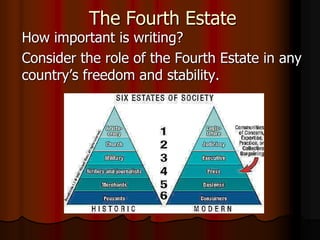
  • 161.
    PATIENCE It takes patienceand willpower for teachers to answer dictatorial and whiney student comments without being dictatorial themselves. But, teachers must be calm and reasonable. Sometimes you have to move to the disruptive student, look him in the eye, wait for him to look at you and then calmly say, “Please don’t ______. Thank you.” Having said that, an excessively rude and/or inappropriate remark or behavior must not be tolerated.
  • 162.
    Busy Hands Asa last resort, keep lectures extremely short and, instead, assign continuous paperwork to keep them busy. Make them take lots of notes. Don’t give students time to misbehave. “Idle hands are the devil’s workshop.” “Busy hands are happy hands.”
  • 163.
    REMINDER: If astudent gives an incorrect answer in English, don’t criticize him, don’t supply the correct answer and don’t let other students jump in and answer. Instead say, Repeat that, please. Or That’s not quite right. Try again. That gives him the chance to think about and correct his own mistake just as people do when they make a mistake speaking their own language.
  • 164.
    REVIEW  Tell studentshow to behave and what you expect before each new type of activity.  Give students responsibilities and then praise them for successes.  Work with the students and they won’t work against you.  Establish a routine.  Be patient, positive and reasonable.
  • 165.
    Student/Parent/Teacher Goals Sometimes it’sgood to suggest to a poorly motivated or disruptive student that he sit down with the teacher and maybe together with a parent to discuss his educational and occupational goals. Privately ask for his parents’ phone numbers and suggest setting up a conference as soon as possible before it’s too late to get him back on a productive track.
  • 166.
    TEACHERS ARE SPECIAL Ifteaching were easy, then everyone could be a professional teacher. Since it’s so hard, it takes intelligent, hardworking, well- educated, patient, creative, dedicated people like us.
  • 167.
  • 168.
    Other Ideas  Talentshow to feature poem recitations, skits, dialogues, monologues and songs in English.  Discussion Forum—An article or guest speaker highlights an educational, business or social philosophy and then the group discusses it in English.  Volunteer Projects related to promoting speaking and writing in English in area public schools.  English essay and poetry writing contest. Peace Corps’ Trans-Caucasus Writing Contest.  Speech, Debate, Book, Movie or Drama club.  Academic Competitions—local and city-wide.
  • 169.
  • 170.
    How to TrainStudents to Be Active If students are reluctant to become involved, start with small steps. 1.Raise your hand if you’re a young lady. 2.Stand up if you like Mugham. 3.Show your cell phone to your seat mate. 4.Take a step forward if you live in Baku. Also use Icebreakers.
  • 171.
    SAMPLE ICEBREAKER The studentsmove the desks away from middle of the room. Each is blindfolded with heavy cloth. The teacher secretly assigns each student a number. Then they are asked by the teacher to form themselves into a straight line in numerical order. The students are only allowed to use English. Next the students are each given a letter of the alphabet. This time they must align themselves in alphabetical order speaking only English.
  • 172.
    What’s in aNAME? Two-Minute Icebreakers Take your notebook and write down as many names of your classmates as you can and add what the names mean in English. Joel means ‘Jehovah is God.’ Take your notebook and write down each person’s favorite sounding English word. Mine is cacophony.
  • 173.
    Another Icebreaker The teacherprepares tiny pieces of paper with each student’s name on it. The students are then given a name and asked to find that student in the class. Then they must ask them three questions: 1. What are your parents names? 2. Who is your favorite American singer? 3. How far do you live from the university? They must write the answers in complete English sentences and turn them in to the Teacher with their name at the top.
  • 174.
    ICEBREAKER: Finding outwho you are. Answers are written and clipped on each person’s back. Students ask yes- or-no questions in English to any student to find out what they are. Brad Pitt dolma puppy taxi
  • 175.
    Introduction Icebreaker 1. Clearthe middle of the room. 2. Arrange chairs in a circle. 3. The teacher randomly tells students where to sit. Friends should not sit next to each other for this activity. 4. The teacher tells students that they are going to have to introduce the person to their right. 5. The teacher gives the students a few minutes to ask questions and to take notes in English. 6. Then the teacher starts with one student. He introduces his neighbor to the right, then the neighbor introduces the next person and so on until all the students have been introduced. 7. After a few of the introductions, the teacher can stop the introductions and pick a student to repeat the last introduction. That will keep all the students listening. 8. Then resume the introductions.
  • 176.
  • 178.
    The Color Wheel Primary—Red, Blue, Secondary–Violet, Green, Tertiary—mixtures of primary and secondary colors Black and White are not colors, but we often referee to them as such.
  • 180.
    What color is the_______ shape?
  • 183.
    Computerized Knowledge Bowl Usea Jeopardy-like game in class to add some variety and excitement. Since they game is made on the PowerPoint platform, the teacher can change the questions to fit the students.
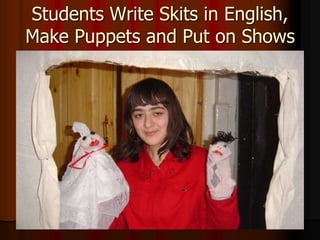
  • 185.
    $10 $20 $50 $100 $10 $20 $50 $100 $100 $100 $100 $50$50 $50 $20 $20 $20 $10 $10 $10 Money Drinks Sports Science Math
  • 186.
    Wine is madefrom grapes. $50 Grapes are fermented to make what beverage?
  • 187.
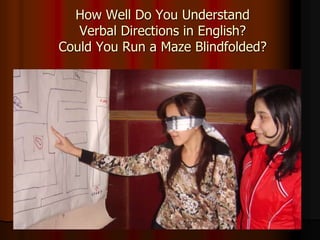
    Meeting 2 am What’s onthe desk and in the drawers? How many of each item?
  • 188.
    THE END (really thebeginning) Prepared by Joel Robbins Peace Corps Response Volunteer 2012 for The English Language and Literature Department Calvin Tiessen, Chair Khazar University Hamlet Isaxanli, founder