TCR Technology
A brief introduction of engineered T cell for
anti-tumor therapy
Cancer Immune Therapy: a glimpse
 CTLA-4, PD-1
 Lymphocytes infiltrating into or surround tumors
 Capable of recognizing tumor associated antigen
 PBMC/PBL in vitro incubation with cytokines and other
additions
 Stimulating the immune system to eliminate tumor cells.
 High affinity TCR gene transfer engineered T cell
 Antibody-TCR chimeric gene transfer engineered T cell
Immunotherapy
Adoptive cell
transfer (ACT)
Immune
checkpoint
inhibitor
mAb drugs
Tumor infiltrating
lymphocytes (TILs)
TCR engineered T
cell (TCR-T)
Cytokine induced
killer cell (CIK)
Chimeric antigen
receptor T cell (CART)
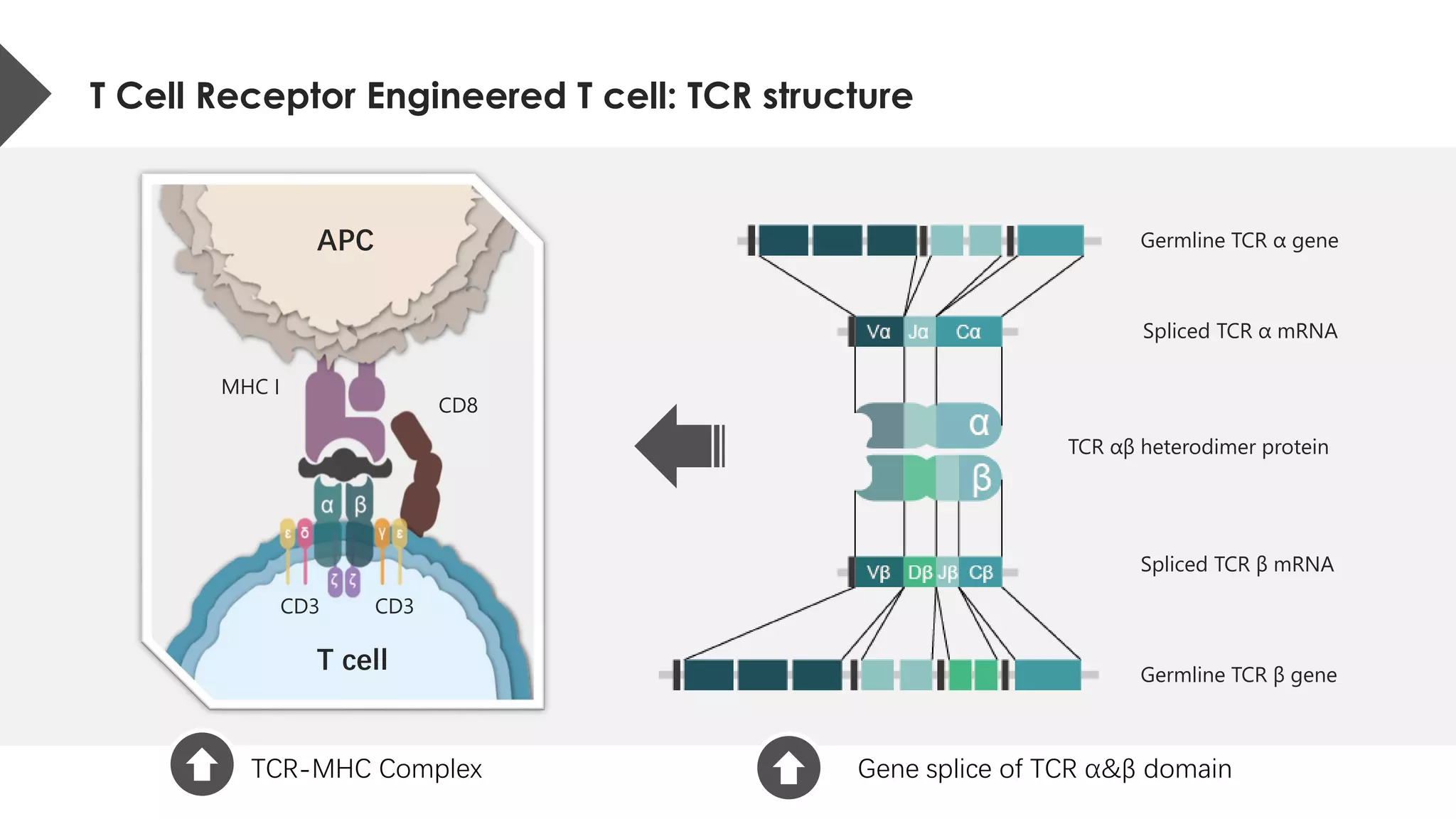
APC
T cell
MHC I
CD8
CD3 CD3
Germline TCR α gene
Germline TCR β gene
Spliced TCR α mRNA
Spliced TCR β mRNA
TCR αβ heterodimer protein
T Cell Receptor Engineered T cell: TCR structure
TCR-MHC Complex Gene splice of TCR α&β domain
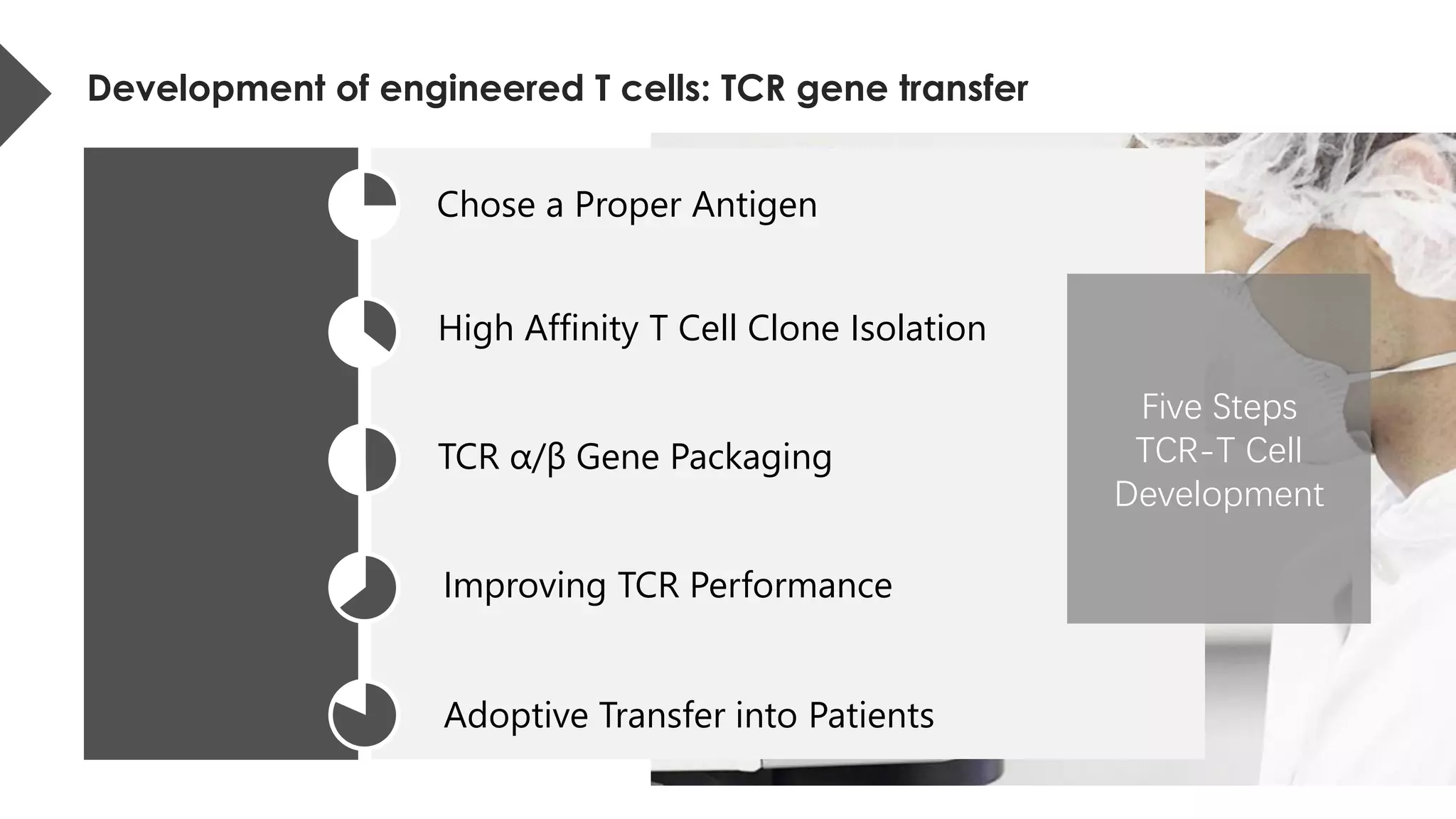
Development of engineered T cells: TCR gene transfer
Chose a Proper Antigen
High Affinity T Cell Clone Isolation
TCR α/β Gene Packaging
Improving TCR Performance
Adoptive Transfer into Patients
Five Steps
TCR-T Cell
Development
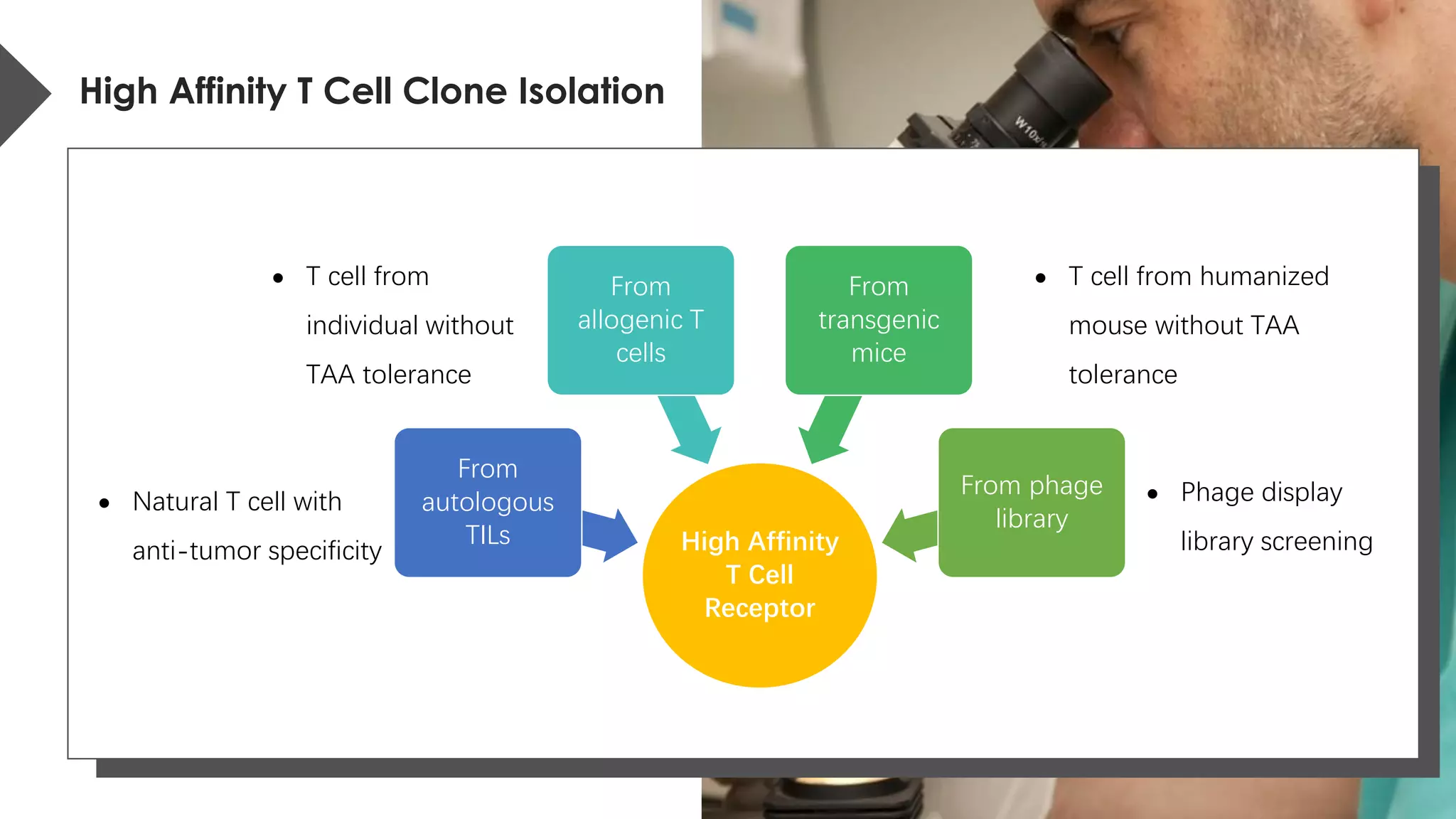
High Affinity
T Cell
Receptor
From
autologous
TILs
From
allogenic T
cells
From
transgenic
mice
From phage
library
 Natural T cell with
anti-tumor specificity
 T cell from
individual without
TAA tolerance
 T cell from humanized
mouse without TAA
tolerance
 Phage display
library screening
High Affinity T Cell Clone Isolation
Gene
Transfer
Transposon
Retroviral
Vector
Lentiviral
Vector
TCR α/β gene packaging
 Single and Dual Amino Acid Substitutions in TCR
CDRs Can Enhance Antigen-Specific T Cell Functions
 Murine-Human Hybrid TCR
 Preferential pairing reduce endogenous mispairing
 Increased stability of the TCR/CD3ζ
 Add a second disulfide bonds
 Add cysteines
 Use mouse TCR gene in human TCR
TCR Performance Improving
Improve TCR affinity
Increase TCR expression
Reduce mispairing TCR
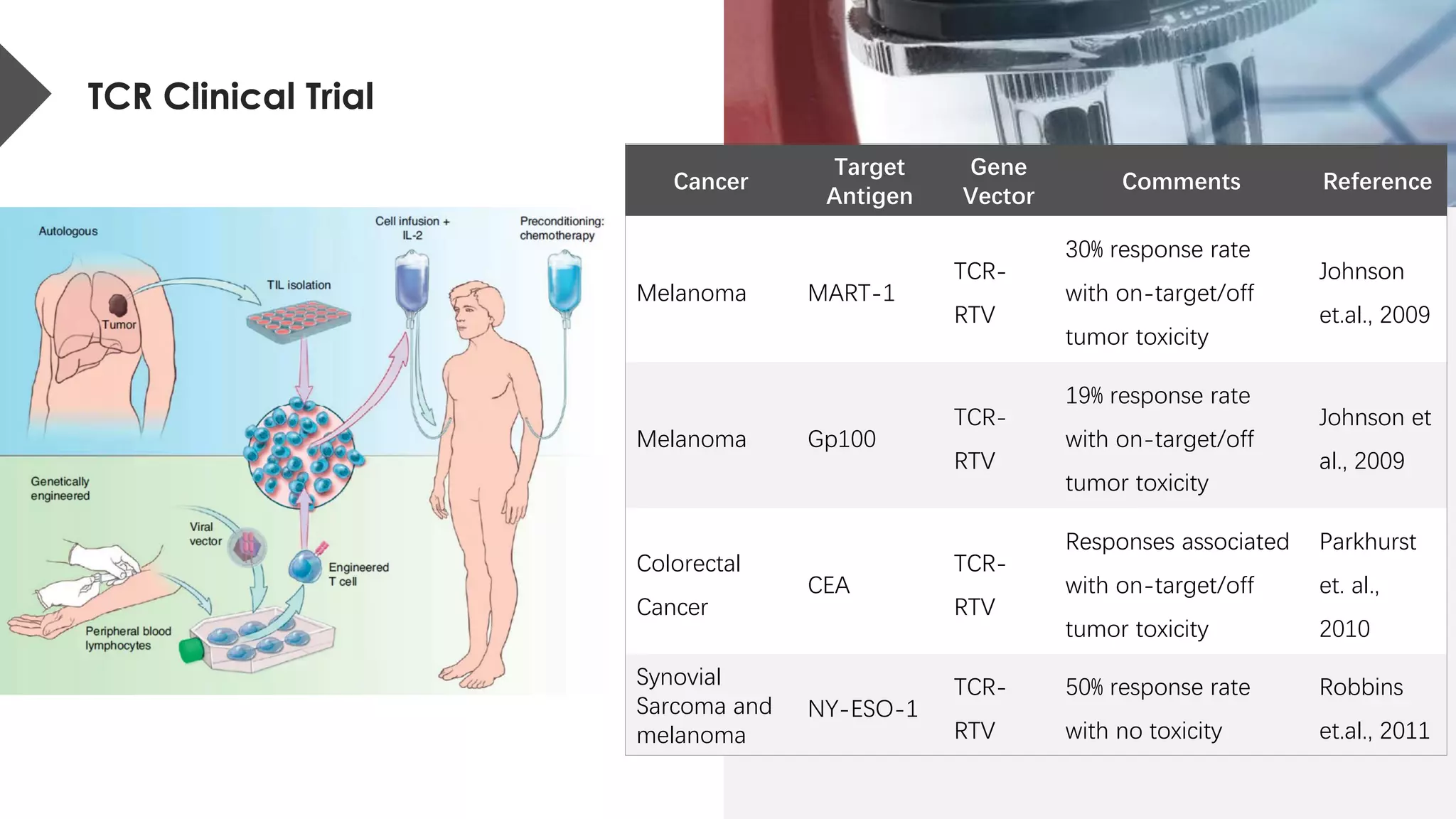
Cancer
Target
Antigen
Gene
Vector
Comments Reference
Melanoma MART-1
TCR-
RTV
30% response rate
with on-target/off
tumor toxicity
Johnson
et.al., 2009
Melanoma Gp100
TCR-
RTV
19% response rate
with on-target/off
tumor toxicity
Johnson et
al., 2009
Colorectal
Cancer
CEA
TCR-
RTV
Responses associated
with on-target/off
tumor toxicity
Parkhurst
et. al.,
2010
Synovial
Sarcoma and
melanoma
NY-ESO-1
TCR-
RTV
50% response rate
with no toxicity
Robbins
et.al., 2011
TCR Clinical Trial
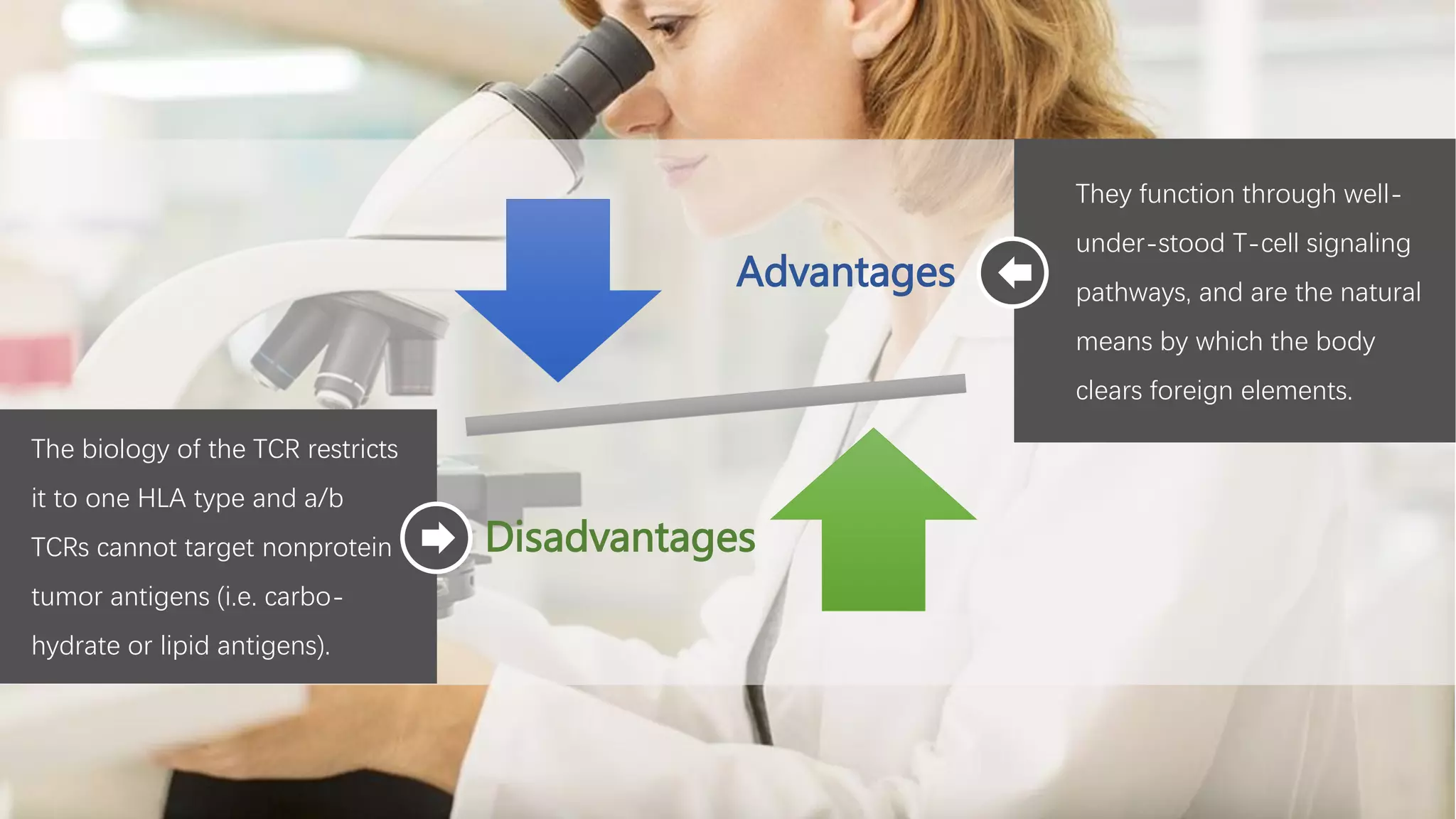
Advantages
Disadvantages
They function through well-
under-stood T-cell signaling
pathways, and are the natural
means by which the body
clears foreign elements.
The biology of the TCR restricts
it to one HLA type and a/b
TCRs cannot target nonprotein
tumor antigens (i.e. carbo-
hydrate or lipid antigens).
TCR Technology platform——Creative Biolabs
TCR-modified
T Cells Construction
TCR
Validation
TCR
Application
Clinical Applications
 TCR Construction
 Chimeric T Cell
Receptors (chTCR)
 Murine-human Hybrid
TCR
 TCR Gene Transfer
Technologies
 TCR Transgene
Expression Assay
 Lymphocyte Culture and
Proliferation Assay
 Cytokines Release Assay
 TCR/CD3 Stability Assay
 TCR Pairing
 Lymphocyte Antigen
Reactivity and
Cytotoxicity
 Animal Experiments
 TCR Repertoire
Sequencing
 TCR Vβ Repertoire
Analysis
 MHC-peptide Tetramer
 TCR Clonality Assessment
 TCR Clonality Quantitation
and CDR3 Size Diversity
Technology
 TCR Clinical Diagnostics
 TCR Clinical Therapeutics
Address: 45-1 Ramsey Road, Shirley, NY 11967, USA
Tel: 1-631-871-5806 Fax: 1-631-614-7828
Email: info@creative-biolabs.com
Web: www.creative-biolabs.com/car-t/

Tcr Technology - Creative Biolabs

  • 1.
    TCR Technology A briefintroduction of engineered T cell for anti-tumor therapy
  • 2.
    Cancer Immune Therapy:a glimpse  CTLA-4, PD-1  Lymphocytes infiltrating into or surround tumors  Capable of recognizing tumor associated antigen  PBMC/PBL in vitro incubation with cytokines and other additions  Stimulating the immune system to eliminate tumor cells.  High affinity TCR gene transfer engineered T cell  Antibody-TCR chimeric gene transfer engineered T cell Immunotherapy Adoptive cell transfer (ACT) Immune checkpoint inhibitor mAb drugs Tumor infiltrating lymphocytes (TILs) TCR engineered T cell (TCR-T) Cytokine induced killer cell (CIK) Chimeric antigen receptor T cell (CART)
  • 3.
    APC T cell MHC I CD8 CD3CD3 Germline TCR α gene Germline TCR β gene Spliced TCR α mRNA Spliced TCR β mRNA TCR αβ heterodimer protein T Cell Receptor Engineered T cell: TCR structure TCR-MHC Complex Gene splice of TCR α&β domain
  • 4.
    Development of engineeredT cells: TCR gene transfer Chose a Proper Antigen High Affinity T Cell Clone Isolation TCR α/β Gene Packaging Improving TCR Performance Adoptive Transfer into Patients Five Steps TCR-T Cell Development
  • 5.
    High Affinity T Cell Receptor From autologous TILs From allogenicT cells From transgenic mice From phage library  Natural T cell with anti-tumor specificity  T cell from individual without TAA tolerance  T cell from humanized mouse without TAA tolerance  Phage display library screening High Affinity T Cell Clone Isolation
  • 6.
  • 7.
     Single andDual Amino Acid Substitutions in TCR CDRs Can Enhance Antigen-Specific T Cell Functions  Murine-Human Hybrid TCR  Preferential pairing reduce endogenous mispairing  Increased stability of the TCR/CD3ζ  Add a second disulfide bonds  Add cysteines  Use mouse TCR gene in human TCR TCR Performance Improving Improve TCR affinity Increase TCR expression Reduce mispairing TCR
  • 8.
    Cancer Target Antigen Gene Vector Comments Reference Melanoma MART-1 TCR- RTV 30%response rate with on-target/off tumor toxicity Johnson et.al., 2009 Melanoma Gp100 TCR- RTV 19% response rate with on-target/off tumor toxicity Johnson et al., 2009 Colorectal Cancer CEA TCR- RTV Responses associated with on-target/off tumor toxicity Parkhurst et. al., 2010 Synovial Sarcoma and melanoma NY-ESO-1 TCR- RTV 50% response rate with no toxicity Robbins et.al., 2011 TCR Clinical Trial
  • 9.
    Advantages Disadvantages They function throughwell- under-stood T-cell signaling pathways, and are the natural means by which the body clears foreign elements. The biology of the TCR restricts it to one HLA type and a/b TCRs cannot target nonprotein tumor antigens (i.e. carbo- hydrate or lipid antigens).
  • 10.
    TCR Technology platform——CreativeBiolabs TCR-modified T Cells Construction TCR Validation TCR Application Clinical Applications  TCR Construction  Chimeric T Cell Receptors (chTCR)  Murine-human Hybrid TCR  TCR Gene Transfer Technologies  TCR Transgene Expression Assay  Lymphocyte Culture and Proliferation Assay  Cytokines Release Assay  TCR/CD3 Stability Assay  TCR Pairing  Lymphocyte Antigen Reactivity and Cytotoxicity  Animal Experiments  TCR Repertoire Sequencing  TCR Vβ Repertoire Analysis  MHC-peptide Tetramer  TCR Clonality Assessment  TCR Clonality Quantitation and CDR3 Size Diversity Technology  TCR Clinical Diagnostics  TCR Clinical Therapeutics
  • 11.
    Address: 45-1 RamseyRoad, Shirley, NY 11967, USA Tel: 1-631-871-5806 Fax: 1-631-614-7828 Email: info@creative-biolabs.com Web: www.creative-biolabs.com/car-t/