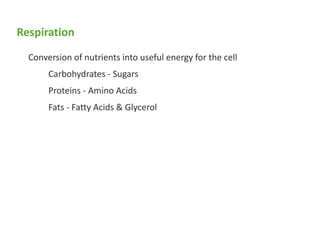
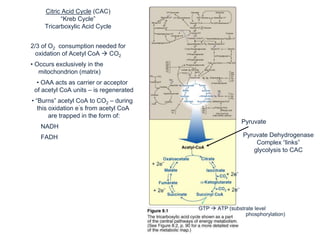
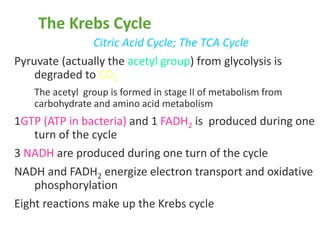
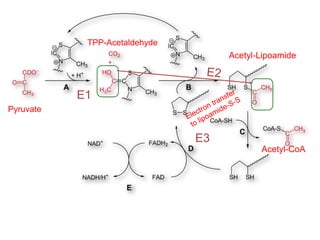
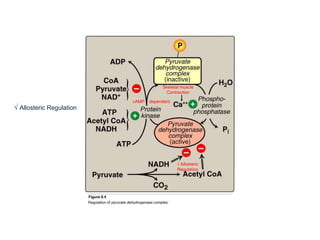
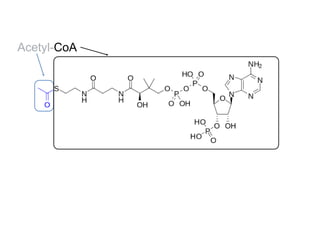
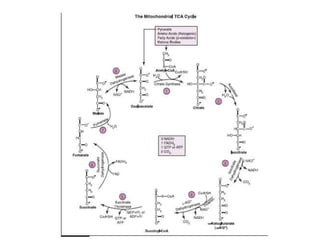
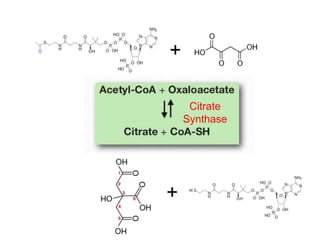
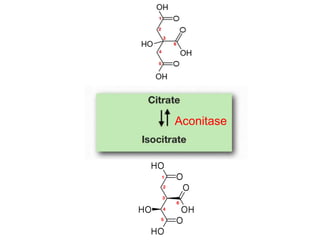
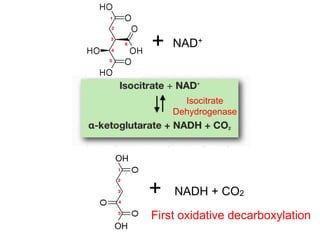
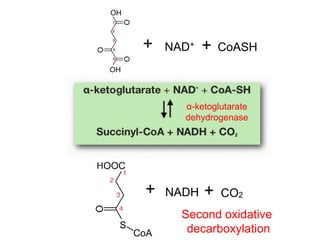
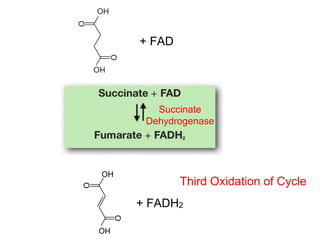
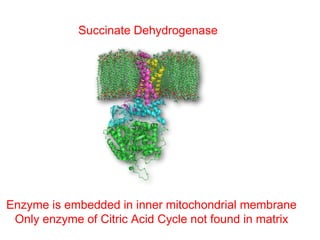
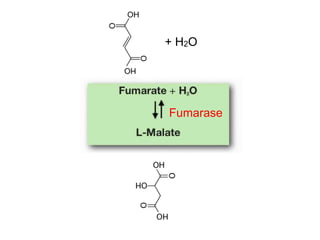
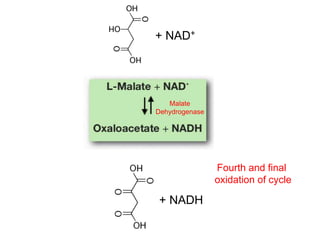
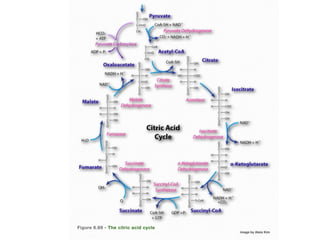
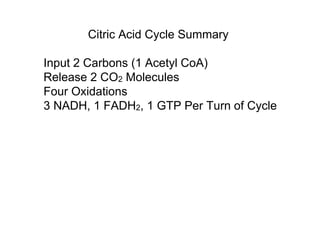
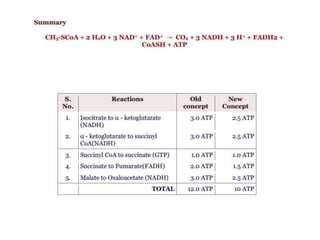
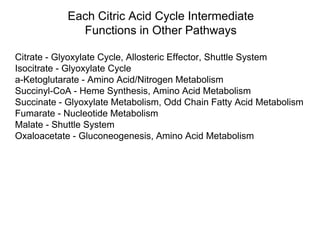
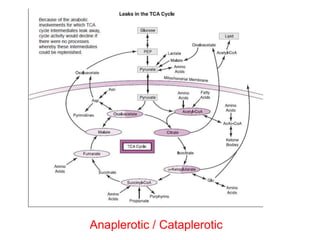
The citric acid cycle (CAC), also known as the Krebs cycle or tricarboxylic acid (TCA) cycle, is a series of chemical reactions used by all aerobic organisms to generate energy through the oxidation of acetyl-CoA derived from carbohydrates, fats, and proteins. The cycle consists of eight sequential reactions that generate high-energy electron carriers and carbon dioxide. Each turn of the cycle produces 3 NADH molecules, 1 FADH2, and 1 GTP that fuel oxidative phosphorylation and generate ATP. The cycle takes place exclusively in the mitochondrial matrix and is crucial for cellular respiration.





![The_citric_acid_cycle[1].pdf](https://cdn.slidesharecdn.com/ss_thumbnails/thecitricacidcycle1-230516202238-10c74d1d-thumbnail.jpg?width=640&height=640&fit=bounds)


![ANIMAL_CELL_,_TISSUE_AND_ORGAN_CULTURE[1].pptx](https://cdn.slidesharecdn.com/ss_thumbnails/animalcelltissueandorganculture1-260204172026-4462b440-thumbnail.jpg?width=640&height=640&fit=bounds)