+


    Biology
    Cell Structures
    By Taylor Eppler
    EDU 107H
+
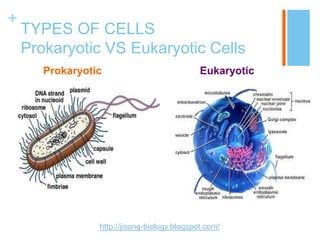
    TYPES OF CELLS
    Prokaryotic VS Eukaryotic Cells
       Prokaryotic                            Eukaryotic


                 http://jisong-biology.blogspot.com/
+
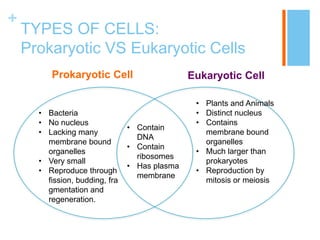
    TYPES OF CELLS:
    Prokaryotic VS Eukaryotic Cells
         Prokaryotic Cell                      Eukaryotic Cell

                                                • Plants and Animals
      • Bacteria                                • Distinct nucleus
      • No nucleus                              • Contains
                                • Contain
      • Lacking many                              membrane bound
                                  DNA
        membrane bound                            organelles
                                • Contain
        organelles                              • Much larger than
                                  ribosomes
      • Very small                                prokaryotes
                                • Has plasma
      • Reproduce through                       • Reproduction by
                                  membrane
        fission, budding, fra                     mitosis or meiosis
        gmentation and
        regeneration.
+
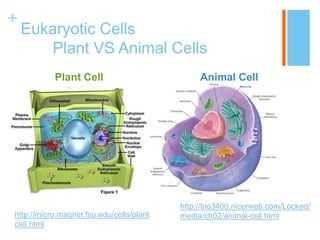
    Eukaryotic Cells
       Plant VS Animal Cells
           Plant Cell                          Animal Cell


                                          http://bio3400.nicerweb.com/Locked/
http://micro.magnet.fsu.edu/cells/plant   media/ch02/animal-cell.html
cell.html
+
    Eukaryotic Cells
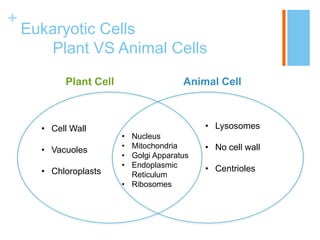
       Plant VS Animal Cells
           Plant Cell                  Animal Cell


      • Cell Wall                           • Lysosomes
                        • Nucleus
                        • Mitochondria      • No cell wall
      • Vacuoles
                        • Golgi Apparatus
                        • Endoplasmic       • Centrioles
      • Chloroplasts      Reticulum
                        • Ribosomes
+
    The Animal Cell
+
+
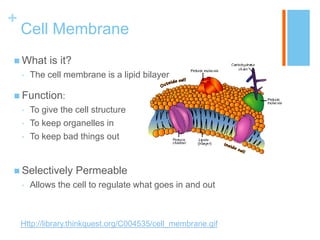
    Cell Membrane
 What       is it?
    •   The cell membrane is a lipid bilayer

 Function:
    •   To give the cell structure
    •   To keep organelles in
    •   To keep bad things out


 Selectively         Permeable
    •   Allows the cell to regulate what goes in and out


    Http://library.thinkquest.org/C004535/cell_membrane.gif
+
    Cytoplasm

     What      is it?
    •   Fluid that fills up the cells

    •   All around the other organelles

    •   Contains sugars, proteins, and other molecules that keep the
        cell running


     Function
        •   To keep the organelles suspended in the cell
        •   Breaks down sugars in the cell
+
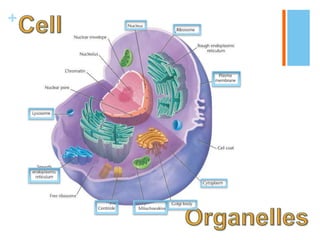
    Nucleus
                      The ‘Brain’

     What   is it?
     •   The brain of the cell
     •   It controls all of the functions of the cell.
     •   Examples of functions: eating, movement, and reproduction


     What   is in the nucleus?
     •   The nucleolus
     •   Chromatin
     •   DNA
+
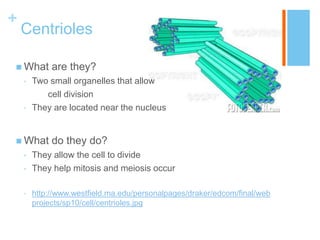
    Centrioles

 What       are they?
    •   Two small organelles that allow
           cell division
    •   They are located near the nucleus


 What       do they do?
    •   They allow the cell to divide
    •   They help mitosis and meiosis occur

    •   http://www.westfield.ma.edu/personalpages/draker/edcom/final/web
        projects/sp10/cell/centrioles.jpg
+
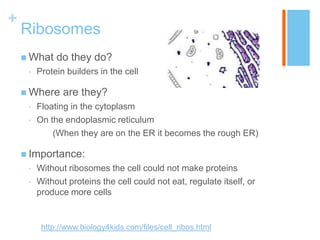
    Ribosomes
     What    do they do?
     •   Protein builders in the cell

     Where     are they?
     •   Floating in the cytoplasm
     •   On the endoplasmic reticulum
             (When they are on the ER it becomes the rough ER)

     Importance:
     •   Without ribosomes the cell could not make proteins
     •   Without proteins the cell could not eat, regulate itself, or
         produce more cells


          http://www.biology4kids.com/files/cell_ribos.html
+
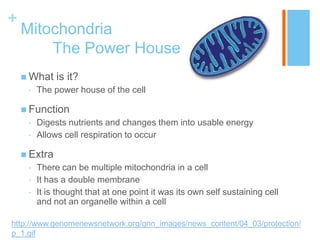
    Mitochondria
        The Power House
     What    is it?
     •   The power house of the cell

     Function
     •   Digests nutrients and changes them into usable energy
     •   Allows cell respiration to occur

     Extra
     •   There can be multiple mitochondria in a cell
     •   It has a double membrane
     •   It is thought that at one point it was its own self sustaining cell
         and not an organelle within a cell

http://www.genomenewsnetwork.org/gnn_images/news_content/04_03/protection/
p_1.gif
+
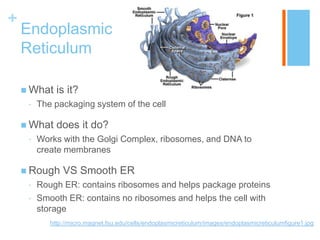
    Endoplasmic
    Reticulum

     What    is it?
     •   The packaging system of the cell

     What    does it do?
     •   Works with the Golgi Complex, ribosomes, and DNA to
         create membranes

     Rough     VS Smooth ER
     •   Rough ER: contains ribosomes and helps package proteins
     •   Smooth ER: contains no ribosomes and helps the cell with
         storage
            http://micro.magnet.fsu.edu/cells/endoplasmicreticulum/images/endoplasmicreticulumfigure1.jpg
+
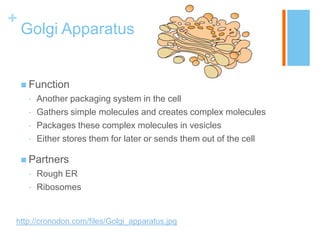
    Golgi Apparatus


     Function
     •   Another packaging system in the cell
     •   Gathers simple molecules and creates complex molecules
     •   Packages these complex molecules in vesicles
     •   Either stores them for later or sends them out of the cell

     Partners
     •   Rough ER
     •   Ribosomes


http://cronodon.com/files/Golgi_apparatus.jpg
+
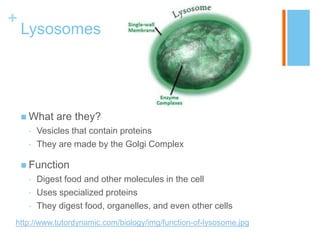
    Lysosomes


     What    are they?
     •   Vesicles that contain proteins
     •   They are made by the Golgi Complex

     Function
     •   Digest food and other molecules in the cell
     •   Uses specialized proteins
     •   They digest food, organelles, and even other cells
http://www.tutordynamic.com/biology/img/function-of-lysosome.jpg
+
    Works Cited


     http://www.biology4kids.com/files/cell_main.html


     Dr.   Learman, BIO 110H, Fall 2011


     Pictures   were cited on the individual slides

TaylorEppler PPT 1

  • 1.
    + Biology Cell Structures By Taylor Eppler EDU 107H
  • 2.
    + TYPES OF CELLS Prokaryotic VS Eukaryotic Cells Prokaryotic Eukaryotic http://jisong-biology.blogspot.com/
  • 3.
    + TYPES OF CELLS: Prokaryotic VS Eukaryotic Cells Prokaryotic Cell Eukaryotic Cell • Plants and Animals • Bacteria • Distinct nucleus • No nucleus • Contains • Contain • Lacking many membrane bound DNA membrane bound organelles • Contain organelles • Much larger than ribosomes • Very small prokaryotes • Has plasma • Reproduce through • Reproduction by membrane fission, budding, fra mitosis or meiosis gmentation and regeneration.
  • 4.
    + Eukaryotic Cells Plant VS Animal Cells Plant Cell Animal Cell http://bio3400.nicerweb.com/Locked/ http://micro.magnet.fsu.edu/cells/plant media/ch02/animal-cell.html cell.html
  • 5.
    + Eukaryotic Cells Plant VS Animal Cells Plant Cell Animal Cell • Cell Wall • Lysosomes • Nucleus • Mitochondria • No cell wall • Vacuoles • Golgi Apparatus • Endoplasmic • Centrioles • Chloroplasts Reticulum • Ribosomes
  • 6.
    + The Animal Cell
  • 7.
  • 8.
    + Cell Membrane  What is it? • The cell membrane is a lipid bilayer  Function: • To give the cell structure • To keep organelles in • To keep bad things out  Selectively Permeable • Allows the cell to regulate what goes in and out Http://library.thinkquest.org/C004535/cell_membrane.gif
  • 9.
    + Cytoplasm  What is it? • Fluid that fills up the cells • All around the other organelles • Contains sugars, proteins, and other molecules that keep the cell running  Function • To keep the organelles suspended in the cell • Breaks down sugars in the cell
  • 10.
    + Nucleus The ‘Brain’  What is it? • The brain of the cell • It controls all of the functions of the cell. • Examples of functions: eating, movement, and reproduction  What is in the nucleus? • The nucleolus • Chromatin • DNA
  • 11.
    + Centrioles  What are they? • Two small organelles that allow cell division • They are located near the nucleus  What do they do? • They allow the cell to divide • They help mitosis and meiosis occur • http://www.westfield.ma.edu/personalpages/draker/edcom/final/web projects/sp10/cell/centrioles.jpg
  • 12.
    + Ribosomes  What do they do? • Protein builders in the cell  Where are they? • Floating in the cytoplasm • On the endoplasmic reticulum (When they are on the ER it becomes the rough ER)  Importance: • Without ribosomes the cell could not make proteins • Without proteins the cell could not eat, regulate itself, or produce more cells http://www.biology4kids.com/files/cell_ribos.html
  • 13.
    + Mitochondria The Power House  What is it? • The power house of the cell  Function • Digests nutrients and changes them into usable energy • Allows cell respiration to occur  Extra • There can be multiple mitochondria in a cell • It has a double membrane • It is thought that at one point it was its own self sustaining cell and not an organelle within a cell http://www.genomenewsnetwork.org/gnn_images/news_content/04_03/protection/ p_1.gif
  • 14.
    + Endoplasmic Reticulum  What is it? • The packaging system of the cell  What does it do? • Works with the Golgi Complex, ribosomes, and DNA to create membranes  Rough VS Smooth ER • Rough ER: contains ribosomes and helps package proteins • Smooth ER: contains no ribosomes and helps the cell with storage http://micro.magnet.fsu.edu/cells/endoplasmicreticulum/images/endoplasmicreticulumfigure1.jpg
  • 15.
    + Golgi Apparatus  Function • Another packaging system in the cell • Gathers simple molecules and creates complex molecules • Packages these complex molecules in vesicles • Either stores them for later or sends them out of the cell  Partners • Rough ER • Ribosomes http://cronodon.com/files/Golgi_apparatus.jpg
  • 16.
    + Lysosomes  What are they? • Vesicles that contain proteins • They are made by the Golgi Complex  Function • Digest food and other molecules in the cell • Uses specialized proteins • They digest food, organelles, and even other cells http://www.tutordynamic.com/biology/img/function-of-lysosome.jpg
  • 17.
    + Works Cited  http://www.biology4kids.com/files/cell_main.html  Dr. Learman, BIO 110H, Fall 2011  Pictures were cited on the individual slides