NAD +  / NADH 在神经细胞死亡中的作用 殷卫海教授 上海交通大学 Med-X  研究院 上海交通大学医学院附属瑞金医院神经病学研究所
NAD +  / NADH OLD COUPLE POWERFUL COUPLE
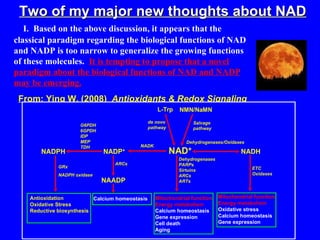
I.  Based on the above discussion, it appears that the classical paradigm regarding the biological functions of NAD and NADP is too narrow to generalize the growing functions of these molecules.   It is tempting to propose that a novel paradigm about the biological functions of NAD and NADP may be emerging.   From: Ying W. (2008)  Antioxidants & Redox Signaling Two of my major new thoughts about NAD
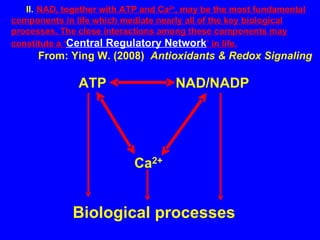
II.   NAD, together with ATP and Ca 2+ , may be the most fundamental components in life which mediate nearly all of the key biological processes. The close interactions among these components may constitute a ‘ Central Regulatory Network ’ in life.   From: Ying W. (2008)  Antioxidants & Redox Signaling
1.  A brief overview of the biological functions of NAD +  and NADH  Roles of NAD +  in PARP-1-mediated cell death 3. Therapeutic potential of NAD +   4. NADH transport across plasma membranes of cells 5.  Roles of Ca 2+ -Mg 2+ -depenent endonuclease in cell death OUTLINE OF THIS TALK
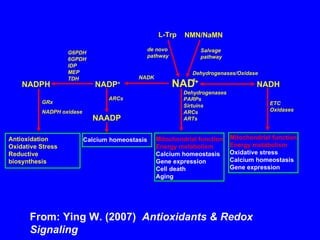
NADPH  NADP +   NAD +   NADH NAADP Antioxidation Oxidative Stress Reductive biosynthesis Calcium homeostasis Mitochondrial function Energy metabolism Oxidative stress Calcium homeostasis Gene expression Mitochondrial function Energy metabolism Calcium homeostasis Gene expression Cell death Aging Dehydrogenases PARPs Sirtuins ARCs ARTs NADK Dehydrogenases/Oxidases GRx NADPH oxidase G6PDH 6GPDH IDP MEP TDH de novo pathway Salvage pathway L-Trp NMN/NaMN ARCs ETC Oxidases From: Ying W. (2007)  Antioxidants & Redox Signaling
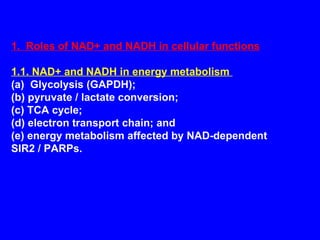
1.  Roles of NAD+ and NADH in cellular functions 1.1. NAD+ and NADH in energy metabolism  (a)  Glycolysis (GAPDH); (b) pyruvate / lactate conversion; (c) TCA cycle;  (d) electron transport chain; and (e) energy metabolism affected by NAD-dependent SIR2 / PARPs.
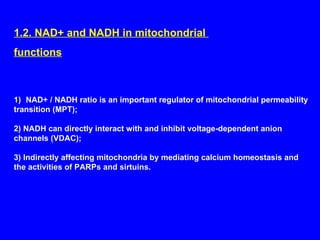
NAD+ / NADH ratio is an important regulator of mitochondrial permeability  transition (MPT); 2) NADH can directly interact with and inhibit voltage-dependent anion  channels (VDAC); 3)  Indirectly affecting mitochondria by mediating calcium homeostasis and  the activities of PARPs and sirtuins.   1.2. NAD+ and NADH in mitochondrial  functions
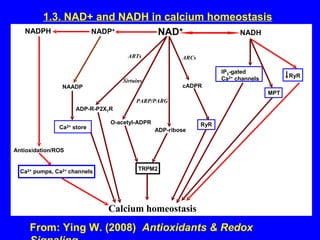
1.3. NAD+ and NADH in calcium homeostasis From: Ying W. (2008)  Antioxidants & Redox Signaling
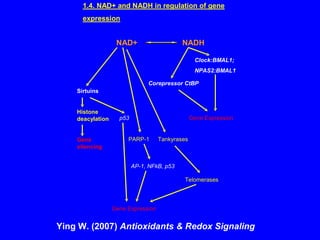
Ying W. (2007)  Antioxidants & Redox Signaling
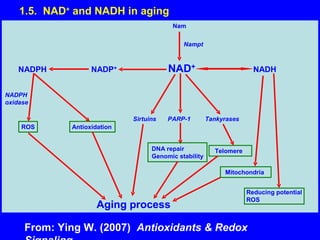
1.5.  NAD +  and NADH in aging From: Ying W. (2007)  Antioxidants & Redox Signaling
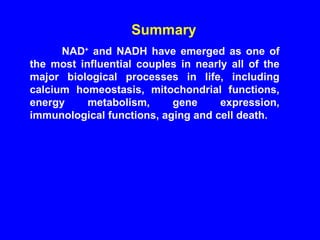
Summary  NAD +  and NADH have emerged as one of the most influential couples in nearly all of the major biological processes in life, including calcium homeostasis, mitochondrial functions, energy metabolism, gene expression, immunological functions, aging and cell death.
Roles of NAD +  in poly(ADP-ribose)  polymerase-1 (PARP-1)-mediated cell death
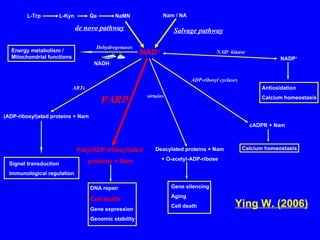
NAD + Dehydrogenases PARP Poly(ADP-ribosyl)ated  proteins + Nam ARTs cADPR + Nam NAD +  kinase NADP + sirtuins Deacylated proteins + Nam  + O-acetyl-ADP-ribose  (ADP-ribosyl)ated proteins + Nam ADP-ribosyl cyclases Salvage pathway Nam / NA de novo pathway NaMN L-Trp  L-Kyn Qa Energy metabolism / Mitochondrial functions NADH DNA repair Cell death Gene expression Genomic stability Gene silencing Aging  Cell death Calcium homeostasis Antioxidation Calcium homeostasis Signal transduction Immunological regulation Ying W. (2006)
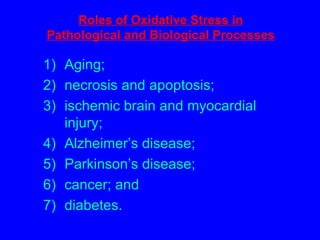
Roles of Oxidative Stress in Pathological and Biological Processes Aging; necrosis and apoptosis; ischemic brain and myocardial injury; Alzheimer’s disease; Parkinson’s disease; cancer; and diabetes.
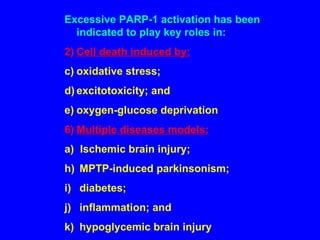
Excessive PARP-1 activation has been indicated to play key roles in: Cell death induced by: oxidative stress;  excitotoxicity; and oxygen-glucose deprivation Multiple diseases models: a)  Ischemic brain injury; MPTP-induced parkinsonism; diabetes; inflammation; and hypoglycemic brain injury
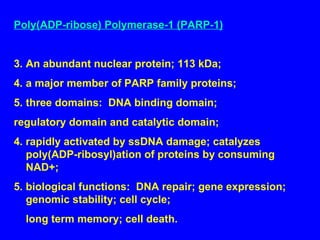
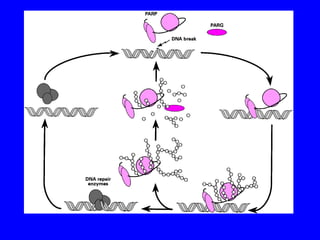
Poly(ADP-ribose) Polymerase-1 (PARP-1) An abundant nuclear protein; 113 kDa; a major member of PARP family proteins; three domains:  DNA binding domain;  regulatory domain and catalytic domain; 4. rapidly activated by ssDNA damage; catalyzes poly(ADP-ribosyl)ation of proteins by consuming NAD+; 5. biological functions:  DNA repair; gene expression; genomic stability; cell cycle;  long term memory; cell death.
 
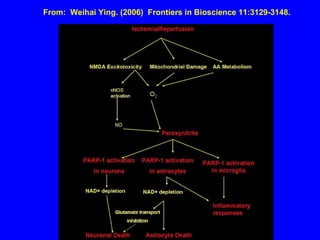
From:  Weihai Ying. (2006)  Frontiers in Bioscience 11:3129-3148.
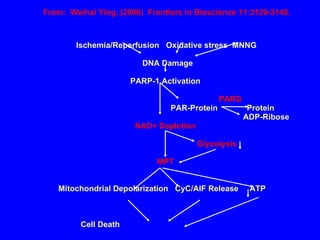
Ischemia/Reperfusion  Oxidative stress  MNNG   DNA Damage PARP-1 Activation   PARG   PAR-Protein  Protein   ADP-Ribose NAD+ Depletion   Glycolysis MPT Mitochondrial Depolarization  CyC/AIF Release  ATP  Cell Death   From:  Weihai Ying. (2006)  Frontiers in Bioscience 11:3129-3148.
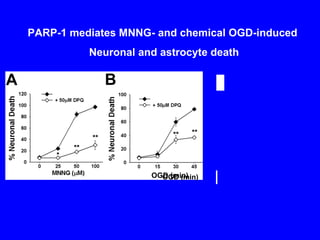
PARP-1 mediates MNNG- and chemical OGD-induced  Neuronal and astrocyte death
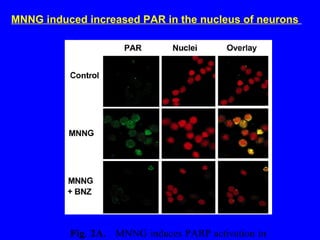
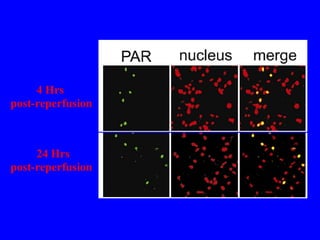
MNNG induced increased PAR in the nucleus of neurons
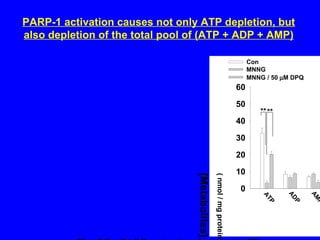
PARP-1 activation causes not only ATP depletion, but also depletion of the total pool of (ATP + ADP + AMP)
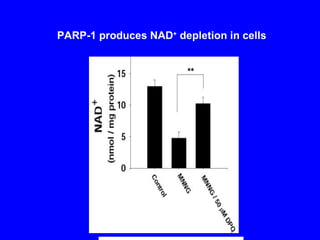
PARP-1 produces NAD +  depletion in cells
How PARP-1 activation causes cell death? What is the role of NAD +  depletion in PARP-1 cytotoxicity? How to test the hypothesis that NAD +  depletion mediates PARP-1 toxicity ?
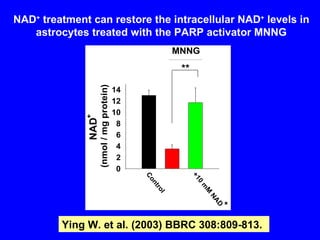
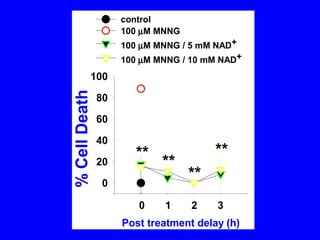
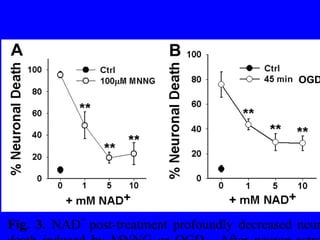
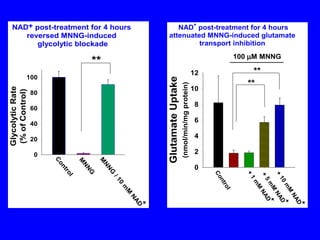
Ying W. et al. (2003) BBRC 308:809-813.  NAD +  treatment can restore the intracellular NAD +  levels in astrocytes treated with the PARP activator MNNG
 
 
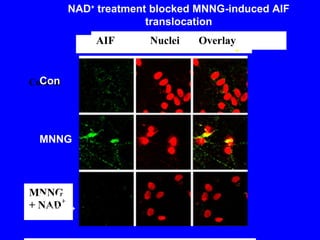
AIF   Nuclei  Overlay Con MNNG MNNG + NAD + NAD +  treatment blocked MNNG-induced AIF translocation
 
* We have further found that NAD +  treatment can abolish MNNG-induced mitochondrial permeability transition and mitochondrial depolarization  (Alano, Ying and Swanson JBC (2004).
Other studies that further indicate that NAD +  depletion mediates PARP-1-induced cell death Liposome-based NAD +  delivery  can decrease peroxynitrite-induced mitochondrial depolarization in neurons (Du et al.); 2)  our colleagues Drs. Alano and Dr. Swanson have recently shown that BioPorter-Based delivery of NADase can induced NAD +  depletion and cell death; NAD +  depletion by an inhibitor of a NAD + -synthesizing enzyme Nampt can induce cell death; and a latest study published in  Cell  suggests that mitochondrial NAD +  depletion mediates cell survival in certain cell lines with low levels of mitochondria
Other studies have further indicated therapeutic potential of NAD+ for various diseases NAD+ treatment can block transection-induced axonal injury by activating SIRT1 (Science (2004)) or locally enhancing energy metabolism (JCB (2005)); 2. NAD+ treatment can block zinc-induced neuronal death (Eur. J. Neurosci. (2006); and 3.  NAD+ treatment can decrease oxidative stress-induced myocyte death (JBC (2005)).
Summary Our study provides the first direct evidence that NAD +  depletion mediates PARP-1-induced cell death; and 2. our study also provides the first evidence that NAD +  may be used for treating oxidative stress-mediated diseases
Can NAD +  be used  in vivo  to decrease brain injury in cerebral ischemia and other PARP-1 related diseases? We used a rat model of transient focal ischemia to test our hypothesis that NAD +  administration can decrease ischemic brain damage. 3.  Therapeutic potential of NAD +
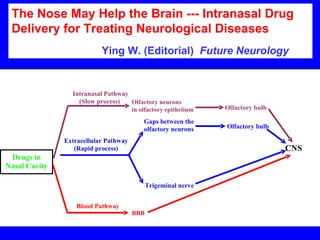
A key problem for treatment of CNS diseases: William M. Pardridge. (2005) The Blood-Brain Barrier: Bottleneck in Brain Drug Development.  NeuroRx. 2: 3–14.  A key challenge in establishing effective strategies for neuroprotection: Searching for drug delivery approaches that can overcome the limitations of BBB.
The Nose May Help the Brain --- Intranasal Drug Delivery for Treating Neurological Diseases Ying W. (Editorial)  Future Neurology
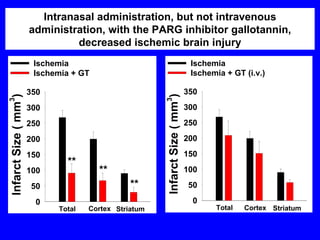
Intranasal administration, but not intravenous administration, with the PARG inhibitor gallotannin, decreased ischemic brain injury
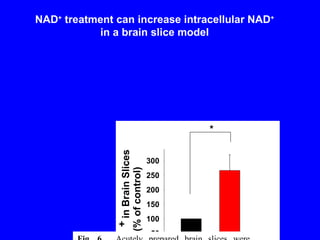
NAD +  treatment can increase intracellular NAD +  in a brain slice model
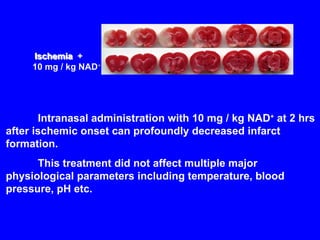
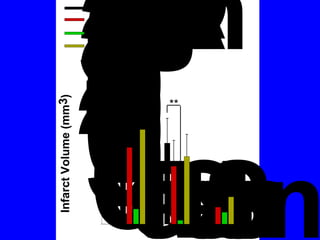
Ischemia Ischemia  + 10 mg / kg NAD + Intranasal administration with 10 mg / kg NAD +  at 2 hrs after ischemic onset can profoundly decreased infarct formation.  This treatment did not affect multiple major physiological parameters including temperature, blood pressure, pH etc.
 
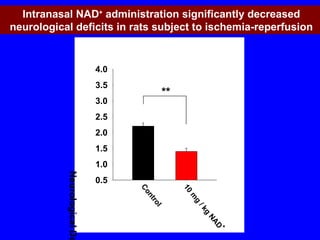
Intranasal NAD +  administration significantly decreased neurological deficits in rats subject to ischemia-reperfusion
What are the mechanisms underlying the protective effects of intranasal NAD +  administration against ischemic brain injury?
 
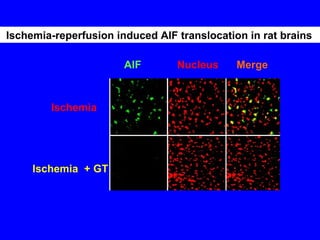
Ischemia Ischemia  + GT AIF   Nucleus   Merge Ischemia-reperfusion induced AIF translocation in rat brains
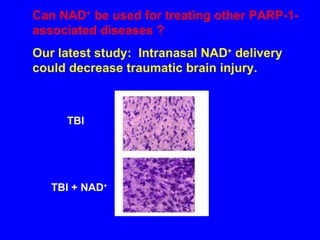
Can NAD +  be used for treating other PARP-1-associated diseases ?  Our latest study:  Intranasal NAD +  delivery could decrease traumatic brain injury. TBI TBI + NAD +
Conclusions Intranasal NAD +  administration can significantly decrease ischemic brain injury, suggesting that this might become a new strategy for reducing ischemic brain damage; our study provides a useful tool for determining the roles of NAD +  metabolism in ischemic brain damage and other PARP-1-related diseases; and future studies are needed to determine the mechanisms underlying the protective effects of intranasal NAD +  administration against ischemic brain injury, and to determine if this approach can decrease brain damage in other CNS diseases.
4. NADH transport across plasma membranes  of cells
 
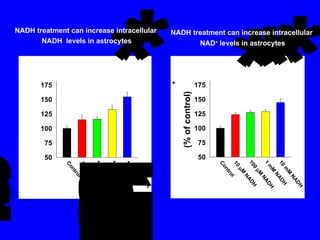
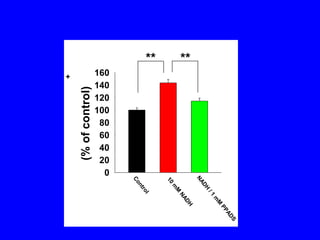
NADH treatment can increase intracellular  NADH  levels in astrocytes NADH treatment can increase intracellular  NAD +  levels in astrocytes
 
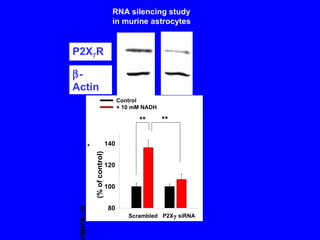
P2X 7 R  -Actin
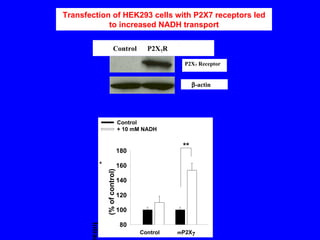
Transfection of HEK293 cells with P2X7 receptors led to increased NADH transport
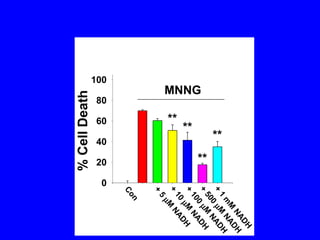
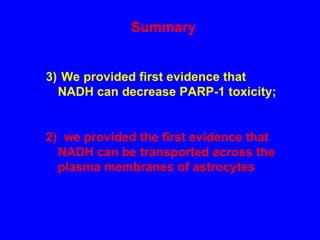
Summary  We provided first evidence that NADH can decrease PARP-1 toxicity; 2)  we provided the first evidence that NADH can be transported across the plasma membranes of astrocytes
5.  Roles of Ca 2+ -Mg 2+  -depenent endonuclease in cell death
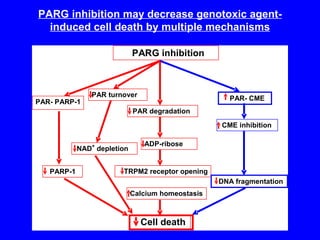
PARG inhibition may decrease genotoxic agent-induced cell death by multiple mechanisms
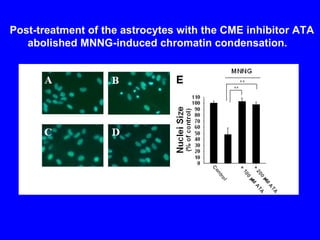
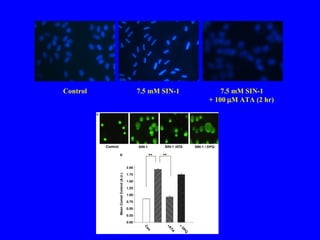
Post-treatment of the astrocytes with the CME inhibitor ATA  abolished MNNG-induced chromatin condensation.
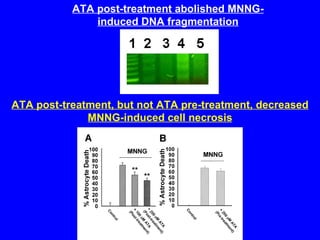
ATA post-treatment abolished MNNG-induced DNA fragmentation ATA post-treatment, but not ATA pre-treatment, decreased MNNG-induced cell necrosis
 
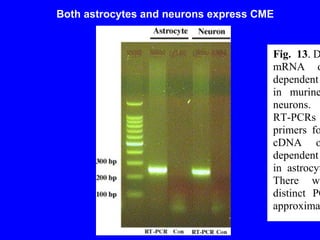
Both astrocytes and neurons express CME
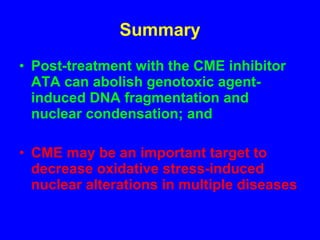
Summary Post-treatment with the CME inhibitor ATA can abolish genotoxic agent-induced DNA fragmentation and nuclear condensation; and CME may be an important target to decrease oxidative stress-induced nuclear alterations in multiple diseases
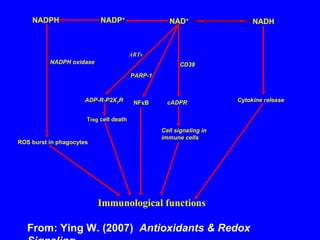
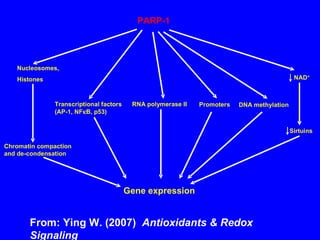
From: Ying W. (2007)  Antioxidants & Redox Signaling

Talk 2008-meeting about NAD

  • 1.
    NAD + / NADH 在神经细胞死亡中的作用 殷卫海教授 上海交通大学 Med-X 研究院 上海交通大学医学院附属瑞金医院神经病学研究所
  • 2.
    NAD + / NADH OLD COUPLE POWERFUL COUPLE
  • 3.
    I. Basedon the above discussion, it appears that the classical paradigm regarding the biological functions of NAD and NADP is too narrow to generalize the growing functions of these molecules. It is tempting to propose that a novel paradigm about the biological functions of NAD and NADP may be emerging. From: Ying W. (2008) Antioxidants & Redox Signaling Two of my major new thoughts about NAD
  • 4.
    II. NAD, together with ATP and Ca 2+ , may be the most fundamental components in life which mediate nearly all of the key biological processes. The close interactions among these components may constitute a ‘ Central Regulatory Network ’ in life. From: Ying W. (2008) Antioxidants & Redox Signaling
  • 5.
    1. Abrief overview of the biological functions of NAD + and NADH Roles of NAD + in PARP-1-mediated cell death 3. Therapeutic potential of NAD + 4. NADH transport across plasma membranes of cells 5. Roles of Ca 2+ -Mg 2+ -depenent endonuclease in cell death OUTLINE OF THIS TALK
  • 6.
    NADPH NADP+ NAD + NADH NAADP Antioxidation Oxidative Stress Reductive biosynthesis Calcium homeostasis Mitochondrial function Energy metabolism Oxidative stress Calcium homeostasis Gene expression Mitochondrial function Energy metabolism Calcium homeostasis Gene expression Cell death Aging Dehydrogenases PARPs Sirtuins ARCs ARTs NADK Dehydrogenases/Oxidases GRx NADPH oxidase G6PDH 6GPDH IDP MEP TDH de novo pathway Salvage pathway L-Trp NMN/NaMN ARCs ETC Oxidases From: Ying W. (2007) Antioxidants & Redox Signaling
  • 7.
    1. Rolesof NAD+ and NADH in cellular functions 1.1. NAD+ and NADH in energy metabolism (a) Glycolysis (GAPDH); (b) pyruvate / lactate conversion; (c) TCA cycle; (d) electron transport chain; and (e) energy metabolism affected by NAD-dependent SIR2 / PARPs.
  • 8.
    NAD+ / NADHratio is an important regulator of mitochondrial permeability transition (MPT); 2) NADH can directly interact with and inhibit voltage-dependent anion channels (VDAC); 3) Indirectly affecting mitochondria by mediating calcium homeostasis and the activities of PARPs and sirtuins. 1.2. NAD+ and NADH in mitochondrial functions
  • 9.
    1.3. NAD+ andNADH in calcium homeostasis From: Ying W. (2008) Antioxidants & Redox Signaling
  • 10.
    Ying W. (2007) Antioxidants & Redox Signaling
  • 11.
    1.5. NAD+ and NADH in aging From: Ying W. (2007) Antioxidants & Redox Signaling
  • 12.
    Summary NAD+ and NADH have emerged as one of the most influential couples in nearly all of the major biological processes in life, including calcium homeostasis, mitochondrial functions, energy metabolism, gene expression, immunological functions, aging and cell death.
  • 13.
    Roles of NAD+ in poly(ADP-ribose) polymerase-1 (PARP-1)-mediated cell death
  • 14.
    NAD + DehydrogenasesPARP Poly(ADP-ribosyl)ated proteins + Nam ARTs cADPR + Nam NAD + kinase NADP + sirtuins Deacylated proteins + Nam + O-acetyl-ADP-ribose (ADP-ribosyl)ated proteins + Nam ADP-ribosyl cyclases Salvage pathway Nam / NA de novo pathway NaMN L-Trp L-Kyn Qa Energy metabolism / Mitochondrial functions NADH DNA repair Cell death Gene expression Genomic stability Gene silencing Aging Cell death Calcium homeostasis Antioxidation Calcium homeostasis Signal transduction Immunological regulation Ying W. (2006)
  • 15.
    Roles of OxidativeStress in Pathological and Biological Processes Aging; necrosis and apoptosis; ischemic brain and myocardial injury; Alzheimer’s disease; Parkinson’s disease; cancer; and diabetes.
  • 16.
    Excessive PARP-1 activationhas been indicated to play key roles in: Cell death induced by: oxidative stress; excitotoxicity; and oxygen-glucose deprivation Multiple diseases models: a) Ischemic brain injury; MPTP-induced parkinsonism; diabetes; inflammation; and hypoglycemic brain injury
  • 17.
    Poly(ADP-ribose) Polymerase-1 (PARP-1)An abundant nuclear protein; 113 kDa; a major member of PARP family proteins; three domains: DNA binding domain; regulatory domain and catalytic domain; 4. rapidly activated by ssDNA damage; catalyzes poly(ADP-ribosyl)ation of proteins by consuming NAD+; 5. biological functions: DNA repair; gene expression; genomic stability; cell cycle; long term memory; cell death.
  • 18.
  • 19.
    From: WeihaiYing. (2006) Frontiers in Bioscience 11:3129-3148.
  • 20.
    Ischemia/Reperfusion Oxidativestress MNNG DNA Damage PARP-1 Activation PARG PAR-Protein Protein ADP-Ribose NAD+ Depletion Glycolysis MPT Mitochondrial Depolarization CyC/AIF Release ATP Cell Death From: Weihai Ying. (2006) Frontiers in Bioscience 11:3129-3148.
  • 21.
    PARP-1 mediates MNNG-and chemical OGD-induced Neuronal and astrocyte death
  • 22.
    MNNG induced increasedPAR in the nucleus of neurons
  • 23.
    PARP-1 activation causesnot only ATP depletion, but also depletion of the total pool of (ATP + ADP + AMP)
  • 24.
    PARP-1 produces NAD+ depletion in cells
  • 25.
    How PARP-1 activationcauses cell death? What is the role of NAD + depletion in PARP-1 cytotoxicity? How to test the hypothesis that NAD + depletion mediates PARP-1 toxicity ?
  • 26.
    Ying W. etal. (2003) BBRC 308:809-813. NAD + treatment can restore the intracellular NAD + levels in astrocytes treated with the PARP activator MNNG
  • 27.
  • 28.
  • 29.
    AIF Nuclei Overlay Con MNNG MNNG + NAD + NAD + treatment blocked MNNG-induced AIF translocation
  • 30.
  • 31.
    * We havefurther found that NAD + treatment can abolish MNNG-induced mitochondrial permeability transition and mitochondrial depolarization (Alano, Ying and Swanson JBC (2004).
  • 32.
    Other studies thatfurther indicate that NAD + depletion mediates PARP-1-induced cell death Liposome-based NAD + delivery can decrease peroxynitrite-induced mitochondrial depolarization in neurons (Du et al.); 2) our colleagues Drs. Alano and Dr. Swanson have recently shown that BioPorter-Based delivery of NADase can induced NAD + depletion and cell death; NAD + depletion by an inhibitor of a NAD + -synthesizing enzyme Nampt can induce cell death; and a latest study published in Cell suggests that mitochondrial NAD + depletion mediates cell survival in certain cell lines with low levels of mitochondria
  • 33.
    Other studies havefurther indicated therapeutic potential of NAD+ for various diseases NAD+ treatment can block transection-induced axonal injury by activating SIRT1 (Science (2004)) or locally enhancing energy metabolism (JCB (2005)); 2. NAD+ treatment can block zinc-induced neuronal death (Eur. J. Neurosci. (2006); and 3. NAD+ treatment can decrease oxidative stress-induced myocyte death (JBC (2005)).
  • 34.
    Summary Our studyprovides the first direct evidence that NAD + depletion mediates PARP-1-induced cell death; and 2. our study also provides the first evidence that NAD + may be used for treating oxidative stress-mediated diseases
  • 35.
    Can NAD + be used in vivo to decrease brain injury in cerebral ischemia and other PARP-1 related diseases? We used a rat model of transient focal ischemia to test our hypothesis that NAD + administration can decrease ischemic brain damage. 3. Therapeutic potential of NAD +
  • 36.
    A key problemfor treatment of CNS diseases: William M. Pardridge. (2005) The Blood-Brain Barrier: Bottleneck in Brain Drug Development. NeuroRx. 2: 3–14. A key challenge in establishing effective strategies for neuroprotection: Searching for drug delivery approaches that can overcome the limitations of BBB.
  • 37.
    The Nose MayHelp the Brain --- Intranasal Drug Delivery for Treating Neurological Diseases Ying W. (Editorial) Future Neurology
  • 38.
    Intranasal administration, butnot intravenous administration, with the PARG inhibitor gallotannin, decreased ischemic brain injury
  • 39.
    NAD + treatment can increase intracellular NAD + in a brain slice model
  • 40.
    Ischemia Ischemia + 10 mg / kg NAD + Intranasal administration with 10 mg / kg NAD + at 2 hrs after ischemic onset can profoundly decreased infarct formation. This treatment did not affect multiple major physiological parameters including temperature, blood pressure, pH etc.
  • 41.
  • 42.
    Intranasal NAD + administration significantly decreased neurological deficits in rats subject to ischemia-reperfusion
  • 43.
    What are themechanisms underlying the protective effects of intranasal NAD + administration against ischemic brain injury?
  • 44.
  • 45.
    Ischemia Ischemia + GT AIF Nucleus Merge Ischemia-reperfusion induced AIF translocation in rat brains
  • 46.
    Can NAD + be used for treating other PARP-1-associated diseases ? Our latest study: Intranasal NAD + delivery could decrease traumatic brain injury. TBI TBI + NAD +
  • 47.
    Conclusions Intranasal NAD+ administration can significantly decrease ischemic brain injury, suggesting that this might become a new strategy for reducing ischemic brain damage; our study provides a useful tool for determining the roles of NAD + metabolism in ischemic brain damage and other PARP-1-related diseases; and future studies are needed to determine the mechanisms underlying the protective effects of intranasal NAD + administration against ischemic brain injury, and to determine if this approach can decrease brain damage in other CNS diseases.
  • 48.
    4. NADH transportacross plasma membranes of cells
  • 49.
  • 50.
    NADH treatment canincrease intracellular NADH levels in astrocytes NADH treatment can increase intracellular NAD + levels in astrocytes
  • 51.
  • 52.
    P2X 7 R -Actin
  • 53.
    Transfection of HEK293cells with P2X7 receptors led to increased NADH transport
  • 54.
    Summary Weprovided first evidence that NADH can decrease PARP-1 toxicity; 2) we provided the first evidence that NADH can be transported across the plasma membranes of astrocytes
  • 55.
    5. Rolesof Ca 2+ -Mg 2+ -depenent endonuclease in cell death
  • 56.
    PARG inhibition maydecrease genotoxic agent-induced cell death by multiple mechanisms
  • 57.
    Post-treatment of theastrocytes with the CME inhibitor ATA abolished MNNG-induced chromatin condensation.
  • 58.
    ATA post-treatment abolishedMNNG-induced DNA fragmentation ATA post-treatment, but not ATA pre-treatment, decreased MNNG-induced cell necrosis
  • 59.
  • 60.
    Both astrocytes andneurons express CME
  • 61.
    Summary Post-treatment withthe CME inhibitor ATA can abolish genotoxic agent-induced DNA fragmentation and nuclear condensation; and CME may be an important target to decrease oxidative stress-induced nuclear alterations in multiple diseases
  • 62.
    From: Ying W.(2007) Antioxidants & Redox Signaling
  • 63.
    From: Ying W.(2007) Antioxidants & Redox Signaling