Diagnostic techniques for genetic disorders
&
Recombinant DNA Technologies
Dr Sehrish ahmed
Objectives
CAUSES OF GENETIC PROBLEMS TYPES OF DIAGNOSTIC TECHNIQUES
UNDERSTANDING DIFFERENT
TECHNIQUES AND THEIR
IMPLICATION IN CLINICAL PRACTICE
• Genetic diseases are usually categorized into
• Single-gene (mendelians disorder)
• Chromosomal (chromosomal disorders)
• Multi-factorial disorders (mix with
environmental factor)
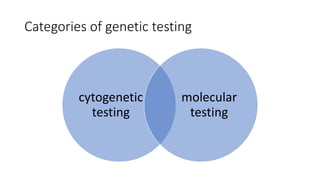
Categories of genetic testing
cytogenetic
testing
molecular
testing
CYTOGENIC TESTS:
FLUORESCENCE IN SITU
HYBRIDIZATION (FISH)
01
SPECIAL KARYOTYPING
02
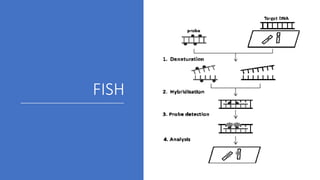
FISH
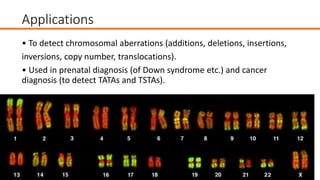
Applications
• To detect chromosomal aberrations (additions, deletions, insertions,
inversions, copy number, translocations).
• Used in prenatal diagnosis (of Down syndrome etc.) and cancer
diagnosis (to detect TATAs and TSTAs).
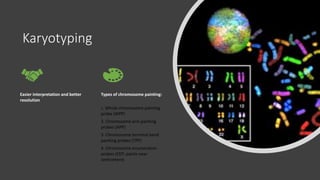
Karyotyping
Easier interpretation and better
resolution
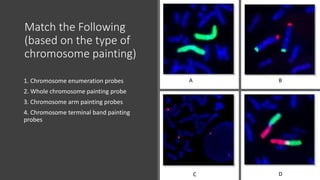
Types of chromosome painting:
1. Whole chromosome painting
probe (WPP)
2. Chromosome arm painting
probes (APP)
3. Chromosome terminal band
painting probes (TPP)
4. Chromosome enumeration
probes (CEP; paints near
centromere)
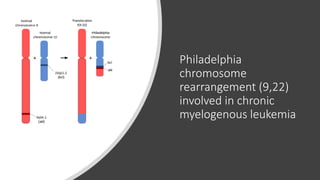
Philadelphia
chromosome
rearrangement (9,22)
involved in chronic
myelogenous leukemia
Match the Following
(based on the type of
chromosome painting)
1. Chromosome enumeration probes
2. Whole chromosome painting probe
3. Chromosome arm painting probes
4. Chromosome terminal band painting
probes
A B
C D
Molecular
testing
TECHNIQUES
• It combines laboratory medicine with molecular genetics to
develop DNA/RNA-based analytical methods for monitoring
human pathologies.
• A wide range of methods has been used for mutation detection
• Known mutation
• PCR
• DNA Microarray
• DNA Sequence
• Unknown mutation
• SSCP
• DGGE
• RFLP
PCR
The Polymerase
Chain Reaction
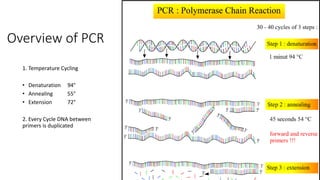
Overview of PCR
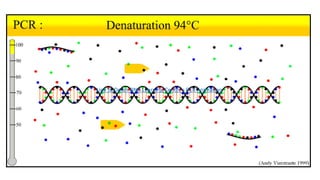
1. Temperature Cycling
• Denaturation 94°
• Annealing 55°
• Extension 72°
2. Every Cycle DNA between
primers is duplicated
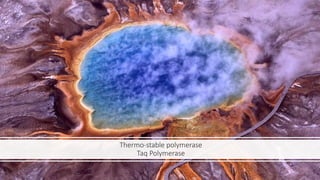
Thermo-stable polymerase
Taq Polymerase
Link to Dolan DNA Learning Center's PCR Animation
PCR and
Disease
Some diseases
that can be
diagnosed with
the help of
PCR:
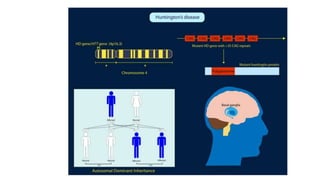
Huntington's disease
cystic fibrosis
Human immunodeficiency
virus
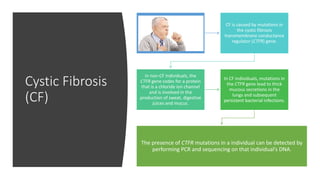
Cystic Fibrosis
(CF)
CF is caused by mutations in
the cystic fibrosis
transmembrane conductance
regulator (CTFR) gene.
In non-CF individuals, the
CTFR gene codes for a protein
that is a chloride ion channel
and is involved in the
production of sweat, digestive
juices and mucus.
In CF individuals, mutations in
the CTFR gene lead to thick
mucous secretions in the
lungs and subsequent
persistent bacterial infections.
The presence of CTFR mutations in a individual can be detected by
performing PCR and sequencing on that individual’s DNA.
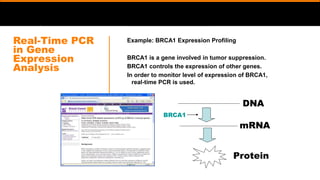
Real-Time PCR
in Gene
Expression
Analysis
Example: BRCA1 Expression Profiling
BRCA1 is a gene involved in tumor suppression.
BRCA1 controls the expression of other genes.
In order to monitor level of expression of BRCA1,
real-time PCR is used.
DNA
mRNA
Protein
BRCA1
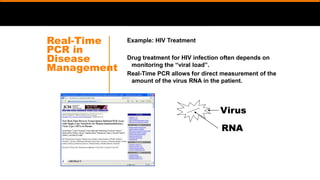
Real-Time
PCR in
Disease
Management
Example: HIV Treatment
Drug treatment for HIV infection often depends on
monitoring the “viral load”.
Real-Time PCR allows for direct measurement of the
amount of the virus RNA in the patient.
Virus
RNA
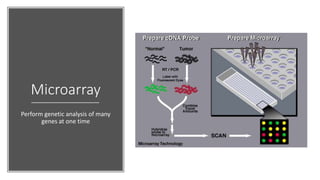
Microarray
Perform genetic analysis of many
genes at one time
DNA Sequencing
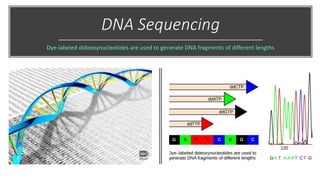
Dye-labeled dideoxynucleotides are used to generate DNA fragments of different lengths
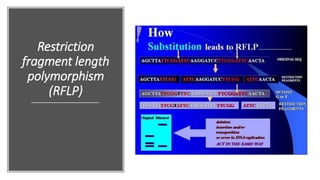
Restriction
fragment length
polymorphism
(RFLP)
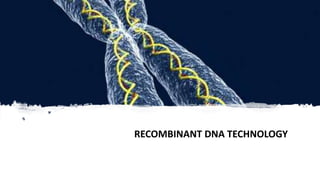
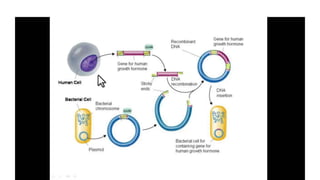
RECOMBINANT DNA TECHNOLOGY
Some cool PCR links
• The Dolan DNA Learning Center:
Link to Dolan DNA Learning Center's PCR Animation
This site provides a nice step by step guide to how DNA is copied in PCR reaction.
• DNA Interactive:
Link to DNAi
This site is FULL of cool stuff! Two 3-D animation videos relevant to this Powerpoint presentation are:
• The DNA Replication animation (to get to this, click on the above link, then click on “code”, then
click on “copying the code”, then click on “putting it together”, and finally click on “replication”).
• The PCR animation (to get to this, click on the above link, then click on “manipulation”, then
click on “techniques”, the click on “amplifying” and then finally click on “PCR animation”).

Diagnostic techniques for genetic disorders

  • 1.
    Diagnostic techniques forgenetic disorders & Recombinant DNA Technologies Dr Sehrish ahmed
  • 2.
    Objectives CAUSES OF GENETICPROBLEMS TYPES OF DIAGNOSTIC TECHNIQUES UNDERSTANDING DIFFERENT TECHNIQUES AND THEIR IMPLICATION IN CLINICAL PRACTICE
  • 3.
    • Genetic diseasesare usually categorized into • Single-gene (mendelians disorder) • Chromosomal (chromosomal disorders) • Multi-factorial disorders (mix with environmental factor)
  • 4.
    Categories of genetictesting cytogenetic testing molecular testing
  • 5.
    CYTOGENIC TESTS: FLUORESCENCE INSITU HYBRIDIZATION (FISH) 01 SPECIAL KARYOTYPING 02
  • 6.
  • 7.
    Applications • To detectchromosomal aberrations (additions, deletions, insertions, inversions, copy number, translocations). • Used in prenatal diagnosis (of Down syndrome etc.) and cancer diagnosis (to detect TATAs and TSTAs).
  • 8.
    Karyotyping Easier interpretation andbetter resolution Types of chromosome painting: 1. Whole chromosome painting probe (WPP) 2. Chromosome arm painting probes (APP) 3. Chromosome terminal band painting probes (TPP) 4. Chromosome enumeration probes (CEP; paints near centromere)
  • 9.
  • 10.
    Match the Following (basedon the type of chromosome painting) 1. Chromosome enumeration probes 2. Whole chromosome painting probe 3. Chromosome arm painting probes 4. Chromosome terminal band painting probes A B C D
  • 11.
  • 12.
    TECHNIQUES • It combineslaboratory medicine with molecular genetics to develop DNA/RNA-based analytical methods for monitoring human pathologies. • A wide range of methods has been used for mutation detection • Known mutation • PCR • DNA Microarray • DNA Sequence • Unknown mutation • SSCP • DGGE • RFLP
  • 13.
  • 14.
    Overview of PCR 1.Temperature Cycling • Denaturation 94° • Annealing 55° • Extension 72° 2. Every Cycle DNA between primers is duplicated
  • 15.
  • 16.
    Link to DolanDNA Learning Center's PCR Animation
  • 17.
    PCR and Disease Some diseases thatcan be diagnosed with the help of PCR: Huntington's disease cystic fibrosis Human immunodeficiency virus
  • 18.
    Cystic Fibrosis (CF) CF iscaused by mutations in the cystic fibrosis transmembrane conductance regulator (CTFR) gene. In non-CF individuals, the CTFR gene codes for a protein that is a chloride ion channel and is involved in the production of sweat, digestive juices and mucus. In CF individuals, mutations in the CTFR gene lead to thick mucous secretions in the lungs and subsequent persistent bacterial infections. The presence of CTFR mutations in a individual can be detected by performing PCR and sequencing on that individual’s DNA.
  • 20.
    Real-Time PCR in Gene Expression Analysis Example:BRCA1 Expression Profiling BRCA1 is a gene involved in tumor suppression. BRCA1 controls the expression of other genes. In order to monitor level of expression of BRCA1, real-time PCR is used. DNA mRNA Protein BRCA1
  • 21.
    Real-Time PCR in Disease Management Example: HIVTreatment Drug treatment for HIV infection often depends on monitoring the “viral load”. Real-Time PCR allows for direct measurement of the amount of the virus RNA in the patient. Virus RNA
  • 22.
    Microarray Perform genetic analysisof many genes at one time
  • 23.
    DNA Sequencing Dye-labeled dideoxynucleotidesare used to generate DNA fragments of different lengths
  • 24.
  • 25.
  • 28.
    Some cool PCRlinks • The Dolan DNA Learning Center: Link to Dolan DNA Learning Center's PCR Animation This site provides a nice step by step guide to how DNA is copied in PCR reaction. • DNA Interactive: Link to DNAi This site is FULL of cool stuff! Two 3-D animation videos relevant to this Powerpoint presentation are: • The DNA Replication animation (to get to this, click on the above link, then click on “code”, then click on “copying the code”, then click on “putting it together”, and finally click on “replication”). • The PCR animation (to get to this, click on the above link, then click on “manipulation”, then click on “techniques”, the click on “amplifying” and then finally click on “PCR animation”).