This presentation can be
        found at:
 Powerpoint:
 http://

 Notes:
 http://
Educational Technology
        and the
  Developing World

      Peter
      Takach
      EDPS 422
Educational
Technology
Key Questions
Does integration of educational
technology narrow or widen
socioeconomic gaps?

Is educational technology a tool
of de-colonization or a tool of
re-colonization?
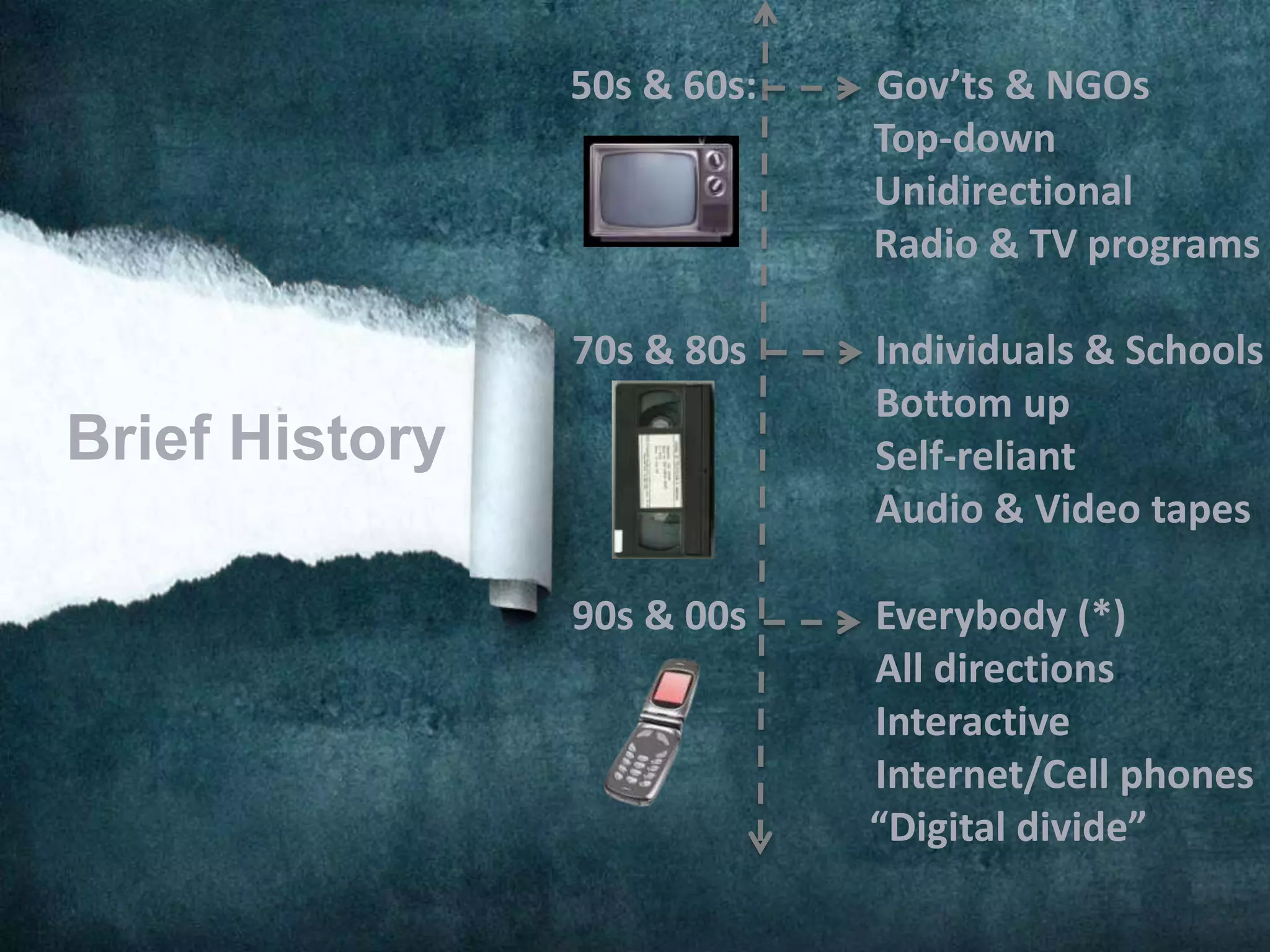
50s & 60s:   Gov’ts & NGOs
                             Top-down
                             Unidirectional
                             Radio & TV programs

                70s & 80s    Individuals & Schools
                             Bottom up
Brief History                Self-reliant
                             Audio & Video tapes

                90s & 00s    Everybody (*)
                             All directions
                             Interactive
                             Internet/Cell phones
                             “Digital divide”
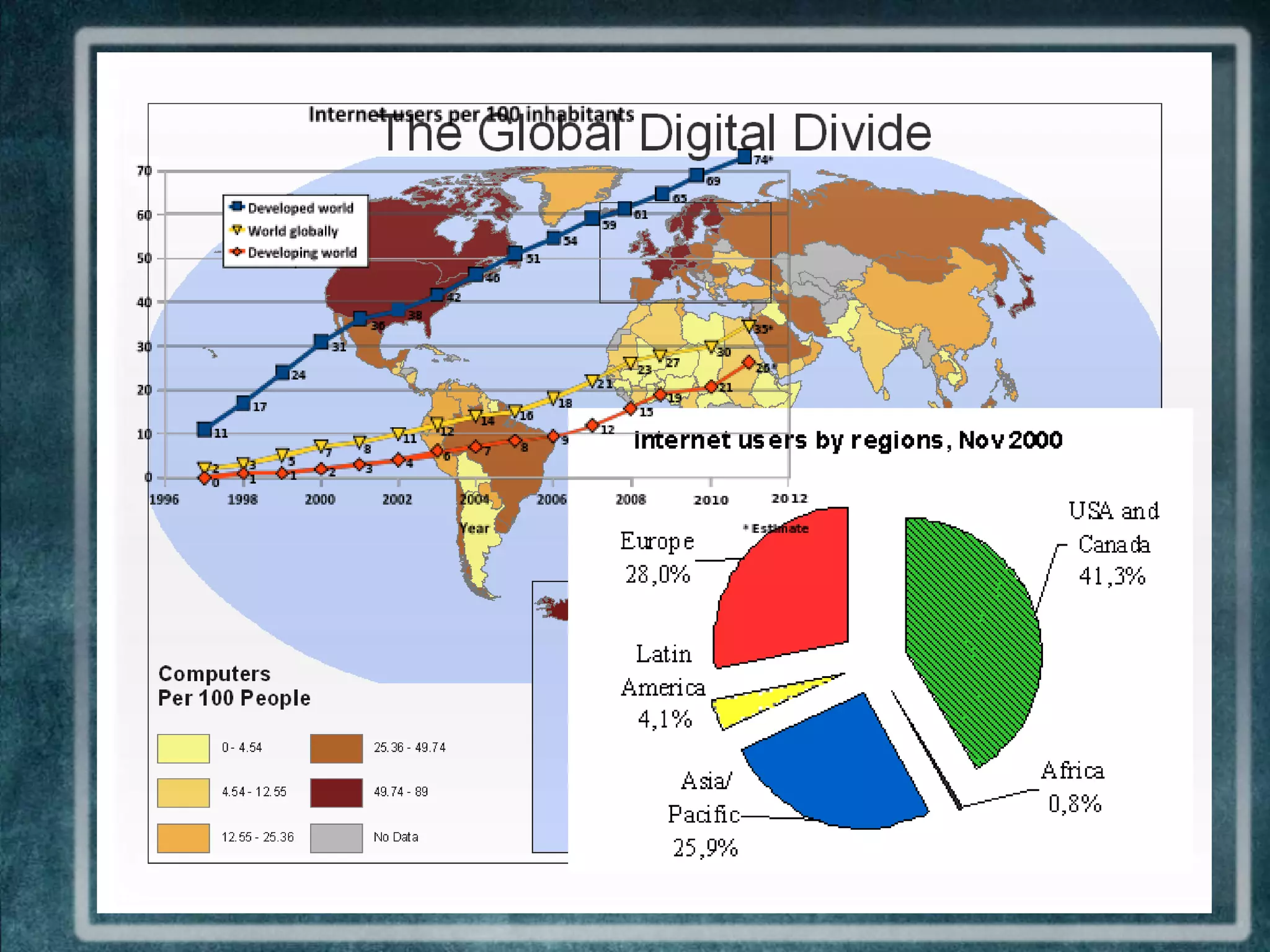
Digital Divide
                      ESTIMATED WORLD TECHNOLOGY USE (CIA Worldbook)
Country         Population (2012) Cell Phones (2009) % of Pop Internet Users (2009)   % of Pop
China                1,343,239,923       986,253,000     73%            389,000,000       29%
India                1,205,073,612       893,862,000     74%             61,338,000         5%
United States          313,847,465       290,300,000     92%            245,000,000       78%
Nigeria                170,123,740        95,167,000     56%             43,989,000       26%
Brazil                 199,321,413        24,435,800     12%             75,982,000       38%
Canada                  34,300,083        27,387,000     80%             26,960,000       79%
Afghanistan             30,419,928        17,558,000     58%              1,000,000         3%
Indonesia              248,645,008       249,800,000    100%             20,000,000         8%
Haiti                    9,801,664         4,200,000     43%              1,000,000       10%
Somalia                 10,085,638           655,000       6%               106,000         0%
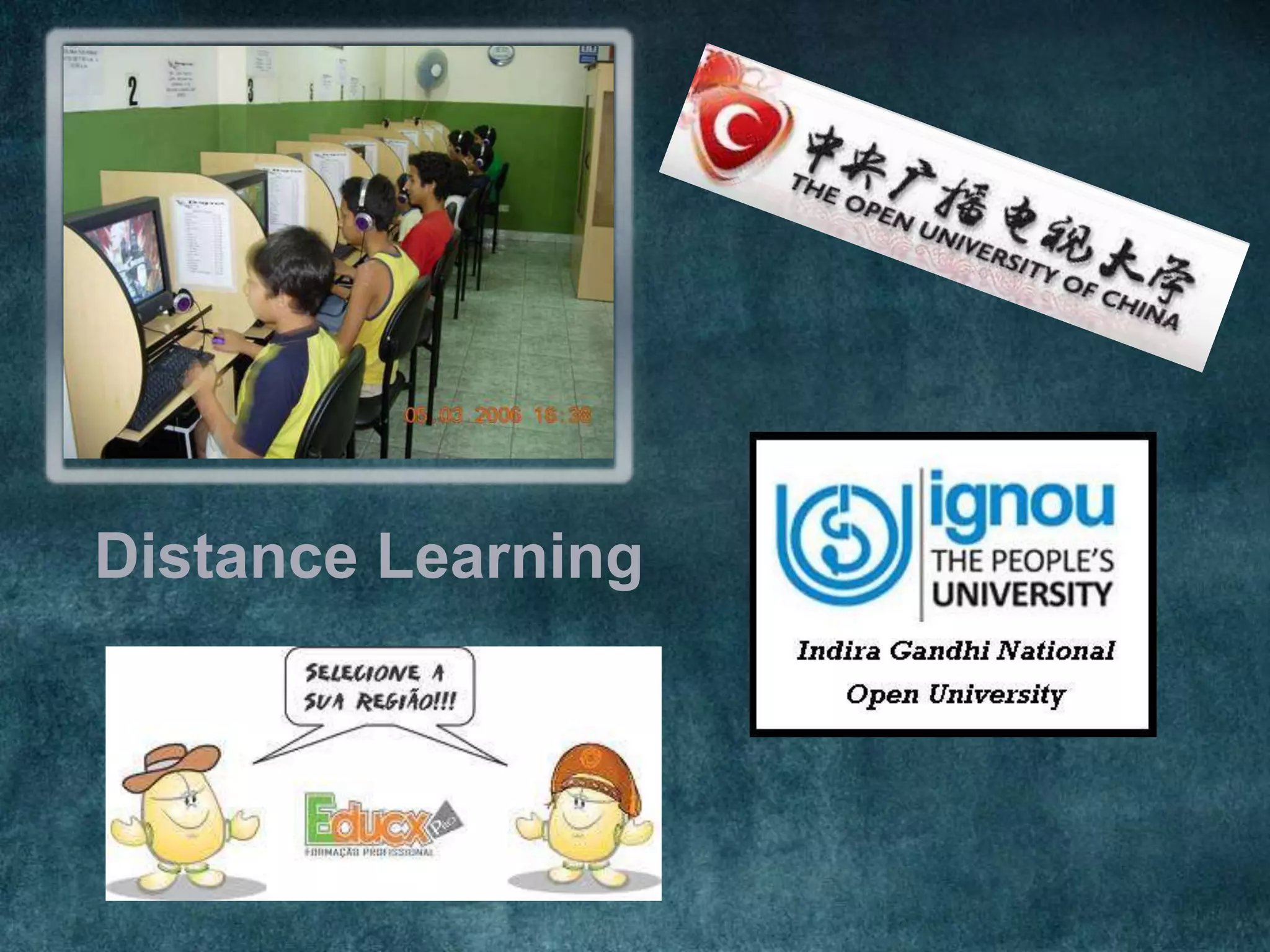
Distance Learning
Equal playing field


   Limited financial
   resources           Limited Teacher
                       Education

Lack of Local
Content
Accessibility
                       Technical/Infrastructural
                       Issues
   Limited financial
   resources                  Limited Teacher
                              Education

Lack of Local
Content
The answer to the
                 global education crisis

                           Or

               “technologically Utopian
One Laptop Per development scheme”?
Child Project
• Founded in 2004 in America

• Mission: “to provide each child
  with a rugged, low-cost, low-power,
  connected laptop”

• “The gods must be crazy”
  approach

• XO laptop: 209 US$

One Laptop Per
Child Project
• First country to equip
  100% of primary
  students with laptops in
  2009
• 395,000 primary students
• Lack of training and
  support
• Only 21% of teachers
  report using these a
  daily or near daily basis


One Laptop Per
Child Project: URUGUAY
M-Learning
                               ESTIMATED WORLD TECHNOLOGY USE (CIA Worldbook)
                        Country        Population (2012) Cell Phones (2009) % of Pop
• Over 6 billion cell       • M-learning is the use of cell
                        China               1,343,239,923       986,253,000     73%
                        India               1,205,073,612       893,862,000     74%
  phone subscriptions         phones or other mobile
                        United States         313,847,465       290,300,000     92%
  (in a world of 7            devices for education
                        Nigeria               170,123,740        95,167,000     56%
                        Brazil                199,321,413        24,435,800     12%
  million).             Canada                 34,300,083        27,387,000     80%
                        Afghanistan            30,419,928        17,558,000     58%
                        Indonesia             248,645,008       249,800,000    100%
• Faster, cheaper and   Haiti
                                    • But again, challenges
                                                9,801,664         4,200,000     43%
                        Somalia                10,085,638           655,000       6%
  more reliable than                  such as accessibility,
  computers. Many have                data, and
  them already and know               infrastructure.
  how to use them. Mobile!
Discussion Questions
Does integration of educational
technology narrow or widen
socioeconomic gaps?

Is educational technology a tool
of de-colonization or a tool of
re-colonization?
Questions?
Sources
Banks, Ken. “Mobile Learning in Developing Countries:           Kamenetz, Anya. “Laptops For All Kids!” Fast Company 170
   Present Realities and Future Possibilities.” David Harper,       (2012): 62-66. Web. 16 Mar. 2013.
   ed. Education for a Digital World: Advice, Guidelines and    Kilker, Julian. “When and Where Appropriate: Lessons From
   Effective Practice From Around the Globe. Vancouver,             „Foreign‟ Contexts for the Pedagogical Use of Web-
   BC: BCcampus & Commonwealth of Learning, 2008.                   Based Technologies in the United States.” Robert Cole,
   51-60. Print.                                                    ed. Issues in Web-based Pedagogy: A Critical Primer.
Daniel, John. “The Expansion of Higher Education in the             Westport, CT: Greenwood Press, 2000. 65-79. Print.
   Developing World: The Contribution of Distance               Larson, Richard & Elizabeth Murray. “Open Educational
   Education.” ICT for Education, Development and Social            Resources For Blended Learning In High Schools:
   Justice. Charalambos Vrasidas, Michalinos Zembylas, &            Overcoming Impediments In Developing Countries.”
   Gene Glass, eds. Charlotte, NC: Information Age                  Journal of Asynchronous Learning Networks 12.1 (2008):
   Publishing, 2009. 53-64. Print.                                  85-103. Web. 17 Mar. 2013.
Dougherty, Audubon. “Rural Peru's Transition To Wireless |      OLPC Foundation. “About the Project.” One Laptop Per
   Internet: A Case Study On The Challenges And Potentials         Child. OLPC Foundation, 2012. Web. Web. 16 Mar. 2013.
   Of ICT Entrepreneurship In The Developing World.”            Sekiwu, Denis. "E-Learning For University Effectiveness In
   International Journal Of Technology, Knowledge & Society        The Developing World." Online Submission (2010): Web.
   6.2 (2010): 119. Web. 16 Mar. 2013.                             16 Mar. 2013.
Fischmann, Gustavo & José Romero. “E-Hopes and Public           Vrasidas, Charalambos, Michalinos Zembylas, & Gene
   Education in Latin America.” ICT for Education,                 Glass. “ICT for Development: Challenges and
   Development and Social Justice. Charalambos Vrasidas,           Perspectives.” ICT for Education, Development and
   Michalinos Zembylas, & Gene Glass, eds. Charlotte, NC:          Social Justice. Charalambos Vrasidas, Michalinos
   Information Age Publishing, 2009. 33-52. Print.                 Zembylas, & Gene Glass, eds. Charlotte, NC: Information
Gulati, Shalni. “Technology-Enhanced Learning In                   Age Publishing, 2009. 3-16. Print.
   Developing Nations: A Review.” International Review Of       Warschauer, Mark, and Morgan Ames. “Can One Laptop
   Research In Open And Distance Learning 9.1 (2008):              Per Child Save The World's Poor?.” Journal Of
   1-16. Web. 16 Mar. 2013.                                        International Affairs 64.1 (2010): 33-51. Web. 16 Mar.
Iqbal, Shakeel & Ijaz Qureshi. “M-Learning Adoption: A             2013.
   Perspective From A Developing Country.” International
   Review Of Research In Open & Distance Learning 13.3
   (2012): 147-164. Web. 17 Mar. 2013.

TakachPres

  • 1.
    This presentation canbe found at: Powerpoint: http:// Notes: http://
  • 2.
    Educational Technology and the Developing World Peter Takach EDPS 422
  • 3.
  • 4.
    Key Questions Does integrationof educational technology narrow or widen socioeconomic gaps? Is educational technology a tool of de-colonization or a tool of re-colonization?
  • 5.
    50s & 60s: Gov’ts & NGOs Top-down Unidirectional Radio & TV programs 70s & 80s Individuals & Schools Bottom up Brief History Self-reliant Audio & Video tapes 90s & 00s Everybody (*) All directions Interactive Internet/Cell phones “Digital divide”
  • 6.
    Digital Divide ESTIMATED WORLD TECHNOLOGY USE (CIA Worldbook) Country Population (2012) Cell Phones (2009) % of Pop Internet Users (2009) % of Pop China 1,343,239,923 986,253,000 73% 389,000,000 29% India 1,205,073,612 893,862,000 74% 61,338,000 5% United States 313,847,465 290,300,000 92% 245,000,000 78% Nigeria 170,123,740 95,167,000 56% 43,989,000 26% Brazil 199,321,413 24,435,800 12% 75,982,000 38% Canada 34,300,083 27,387,000 80% 26,960,000 79% Afghanistan 30,419,928 17,558,000 58% 1,000,000 3% Indonesia 248,645,008 249,800,000 100% 20,000,000 8% Haiti 9,801,664 4,200,000 43% 1,000,000 10% Somalia 10,085,638 655,000 6% 106,000 0%
  • 7.
  • 8.
    Equal playing field Limited financial resources Limited Teacher Education Lack of Local Content
  • 9.
    Accessibility Technical/Infrastructural Issues Limited financial resources Limited Teacher Education Lack of Local Content
  • 10.
    The answer tothe global education crisis Or “technologically Utopian One Laptop Per development scheme”? Child Project
  • 11.
    • Founded in2004 in America • Mission: “to provide each child with a rugged, low-cost, low-power, connected laptop” • “The gods must be crazy” approach • XO laptop: 209 US$ One Laptop Per Child Project
  • 12.
    • First countryto equip 100% of primary students with laptops in 2009 • 395,000 primary students • Lack of training and support • Only 21% of teachers report using these a daily or near daily basis One Laptop Per Child Project: URUGUAY
  • 13.
    M-Learning ESTIMATED WORLD TECHNOLOGY USE (CIA Worldbook) Country Population (2012) Cell Phones (2009) % of Pop • Over 6 billion cell • M-learning is the use of cell China 1,343,239,923 986,253,000 73% India 1,205,073,612 893,862,000 74% phone subscriptions phones or other mobile United States 313,847,465 290,300,000 92% (in a world of 7 devices for education Nigeria 170,123,740 95,167,000 56% Brazil 199,321,413 24,435,800 12% million). Canada 34,300,083 27,387,000 80% Afghanistan 30,419,928 17,558,000 58% Indonesia 248,645,008 249,800,000 100% • Faster, cheaper and Haiti • But again, challenges 9,801,664 4,200,000 43% Somalia 10,085,638 655,000 6% more reliable than such as accessibility, computers. Many have data, and them already and know infrastructure. how to use them. Mobile!
  • 14.
    Discussion Questions Does integrationof educational technology narrow or widen socioeconomic gaps? Is educational technology a tool of de-colonization or a tool of re-colonization?
  • 15.
  • 16.
    Sources Banks, Ken. “MobileLearning in Developing Countries: Kamenetz, Anya. “Laptops For All Kids!” Fast Company 170 Present Realities and Future Possibilities.” David Harper, (2012): 62-66. Web. 16 Mar. 2013. ed. Education for a Digital World: Advice, Guidelines and Kilker, Julian. “When and Where Appropriate: Lessons From Effective Practice From Around the Globe. Vancouver, „Foreign‟ Contexts for the Pedagogical Use of Web- BC: BCcampus & Commonwealth of Learning, 2008. Based Technologies in the United States.” Robert Cole, 51-60. Print. ed. Issues in Web-based Pedagogy: A Critical Primer. Daniel, John. “The Expansion of Higher Education in the Westport, CT: Greenwood Press, 2000. 65-79. Print. Developing World: The Contribution of Distance Larson, Richard & Elizabeth Murray. “Open Educational Education.” ICT for Education, Development and Social Resources For Blended Learning In High Schools: Justice. Charalambos Vrasidas, Michalinos Zembylas, & Overcoming Impediments In Developing Countries.” Gene Glass, eds. Charlotte, NC: Information Age Journal of Asynchronous Learning Networks 12.1 (2008): Publishing, 2009. 53-64. Print. 85-103. Web. 17 Mar. 2013. Dougherty, Audubon. “Rural Peru's Transition To Wireless | OLPC Foundation. “About the Project.” One Laptop Per Internet: A Case Study On The Challenges And Potentials Child. OLPC Foundation, 2012. Web. Web. 16 Mar. 2013. Of ICT Entrepreneurship In The Developing World.” Sekiwu, Denis. "E-Learning For University Effectiveness In International Journal Of Technology, Knowledge & Society The Developing World." Online Submission (2010): Web. 6.2 (2010): 119. Web. 16 Mar. 2013. 16 Mar. 2013. Fischmann, Gustavo & José Romero. “E-Hopes and Public Vrasidas, Charalambos, Michalinos Zembylas, & Gene Education in Latin America.” ICT for Education, Glass. “ICT for Development: Challenges and Development and Social Justice. Charalambos Vrasidas, Perspectives.” ICT for Education, Development and Michalinos Zembylas, & Gene Glass, eds. Charlotte, NC: Social Justice. Charalambos Vrasidas, Michalinos Information Age Publishing, 2009. 33-52. Print. Zembylas, & Gene Glass, eds. Charlotte, NC: Information Gulati, Shalni. “Technology-Enhanced Learning In Age Publishing, 2009. 3-16. Print. Developing Nations: A Review.” International Review Of Warschauer, Mark, and Morgan Ames. “Can One Laptop Research In Open And Distance Learning 9.1 (2008): Per Child Save The World's Poor?.” Journal Of 1-16. Web. 16 Mar. 2013. International Affairs 64.1 (2010): 33-51. Web. 16 Mar. Iqbal, Shakeel & Ijaz Qureshi. “M-Learning Adoption: A 2013. Perspective From A Developing Country.” International Review Of Research In Open & Distance Learning 13.3 (2012): 147-164. Web. 17 Mar. 2013.

Editor's Notes

  • #2 Your audience didn’t show up to read your 60 page on screen dissertation.
  • #3 …five simple rules for creating world-changing presentations.
  • #4 But also change the world. (Well, at least your part of the world.)
  • #5 Brainstorm graphics that will effectively communicate your message…
  • #6 To view this presentation, first, turn up your volume and second, launch the self-running slide show.
  • #7 But also change the world. (Well, at least your part of the world.)
  • #8 But also change the world. (Well, at least your part of the world.)
  • #9 To view this presentation, first, turn up your volume and second, launch the self-running slide show.
  • #10 To view this presentation, first, turn up your volume and second, launch the self-running slide show.
  • #11 But also change the world. (Well, at least your part of the world.)
  • #12 But also change the world. (Well, at least your part of the world.)
  • #13 But also change the world. (Well, at least your part of the world.)
  • #14 Your audience didn’t show up to read your 60 page on screen dissertation.
  • #15 Brainstorm graphics that will effectively communicate your message…
  • #16 Why not do it the way you are used to?
  • #17 Why not do it the way you are used to?