Education in
  Africa
 ICT from the bottom up
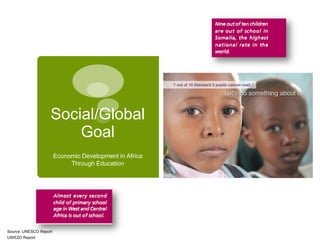
Social/Global
                        Goal
                        Economic Development in Africa
                             Through Education


Source: UNESCO Report
UWEZO Report
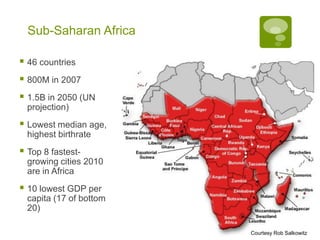
Sub-Saharan Africa

 46 countries
 800M in 2007
 1.5B in 2050 (UN
  projection)
 Lowest median age,
  highest birthrate
 Top 8 fastest-
  growing cities 2010
  are in Africa
 10 lowest GDP per
  capita (17 of bottom
  20)

                         Courtesy Rob Salkowitz
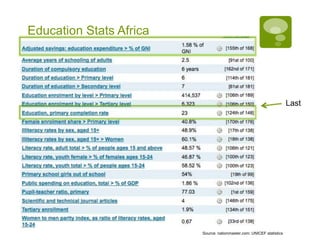
Education Stats Africa


                                                                       Last


                         Source: nationmaster.com: UNICEF statistics
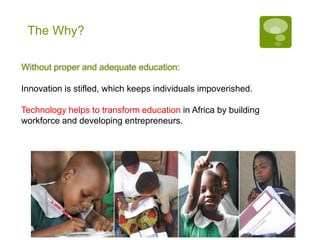
The Why?

Without proper and adequate education:

Innovation is stifled, which keeps individuals impoverished.

Technology helps to transform education in Africa by building
workforce and developing entrepreneurs.
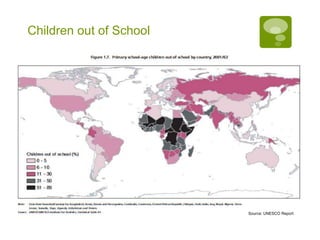
Children out of School


                         Source: UNESCO Report
Some tough #’s


Primary school enrollment is among the lowest in the world.

In Sub-Saharan Africa, only two-thirds of children who start
primary school reach the final grade.

40% of Africans over the age of 15, and 50% of women above the age of
25 are illiterate.

Average of 40 pupils per teacher in sub-Saharan Africa, 60 to 1 in some


                                                                    Source: UNICEF
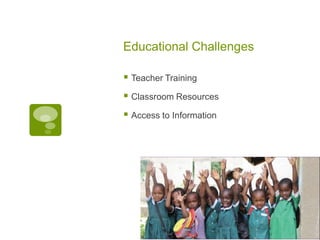
Educational Challenges

 Teacher Training
 Classroom Resources
 Access to Information
Potential Solutions
               Digital Media & ICT Solutions

 Increasing access to technology helps improve the quality of
  teaching and the learning experience for students on the front end

 Efficient management and resourcing of schools by governments
  on the back end.
Leveraging Point

 Large support and financial, institutional
  backing

 Low cost infrastructure and a ubiquity across
  nations

 Access to mobile and other forms of
  technology

 Successful piloting programs
 Education
Failure is not an option

 Pilot programs have not been able to run
 Some argue that there are not enough pilot
  programs implemented.

 Money and resources are low.
 ICT infrastructure is not ubiquitous.
 Corruption and lethargy
Tech
       Transforming
       Education in Africa

        Interconnection Uganda
        CyberSmart Africa
        Nokia MoMaths
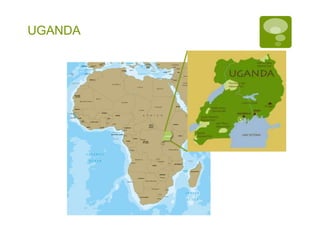
UGANDA
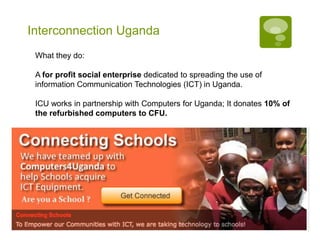
Interconnection Uganda
 What they do:

 A for profit social enterprise dedicated to spreading the use of
 information Communication Technologies (ICT) in Uganda.

 ICU works in partnership with Computers for Uganda; It donates 10% of
 the refurbished computers to CFU.
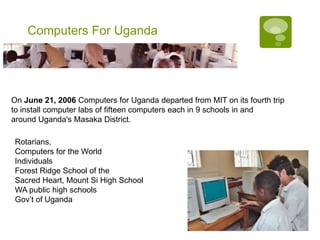
Computers For Uganda


On June 21, 2006 Computers for Uganda departed from MIT on its fourth trip
to install computer labs of fifteen computers each in 9 schools in and
around Uganda's Masaka District.

Rotarians,
Computers for the World
Individuals
Forest Ridge School of the
Sacred Heart, Mount Si High School
WA public high schools
Gov’t of Uganda
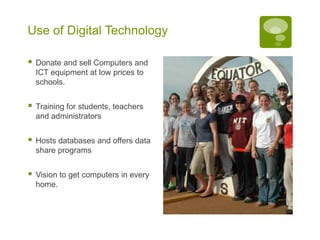
Use of Digital Technology

   Donate and sell Computers and
    ICT equipment at low prices to
    schools.


   Training for students, teachers
    and administrators


   Hosts databases and offers data
    share programs


   Vision to get computers in every
    home.
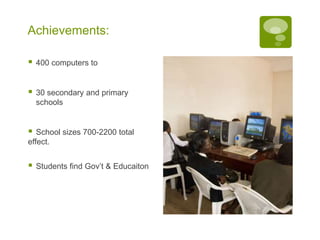
Achievements:

   400 computers to


   30 secondary and primary
    schools


  School sizes 700-2200 total
effect.


   Students find Gov’t & Educaiton
Social Value

Pay it forward

Teach a man to fish

Use technology to raise skill level of workers in Uganda

Empower youth to become entrepreneurs
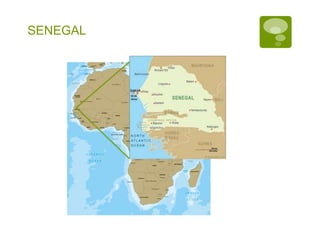
SENEGAL
CyberSmart Africa


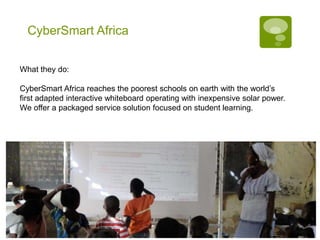
What they do:

CyberSmart Africa reaches the poorest schools on earth with the world’s
first adapted interactive whiteboard operating with inexpensive solar power.
We offer a packaged service solution focused on student learning.
CyberSmart Africa

21st Century Skills for Education:

    Disruptive
    Innovative
    Scalable
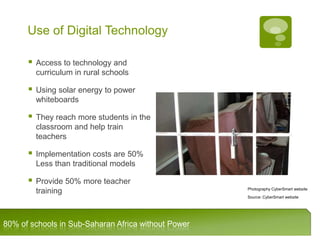
Use of Digital Technology

         Access to technology and
          curriculum in rural schools

         Using solar energy to power
          whiteboards

         They reach more students in the
          classroom and help train
          teachers

         Implementation costs are 50%
          Less than traditional models

         Provide 50% more teacher
                                                     Photography CyberSmart website
          training
                                                     Source: CyberSmart website


80% of schools in Sub-Saharan Africa without Power
Social Value


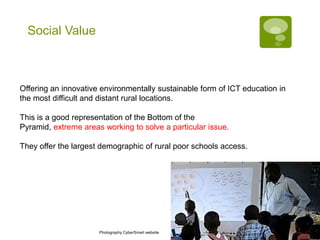
Offering an innovative environmentally sustainable form of ICT education in
the most difficult and distant rural locations.

This is a good representation of the Bottom of the
Pyramid, extreme areas working to solve a particular issue.

They offer the largest demographic of rural poor schools access.


                      Photography CyberSmart website
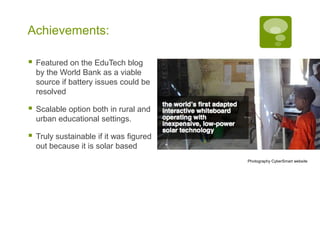
Achievements:

   Featured on the EduTech blog
    by the World Bank as a viable
    source if battery issues could be
    resolved

   Scalable option both in rural and
    urban educational settings.

   Truly sustainable if it was figured
    out because it is solar based
                                          Photography CyberSmart website
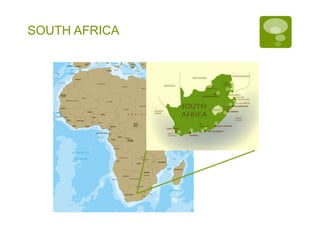
SOUTH AFRICA
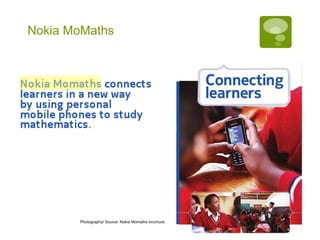
Nokia MoMaths


       Photography/ Source Nokia Momaths brochure
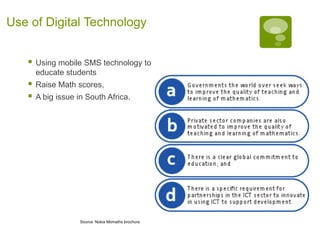
Use of Digital Technology


      Using mobile SMS technology to
       educate students
      Raise Math scores,
      A big issue in South Africa.


                    Source Nokia Momaths brochure
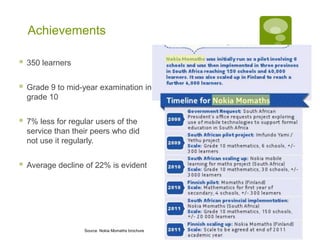
Achievements

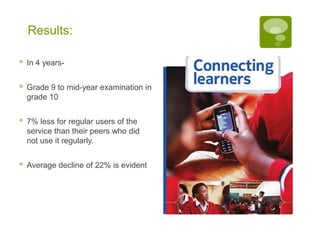
   350 learners


   Grade 9 to mid-year examination in
    grade 10


   7% less for regular users of the
    service than their peers who did
    not use it regularly.


   Average decline of 22% is evident


                    Source Nokia Momaths brochure
Results:

   In 4 years-


   Grade 9 to mid-year examination in
    grade 10


   7% less for regular users of the
    service than their peers who did
    not use it regularly.


   Average decline of 22% is evident
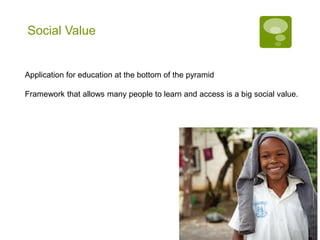
Social Value


Application for education at the bottom of the pyramid

Framework that allows many people to learn and access is a big social value.
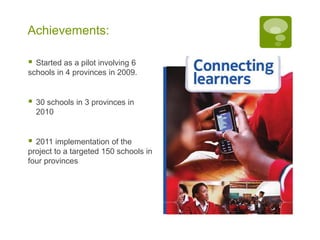
Achievements:

 Started as a pilot involving 6
schools in 4 provinces in 2009.


   30 schools in 3 provinces in
    2010


 2011 implementation of the
project to a targeted 150 schools in
four provinces
Progress on the Issues

 mLearning offers cheap and easy
    access to information

 Helps at the bottom of the pyramid
   Uniting Government, private and NGOs Is
    important to help expand educational
    initiatives

   Training for teachers is important

   Enhancing administrational support for
    teachers
What still needs to be done?


 Piloting Program support

 Replicate Successful Programs

 Scalability
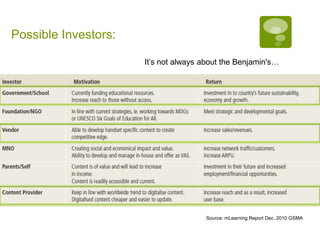
Possible Investors:

                      It’s not always about the Benjamin's…


                                      Source: mLearning Report Dec. 2010 GSMA
Developed World Implications

   If it works in extreme environments then it can work
    anywhere.

   The use of a solar power interactive whiteboard can
    offer considerable savings to power bills and also be
    implemented in schools around the world.

   M learning is a viable option for access to information
    anywhere

   As a learning tool in all areas with access to mobile
    phone connection

   Viable low cost solution to economically depressed
    areas within the western world and helps bypass the
    use of smartphones, an expensive alternative to
    mobile technology in the western world

Technology in African Education: ICT from the Bottom Up

  • 1.
    Education in Africa ICT from the bottom up
  • 2.
    Social/Global Goal Economic Development in Africa Through Education Source: UNESCO Report UWEZO Report
  • 3.
    Sub-Saharan Africa  46countries  800M in 2007  1.5B in 2050 (UN projection)  Lowest median age, highest birthrate  Top 8 fastest- growing cities 2010 are in Africa  10 lowest GDP per capita (17 of bottom 20) Courtesy Rob Salkowitz
  • 4.
    Education Stats Africa Last Source: nationmaster.com: UNICEF statistics
  • 5.
    The Why? Without properand adequate education: Innovation is stifled, which keeps individuals impoverished. Technology helps to transform education in Africa by building workforce and developing entrepreneurs.
  • 6.
    Children out ofSchool Source: UNESCO Report
  • 7.
    Some tough #’s Primaryschool enrollment is among the lowest in the world. In Sub-Saharan Africa, only two-thirds of children who start primary school reach the final grade. 40% of Africans over the age of 15, and 50% of women above the age of 25 are illiterate. Average of 40 pupils per teacher in sub-Saharan Africa, 60 to 1 in some Source: UNICEF
  • 8.
    Educational Challenges  TeacherTraining  Classroom Resources  Access to Information
  • 9.
    Potential Solutions Digital Media & ICT Solutions  Increasing access to technology helps improve the quality of teaching and the learning experience for students on the front end  Efficient management and resourcing of schools by governments on the back end.
  • 10.
    Leveraging Point  Largesupport and financial, institutional backing  Low cost infrastructure and a ubiquity across nations  Access to mobile and other forms of technology  Successful piloting programs  Education
  • 11.
    Failure is notan option  Pilot programs have not been able to run  Some argue that there are not enough pilot programs implemented.  Money and resources are low.  ICT infrastructure is not ubiquitous.  Corruption and lethargy
  • 12.
    Tech Transforming Education in Africa  Interconnection Uganda  CyberSmart Africa  Nokia MoMaths
  • 13.
  • 14.
    Interconnection Uganda Whatthey do: A for profit social enterprise dedicated to spreading the use of information Communication Technologies (ICT) in Uganda. ICU works in partnership with Computers for Uganda; It donates 10% of the refurbished computers to CFU.
  • 15.
    Computers For Uganda OnJune 21, 2006 Computers for Uganda departed from MIT on its fourth trip to install computer labs of fifteen computers each in 9 schools in and around Uganda's Masaka District. Rotarians, Computers for the World Individuals Forest Ridge School of the Sacred Heart, Mount Si High School WA public high schools Gov’t of Uganda
  • 16.
    Use of DigitalTechnology  Donate and sell Computers and ICT equipment at low prices to schools.  Training for students, teachers and administrators  Hosts databases and offers data share programs  Vision to get computers in every home.
  • 17.
    Achievements:  400 computers to  30 secondary and primary schools  School sizes 700-2200 total effect.  Students find Gov’t & Educaiton
  • 18.
    Social Value Pay itforward Teach a man to fish Use technology to raise skill level of workers in Uganda Empower youth to become entrepreneurs
  • 19.
  • 20.
    CyberSmart Africa What theydo: CyberSmart Africa reaches the poorest schools on earth with the world’s first adapted interactive whiteboard operating with inexpensive solar power. We offer a packaged service solution focused on student learning.
  • 21.
    CyberSmart Africa 21st CenturySkills for Education:  Disruptive  Innovative  Scalable
  • 22.
    Use of DigitalTechnology  Access to technology and curriculum in rural schools  Using solar energy to power whiteboards  They reach more students in the classroom and help train teachers  Implementation costs are 50% Less than traditional models  Provide 50% more teacher Photography CyberSmart website training Source: CyberSmart website 80% of schools in Sub-Saharan Africa without Power
  • 23.
    Social Value Offering aninnovative environmentally sustainable form of ICT education in the most difficult and distant rural locations. This is a good representation of the Bottom of the Pyramid, extreme areas working to solve a particular issue. They offer the largest demographic of rural poor schools access. Photography CyberSmart website
  • 24.
    Achievements:  Featured on the EduTech blog by the World Bank as a viable source if battery issues could be resolved  Scalable option both in rural and urban educational settings.  Truly sustainable if it was figured out because it is solar based Photography CyberSmart website
  • 25.
  • 26.
    Nokia MoMaths Photography/ Source Nokia Momaths brochure
  • 27.
    Use of DigitalTechnology  Using mobile SMS technology to educate students  Raise Math scores,  A big issue in South Africa. Source Nokia Momaths brochure
  • 28.
    Achievements  350 learners  Grade 9 to mid-year examination in grade 10  7% less for regular users of the service than their peers who did not use it regularly.  Average decline of 22% is evident Source Nokia Momaths brochure
  • 29.
    Results:  In 4 years-  Grade 9 to mid-year examination in grade 10  7% less for regular users of the service than their peers who did not use it regularly.  Average decline of 22% is evident
  • 30.
    Social Value Application foreducation at the bottom of the pyramid Framework that allows many people to learn and access is a big social value.
  • 31.
    Achievements:  Started asa pilot involving 6 schools in 4 provinces in 2009.  30 schools in 3 provinces in 2010  2011 implementation of the project to a targeted 150 schools in four provinces
  • 32.
    Progress on theIssues  mLearning offers cheap and easy access to information  Helps at the bottom of the pyramid  Uniting Government, private and NGOs Is important to help expand educational initiatives  Training for teachers is important  Enhancing administrational support for teachers
  • 33.
    What still needsto be done?  Piloting Program support  Replicate Successful Programs  Scalability
  • 34.
    Possible Investors: It’s not always about the Benjamin's… Source: mLearning Report Dec. 2010 GSMA
  • 35.
    Developed World Implications  If it works in extreme environments then it can work anywhere.  The use of a solar power interactive whiteboard can offer considerable savings to power bills and also be implemented in schools around the world.  M learning is a viable option for access to information anywhere  As a learning tool in all areas with access to mobile phone connection  Viable low cost solution to economically depressed areas within the western world and helps bypass the use of smartphones, an expensive alternative to mobile technology in the western world

Editor's Notes

  • #2 Education & Workforce development: There is a need for better teachers with access to technology in both urban and rural areas of Africa. No matter where they are teachers and students need access to information and educational resources.
  • #12 Get bloggers name/ and a quote. Split up these with images and a little numbers and figures.
  • #13 May split these up with logo’s and imagery for each to give a little more visual context.
  • #18 This is a tricky question to answer precisely because it’s still in a pilot stage, this organization has been featured on
  • #25 This is a tricky question to answer precisely because it’s still in a pilot stage, this organization has been featured on
  • #28 Find numbers on Math scores in Africa
  • #29 Preliminary findings for 350 learners showed that the average shift in their individual results from grade 9 to mid-year examination in grde10 (where on average decline of 22% is evident) was 7% less for regular users of the service that that of their peers who did not use it regularly.
  • #30 Preliminary findings for 350 learners showed that the average shift in their individual results from grade 9 to mid-year examination in grde10 (where on average decline of 22% is evident) was 7% less for regular users of the service that that of their peers who did not use it regularly.
  • #32 This is a tricky question to answer precisely because it’s still in a pilot stage, this organization has been featured on
  • #34 Better batteries and proof of viability for scalability. Working on finding more. Infrastructure development is needed across Africa.Scalability and replicability, mobile coverage, handset availability, handset literacy, screen size; get more money behind pilot programs to see true effect