D Dr. Most. Rokshana Begum
Assistant Professor, Hepatology
Contents..
 Preamble
 Patient selection for TACE: Indication &
Contraindication
 Mechanism
 TACE Procedure
 TACE adverse effects
 Treatment Schedule
 TACE with other combinations
 Our Experiences
 Conclusion
Preamble
 Hepatocellular carcinoma (HCC) is one of the most
common cancers worldwide.
 Even with the breakthrough in preventive strategies,
and new diagnostic and treatment modalities,
incidence and fatality rates of HCC is climbing.
 Despite improved surveillance programs,
approximately 80% of patients with HCC have
intermediate- or advanced-stage disease at the time of
diagnosis where curative surgery is not possible.
Preamble cont..
 Transarterial Chemoembolization (TACE) is a
locoregional therapy regarded as a first-line treatment
in patients with intermediate-stage HCC.
 In real-world clinical practice, TACE also plays an
important role in early- and advanced-stage HCC.
 TACE is recommended as first line non-curative
therapy for non-surgical patients.
Patient selection for TACE
BCLC stage B (Intermediate stage) patients,
supported by EASL, AASLD, APASL, and JSH for
intermediate-stage HCC.
The BCLC staging system defines intermediate HCC as
 Presence of multifocal nodules
 >3 nodules or a maximum nodule diameter of >3 cm
 Preserved liver function
 No cancer related symptoms, i.e. ECOG 0.
 No macrovascular invasion or extrahepatic spread.
Zhong B.Y. et al: TACE for HCC
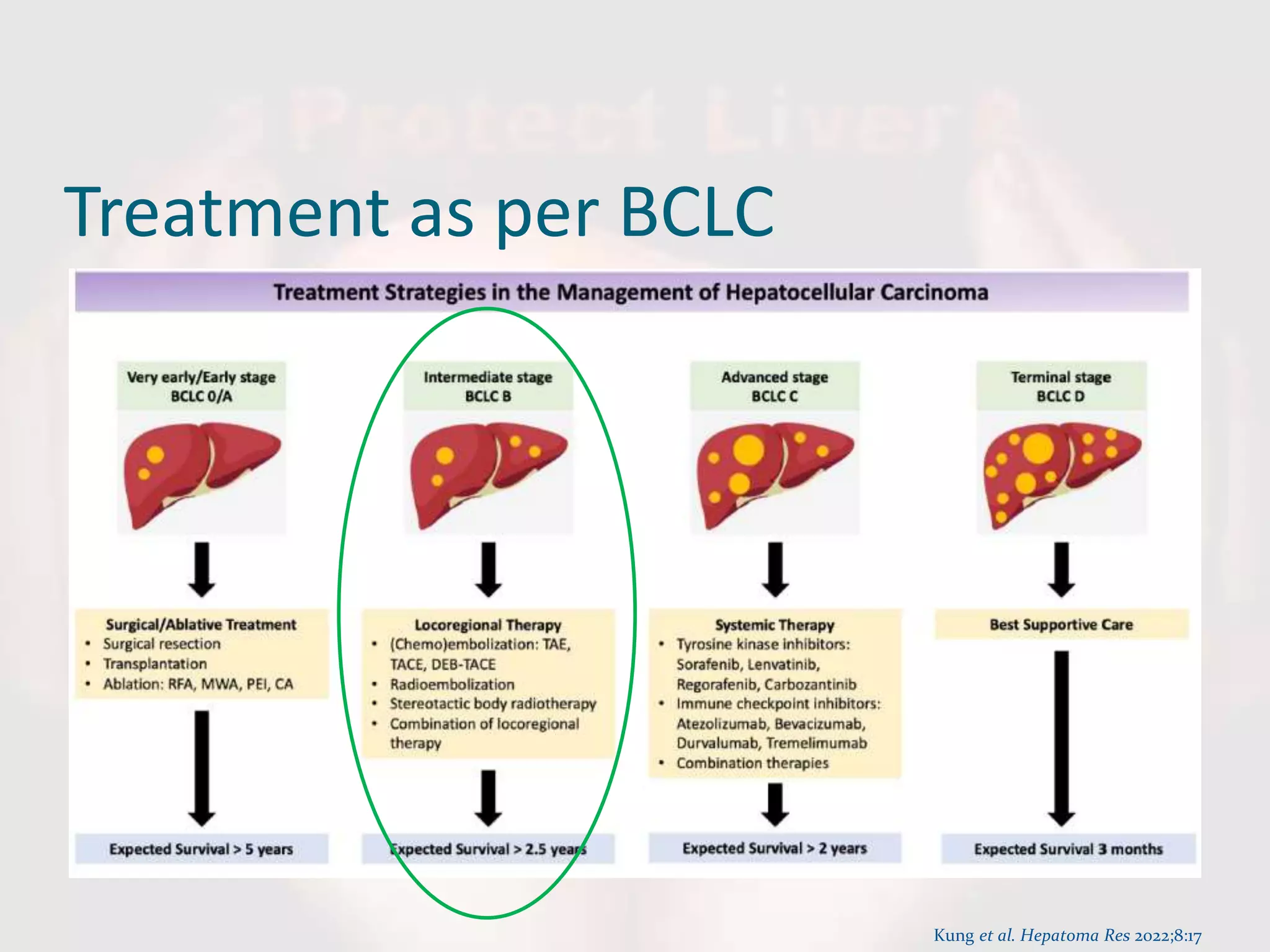
Treatment as per BCLC
Kung et al. Hepatoma Res 2022;8:17
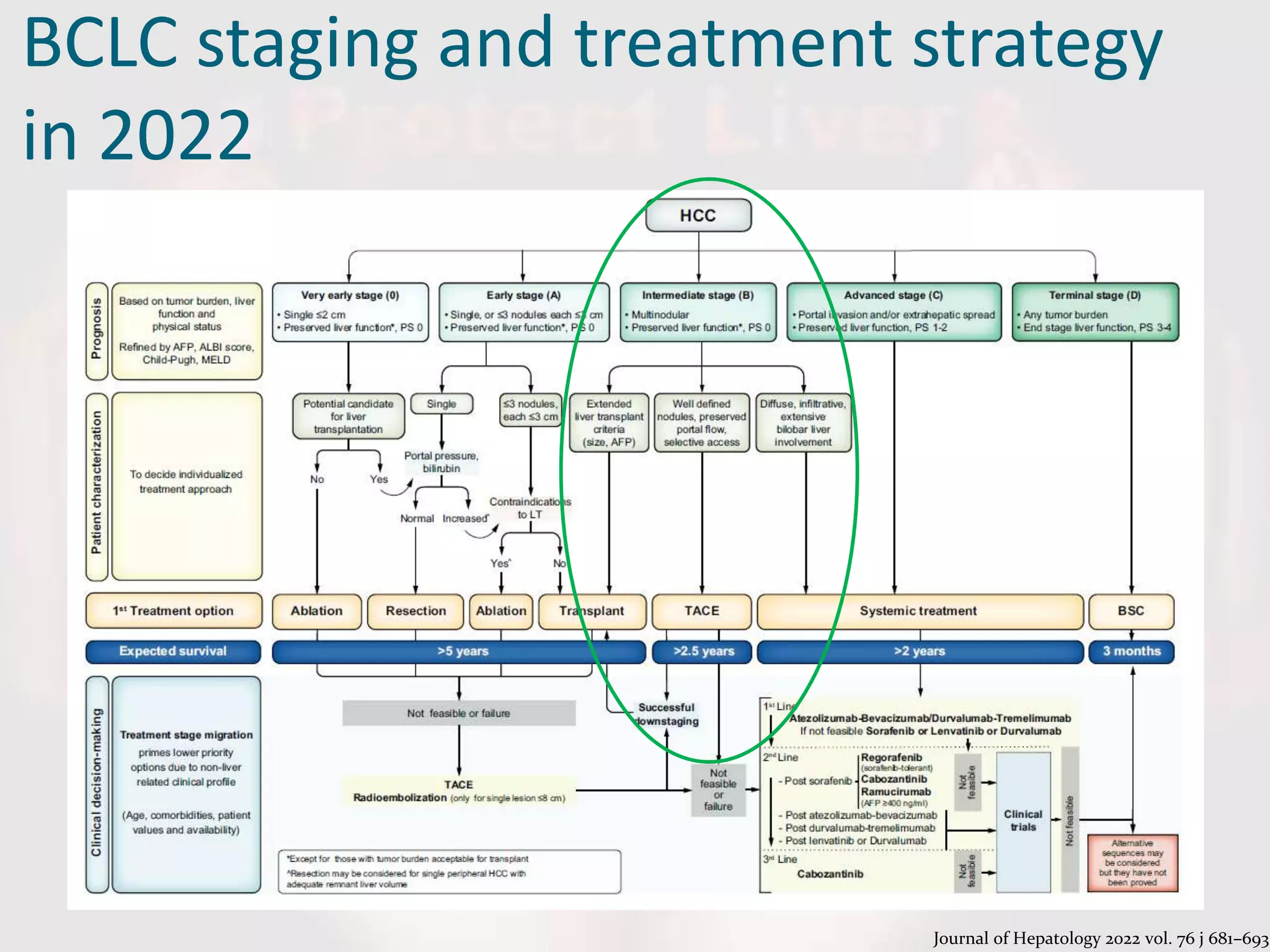
BCLC staging and treatment strategy
in 2022
Journal of Hepatology 2022 vol. 76 j 681–693
Patient selection for TACE cont..
 TACE is also used in patients with early-stage HCC as a
bridge to liver transplantation, Neoadjuvant
chemoembolization
 When liver transplantation, hepatic resection, and
image-guided ablation are not possible, in keeping
with the stage migration strategy
Journal of Hepatology 2018 vol. 69 j 182–236
Patient selection for TACE cont..
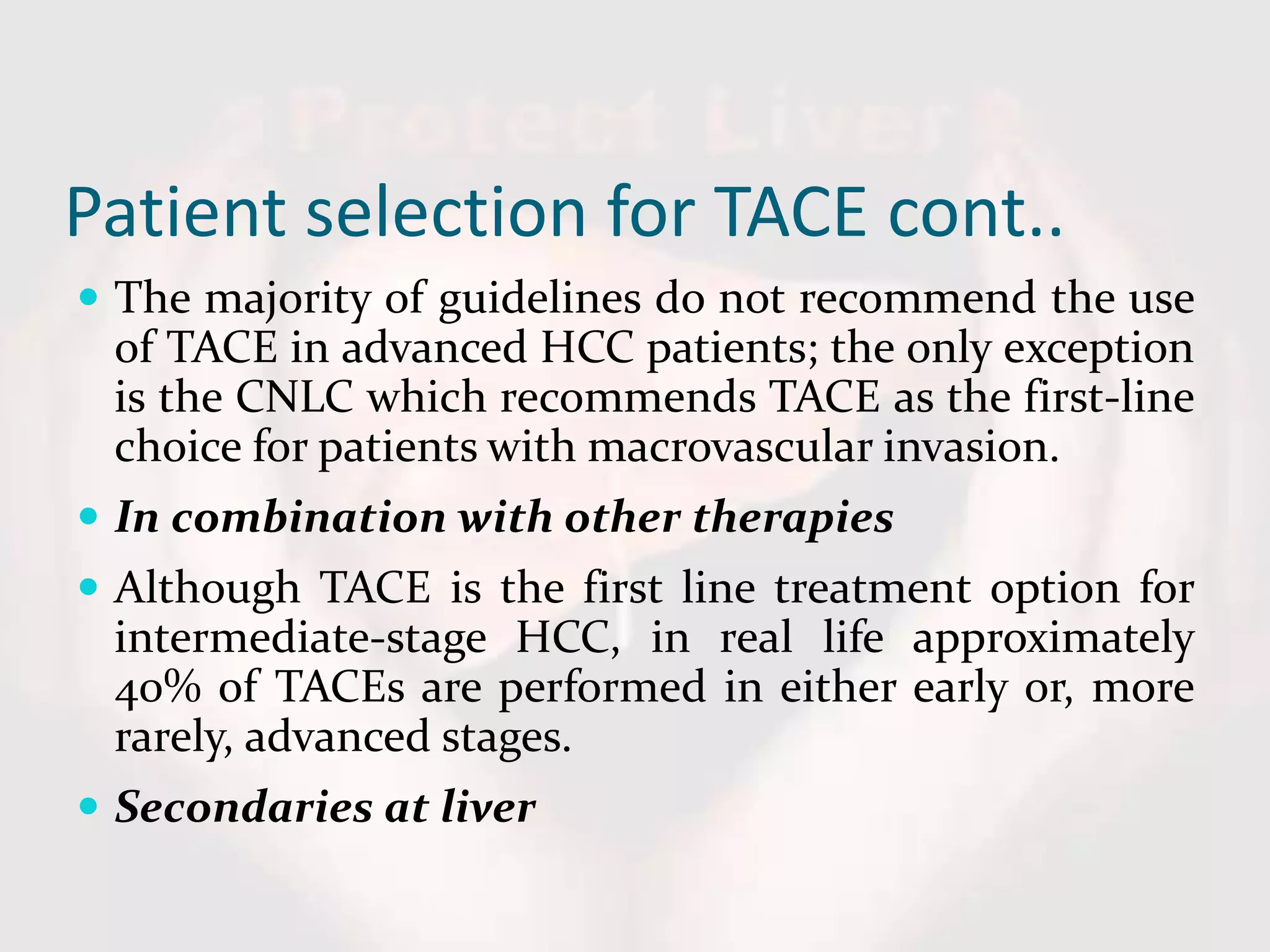
 The majority of guidelines do not recommend the use
of TACE in advanced HCC patients; the only exception
is the CNLC which recommends TACE as the first-line
choice for patients with macrovascular invasion.
 In combination with other therapies
 Although TACE is the first line treatment option for
intermediate-stage HCC, in real life approximately
40% of TACEs are performed in either early or, more
rarely, advanced stages.
 Secondaries at liver
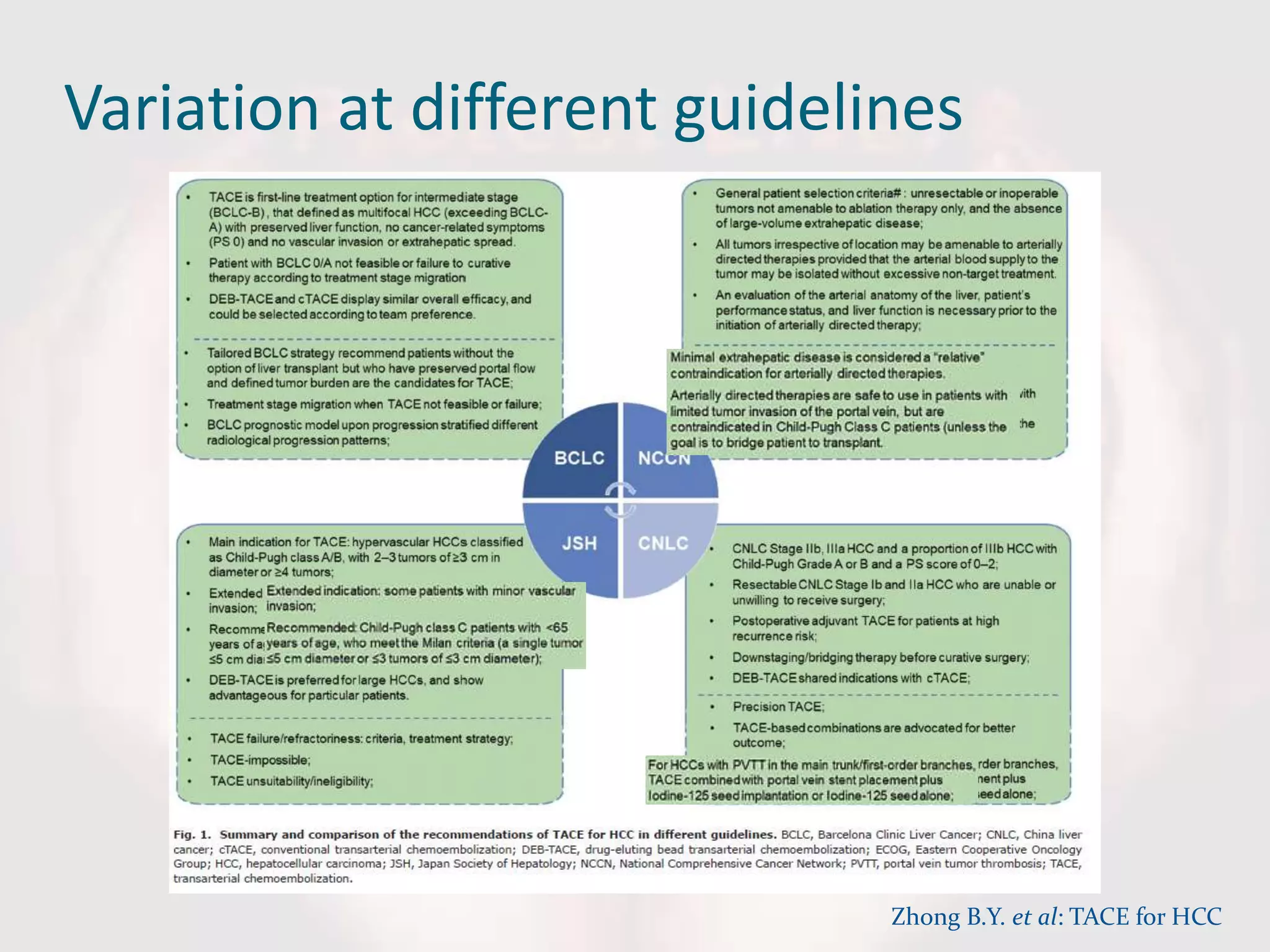
Variation at different guidelines
Zhong B.Y. et al: TACE for HCC
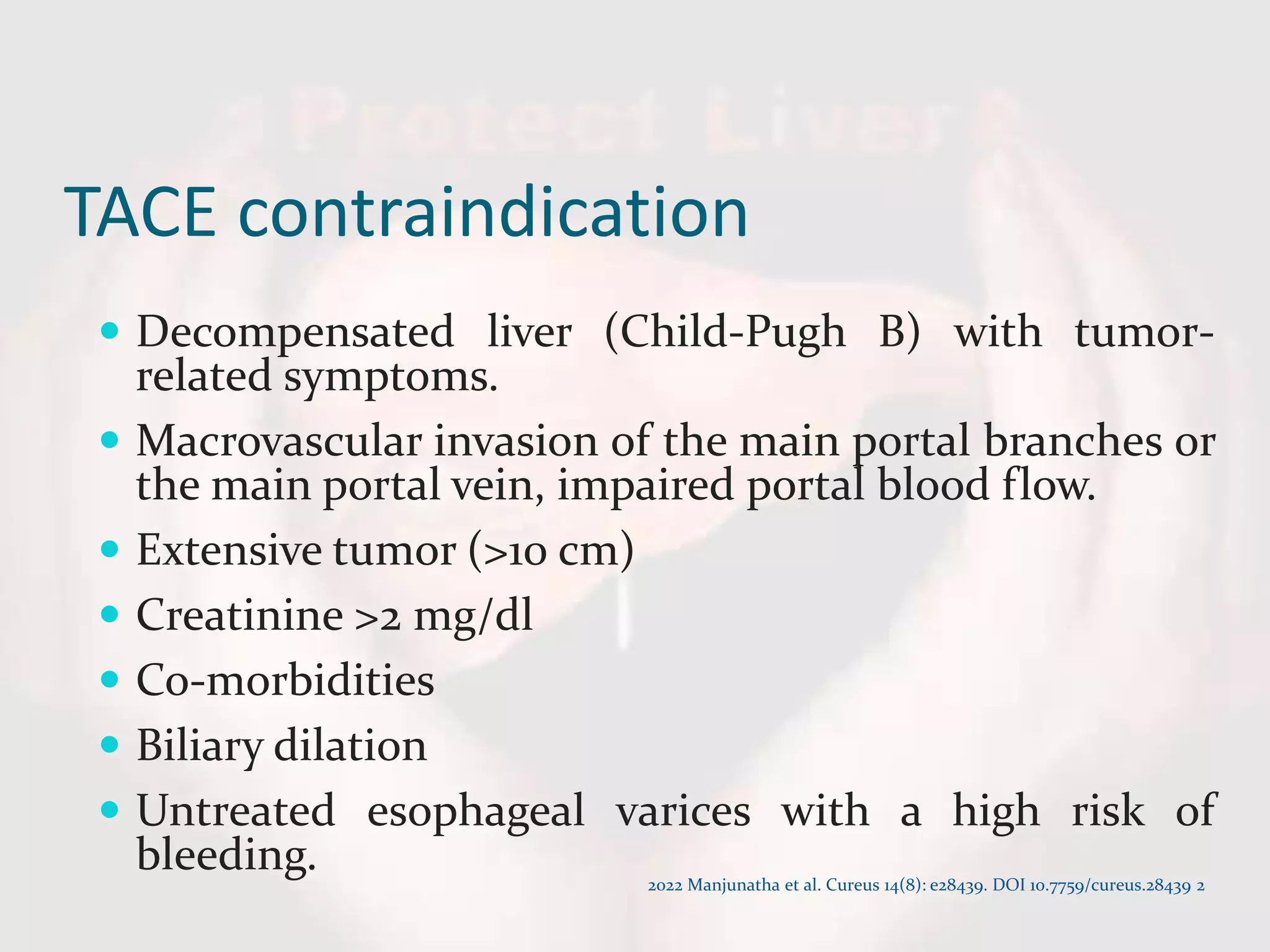
TACE contraindication
 Decompensated liver (Child-Pugh B) with tumor-
related symptoms.
 Macrovascular invasion of the main portal branches or
the main portal vein, impaired portal blood flow.
 Extensive tumor (>10 cm)
 Creatinine >2 mg/dl
 Co-morbidities
 Biliary dilation
 Untreated esophageal varices with a high risk of
bleeding. 2022 Manjunatha et al. Cureus 14(8): e28439. DOI 10.7759/cureus.28439 2
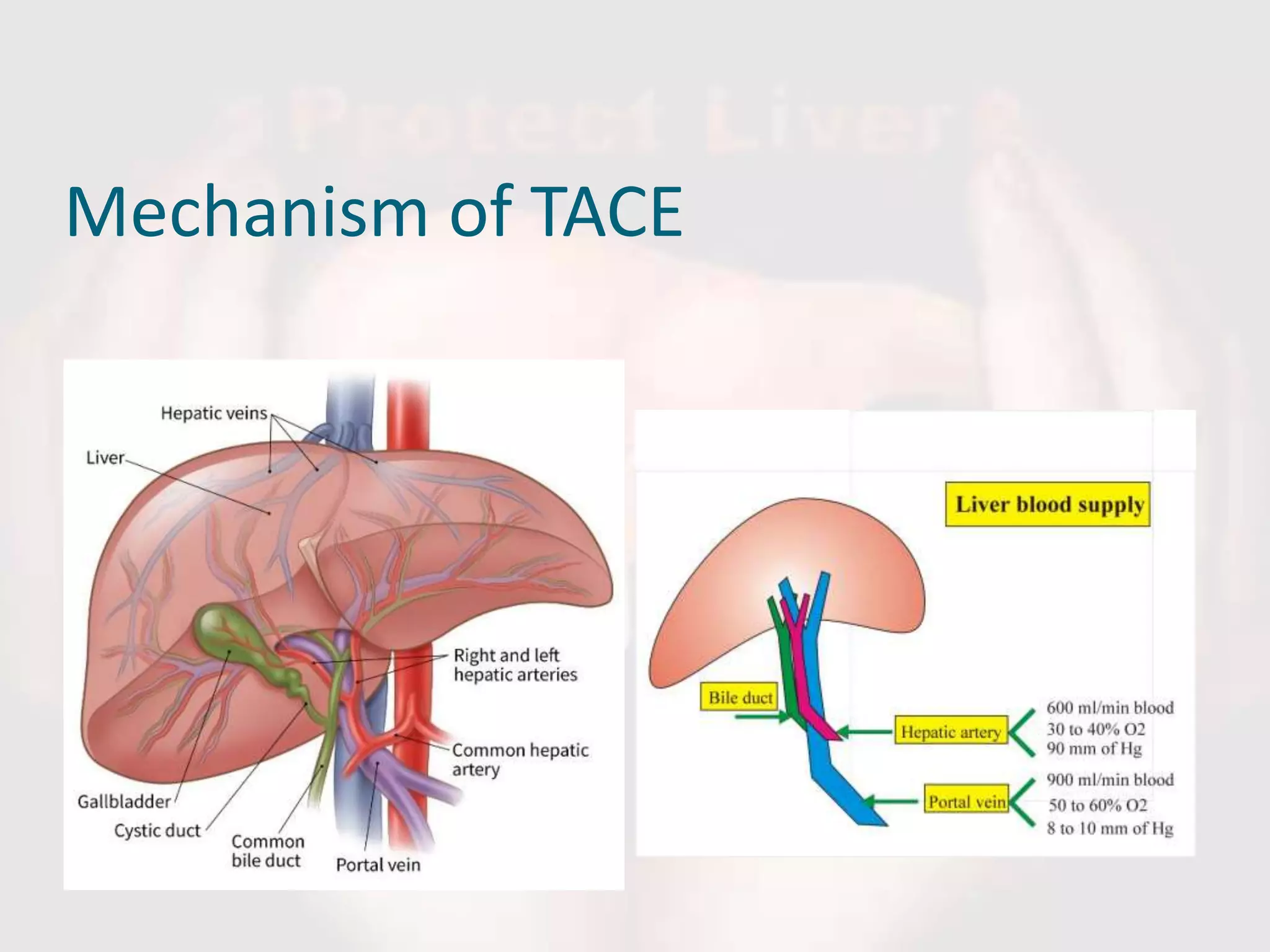
Mechanism of TACE
Mechanism of TACE ..
 The primary notion of TACE relies upon the concept of
the liver's dual blood supply
 Normal hepatocytes receive dual blood supply
predominantly from the portal vein
 The objective of transarterial embolization is to
selectively deprive arterial inflow to the tumour, which
causes ischaemic necrosis.
 Hepatocyte perfusion is then maintained by patent
portal vein.
2022 Manjunatha et al. Cureus 14(8): e28439. DOI 10.7759/cureus.28439 2
Mechanism of TACE cont..
 Mori et al. in 1966 were the first to perform hepatic
artery ligation to create ischemic necrosis of the tumor
leading to regression.
 Tumor embolization using embolic agents injected via
a percutaneous injection, was used by angiographers
in the early 1970s.
 Later in 1974, Doyon et al. were the first to perform and
describe TACE
2022 Manjunatha et al. Cureus 14(8): e28439. DOI 10.7759/cureus.28439 2
Mechanism of TACE cont..
 There are four main types of transarterial therapies:
 Transarterial embolization (or “bland” embolization,
TAE),
 Transarterial chemoembolization (TACE),
 TACE using drug-eluting beads (DEB-TACE)
 Transarterial radioembolization (TARE).
Kung et al. Hepatoma Res 2022;8:17
Procedure:
 An interventional radiologist or a hepatologist
usually performs TACE through a percutaneous
transarterial approach.
 Femoral artery on the right is punctured, and
under local anesthesia, an arterial sheath is placed
into the artery by Selinger's method
 A catheter is then introduced through the sheath;
a wire often aids the catheter into the arterial
system under imagining guidelines.
2022 Manjunatha et al. Cureus 14(8): e28439. DOI 10.7759/cureus.28439 2
Procedure cont..
 To reach the target branches that supply the tumor, a
micro catheter is then inserted through the common
hepatic artery and then the proper hepatic artery;
 After locating the feeding vessel, an iodized oil along
with cytotoxic drug, followed by embolization particles
is injected.
Procedure cont..
Procedure cont…
 Commonly used cytotoxic drugs in TACE are:
doxorubicin, cisplatin, epirubicin or miriplatin.
Idarubicin is under clinical trial.
 Carrier: Lipiodol
 Embolic agents: gel foam, micro particles
 At DEB-TACE, microspheres charged with cytotoxic
drugs are administered.
Procedure cont…
Adverse effects: 03 types
1. Intraoperative complications
2. Post Operative complications
3. Tumour lysis syndrome
Intraoperative complications:
 Allergic reactions
 Intraoperative bleeding
 Biliary cardiac reflex
Procedure cont..
Post operative complications:
 Postembolization syndrome (PES): 47.7% suffered from this.
Results in fever (17.2%), vomiting, liver enzyme abnormalities
(18.1%), abdominal pain(11%) , and nausea, vomiting (6%).
 Liver abscess,
 Acute cholecystitis, pancreatitis
 Upper gastrointestinal bleeding
 Liver and renal failure
 Myelosuppression
 Ectopic embolism
 Bile duct damage
Procedure cont..
Tumour lysis syndrome: Results from rapid destruction
of tumour cells, lead to-
 Renal insufficiency
 Metabolic disturbance
 Arrhythmias
 Seizures
 30-day mortality of 1%
 Overall mortality 0.6%
Kung et al. Hepatoma Res 2022;8:17
Treatment Schedule
Scheduled TACE & On demand TACE
 Aggressive Schedule like TACE every two months may
result liver failure and at present repeat TACE is
usually done if CT images Suggest viable tumour.
 TACE should not be repeated if substantial necrosis is
not achieved after two rounds or if there are
untreatable progression.
 If patient gets multiple session of TACE,
echcardiogram should be done and cumulative dose
should not exceed 450 mg/m2
Journal of Hepatology 2018 vol. 69 j 182–236
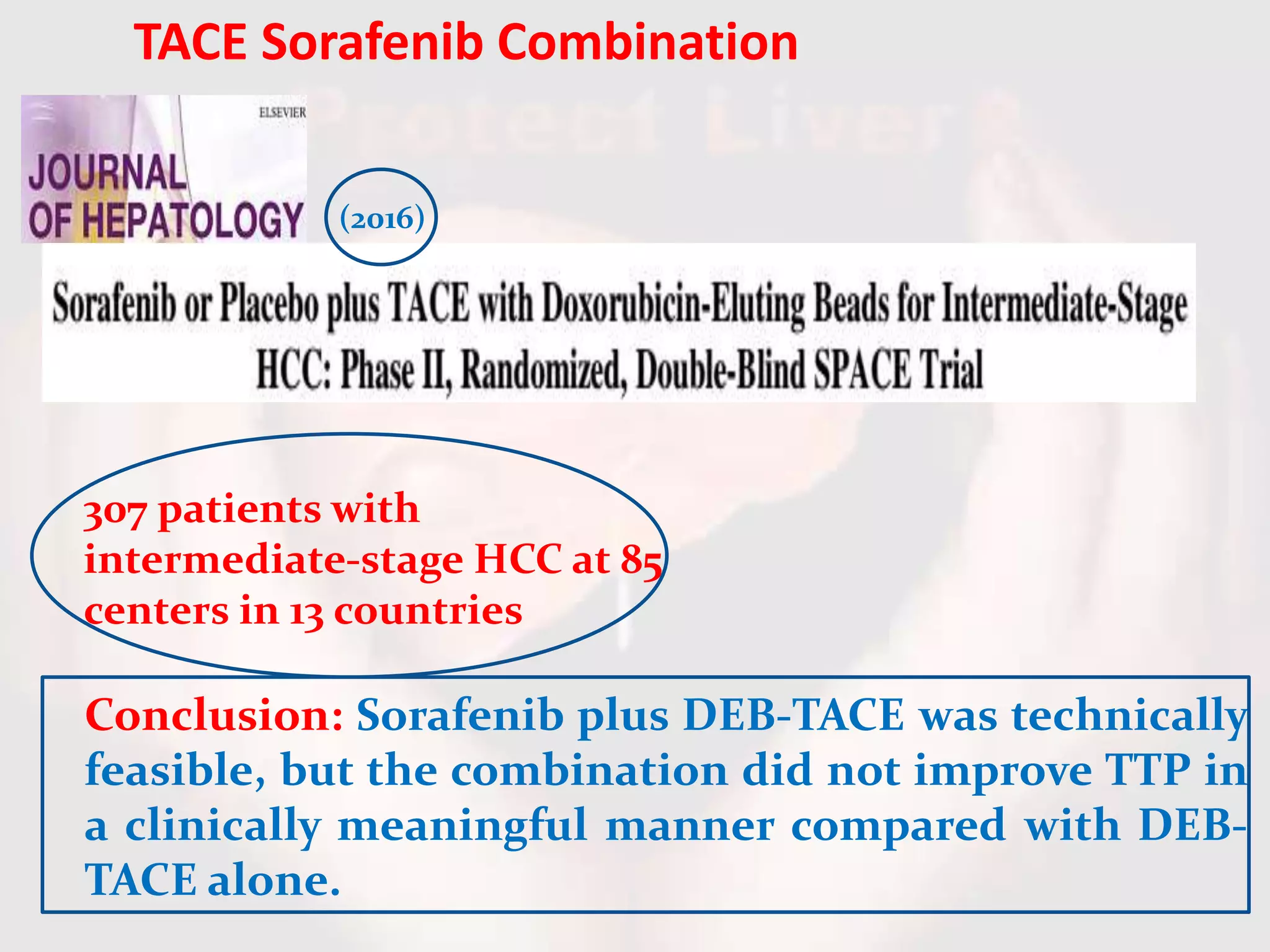
TACE Sorafenib Combination
307 patients with
intermediate-stage HCC at 85
centers in 13 countries
(2016)
Conclusion: Sorafenib plus DEB-TACE was technically
feasible, but the combination did not improve TTP in
a clinically meaningful manner compared with DEB-
TACE alone.
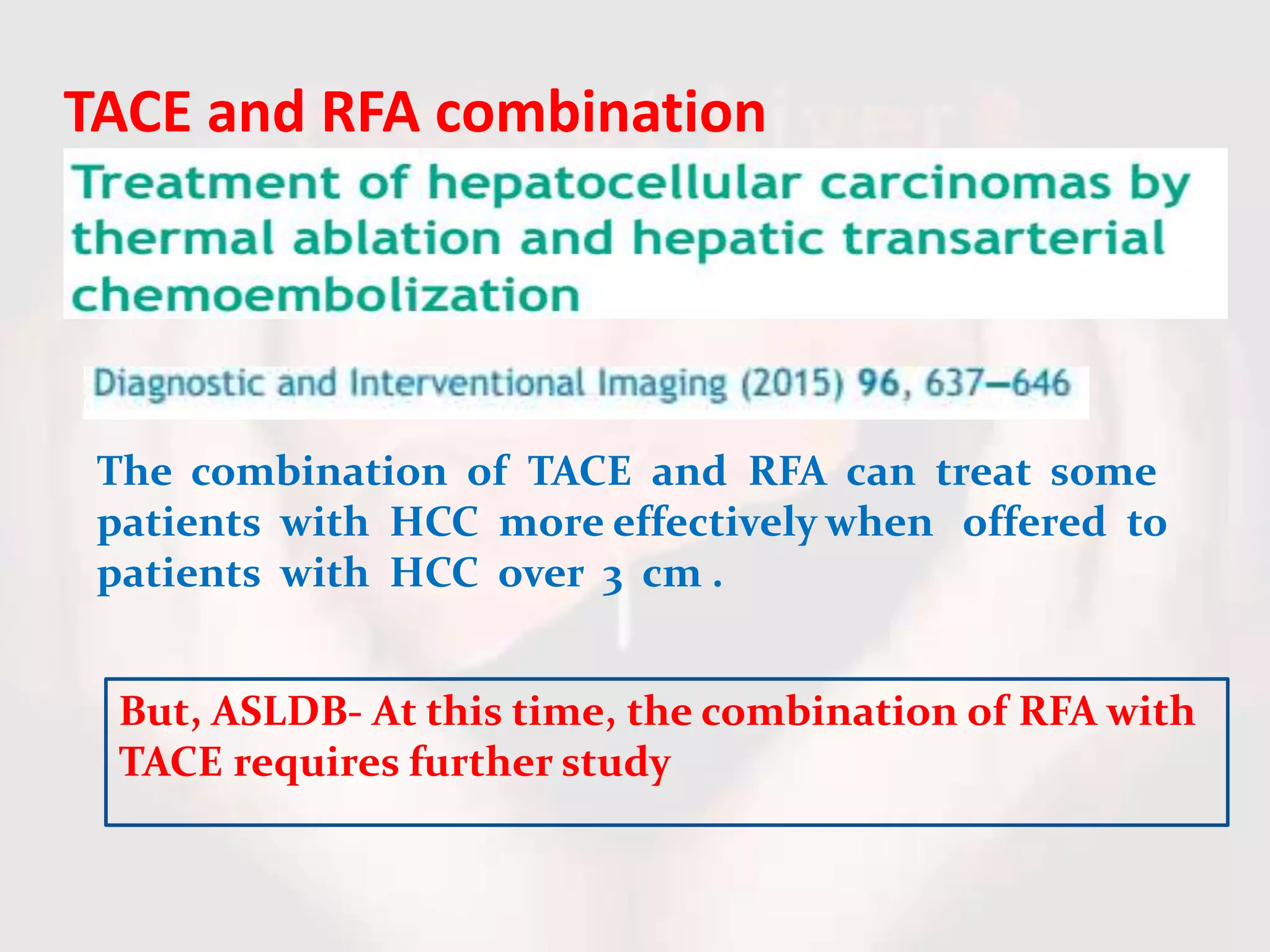
TACE and RFA combination
The combination of TACE and RFA can treat some
patients with HCC more effectively when offered to
patients with HCC over 3 cm .
But, ASLDB- At this time, the combination of RFA with
TACE requires further study
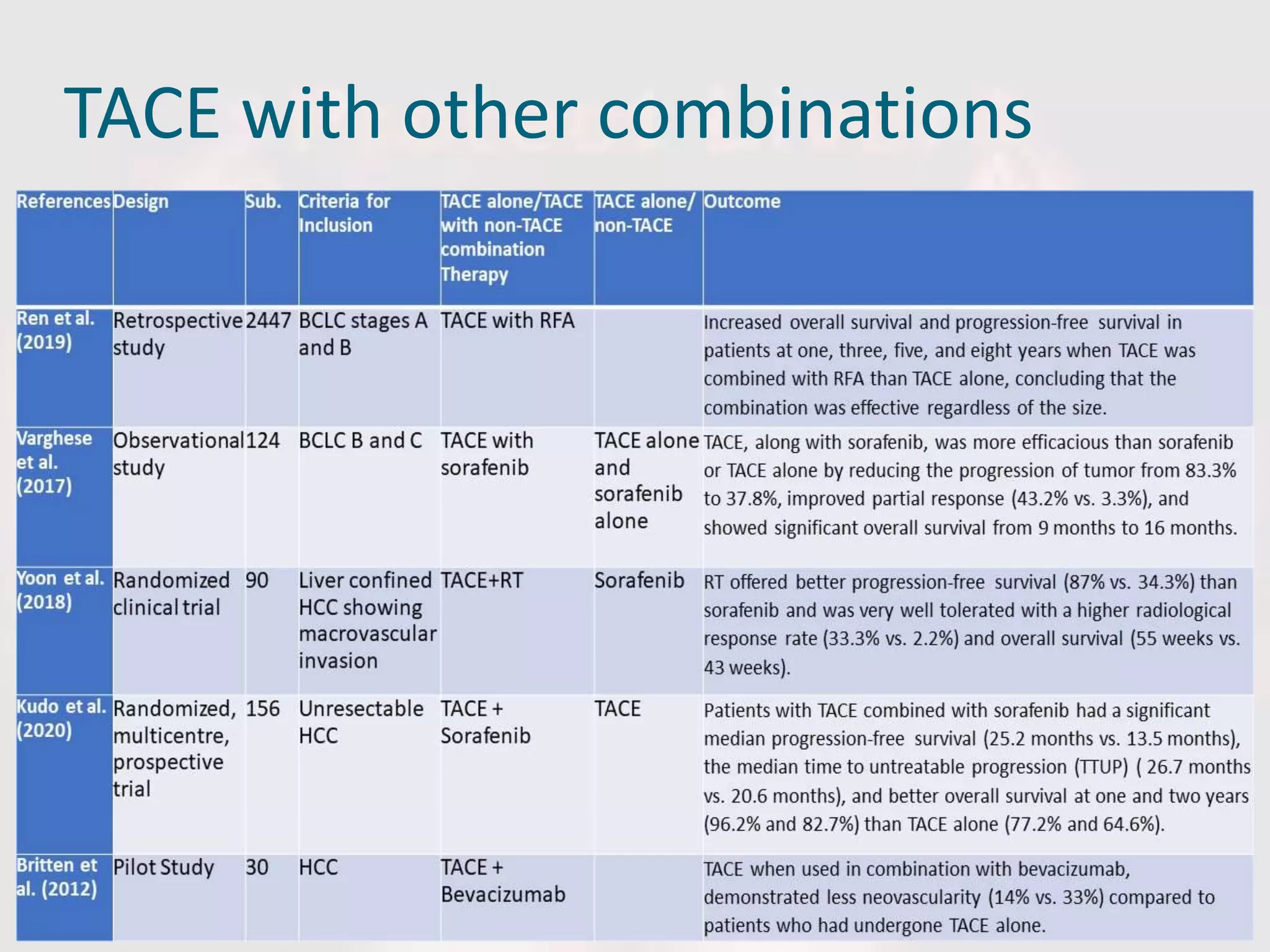
TACE with other combinations
Our Experience on TACE
In Bangladesh, First TACE in April 1 2016
As of now,
338 cases
Baseline Data
Male,
80.2%
Female,
19.8%
Total Patients 283
64%
15%
10%
6%
1%
4%
ETIOLOGY OF HCC
HBV HCV Cryptogenic
NASH Occult HBV Hepatic Mets
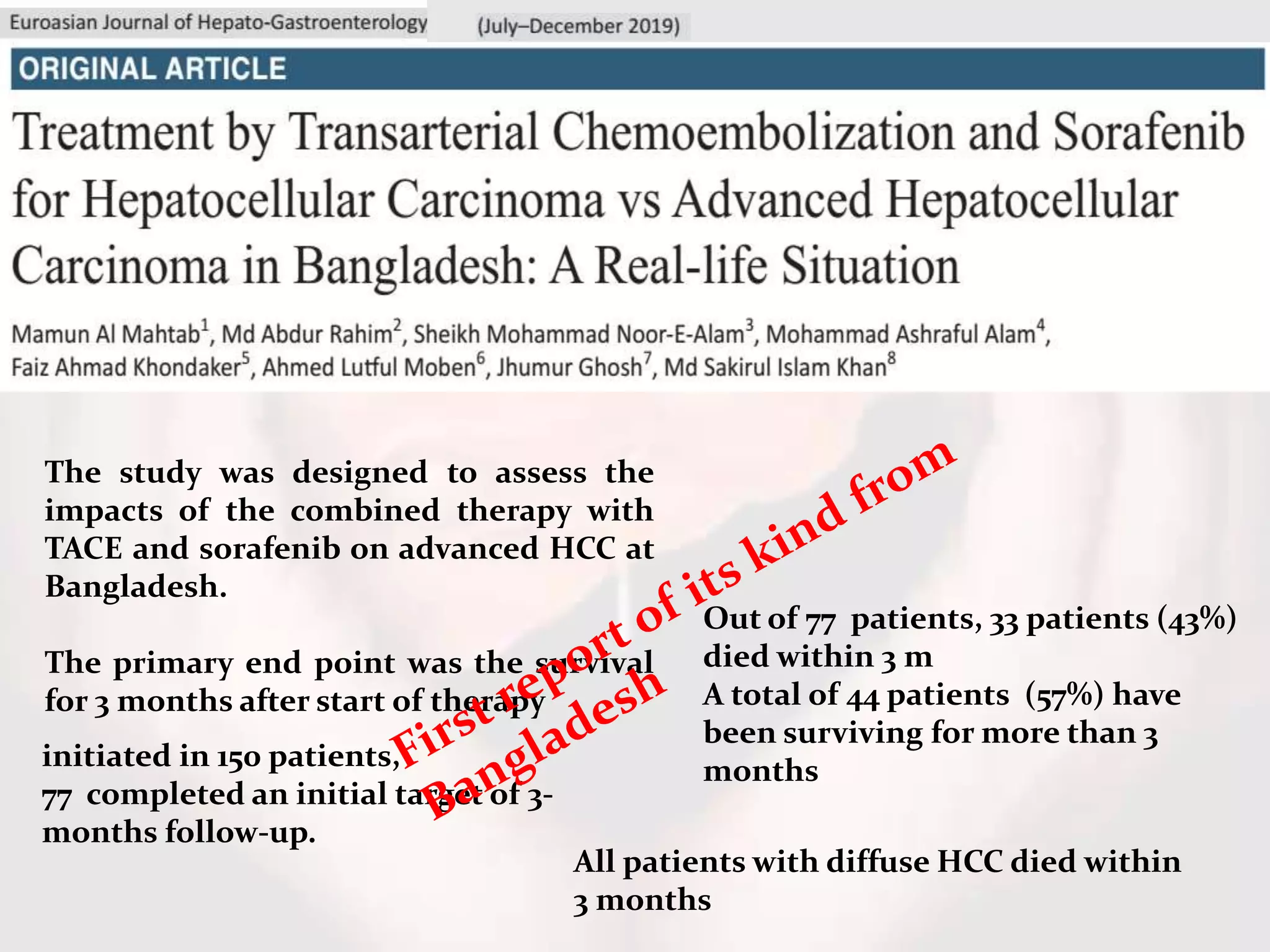
initiated in 150 patients,
77 completed an initial target of 3-
months follow-up.
The study was designed to assess the
impacts of the combined therapy with
TACE and sorafenib on advanced HCC at
Bangladesh.
The primary end point was the survival
for 3 months after start of therapy
Out of 77 patients, 33 patients (43%)
died within 3 m
A total of 44 patients (57%) have
been surviving for more than 3
months
All patients with diffuse HCC died within
3 months
Concluding Remarks
 Being the 5th most common cancer and second most
common cancer related death globally, management of
HCC is getting utmost attention world wide.
 Proper selection of patients is of paramount
importance
 Important area to pay attention is-
 Combination therapies
 To increase coverage
Miles to go yet…..
TACE- As a management option of HCC.pptx

TACE- As a management option of HCC.pptx

  • 1.
    D Dr. Most.Rokshana Begum Assistant Professor, Hepatology
  • 2.
    Contents..  Preamble  Patientselection for TACE: Indication & Contraindication  Mechanism  TACE Procedure  TACE adverse effects  Treatment Schedule  TACE with other combinations  Our Experiences  Conclusion
  • 3.
    Preamble  Hepatocellular carcinoma(HCC) is one of the most common cancers worldwide.  Even with the breakthrough in preventive strategies, and new diagnostic and treatment modalities, incidence and fatality rates of HCC is climbing.  Despite improved surveillance programs, approximately 80% of patients with HCC have intermediate- or advanced-stage disease at the time of diagnosis where curative surgery is not possible.
  • 4.
    Preamble cont..  TransarterialChemoembolization (TACE) is a locoregional therapy regarded as a first-line treatment in patients with intermediate-stage HCC.  In real-world clinical practice, TACE also plays an important role in early- and advanced-stage HCC.  TACE is recommended as first line non-curative therapy for non-surgical patients.
  • 5.
    Patient selection forTACE BCLC stage B (Intermediate stage) patients, supported by EASL, AASLD, APASL, and JSH for intermediate-stage HCC. The BCLC staging system defines intermediate HCC as  Presence of multifocal nodules  >3 nodules or a maximum nodule diameter of >3 cm  Preserved liver function  No cancer related symptoms, i.e. ECOG 0.  No macrovascular invasion or extrahepatic spread. Zhong B.Y. et al: TACE for HCC
  • 6.
    Treatment as perBCLC Kung et al. Hepatoma Res 2022;8:17
  • 7.
    BCLC staging andtreatment strategy in 2022 Journal of Hepatology 2022 vol. 76 j 681–693
  • 8.
    Patient selection forTACE cont..  TACE is also used in patients with early-stage HCC as a bridge to liver transplantation, Neoadjuvant chemoembolization  When liver transplantation, hepatic resection, and image-guided ablation are not possible, in keeping with the stage migration strategy Journal of Hepatology 2018 vol. 69 j 182–236
  • 9.
    Patient selection forTACE cont..  The majority of guidelines do not recommend the use of TACE in advanced HCC patients; the only exception is the CNLC which recommends TACE as the first-line choice for patients with macrovascular invasion.  In combination with other therapies  Although TACE is the first line treatment option for intermediate-stage HCC, in real life approximately 40% of TACEs are performed in either early or, more rarely, advanced stages.  Secondaries at liver
  • 10.
    Variation at differentguidelines Zhong B.Y. et al: TACE for HCC
  • 11.
    TACE contraindication  Decompensatedliver (Child-Pugh B) with tumor- related symptoms.  Macrovascular invasion of the main portal branches or the main portal vein, impaired portal blood flow.  Extensive tumor (>10 cm)  Creatinine >2 mg/dl  Co-morbidities  Biliary dilation  Untreated esophageal varices with a high risk of bleeding. 2022 Manjunatha et al. Cureus 14(8): e28439. DOI 10.7759/cureus.28439 2
  • 12.
  • 13.
    Mechanism of TACE..  The primary notion of TACE relies upon the concept of the liver's dual blood supply  Normal hepatocytes receive dual blood supply predominantly from the portal vein  The objective of transarterial embolization is to selectively deprive arterial inflow to the tumour, which causes ischaemic necrosis.  Hepatocyte perfusion is then maintained by patent portal vein. 2022 Manjunatha et al. Cureus 14(8): e28439. DOI 10.7759/cureus.28439 2
  • 14.
    Mechanism of TACEcont..  Mori et al. in 1966 were the first to perform hepatic artery ligation to create ischemic necrosis of the tumor leading to regression.  Tumor embolization using embolic agents injected via a percutaneous injection, was used by angiographers in the early 1970s.  Later in 1974, Doyon et al. were the first to perform and describe TACE 2022 Manjunatha et al. Cureus 14(8): e28439. DOI 10.7759/cureus.28439 2
  • 15.
    Mechanism of TACEcont..  There are four main types of transarterial therapies:  Transarterial embolization (or “bland” embolization, TAE),  Transarterial chemoembolization (TACE),  TACE using drug-eluting beads (DEB-TACE)  Transarterial radioembolization (TARE). Kung et al. Hepatoma Res 2022;8:17
  • 16.
    Procedure:  An interventionalradiologist or a hepatologist usually performs TACE through a percutaneous transarterial approach.  Femoral artery on the right is punctured, and under local anesthesia, an arterial sheath is placed into the artery by Selinger's method  A catheter is then introduced through the sheath; a wire often aids the catheter into the arterial system under imagining guidelines. 2022 Manjunatha et al. Cureus 14(8): e28439. DOI 10.7759/cureus.28439 2
  • 17.
    Procedure cont..  Toreach the target branches that supply the tumor, a micro catheter is then inserted through the common hepatic artery and then the proper hepatic artery;  After locating the feeding vessel, an iodized oil along with cytotoxic drug, followed by embolization particles is injected.
  • 18.
  • 19.
    Procedure cont…  Commonlyused cytotoxic drugs in TACE are: doxorubicin, cisplatin, epirubicin or miriplatin. Idarubicin is under clinical trial.  Carrier: Lipiodol  Embolic agents: gel foam, micro particles  At DEB-TACE, microspheres charged with cytotoxic drugs are administered.
  • 20.
    Procedure cont… Adverse effects:03 types 1. Intraoperative complications 2. Post Operative complications 3. Tumour lysis syndrome Intraoperative complications:  Allergic reactions  Intraoperative bleeding  Biliary cardiac reflex
  • 21.
    Procedure cont.. Post operativecomplications:  Postembolization syndrome (PES): 47.7% suffered from this. Results in fever (17.2%), vomiting, liver enzyme abnormalities (18.1%), abdominal pain(11%) , and nausea, vomiting (6%).  Liver abscess,  Acute cholecystitis, pancreatitis  Upper gastrointestinal bleeding  Liver and renal failure  Myelosuppression  Ectopic embolism  Bile duct damage
  • 22.
    Procedure cont.. Tumour lysissyndrome: Results from rapid destruction of tumour cells, lead to-  Renal insufficiency  Metabolic disturbance  Arrhythmias  Seizures  30-day mortality of 1%  Overall mortality 0.6% Kung et al. Hepatoma Res 2022;8:17
  • 23.
    Treatment Schedule Scheduled TACE& On demand TACE  Aggressive Schedule like TACE every two months may result liver failure and at present repeat TACE is usually done if CT images Suggest viable tumour.  TACE should not be repeated if substantial necrosis is not achieved after two rounds or if there are untreatable progression.  If patient gets multiple session of TACE, echcardiogram should be done and cumulative dose should not exceed 450 mg/m2 Journal of Hepatology 2018 vol. 69 j 182–236
  • 25.
    TACE Sorafenib Combination 307patients with intermediate-stage HCC at 85 centers in 13 countries (2016) Conclusion: Sorafenib plus DEB-TACE was technically feasible, but the combination did not improve TTP in a clinically meaningful manner compared with DEB- TACE alone.
  • 26.
    TACE and RFAcombination The combination of TACE and RFA can treat some patients with HCC more effectively when offered to patients with HCC over 3 cm . But, ASLDB- At this time, the combination of RFA with TACE requires further study
  • 27.
    TACE with othercombinations
  • 28.
    Our Experience onTACE In Bangladesh, First TACE in April 1 2016 As of now, 338 cases
  • 31.
    Baseline Data Male, 80.2% Female, 19.8% Total Patients283 64% 15% 10% 6% 1% 4% ETIOLOGY OF HCC HBV HCV Cryptogenic NASH Occult HBV Hepatic Mets
  • 32.
    initiated in 150patients, 77 completed an initial target of 3- months follow-up. The study was designed to assess the impacts of the combined therapy with TACE and sorafenib on advanced HCC at Bangladesh. The primary end point was the survival for 3 months after start of therapy Out of 77 patients, 33 patients (43%) died within 3 m A total of 44 patients (57%) have been surviving for more than 3 months All patients with diffuse HCC died within 3 months
  • 33.
    Concluding Remarks  Beingthe 5th most common cancer and second most common cancer related death globally, management of HCC is getting utmost attention world wide.  Proper selection of patients is of paramount importance  Important area to pay attention is-  Combination therapies  To increase coverage Miles to go yet…..

Editor's Notes

  • #26 Time to Tumor progression.
  • #34 Transarterial liver-directed therapies are currently not recommended as a standard treatment for colorectal liver metastases. Transarterial chemoembolization (TACE), however, is increasingly used for patients with liver-dominant colorectal metastases after failure of surgery or systemic chemotherapy.