Guiding questions
1. What are squatter settlements, and
where are they located?
2. What are the problems associated
with them?
3. Are they a symbol of failure of good
planning and leadership - is it always
a negative entity?
What are squatter settlements?
A group of individuals living under the same roof in an
urban area who
lack one or more of the following:
1. Durable housing of a permanent nature
2. Sufficient living space
3. Easy access to safe water in sufficient amounts
4. Access to adequate sanitation in the form of a private or public toilet
5. Legal rights to housing
- UN Habitat Definition
Where are squatters located?
Overview of problems
Env
Urban
overspills
Vulnerabilities
magnified by
slum’s interaction
with nat & mn
hazard
Social &
Wellbeing
Public
Health
Gender
Access to
Education
Economic
Employment
Formal –
Informal
Political
Securing
legal
housing
rights
Corporation -
Slum
Environment
Urban Overspills
Loss in arable
land
Man encroaching
into nature
Interaction with Natural &
Manmade hazard
Floods, Bad
Geology
Fire, Toxic Waste
Slums of Hanoi
Urban Overspill in Hanoi – Loss in
agriculture
Annual urban growth of 6% -> 41% of urban
population live in slums
– 9 million Vietnamese
Rapid land use change 
reduction in arable land in
peripheral areas of Hanoi (1/3
converted into built-up areas)
Peri-urban agriculture
contaminated by toxics
found in human and
animal manure.
Urban Overspill – whose encroachment
Man encroaching into
nature spaces
‘Invasion’ into ecological
sanctuaries
Tensions in Man – Nature
relationship
Nature’s response
Sanjay Gandhi National Park, Bombay
Environment
Urban Overspills
Loss in arable
land
Man encroaching
into nature
Natural & Manmade
hazards
Floods, Bad
Geology
Fire, Toxic Waste
Presence of slums aggravates natural and
manmade hazards
Manmade hazards
Tudor Shaft, Johannesburg
Previously, gold mining activities creates mining
waste (uranium rocks)  radioactive tailings
Radioactivity level x32times more than limit allowed
Enters groundwater and river system
Establishment of squatter settlements
Natural -
Bad Geology
‘Caracas Valley’, Venezula
Natural factors:
Unstable hillsides, seismically active valley
Establishment of informal settlements (human
activities) -> greater surface pressure
Destabilization of hill  Increase in major landslides
and slope failures
Natural –
Flooding
Flooding in Slums of Manila
Natural factors:
Increase in frequency of
tropical storms. Philippines
located at the Typhoon Belt
+ Pacific Ring of Fire
+
Interaction with squatters:
Garbage clogged
waterways. Crammed
alleyways.
= ?
Social &
Wellbeing
Public Health
Contamination
of resources
Spread of
Infectious
diseases
Clean
sanitation
Access to
education
Contamination of potable water
supply
Situation + Response
Kibera Slums, Nairobi
PRIVATISATION OF WATER
Privatization of water
Spread of vector borne & infectious
diseases
Diseases affecting squatter
settlements
1.Water-borne diseases - contamination of
water supply with raw sewage
2.Vector-borne infectious diseases -- living
environment & carried by hosts
Implications on gender equality
Lack of toilets & privacy  ?
Sanitation facilities in India
Lacking in
functional
common toilet
lacking in toilets
for girls
presence of
functional female
toilets
Link between sanitation facilities and
school drop outs
Lack of sanitation facilities -> inconvenience &
embarrassment
+
Religious Taboos  social stigmas
A taboo is defined as that which is “always seen as
symbolically dangerous or otherwise defiling” (Delaney
1976:4)
Importance of providing better sanitation facilities
Bridging the education gap 
• Economic benefits: increase in GDP,
higher labour force participation
• Social benefits: gender equality, good
family planning
Informal slum economy
• “Self-created special economic zone (SEZ)
for the poor”
• Exists outside government oversight, help
or encouragement
• “Every slum has its businesses. Every kind
of business is there in the slums.”
–Mr Mobin, Dharavi Millionaire
http://www.youtube.com/watch?v=Im0tHRs
9Bng
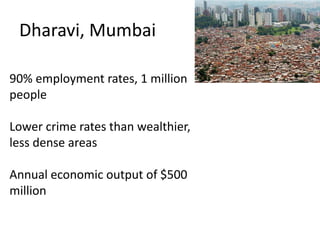
Dharavi, Mumbai
90% employment rates, 1 million
people
Lower crime rates than wealthier,
less dense areas
Annual economic output of $500
million
Dharavi Redevelopment Plan –
 
http://www.youtube.com/w
atch?v=f7y9WoGwJJI
Conference of the Parties
starring
Rakesh, 24
Leather Worker
US$65/month + US$11/month
Shares 2 rooms with 5 others
Arockia, 18
College student
Family income $196/month
Lives with 8 family members
over 2 floors
Vimla, 27
Domestic maid, Flower band
maker
Has 4 children
$22/month
Hut by railway tracks with no
toilet or water
Esakkiamal, 40
Housewife
Has 3 sons all of whom are
studying
Lives on 1 floor, rents out the
other for $11/month
Janjibhai, 45
Pottery worker
$260/month, no $ during monsoon
Stays with family of 5
Selvaraj, 46
Aircraft engineer for Jet Airways
$260/month
Lives in 1 room with wife & son
https://todaysmeet.com/DharaviSlum

T2 w4

  • 1.
    Guiding questions 1. Whatare squatter settlements, and where are they located? 2. What are the problems associated with them? 3. Are they a symbol of failure of good planning and leadership - is it always a negative entity?
  • 2.
    What are squattersettlements? A group of individuals living under the same roof in an urban area who lack one or more of the following: 1. Durable housing of a permanent nature 2. Sufficient living space 3. Easy access to safe water in sufficient amounts 4. Access to adequate sanitation in the form of a private or public toilet 5. Legal rights to housing - UN Habitat Definition
  • 4.
  • 5.
    Overview of problems Env Urban overspills Vulnerabilities magnifiedby slum’s interaction with nat & mn hazard Social & Wellbeing Public Health Gender Access to Education Economic Employment Formal – Informal Political Securing legal housing rights Corporation - Slum
  • 6.
    Environment Urban Overspills Loss inarable land Man encroaching into nature Interaction with Natural & Manmade hazard Floods, Bad Geology Fire, Toxic Waste
  • 7.
  • 8.
    Urban Overspill inHanoi – Loss in agriculture Annual urban growth of 6% -> 41% of urban population live in slums – 9 million Vietnamese Rapid land use change  reduction in arable land in peripheral areas of Hanoi (1/3 converted into built-up areas) Peri-urban agriculture contaminated by toxics found in human and animal manure.
  • 9.
    Urban Overspill –whose encroachment Man encroaching into nature spaces ‘Invasion’ into ecological sanctuaries Tensions in Man – Nature relationship Nature’s response
  • 10.
  • 11.
    Environment Urban Overspills Loss inarable land Man encroaching into nature Natural & Manmade hazards Floods, Bad Geology Fire, Toxic Waste
  • 12.
    Presence of slumsaggravates natural and manmade hazards
  • 13.
    Manmade hazards Tudor Shaft,Johannesburg Previously, gold mining activities creates mining waste (uranium rocks)  radioactive tailings Radioactivity level x32times more than limit allowed Enters groundwater and river system Establishment of squatter settlements
  • 16.
    Natural - Bad Geology ‘CaracasValley’, Venezula Natural factors: Unstable hillsides, seismically active valley Establishment of informal settlements (human activities) -> greater surface pressure Destabilization of hill  Increase in major landslides and slope failures
  • 17.
  • 18.
    Flooding in Slumsof Manila Natural factors: Increase in frequency of tropical storms. Philippines located at the Typhoon Belt + Pacific Ring of Fire + Interaction with squatters: Garbage clogged waterways. Crammed alleyways. = ?
  • 19.
    Social & Wellbeing Public Health Contamination ofresources Spread of Infectious diseases Clean sanitation Access to education
  • 20.
  • 21.
    Situation + Response KiberaSlums, Nairobi PRIVATISATION OF WATER Privatization of water
  • 25.
    Spread of vectorborne & infectious diseases
  • 26.
    Diseases affecting squatter settlements 1.Water-bornediseases - contamination of water supply with raw sewage 2.Vector-borne infectious diseases -- living environment & carried by hosts
  • 30.
  • 31.
    Lack of toilets& privacy  ? Sanitation facilities in India Lacking in functional common toilet lacking in toilets for girls presence of functional female toilets
  • 33.
    Link between sanitationfacilities and school drop outs Lack of sanitation facilities -> inconvenience & embarrassment + Religious Taboos  social stigmas A taboo is defined as that which is “always seen as symbolically dangerous or otherwise defiling” (Delaney 1976:4)
  • 34.
    Importance of providingbetter sanitation facilities Bridging the education gap  • Economic benefits: increase in GDP, higher labour force participation • Social benefits: gender equality, good family planning
  • 35.
    Informal slum economy •“Self-created special economic zone (SEZ) for the poor” • Exists outside government oversight, help or encouragement • “Every slum has its businesses. Every kind of business is there in the slums.” –Mr Mobin, Dharavi Millionaire http://www.youtube.com/watch?v=Im0tHRs 9Bng
  • 37.
    Dharavi, Mumbai 90% employmentrates, 1 million people Lower crime rates than wealthier, less dense areas Annual economic output of $500 million
  • 38.
    Dharavi Redevelopment Plan–   http://www.youtube.com/w atch?v=f7y9WoGwJJI
  • 39.
    Conference of theParties starring
  • 40.
    Rakesh, 24 Leather Worker US$65/month+ US$11/month Shares 2 rooms with 5 others
  • 41.
    Arockia, 18 College student Familyincome $196/month Lives with 8 family members over 2 floors
  • 42.
    Vimla, 27 Domestic maid,Flower band maker Has 4 children $22/month Hut by railway tracks with no toilet or water
  • 43.
    Esakkiamal, 40 Housewife Has 3sons all of whom are studying Lives on 1 floor, rents out the other for $11/month
  • 44.
    Janjibhai, 45 Pottery worker $260/month,no $ during monsoon Stays with family of 5
  • 45.
    Selvaraj, 46 Aircraft engineerfor Jet Airways $260/month Lives in 1 room with wife & son
  • 47.