1
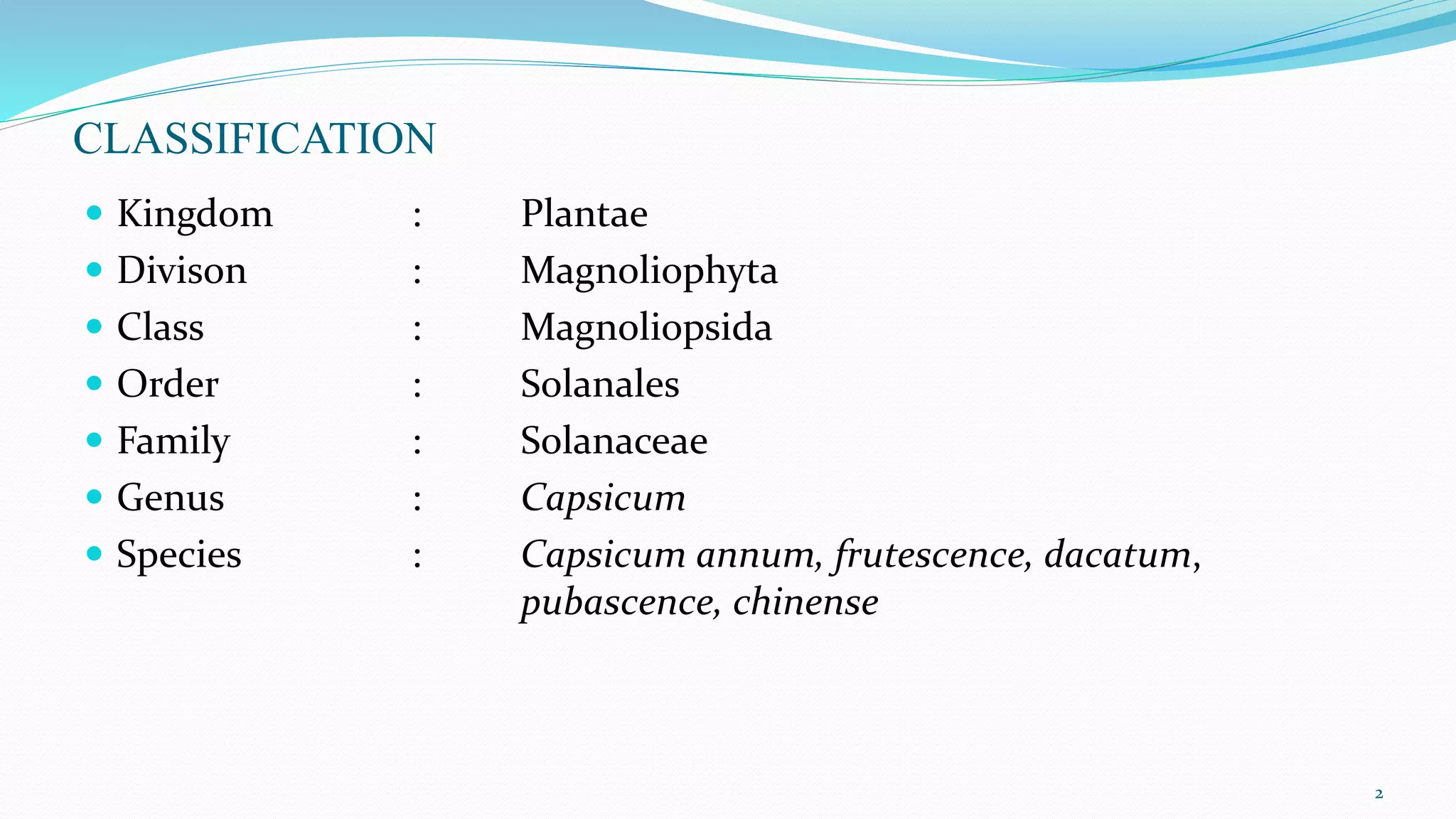
CLASSIFICATION
2
 Kingdom : Plantae
 Divison : Magnoliophyta
 Class : Magnoliopsida
 Order : Solanales
 Family : Solanaceae
 Genus : Capsicum
 Species : Capsicum annum, frutescence, dacatum,
pubascence, chinense
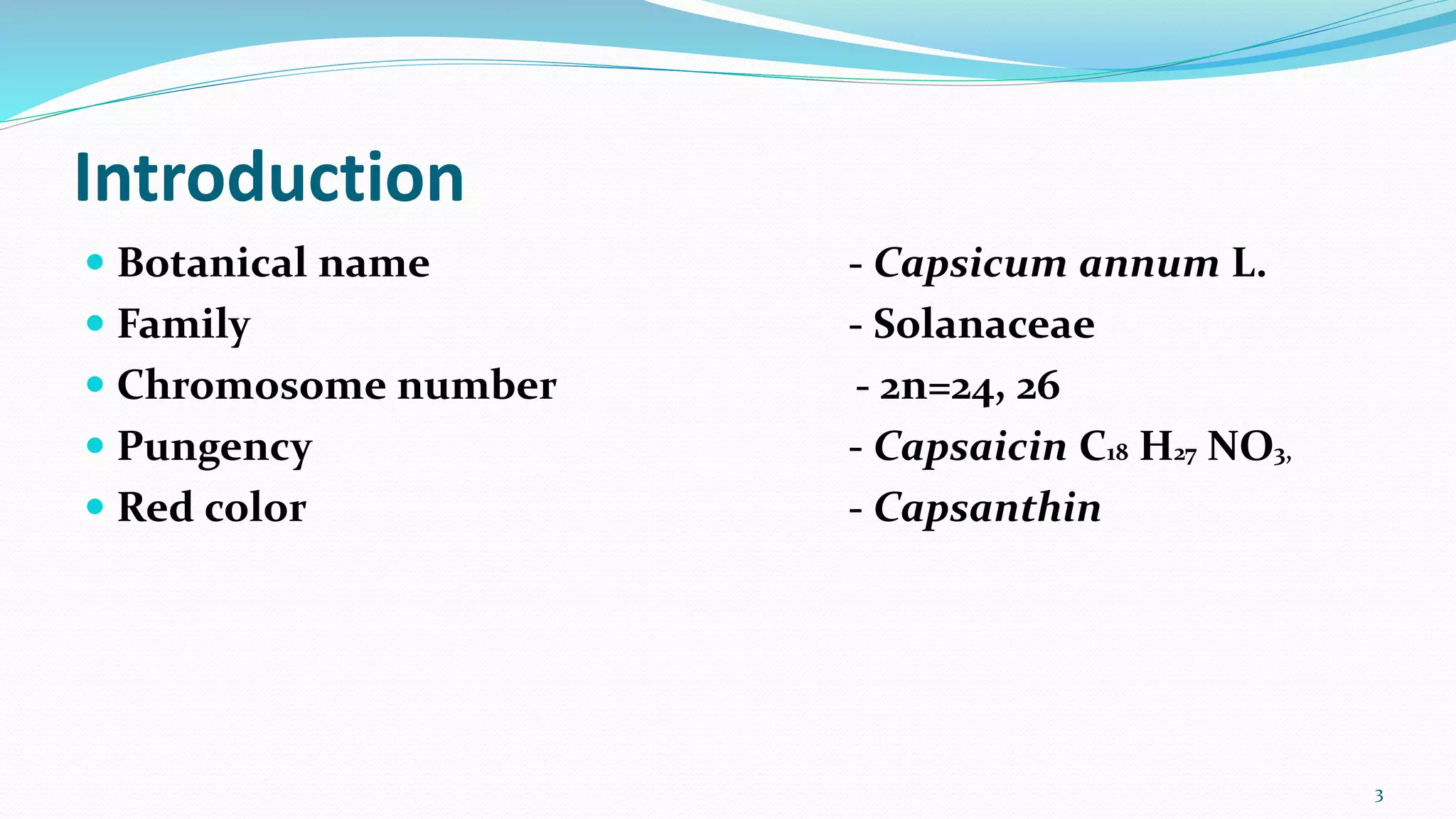
Introduction
 Botanical name - Capsicum annum L.
 Family - Solanaceae
 Chromosome number - 2n=24, 26
 Pungency - Capsaicin C18 H27 NO3,
 Red color - Capsanthin
3
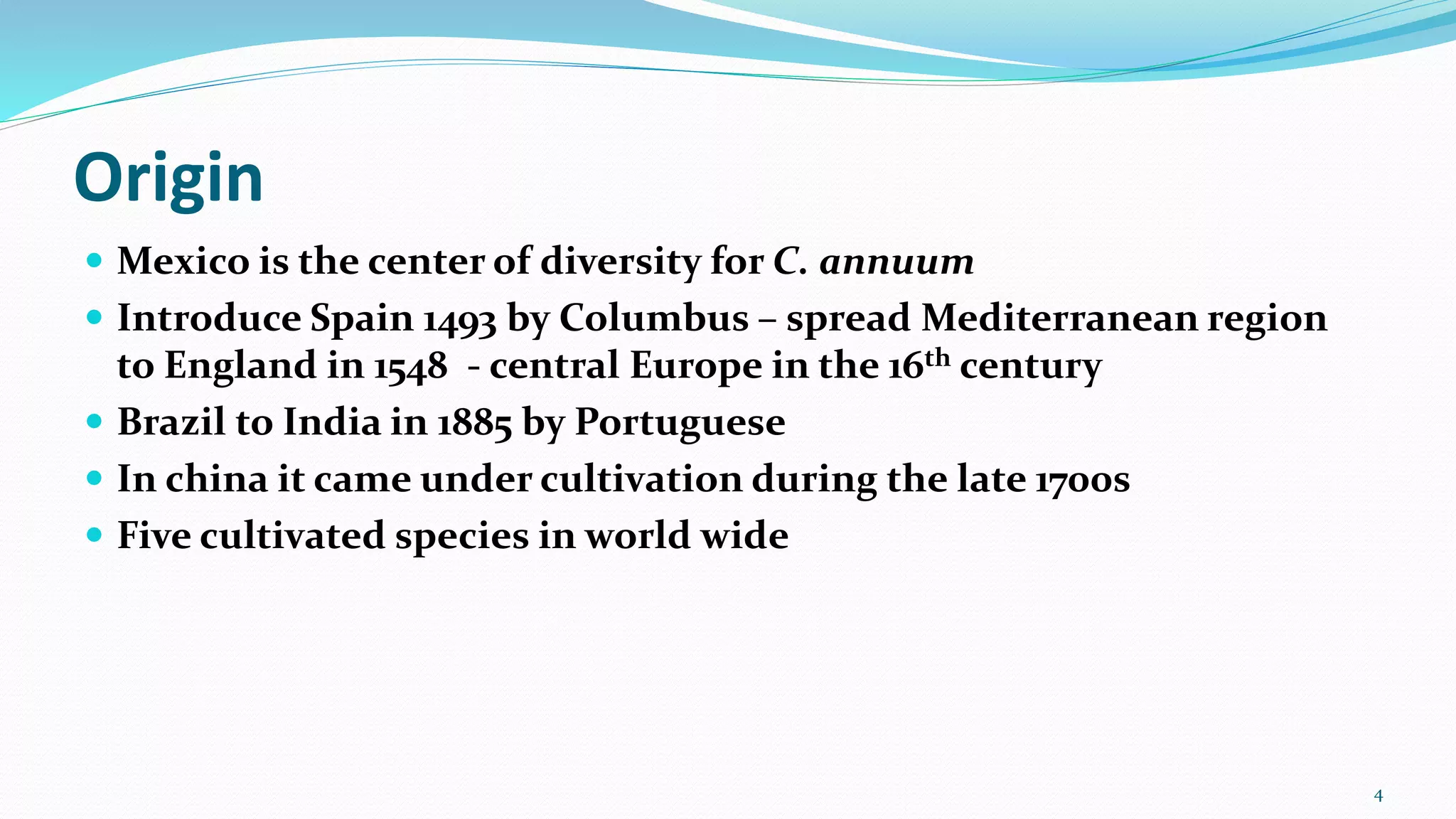
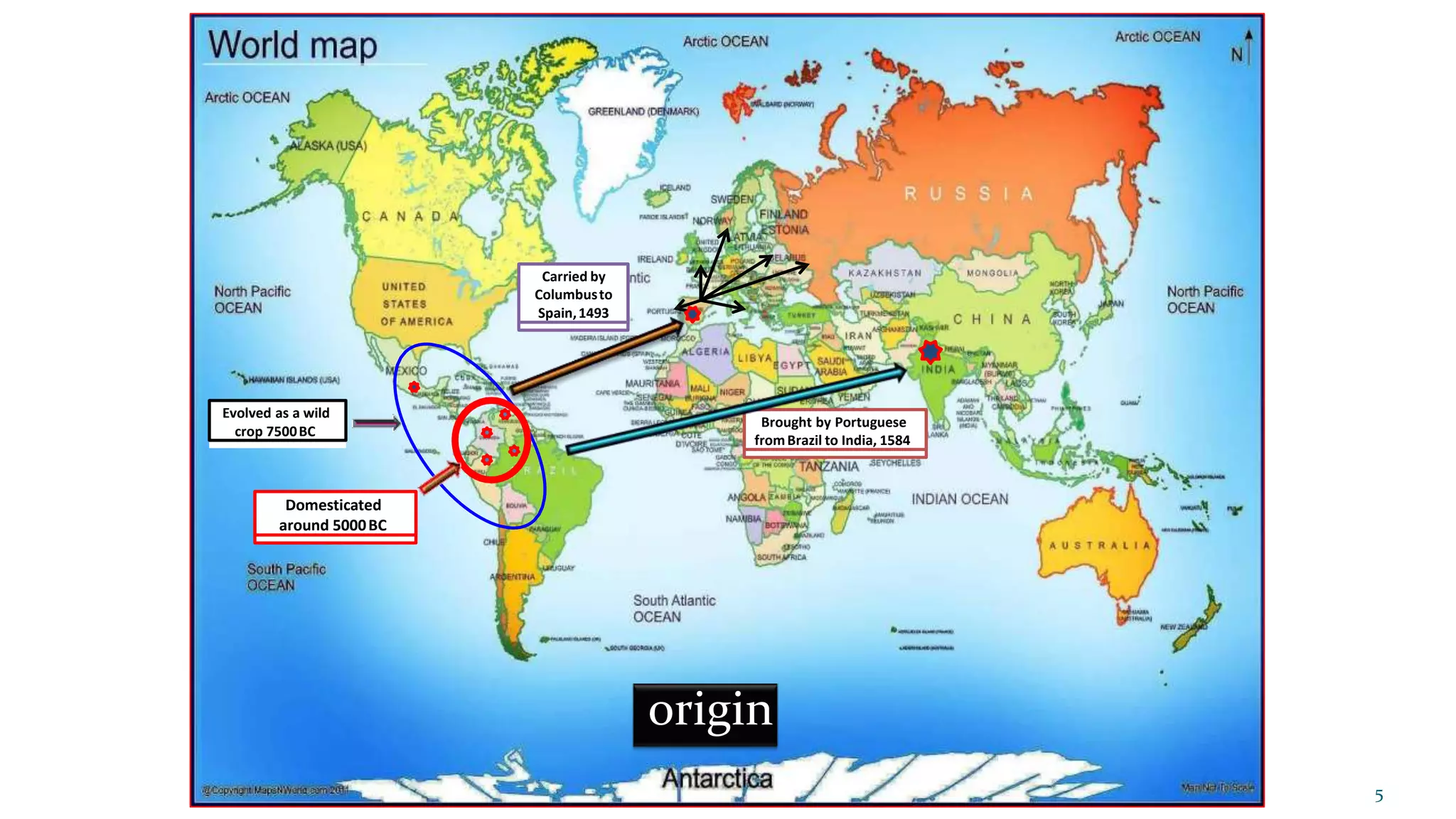
Origin
 Mexico is the center of diversity for C. annuum
 Introduce Spain 1493 by Columbus – spread Mediterranean region
to England in 1548 - central Europe in the 16th century
 Brazil to India in 1885 by Portuguese
 In china it came under cultivation during the late 1700s
 Five cultivated species in world wide
4
Domesticated
around 5000BC
Carried by
Columbusto
Spain,1493
Brought by Portuguese
fromBrazil to India, 1584
Evolved as a wild
crop 7500BC
origin
5
Cultivated species are:-
 C. annuum - Mexico
 C. frutescens - Amazonia
 C. chinense - Amazonia
 C. pendulum - Peru and Bolivia
 C. pubescens - Peru and Bolivia (Extinct)
 C. pendulum becomes C. baccatum var. pendulum ,
 C. microcarpum becomes C. baccatum var. baccatum
6
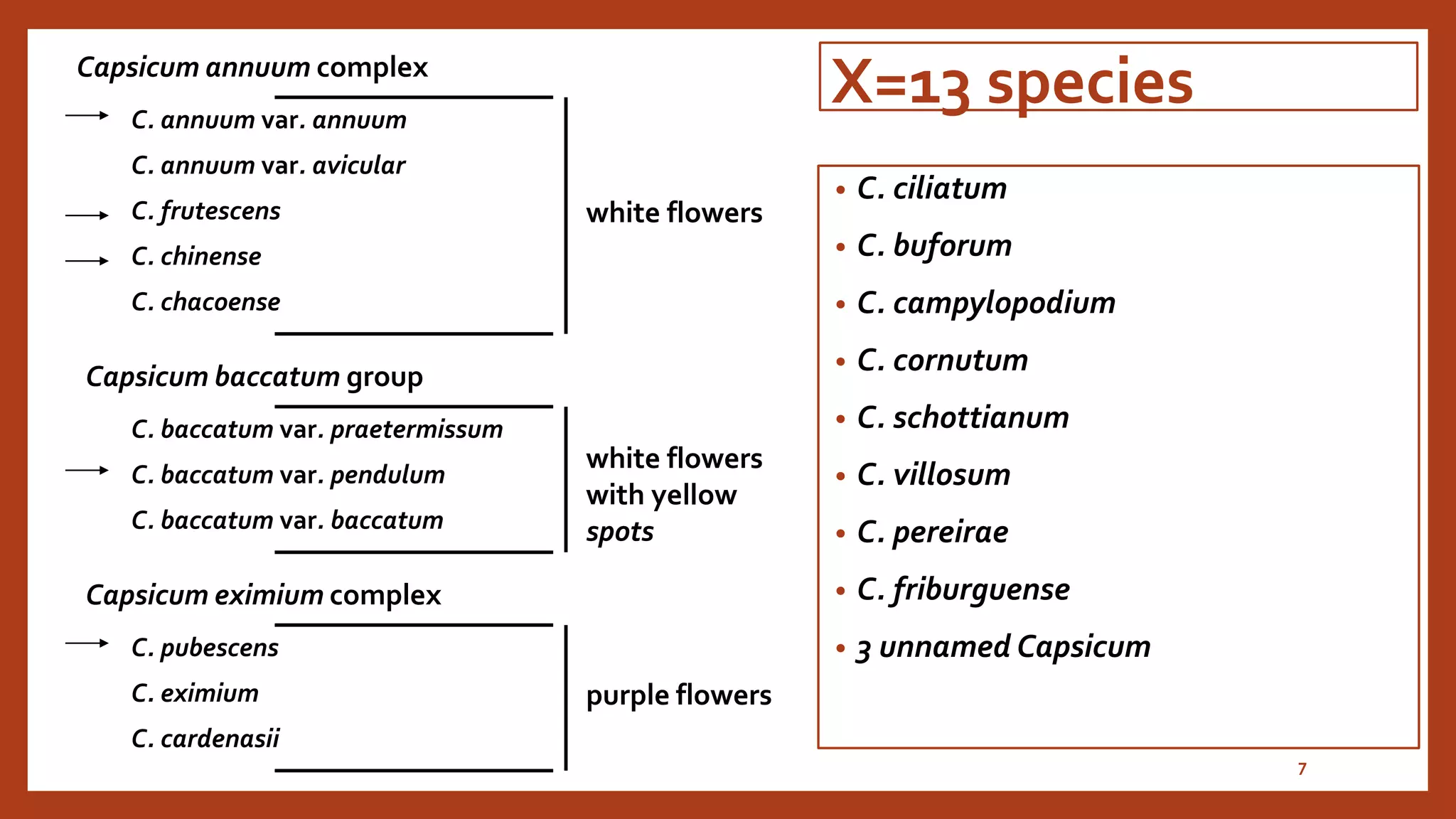
Capsicum annuum complex
C. annuum var. annuum
C. annuum var. avicular
C. frutescens
C. chinense
C. chacoense
Capsicum baccatum group
C. baccatum var. praetermissum
C. baccatum var. pendulum
C. baccatum var. baccatum
Capsicum eximium complex
C. pubescens
C. eximium
C. cardenasii
white flowers
white flowers
with yellow
spots
purple flowers
X=13 species
• C. ciliatum
• C. buforum
• C. campylopodium
• C. cornutum
• C. schottianum
• C. villosum
• C. pereirae
• C. friburguense
• 3 unnamed Capsicum
7
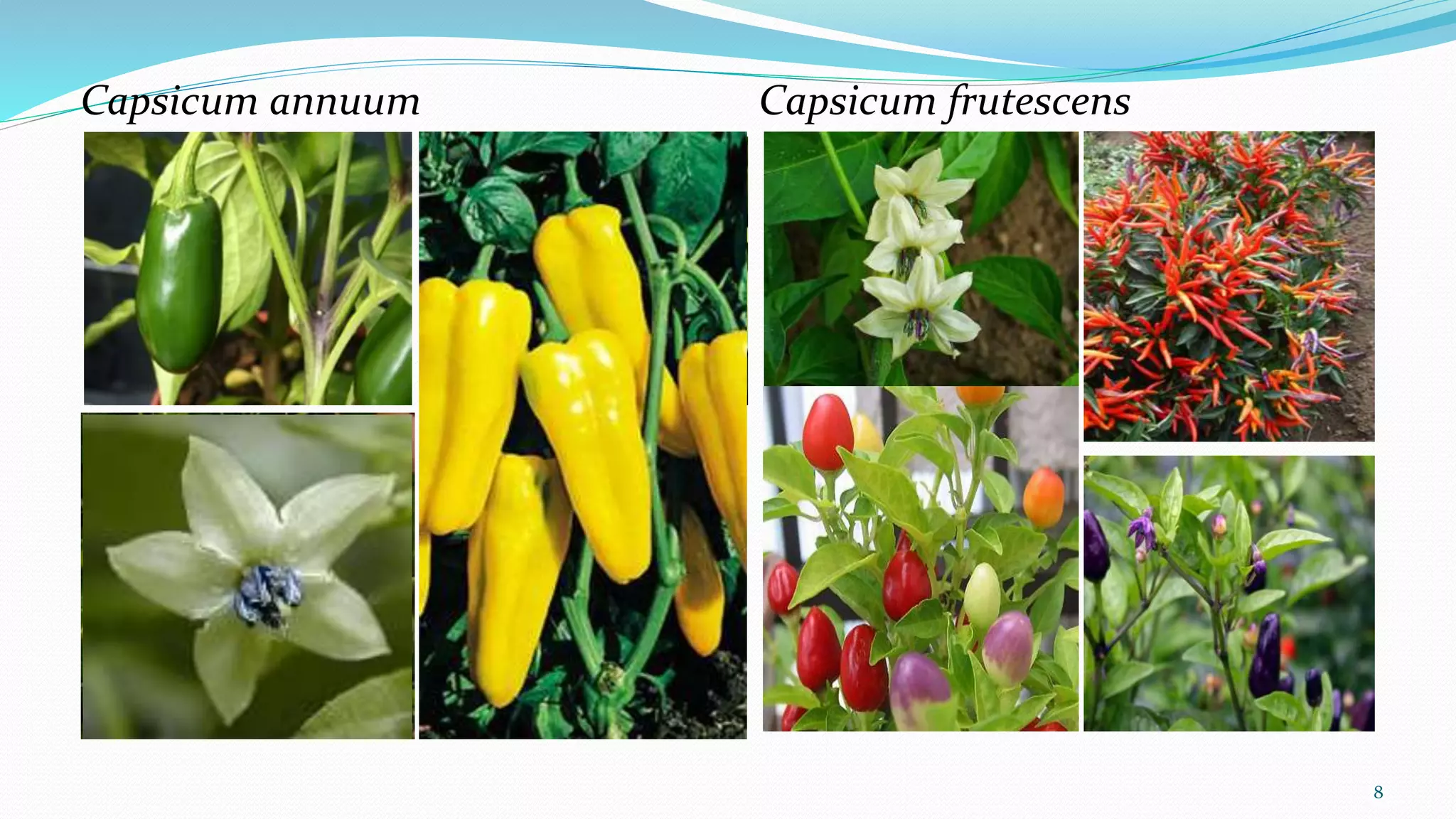
Capsicum annuum Capsicum frutescens
8
Capsicum pubescens C. chinense
9
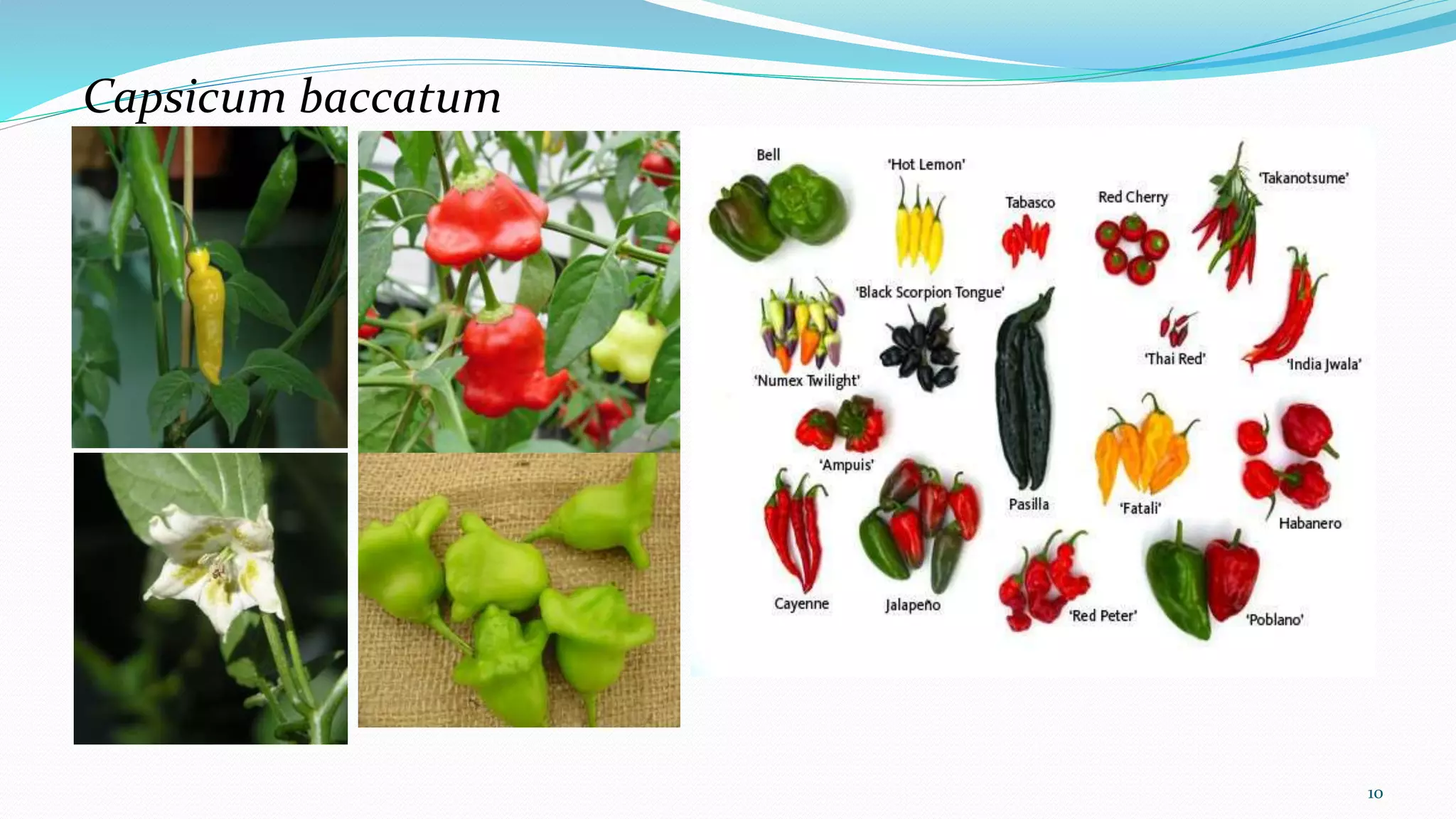
Capsicum baccatum
10
11
12
Morphology of fruit
 Fruit type is berry
 Capsicin glands – between placenta and
endocarp - produce capsaicin
 Calyx – Persistent calyx
 Seeds – Contain a very low amount of water
but rich in lecithin.contrary to popular
belief, the seeds do not contain
capsaicin,although since they are accanti to
capsaiciniche glands,can absorb a little.
 Placenta – metabolic exchange fruit to seed
Flower biology
 Flower -Actinomorphic, Bisexual, Pedicellate, Hypogynous
 Gynoecium -Superior ovary,
 Androecium -Stamens 5-6, Epipetalous
 Pollination -Self pollination (cross 16% bees, Ants & Thrips)
 Flower opening -5am to 6am – cool days cloudy delay
 Anther dehiscence -8am to 11am
 Receptivity -24 hours after flower opening.
13
Hotness in pepper
 Chilli hotness measured by SHU
(Scoville Heat Unit )
 Bhut Jolokia – 1,001,304 SHU
 Naga Morich – 1,598,227 SHU
14
Reference
 Zhigila, D. A., Fruit Morphology as Taxonomic Features in Five
Varieties of Capsicum annuum L. Solanaceae. 2014
 Mark J. Bassett., Breeding of vegetable crops, 67-137
 Sigh, H. R., 1997. Vegetable Breeding - Principles and practices:381-
406
 Reddy, M.K., Chilli (Capsicum annuum L.) breeding in india: an
overview.
15
16
Thank you…..

Systematics of chilli (Capscicum annuum) - Horticulture

  • 1.
  • 2.
    CLASSIFICATION 2  Kingdom :Plantae  Divison : Magnoliophyta  Class : Magnoliopsida  Order : Solanales  Family : Solanaceae  Genus : Capsicum  Species : Capsicum annum, frutescence, dacatum, pubascence, chinense
  • 3.
    Introduction  Botanical name- Capsicum annum L.  Family - Solanaceae  Chromosome number - 2n=24, 26  Pungency - Capsaicin C18 H27 NO3,  Red color - Capsanthin 3
  • 4.
    Origin  Mexico isthe center of diversity for C. annuum  Introduce Spain 1493 by Columbus – spread Mediterranean region to England in 1548 - central Europe in the 16th century  Brazil to India in 1885 by Portuguese  In china it came under cultivation during the late 1700s  Five cultivated species in world wide 4
  • 5.
    Domesticated around 5000BC Carried by Columbusto Spain,1493 Broughtby Portuguese fromBrazil to India, 1584 Evolved as a wild crop 7500BC origin 5
  • 6.
    Cultivated species are:- C. annuum - Mexico  C. frutescens - Amazonia  C. chinense - Amazonia  C. pendulum - Peru and Bolivia  C. pubescens - Peru and Bolivia (Extinct)  C. pendulum becomes C. baccatum var. pendulum ,  C. microcarpum becomes C. baccatum var. baccatum 6
  • 7.
    Capsicum annuum complex C.annuum var. annuum C. annuum var. avicular C. frutescens C. chinense C. chacoense Capsicum baccatum group C. baccatum var. praetermissum C. baccatum var. pendulum C. baccatum var. baccatum Capsicum eximium complex C. pubescens C. eximium C. cardenasii white flowers white flowers with yellow spots purple flowers X=13 species • C. ciliatum • C. buforum • C. campylopodium • C. cornutum • C. schottianum • C. villosum • C. pereirae • C. friburguense • 3 unnamed Capsicum 7
  • 8.
  • 9.
  • 10.
  • 11.
  • 12.
    12 Morphology of fruit Fruit type is berry  Capsicin glands – between placenta and endocarp - produce capsaicin  Calyx – Persistent calyx  Seeds – Contain a very low amount of water but rich in lecithin.contrary to popular belief, the seeds do not contain capsaicin,although since they are accanti to capsaiciniche glands,can absorb a little.  Placenta – metabolic exchange fruit to seed
  • 13.
    Flower biology  Flower-Actinomorphic, Bisexual, Pedicellate, Hypogynous  Gynoecium -Superior ovary,  Androecium -Stamens 5-6, Epipetalous  Pollination -Self pollination (cross 16% bees, Ants & Thrips)  Flower opening -5am to 6am – cool days cloudy delay  Anther dehiscence -8am to 11am  Receptivity -24 hours after flower opening. 13
  • 14.
    Hotness in pepper Chilli hotness measured by SHU (Scoville Heat Unit )  Bhut Jolokia – 1,001,304 SHU  Naga Morich – 1,598,227 SHU 14
  • 15.
    Reference  Zhigila, D.A., Fruit Morphology as Taxonomic Features in Five Varieties of Capsicum annuum L. Solanaceae. 2014  Mark J. Bassett., Breeding of vegetable crops, 67-137  Sigh, H. R., 1997. Vegetable Breeding - Principles and practices:381- 406  Reddy, M.K., Chilli (Capsicum annuum L.) breeding in india: an overview. 15
  • 16.