Introduction
Systems development is systematic process which
includes phases such as planning, analysis, design,
deployment, and maintenance. Here, in this
presentation, we will primarily focus on −
Systems analysis
Systems design
Systems Analysis
 It is a process of collecting and interpreting facts, identifying the
problems, and decomposition of a system into its components.
 System analysis is conducted for the purpose of studying a system or
its parts in order to identify its objectives. It is a problem solving
technique that improves the system and ensures that all the
components of the system work efficiently to accomplish their
purpose.
 Analysis specifies what the system should do.
Need for System Analysis
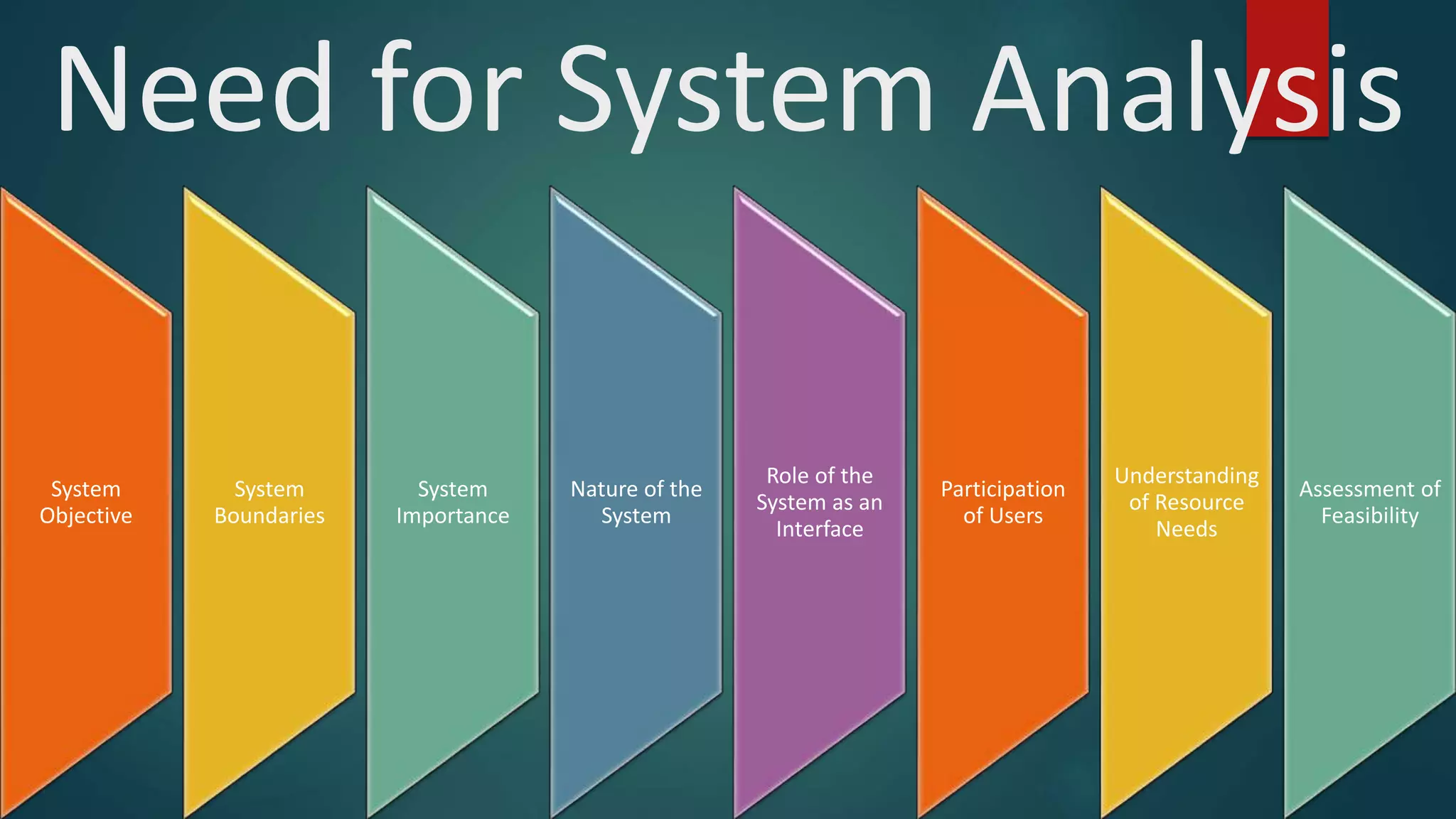
System
Objective
System
Boundaries
System
Importance
Nature of the
System
Role of the
System as an
Interface
Participation
of Users
Understanding
of Resource
Needs
Assessment of
Feasibility
Phases of System Analysis
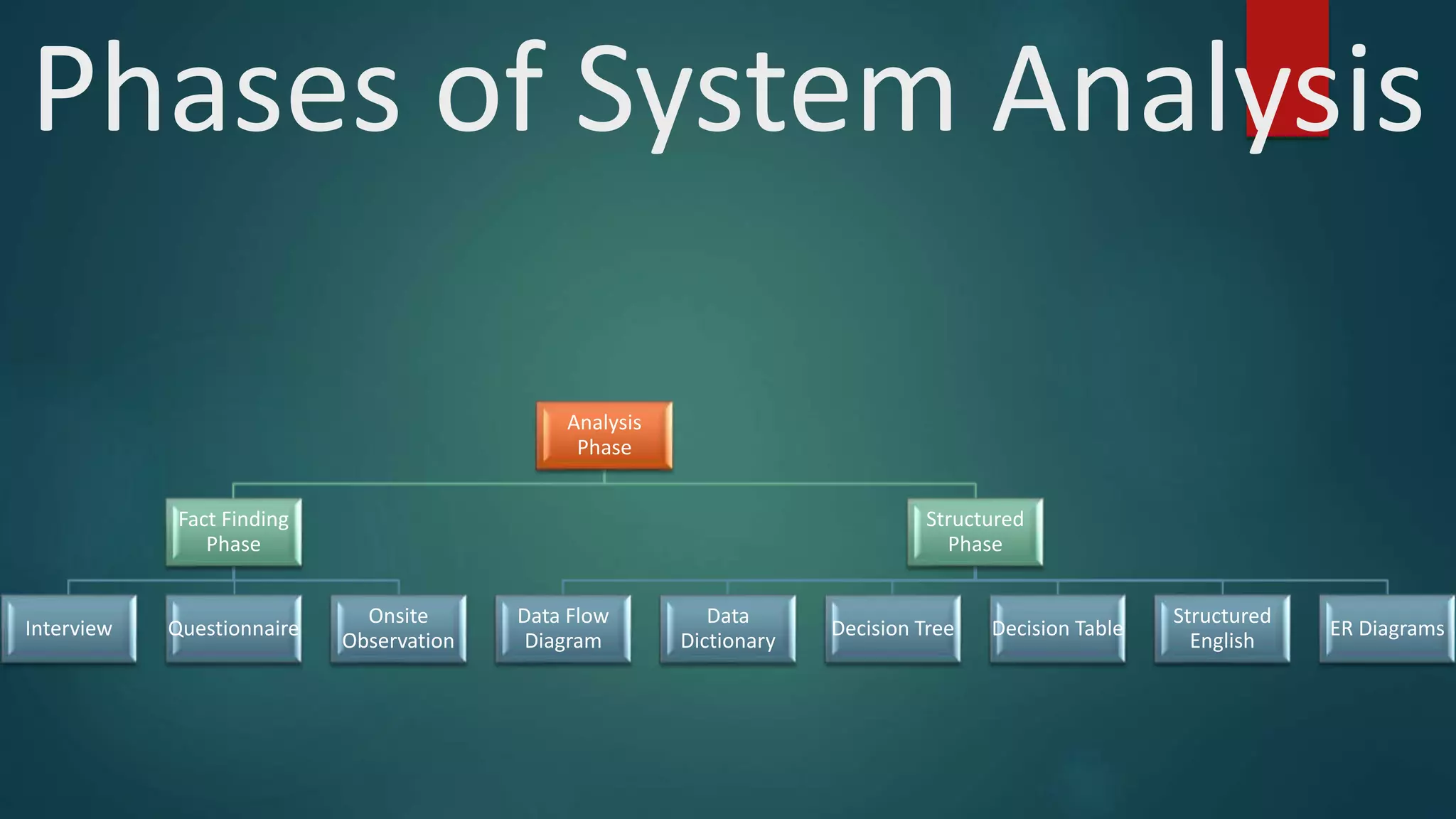
Analysis
Phase
Fact Finding
Phase
Interview Questionnaire
Onsite
Observation
Structured
Phase
Data Flow
Diagram
Data
Dictionary
Decision Tree Decision Table
Structured
English
ER Diagrams
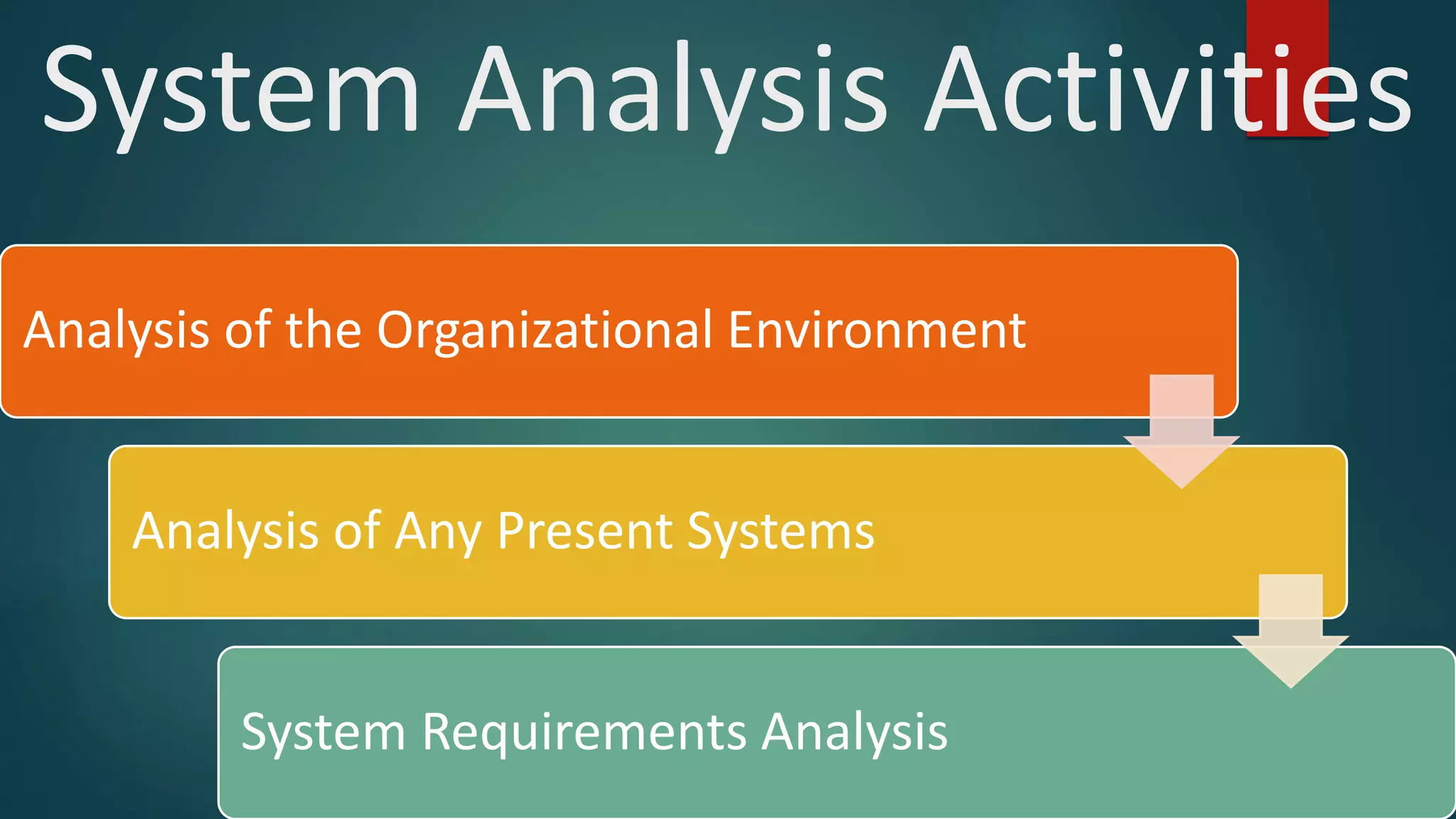
System Analysis Activities
Analysis of the Organizational Environment
Analysis of Any Present Systems
System Requirements Analysis
Systems Design
It is a process of planning a new business system or replacing
an existing system by defining its components or modules to
satisfy the specific requirements. Before planning, you need to
understand the old system thoroughly and determine how
computers can best be used in order to operate efficiently.
System Design focuses on how to accomplish the objective of
the system.
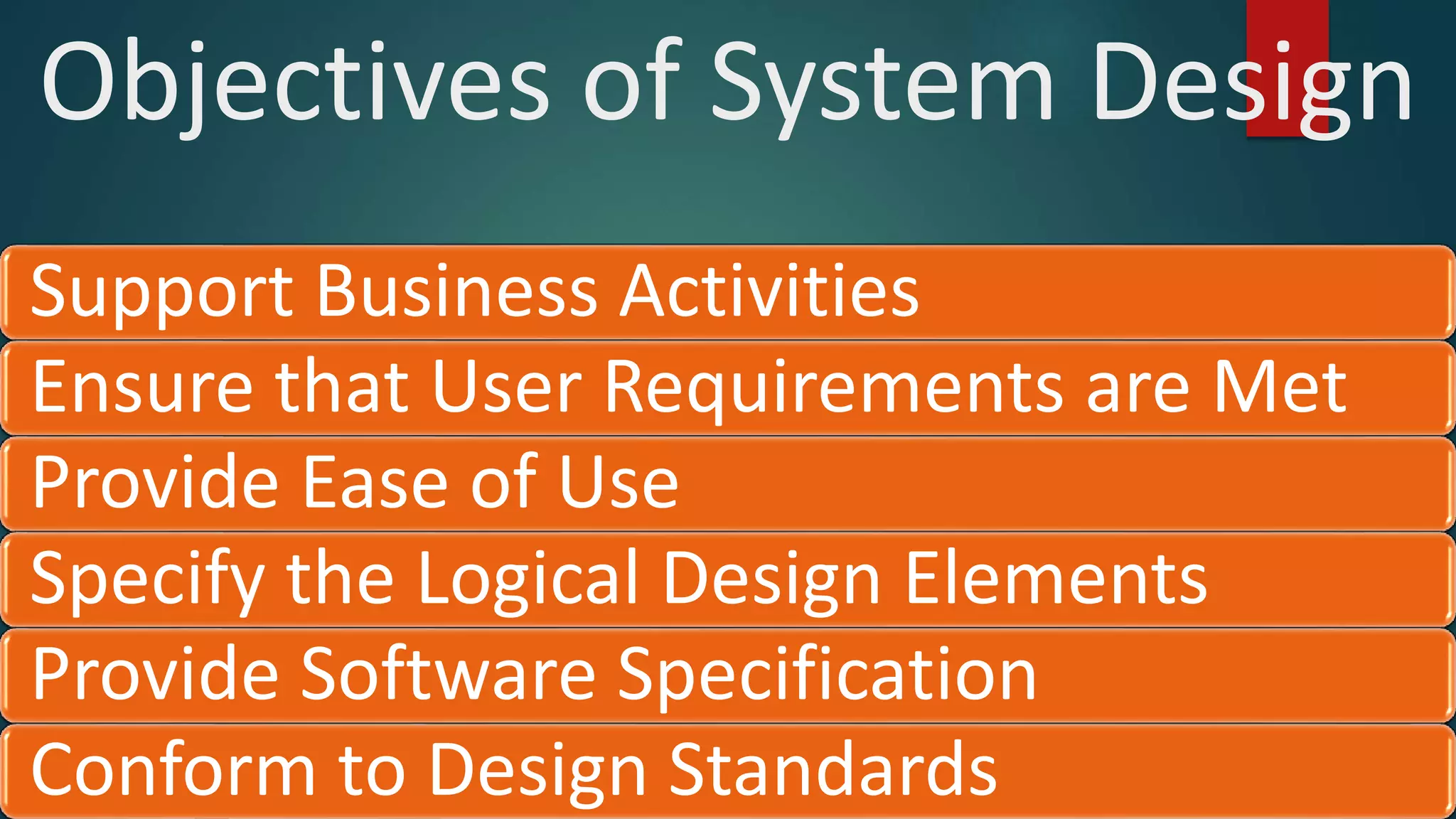
Objectives of System Design
Support Business Activities
Ensure that User Requirements are Met
Provide Ease of Use
Specify the Logical Design Elements
Provide Software Specification
Conform to Design Standards
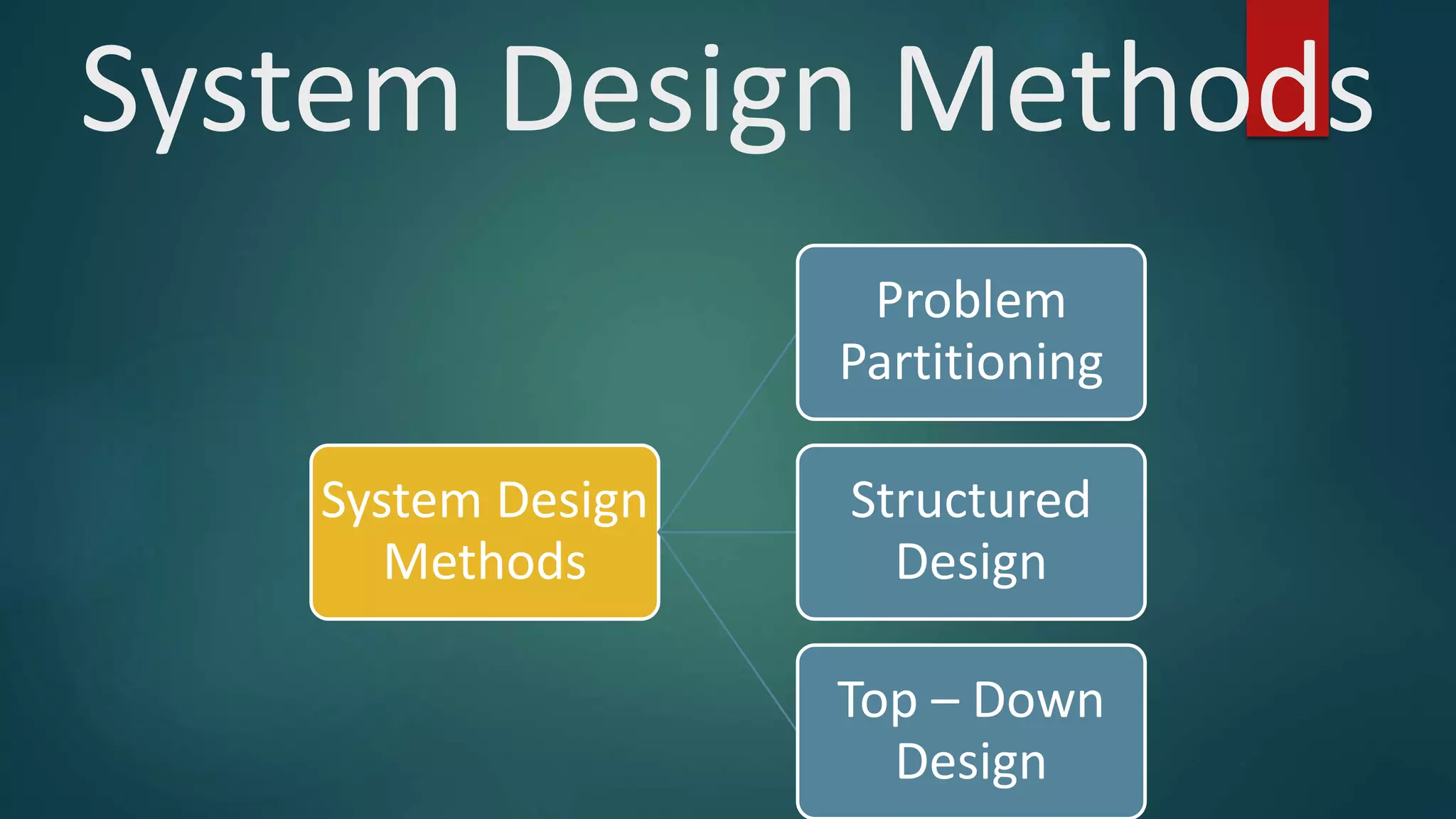
System Design Methods
System Design
Methods
Problem
Partitioning
Structured
Design
Top – Down
Design
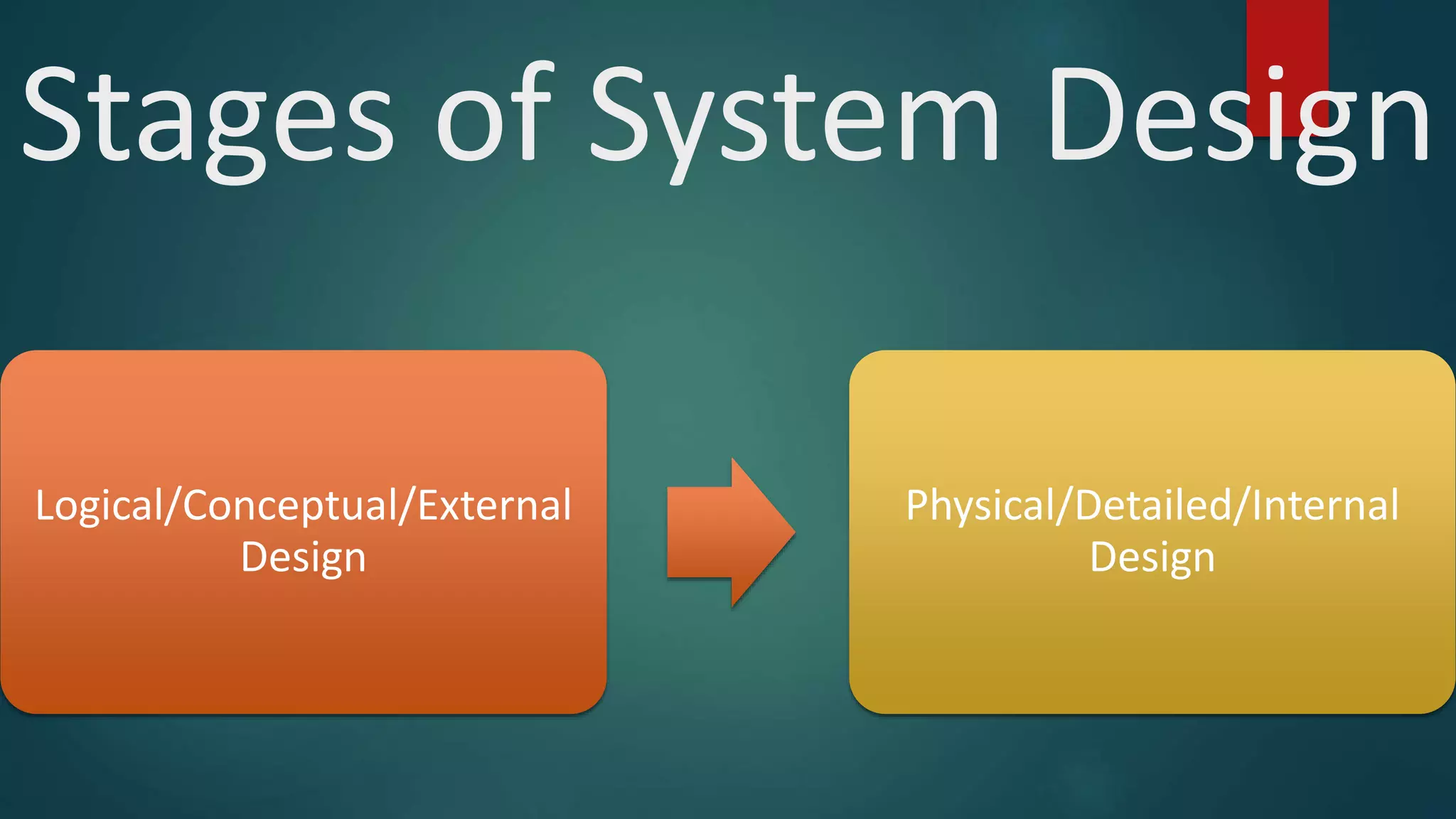
Stages of System Design
Logical/Conceptual/External
Design
Physical/Detailed/Internal
Design
System Analysis and Design
System Analysis and Design (SAD) mainly
focuses on −
Systems
Processes
Technology
System Analysis & Design

System Analysis & Design

  • 2.
    Introduction Systems development issystematic process which includes phases such as planning, analysis, design, deployment, and maintenance. Here, in this presentation, we will primarily focus on − Systems analysis Systems design
  • 3.
    Systems Analysis  Itis a process of collecting and interpreting facts, identifying the problems, and decomposition of a system into its components.  System analysis is conducted for the purpose of studying a system or its parts in order to identify its objectives. It is a problem solving technique that improves the system and ensures that all the components of the system work efficiently to accomplish their purpose.  Analysis specifies what the system should do.
  • 4.
    Need for SystemAnalysis System Objective System Boundaries System Importance Nature of the System Role of the System as an Interface Participation of Users Understanding of Resource Needs Assessment of Feasibility
  • 5.
    Phases of SystemAnalysis Analysis Phase Fact Finding Phase Interview Questionnaire Onsite Observation Structured Phase Data Flow Diagram Data Dictionary Decision Tree Decision Table Structured English ER Diagrams
  • 6.
    System Analysis Activities Analysisof the Organizational Environment Analysis of Any Present Systems System Requirements Analysis
  • 7.
    Systems Design It isa process of planning a new business system or replacing an existing system by defining its components or modules to satisfy the specific requirements. Before planning, you need to understand the old system thoroughly and determine how computers can best be used in order to operate efficiently. System Design focuses on how to accomplish the objective of the system.
  • 8.
    Objectives of SystemDesign Support Business Activities Ensure that User Requirements are Met Provide Ease of Use Specify the Logical Design Elements Provide Software Specification Conform to Design Standards
  • 9.
    System Design Methods SystemDesign Methods Problem Partitioning Structured Design Top – Down Design
  • 10.
    Stages of SystemDesign Logical/Conceptual/External Design Physical/Detailed/Internal Design
  • 11.
    System Analysis andDesign System Analysis and Design (SAD) mainly focuses on − Systems Processes Technology