SYNAPSES AND DRUGS
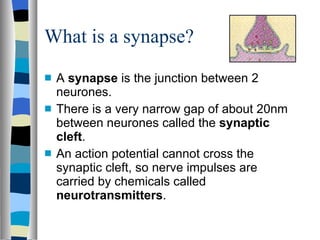
What is a synapse? A  synapse  is the junction between 2 neurones. There is a very narrow gap of about 20nm between neurones called the  synaptic cleft . An action potential cannot cross the synaptic cleft, so nerve impulses are carried by chemicals called  neurotransmitters .
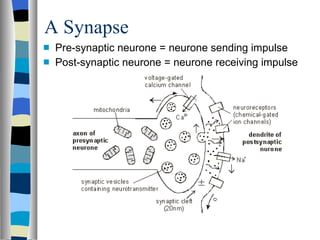
A Synapse Pre-synaptic neurone = neurone sending impulse Post-synaptic neurone = neurone receiving impulse
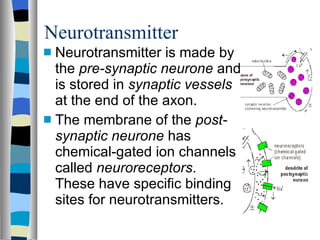
Neurotransmitter Neurotransmitter is made by the  pre-synaptic neurone  and is stored in  synaptic vessels  at the end of the axon. The membrane of the  post-synaptic neurone  has chemical-gated ion channels called  neuroreceptors .  These have specific binding sites for neurotransmitters.
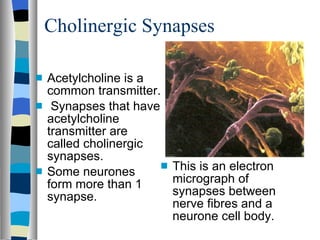
Cholinergic Synapses Acetylcholine is a common transmitter.  Synapses that have acetylcholine transmitter are called cholinergic synapses. Some neurones form more than 1 synapse. This is an electron micrograph of synapses between nerve fibres and a neurone cell body.
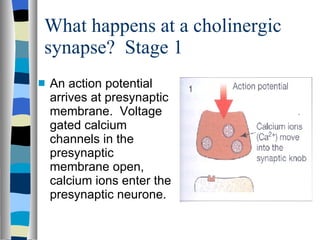
What happens at a cholinergic synapse?  Stage 1 An action potential arrives at presynaptic membrane.  Voltage gated calcium channels in the presynaptic membrane open, calcium ions enter the presynaptic neurone.
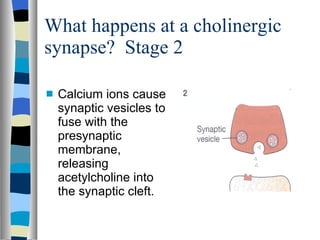
What happens at a cholinergic synapse?  Stage 2 Calcium ions cause synaptic vesicles to fuse with the presynaptic membrane, releasing acetylcholine into the synaptic cleft.
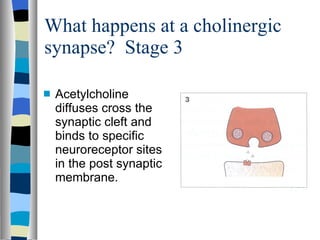
What happens at a cholinergic synapse?  Stage 3 Acetylcholine diffuses cross the synaptic cleft and binds to specific neuroreceptor sites in the post synaptic membrane.
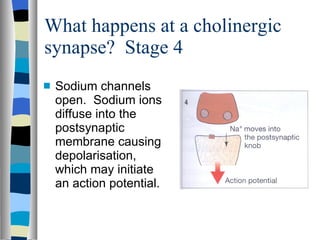
What happens at a cholinergic synapse?  Stage 4 Sodium channels open.  Sodium ions diffuse into the postsynaptic membrane causing depolarisation, which may initiate an action potential.
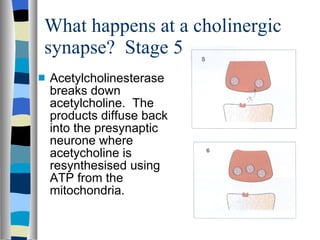
What happens at a cholinergic synapse?  Stage 5 Acetylcholinesterase breaks down acetylcholine.  The products diffuse back into the presynaptic neurone where acetycholine is resynthesised using ATP from the  mitochondria.
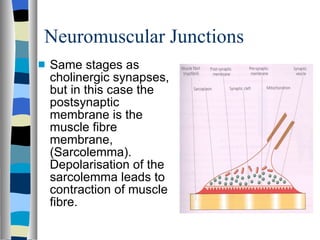
Neuromuscular Junctions Same stages as cholinergic synapses, but in this case the postsynaptic membrane is the muscle fibre membrane, (Sarcolemma).  Depolarisation of the sarcolemma leads to contraction of muscle fibre.
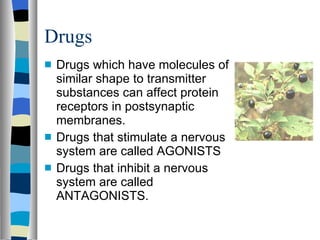
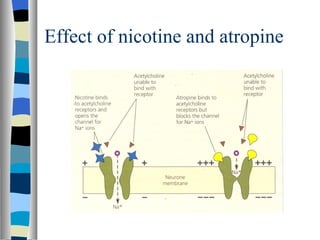
Drugs Drugs which have molecules of similar shape to transmitter substances can affect protein receptors in postsynaptic membranes. Drugs that stimulate a nervous system are called AGONISTS Drugs that inhibit a nervous system are called ANTAGONISTS.
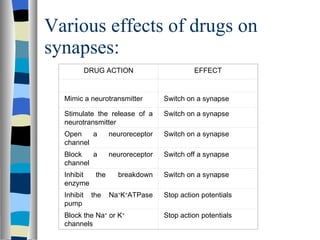
Various effects of drugs on synapses:   DRUG ACTION EFFECT     Mimic a neurotransmitter Switch on a synapse Stimulate the release of a neurotransmitter Switch on a synapse Open a neuroreceptor channel Switch on a synapse Block a neuroreceptor channel Switch off a synapse Inhibit the breakdown enzyme Switch on a synapse Inhibit the Na + K + ATPase pump Stop action potentials Block the Na +  or K +  channels Stop action potentials
Effect of nicotine and atropine
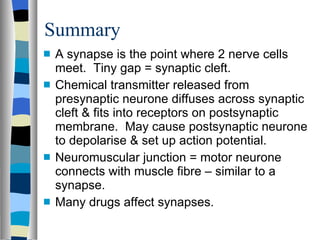
Summary A synapse is the point where 2 nerve cells meet.  Tiny gap = synaptic cleft. Chemical transmitter released from presynaptic neurone diffuses across synaptic cleft & fits into receptors on postsynaptic membrane.  May cause postsynaptic neurone to depolarise & set up action potential. Neuromuscular junction = motor neurone connects with muscle fibre – similar to a synapse. Many drugs affect synapses.

Synapses and drugs

  • 1.
  • 2.
    What is asynapse? A synapse is the junction between 2 neurones. There is a very narrow gap of about 20nm between neurones called the synaptic cleft . An action potential cannot cross the synaptic cleft, so nerve impulses are carried by chemicals called neurotransmitters .
  • 3.
    A Synapse Pre-synapticneurone = neurone sending impulse Post-synaptic neurone = neurone receiving impulse
  • 4.
    Neurotransmitter Neurotransmitter ismade by the pre-synaptic neurone and is stored in synaptic vessels at the end of the axon. The membrane of the post-synaptic neurone has chemical-gated ion channels called neuroreceptors . These have specific binding sites for neurotransmitters.
  • 5.
    Cholinergic Synapses Acetylcholineis a common transmitter. Synapses that have acetylcholine transmitter are called cholinergic synapses. Some neurones form more than 1 synapse. This is an electron micrograph of synapses between nerve fibres and a neurone cell body.
  • 6.
    What happens ata cholinergic synapse? Stage 1 An action potential arrives at presynaptic membrane. Voltage gated calcium channels in the presynaptic membrane open, calcium ions enter the presynaptic neurone.
  • 7.
    What happens ata cholinergic synapse? Stage 2 Calcium ions cause synaptic vesicles to fuse with the presynaptic membrane, releasing acetylcholine into the synaptic cleft.
  • 8.
    What happens ata cholinergic synapse? Stage 3 Acetylcholine diffuses cross the synaptic cleft and binds to specific neuroreceptor sites in the post synaptic membrane.
  • 9.
    What happens ata cholinergic synapse? Stage 4 Sodium channels open. Sodium ions diffuse into the postsynaptic membrane causing depolarisation, which may initiate an action potential.
  • 10.
    What happens ata cholinergic synapse? Stage 5 Acetylcholinesterase breaks down acetylcholine. The products diffuse back into the presynaptic neurone where acetycholine is resynthesised using ATP from the mitochondria.
  • 11.
    Neuromuscular Junctions Samestages as cholinergic synapses, but in this case the postsynaptic membrane is the muscle fibre membrane, (Sarcolemma). Depolarisation of the sarcolemma leads to contraction of muscle fibre.
  • 12.
    Drugs Drugs whichhave molecules of similar shape to transmitter substances can affect protein receptors in postsynaptic membranes. Drugs that stimulate a nervous system are called AGONISTS Drugs that inhibit a nervous system are called ANTAGONISTS.
  • 13.
    Various effects ofdrugs on synapses:   DRUG ACTION EFFECT     Mimic a neurotransmitter Switch on a synapse Stimulate the release of a neurotransmitter Switch on a synapse Open a neuroreceptor channel Switch on a synapse Block a neuroreceptor channel Switch off a synapse Inhibit the breakdown enzyme Switch on a synapse Inhibit the Na + K + ATPase pump Stop action potentials Block the Na + or K + channels Stop action potentials
  • 14.
    Effect of nicotineand atropine
  • 15.
    Summary A synapseis the point where 2 nerve cells meet. Tiny gap = synaptic cleft. Chemical transmitter released from presynaptic neurone diffuses across synaptic cleft & fits into receptors on postsynaptic membrane. May cause postsynaptic neurone to depolarise & set up action potential. Neuromuscular junction = motor neurone connects with muscle fibre – similar to a synapse. Many drugs affect synapses.