Symbols and Symmetry
Learning Objectives Appreciate significance of symbols Know what symmetry is and recognise its beauty Be familiar with lines of symmetry and order of rotational symmetry Transform shapes on a grid to create symmetrical symbols
Starter There are several symbols displayed around the room Your challenge is to match the group names with the symbols on your  worksheet
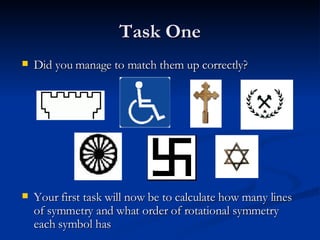
Task One Did you manage to match them up correctly? Your first task will now be to calculate how many lines of symmetry and what order of rotational symmetry each symbol has
Symmetry Symmetry is something which is all around us, especially in  nature  (click on link), and is considered an important aspect of beauty What does symmetry mean? Can you write your own definition? WORKING DEFINITION: symmetry is a characteristic of a figure or shape whereby reflection in a plane or rotation of the shape does not  appear  to change it
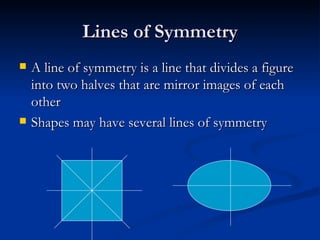
Lines of Symmetry A line of symmetry is a line that divides a figure into two halves that are mirror images of each other Shapes may have several lines of symmetry
Lines of Symmetry Tricks One good trick is to see how many different ways you can fold a shape in half A second trick is to use a mirror to see how many ways you can make the figure appear like the original Which letters of the alphabet are symmetrical?
Order of Rotational Symmetry What the heck is this all about? The rotational symmetry of an object is determined by how many times it can be rotated about its centre point and appear to be the same before returning to its original position Watch this  animation  to help you understand what we are talking about. The shape in the animation has rotational symmetry to the order of 4.
Task One Now that we know what lines of symmetry and order of rotational symmetry is all about we can return to our original task: How many lines of symmetry do our symbols have? What order of rotational symmetry do they have?
Results - Did you get the same? 0 0 Disabled Sign 4 0 Swastika 16 32 Gypsy Wheel 0 1 Watchtower 0 1 Trade Unions 0 1 Catholic Cross 6 6 Star of David Order of Rotation Symmetry Lines of Symmetry
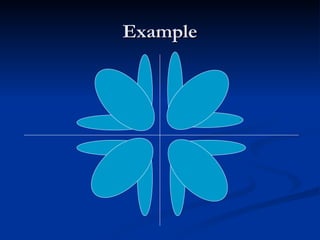
Task 2 We have been looking at various existing symbols, but how about making our own symmetrical symbols? Make your own symmetrical symbol (related to suffering and survival) into a display TIP: Draw a cross on a blank sheet of paper or grid paper and use a mirror to make reflections of your shape in each of the 4 quadrants, or use tracing paper and rotate your shape about the origin
Example
Plenary In groups, write down 3 things that you have learnt this lesson Did we meet our learning objectives? Appreciate significance of symbols Know what symmetry is and recognise its beauty Be familiar with lines of symmetry and order of rotational symmetry Transform shapes on a grid to create symmetrical symbols

Symbols And Symmetry

  • 1.
  • 2.
    Learning Objectives Appreciatesignificance of symbols Know what symmetry is and recognise its beauty Be familiar with lines of symmetry and order of rotational symmetry Transform shapes on a grid to create symmetrical symbols
  • 3.
    Starter There areseveral symbols displayed around the room Your challenge is to match the group names with the symbols on your worksheet
  • 4.
    Task One Didyou manage to match them up correctly? Your first task will now be to calculate how many lines of symmetry and what order of rotational symmetry each symbol has
  • 5.
    Symmetry Symmetry issomething which is all around us, especially in nature (click on link), and is considered an important aspect of beauty What does symmetry mean? Can you write your own definition? WORKING DEFINITION: symmetry is a characteristic of a figure or shape whereby reflection in a plane or rotation of the shape does not appear to change it
  • 6.
    Lines of SymmetryA line of symmetry is a line that divides a figure into two halves that are mirror images of each other Shapes may have several lines of symmetry
  • 7.
    Lines of SymmetryTricks One good trick is to see how many different ways you can fold a shape in half A second trick is to use a mirror to see how many ways you can make the figure appear like the original Which letters of the alphabet are symmetrical?
  • 8.
    Order of RotationalSymmetry What the heck is this all about? The rotational symmetry of an object is determined by how many times it can be rotated about its centre point and appear to be the same before returning to its original position Watch this animation to help you understand what we are talking about. The shape in the animation has rotational symmetry to the order of 4.
  • 9.
    Task One Nowthat we know what lines of symmetry and order of rotational symmetry is all about we can return to our original task: How many lines of symmetry do our symbols have? What order of rotational symmetry do they have?
  • 10.
    Results - Didyou get the same? 0 0 Disabled Sign 4 0 Swastika 16 32 Gypsy Wheel 0 1 Watchtower 0 1 Trade Unions 0 1 Catholic Cross 6 6 Star of David Order of Rotation Symmetry Lines of Symmetry
  • 11.
    Task 2 Wehave been looking at various existing symbols, but how about making our own symmetrical symbols? Make your own symmetrical symbol (related to suffering and survival) into a display TIP: Draw a cross on a blank sheet of paper or grid paper and use a mirror to make reflections of your shape in each of the 4 quadrants, or use tracing paper and rotate your shape about the origin
  • 12.
  • 13.
    Plenary In groups,write down 3 things that you have learnt this lesson Did we meet our learning objectives? Appreciate significance of symbols Know what symmetry is and recognise its beauty Be familiar with lines of symmetry and order of rotational symmetry Transform shapes on a grid to create symmetrical symbols