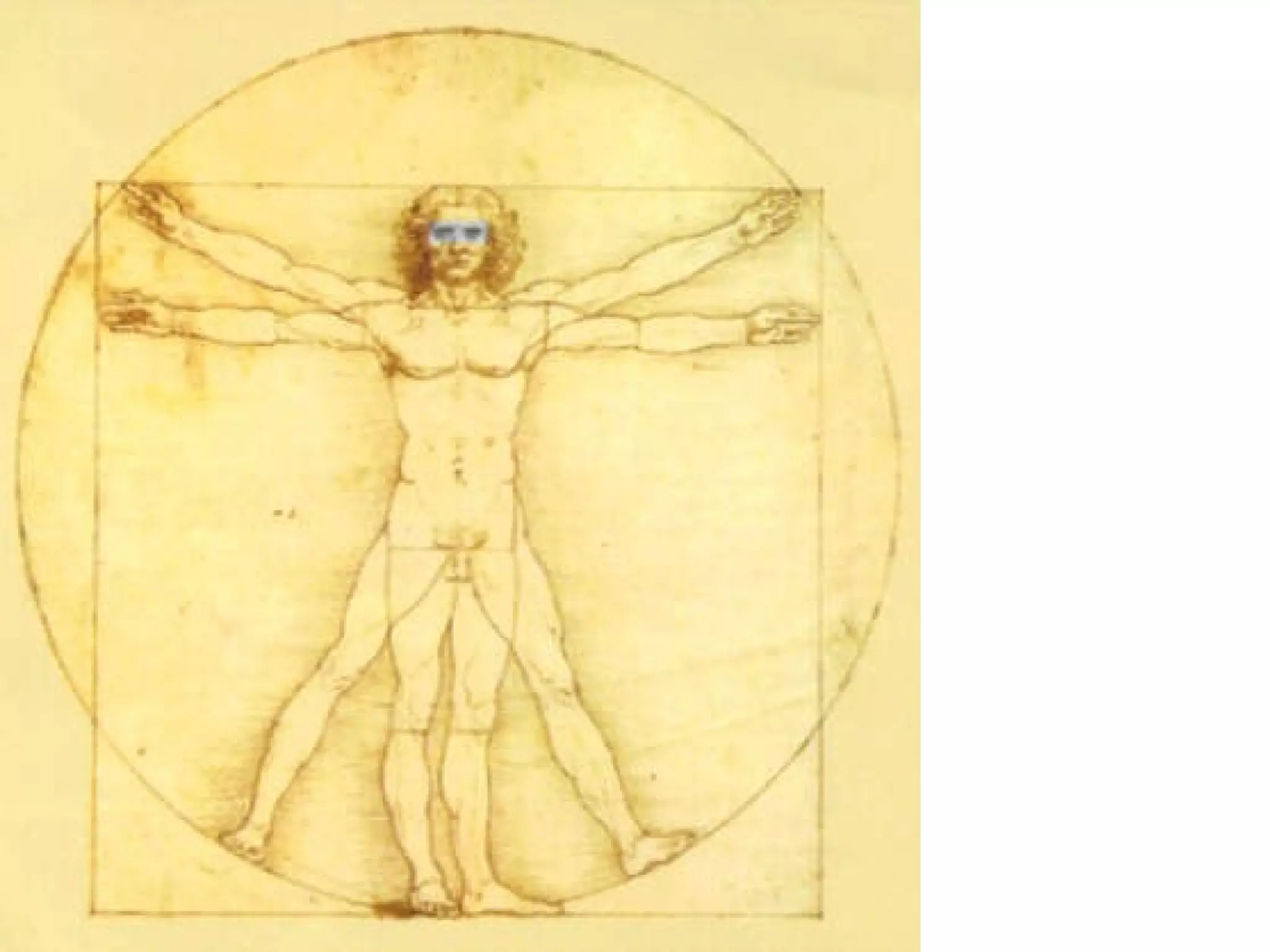
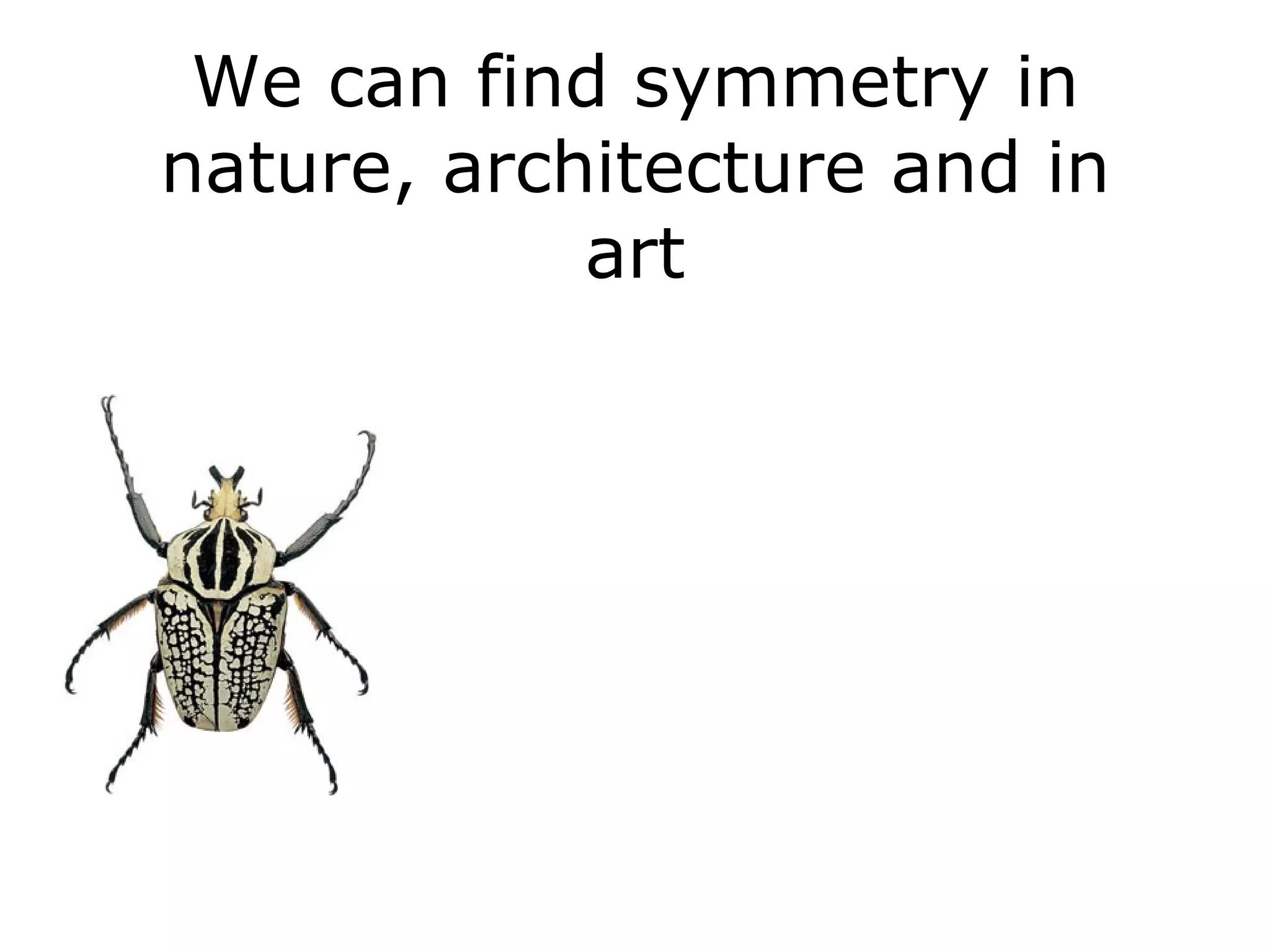
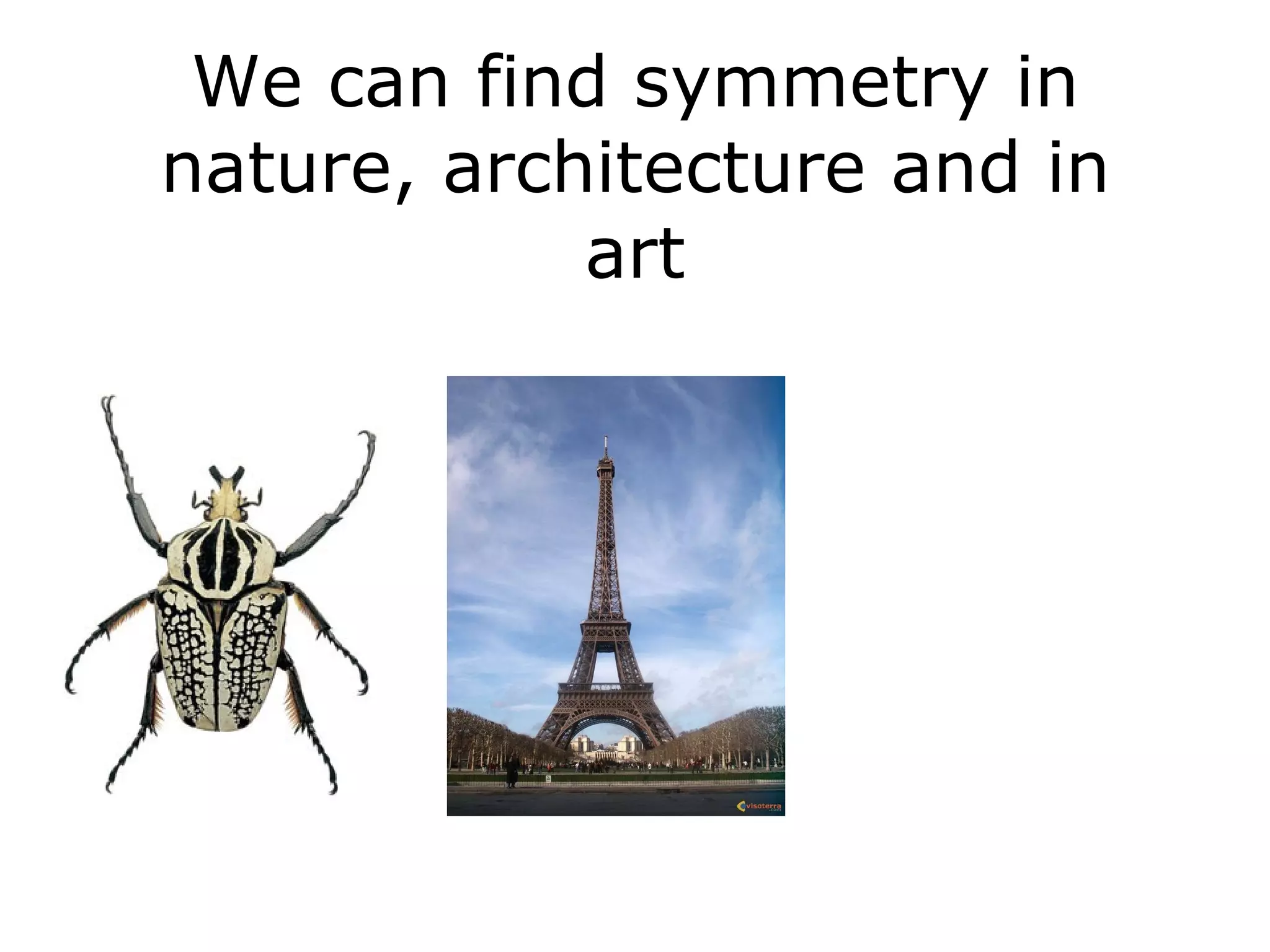
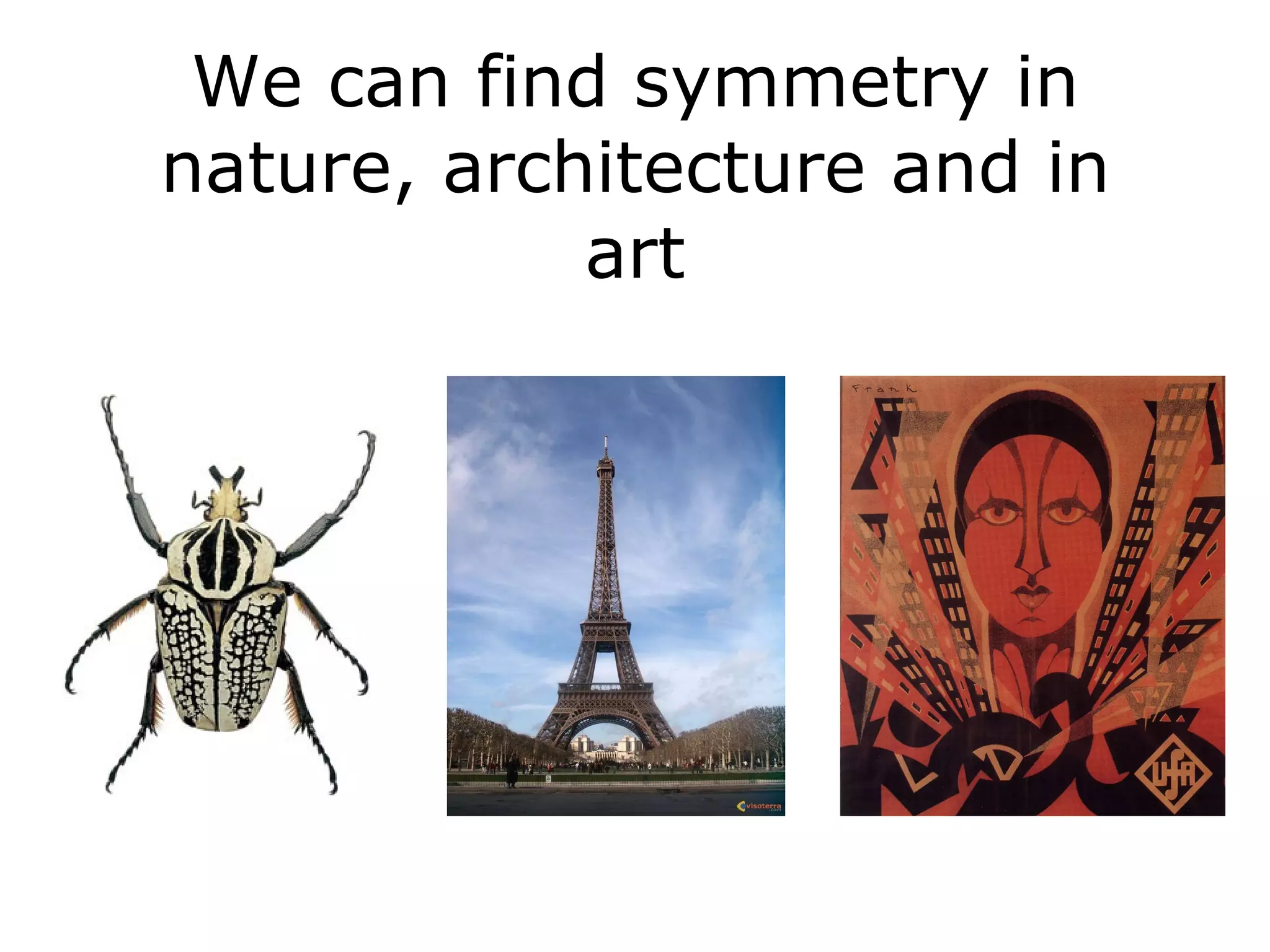
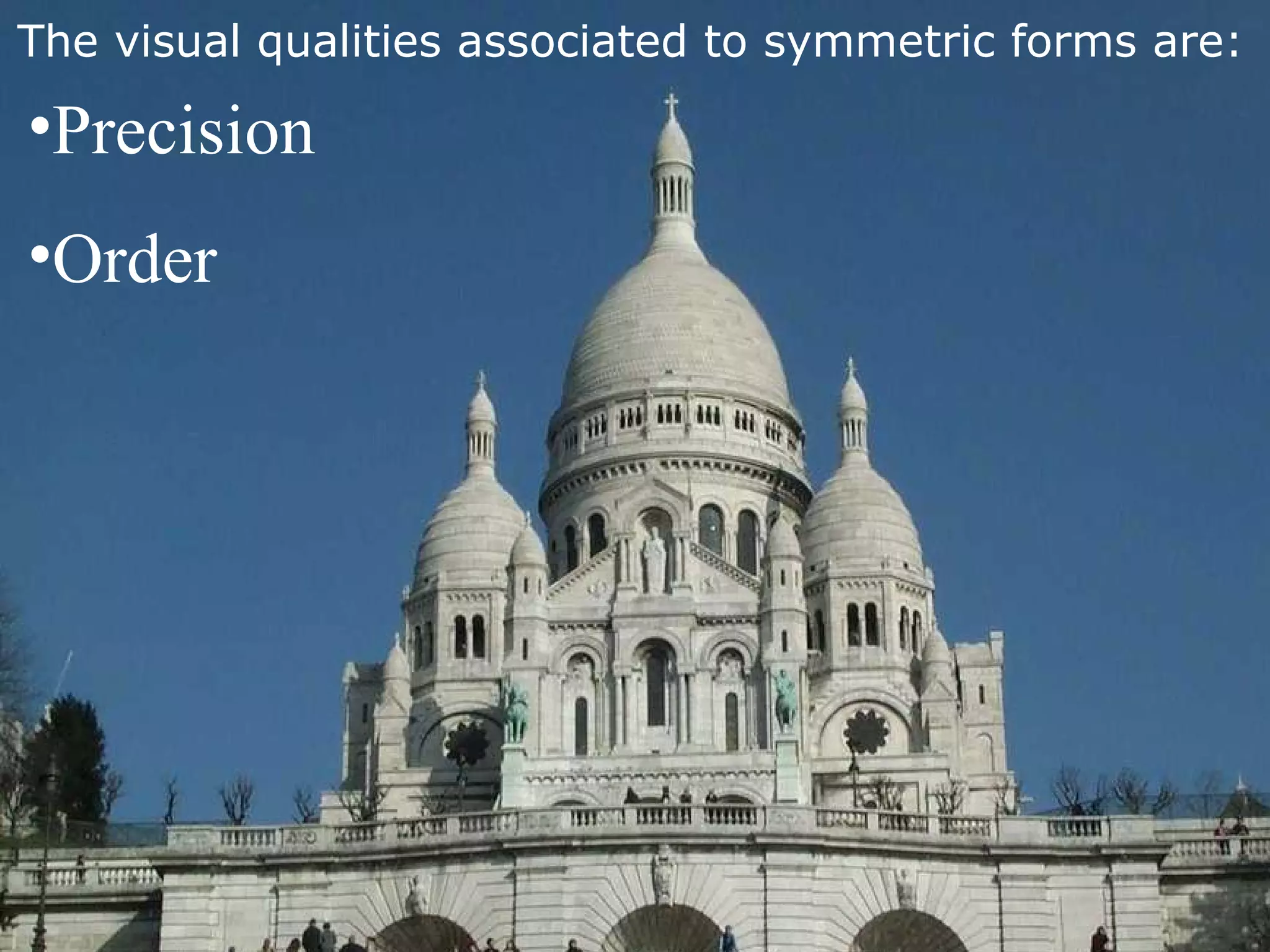
We can find symmetry in nature, architecture and in art
 
 
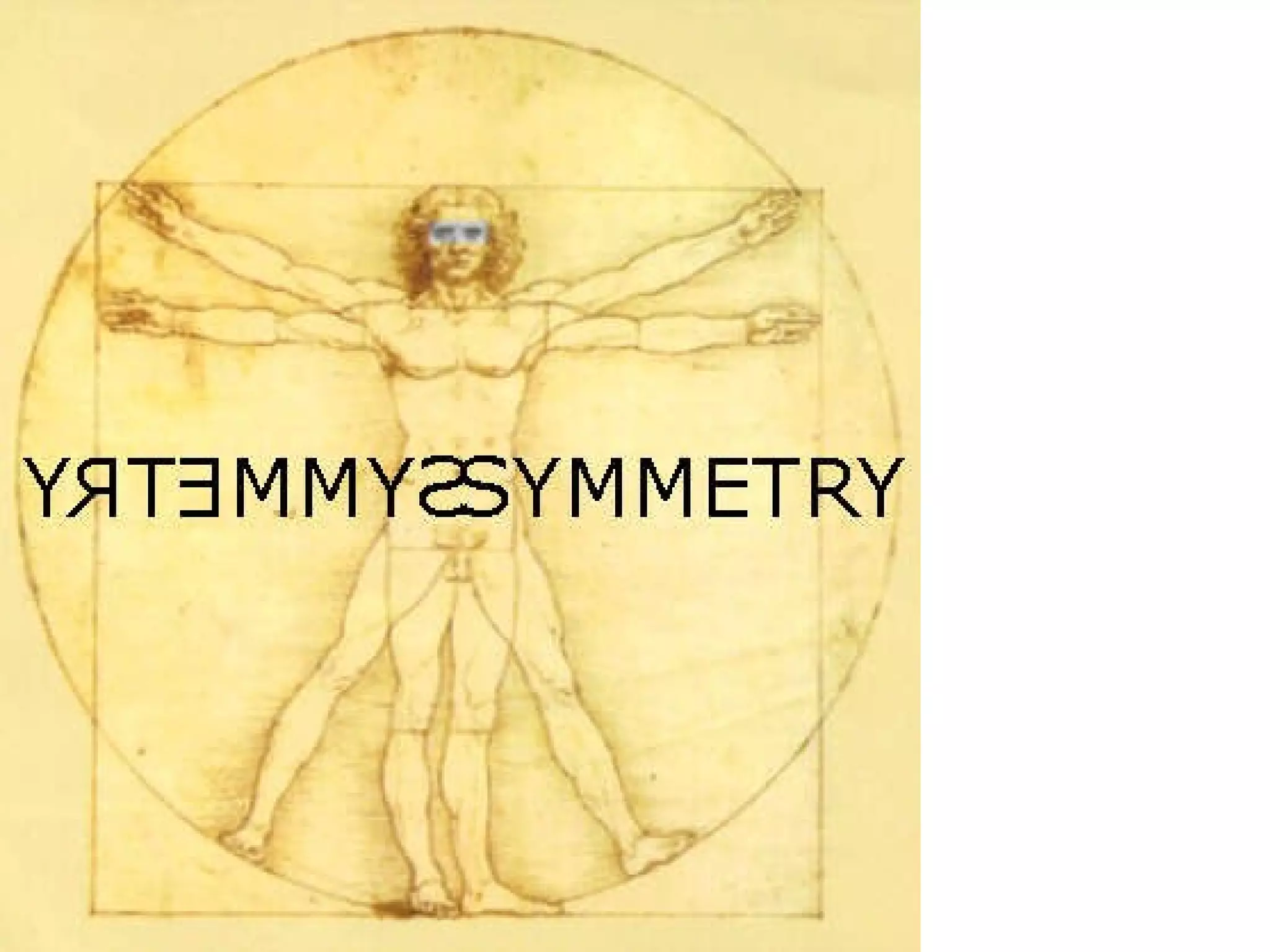
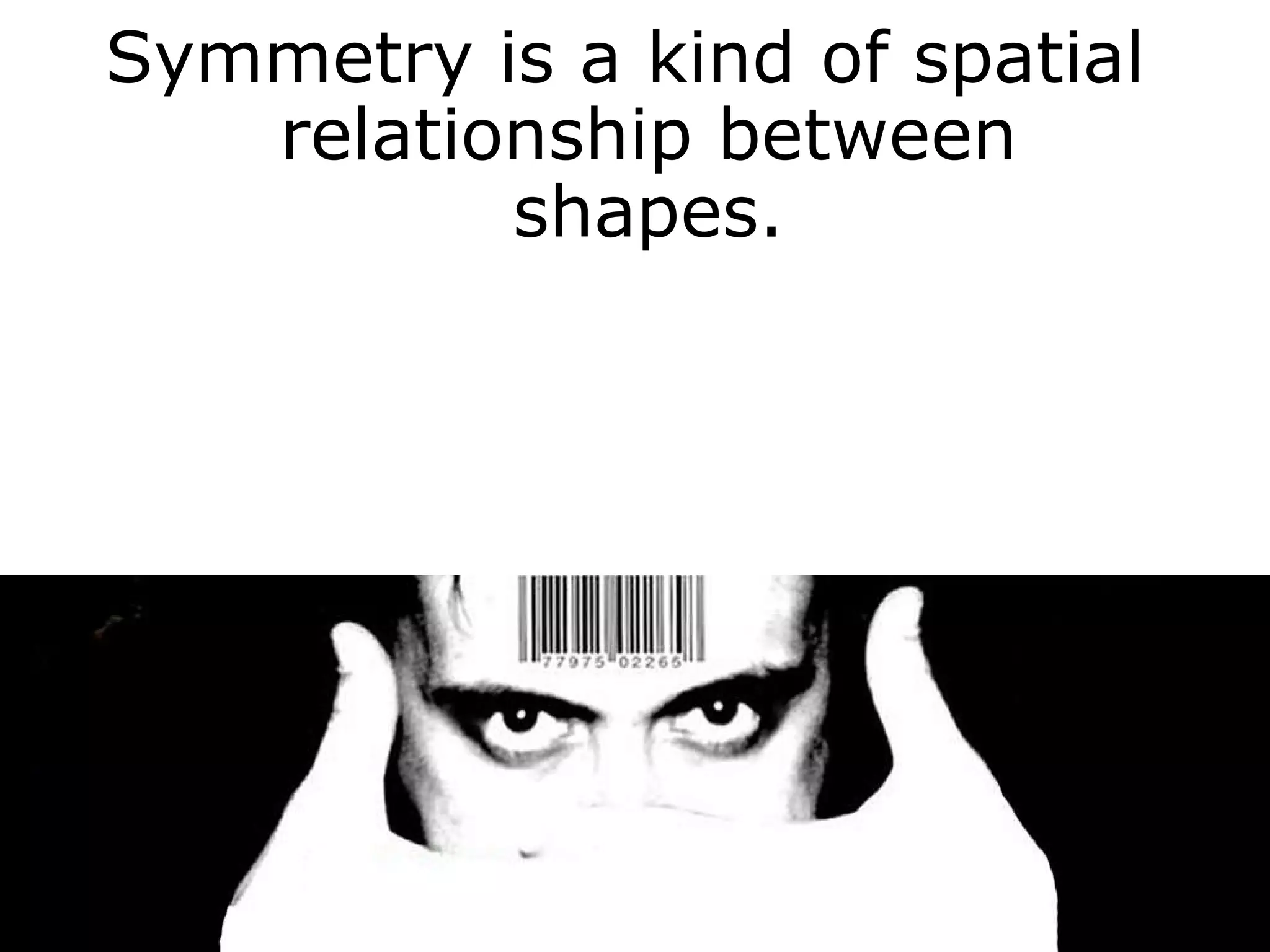
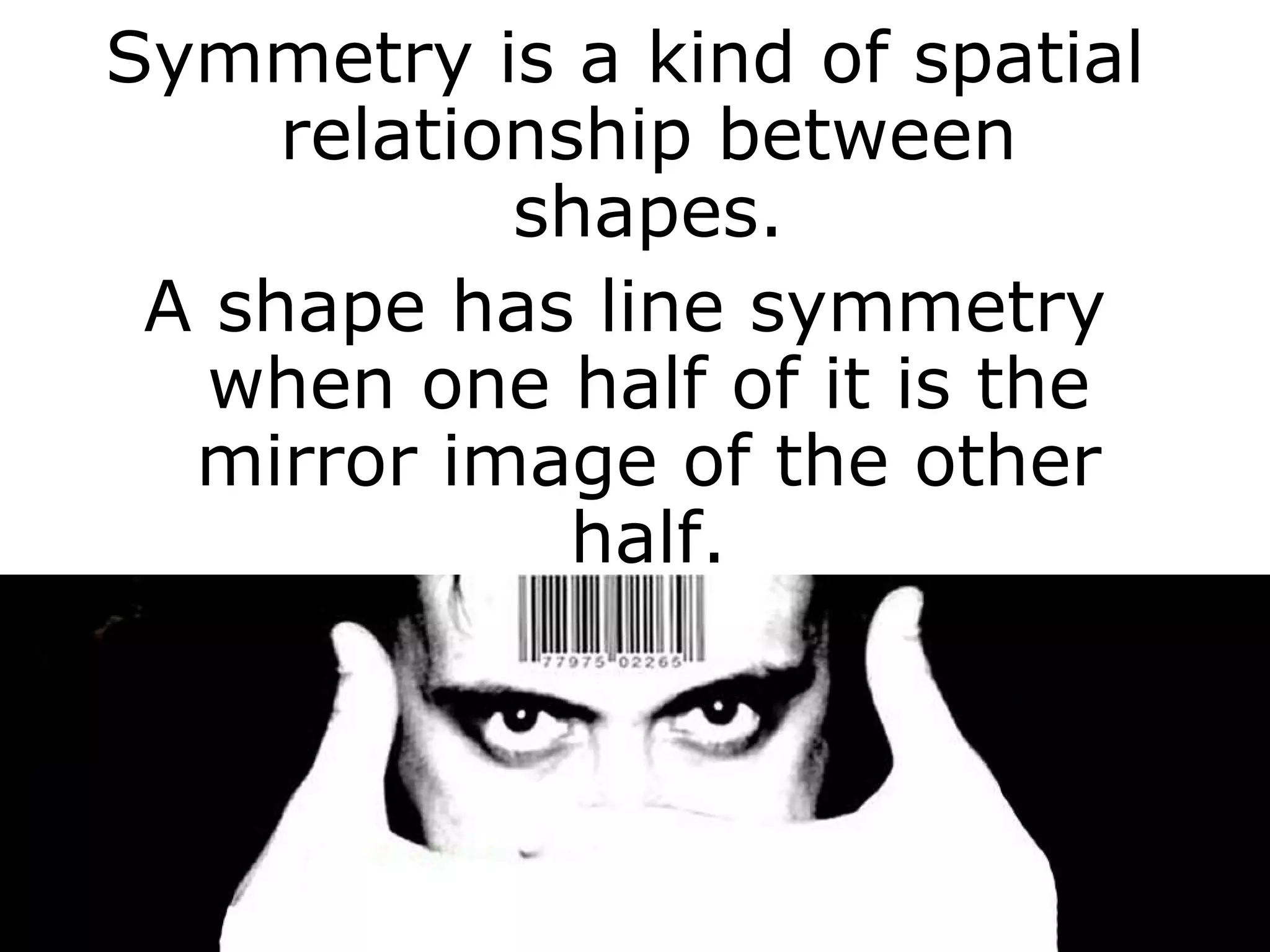
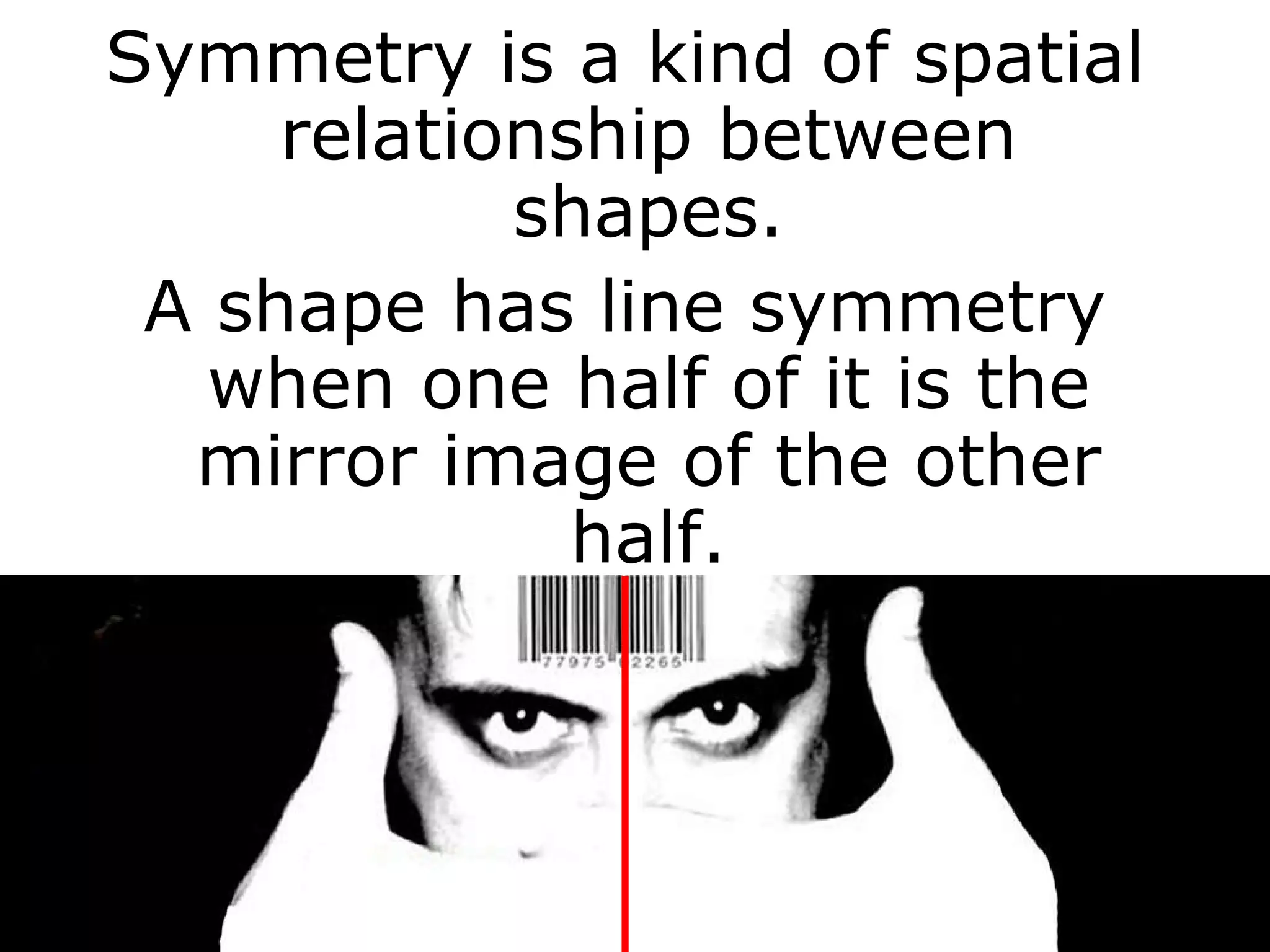
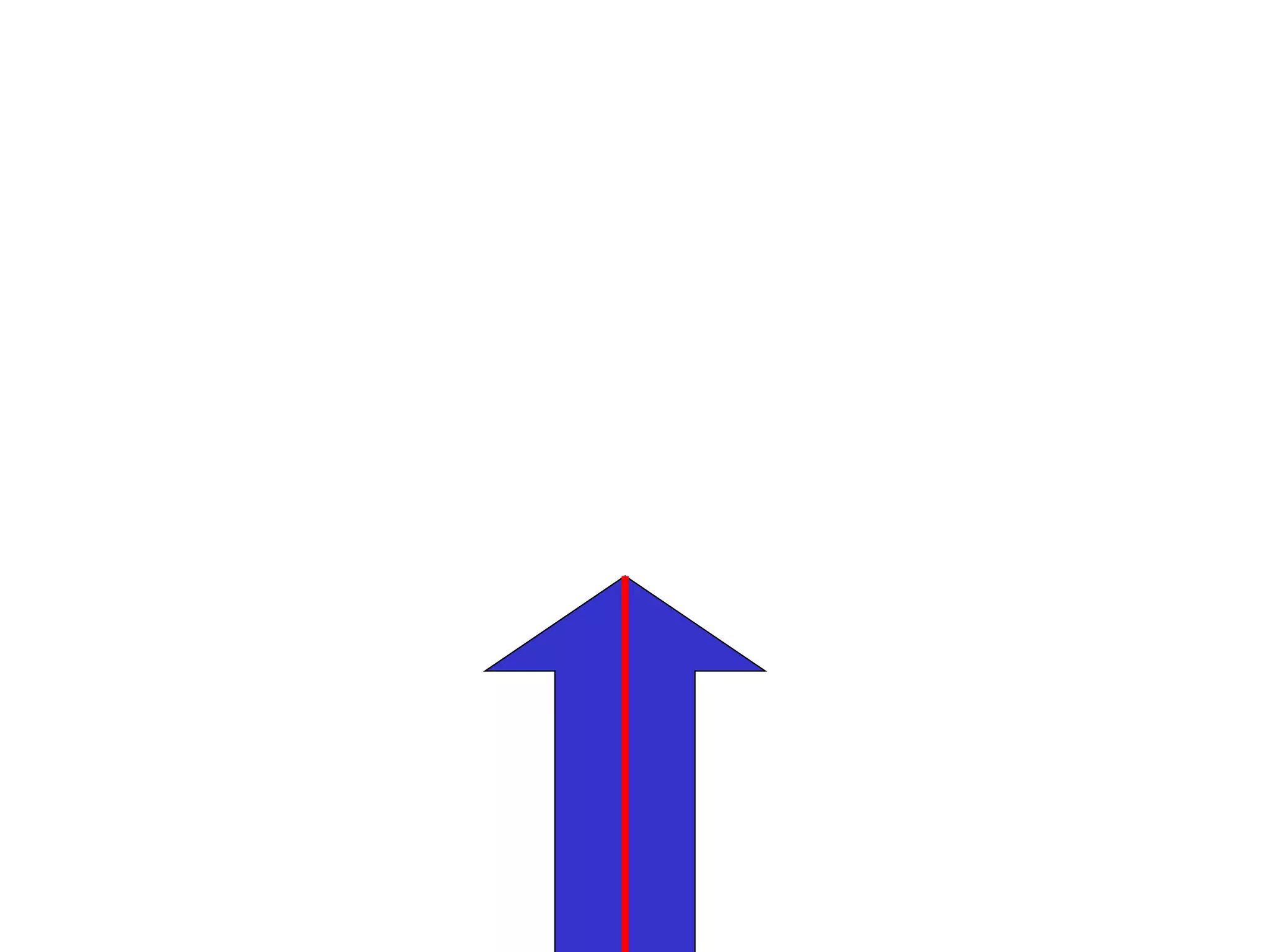
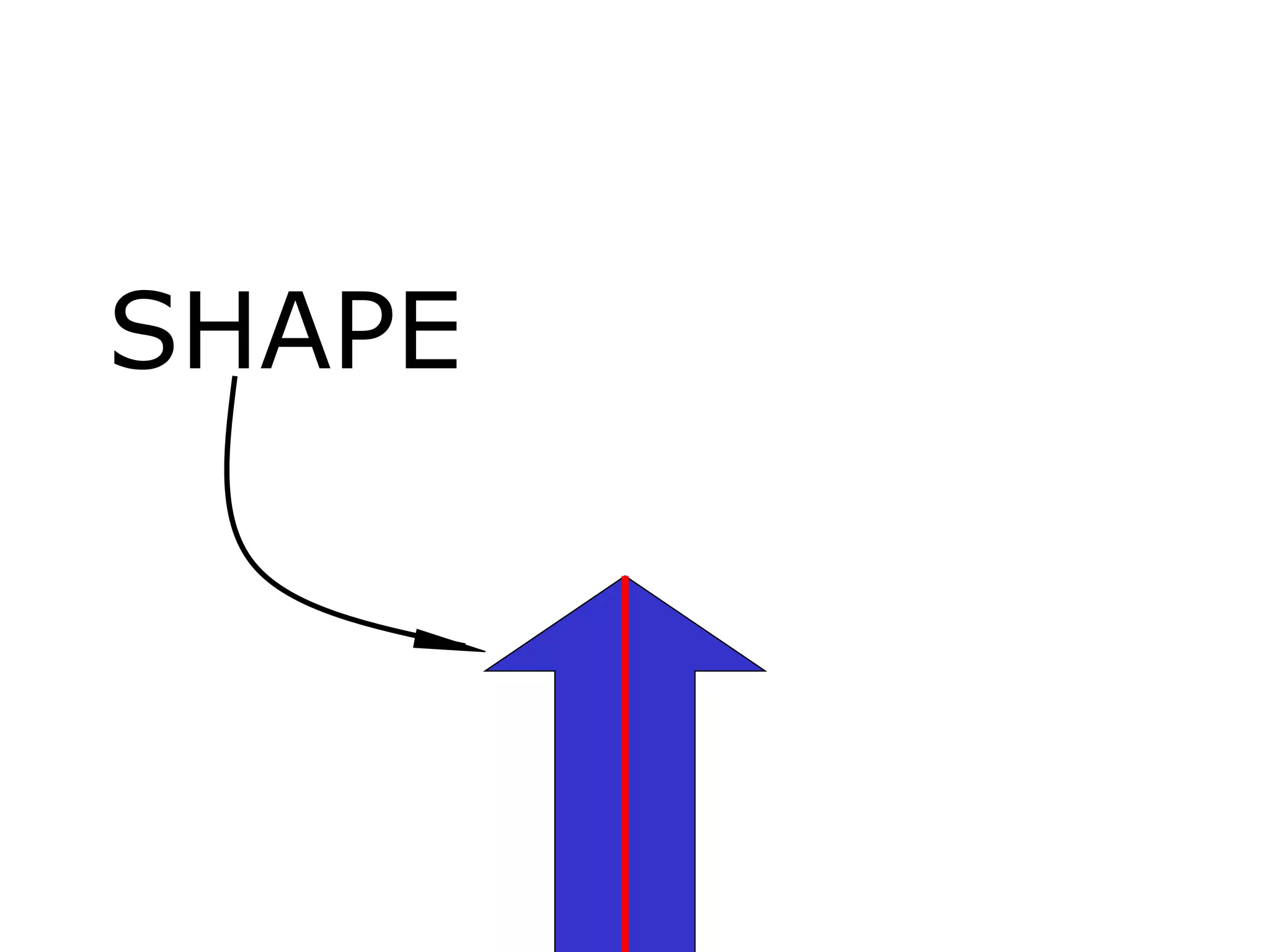
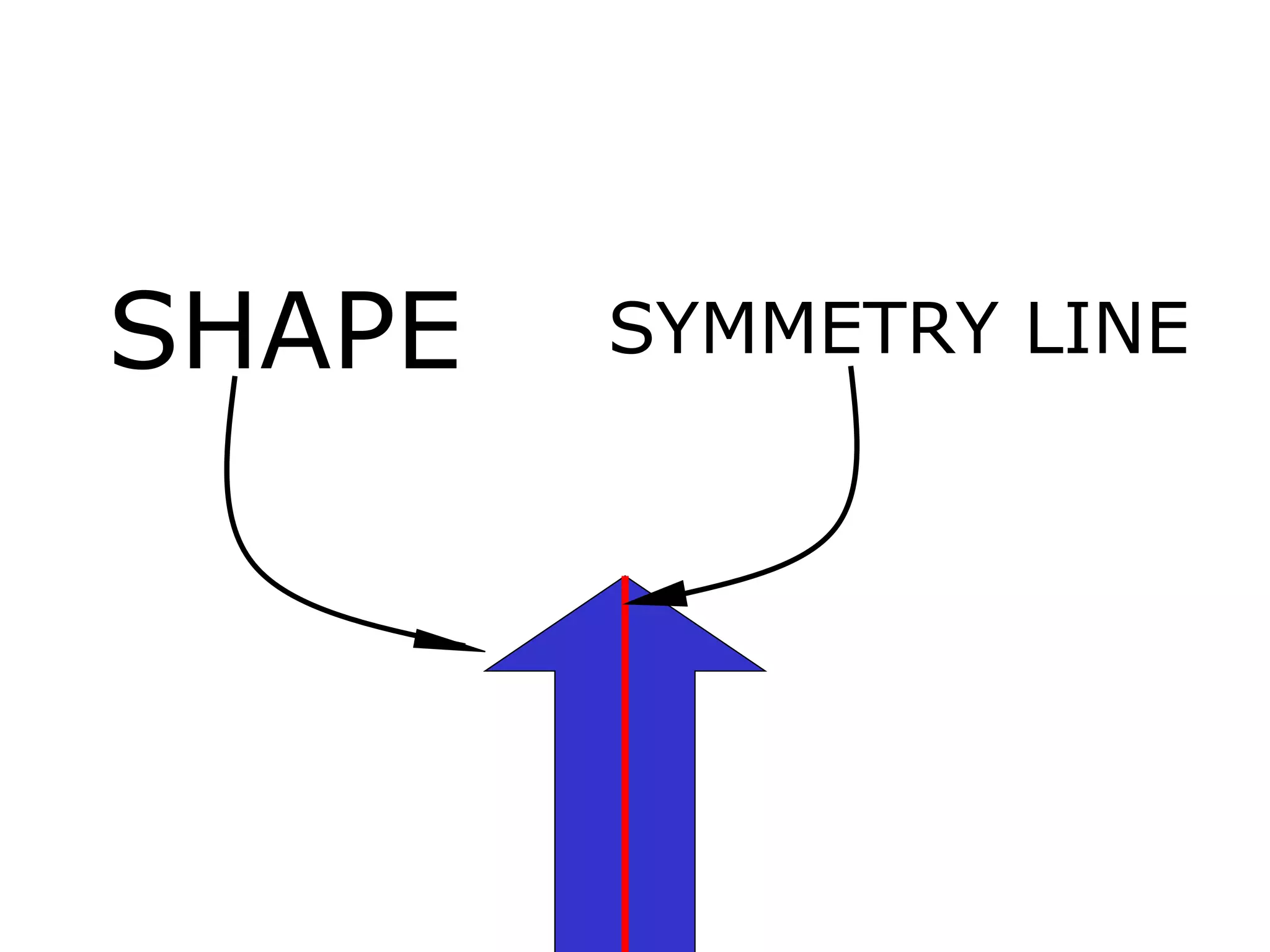
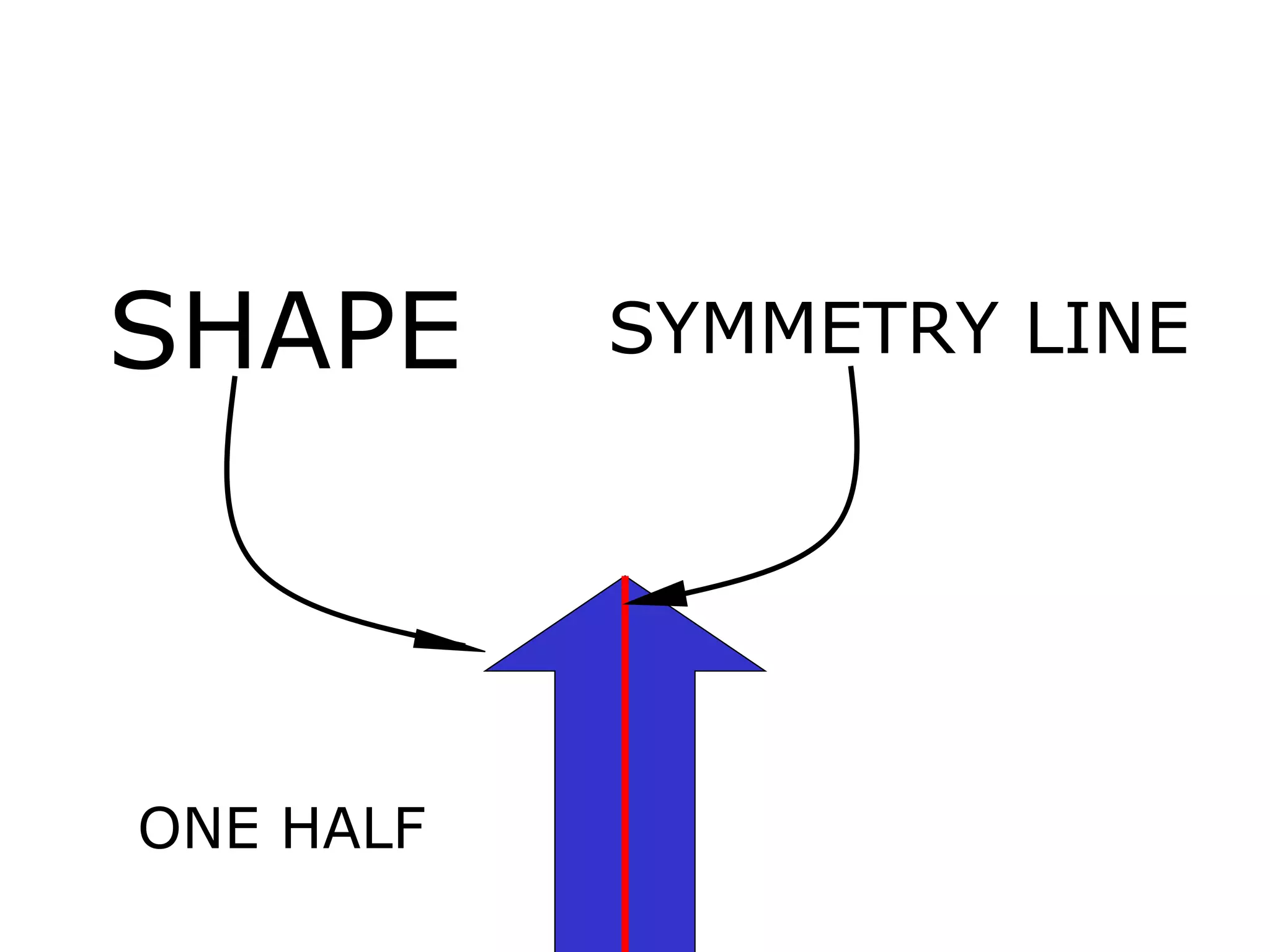
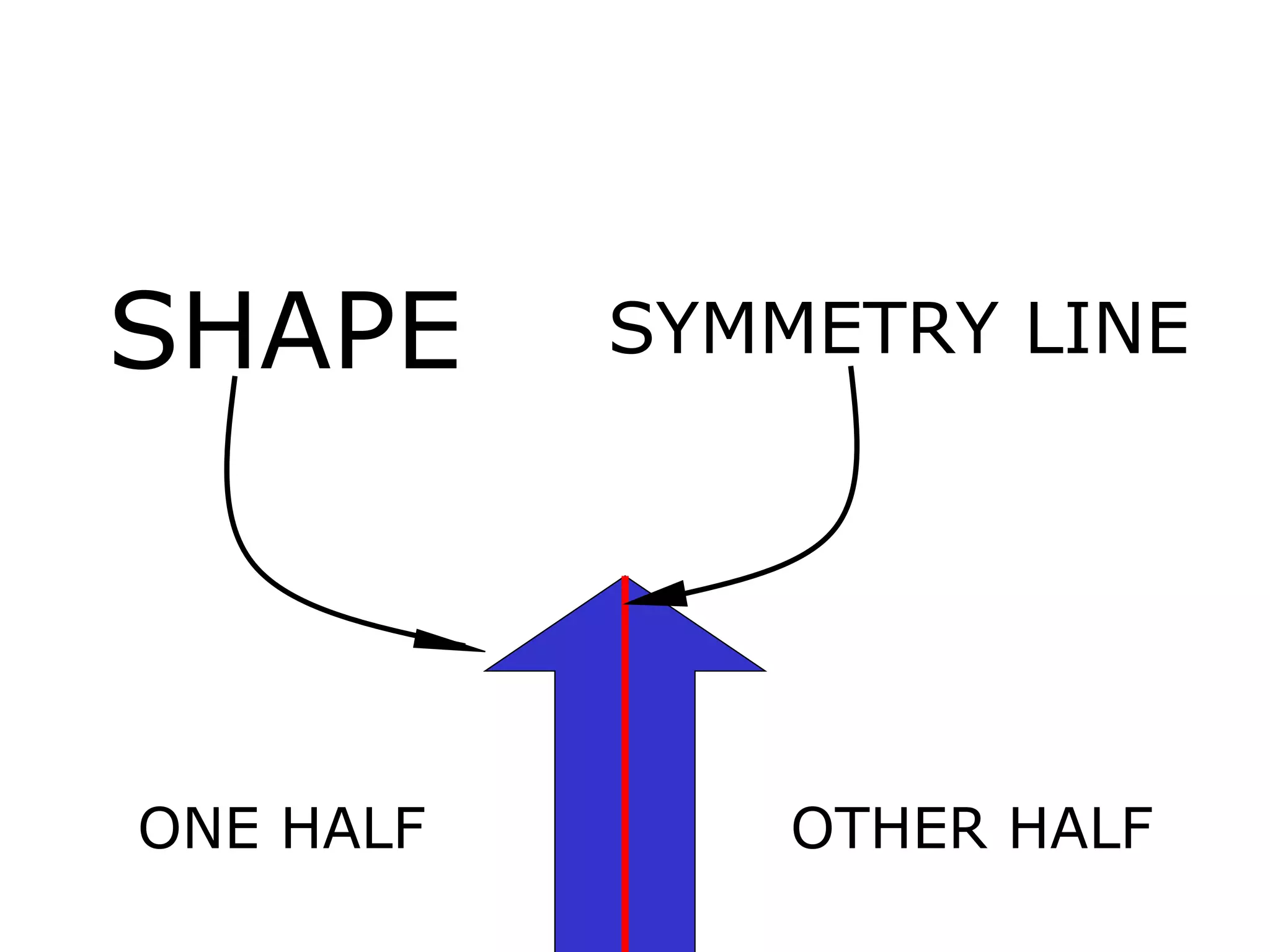
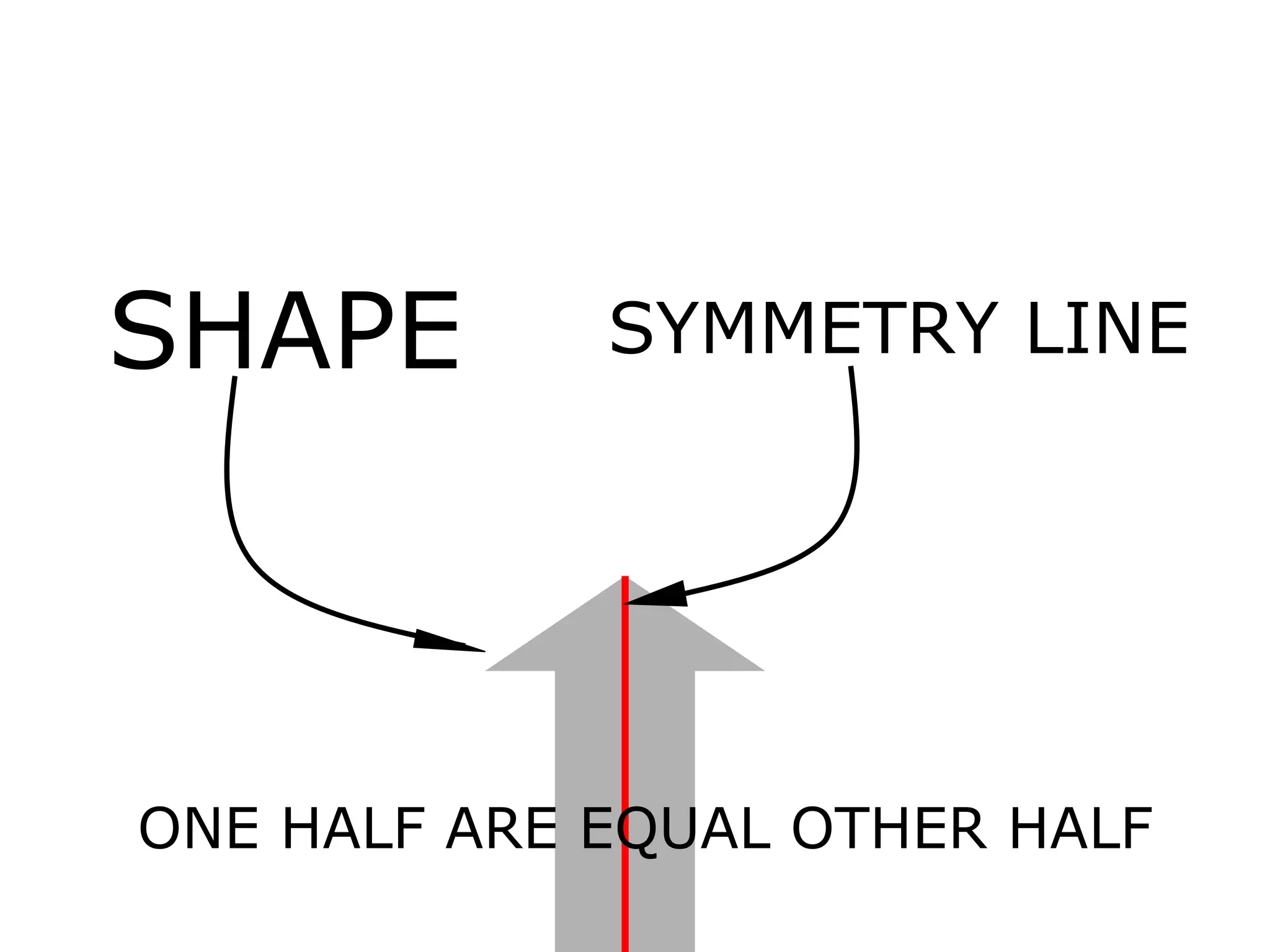
Symmetry is a kind of spatial relationship between shapes. A shape has line symmetry when one half of it is the mirror image of the other half.
 
 
SHAPE
SHAPE SYMMETRY LINE
ONE HALF  ARE EQUAL OTHER HALF SHAPE SYMMETRY LINE
ONE HALF  ARE EQUAL  OTHER HALF SHAPE SYMMETRY LINE
SHAPE SYMMETRY LINE ONE HALF ARE EQUAL OTHER HALF
 
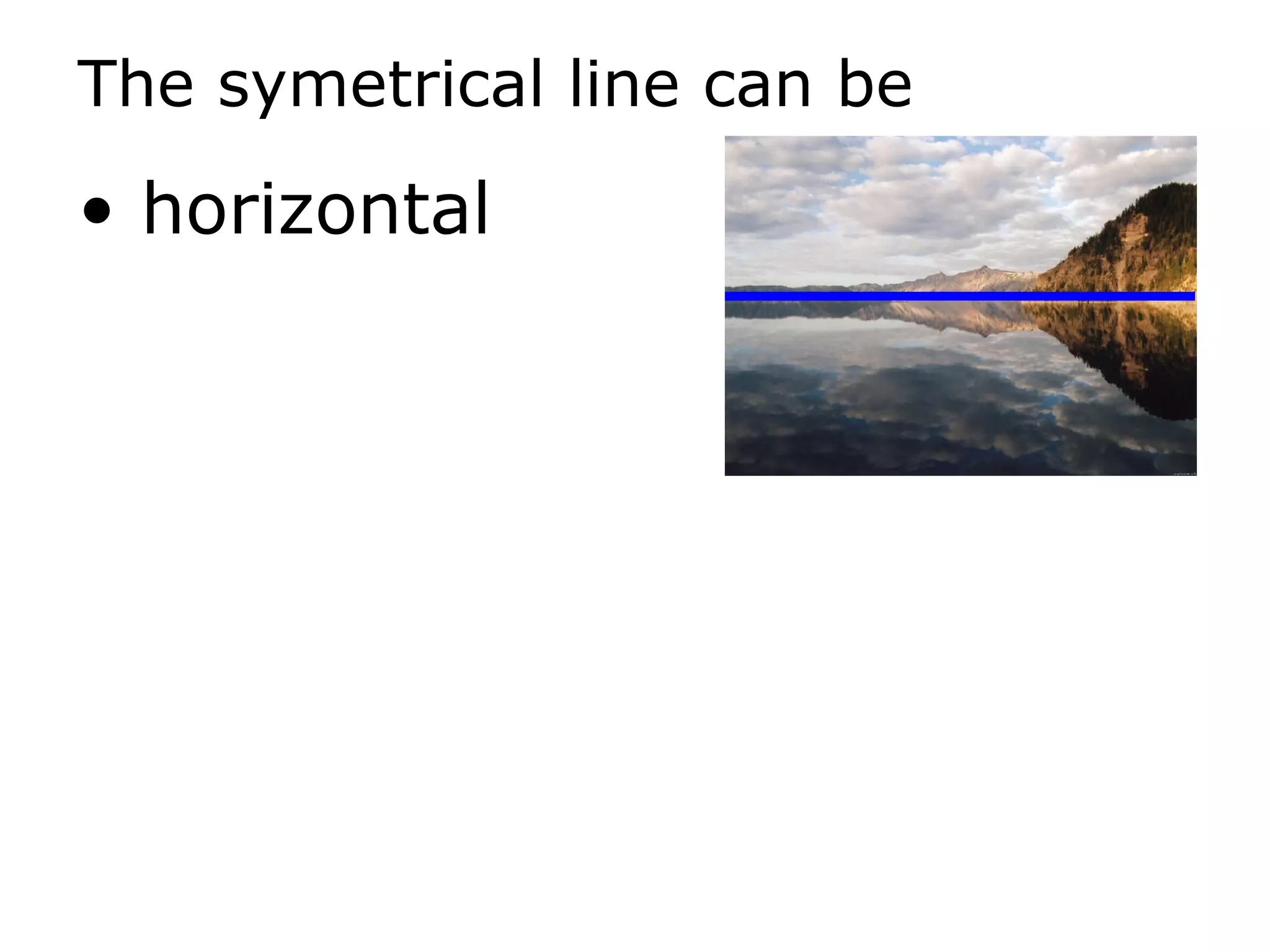
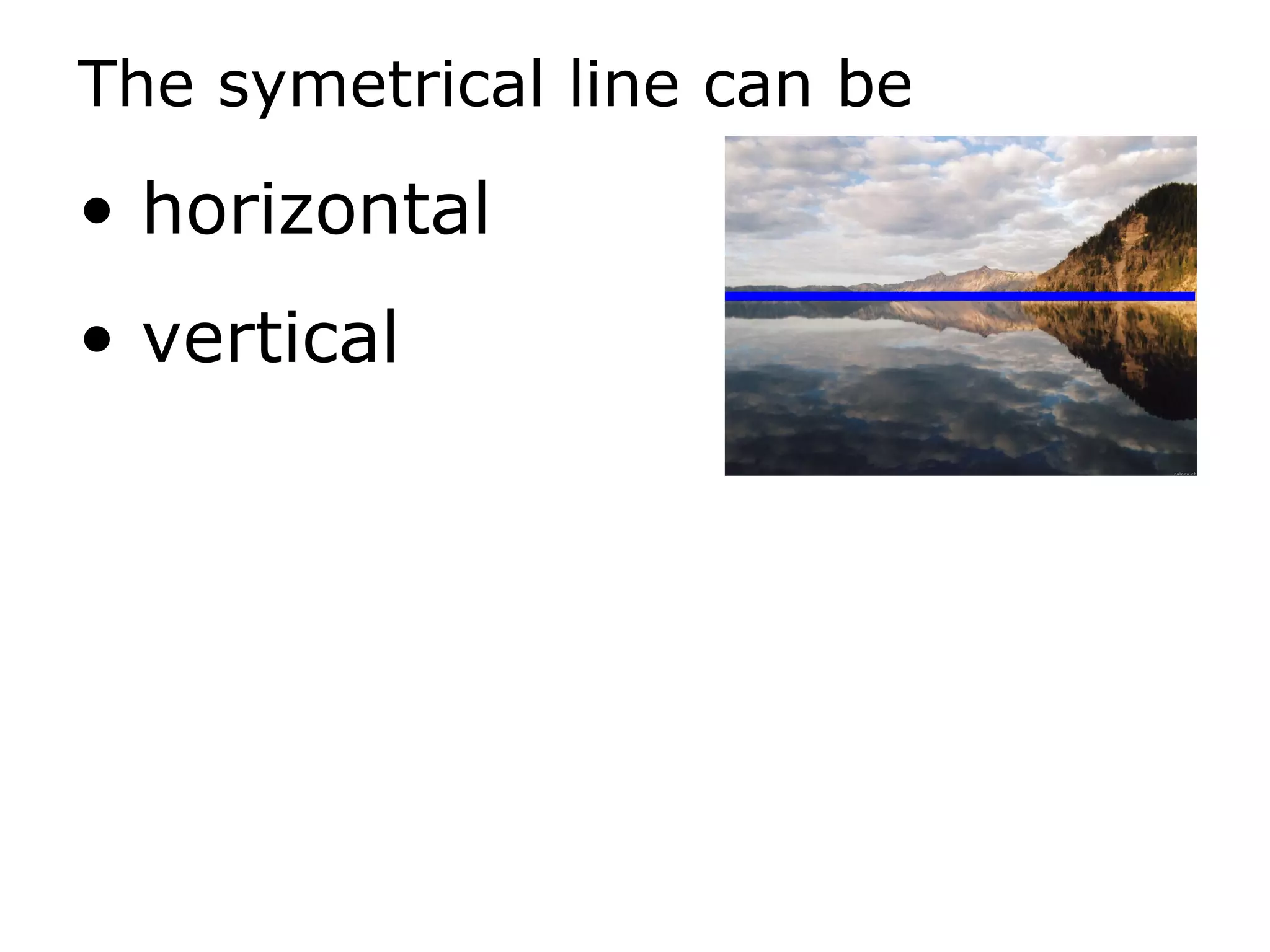
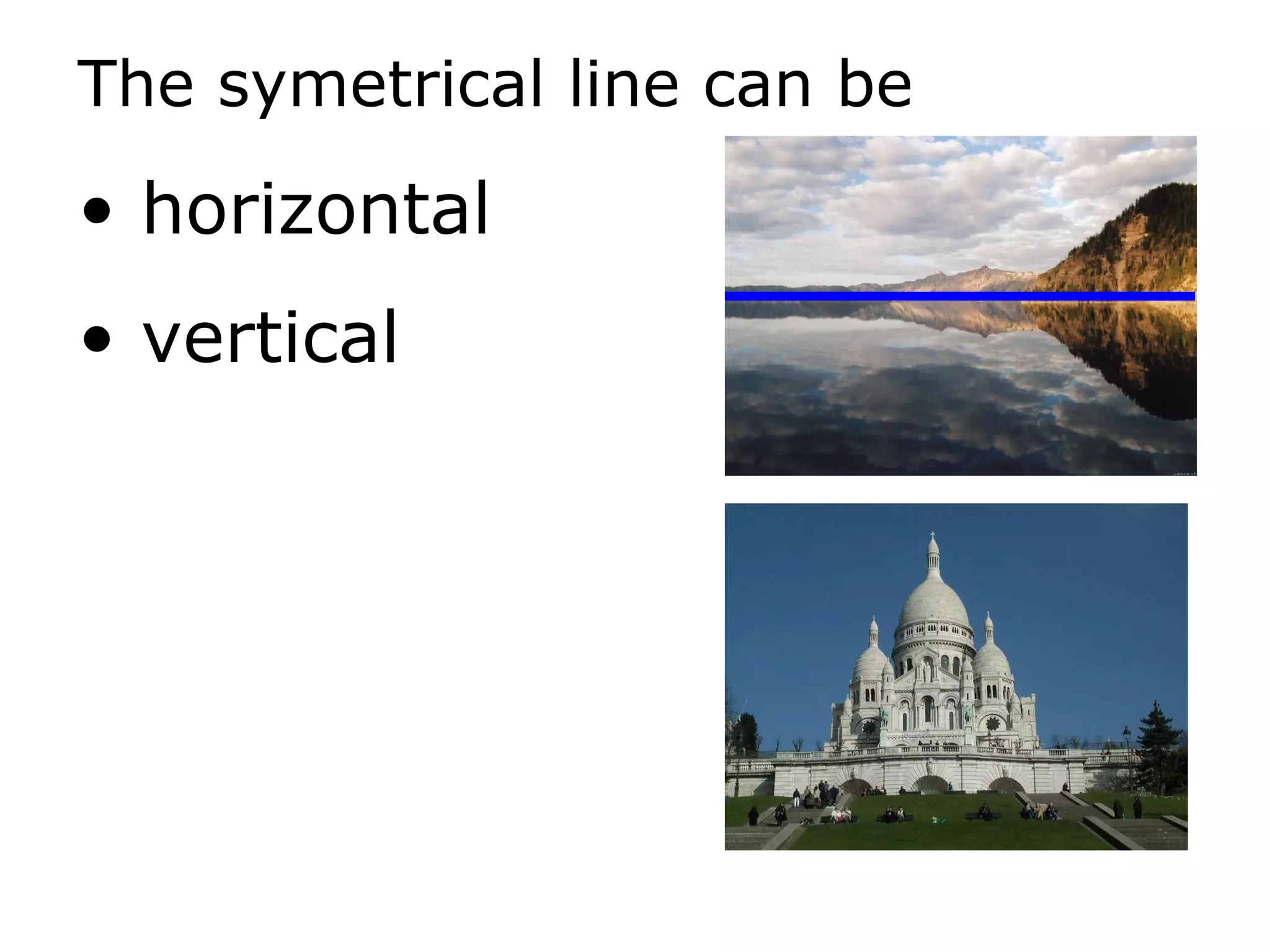
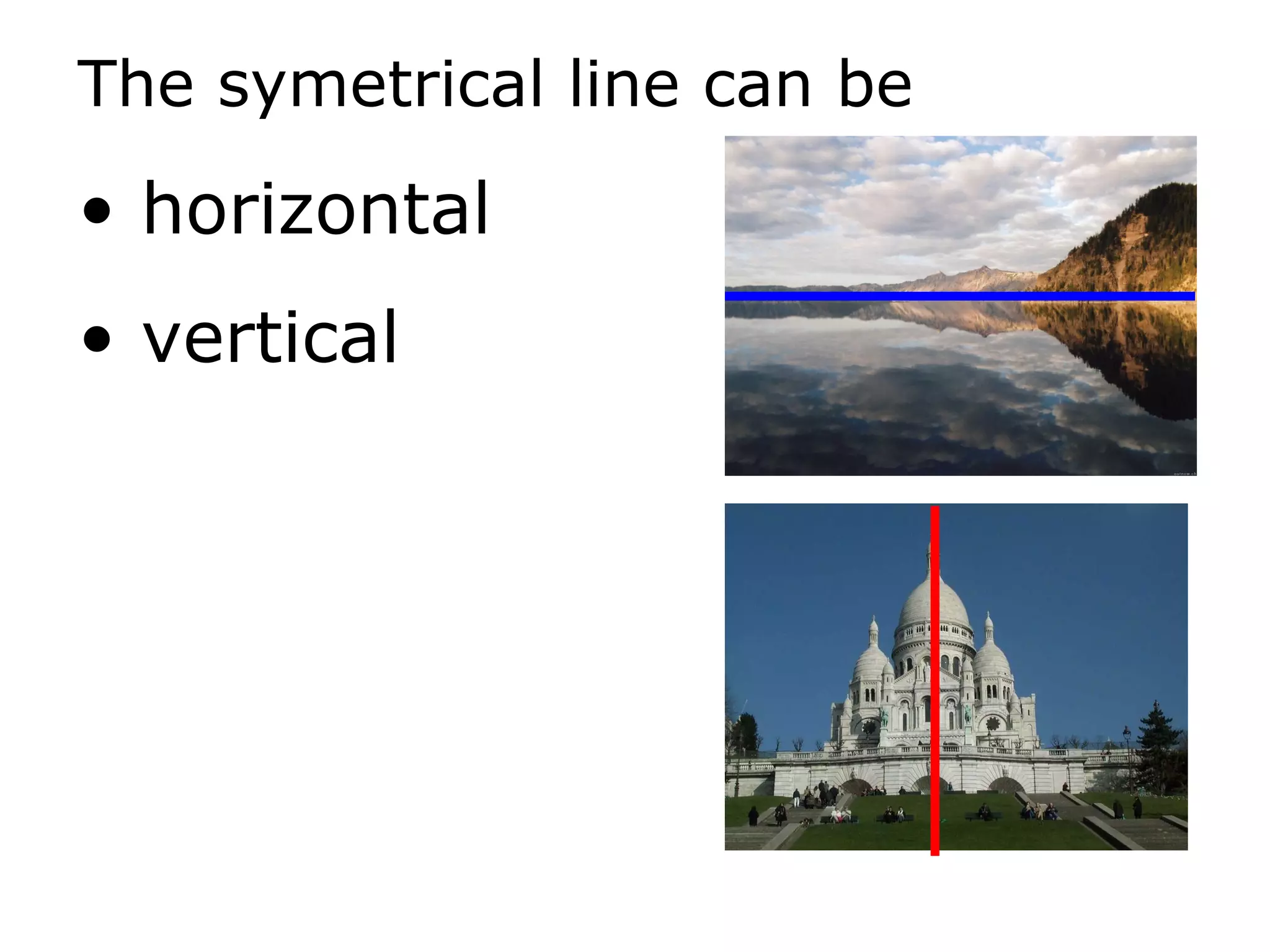
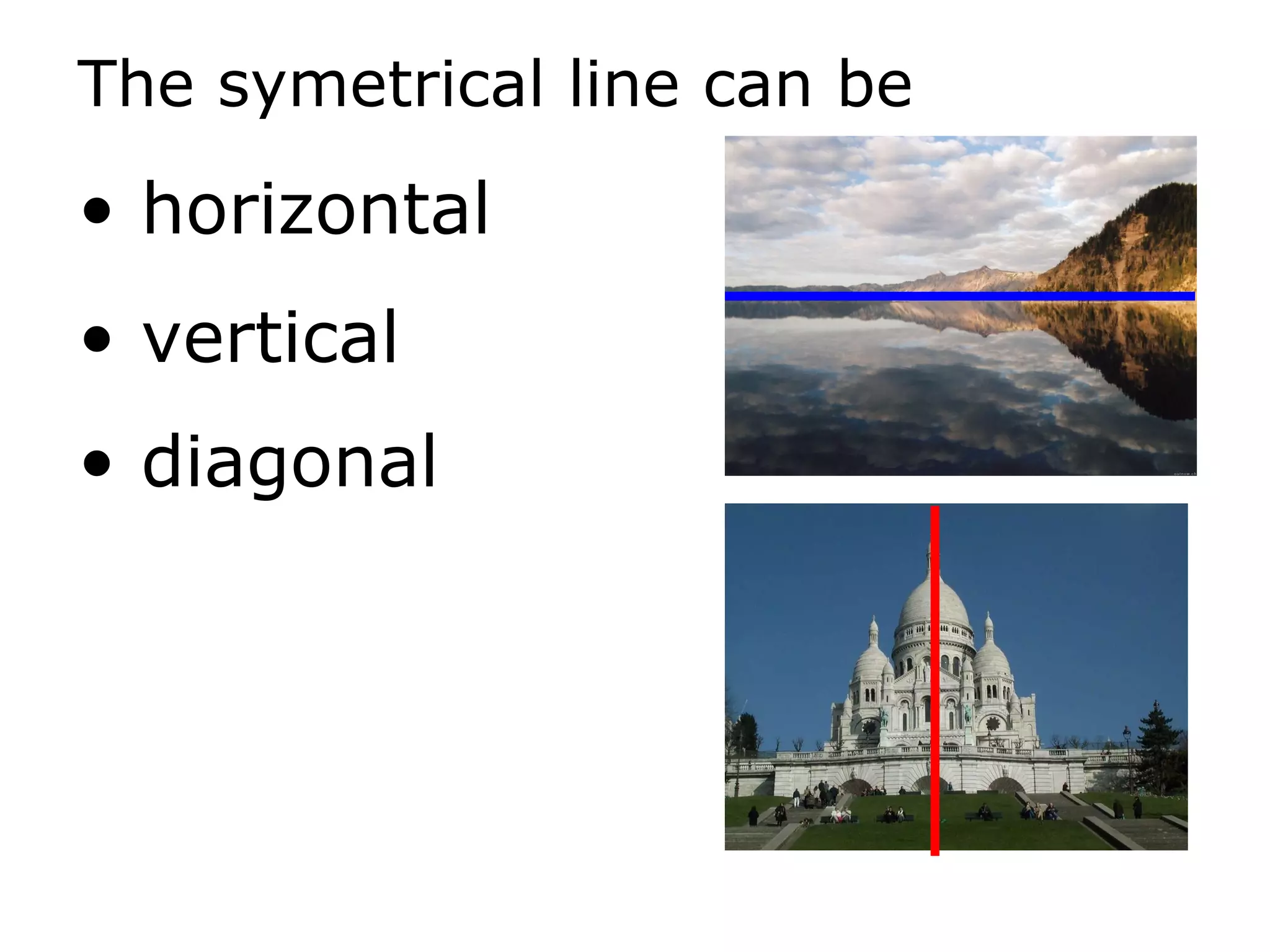
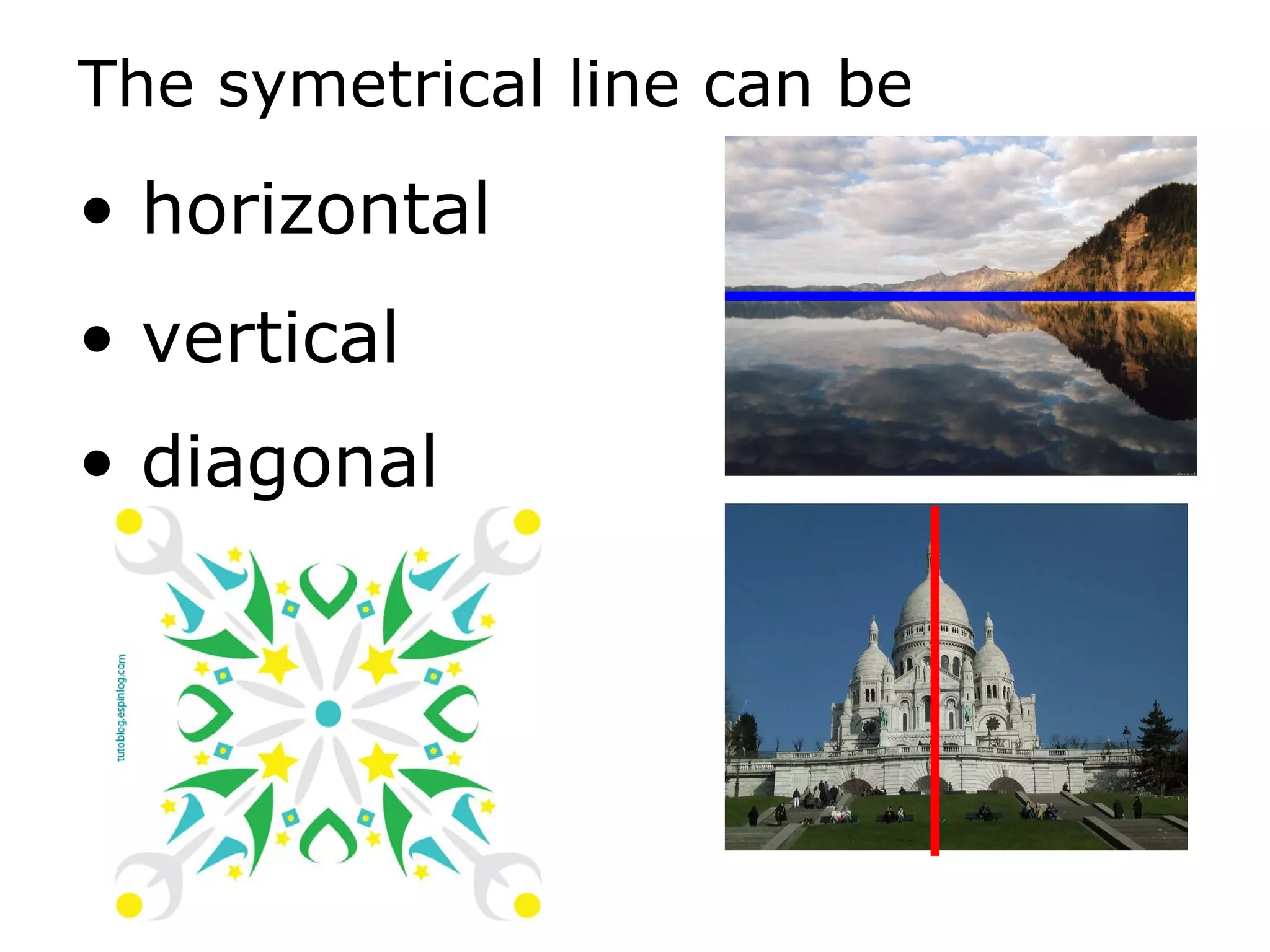
The symetrical line can be
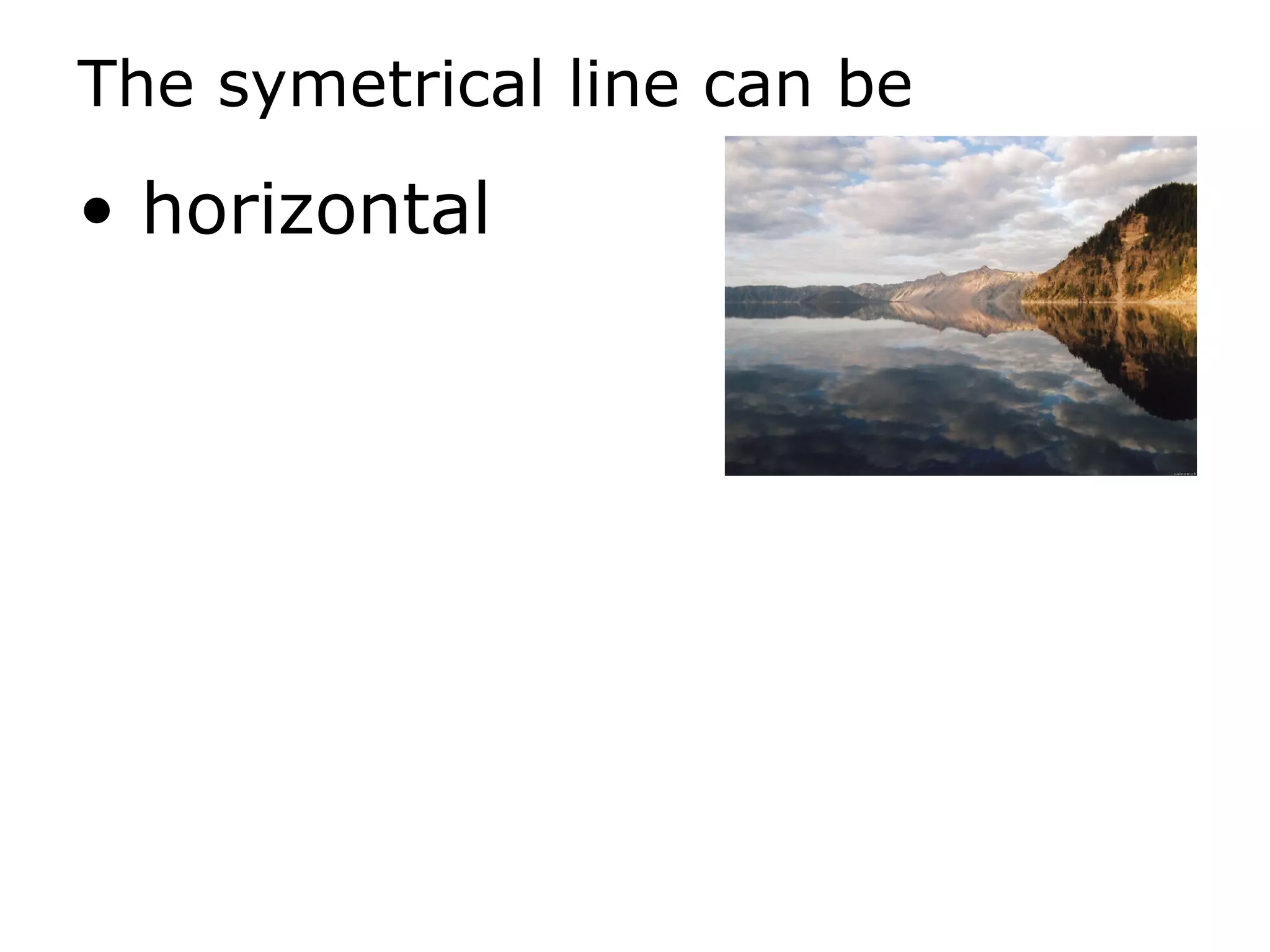
The symetrical line can be horizontal
The symetrical line can be horizontal vertical
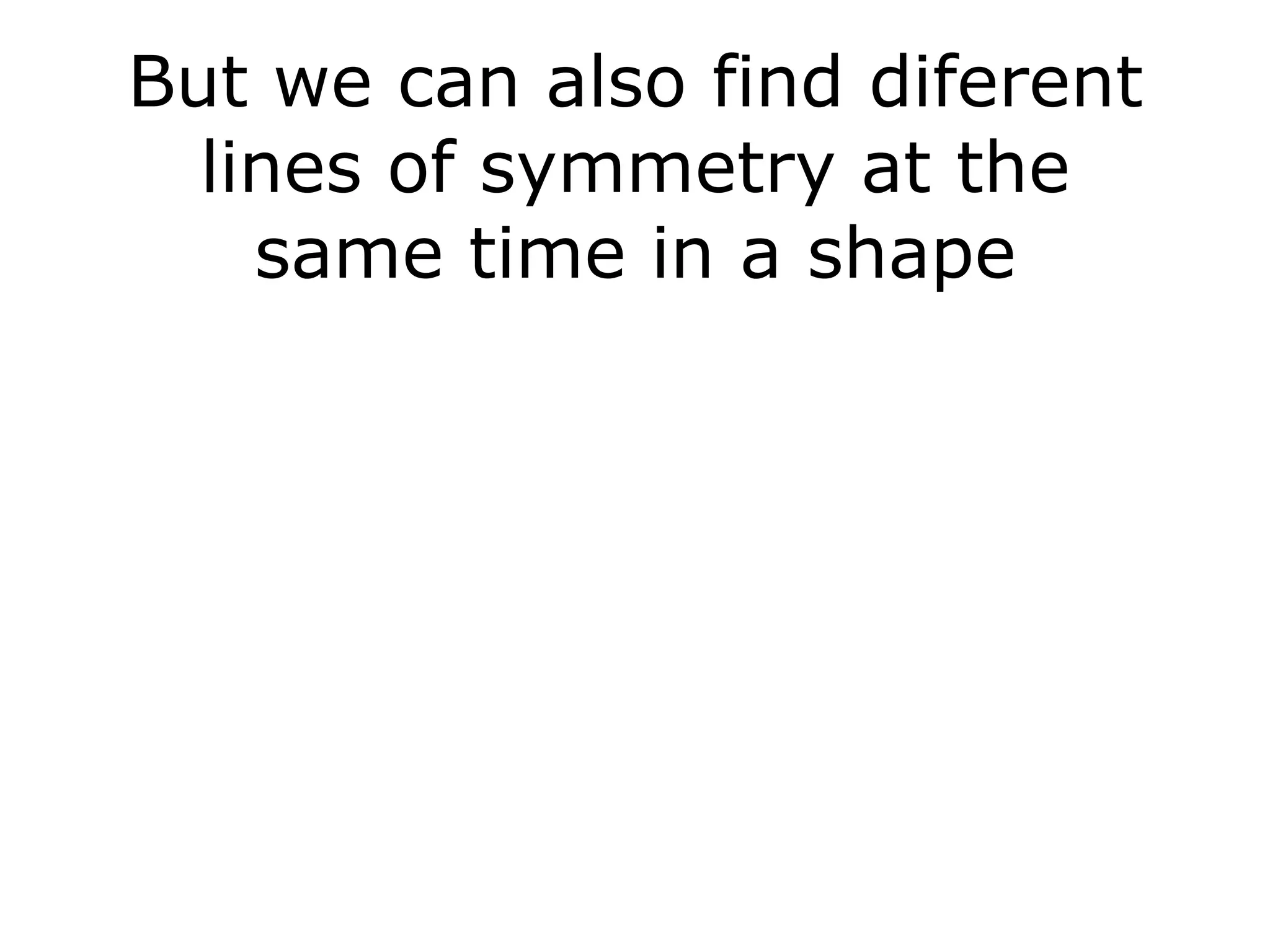
The symetrical line can be horizontal vertical diagonal
 
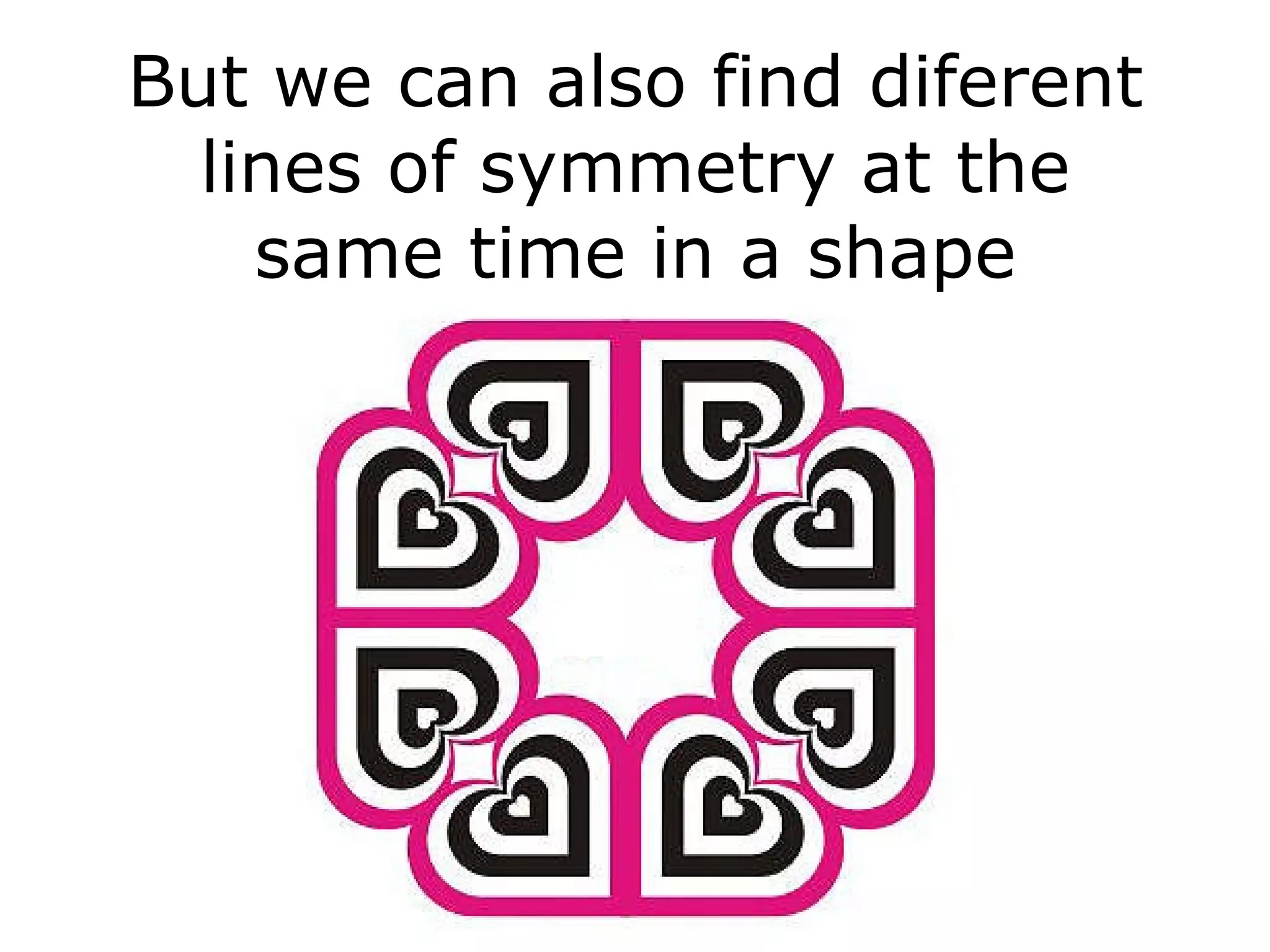
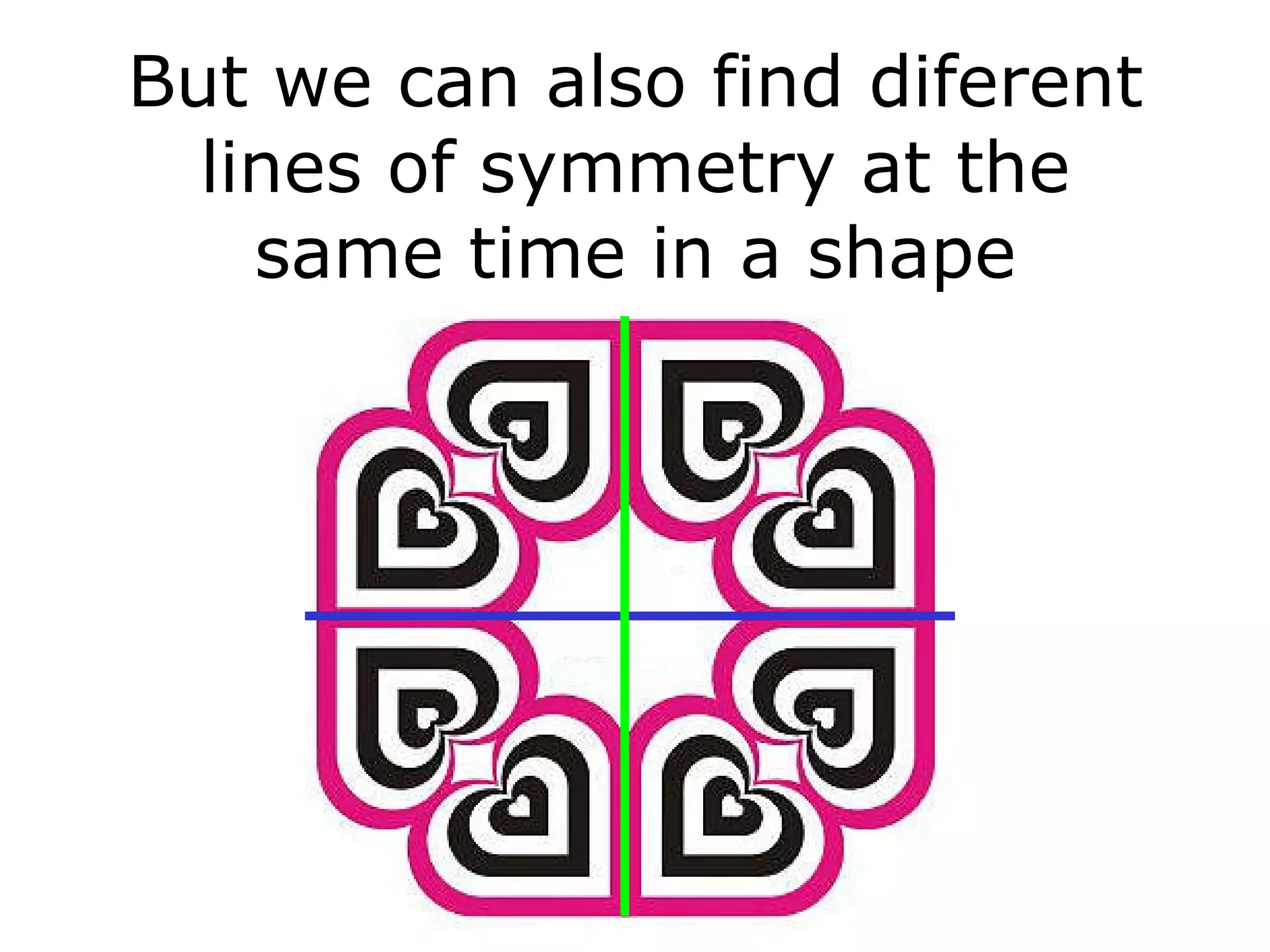
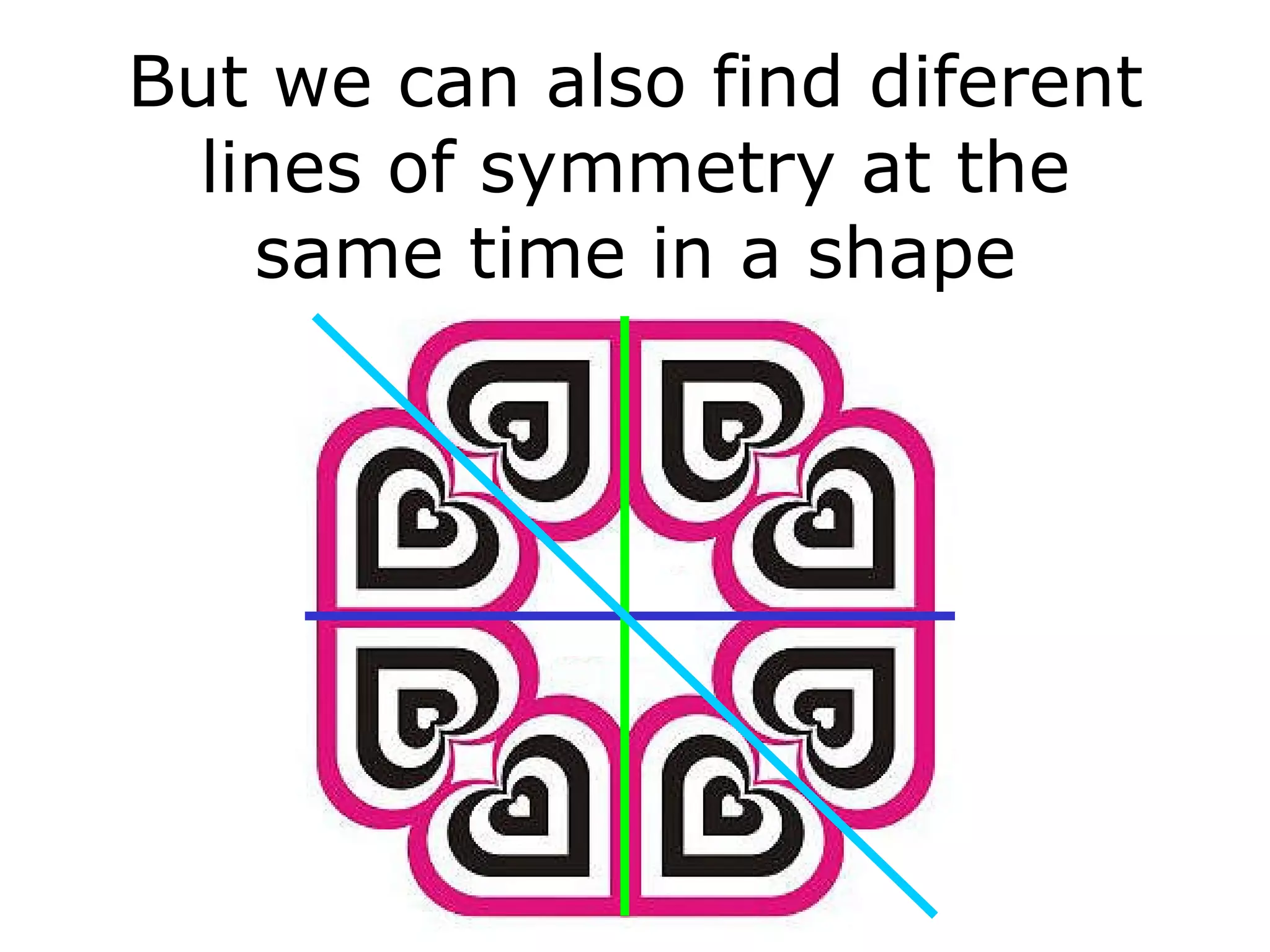
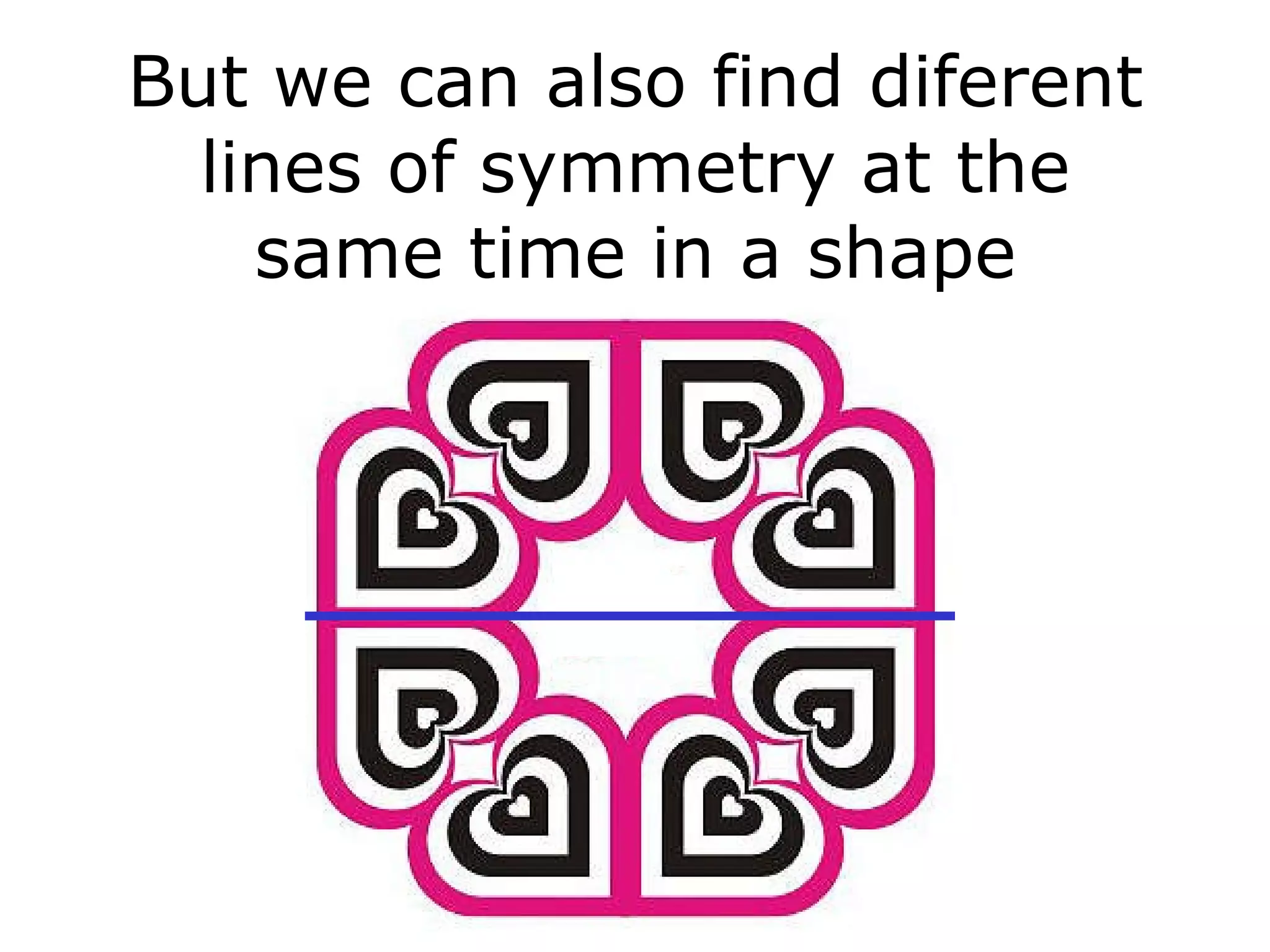
But we can also find diferent lines of symmetry at the same time in a shape
 
Let´s go to internet to learn more http://www.adrianbruce.com/Symmetry/
 
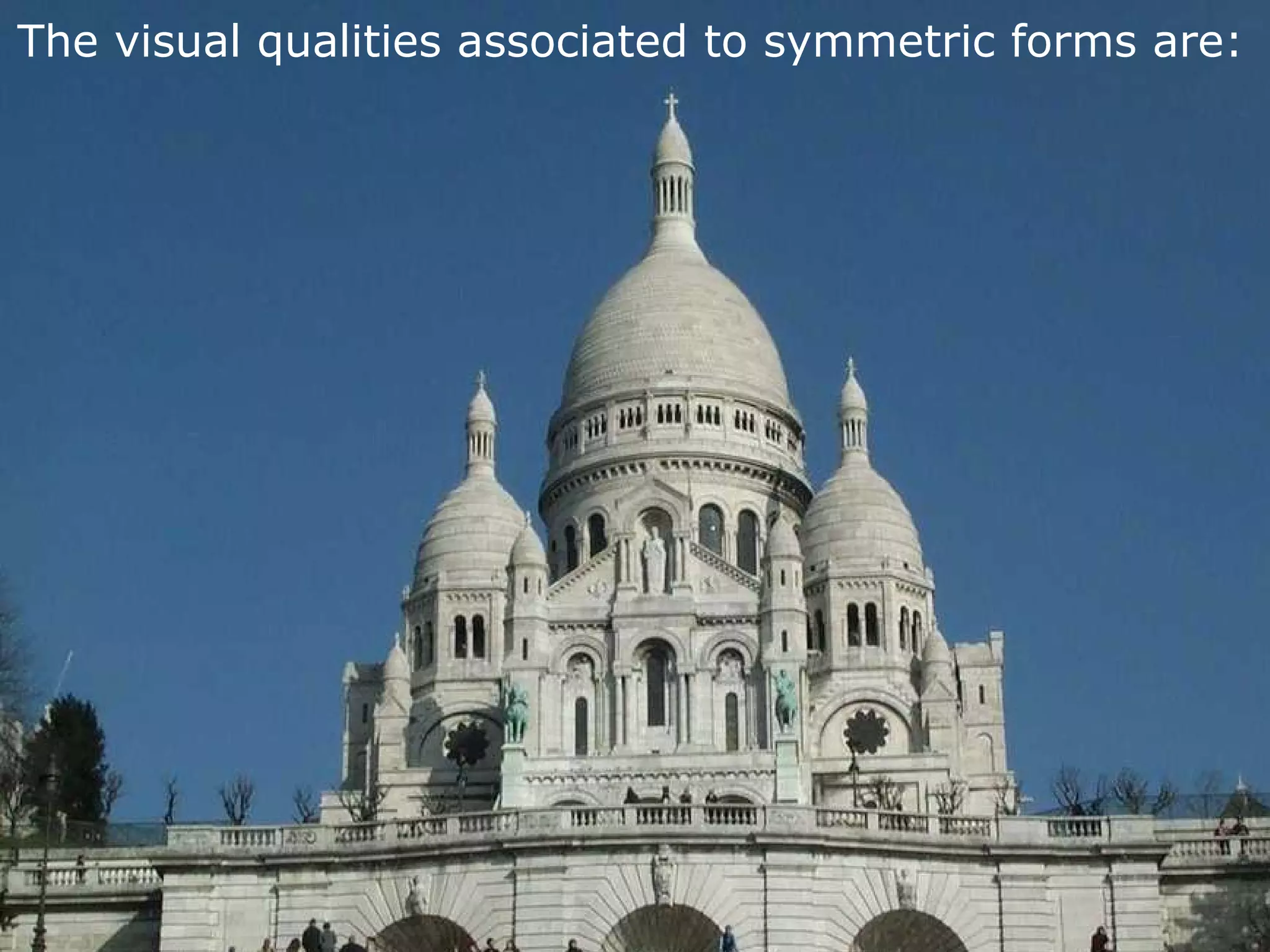
The visual qualities associated to symmetric forms are:
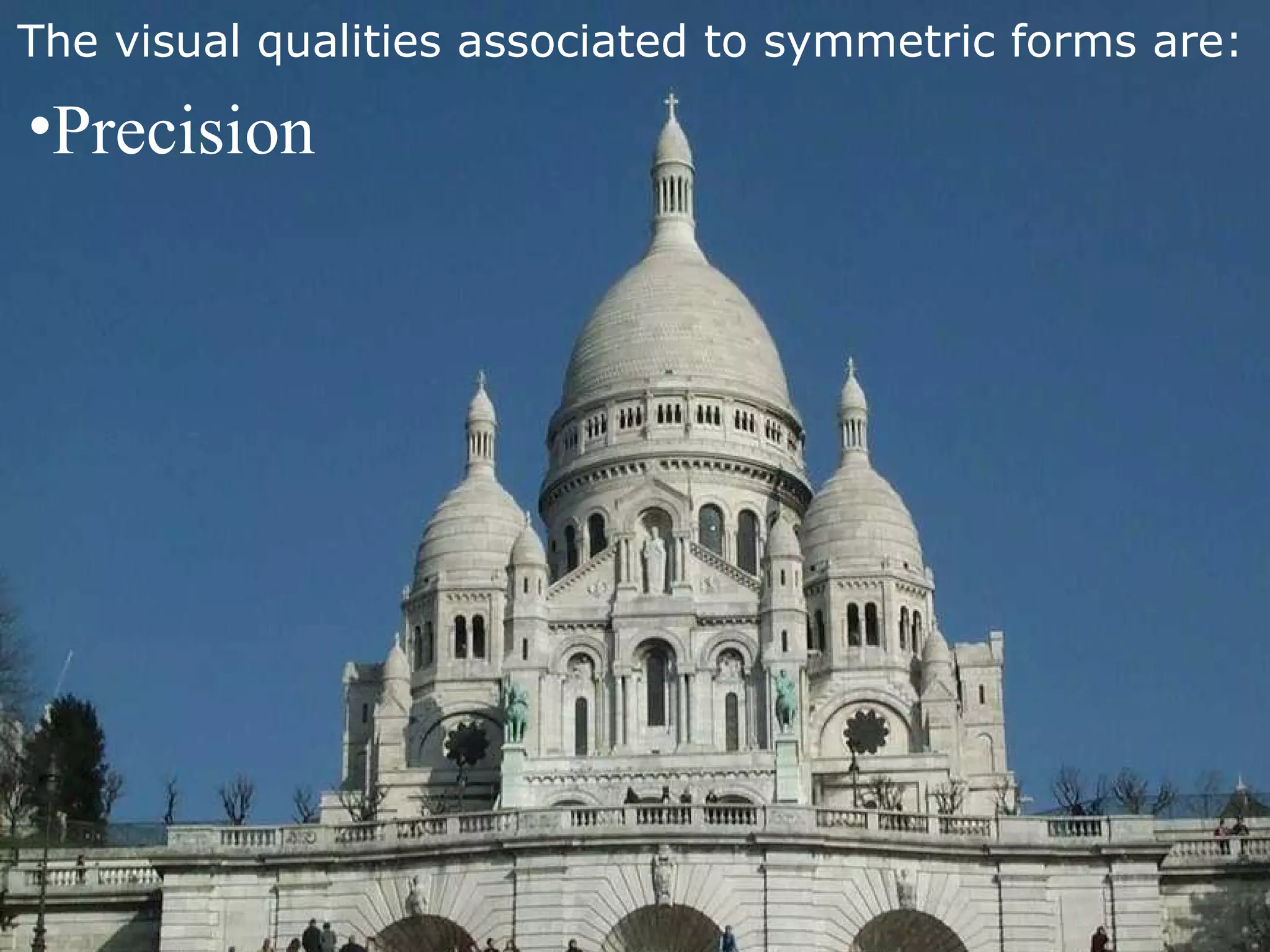
The visual qualities associated to symmetric forms are:   Precision
Precision Order The visual qualities associated to symmetric forms are:
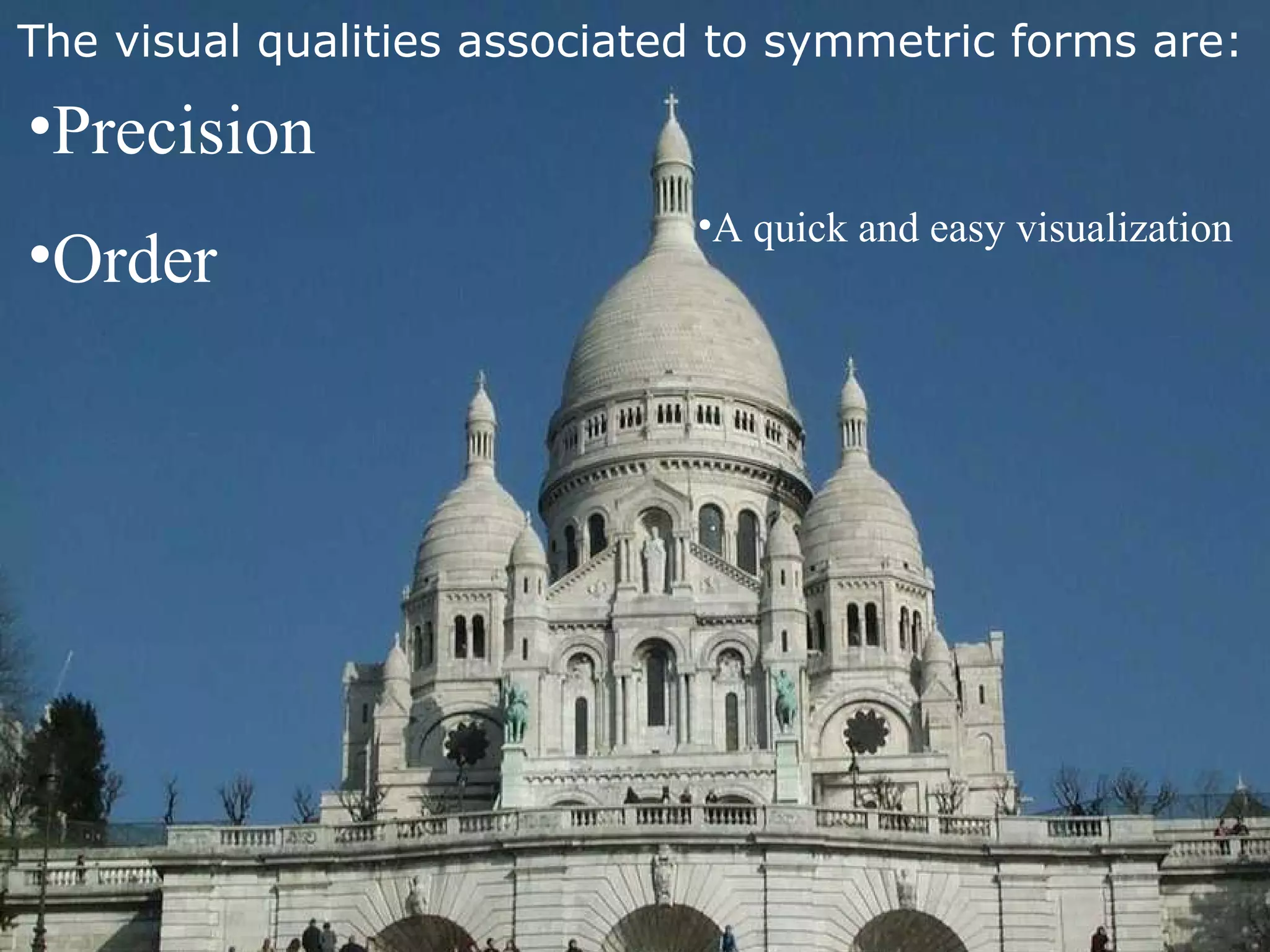
Precision Order A quick and easy visualization The visual qualities associated to symmetric forms are:
 
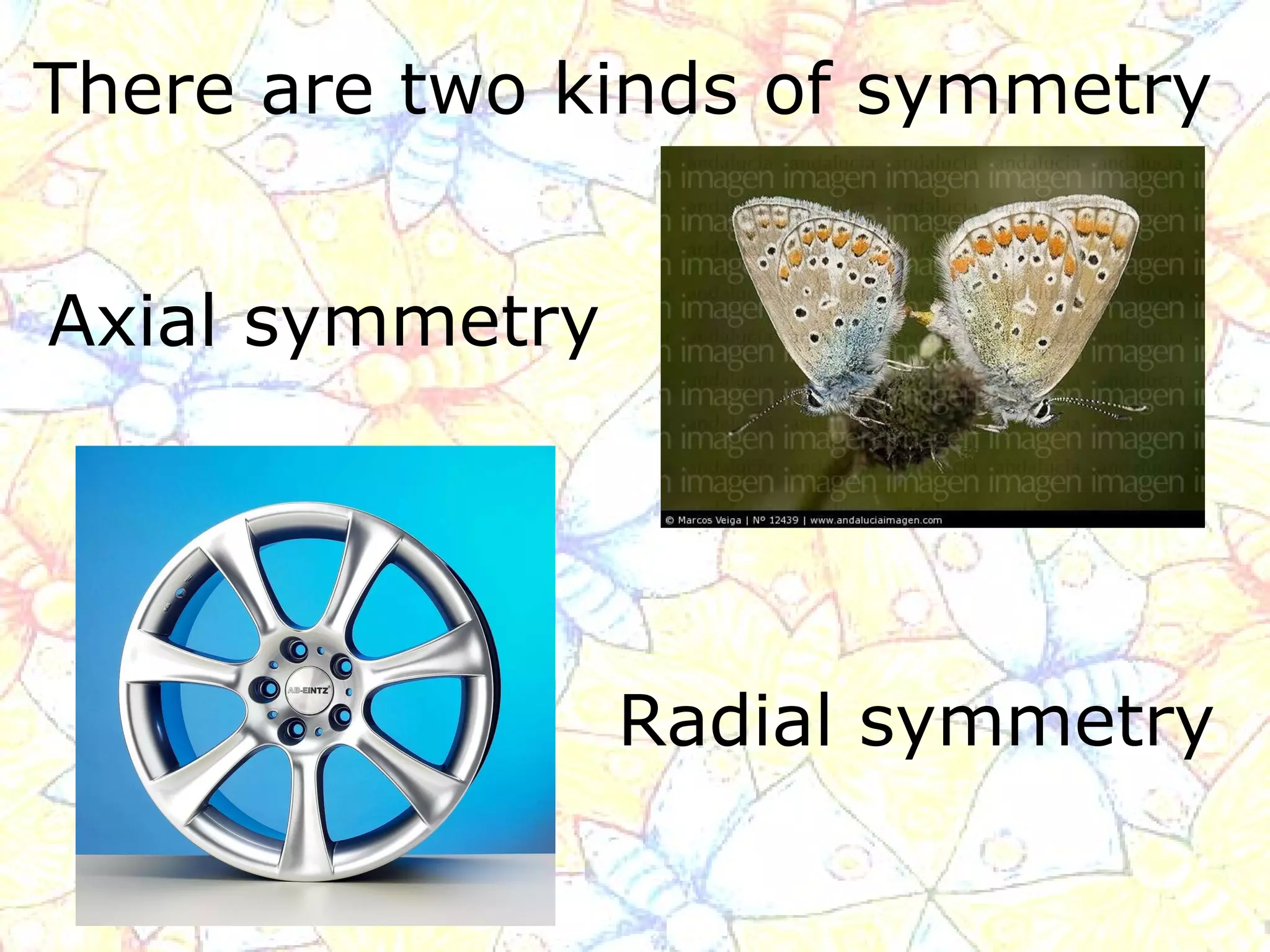
There are two kinds of symmetry
There are two kinds of symmetry   Axial symmetry
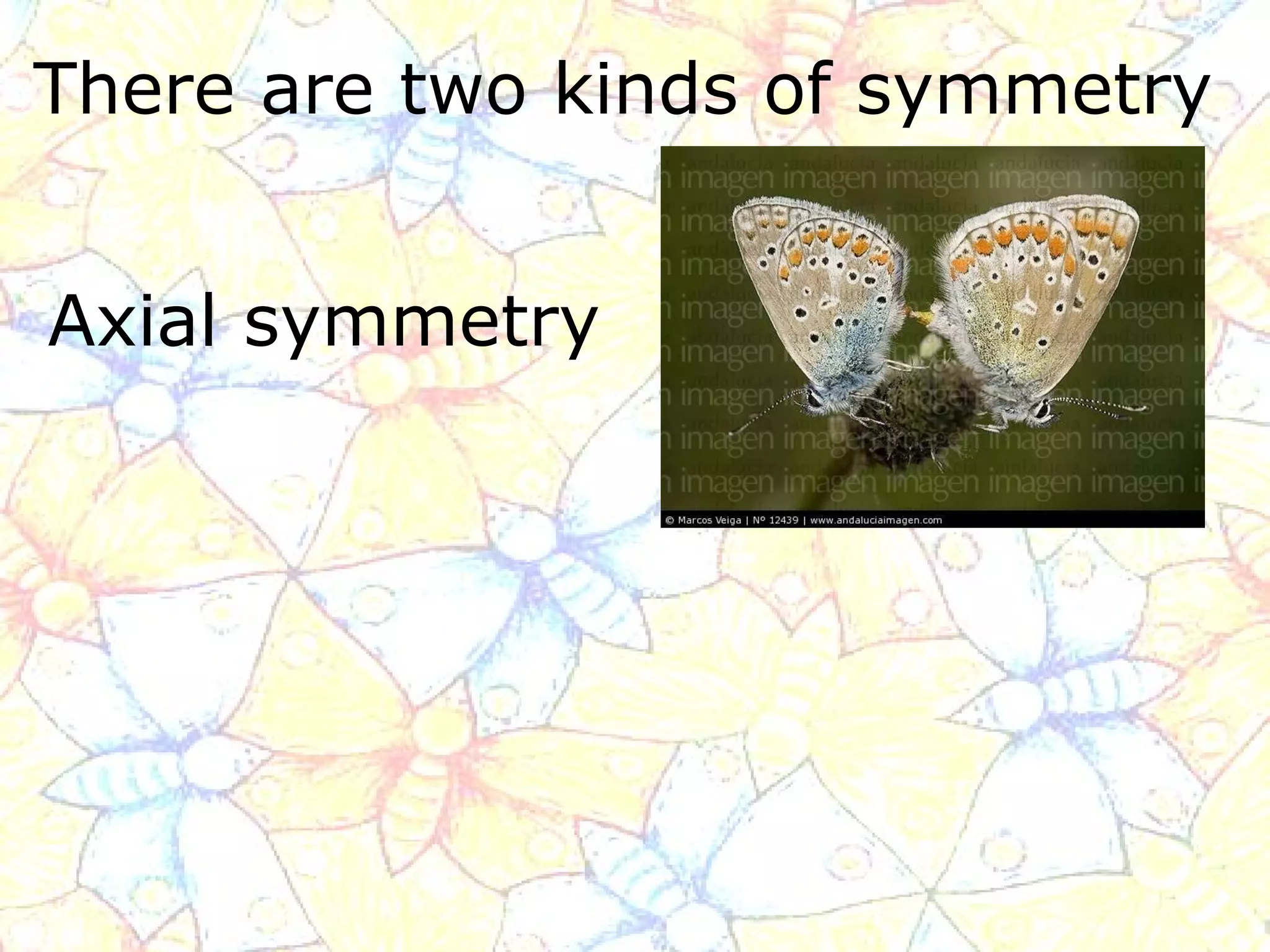
There are two kinds of symmetry   Axial symmetry Radial symmetry
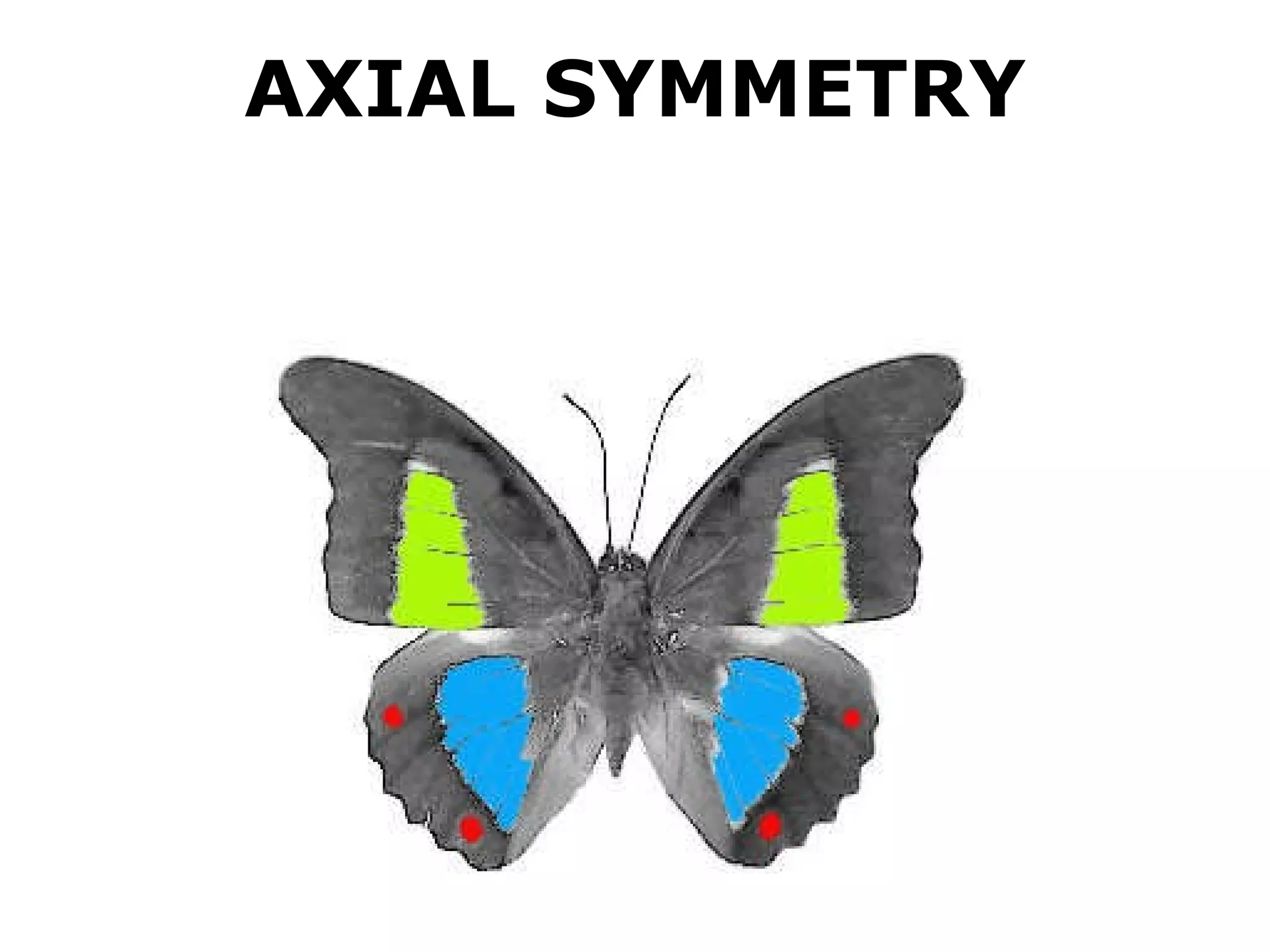
AXIAL SYMMETRY
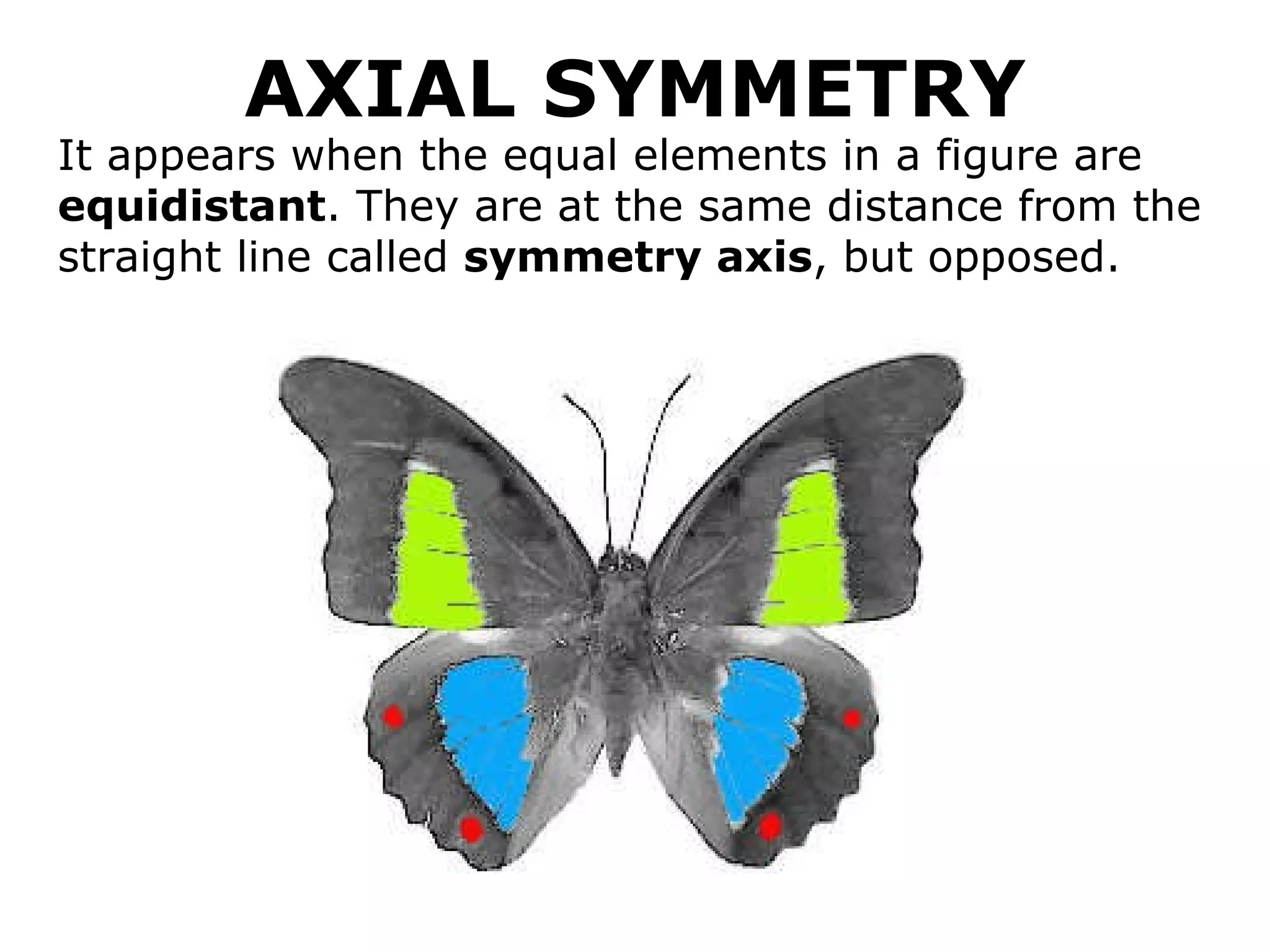
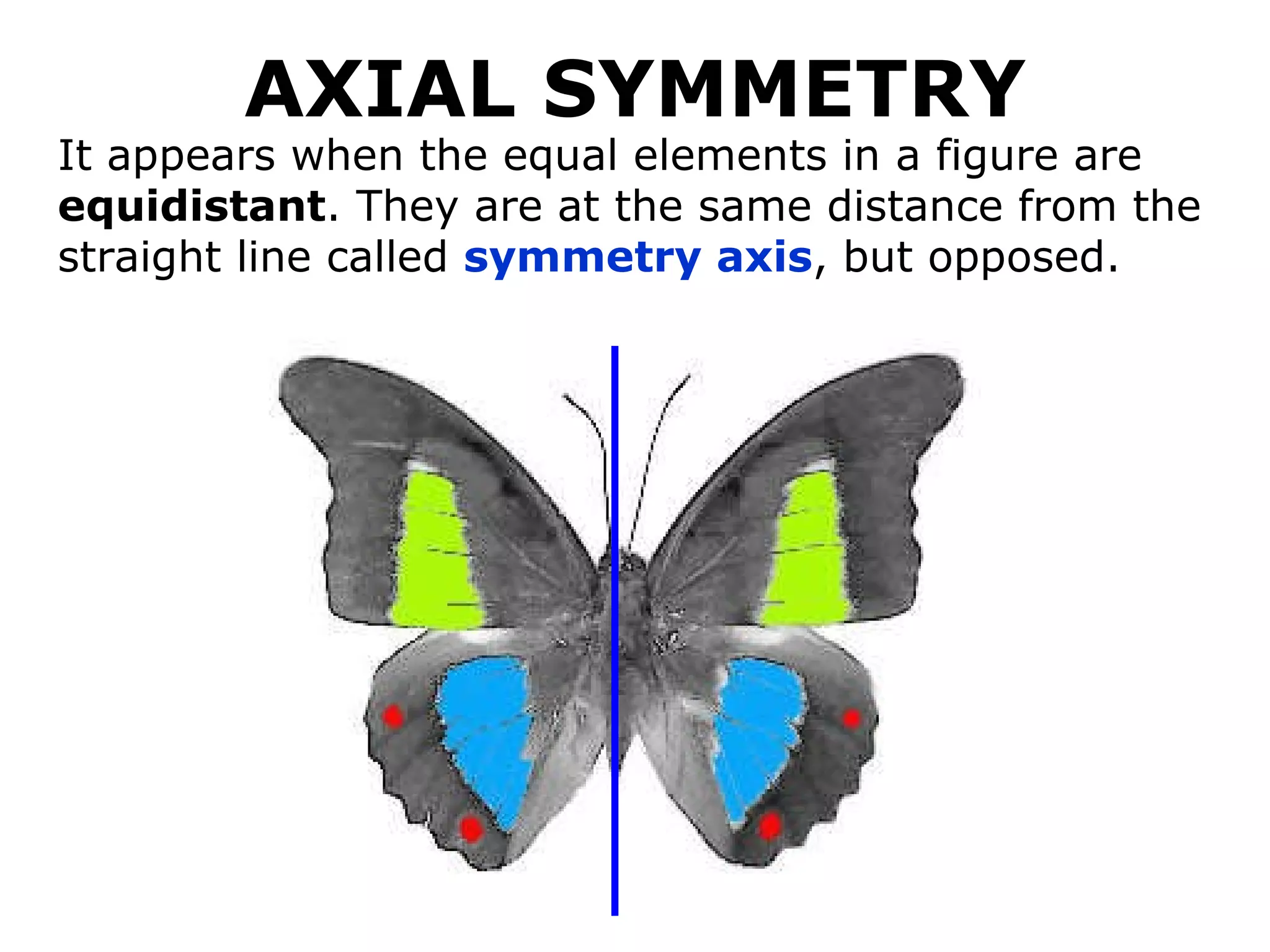
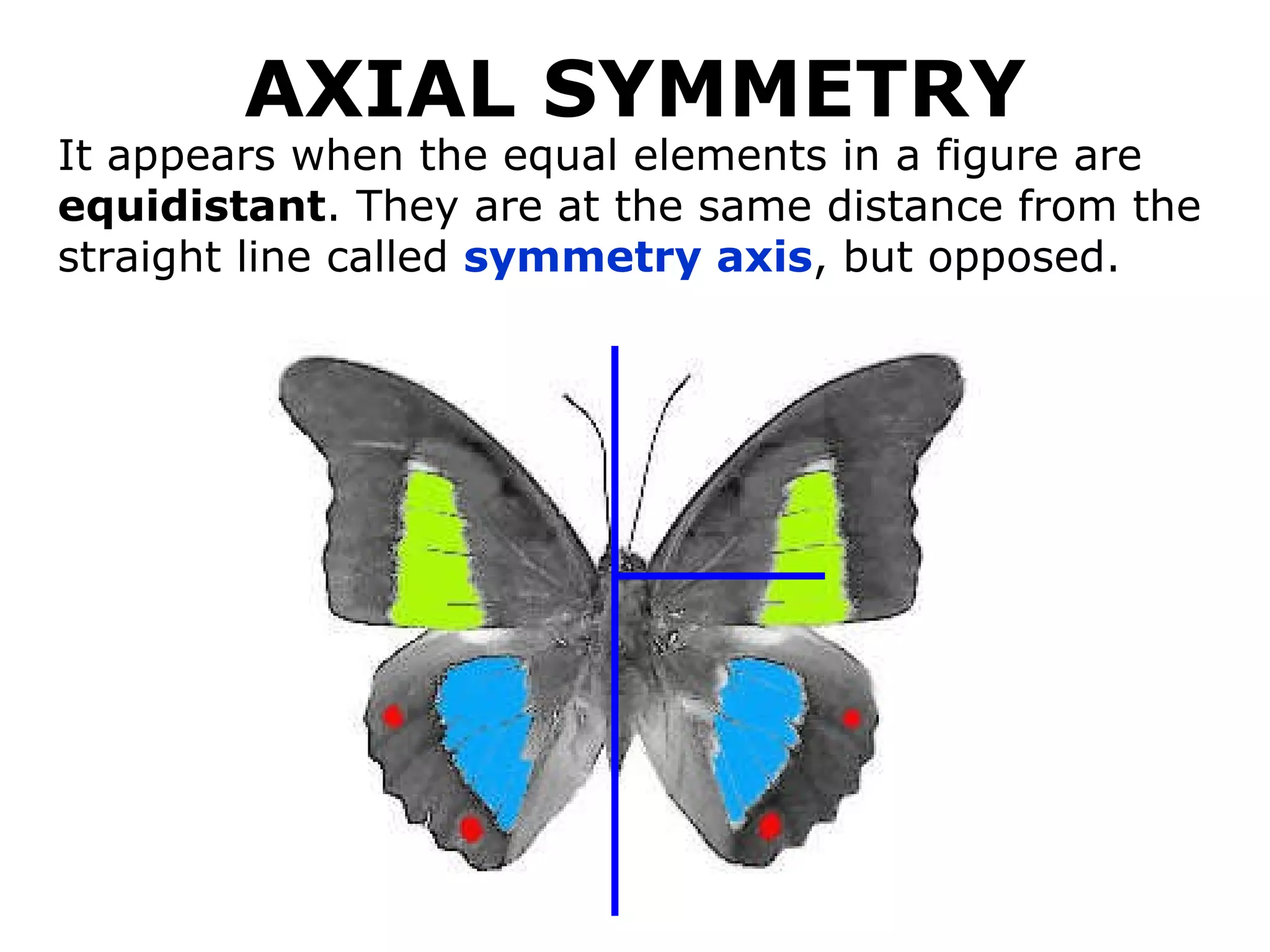
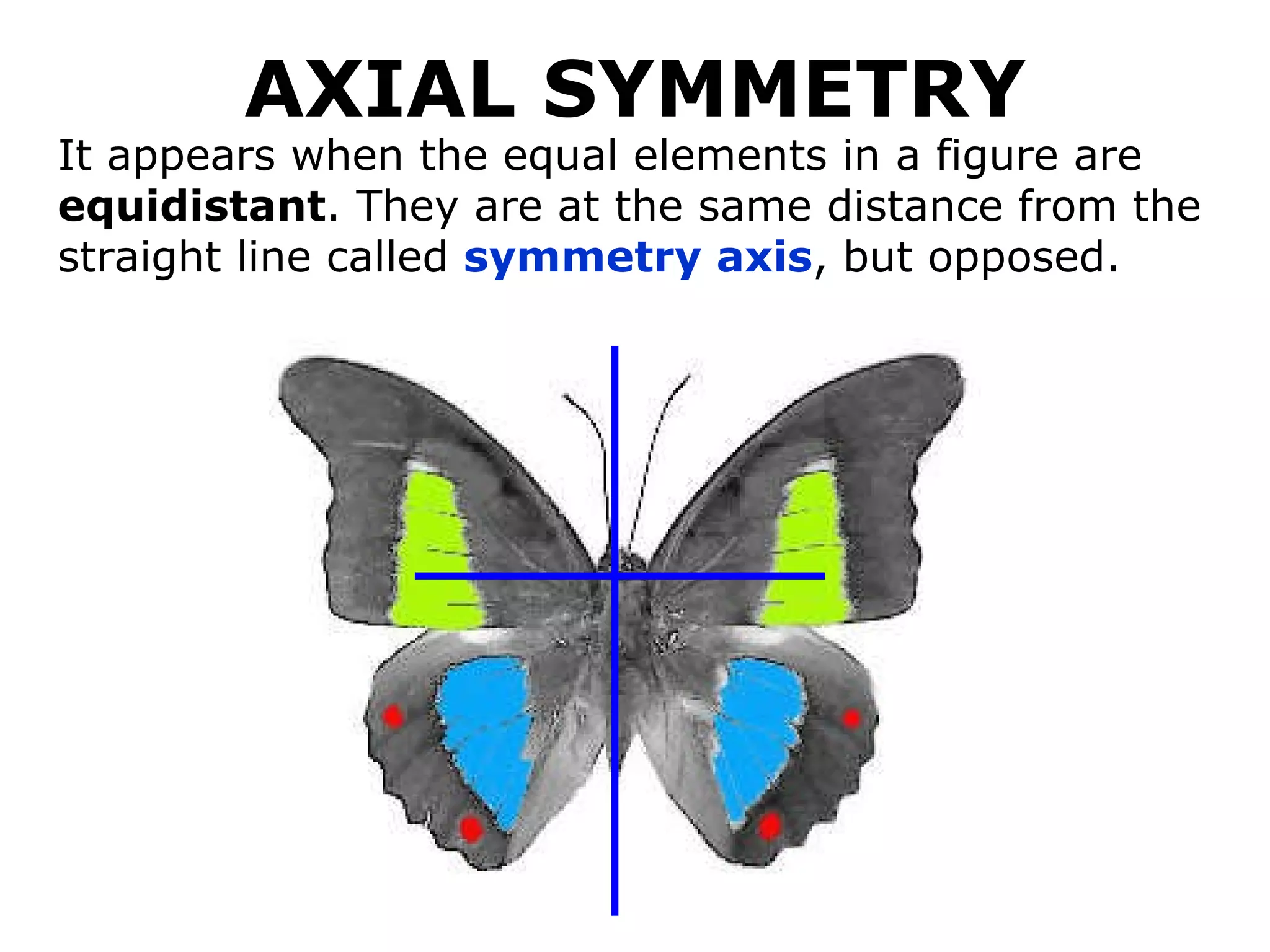
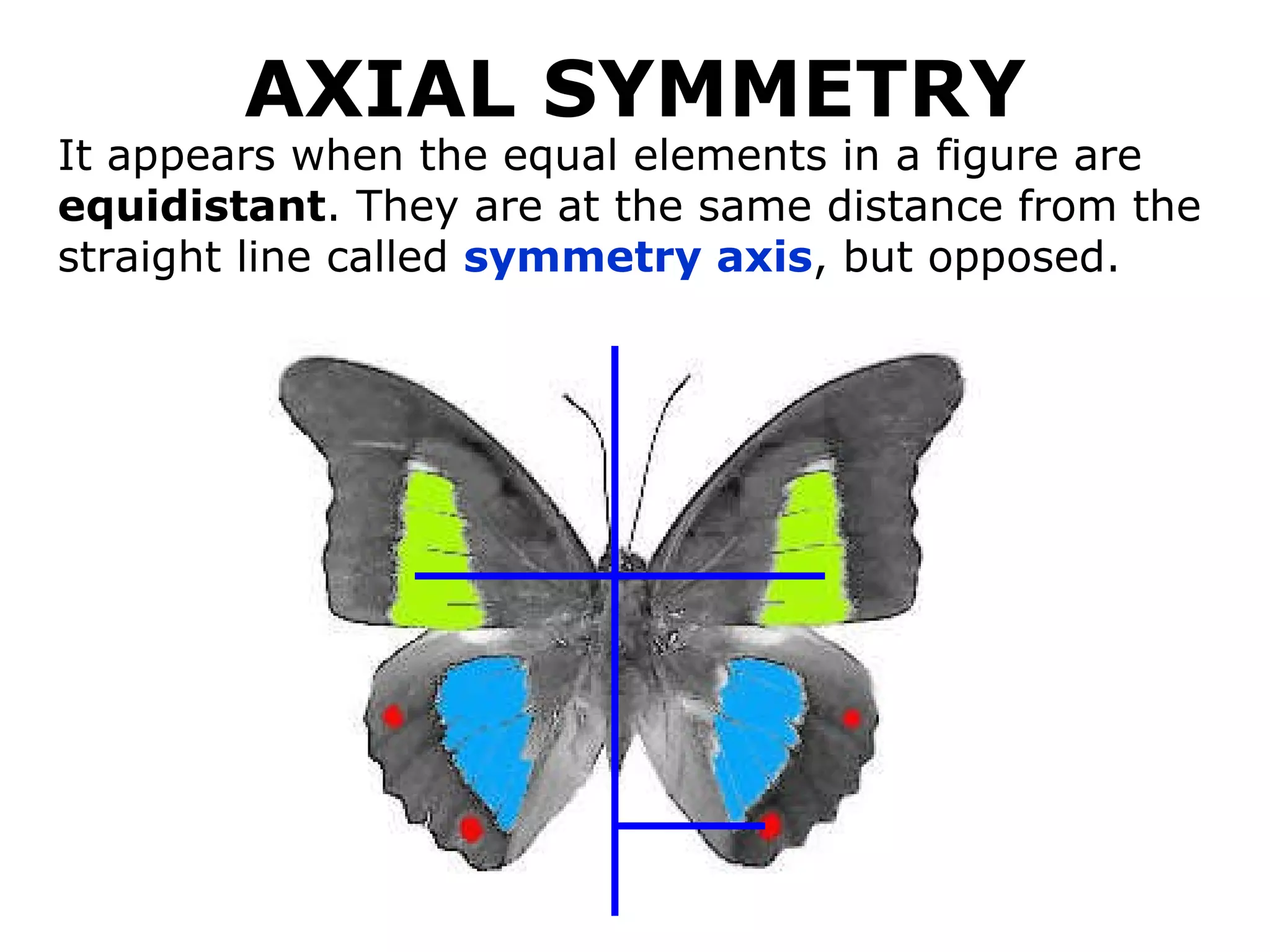
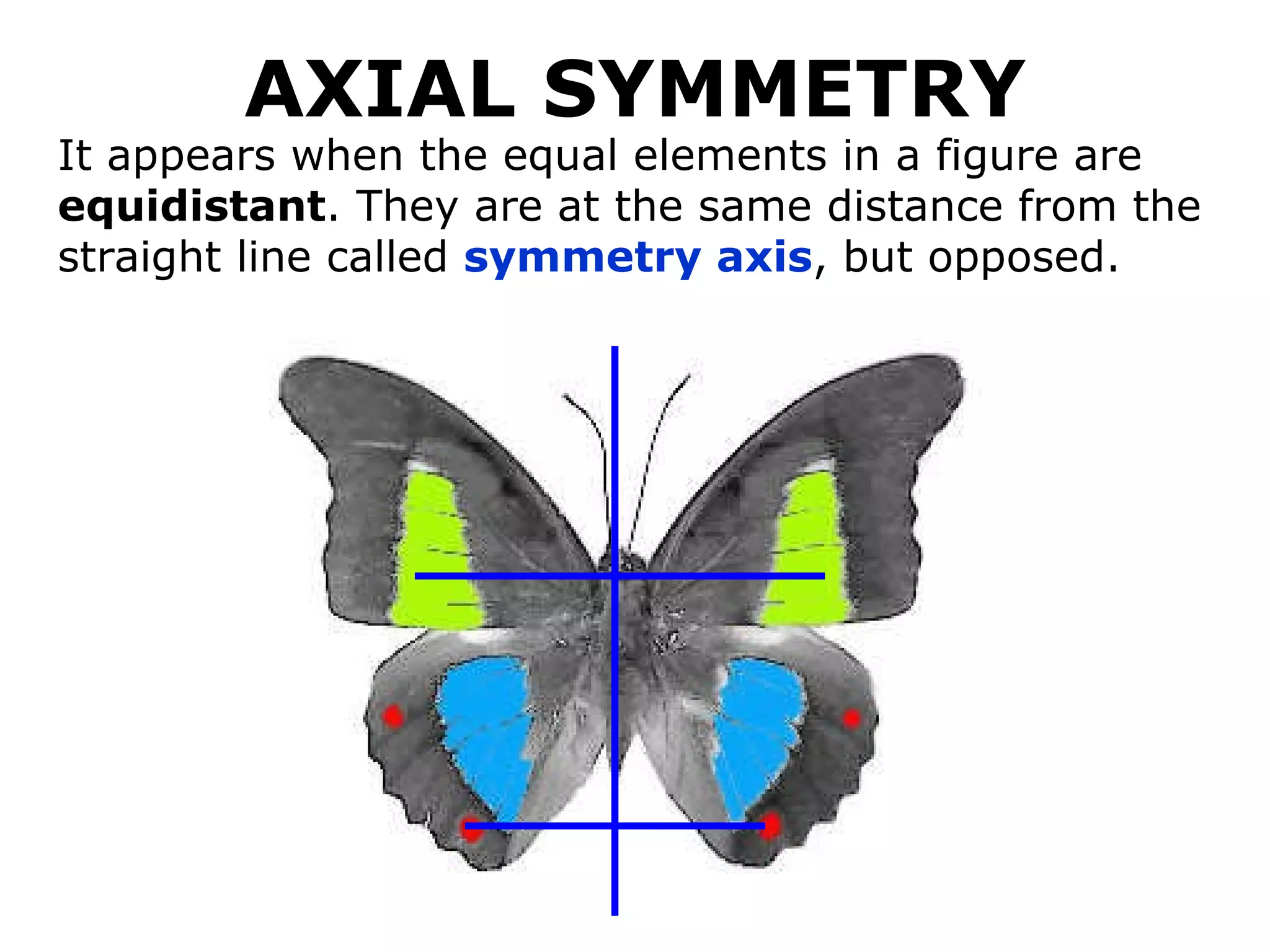
AXIAL SYMMETRY It appears when the equal elements in a figure are  equidistant . They are at the same distance from the straight line called  symmetry axis , but opposed.
 
RADIAL SYMMETRY
RADIAL SYMMETRY
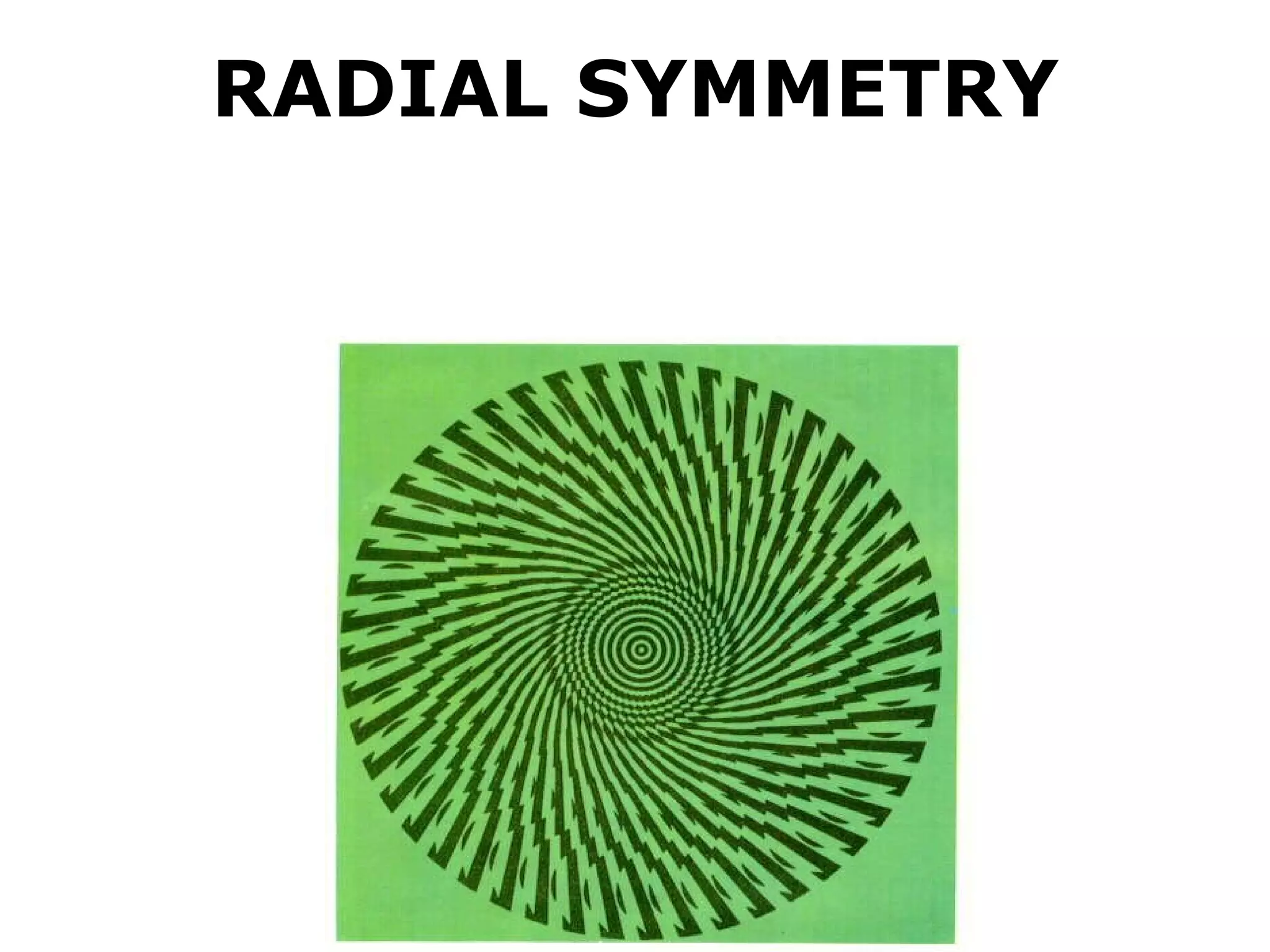
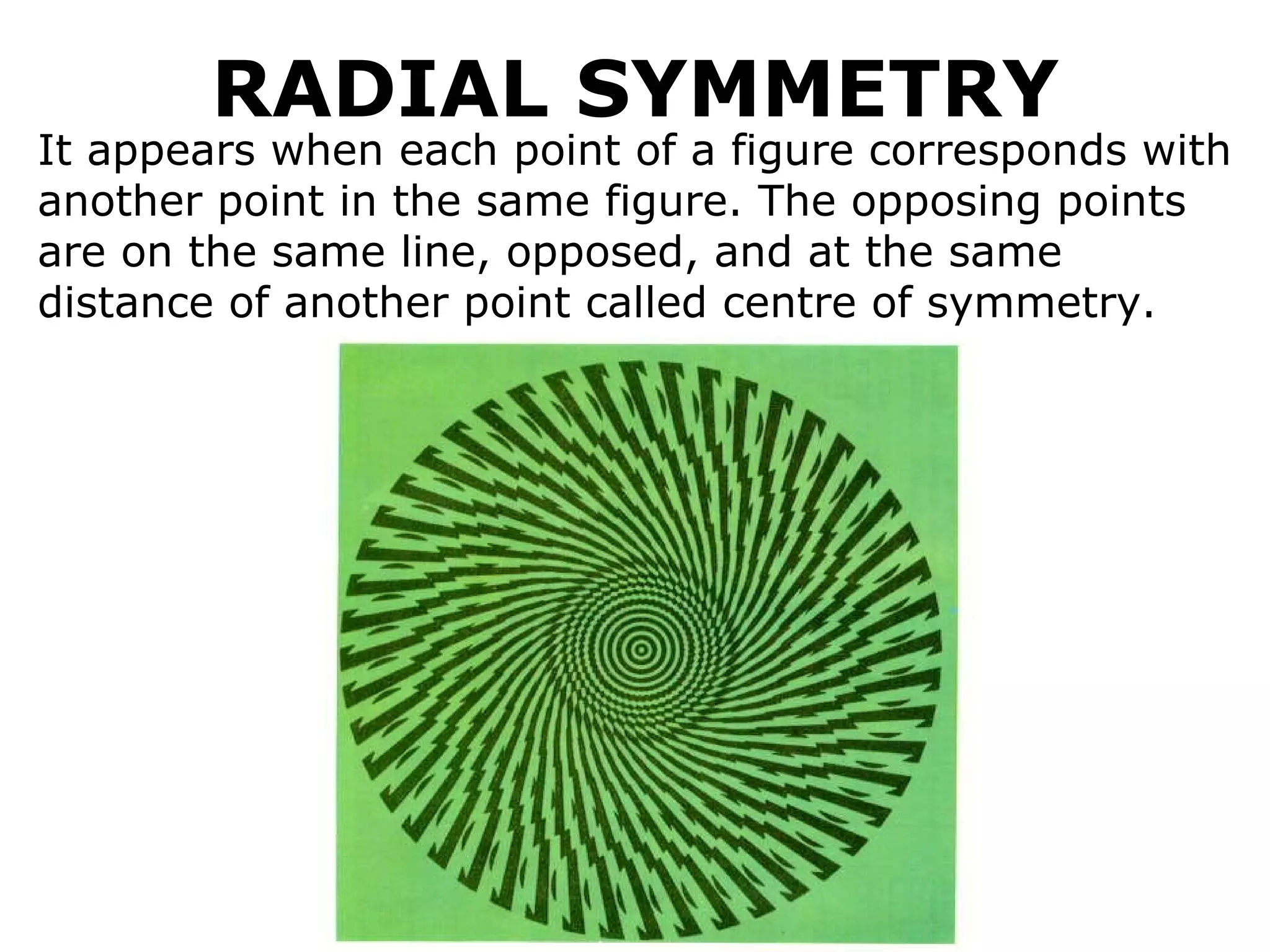
RADIAL SYMMETRY It appears when each point of a figure corresponds with another point in the same figure. The opposing points are on the same line, opposed, and at the same distance of another point called centre of symmetry.
 
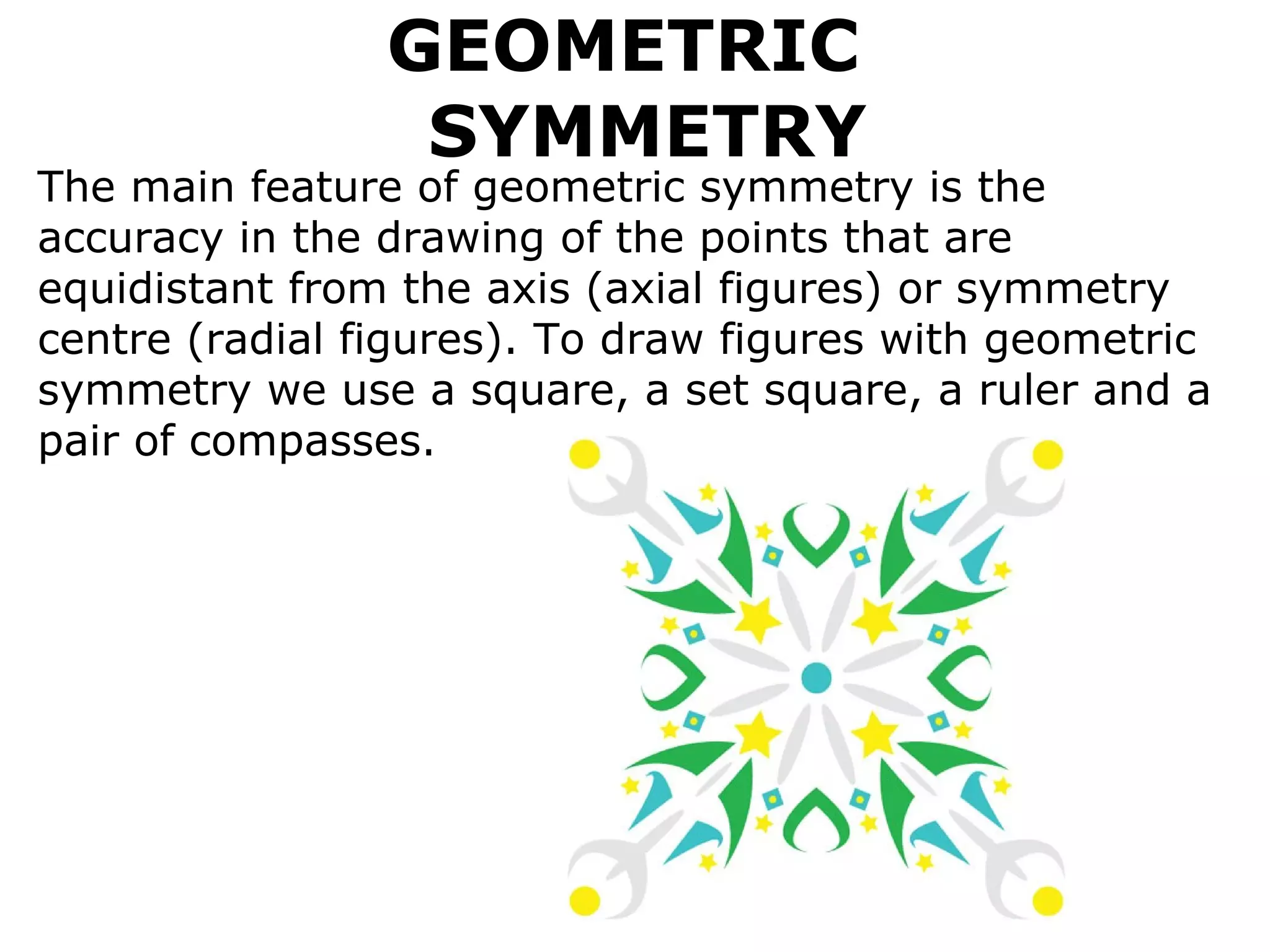
GEOMETRIC   SYMMETRY
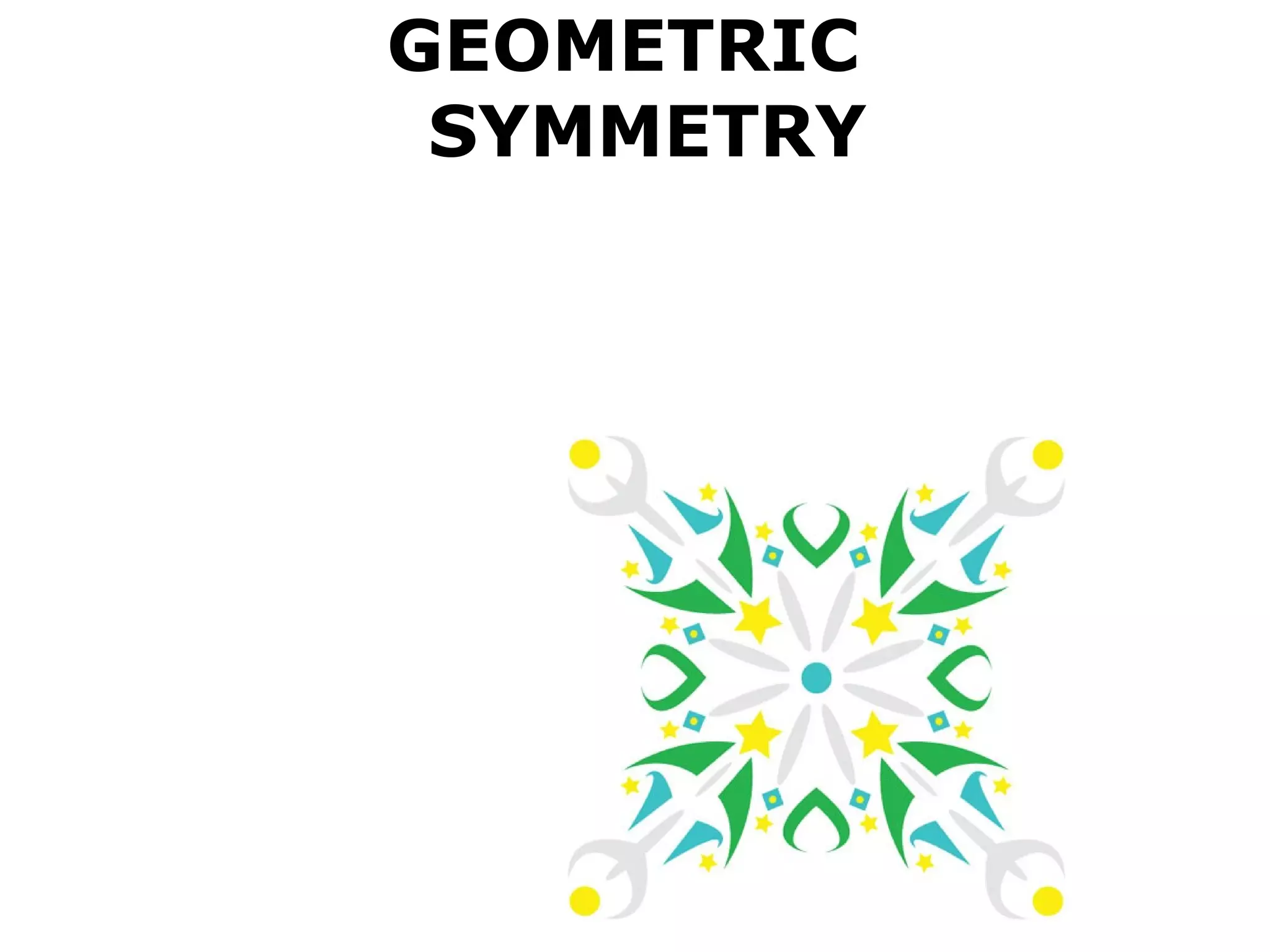
GEOMETRIC   SYMMETRY The main feature of geometric symmetry is the accuracy in the drawing of the points that are equidistant from the axis (axial figures) or symmetry centre (radial figures). To draw figures with geometric symmetry we use a square, a set square, a ruler and a pair of compasses.
 
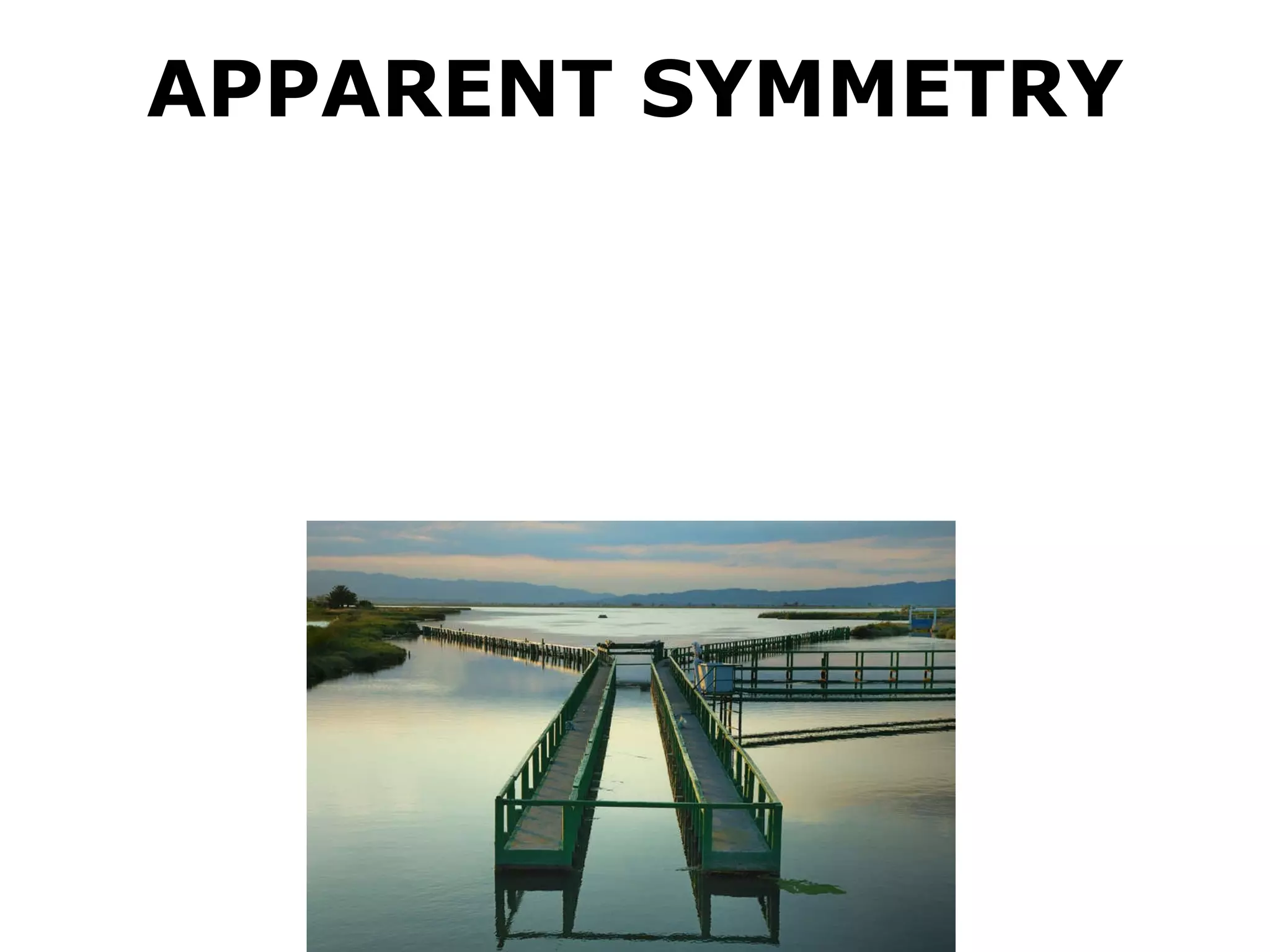
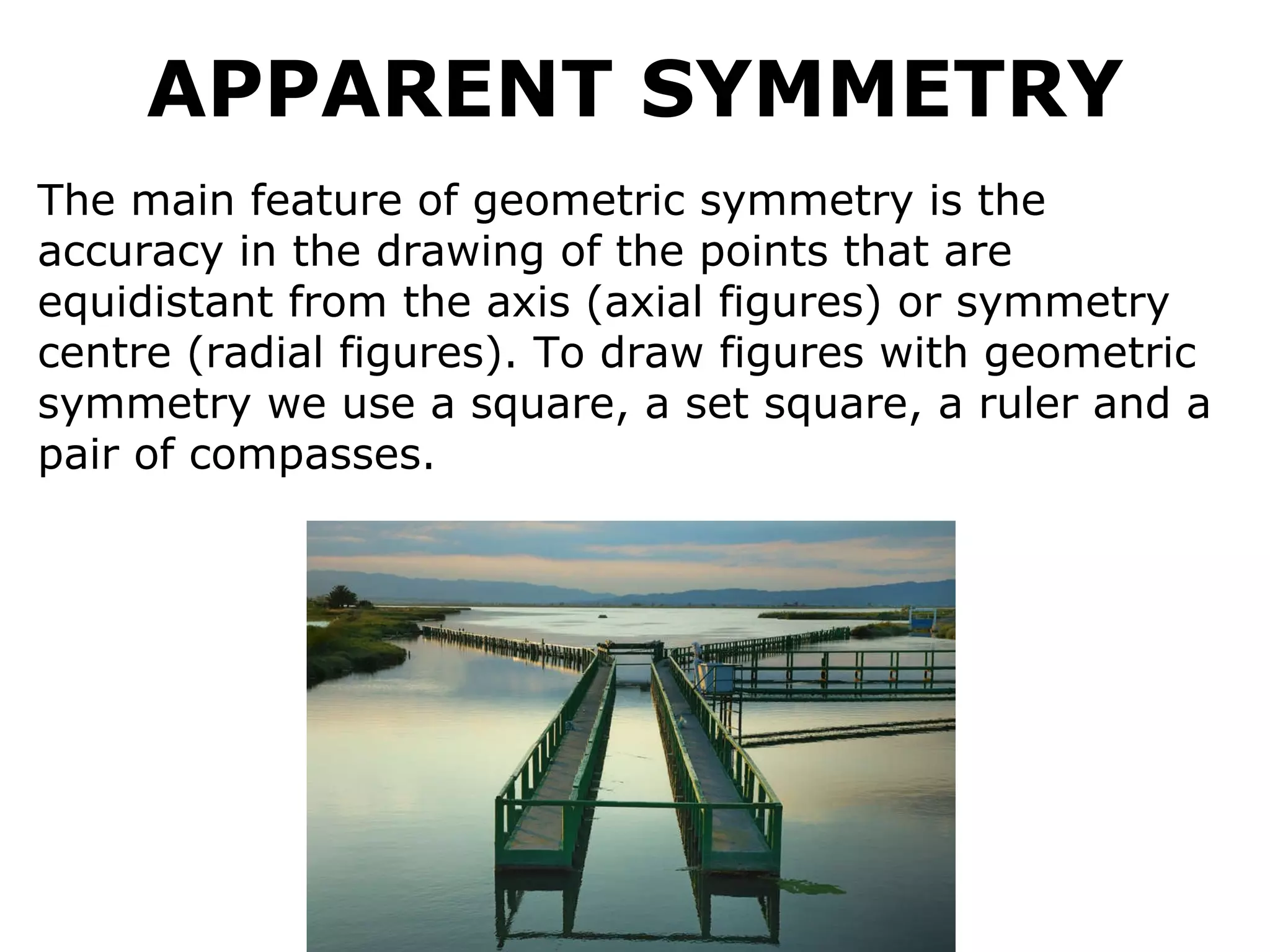
APPARENT SYMMETRY
APPARENT SYMMETRY The main feature of geometric symmetry is the accuracy in the drawing of the points that are equidistant from the axis (axial figures) or symmetry centre (radial figures). To draw figures with geometric symmetry we use a square, a set square, a ruler and a pair of compasses.
 

Unit 3 symmetry

  • 1.
  • 2.
  • 3.
  • 4.
  • 5.
  • 6.
  • 7.
  • 8.
  • 9.
    We can findsymmetry in nature, architecture and in art
  • 10.
    We can findsymmetry in nature, architecture and in art
  • 11.
    We can findsymmetry in nature, architecture and in art
  • 12.
    We can findsymmetry in nature, architecture and in art
  • 13.
  • 14.
  • 15.
    Symmetry is akind of spatial relationship between shapes. A shape has line symmetry when one half of it is the mirror image of the other half.
  • 16.
    Symmetry is akind of spatial relationship between shapes. A shape has line symmetry when one half of it is the mirror image of the other half.
  • 17.
    Symmetry is akind of spatial relationship between shapes. A shape has line symmetry when one half of it is the mirror image of the other half.
  • 18.
  • 19.
  • 20.
  • 21.
  • 22.
    ONE HALF ARE EQUAL OTHER HALF SHAPE SYMMETRY LINE
  • 23.
    ONE HALF ARE EQUAL OTHER HALF SHAPE SYMMETRY LINE
  • 24.
    SHAPE SYMMETRY LINEONE HALF ARE EQUAL OTHER HALF
  • 25.
  • 26.
  • 27.
    The symetrical linecan be horizontal
  • 28.
    The symetrical linecan be horizontal
  • 29.
    The symetrical linecan be horizontal
  • 30.
    The symetrical linecan be horizontal vertical
  • 31.
    The symetrical linecan be horizontal vertical
  • 32.
    The symetrical linecan be horizontal vertical
  • 33.
    The symetrical linecan be horizontal vertical diagonal
  • 34.
    The symetrical linecan be horizontal vertical diagonal
  • 35.
    The symetrical linecan be horizontal vertical diagonal
  • 36.
  • 37.
    But we canalso find diferent lines of symmetry at the same time in a shape
  • 38.
    But we canalso find diferent lines of symmetry at the same time in a shape
  • 39.
    But we canalso find diferent lines of symmetry at the same time in a shape
  • 40.
    But we canalso find diferent lines of symmetry at the same time in a shape
  • 41.
    But we canalso find diferent lines of symmetry at the same time in a shape
  • 42.
  • 43.
    Let´s go tointernet to learn more http://www.adrianbruce.com/Symmetry/
  • 44.
    Let´s go tointernet to learn more http://www.adrianbruce.com/Symmetry/
  • 45.
  • 46.
    The visual qualitiesassociated to symmetric forms are:
  • 47.
    The visual qualitiesassociated to symmetric forms are: Precision
  • 48.
    Precision Order Thevisual qualities associated to symmetric forms are:
  • 49.
    Precision Order Aquick and easy visualization The visual qualities associated to symmetric forms are:
  • 50.
  • 51.
    There are twokinds of symmetry
  • 52.
    There are twokinds of symmetry Axial symmetry
  • 53.
    There are twokinds of symmetry Axial symmetry Radial symmetry
  • 54.
  • 55.
    AXIAL SYMMETRY Itappears when the equal elements in a figure are equidistant . They are at the same distance from the straight line called symmetry axis , but opposed.
  • 56.
    AXIAL SYMMETRY Itappears when the equal elements in a figure are equidistant . They are at the same distance from the straight line called symmetry axis , but opposed.
  • 57.
    AXIAL SYMMETRY Itappears when the equal elements in a figure are equidistant . They are at the same distance from the straight line called symmetry axis , but opposed.
  • 58.
    AXIAL SYMMETRY Itappears when the equal elements in a figure are equidistant . They are at the same distance from the straight line called symmetry axis , but opposed.
  • 59.
    AXIAL SYMMETRY Itappears when the equal elements in a figure are equidistant . They are at the same distance from the straight line called symmetry axis , but opposed.
  • 60.
    AXIAL SYMMETRY Itappears when the equal elements in a figure are equidistant . They are at the same distance from the straight line called symmetry axis , but opposed.
  • 61.
  • 62.
  • 63.
  • 64.
    RADIAL SYMMETRY Itappears when each point of a figure corresponds with another point in the same figure. The opposing points are on the same line, opposed, and at the same distance of another point called centre of symmetry.
  • 65.
  • 66.
    GEOMETRIC SYMMETRY
  • 67.
    GEOMETRIC SYMMETRY The main feature of geometric symmetry is the accuracy in the drawing of the points that are equidistant from the axis (axial figures) or symmetry centre (radial figures). To draw figures with geometric symmetry we use a square, a set square, a ruler and a pair of compasses.
  • 68.
  • 69.
  • 70.
    APPARENT SYMMETRY Themain feature of geometric symmetry is the accuracy in the drawing of the points that are equidistant from the axis (axial figures) or symmetry centre (radial figures). To draw figures with geometric symmetry we use a square, a set square, a ruler and a pair of compasses.
  • 71.