Robo-Revolution: Unleashing the
Strengths, Weaknesses, Opportunities,
and Threats of Robotics!
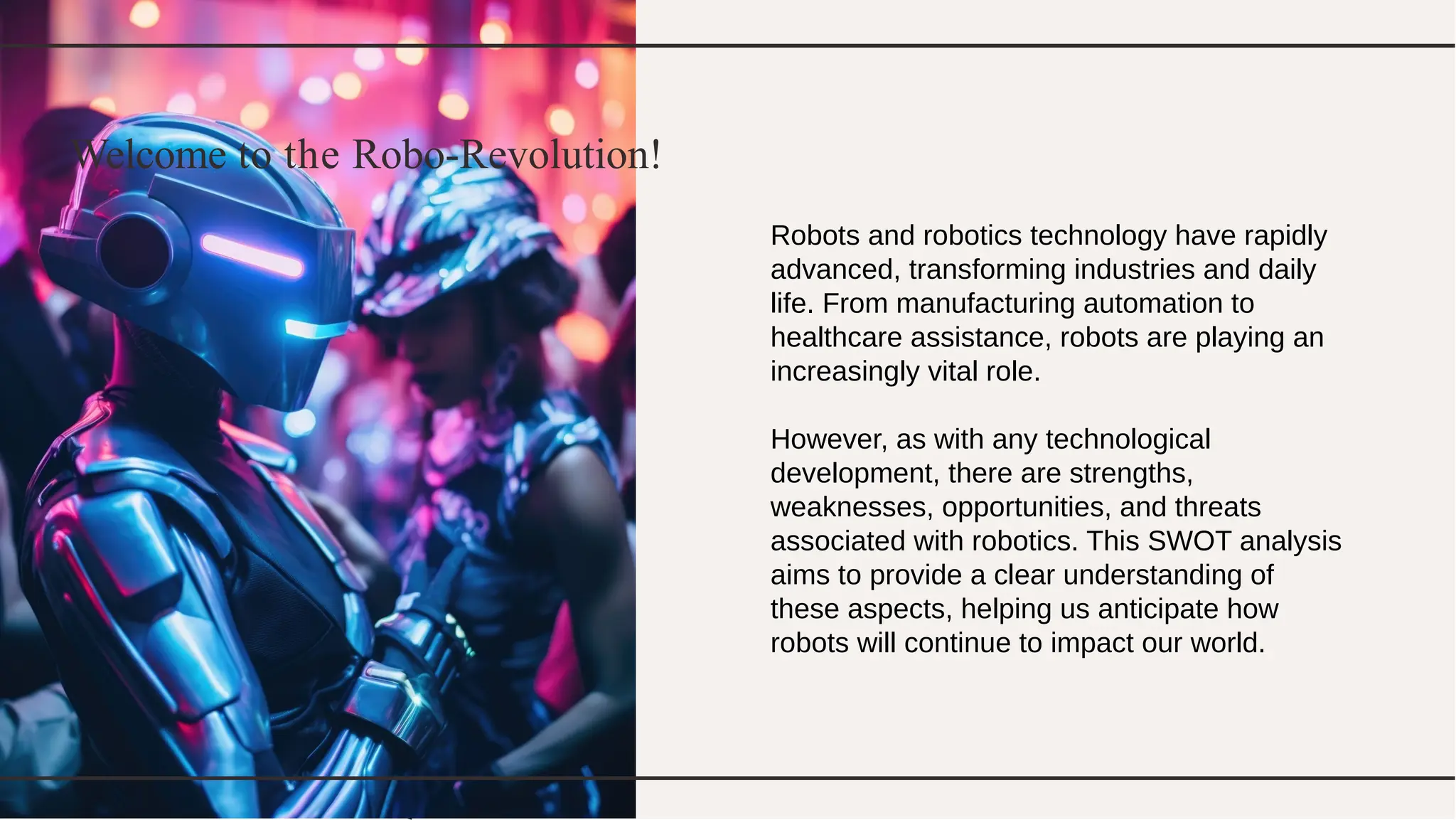
Welcome to the Robo-Revolution!
Robots and robotics technology have rapidly
advanced, transforming industries and daily
life. From manufacturing automation to
healthcare assistance, robots are playing an
increasingly vital role.
However, as with any technological
development, there are strengths,
weaknesses, opportunities, and threats
associated with robotics. This SWOT analysis
aims to provide a clear understanding of
these aspects, helping us anticipate how
robots will continue to impact our world.
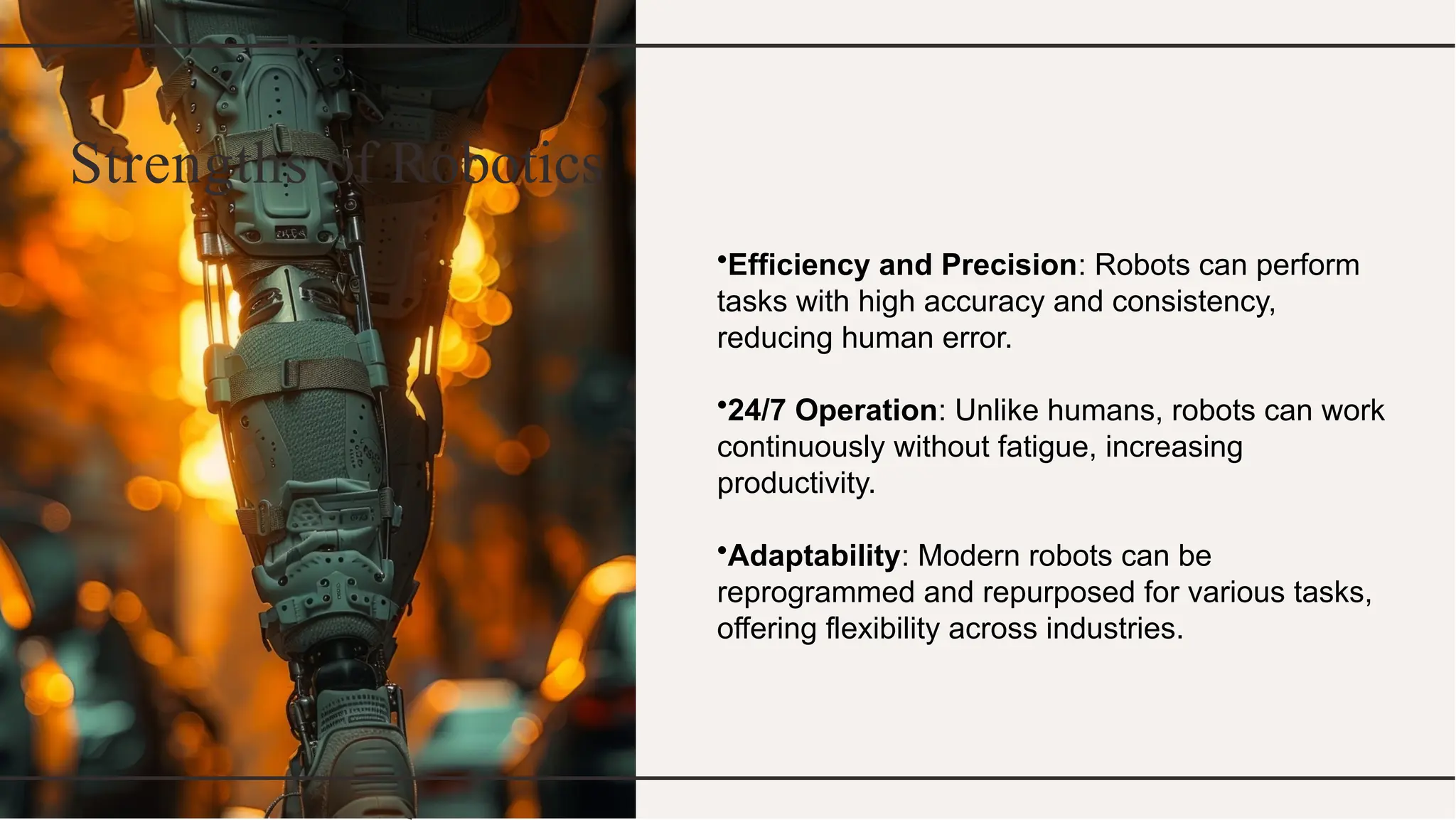
Strengths of Robotics
•Efficiency and Precision: Robots can perform
tasks with high accuracy and consistency,
reducing human error.
•24/7 Operation: Unlike humans, robots can work
continuously without fatigue, increasing
productivity.
•Adaptability: Modern robots can be
reprogrammed and repurposed for various tasks,
offering flexibility across industries.
Weaknesses of Robotics
•High Initial Costs: The development and
implementation of robotic systems require significant
upfront investment.
•Limited Creativity: Robots lack the ability to think
creatively or solve problems in unstructured
environments.
•Dependence on Technology: Breakdowns or
software issues can lead to significant downtime,
affecting operations.
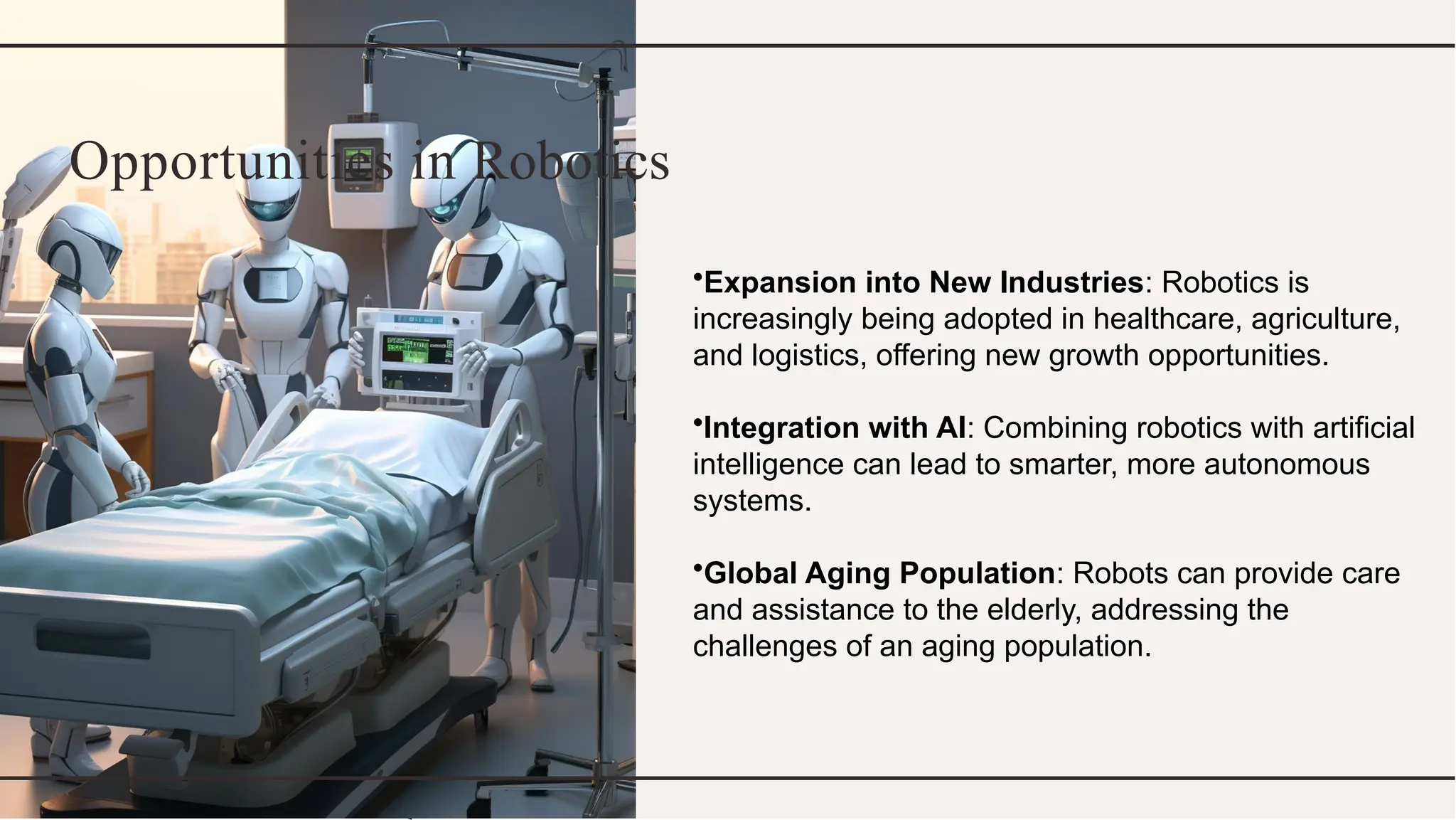
Opportunities in Robotics
•Expansion into New Industries: Robotics is
increasingly being adopted in healthcare, agriculture,
and logistics, offering new growth opportunities.
•Integration with AI: Combining robotics with artificial
intelligence can lead to smarter, more autonomous
systems.
•Global Aging Population: Robots can provide care
and assistance to the elderly, addressing the
challenges of an aging population.
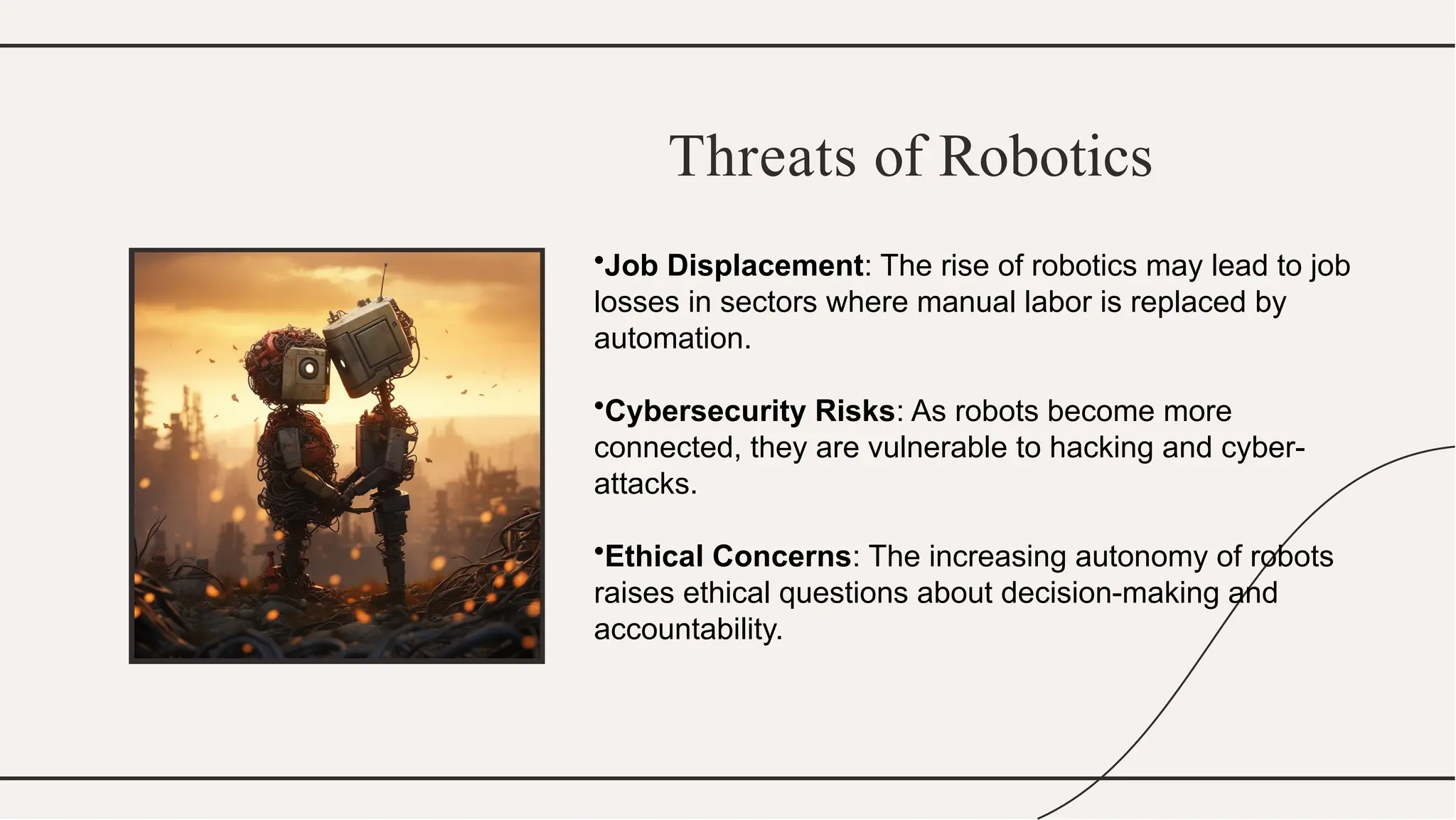
Threats of Robotics
•Job Displacement: The rise of robotics may lead to job
losses in sectors where manual labor is replaced by
automation.
•Cybersecurity Risks: As robots become more
connected, they are vulnerable to hacking and cyber-
attacks.
•Ethical Concerns: The increasing autonomy of robots
raises ethical questions about decision-making and
accountability.
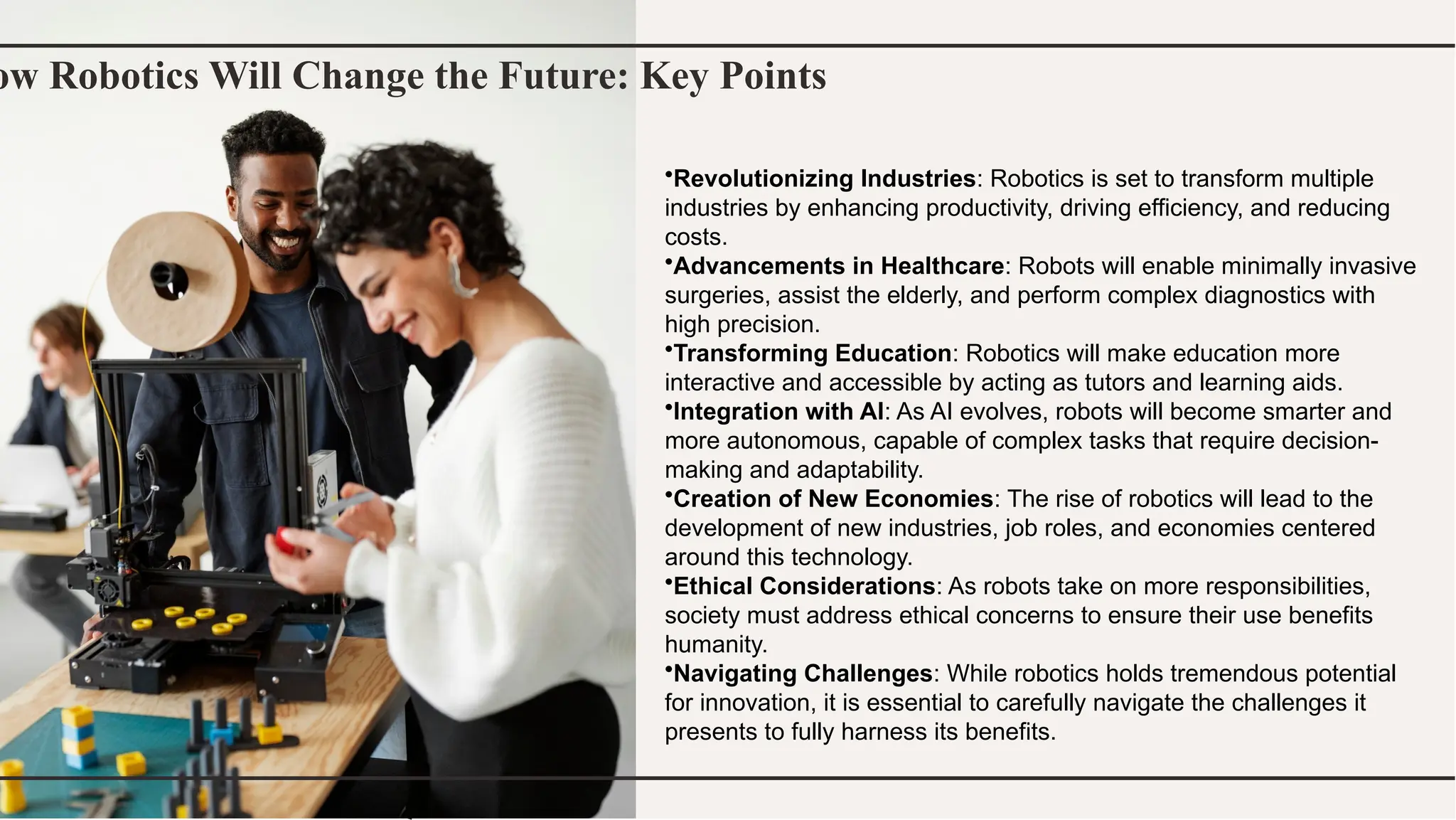
ow Robotics Will Change the Future: Key Points
•Revolutionizing Industries: Robotics is set to transform multiple
industries by enhancing productivity, driving efficiency, and reducing
costs.
•Advancements in Healthcare: Robots will enable minimally invasive
surgeries, assist the elderly, and perform complex diagnostics with
high precision.
•Transforming Education: Robotics will make education more
interactive and accessible by acting as tutors and learning aids.
•Integration with AI: As AI evolves, robots will become smarter and
more autonomous, capable of complex tasks that require decision-
making and adaptability.
•Creation of New Economies: The rise of robotics will lead to the
development of new industries, job roles, and economies centered
around this technology.
•Ethical Considerations: As robots take on more responsibilities,
society must address ethical concerns to ensure their use benefits
humanity.
•Navigating Challenges: While robotics holds tremendous potential
for innovation, it is essential to carefully navigate the challenges it
presents to fully harness its benefits.
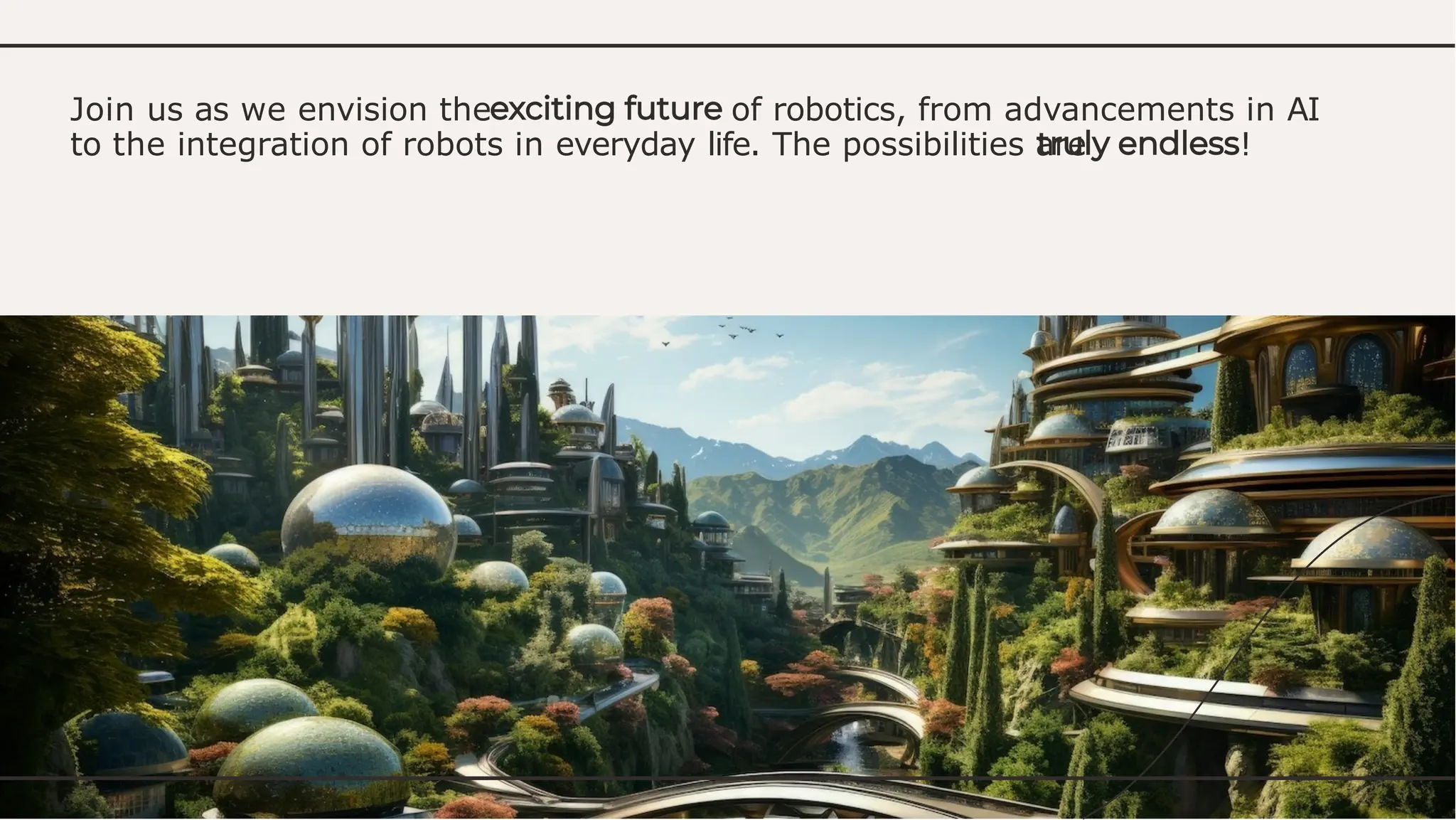
Join us as we envision the of robotics, from advancements in AI
to the integration of robots in everyday life. The possibilities are !
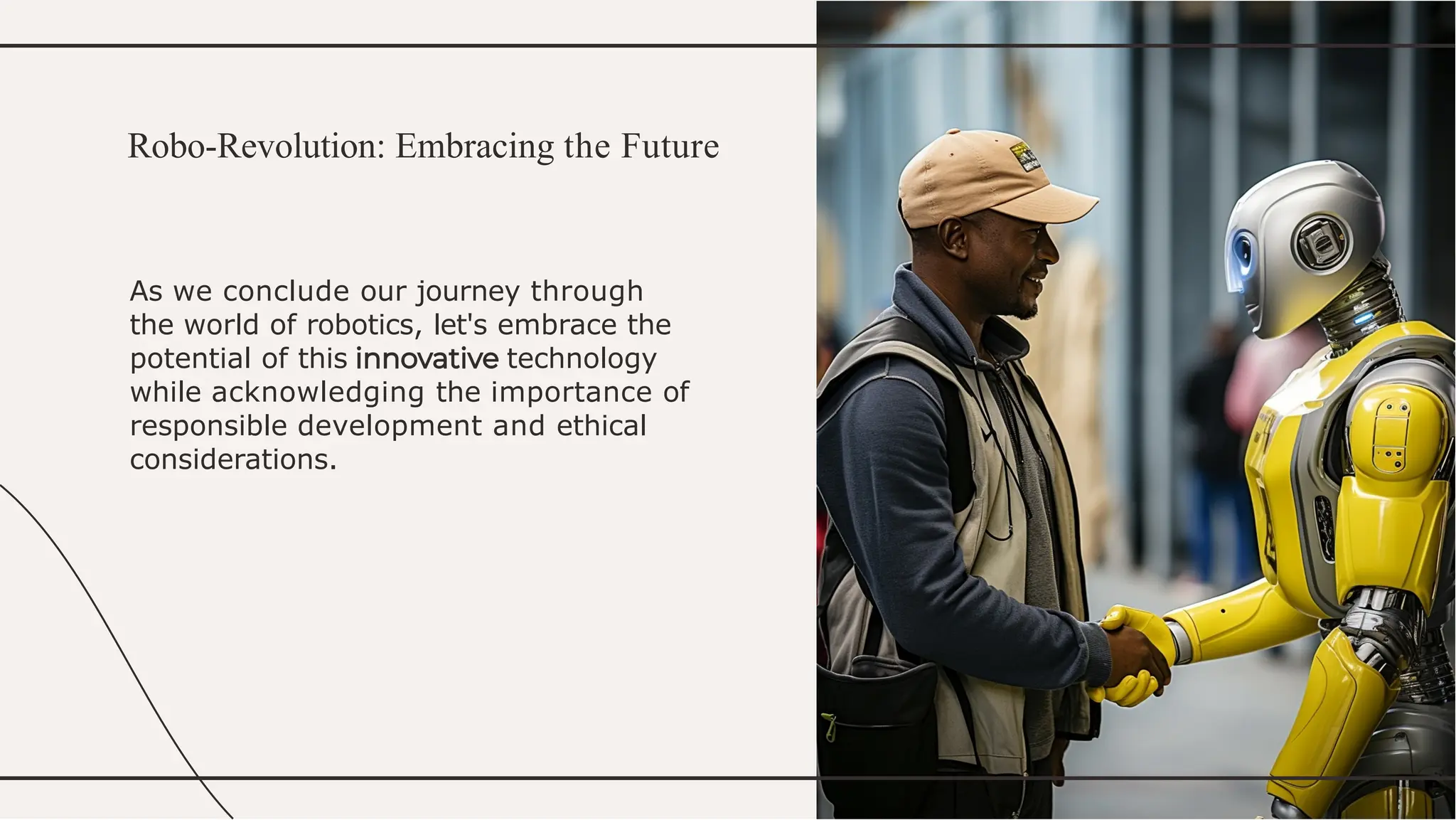
As we conclude our journey through
the world of robotics, let's embrace the
potential of this technology
while acknowledging the importance of
responsible development and ethical
considerations.
Robo-Revolution: Embracing the Future

SWOT Analysis of Robotics Technology Latest

  • 1.
    Robo-Revolution: Unleashing the Strengths,Weaknesses, Opportunities, and Threats of Robotics!
  • 2.
    Welcome to theRobo-Revolution! Robots and robotics technology have rapidly advanced, transforming industries and daily life. From manufacturing automation to healthcare assistance, robots are playing an increasingly vital role. However, as with any technological development, there are strengths, weaknesses, opportunities, and threats associated with robotics. This SWOT analysis aims to provide a clear understanding of these aspects, helping us anticipate how robots will continue to impact our world.
  • 3.
    Strengths of Robotics •Efficiencyand Precision: Robots can perform tasks with high accuracy and consistency, reducing human error. •24/7 Operation: Unlike humans, robots can work continuously without fatigue, increasing productivity. •Adaptability: Modern robots can be reprogrammed and repurposed for various tasks, offering flexibility across industries.
  • 4.
    Weaknesses of Robotics •HighInitial Costs: The development and implementation of robotic systems require significant upfront investment. •Limited Creativity: Robots lack the ability to think creatively or solve problems in unstructured environments. •Dependence on Technology: Breakdowns or software issues can lead to significant downtime, affecting operations.
  • 5.
    Opportunities in Robotics •Expansioninto New Industries: Robotics is increasingly being adopted in healthcare, agriculture, and logistics, offering new growth opportunities. •Integration with AI: Combining robotics with artificial intelligence can lead to smarter, more autonomous systems. •Global Aging Population: Robots can provide care and assistance to the elderly, addressing the challenges of an aging population.
  • 6.
    Threats of Robotics •JobDisplacement: The rise of robotics may lead to job losses in sectors where manual labor is replaced by automation. •Cybersecurity Risks: As robots become more connected, they are vulnerable to hacking and cyber- attacks. •Ethical Concerns: The increasing autonomy of robots raises ethical questions about decision-making and accountability.
  • 7.
    ow Robotics WillChange the Future: Key Points •Revolutionizing Industries: Robotics is set to transform multiple industries by enhancing productivity, driving efficiency, and reducing costs. •Advancements in Healthcare: Robots will enable minimally invasive surgeries, assist the elderly, and perform complex diagnostics with high precision. •Transforming Education: Robotics will make education more interactive and accessible by acting as tutors and learning aids. •Integration with AI: As AI evolves, robots will become smarter and more autonomous, capable of complex tasks that require decision- making and adaptability. •Creation of New Economies: The rise of robotics will lead to the development of new industries, job roles, and economies centered around this technology. •Ethical Considerations: As robots take on more responsibilities, society must address ethical concerns to ensure their use benefits humanity. •Navigating Challenges: While robotics holds tremendous potential for innovation, it is essential to carefully navigate the challenges it presents to fully harness its benefits.
  • 8.
    Join us aswe envision the of robotics, from advancements in AI to the integration of robots in everyday life. The possibilities are !
  • 9.
    As we concludeour journey through the world of robotics, let's embrace the potential of this technology while acknowledging the importance of responsible development and ethical considerations. Robo-Revolution: Embracing the Future