Introduction
to Robotics
The fundamental
concepts and trends in
robotics today.
Start here
Introduction
Robotics is a rapidly evolving field that encompasses the design,
construction, and operation of robots. This presentation
explores the key aspects of robotics, highlighting its history,
development, and current trends. By understanding robotics,
we can appreciate its impact on various industries and society
as a whole.
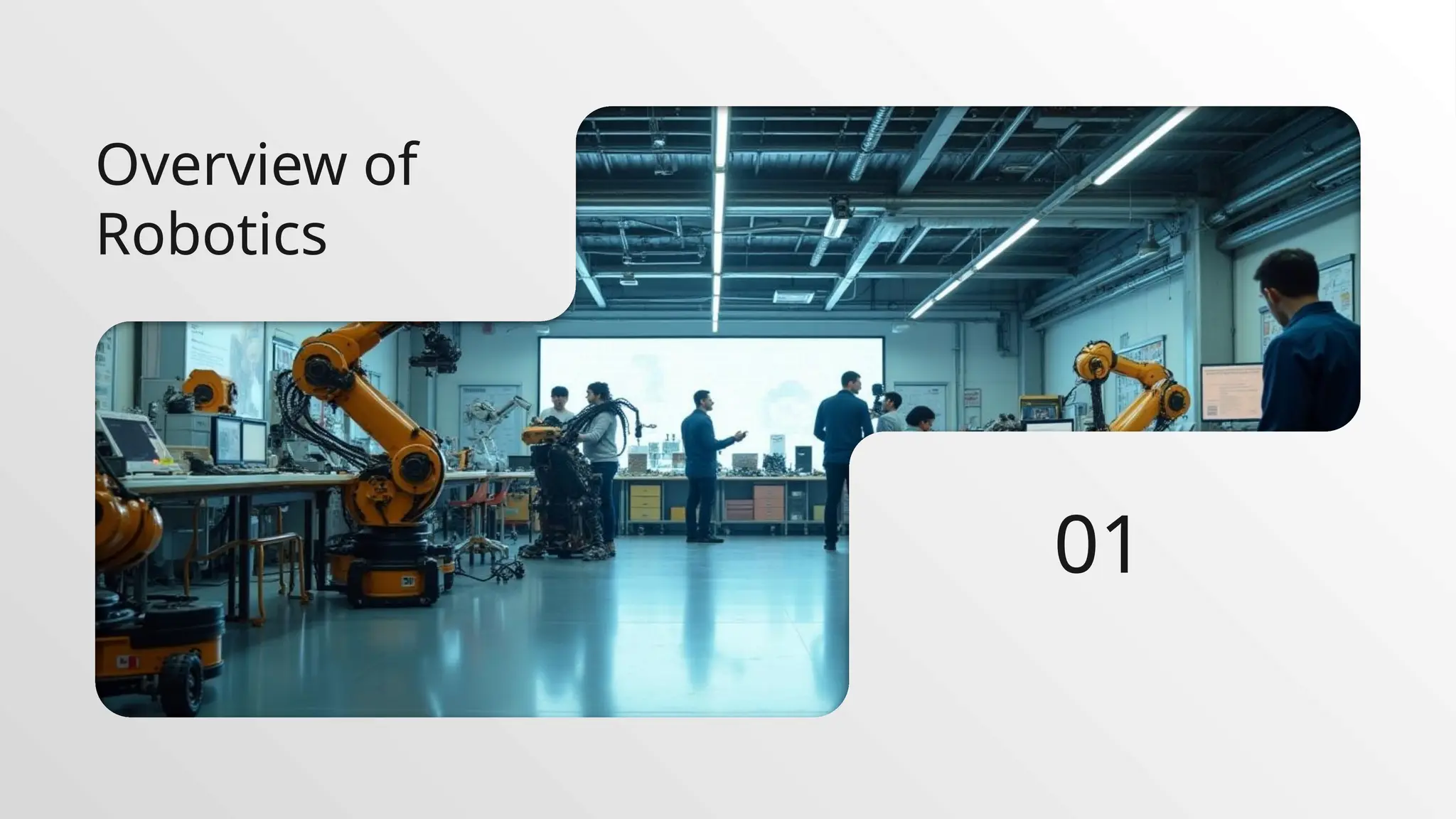
Overview of
Robotics
01
Definition and History
Robotics refers to the technology used to create machines that
can perform tasks autonomously or semi-autonomously. The
origins of robotics date back to ancient times, but significant
advancements began in the 20th century, leading to modern
robotic systems.
Key Milestones in Robotics
Development
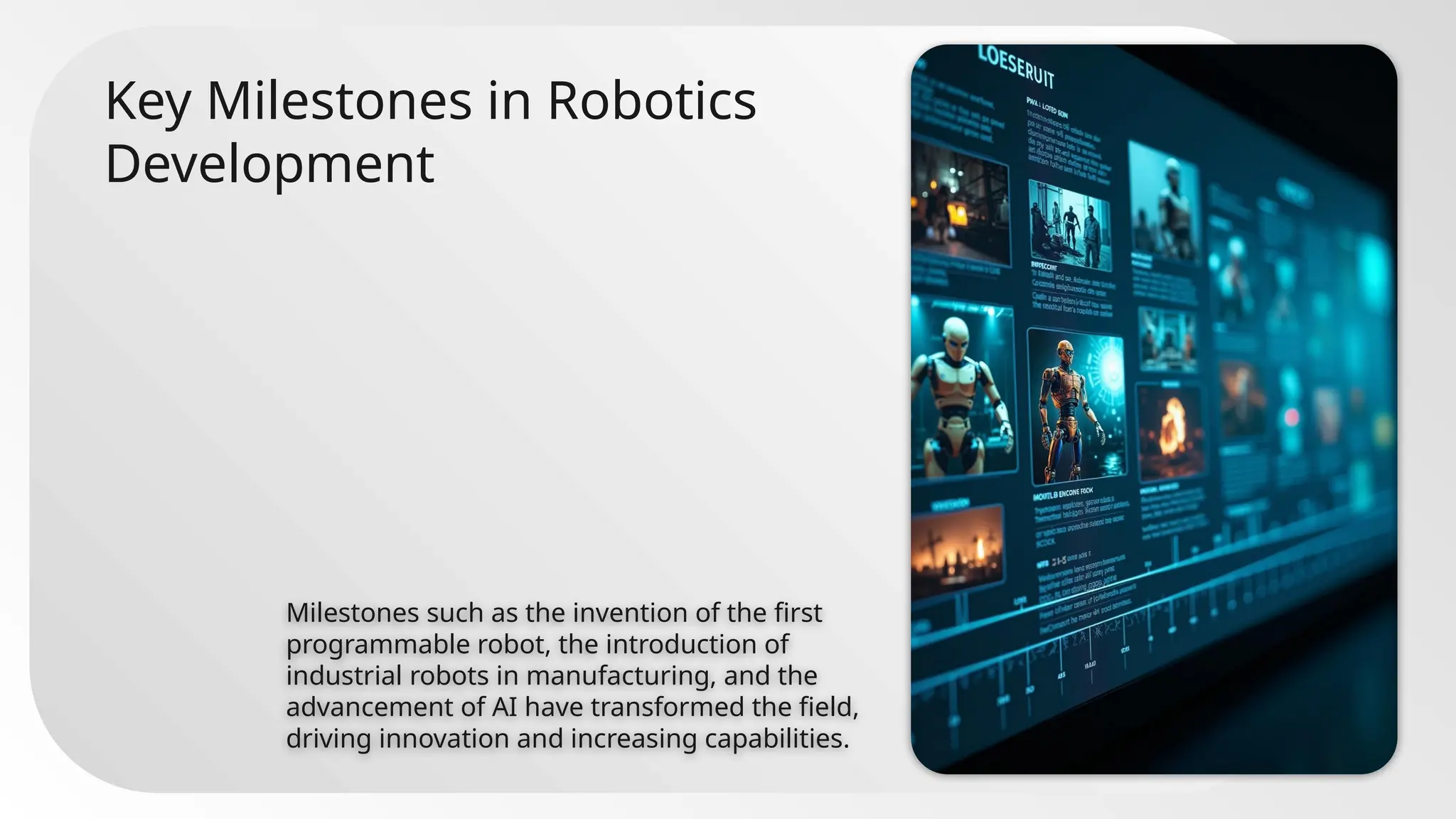
Milestones such as the invention of the first
programmable robot, the introduction of
industrial robots in manufacturing, and the
advancement of AI have transformed the field,
driving innovation and increasing capabilities.
Current Trends in Robotics
Today, robotics is driven by advances in AI, machine learning,
and sensor technology. Trends include the rise of collaborative
robots, autonomous vehicles, and robotics in healthcare,
emphasizing their growing importance in various sectors.
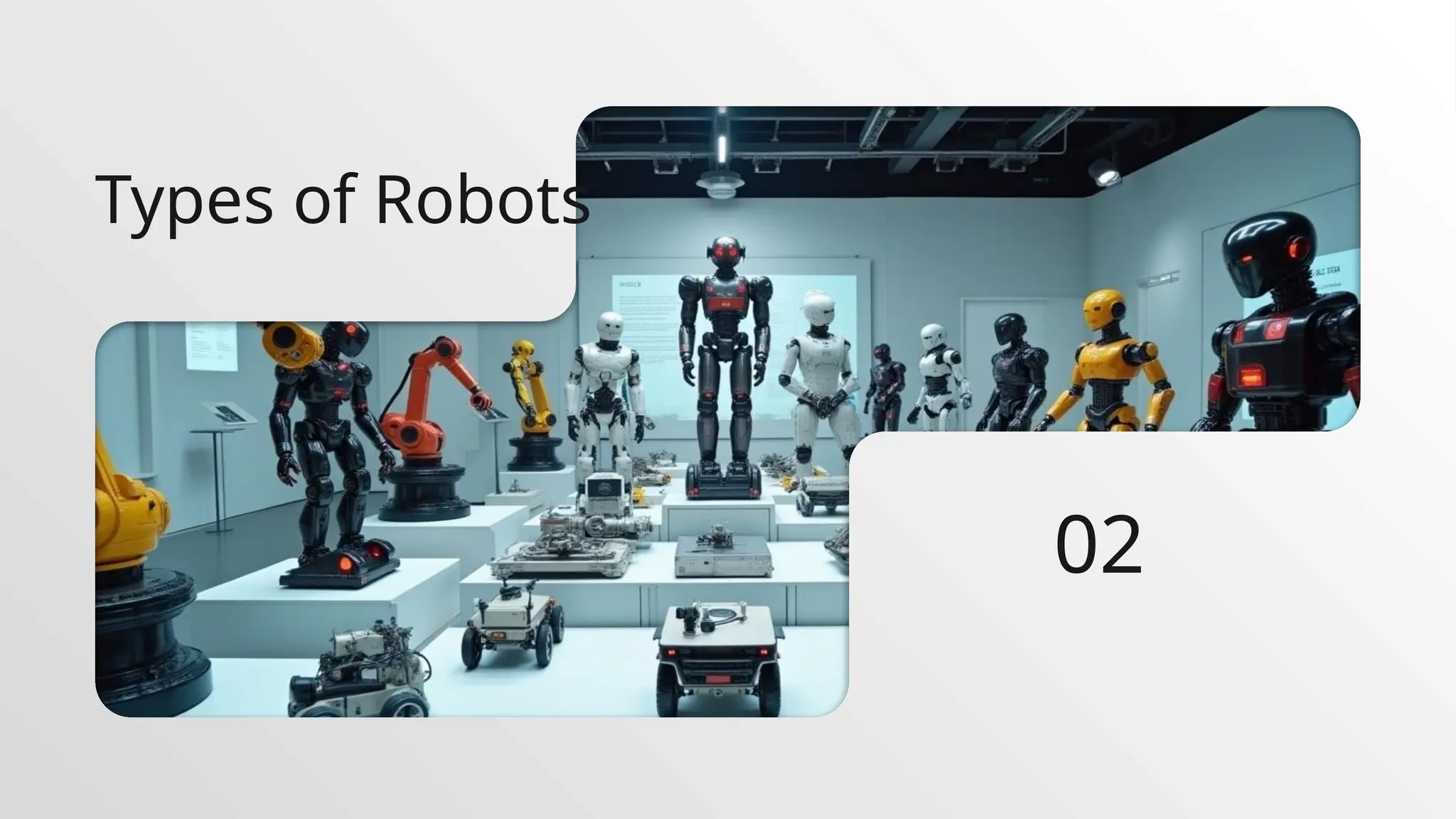
Types of Robots
02
Industrial Robots
Industrial robots are used in manufacturing processes,
designed for tasks like assembly, welding, and painting. Their
precision, speed, and ability to work in hazardous environments
make them indispensable in modern production lines.
Service Robots
Service robots assist humans with tasks, ranging from
household chores to complex surgeries. Their applications are
expanding, significantly enhancing efficiency and quality of life
in various areas, including health care, hospitality, and elderly
care.
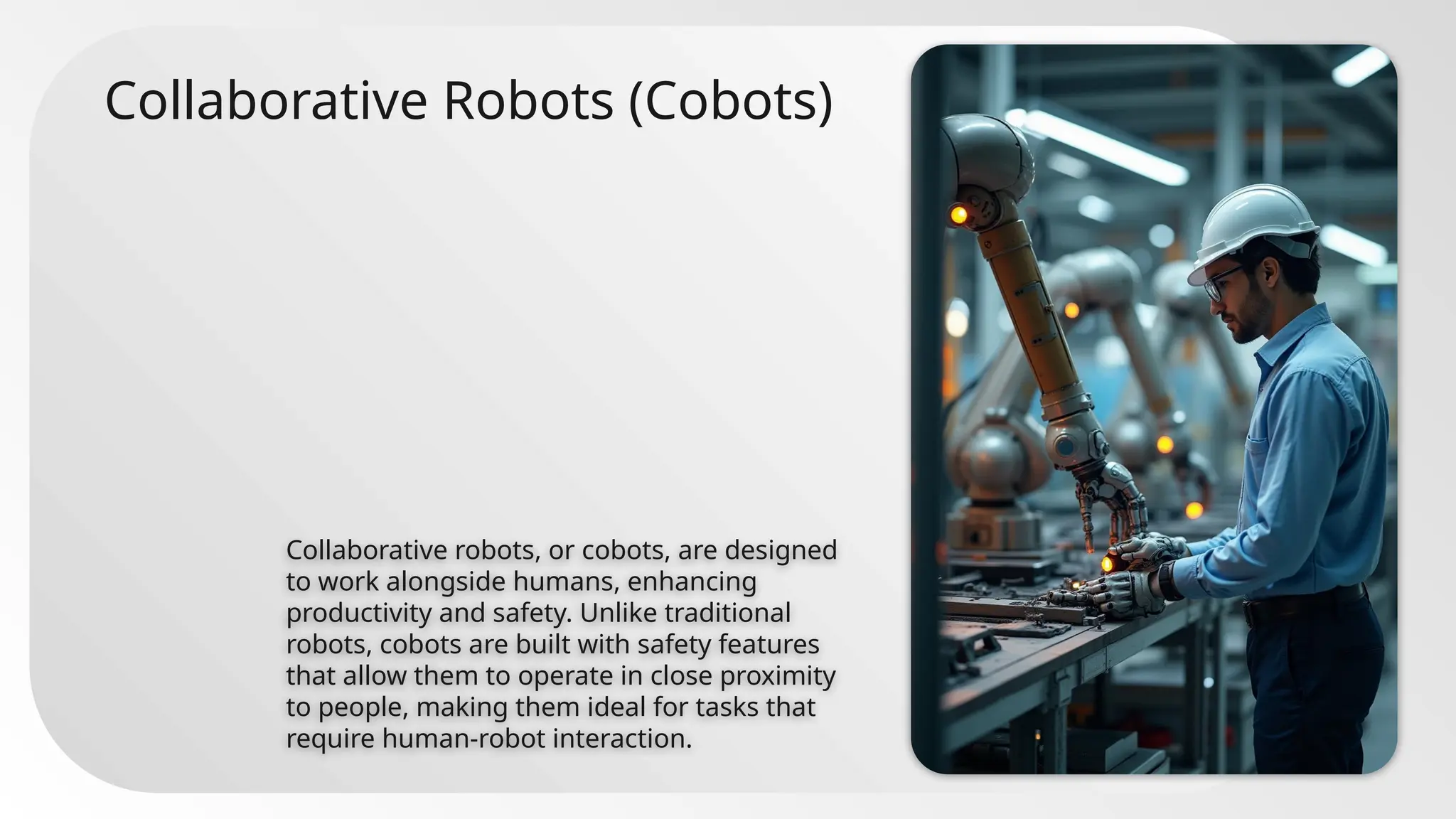
Collaborative Robots (Cobots)
Collaborative robots, or cobots, are designed
to work alongside humans, enhancing
productivity and safety. Unlike traditional
robots, cobots are built with safety features
that allow them to operate in close proximity
to people, making them ideal for tasks that
require human-robot interaction.
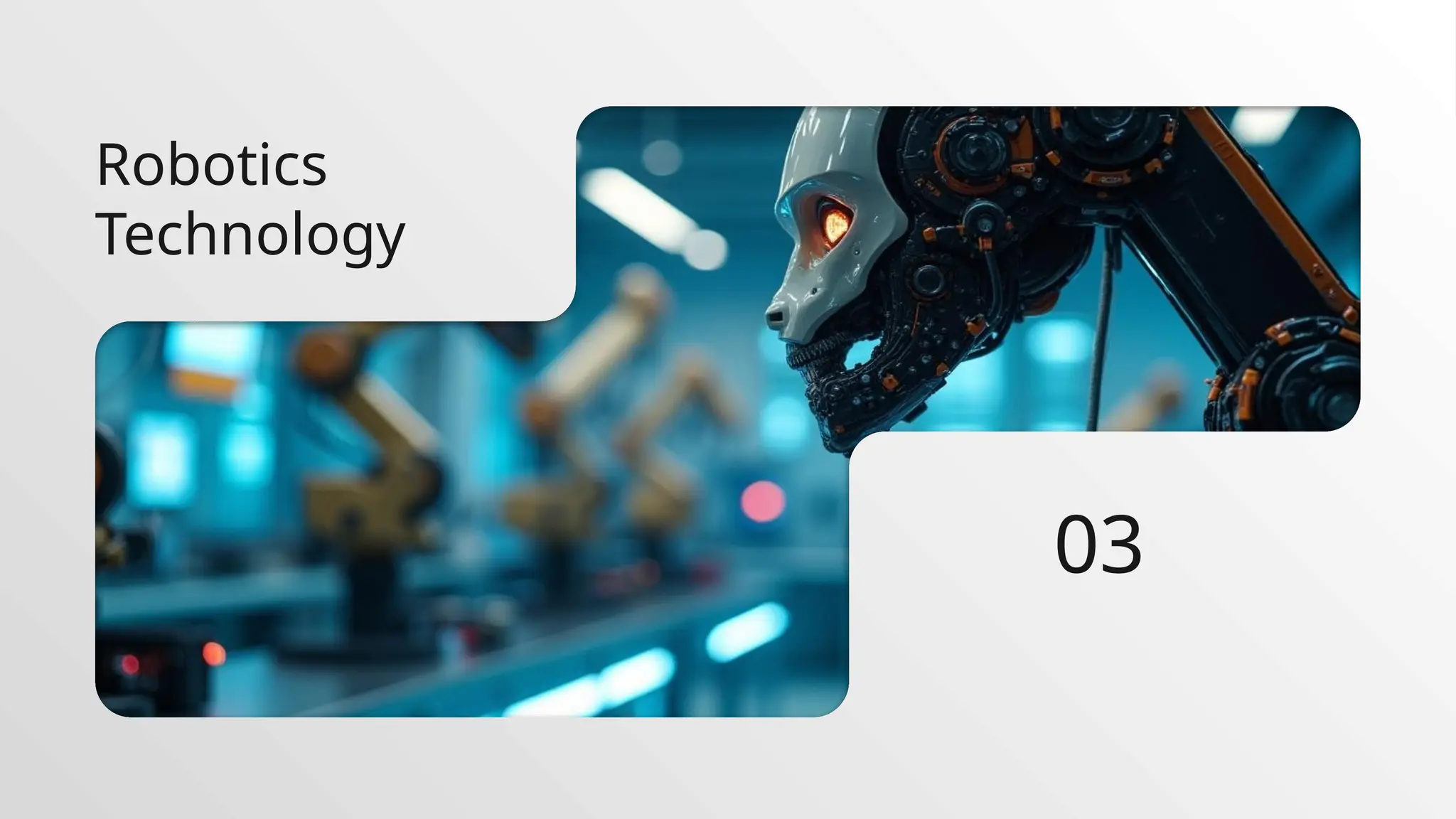
Robotics
Technology
03
Sensors and Actuators
Sensors and actuators are crucial components in robotics,
enabling robots to perceive their environment and perform
tasks effectively. Sensors gather data about surroundings, while
actuators convert this data into physical actions, facilitating real-
time responses.
Artificial Intelligence in
Robotics
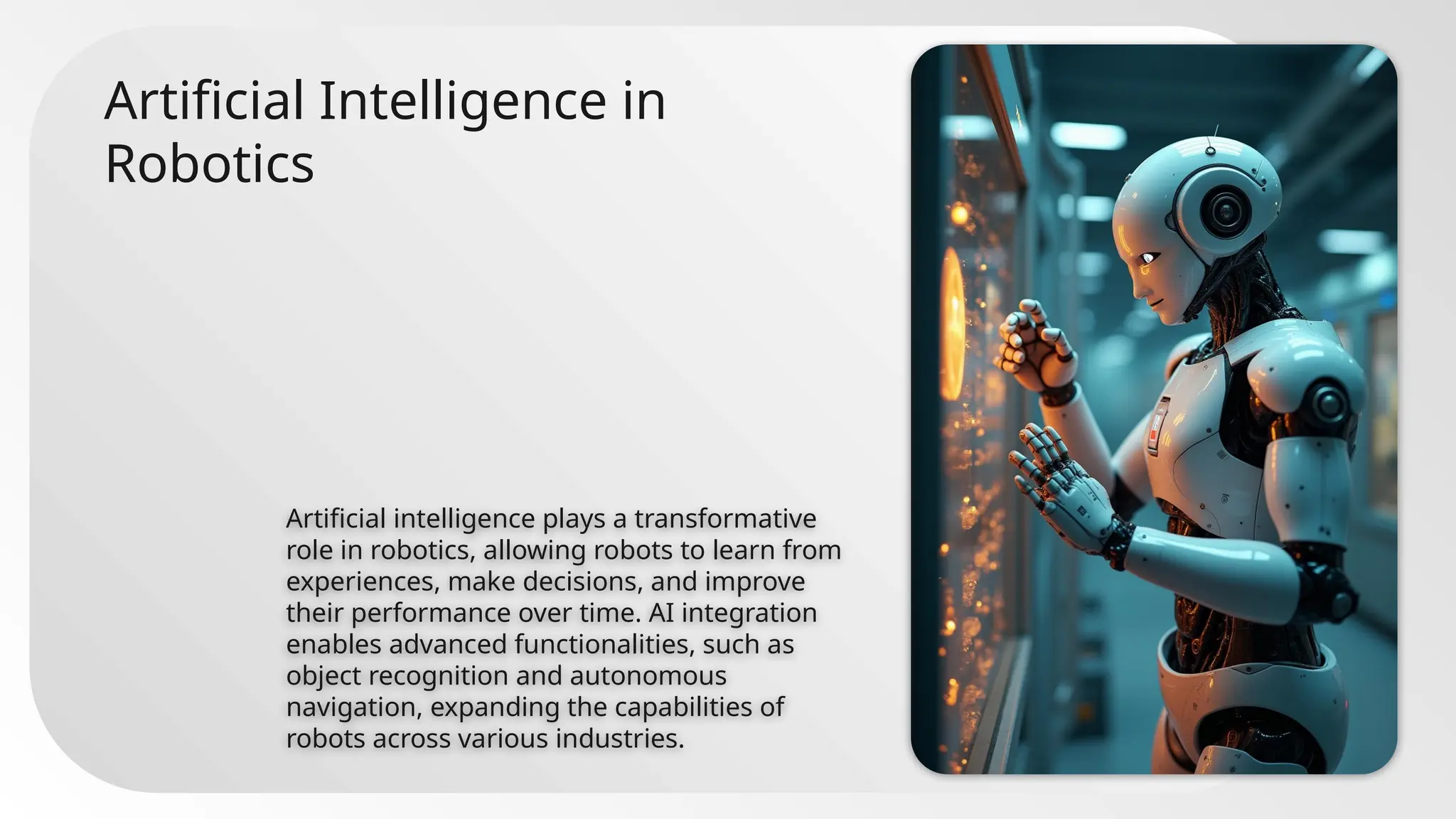
Artificial intelligence plays a transformative
role in robotics, allowing robots to learn from
experiences, make decisions, and improve
their performance over time. AI integration
enables advanced functionalities, such as
object recognition and autonomous
navigation, expanding the capabilities of
robots across various industries.
Safety and Ethical Considerations
With the rise of robotics, safety and ethical considerations have
become paramount. Protecting human workers and preventing
misuse of robotic technology are critical challenges. Ensuring
safe integration of robots into society involves establishing
guidelines, regulations, and ethical norms.
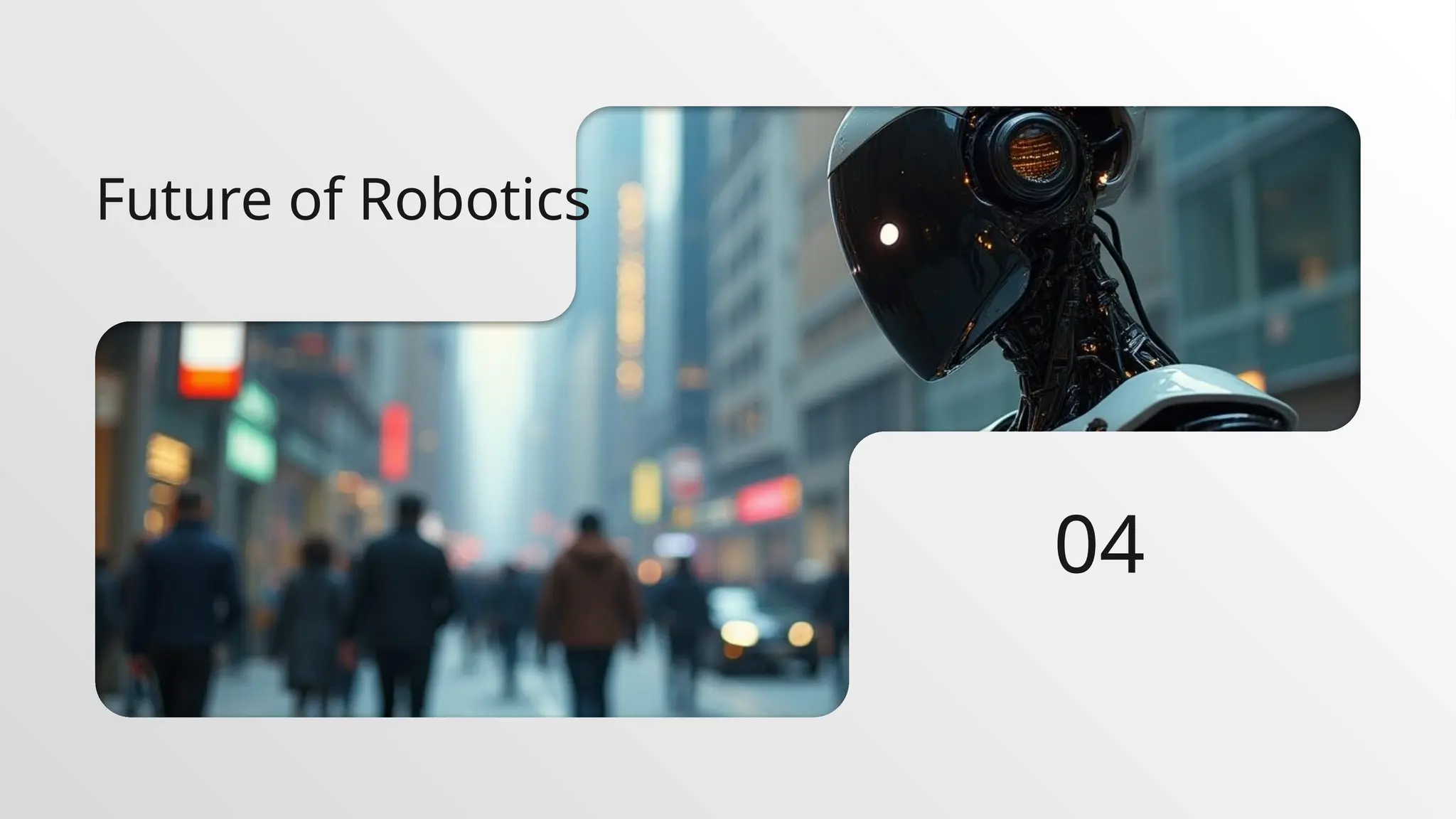
Future of Robotics
04
Emerging Applications
The future of robotics is marked by emerging applications in
fields like healthcare, agriculture, and logistics. Innovations such
as drone technology and automated delivery systems
demonstrate the potential for robotics to revolutionize
industries and improve efficiency.
Challenges and Opportunities
While robotics presents vast opportunities, challenges such as
job displacement and technological limitations persist.
Addressing these issues will be crucial to harnessing the full
potential of robotics, ensuring that technological advancements
benefit society as a whole.
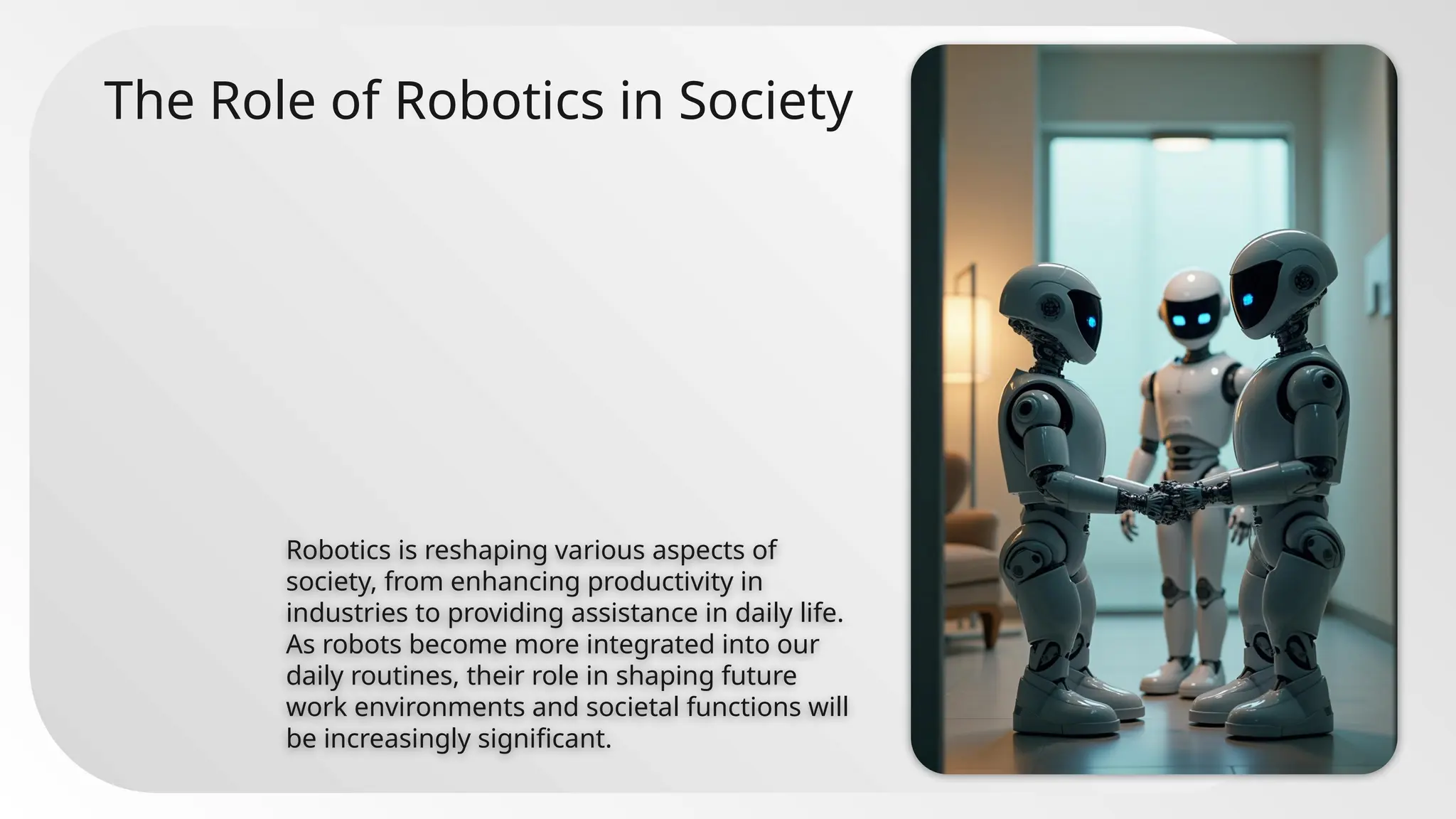
The Role of Robotics in Society
Robotics is reshaping various aspects of
society, from enhancing productivity in
industries to providing assistance in daily life.
As robots become more integrated into our
daily routines, their role in shaping future
work environments and societal functions will
be increasingly significant.
Conclusions
Robotics is a dynamic field with far-reaching
implications for various sectors.
Understanding its technology, applications,
and ethical considerations is essential for
leveraging its potential responsibly. As we
progress into the future, robotics will play a
pivotal role in enhancing productivity, quality
of life, and driving innovation.
CREDITS: This presentation template was
created by Slidesgo, and includes icons,
infographics & images by Freepik
Thank you!
Do you have any questions?
+00 000 000 000
Introduction to Robotics process automation.pptx

  • 1.
    Introduction to Robotics The fundamental conceptsand trends in robotics today. Start here
  • 2.
    Introduction Robotics is arapidly evolving field that encompasses the design, construction, and operation of robots. This presentation explores the key aspects of robotics, highlighting its history, development, and current trends. By understanding robotics, we can appreciate its impact on various industries and society as a whole.
  • 3.
  • 4.
    Definition and History Roboticsrefers to the technology used to create machines that can perform tasks autonomously or semi-autonomously. The origins of robotics date back to ancient times, but significant advancements began in the 20th century, leading to modern robotic systems.
  • 5.
    Key Milestones inRobotics Development Milestones such as the invention of the first programmable robot, the introduction of industrial robots in manufacturing, and the advancement of AI have transformed the field, driving innovation and increasing capabilities.
  • 6.
    Current Trends inRobotics Today, robotics is driven by advances in AI, machine learning, and sensor technology. Trends include the rise of collaborative robots, autonomous vehicles, and robotics in healthcare, emphasizing their growing importance in various sectors.
  • 7.
  • 8.
    Industrial Robots Industrial robotsare used in manufacturing processes, designed for tasks like assembly, welding, and painting. Their precision, speed, and ability to work in hazardous environments make them indispensable in modern production lines.
  • 9.
    Service Robots Service robotsassist humans with tasks, ranging from household chores to complex surgeries. Their applications are expanding, significantly enhancing efficiency and quality of life in various areas, including health care, hospitality, and elderly care.
  • 10.
    Collaborative Robots (Cobots) Collaborativerobots, or cobots, are designed to work alongside humans, enhancing productivity and safety. Unlike traditional robots, cobots are built with safety features that allow them to operate in close proximity to people, making them ideal for tasks that require human-robot interaction.
  • 11.
  • 12.
    Sensors and Actuators Sensorsand actuators are crucial components in robotics, enabling robots to perceive their environment and perform tasks effectively. Sensors gather data about surroundings, while actuators convert this data into physical actions, facilitating real- time responses.
  • 13.
    Artificial Intelligence in Robotics Artificialintelligence plays a transformative role in robotics, allowing robots to learn from experiences, make decisions, and improve their performance over time. AI integration enables advanced functionalities, such as object recognition and autonomous navigation, expanding the capabilities of robots across various industries.
  • 14.
    Safety and EthicalConsiderations With the rise of robotics, safety and ethical considerations have become paramount. Protecting human workers and preventing misuse of robotic technology are critical challenges. Ensuring safe integration of robots into society involves establishing guidelines, regulations, and ethical norms.
  • 15.
  • 16.
    Emerging Applications The futureof robotics is marked by emerging applications in fields like healthcare, agriculture, and logistics. Innovations such as drone technology and automated delivery systems demonstrate the potential for robotics to revolutionize industries and improve efficiency.
  • 17.
    Challenges and Opportunities Whilerobotics presents vast opportunities, challenges such as job displacement and technological limitations persist. Addressing these issues will be crucial to harnessing the full potential of robotics, ensuring that technological advancements benefit society as a whole.
  • 18.
    The Role ofRobotics in Society Robotics is reshaping various aspects of society, from enhancing productivity in industries to providing assistance in daily life. As robots become more integrated into our daily routines, their role in shaping future work environments and societal functions will be increasingly significant.
  • 19.
    Conclusions Robotics is adynamic field with far-reaching implications for various sectors. Understanding its technology, applications, and ethical considerations is essential for leveraging its potential responsibly. As we progress into the future, robotics will play a pivotal role in enhancing productivity, quality of life, and driving innovation.
  • 20.
    CREDITS: This presentationtemplate was created by Slidesgo, and includes icons, infographics & images by Freepik Thank you! Do you have any questions? +00 000 000 000