S.W.O.T. ANALYSIS Matching Your Organization To Social Environment in which it operates
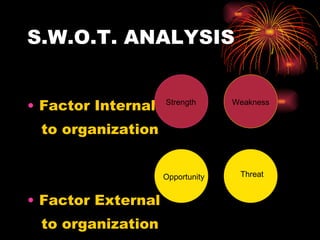
S.W.O.T. ANALYSIS Factor Internal  to organization Factor External to organization Strength Threat Opportunity Weakness
SWOT: Description A SWOT analysis generates information that is helpful in matching an organization or group goals, programs and capacities to the social environment in which it operates. Factors internal to firm usually can be classified as strength  and weakness, and those external to the firm can be classified as opportunity or threat It is an instrument within strategic planning When combined with dialogue it is a participatory process.
SWOT: Internal Factors Strengths Positive tangible and intangible attributes, internal to an organization. They are within the organization’s control. Weakness. Factors that are within an organization’s control that detract from its ability to attain the core goal. Which areas might the organization improve?
SWOT: External Factors Opportunities External attractive factors that represent the reason for an organization to exist and develop. What opportunities exist in the environment which will propel the organization? Identify them by their “time frames” Threats External factors beyond an organization control, which could place the organization mission or operation at risk. The organization may benefit the contingency plans to address them if they should occur. Classify them by their seriousness and probability of occurrence.
SWOT: Analysis-Strength Strengths can be defined to include in past/historical accomplishments-history and tradition so forth. Strengths  also refer to the present condition that define an advantageous market position or a current situation condition.
SWOT: Analysis-Weakness Like strengths, weaknesses can refer to past difficulties that have contributed to the current situation as well as conditions derived from the current marketing climate. Weakness may be factual or fictional in any case perception for the markerter.
SWOT : Analysis - Opportunities Opportunities  are defined as possibilities that have not become realities at the current time-while they are primarily future focused they can occur in the present or in the sort time.
SWOT: Analysis-Threat Similar to the opportunities, Threat can defined as potential problems. A threat like an opportunity can exist in the present if that particular situation has not directly impacted the marketing conditions. In fact it is common for threats to be current market conditions outside geographic scope of a particular organization.
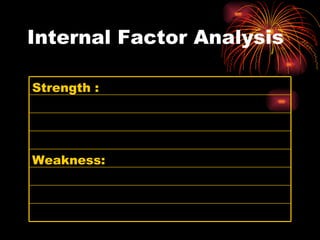
Internal Factor Analysis Weakness: Strength :
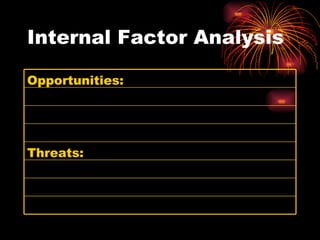
Internal Factor Analysis Threats: Opportunities:
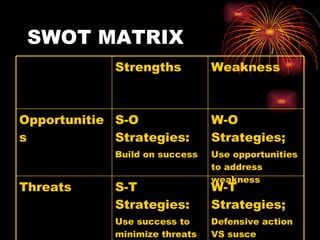
SWOT MATRIX W-T Strategies; Defensive action VS susce ptible areas S-T Strategies: Use success to minimize threats Threats W-O Strategies; Use opportunities to address weakness S-O Strategies: Build on success Opportunities Weakness Strengths
SWOT Strategies S-O strategies; build on success, good practice, and models S-T strategies; use success to minimize threat. W-0 strategies; use opportunities to address weakness. W-T strategies; defensive action vs susceptible areas.
Concern SWOT analysis can be very subjective. Do not rely on it very much. Two people rarely come-up with the same final version of SWOT. Use it as a guide not as prescription.

Swot Analysis 1218442734901185 9

  • 1.
    S.W.O.T. ANALYSIS MatchingYour Organization To Social Environment in which it operates
  • 2.
    S.W.O.T. ANALYSIS FactorInternal to organization Factor External to organization Strength Threat Opportunity Weakness
  • 3.
    SWOT: Description ASWOT analysis generates information that is helpful in matching an organization or group goals, programs and capacities to the social environment in which it operates. Factors internal to firm usually can be classified as strength and weakness, and those external to the firm can be classified as opportunity or threat It is an instrument within strategic planning When combined with dialogue it is a participatory process.
  • 4.
    SWOT: Internal FactorsStrengths Positive tangible and intangible attributes, internal to an organization. They are within the organization’s control. Weakness. Factors that are within an organization’s control that detract from its ability to attain the core goal. Which areas might the organization improve?
  • 5.
    SWOT: External FactorsOpportunities External attractive factors that represent the reason for an organization to exist and develop. What opportunities exist in the environment which will propel the organization? Identify them by their “time frames” Threats External factors beyond an organization control, which could place the organization mission or operation at risk. The organization may benefit the contingency plans to address them if they should occur. Classify them by their seriousness and probability of occurrence.
  • 6.
    SWOT: Analysis-Strength Strengthscan be defined to include in past/historical accomplishments-history and tradition so forth. Strengths also refer to the present condition that define an advantageous market position or a current situation condition.
  • 7.
    SWOT: Analysis-Weakness Likestrengths, weaknesses can refer to past difficulties that have contributed to the current situation as well as conditions derived from the current marketing climate. Weakness may be factual or fictional in any case perception for the markerter.
  • 8.
    SWOT : Analysis- Opportunities Opportunities are defined as possibilities that have not become realities at the current time-while they are primarily future focused they can occur in the present or in the sort time.
  • 9.
    SWOT: Analysis-Threat Similarto the opportunities, Threat can defined as potential problems. A threat like an opportunity can exist in the present if that particular situation has not directly impacted the marketing conditions. In fact it is common for threats to be current market conditions outside geographic scope of a particular organization.
  • 10.
    Internal Factor AnalysisWeakness: Strength :
  • 11.
    Internal Factor AnalysisThreats: Opportunities:
  • 12.
    SWOT MATRIX W-TStrategies; Defensive action VS susce ptible areas S-T Strategies: Use success to minimize threats Threats W-O Strategies; Use opportunities to address weakness S-O Strategies: Build on success Opportunities Weakness Strengths
  • 13.
    SWOT Strategies S-Ostrategies; build on success, good practice, and models S-T strategies; use success to minimize threat. W-0 strategies; use opportunities to address weakness. W-T strategies; defensive action vs susceptible areas.
  • 14.
    Concern SWOT analysiscan be very subjective. Do not rely on it very much. Two people rarely come-up with the same final version of SWOT. Use it as a guide not as prescription.