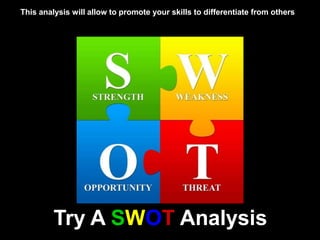
Try A SWOT Analysis
This analysis will allow to promote your skills to differentiate from others
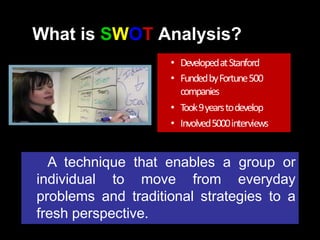
What is SWOT Analysis?
• DevelopedatStanford
• FundedbyFortune500
companies
• Took9yearstodevelop
• Involved5000interviews
A technique that enables a group or
individual to move from everyday
problems and traditional strategies to a
fresh perspective.
S – Strengths
Capitalize on them
W – Weaknesses
Shore up
O – Opportunities
Invest in them
T – Threats
Identify them
SWOT is an acronym for:
Internal Environment
• Strengths &
weaknesses are
most often internal
factors
External Environment
• Opportunities and threats
often relate to external factors
SWOT Analysis is sometimes called
Internal-External Analysis &
SWOT Matrix IE Matrix Tool
… A strategic planning tool that separates influences on
a future success into internal and external factors.
Brainstorming – key ingredient for-SWOT
SWOT analysis will be useful if:
•
•
•
•
•
You are thinking outside the box
Availability of varied perspectives – group discussion
Liberty to say your mind
Willingness to break away from traditional methods
Appetite for change
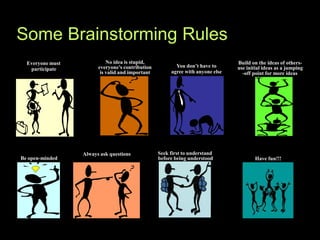
Some Brainstorming Rules
No idea is stupid,
everyone’s contribution
is valid and important
You don’t have to
agree with anyone else
Build on the ideas of others-
use initial ideas as a jumping
-off point for more ideas
Always ask questions Seek first to understand
before being understood Have fun!!!
Be open-minded
Everyone must
participate
SWOT Analysis allows to…
• Define realistic goals
• Improve capability
• Overcome weaknesses with strengths
• Identify threats than can be turned into
opportunities
A SWOT Matrix
•…separates and compares internal and
external influencers
• Internal
strengths, weaknesses
• External
opportunities, threats
Strength
Any existing or potential resources or capability
within that provides a competitive advantage.
Example:
• Expertise
• Location
• Intense Staff commitment and loyalty
• Increasing profit margin
Activity #1: Can you identify some of your
strengths?
Weakness
Any existing or potential force which could
serve as a barrier to maintaining or
achieving a competitive advantage.
Example
• Lack of a clear self understanding
• Lack of training opportunities
Activity #2: Can you think of some of your
weaknesses?
Opportunity
Any existing or potential force in the external
environment that, if properly leveraged,
could provide a competitive advantage.
Example:
•A high-profile opportunity
•An untapped area
•A gap left by a failed competitor
• New working areas
Activity #3: Can you think of some opportunities
available to your company?
Threat
Any existing or potential force in the external
environment that could erode a competitive
advantage
Example:
•Un-favorable conditions/environment
•Market image/working attitude
•Overburden
Activity #4: Can you think of some threats.
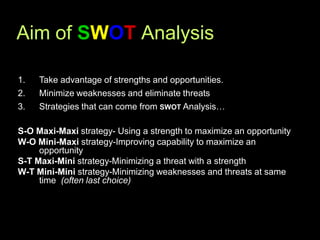
Aim of SWOT Analysis
1. Take advantage of strengths and opportunities.
2. Minimize weaknesses and eliminate threats
3. Strategies that can come from SWOT Analysis…
S-O Maxi-Maxi strategy- Using a strength to maximize an opportunity
W-O Mini-Maxi strategy-Improving capability to maximize an
opportunity
S-T Maxi-Mini strategy-Minimizing a threat with a strength
W-T Mini-Mini strategy-Minimizing weaknesses and threats at same
time (often last choice)
Who Needs SWOT Analysis?
A Company, an individual, an happy home, a
family, relationship etc
• When goals, growth and expense targets are
not being achieved;
• motivation is dropping;
• Environmental conditions are unfavorable;
hurdles/bareers
• Want to initiate new task or project; etc.
Who Needs SWOT Analysis?
A TEAM
• When the team has not met its targets;
• Customer service can be better;
• A new unit to pursue new ideas;
• A new team leader is appointed; etc
Who Needs SWOT Analysis?
Job Holder
• When supervisor has issues with work
output;
• Assigned to a new job;
• New financial year – fresh targets;
• Job holder seeks to improve performance on
the job; etc.
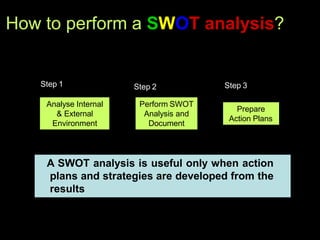
A SWOT analysis is useful only when action
plans and strategies are developed from the
results
How to perform a SWOT analysis?
Prepare
Action Plans
Analyse Internal
& External
Environment
Perform SWOT
Analysis and
Document
Step 1 Step 2 Step 3
Benefits of SWOT Analysis
•
•
•
Solving problems
Implementing change
Developing strategies for achieving the
objectives and mission
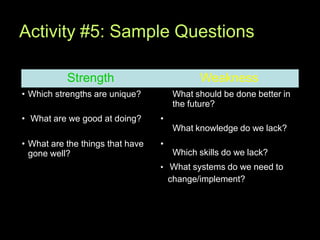
Activity #5: Sample Questions
Strength Weakness
What should be done better in
the future?
What knowledge do we lack?
Which skills do we lack?
• Which strengths are unique?
• What are we good at doing? •
• What are the things that have •
gone well?
• What systems do we need to
change/implement?
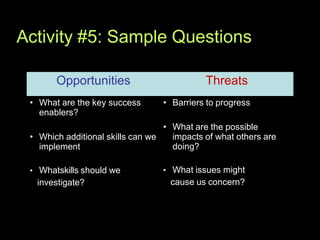
Activity #5: Sample Questions
Opportunities Threats
• Which additional skills can we
implement
• Whatskills should we
investigate?
• What are the key success • Barriers to progress
enablers?
• What are the possible
impacts of what others are
doing?
• What issues might
cause us concern?
SWOT Worksheet
Strengths Weaknesses
SWOT Worksheet
Opportunities Threats
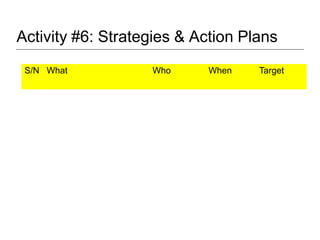
Activity #6: Strategies & Action Plans
S/N What Who When Target
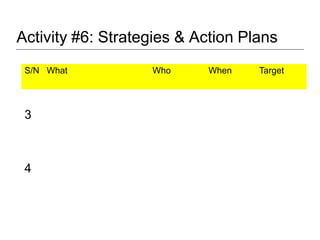
Activity #6: Strategies & Action Plans
S/N What Who When Target
3
4
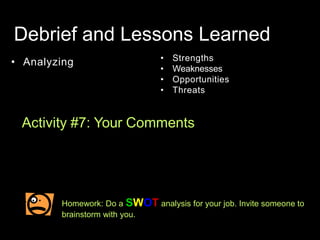
Debrief and Lessons Learned
Activity #7: Your Comments
Homework: Do a SWOT analysis for your job. Invite someone to
brainstorm with you.
• Strengths
• Weaknesses
• Opportunities
• Threats
• Analyzing

SWOT.pptx

  • 1.
    Try A SWOTAnalysis This analysis will allow to promote your skills to differentiate from others
  • 2.
    What is SWOTAnalysis? • DevelopedatStanford • FundedbyFortune500 companies • Took9yearstodevelop • Involved5000interviews A technique that enables a group or individual to move from everyday problems and traditional strategies to a fresh perspective.
  • 3.
    S – Strengths Capitalizeon them W – Weaknesses Shore up O – Opportunities Invest in them T – Threats Identify them SWOT is an acronym for: Internal Environment • Strengths & weaknesses are most often internal factors External Environment • Opportunities and threats often relate to external factors SWOT Analysis is sometimes called Internal-External Analysis & SWOT Matrix IE Matrix Tool … A strategic planning tool that separates influences on a future success into internal and external factors.
  • 4.
    Brainstorming – keyingredient for-SWOT SWOT analysis will be useful if: • • • • • You are thinking outside the box Availability of varied perspectives – group discussion Liberty to say your mind Willingness to break away from traditional methods Appetite for change
  • 5.
    Some Brainstorming Rules Noidea is stupid, everyone’s contribution is valid and important You don’t have to agree with anyone else Build on the ideas of others- use initial ideas as a jumping -off point for more ideas Always ask questions Seek first to understand before being understood Have fun!!! Be open-minded Everyone must participate
  • 6.
    SWOT Analysis allowsto… • Define realistic goals • Improve capability • Overcome weaknesses with strengths • Identify threats than can be turned into opportunities
  • 7.
    A SWOT Matrix •…separatesand compares internal and external influencers • Internal strengths, weaknesses • External opportunities, threats
  • 8.
    Strength Any existing orpotential resources or capability within that provides a competitive advantage. Example: • Expertise • Location • Intense Staff commitment and loyalty • Increasing profit margin Activity #1: Can you identify some of your strengths?
  • 9.
    Weakness Any existing orpotential force which could serve as a barrier to maintaining or achieving a competitive advantage. Example • Lack of a clear self understanding • Lack of training opportunities Activity #2: Can you think of some of your weaknesses?
  • 10.
    Opportunity Any existing orpotential force in the external environment that, if properly leveraged, could provide a competitive advantage. Example: •A high-profile opportunity •An untapped area •A gap left by a failed competitor • New working areas Activity #3: Can you think of some opportunities available to your company?
  • 11.
    Threat Any existing orpotential force in the external environment that could erode a competitive advantage Example: •Un-favorable conditions/environment •Market image/working attitude •Overburden Activity #4: Can you think of some threats.
  • 12.
    Aim of SWOTAnalysis 1. Take advantage of strengths and opportunities. 2. Minimize weaknesses and eliminate threats 3. Strategies that can come from SWOT Analysis… S-O Maxi-Maxi strategy- Using a strength to maximize an opportunity W-O Mini-Maxi strategy-Improving capability to maximize an opportunity S-T Maxi-Mini strategy-Minimizing a threat with a strength W-T Mini-Mini strategy-Minimizing weaknesses and threats at same time (often last choice)
  • 13.
    Who Needs SWOTAnalysis? A Company, an individual, an happy home, a family, relationship etc • When goals, growth and expense targets are not being achieved; • motivation is dropping; • Environmental conditions are unfavorable; hurdles/bareers • Want to initiate new task or project; etc.
  • 14.
    Who Needs SWOTAnalysis? A TEAM • When the team has not met its targets; • Customer service can be better; • A new unit to pursue new ideas; • A new team leader is appointed; etc
  • 15.
    Who Needs SWOTAnalysis? Job Holder • When supervisor has issues with work output; • Assigned to a new job; • New financial year – fresh targets; • Job holder seeks to improve performance on the job; etc.
  • 16.
    A SWOT analysisis useful only when action plans and strategies are developed from the results How to perform a SWOT analysis? Prepare Action Plans Analyse Internal & External Environment Perform SWOT Analysis and Document Step 1 Step 2 Step 3
  • 17.
    Benefits of SWOTAnalysis • • • Solving problems Implementing change Developing strategies for achieving the objectives and mission
  • 18.
    Activity #5: SampleQuestions Strength Weakness What should be done better in the future? What knowledge do we lack? Which skills do we lack? • Which strengths are unique? • What are we good at doing? • • What are the things that have • gone well? • What systems do we need to change/implement?
  • 19.
    Activity #5: SampleQuestions Opportunities Threats • Which additional skills can we implement • Whatskills should we investigate? • What are the key success • Barriers to progress enablers? • What are the possible impacts of what others are doing? • What issues might cause us concern?
  • 20.
  • 21.
  • 22.
    Activity #6: Strategies& Action Plans S/N What Who When Target
  • 23.
    Activity #6: Strategies& Action Plans S/N What Who When Target 3 4
  • 24.
    Debrief and LessonsLearned Activity #7: Your Comments Homework: Do a SWOT analysis for your job. Invite someone to brainstorm with you. • Strengths • Weaknesses • Opportunities • Threats • Analyzing