Chapter 8 SWLBy Daryl Hall
Team Task 1The most basic explanation for normalization is the streamlining of databases,  specifically the elimination of repeating data.
Team Task 2The design may need to be spread across multiple tables in the database in order to be efficient.  The multiple tables can then have cardinality, with shared fields / keys.
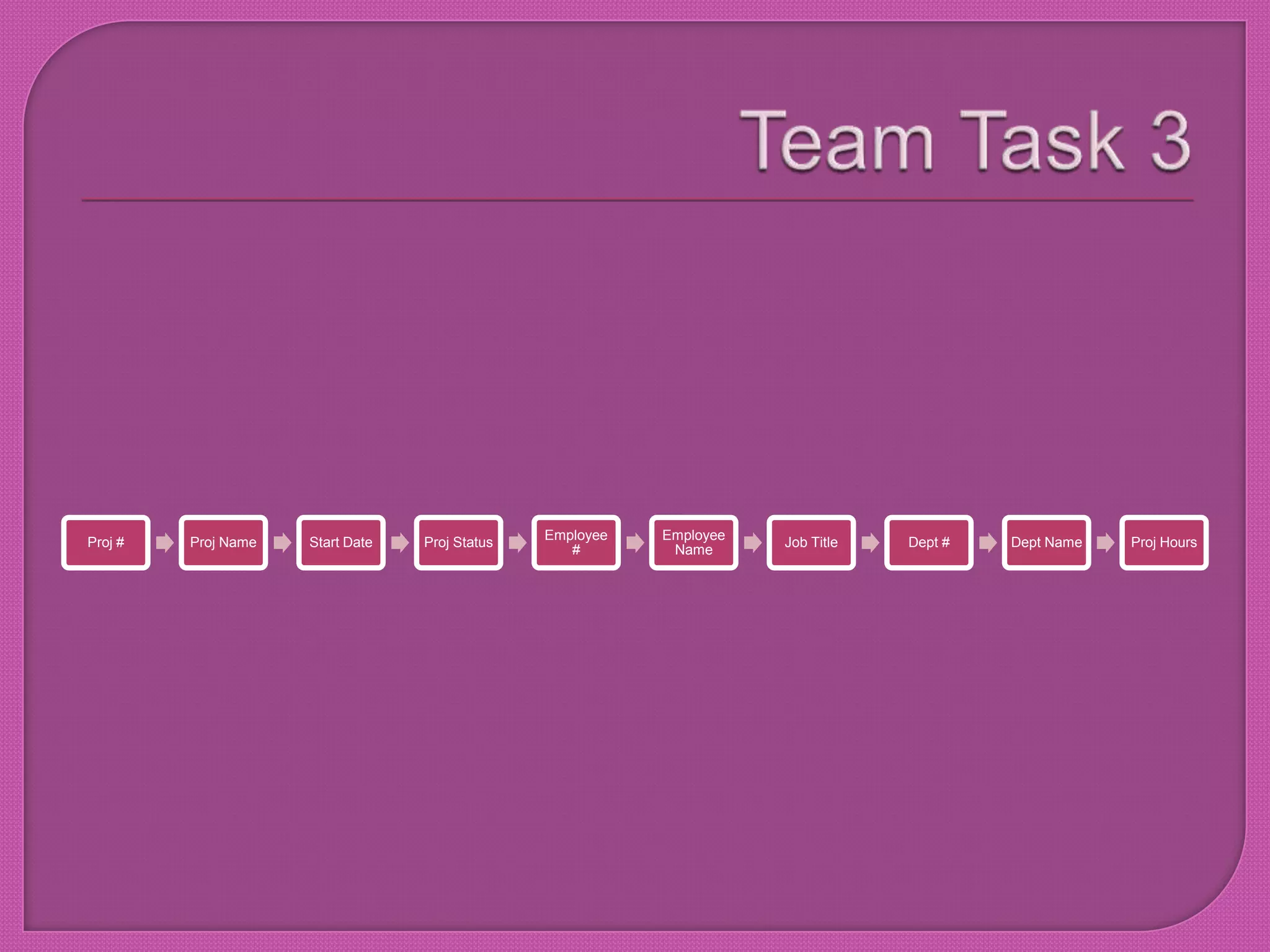
Team Task 3
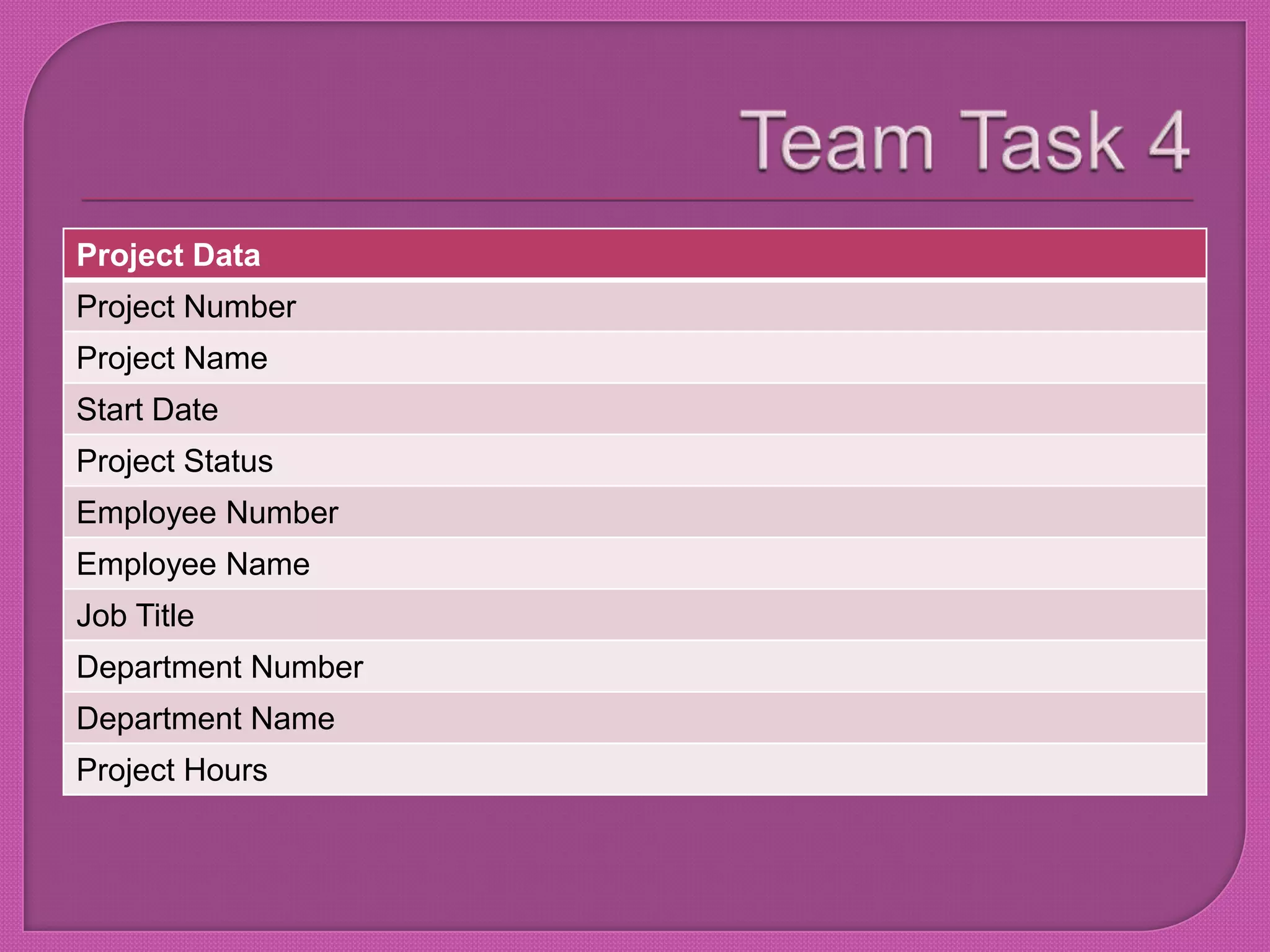
Team Task 4
Manage the Project 1aIdentify all entitiesCreate an initial ERDExplain data design concepts and structuresDescribe file processing systemsExplain database systems and define the components of a database management system (DBMS)
Manage the Project 1a (cont.)Describe Web-based data designDescribe data relationships, draw an entity-relationship diagram, define cardinality, and use cardinality notationDescribe relational and object-oriented database modelsExplain data warehousing and data miningExplain data control measures
Manage the Project 1bConcurrent Tasks:1.  Identify all entities2.  Explain data design concepts and structures3.  Describe relational and object-oriented database models4.  Describe file processing systems5.  Explain database systems and define the components of a database management system (DBMS)
Manage the Project 1b (cont.Sequential Tasks:6.  Create an initial ERD7.  Describe Web-based data design8.  Describe data relationships, draw an entity-relationship diagram, define cardinality, and use cardinality notation9.  Explain data warehousing and data mining10.  Explain data control measures
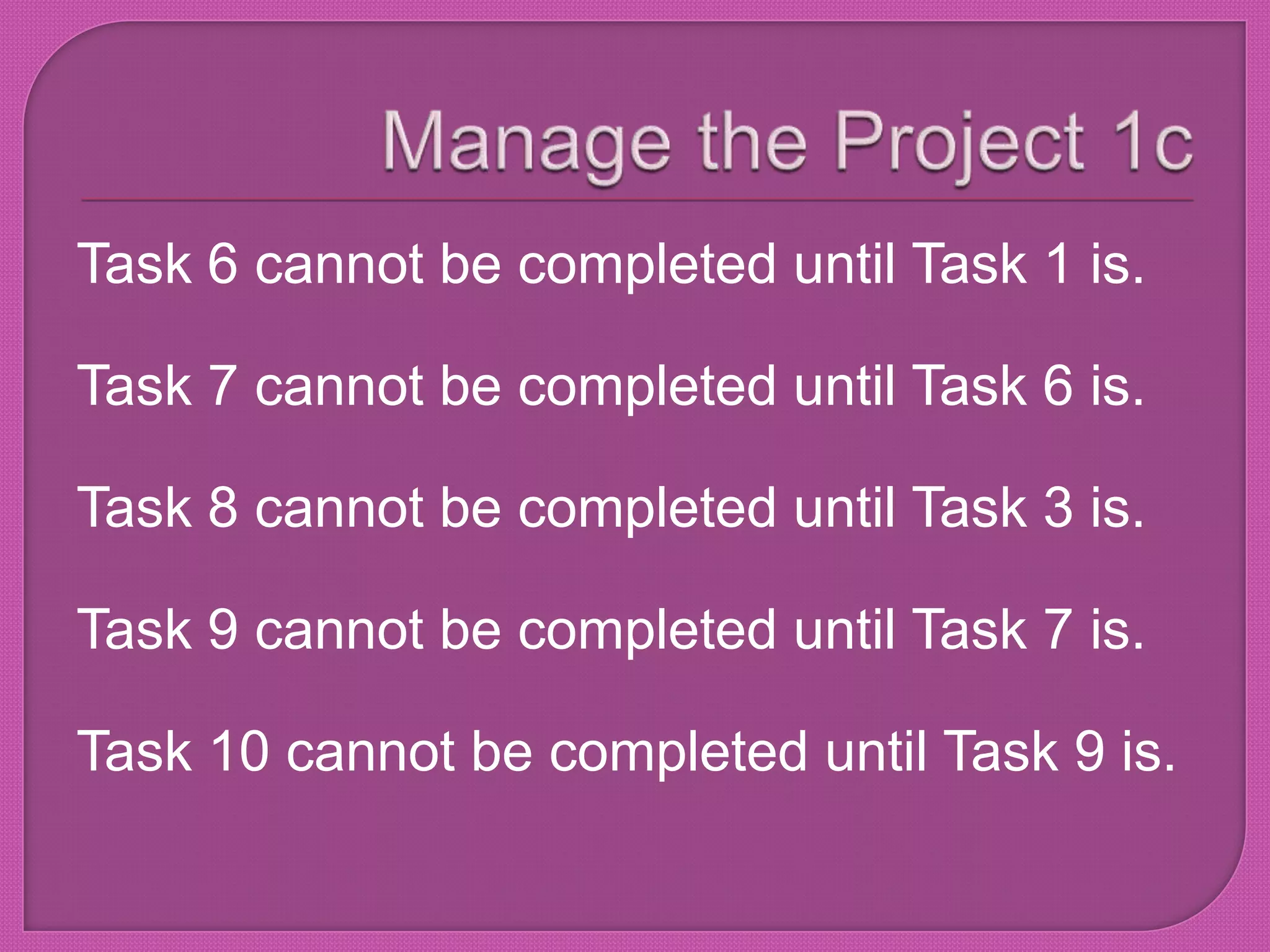
Manage the Project 1cTask 6 cannot be completed until Task 1 is.Task 7 cannot be completed until Task 6 is.Task 8 cannot be completed until Task 3 is.Task 9 cannot be completed until Task 7 is.Task 10 cannot be completed until Task 9 is.

SWL 8

  • 1.
    Chapter 8 SWLByDaryl Hall
  • 2.
    Team Task 1Themost basic explanation for normalization is the streamlining of databases, specifically the elimination of repeating data.
  • 3.
    Team Task 2Thedesign may need to be spread across multiple tables in the database in order to be efficient. The multiple tables can then have cardinality, with shared fields / keys.
  • 4.
  • 5.
  • 6.
    Manage the Project1aIdentify all entitiesCreate an initial ERDExplain data design concepts and structuresDescribe file processing systemsExplain database systems and define the components of a database management system (DBMS)
  • 7.
    Manage the Project1a (cont.)Describe Web-based data designDescribe data relationships, draw an entity-relationship diagram, define cardinality, and use cardinality notationDescribe relational and object-oriented database modelsExplain data warehousing and data miningExplain data control measures
  • 8.
    Manage the Project1bConcurrent Tasks:1. Identify all entities2. Explain data design concepts and structures3. Describe relational and object-oriented database models4. Describe file processing systems5. Explain database systems and define the components of a database management system (DBMS)
  • 9.
    Manage the Project1b (cont.Sequential Tasks:6. Create an initial ERD7. Describe Web-based data design8. Describe data relationships, draw an entity-relationship diagram, define cardinality, and use cardinality notation9. Explain data warehousing and data mining10. Explain data control measures
  • 10.
    Manage the Project1cTask 6 cannot be completed until Task 1 is.Task 7 cannot be completed until Task 6 is.Task 8 cannot be completed until Task 3 is.Task 9 cannot be completed until Task 7 is.Task 10 cannot be completed until Task 9 is.