SWINE FLU
SIDDHARTH
MEDICINE PG
TOPICS TO BE DISCUSSED
• INTRODUCTION
• EPIDEMIOLOGY
• RISK GROUPS
• ETIOLOGY
• PATHOGENESIS
• CLINICAL FEATURES
• COMPLICATIONS
INTRODUCTION
• It is caused by Influenza virus (H1N1)
• It is usually a mild and self limited respiratory
illness
• It has potential to cause significant morbidity
and mortality
• 2009 pandemic influenza A (H1N1) virus is
continued to co-circulate following years along
with seasonal influenza A and it cased significant
mortality among young people
EPIDEMIOLOGY
• Latest pandemic of swine flu was first noted in
Mexico in march 2009
• It spread worldwide affected nearly 195
countries and it ended in August 2010
• In India outbreak killed:
2009 - 981 2012 - 405
2010 - 1763 2013 - 699
2011 - 75 2014 - 218
• 2015 outbreak became wide spread throughout
India. Gujarat & Rajasthan were the worst affected
states
• 2009 pandemic strain is now responsible for the
periodic seasonal outbreaks of Influenza in India
• The average incubation period is 1-3 days
(maximum 7 days)
• Transmission through contact with large particle
respiratory droplets
• Other body fluids and fomites also play a role in
transmission
• Viral shedding begins the day prior to symptom
onset and often to persist for 5-7 days,
sometimes even longer in children & immuno
compromised
RISK GROUPS
• Age < 5 years & > 65 years
• Obese individuals
• Pregnancy
• Persons with Asthma/ COPD or other chronic
pulmonary diseases
• Immuno compromised and ppl receiving
Immuno suppressive therapy
• Sickle cell anemia and other
Hemoglobinopathies
• Long term aspirin therapy
• CKD
• Metabolic disease such as diabetes mellitus
• Persons with Neuromuscular disorders, seizure
disorders, cognitive dysfunction
• People working in Health care institutions
ETIOLOGICAL AGENT
• It’s a RNA virus belonging to the family of
Orthomyxoviridae
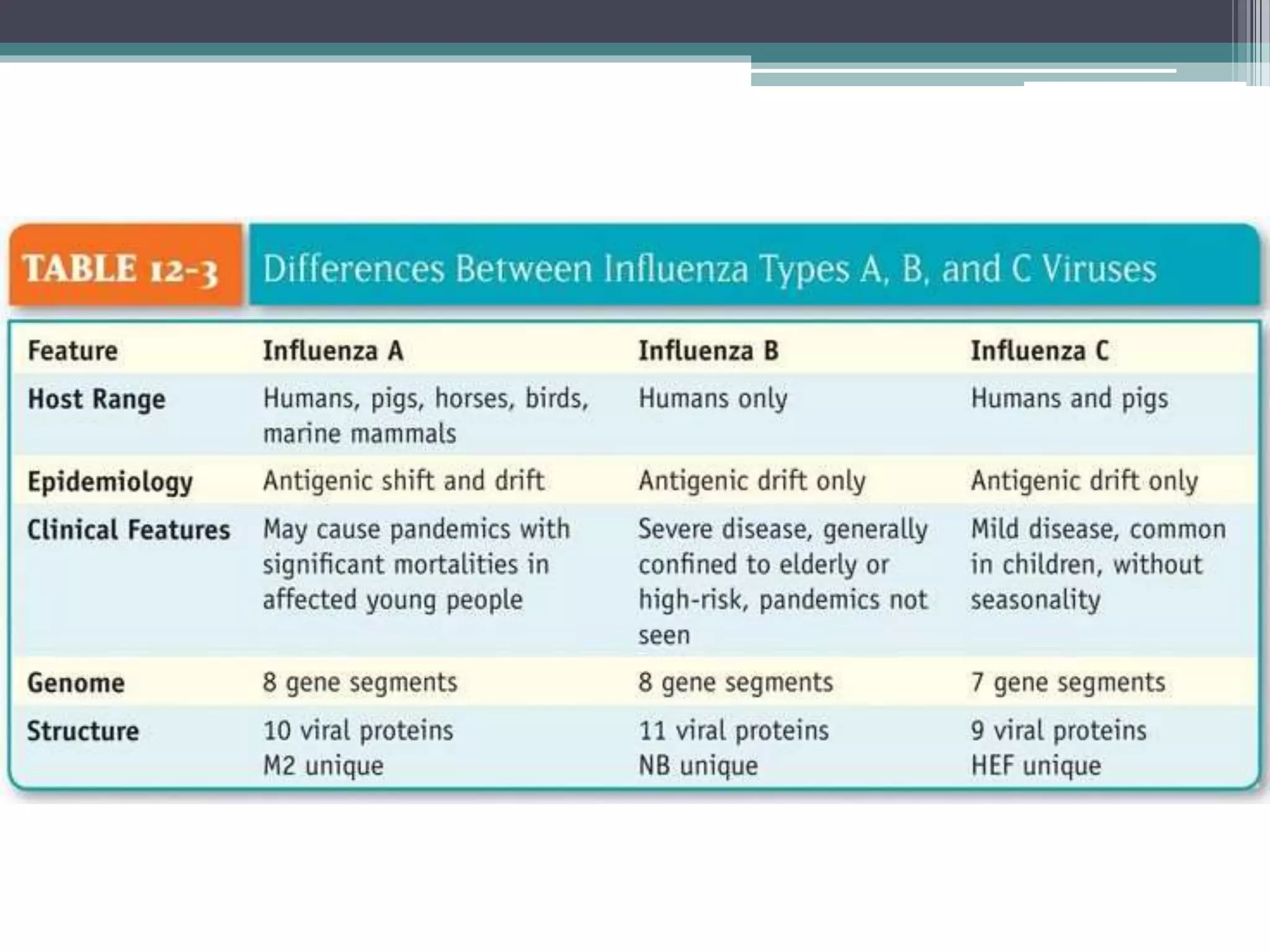
• Three main genera - Influenza A, Influenza B,
Influenza C
• Influenza A is further sub-typed into 16 distinct
H types & 9 distinct N types based on
Hemagglutinin & Neuroaminidase antigens on
the surface of the virus
• Every year new strains of influenza virus emerge
as its genes undergo point mutations leading to
‘Antigenic drift’
• This process helps the virus to evade host
defense mechanism
• Infuenza A virus has a 8 segmented genome with
eight single stranded RNA segments
• These genes get reassorted and produce a very
different strain altogether- “Antigenic shift”
• 2009 viral strain had undergone triple
reassortment and contain genes from the avian,
swine, and human viruses
PATHOGENESIS
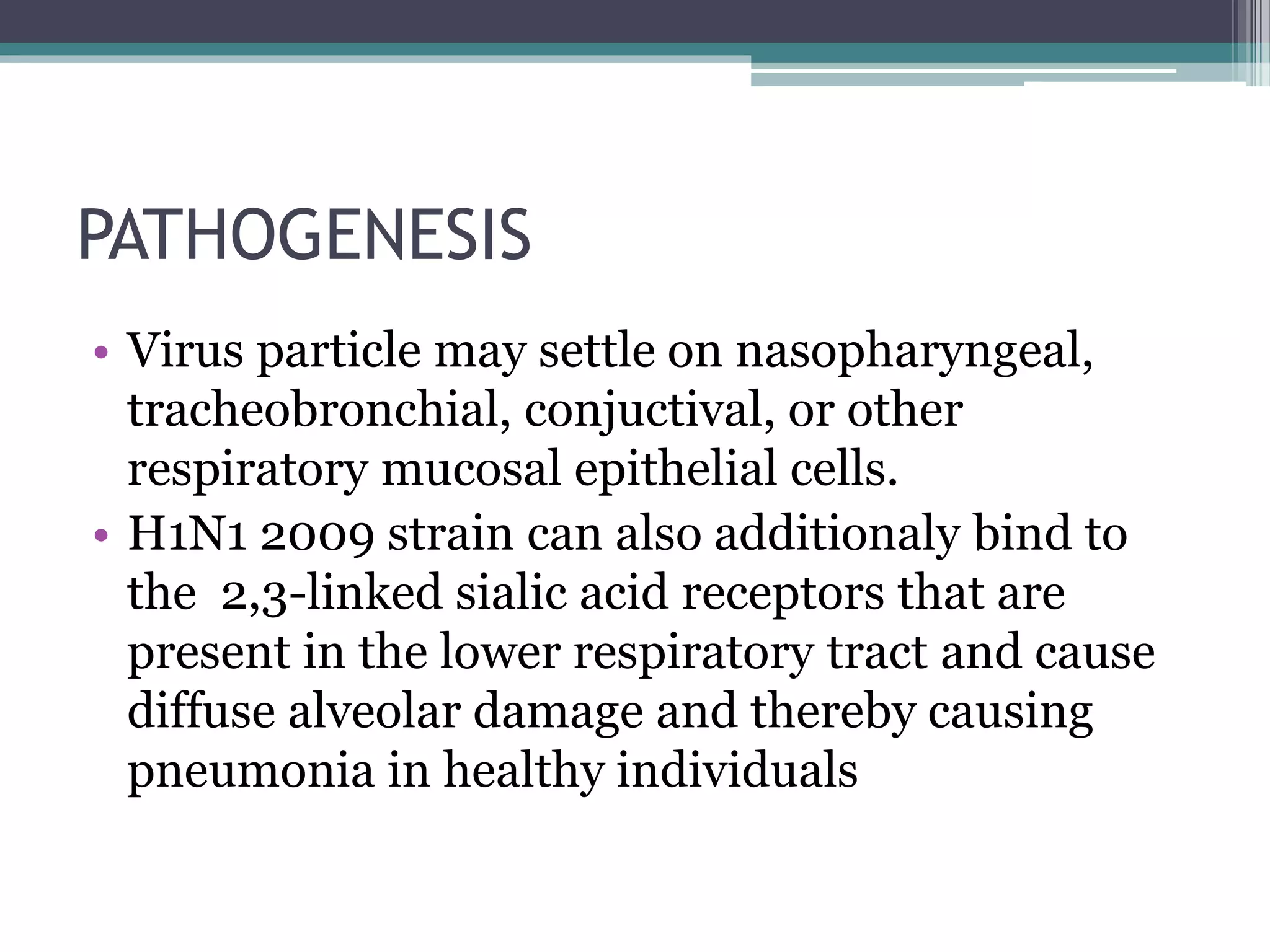
• Virus particle may settle on nasopharyngeal,
tracheobronchial, conjuctival, or other
respiratory mucosal epithelial cells.
• H1N1 2009 strain can also additionaly bind to
the 2,3-linked sialic acid receptors that are
present in the lower respiratory tract and cause
diffuse alveolar damage and thereby causing
pneumonia in healthy individuals
COMMON CLINICAL FEATURES
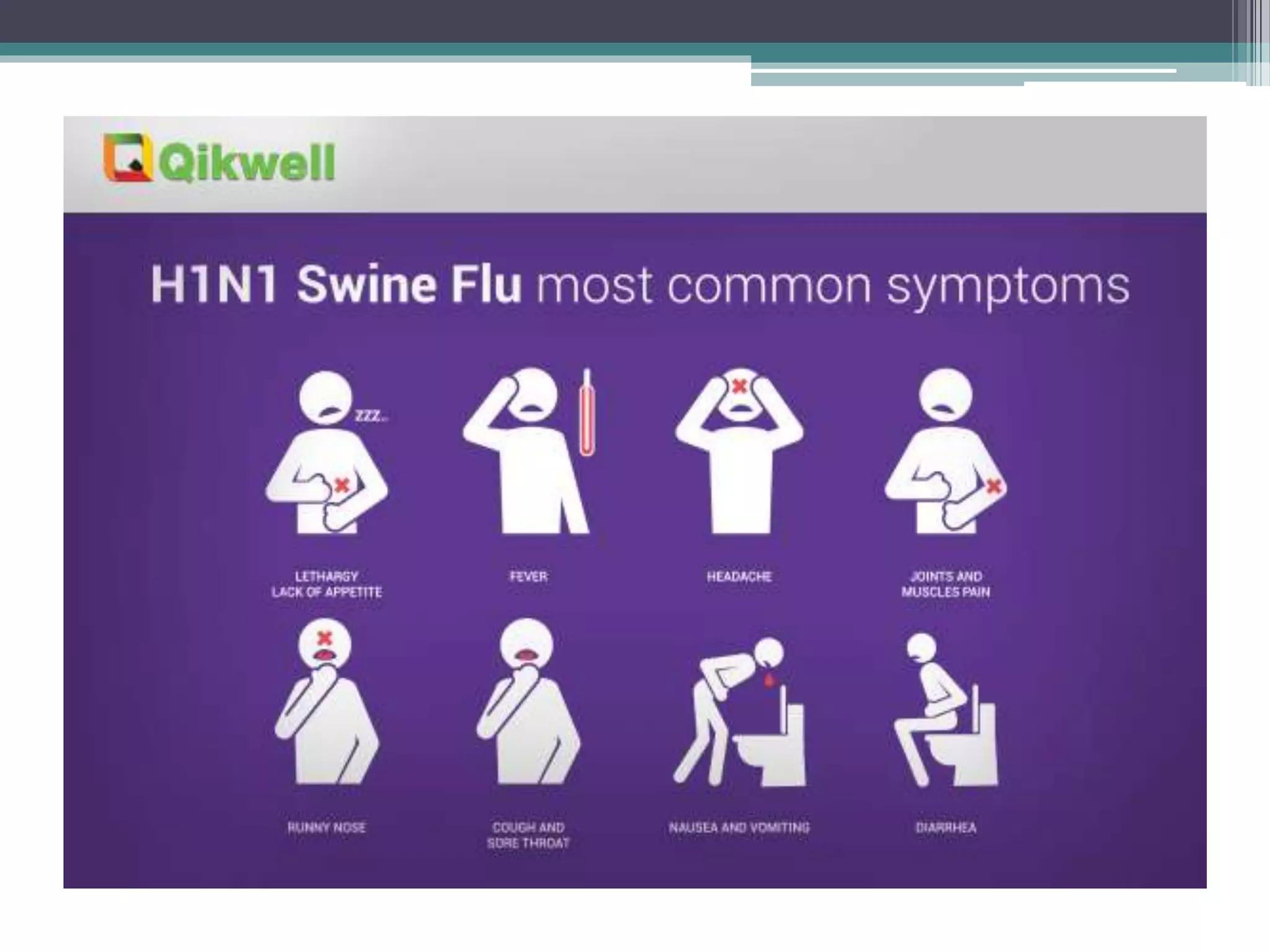
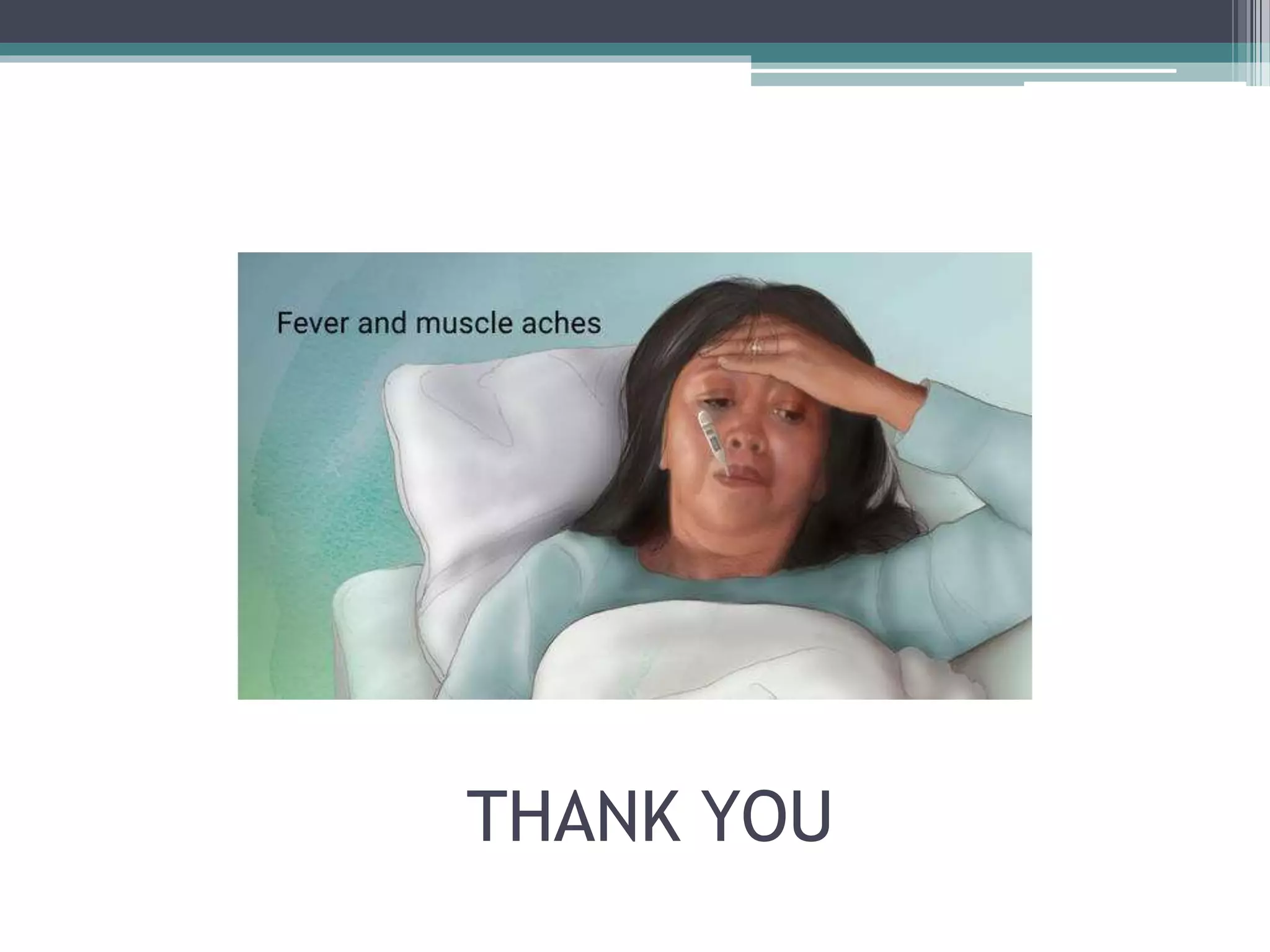
• Fever
• Sore throat
• Rhinorrhea
• Myalgia & Arthralgia
• Headache
• Vomiting
• Diarrhoea
EXTRA PULMONARY MANIFESTATION
• CVS- Chest pain, hypotension
• CNS- Seizures, lethargy, altered mental status,
weakness or paralysis
• OTHERS- Decreased urine output, cyanosis,
dehydration
COMPLICATIONS
• PULMONARY - Progressive viral pneumonia,
Secondary bacterial pneumonia, ARDS
• CNS - Encephalitis, Encephalopathy, GBS,
ADEM
• CVS - Myocarditis, Pericarditis
• OTHERS – Renal failure, Rhabdomyolysis,
Ryes syndrome, Hemophagocytosis, Multi organ
failure syndrome
THANK YOU

Swine flu

  • 1.
  • 2.
    TOPICS TO BEDISCUSSED • INTRODUCTION • EPIDEMIOLOGY • RISK GROUPS • ETIOLOGY • PATHOGENESIS • CLINICAL FEATURES • COMPLICATIONS
  • 3.
    INTRODUCTION • It iscaused by Influenza virus (H1N1) • It is usually a mild and self limited respiratory illness • It has potential to cause significant morbidity and mortality • 2009 pandemic influenza A (H1N1) virus is continued to co-circulate following years along with seasonal influenza A and it cased significant mortality among young people
  • 4.
    EPIDEMIOLOGY • Latest pandemicof swine flu was first noted in Mexico in march 2009 • It spread worldwide affected nearly 195 countries and it ended in August 2010
  • 6.
    • In Indiaoutbreak killed: 2009 - 981 2012 - 405 2010 - 1763 2013 - 699 2011 - 75 2014 - 218 • 2015 outbreak became wide spread throughout India. Gujarat & Rajasthan were the worst affected states • 2009 pandemic strain is now responsible for the periodic seasonal outbreaks of Influenza in India
  • 9.
    • The averageincubation period is 1-3 days (maximum 7 days) • Transmission through contact with large particle respiratory droplets • Other body fluids and fomites also play a role in transmission • Viral shedding begins the day prior to symptom onset and often to persist for 5-7 days, sometimes even longer in children & immuno compromised
  • 10.
    RISK GROUPS • Age< 5 years & > 65 years • Obese individuals • Pregnancy • Persons with Asthma/ COPD or other chronic pulmonary diseases • Immuno compromised and ppl receiving Immuno suppressive therapy • Sickle cell anemia and other Hemoglobinopathies
  • 11.
    • Long termaspirin therapy • CKD • Metabolic disease such as diabetes mellitus • Persons with Neuromuscular disorders, seizure disorders, cognitive dysfunction • People working in Health care institutions
  • 12.
  • 14.
    • It’s aRNA virus belonging to the family of Orthomyxoviridae • Three main genera - Influenza A, Influenza B, Influenza C • Influenza A is further sub-typed into 16 distinct H types & 9 distinct N types based on Hemagglutinin & Neuroaminidase antigens on the surface of the virus
  • 15.
    • Every yearnew strains of influenza virus emerge as its genes undergo point mutations leading to ‘Antigenic drift’ • This process helps the virus to evade host defense mechanism • Infuenza A virus has a 8 segmented genome with eight single stranded RNA segments • These genes get reassorted and produce a very different strain altogether- “Antigenic shift” • 2009 viral strain had undergone triple reassortment and contain genes from the avian, swine, and human viruses
  • 17.
    PATHOGENESIS • Virus particlemay settle on nasopharyngeal, tracheobronchial, conjuctival, or other respiratory mucosal epithelial cells. • H1N1 2009 strain can also additionaly bind to the 2,3-linked sialic acid receptors that are present in the lower respiratory tract and cause diffuse alveolar damage and thereby causing pneumonia in healthy individuals
  • 20.
    COMMON CLINICAL FEATURES •Fever • Sore throat • Rhinorrhea • Myalgia & Arthralgia • Headache • Vomiting • Diarrhoea
  • 22.
    EXTRA PULMONARY MANIFESTATION •CVS- Chest pain, hypotension • CNS- Seizures, lethargy, altered mental status, weakness or paralysis • OTHERS- Decreased urine output, cyanosis, dehydration
  • 23.
    COMPLICATIONS • PULMONARY -Progressive viral pneumonia, Secondary bacterial pneumonia, ARDS • CNS - Encephalitis, Encephalopathy, GBS, ADEM • CVS - Myocarditis, Pericarditis • OTHERS – Renal failure, Rhabdomyolysis, Ryes syndrome, Hemophagocytosis, Multi organ failure syndrome
  • 24.