This document summarizes von Willebrand's disease, the most common inherited bleeding disorder. It is characterized by defective platelet adhesion and aggregation due to reduced or dysfunctional von Willebrand factor. The disorder was first described in 1926 and is caused by mutations in the von Willebrand factor gene. It is classified into types 1, 2 and 3 based on phenotypic characteristics. Type 1 is a quantitative deficiency, type 2 is qualitative with normal or reduced levels but reduced function, and type 3 is the most severe form with an absence of von Willebrand factor. Symptoms vary but often include bruising, bleeding, and heavy menstrual periods. Treatment aims to replace von Willebrand factor levels.
![n engl j med 375;21 nejm.org November 24, 2016 2071
Von Willebrand’s Disease
rise with age in patients with type 2 disease, von
Willebrand factor activity remains low because
of the functional defect in the protein. In these
patients, an increase in bleeding symptoms is
observed with increasing age.30
These observa-
tions should be confirmed in larger prospective
studies. An interesting finding in two recent
studies is that the risks of cardiovascular disease
and ischemic stroke are reduced among patients
with von Willebrand’s disease.31,32
Pathophysiological Features
VWF Mutations
The inheritance pattern for most types of von
Willebrand’s disease is autosomal dominant, but
in some cases, the inheritance is recessive. In 80%
of patients with type 3 von Willebrand’s disease,
the genetic defects in the VWF gene are null
alleles, explaining the complete absence of von
Willebrand factor17,33
(mutation database, www
.vwf.group.shef.ac.uk). Most patients with type 3
disease are homozygous or compound heterozy-
gous. Codominant rather than recessive inheri-
tance is observed in up to 50% of patients with
type 3 von Willebrand’s disease, with the hetero-
zygous carriers having a mild type 1 disease
phenotype.34
Although null alleles might be ex-
pected in type 1 von Willebrand’s disease, since
it is also characterized by a quantitative defi-
ciency of von Willebrand factor, the majority of
the mutations are in fact missense mutations.
Type 1 disease often shows variable expression
and incomplete penetrance. The missense muta-
tions in type 1 disease may lead to impaired
intracellular routing, storage, and secretion of
von Willebrand factor or to faster clearance
(Fig. 2).9,17,35,36
Missense mutations exert a domi-
nant-negative effect on the normal allele as a
result of the incorporation of mutant von Wille-
brand factor subunits, together with normal sub-
units, in von Willebrand factor multimers. This
leads to a more severe phenotype than in the
case of heterozygous null alleles (Fig. 2). In type 2
von Willebrand’s disease, the phenotype is deter-
mined by specific functional defects or character-
istics of the von Willebrand factor protein, and
consequently, the mutations are usually dominant-
negative missense mutations restricted to specific
domains of von Willebrand factor. In contrast to
type 1, the phenotype in type 2 disease is usually
fully penetrant. Generally, the inheritance pattern
of type 2 disease is autosomal dominant, with
the exception of type 2N disease.33
Other Genetic Disease Modifiers
and Physiological Factors
Even though many mutations causing type 1 von
Willebrand’s disease have been identified, no
mutations are found in approximately 30% of
patients.9,35-37
Genetic modifiers outside the VWF
gene and physiological factors probably play a
role in reducing von Willebrand factor levels.
One of the major genetic determinants of von
Willebrand factor levels outside the VWF gene is
the ABO blood group, with 25% lower von Wille
brand factor levels in persons with type O blood
than in those with other types.38
Genomewide
association studies have identified several other
genetic loci that are associated with von Wille-
brand factor levels in healthy persons.39
These
studies have led to new insights into genetic loci
that may be involved in clearance (e.g., CLEC4M
[C-type lectin domain family 4, member M]) or
exocytosis (e.g., STXBP5 [syntaxin-binding pro-
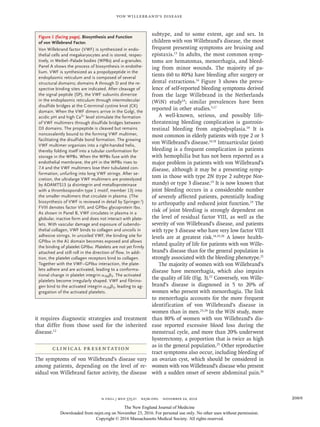
Figure 2 (facing page). Pathophysiological Mechanisms
and Classification of von Willebrand’s Disease.
In healthy persons, VWF circulates as high-molecular-
weight (HMW) multimers carrying factor VIII. Some
persons have mildly reduced VWF levels, which may
contribute to a bleeding phenotype but are not neces-
sarily caused by defects in the VWF gene. Persons with
low VWF levels and a bleeding tendency are classified
as having low VWF, rather than von Willebrand’s dis-
ease (VWD). There is a partial deficiency of functionally
normal VWF in type 1 VWD and a complete deficiency
in type 3 disease. This deficiency can result from a re-
duction in protein synthesis, which is often caused by
null alleles (large gene deletions, stop codons, frame-
shift mutations, or splice-site mutations) but may also
be due to mutations in the promotor regions. Homo-
zygosity or compound heterozygosity for these defects
results in type 3 VWD. Some heterozygous carriers
have mild symptoms and receive a diagnosis of type 1
disease. However, most cases of type 1 VWD are caused
by heterozygous missense mutations that exert a dom-
inant-negative effect because the mutant subunits are
incorporated into the multimer together with the nor-
mal subunits, resulting in a disturbance of the entire
multimer. Almost all cases of type 2 VWD are caused
by missense mutations, which are usually restricted to
specific functional domains. Inheritance of subtypes of
type 2 disease is autosomal dominant, with the excep-
tion of type 2N, which has a recessive pattern of inheri-
tance. Patients may be either homozygous for two type
2N mutations or compound heterozygous for a type 1
defect and a type 2N defect.
The New England Journal of Medicine
Downloaded from nejm.org on November 23, 2016. For personal use only. No other uses without permission.
Copyright © 2016 Massachusetts Medical Society. All rights reserved.](https://image.slidesharecdn.com/varunnejm-170226172520/85/Varun-nejm-5-320.jpg)
![n engl j med 375;21 nejm.org November 24, 20162072
The new engl and jour nal of medicine
tein 5]) of von Willebrand factor.39
Studies have
confirmed that these genetic loci lead to vari-
ability in von Willebrand factor levels in patients
with von Willebrand’s disease, as well as in
healthy persons.40,41
The newly recognized genetic
loci may contribute to the variability in the von
Willebrand’s disease phenotype and may explain
low levels of von Willebrand factor in affected
patients who do not have a mutation in the VWF
gene. Apart from genetic modifiers, physiologi-
cal factors such as age and the response to exer-
cise and the acute-phase response, as well as the
menstrual cycle and pregnancy in women, also
play a role in the variability of von Willebrand
factor levels.
Diagnosis
The diagnosis of von Willebrand’s disease is based
on a personal history of bleeding, a family his-
tory of bleeding, or both, in combination with
laboratory tests showing abnormalities in von
Willebrand factor, factor VIII, or both. The assess-
ment of the bleeding phenotype starts with a
detailed history of all bleeding symptoms in the
patient and family members. The rating of the
severity of bleeding symptoms in von Wille-
brand’s disease has received considerable atten-
tion in recent years. Numerical scoring systems
based on structured questionnaires, usually re-
ferred to as bleeding-assessment tools, have been
developed and endorsed by the ISTH (https://bh
.rockefeller.edu/ISTH-BATR/).42-44
These tools have
limited diagnostic use because they depend
strongly on age and the number of previous he-
mostatic challenges. Diagnostic use of these tools
is especially problematic in the case of young
children, who have not yet undergone surgery or
dental intervention. An additional limitation of
the bleeding-assessment tools is that they use
cumulative scoring, which means that once a
patient has had a severe bleeding episode, the
bleeding score will remain high even if bleeding
does not recur.
The diagnosis of von Willebrand’s disease is
based on measurements of von Willebrand factor
antigen; the level of von Willebrand factor–depen-
dent platelet adhesion, historically measured with
the use of the von Willebrand factor–ristocetin
cofactor activity assay; and the coagulant activity
of factor VIII (Fig. 4). When von Willebrand fac-
tor antigen is undetectable (or the level is <5 IU
per deciliter, according to the latest disease clas-
sification), type 3 von Willebrand’s disease is
diagnosed.11
However, the use of a cutoff level of
5 IU per deciliter means that patients with detect-
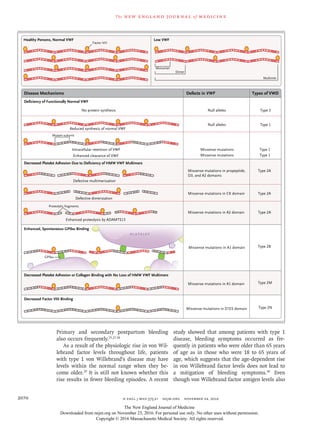
Figure 3. Frequency of Bleeding Symptoms in Adults with von Willebrand’s
Disease.
The prevalence of self-reported bleeding symptoms is shown for 664 adults
with von Willebrand’s disease (VWD), as compared with 500 healthy persons,
in the Willebrand in the Netherlands (WiN) study.14-16
Of all the patients
with VWD, 59% had type 1, 37% had type 2, and 4% had type 3 disease.
The respective prevalences of bleeding from tooth extraction, postopera-
tive bleeding, menorrhagia, and postpartum hemorrhage are for patients
who underwent tooth extraction (554 patients) or surgery (559) and for
women who menstruated (423 women) or had given birth (314). Muscle
hematoma was not assessed in healthy persons, and joint bleeding was not
reported by any of the healthy persons; central nervous system (CNS) bleed-
ing was not assessed in healthy persons and was not reported by the patients
with type 3 VWD.
Epistaxis
Cutaneous
Bleeding
Bleeding from
Minor Wounds
Oral-Cavity
Bleeding
Gastrointestinal
Bleeding
Bleeding from
Tooth Extraction
Postoperative
Bleeding
Menorrhagia
Postpartum
Hemorrhage
Muscle
Hematoma
Joint Bleeding
CNS Bleeding
0 20 40 60 80 100
Prevalence (%)
No VWD
Type 1 VWD
Type 2 VWD
Type 3 VWD
The New England Journal of Medicine
Downloaded from nejm.org on November 23, 2016. For personal use only. No other uses without permission.
Copyright © 2016 Massachusetts Medical Society. All rights reserved.](https://image.slidesharecdn.com/varunnejm-170226172520/85/Varun-nejm-6-320.jpg)
![n engl j med 375;21 nejm.org November 24, 2016 2073
Von Willebrand’s Disease
able, although very low, von Willebrand factor
antigen levels, who should actually be classified
as having severe type 1 von Willebrand’s disease,
will instead be classified as having type 3 dis-
ease. Measurement of von Willebrand factor
propeptide, a cleavage product formed during
synthesis of von Willebrand factor (Fig. 1), helps
discriminate between type 3 and type 1 disease.
In type 3 disease, both von Willebrand factor
antigen and propeptide are absent or are present
at very low levels, whereas in severe type 1 dis-
ease, the antigen level is very low, but the pro-
peptide level is minimally reduced or normal
(Fig. 4).45
When von Willebrand factor antigen is mea-
surable, the level is considered in relation to the
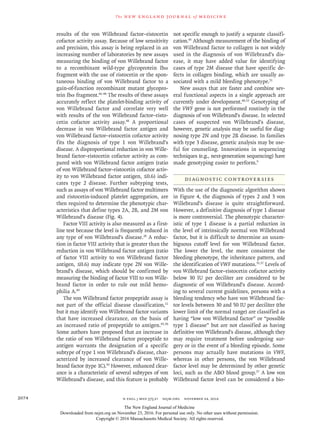
Figure 4. Diagnostic Algorithm for von Willebrand’s Disease.
The diagnosis of von Willebrand’s disease (VWD) begins with a relevant personal or family history of mucocutaneous
bleeding. When VWD is suspected, the first level of testing comprises measurements of the VWF antigen (VWF:Ag)
level, the platelet-binding activity of VWF (measured by means of a VWF–ristocetin cofactor activity [VWF:RCo] as-
say), and factor VIII activity (FVIII:C). (The VWF:RCo assay may be replaced by newer assays that measure the bind-
ing of VWF to a recombinant wild-type GPIb fragment with the use of ristocetin or the spontaneous binding of VWF
to a gain-of-function recombinant mutant GPIb fragment.) When the results of all first-level tests are normal, VWD
is ruled out; because of biologic variability, however, the tests should be repeated if values are at the low end of the
normal range or if VWD is strongly suspected. If these first-level tests reveal definitive abnormalities, a diagnosis of
VWD can be made; if the results are not conclusive, second-level tests are required. VWD can be subtyped on the
basis of these second-level tests. A rare platelet defect due to a gain-of-function mutation in the GPIbα receptor,
known as platelet-type VWD, has a phenotype similar to that of type 2B VWD; the two disorders can be distinguished
with the use of genetic testing. RIPA denotes ristocetin-induced platelet aggregation, VWF:FVIIIB VWF–FVIII bind-
ing activity, and VWFpp VWF propeptide. Persons with a bleeding tendency who have VWF levels between 30 and
50 IU per deciliter (the lower limit of the normal range) are classified as having “low VWF” or “possible type 1 dis-
ease” but are not classified as having definitive VWD.
Bleeding Disorder Suspected
Second-Level Tests
VWF:Ag
<5 IU/dl
Ratio of
VWF:RCo
to
VWF:Ag
≤0.6
Type 3 VWD
Severe
Type 1 VWD
VWFpp
<5 IU/dl
VWFpp
≥5 IU/dl
Ratio of
FVIII:C
to
VWF:Ag
>0.6
and
Multimers
Normal
Type 1 VWD
Ratio of FVIII:C
to
VWF:Ag
≤0.6
VWF:FVIIIB
Reduced
Type 2N VWD
Multimers
Loss
of HMW
multimers
Multimers
Normal
Type 2M VWD
RIPA
Enhanced
RIPA
Normal
or reduced
Type 2B VWD
Type 2A VWD
Multimers
Loss of HMW
multimers
VWF:RCo
<30 IU/dl
VWF:RCo
<30 IU/dl
and
Ratio of
VWF:RCo
to
VWF:Ag
>0.6
Low VWF
VWF:RCo
30–50 IU/dl
Ratio of FVIII:C
to
VWF:Ag
>0.6
and
and
and
First-Level
Tests
The New England Journal of Medicine
Downloaded from nejm.org on November 23, 2016. For personal use only. No other uses without permission.
Copyright © 2016 Massachusetts Medical Society. All rights reserved.](https://image.slidesharecdn.com/varunnejm-170226172520/85/Varun-nejm-7-320.jpg)
![n engl j med 375;21 nejm.org November 24, 2016 2075
Von Willebrand’s Disease
marker for an increased risk of bleeding.53
It is
also possible that other hemostatic defects, such
as mild platelet-function disorders, contribute to
the bleeding phenotype in these patients.54
A further diagnostic dilemma is posed by the
physiologic increase in von Willebrand factor
levels with age throughout life. This may have an
effect on the diagnosis of von Willebrand’s dis-
ease. In childhood, the physiologically lower
levels may be erroneously interpreted as indica-
tive of von Willebrand’s disease. Elderly patients
who met the diagnostic criteria when they were
younger may no longer have a von Willebrand
factor level below the lower limit of the refer-
ence range but may still appear to be at risk for
bleeding.29,30
Treatment
Treatment of von Willebrand’s disease is based
on normalizing von Willebrand factor and factor
VIII levels in case of bleeding or before an inter-
vention. This can be achieved by increasing the
endogenous factor levels with the use of desmo-
pressin or by infusing exogenous coagulation
factors in the form of a high-purity von Wille-
brand factor concentrate or a low-purity factor
VIII–von Willebrand factor concentrate (Table 1).
Desmopressin
For most patients who have type 1 von Wille-
brand’s disease or who are classified as having a
low level of von Willebrand factor or possible
type 1 von Willebrand’s disease, and for some
patients with type 2 von Willebrand’s disease,
desmopressin can be given intravenously (0.3 μg
per kilogram of body weight), intranasally (300 μg
[150 μg per nostril] or, in a patient with a body
weight of <50 kg, only one dose of 150 μg), or
subcutaneously (0.3 μg per kilogram) to increase
factor VIII and von Willebrand factor levels by
two to four times. The use of a capped desmo-
pressin dose of 15 or 20 μg (administered intra-
venously or subcutaneously) has been suggested,
but this approach requires further study before
it can be recommended.55,56
The desmopressin
dose can be repeated after 12 to 24 hours, de-
pending on the individual response. Desmopres-
sin is considered to be safe but may have mild
side effects such as hypotension and flushing.
More severe, rare side effects are cardiovascular
complications and hyponatremia. The latter can
be prevented by limiting fluid intake to 1500 ml
for 24 hours after the administration of desmo-
pressin.56,57
Various factors influence the response
to desmopressin, including the genotype and
phenotype of von Willebrand’s disease.58
There-
fore, a test-dose infusion is recommended to
establish the magnitude and duration of the re-
sponse to desmopressin.
Factor Concentrate
In patients with type 3 von Willebrand’s disease
and in most patients with type 2 disease, von
Willebrand factor–containing concentrate is the
treatment of choice. Plasma-derived concentrates
of factor VIII and von Willebrand factor are com-
mercially available in various ratios.59
Therefore,
Disease Type Treatment Alternative or Additional Treatment
Low VWF† Desmopressin, administered intravenously (0.3 μg per kilogram
of body weight), intranasally (total dose, 300 μg [150 μg per
nostril]; in patients with body weight <50 kg, only one dose
of 150 μg), or subcutaneously (0.3 μg per kilogram)
Alternative or additional treatment:
tranexamic acid (1 g, 3 or 4 times
daily)
Type 1 Desmopressin, at same doses as above Additional treatment: tranexamic acid,
at same dose as above
Type 2 Desmopressin, at same doses as above, or VWF–factor VIII or
VWF concentrate‡
Additional treatment: tranexamic acid,
at same dose as above
Type 3 VWF–factor VIII or VWF concentrate Additional treatment: tranexamic acid,
at same dose as above
* VWF denotes von Willebrand factor.
† Patients presenting with bleeding symptoms and VWF levels between 30 and 50 IU per deciliter (the lower limit of the
normal range) are classified as having low VWF but not von Willebrand’s disease.
‡ Desmopressin is contraindicated in patients with type 2B disease.
Table 1. Treatment of von Willebrand’s Disease.*
The New England Journal of Medicine
Downloaded from nejm.org on November 23, 2016. For personal use only. No other uses without permission.
Copyright © 2016 Massachusetts Medical Society. All rights reserved.](https://image.slidesharecdn.com/varunnejm-170226172520/85/Varun-nejm-9-320.jpg)