How does S.M.A.R.T. goal-setting
effect student engagement in
intermediate class year 12-14 year
old students.
MY PRACTITIONER
RESEARCH
Title
Research Aim
Literature Review
Research Design
Participants
Data Collection Methods
Time frame
Constraints
Analysis plan
Validation
Ethical and other issues
Possible new knowledge
Limitations for future applications
TABLE OF CONTENTS
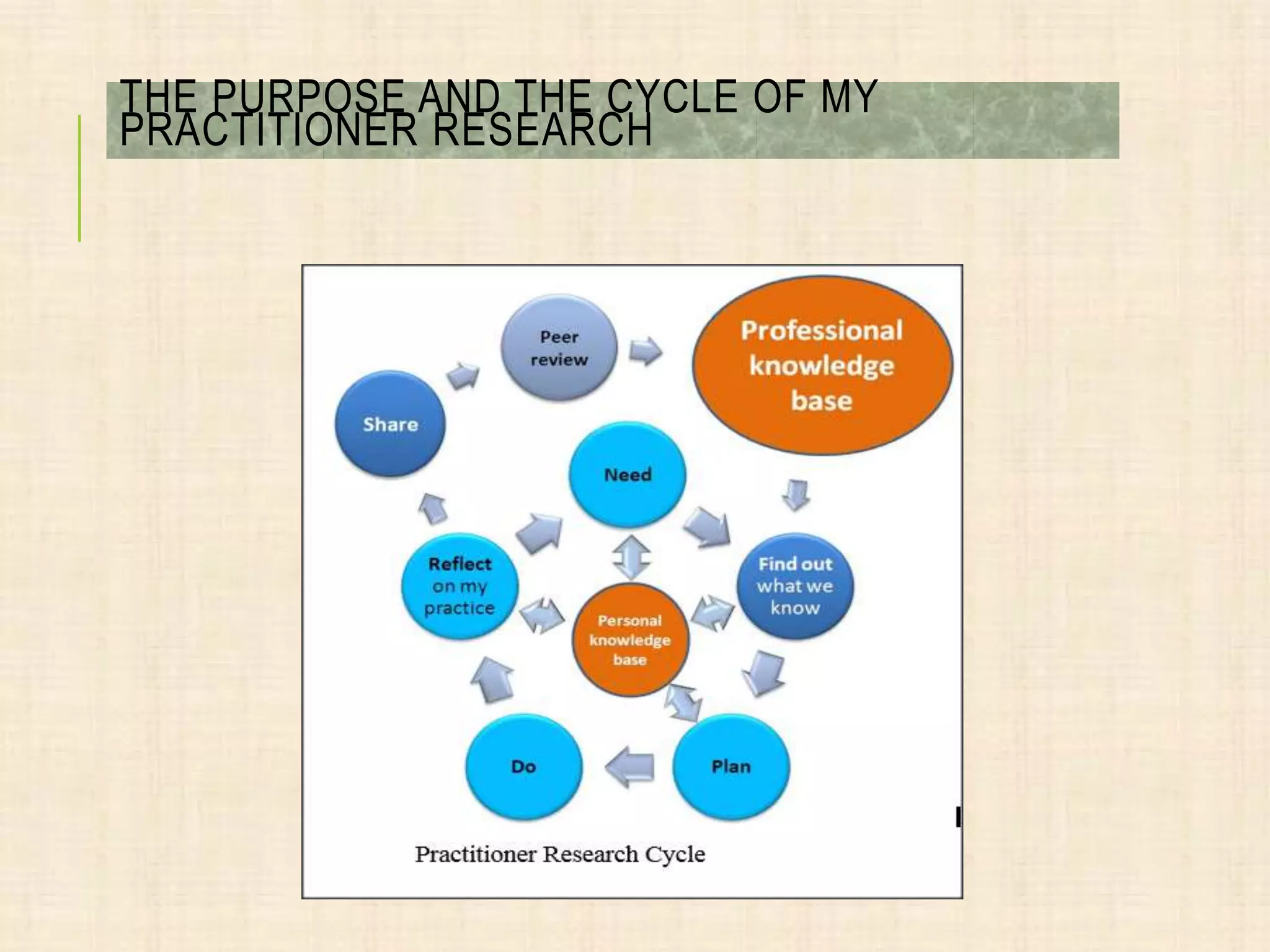
THE PURPOSE AND THE CYCLE OF MY
PRACTITIONER RESEARCH
To improve my pedagogical
approaches and practice.
To provide evidence based
practice to move from provisional
to full registration with NZ teachers
Council.
To contribute to the body of
knowledge of practice
collaboratively with other teachers.
THREE MAIN AIMS
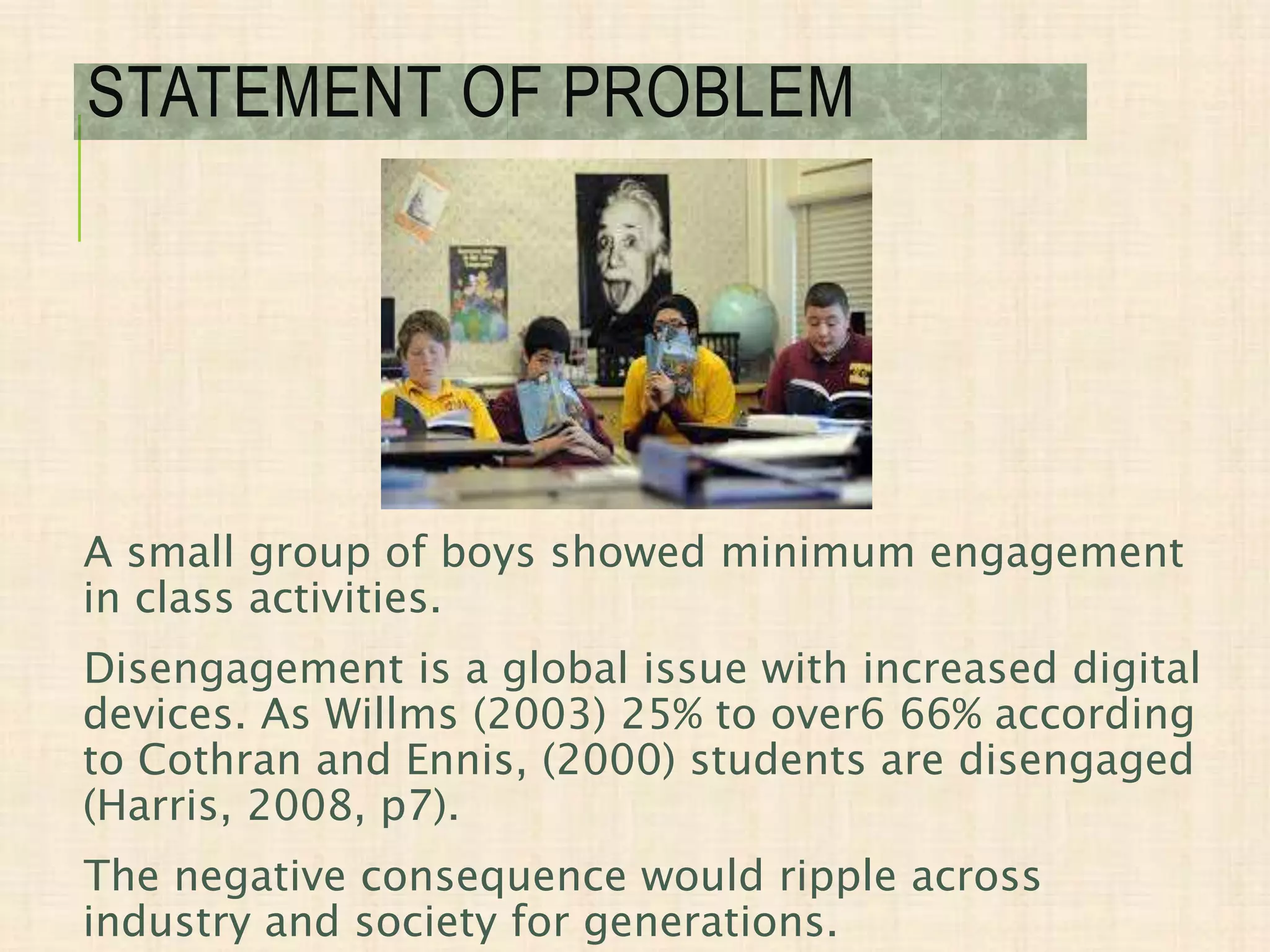
A small group of boys showed minimum engagement
in class activities.
Disengagement is a global issue with increased digital
devices. As Willms (2003) 25% to over6 66% according
to Cothran and Ennis, (2000) students are disengaged
(Harris, 2008, p7).
The negative consequence would ripple across
industry and society for generations.
STATEMENT OF PROBLEM
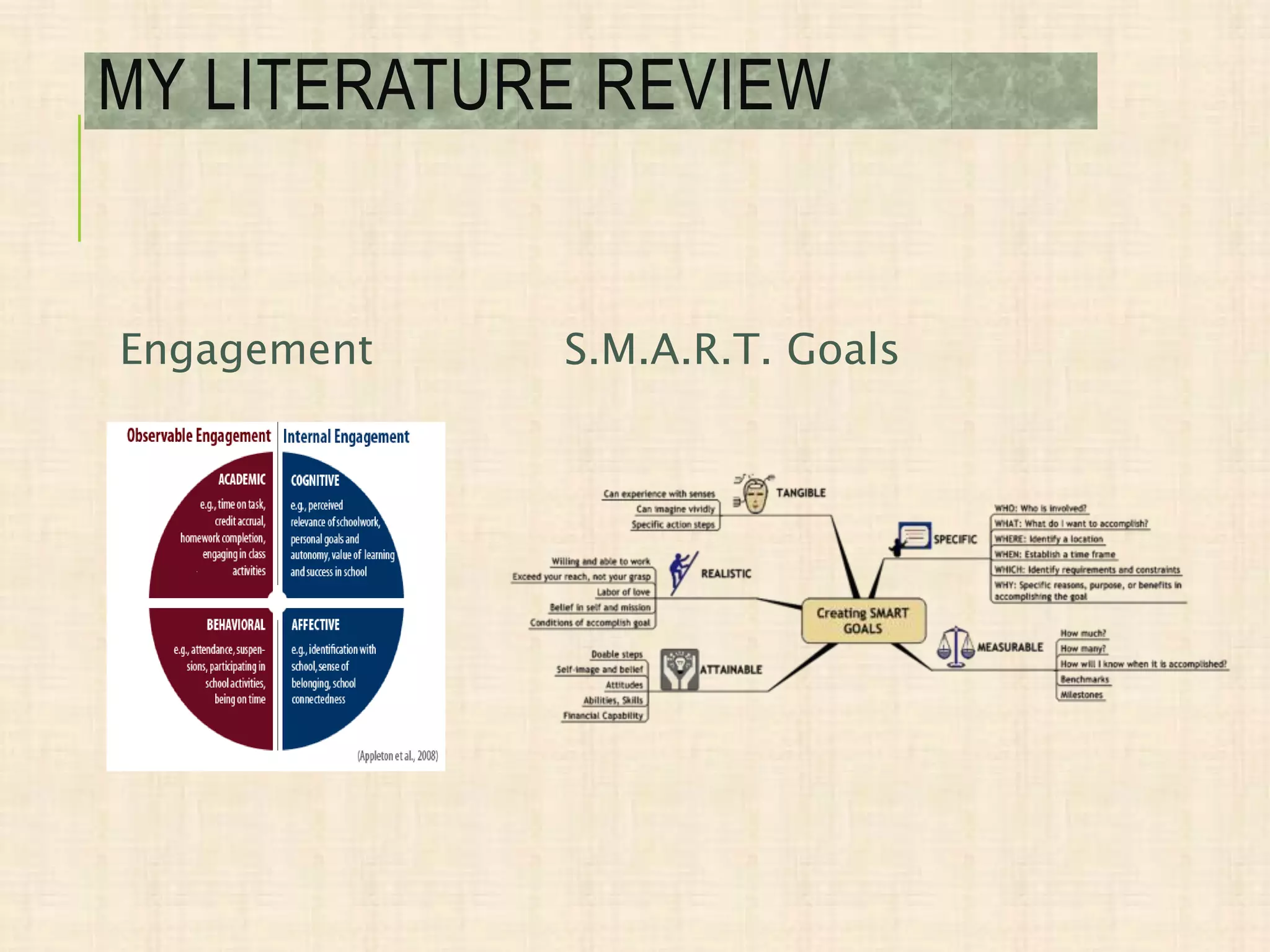
Engagement
The failure to change our pedagogy,
curriculum and assessment ,fail our
students (Willms,2003and Robinson,
2009).
As Chamber( 1996) and Bromley
(2006) mentions the role of a teacher
is crucial to motivate and engage
teenager students.
Engagement is fundamentally
promoting achievement (Akey, 2006)
When students are engaged 3 things
happen:
Construct meaning and produce
knowledge.
Use disciplined inquiry to construct
meaning.
Aim their work towards production of
discourses, products and
performances that have values and
meaning beyond success in schools.
(Newmann and Wehlage1994,p.1)
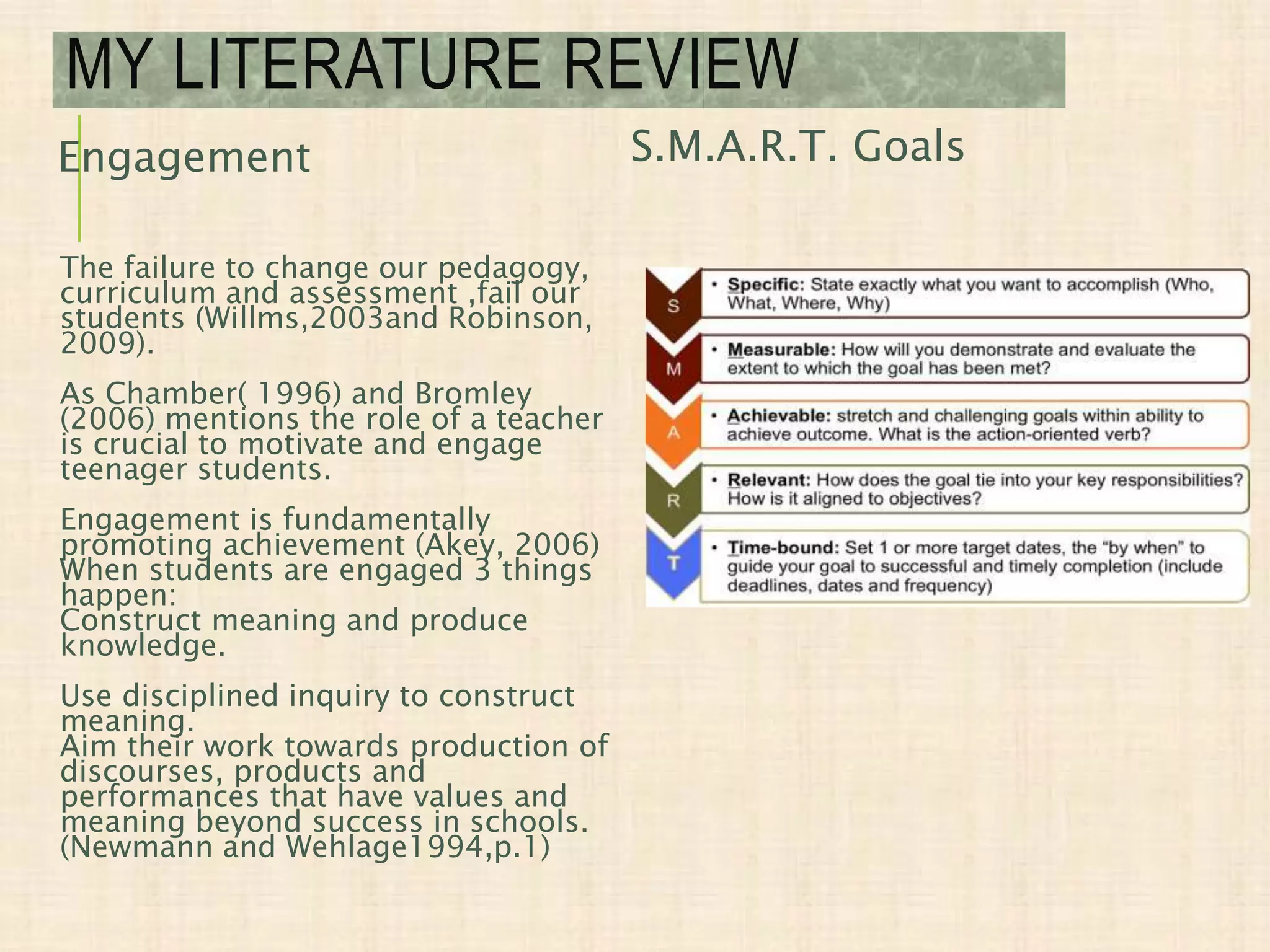
S.M.A.R.T. Goals
MY LITERATURE REVIEW
Engagement S.M.A.R.T. Goals
RESEARCH DESIGN, PARTICIPANTS, LOCATION AND
TIME FRAME
Research design : A Qualitative interpretative
systematic form of inquiry that is collective
collaborative ,self-reflective critical and undertaken
by the participants of the inquiry research(
McCutcheon and Jung (1990).
Research Location: A decile 9, ABC intermediate
school in an urban region in Auckland, NZ
Participants: 6 boys of year 8 students in a maths
classroom.
Time Frame : Term 1 of 2015 (10 Weeks
Approximately)
 Monday, Wednesday and Friday in classroom
 Utilise Tuesday and Thursday to interpret
,transcribe, sort and categorize and analyse data
and weekend meet with critical friend.
DATA COLLECTION METHODS AND
ANALYSIS PLAN
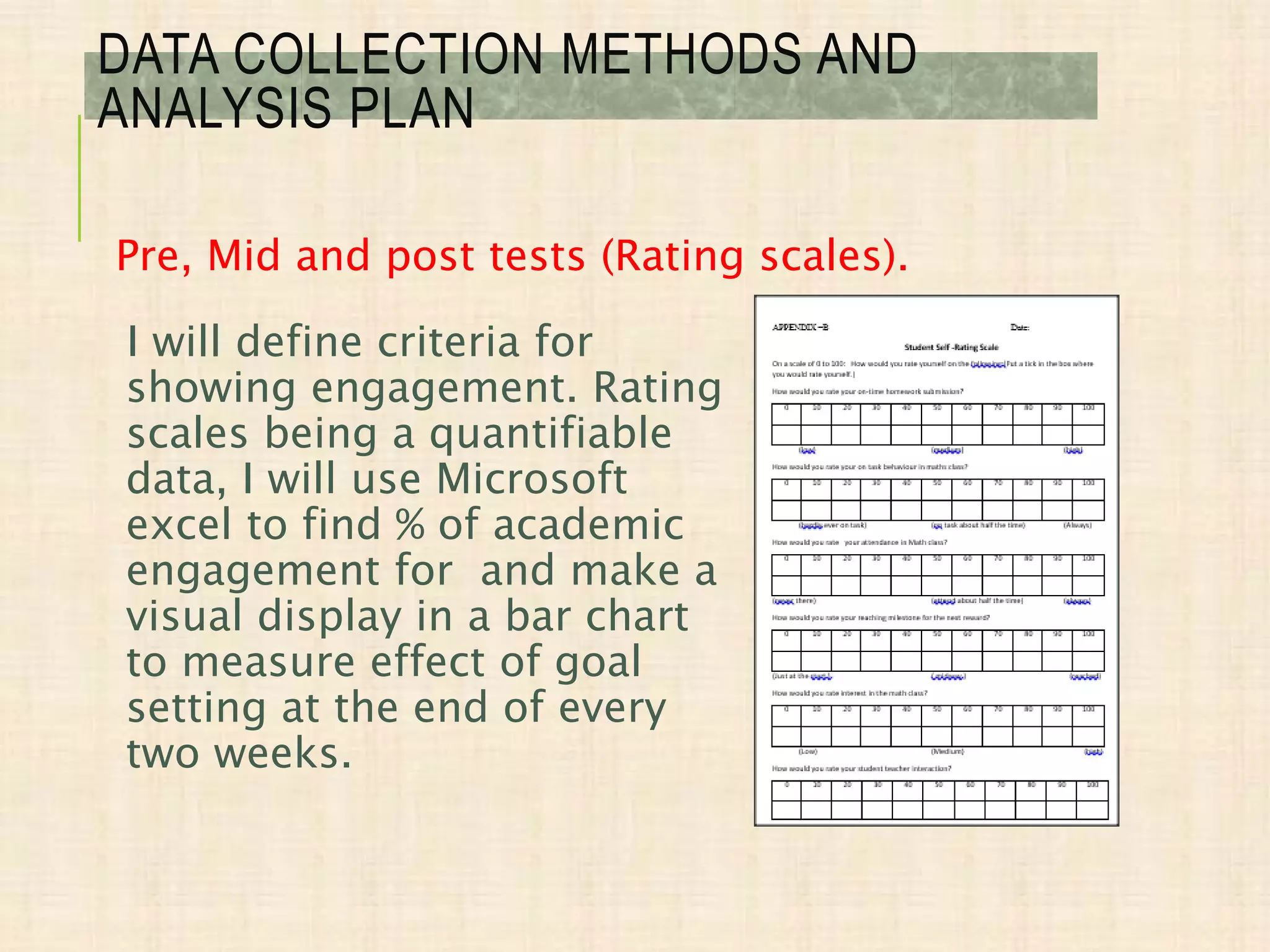
I will define criteria for
showing engagement. Rating
scales being a quantifiable
data, I will use Microsoft
excel to find % of academic
engagement for and make a
visual display in a bar chart
to measure effect of goal
setting at the end of every
two weeks.
Pre, Mid and post tests (Rating scales).
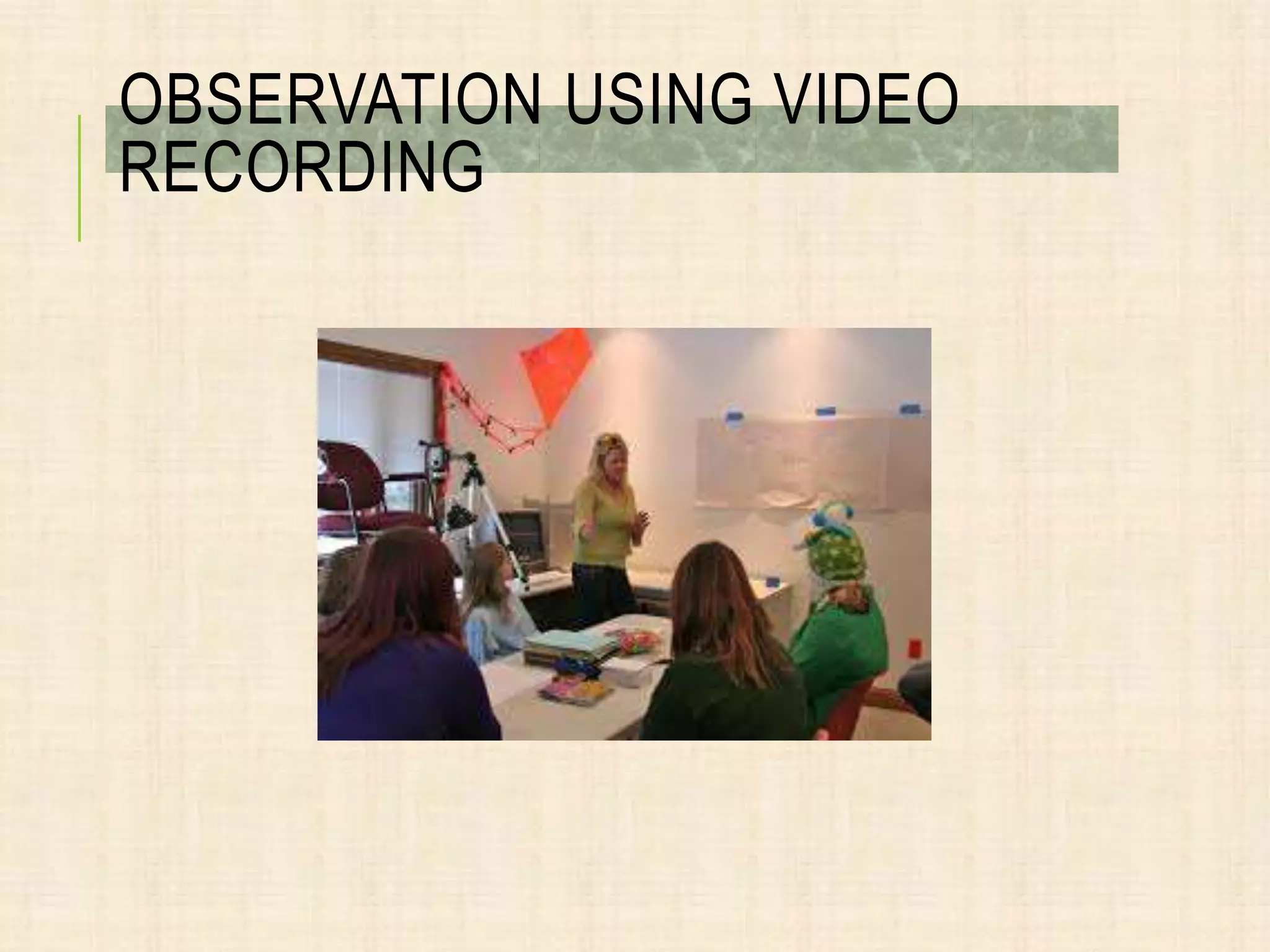
OBSERVATION USING VIDEO
RECORDING
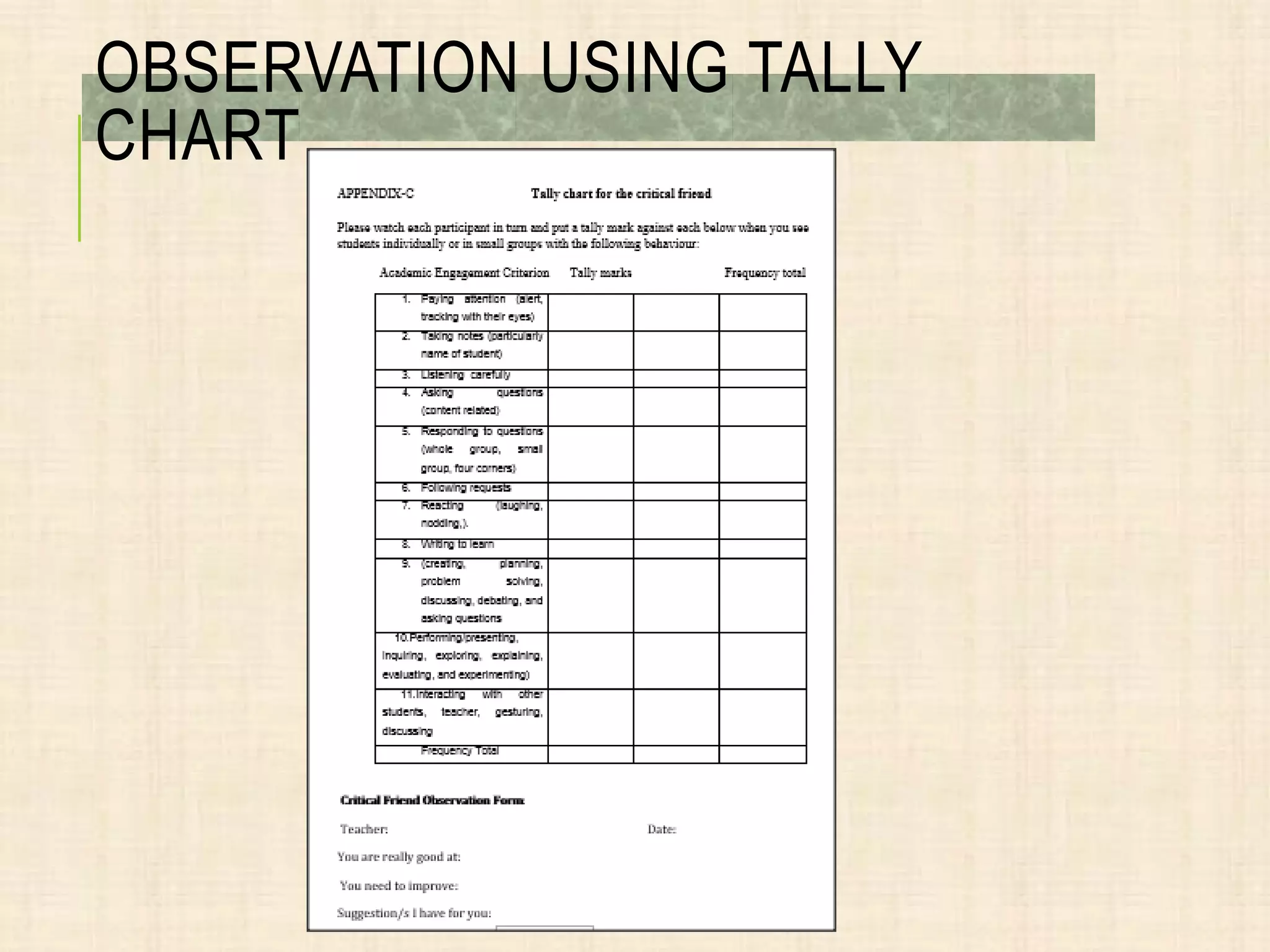
OBSERVATION USING TALLY
CHART
Analysis Plan
STUDENT PORTFOLIOS & E-
PORTFOLIOS
Ramos 1989 identifies 3 problems due to
The researcher participant relationship
The researchers subjective
interpretation of data
The design itself
Beneficence and No harm
Confidentiality and Anonymity
Free and informed consent
The right to withdraw and right to information
Power relations
The bias issue
Conflict of interest
ETHICAL ISSUES
A Ravitch(2014) affirms, Practitioner research is
a powerful stance and a tool of social,
communal and educational transformation.
I will improve my own prior knowledge of
practitioner research its practical and
theoretical realms.
I will gain knowledge about how S.M.A.R.T
goal-setting affects academic engagement in
high school and intermediate students.
It will lead to an in-depth subject perspective
and lead to possible new hypothesis and study
of the same topic.(Mc Niff and Whitehead,
2010)
POSSIBLE NEW KNOWLEDGE AND
LIMITATIONS
http://www.realpeoplemedia.org/p/programs-and-classes.html
http://allthingsupperelementary.blogspot.co.nz/2013/02/student-portfolio-
conferences.htm
REFERENCES
Sweety_AU

Sweety_AU

  • 1.
    How does S.M.A.R.T.goal-setting effect student engagement in intermediate class year 12-14 year old students. MY PRACTITIONER RESEARCH
  • 2.
    Title Research Aim Literature Review ResearchDesign Participants Data Collection Methods Time frame Constraints Analysis plan Validation Ethical and other issues Possible new knowledge Limitations for future applications TABLE OF CONTENTS
  • 3.
    THE PURPOSE ANDTHE CYCLE OF MY PRACTITIONER RESEARCH
  • 4.
    To improve mypedagogical approaches and practice. To provide evidence based practice to move from provisional to full registration with NZ teachers Council. To contribute to the body of knowledge of practice collaboratively with other teachers. THREE MAIN AIMS
  • 5.
    A small groupof boys showed minimum engagement in class activities. Disengagement is a global issue with increased digital devices. As Willms (2003) 25% to over6 66% according to Cothran and Ennis, (2000) students are disengaged (Harris, 2008, p7). The negative consequence would ripple across industry and society for generations. STATEMENT OF PROBLEM
  • 6.
    Engagement The failure tochange our pedagogy, curriculum and assessment ,fail our students (Willms,2003and Robinson, 2009). As Chamber( 1996) and Bromley (2006) mentions the role of a teacher is crucial to motivate and engage teenager students. Engagement is fundamentally promoting achievement (Akey, 2006) When students are engaged 3 things happen: Construct meaning and produce knowledge. Use disciplined inquiry to construct meaning. Aim their work towards production of discourses, products and performances that have values and meaning beyond success in schools. (Newmann and Wehlage1994,p.1) S.M.A.R.T. Goals MY LITERATURE REVIEW
  • 7.
  • 8.
    RESEARCH DESIGN, PARTICIPANTS,LOCATION AND TIME FRAME Research design : A Qualitative interpretative systematic form of inquiry that is collective collaborative ,self-reflective critical and undertaken by the participants of the inquiry research( McCutcheon and Jung (1990). Research Location: A decile 9, ABC intermediate school in an urban region in Auckland, NZ Participants: 6 boys of year 8 students in a maths classroom. Time Frame : Term 1 of 2015 (10 Weeks Approximately)  Monday, Wednesday and Friday in classroom  Utilise Tuesday and Thursday to interpret ,transcribe, sort and categorize and analyse data and weekend meet with critical friend.
  • 9.
    DATA COLLECTION METHODSAND ANALYSIS PLAN I will define criteria for showing engagement. Rating scales being a quantifiable data, I will use Microsoft excel to find % of academic engagement for and make a visual display in a bar chart to measure effect of goal setting at the end of every two weeks. Pre, Mid and post tests (Rating scales).
  • 10.
  • 11.
  • 12.
  • 13.
    Ramos 1989 identifies3 problems due to The researcher participant relationship The researchers subjective interpretation of data The design itself Beneficence and No harm Confidentiality and Anonymity Free and informed consent The right to withdraw and right to information Power relations The bias issue Conflict of interest ETHICAL ISSUES
  • 14.
    A Ravitch(2014) affirms,Practitioner research is a powerful stance and a tool of social, communal and educational transformation. I will improve my own prior knowledge of practitioner research its practical and theoretical realms. I will gain knowledge about how S.M.A.R.T goal-setting affects academic engagement in high school and intermediate students. It will lead to an in-depth subject perspective and lead to possible new hypothesis and study of the same topic.(Mc Niff and Whitehead, 2010) POSSIBLE NEW KNOWLEDGE AND LIMITATIONS
  • 15.