History
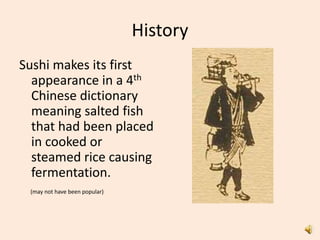
Sushi makes its first
  appearance in a 4th
  Chinese dictionary
  meaning salted fish
  that had been placed
  in cooked or
  steamed rice causing
  fermentation.
 (may not have been popular)
Japanese Sushi
May not have appeared until the 9th century.
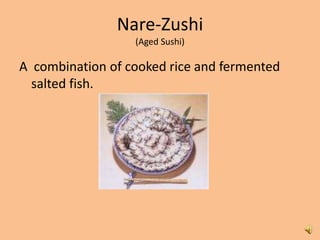
Nare-Zushi
                  (Aged Sushi)

A combination of cooked rice and fermented
  salted fish.
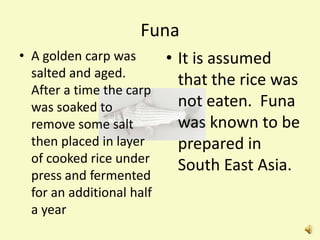
Funa
• A golden carp was        • It is assumed
  salted and aged.
                             that the rice was
  After a time the carp
  was soaked to              not eaten. Funa
  remove some salt           was known to be
  then placed in layer       prepared in
  of cooked rice under
                             South East Asia.
  press and fermented
  for an additional half
  a year
Nama-Zushi
                 (Raw Sushi)

Introduced in 15th
  and 16th century.
  The fermentation
  only took 1 month
  and it is believed
  the rice was eaten.
Nama-Zushi
Fermentation was quickened by adding rice
  vinegar, then placed under pressure.

               Haya-Zushi
Rice was prepared in a 24-hour period and
  consumed.
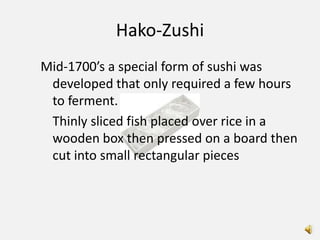
Hako-Zushi
Mid-1700’s a special form of sushi was
 developed that only required a few hours
 to ferment.
 Thinly sliced fish placed over rice in a
 wooden box then pressed on a board then
 cut into small rectangular pieces
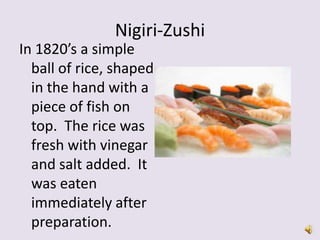
Nigiri-Zushi
In 1820’s a simple
  ball of rice, shaped
  in the hand with a
  piece of fish on
  top. The rice was
  fresh with vinegar
  and salt added. It
  was eaten
  immediately after
  preparation.
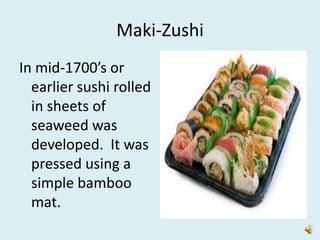
Maki-Zushi
In mid-1700’s or
  earlier sushi rolled
  in sheets of
  seaweed was
  developed. It was
  pressed using a
  simple bamboo
  mat.
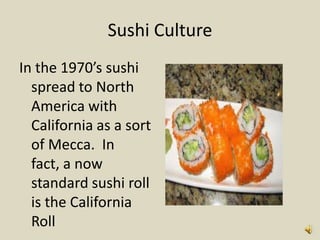
Sushi Culture
In the 1970’s sushi
  spread to North
  America with
  California as a sort
  of Mecca. In
  fact, a now
  standard sushi roll
  is the California
  Roll
California Sushi Roll Ingredients
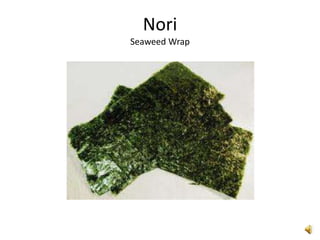
Nori
Seaweed Wrap
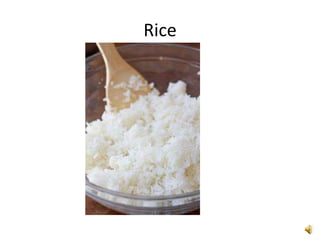
Rice
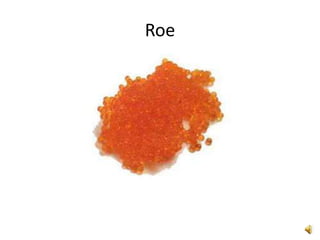
Roe
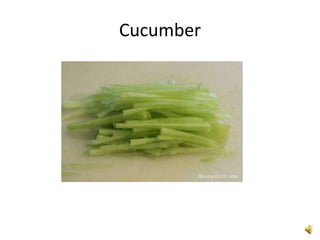
Cucumber
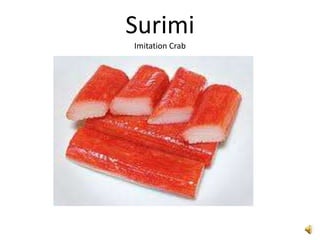
Surimi
Imitation Crab
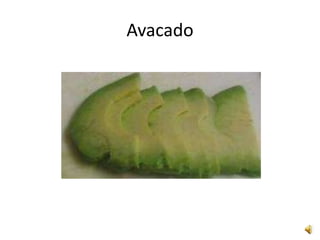
Avacado
How to remember the ingredient and
process you may want to remember:
Nasty Rodeo Riding Freaky Cowboys Sling Amazing Ropes

Nori Rice Roe Flip Cucumber Surimi Avocado Roll


          Now, take a moment and create a mnemonic
          sentence to help you remember this process.
Preparation-
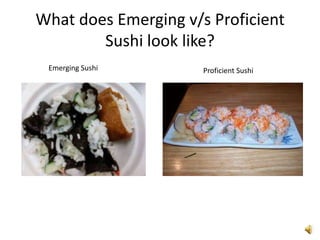
What does Emerging v/s Proficient
        Sushi look like?
 Emerging Sushi       Proficient Sushi
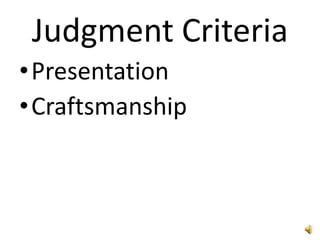
Judgment Criteria
•Presentation
•Craftsmanship
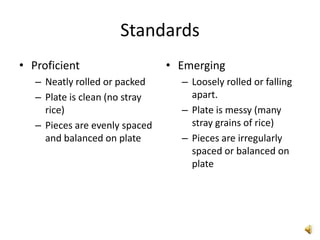
Standards
• Proficient                    • Emerging
   – Neatly rolled or packed      – Loosely rolled or falling
   – Plate is clean (no stray       apart.
     rice)                        – Plate is messy (many
   – Pieces are evenly spaced       stray grains of rice)
     and balanced on plate        – Pieces are irregularly
                                    spaced or balanced on
                                    plate
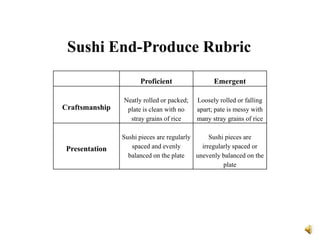
Sushi End-Produce Rubric
                      Proficient                 Emergent

                Neatly rolled or packed;   Loosely rolled or falling
Craftsmanship    plate is clean with no    apart; pate is messy with
                  stray grains of rice     many stray grains of rice

                Sushi pieces are regularly      Sushi pieces are
 Presentation      spaced and evenly         irregularly spaced or
                  balanced on the plate    unevenly balanced on the
                                                     plate

Sushi powerpoint w embedded

  • 2.
    History Sushi makes itsfirst appearance in a 4th Chinese dictionary meaning salted fish that had been placed in cooked or steamed rice causing fermentation. (may not have been popular)
  • 3.
    Japanese Sushi May nothave appeared until the 9th century.
  • 4.
    Nare-Zushi (Aged Sushi) A combination of cooked rice and fermented salted fish.
  • 5.
    Funa • A goldencarp was • It is assumed salted and aged. that the rice was After a time the carp was soaked to not eaten. Funa remove some salt was known to be then placed in layer prepared in of cooked rice under South East Asia. press and fermented for an additional half a year
  • 6.
    Nama-Zushi (Raw Sushi) Introduced in 15th and 16th century. The fermentation only took 1 month and it is believed the rice was eaten.
  • 7.
    Nama-Zushi Fermentation was quickenedby adding rice vinegar, then placed under pressure. Haya-Zushi Rice was prepared in a 24-hour period and consumed.
  • 8.
    Hako-Zushi Mid-1700’s a specialform of sushi was developed that only required a few hours to ferment. Thinly sliced fish placed over rice in a wooden box then pressed on a board then cut into small rectangular pieces
  • 9.
    Nigiri-Zushi In 1820’s asimple ball of rice, shaped in the hand with a piece of fish on top. The rice was fresh with vinegar and salt added. It was eaten immediately after preparation.
  • 10.
    Maki-Zushi In mid-1700’s or earlier sushi rolled in sheets of seaweed was developed. It was pressed using a simple bamboo mat.
  • 11.
    Sushi Culture In the1970’s sushi spread to North America with California as a sort of Mecca. In fact, a now standard sushi roll is the California Roll
  • 12.
  • 13.
  • 14.
  • 15.
  • 16.
  • 17.
  • 18.
  • 19.
    How to rememberthe ingredient and process you may want to remember: Nasty Rodeo Riding Freaky Cowboys Sling Amazing Ropes Nori Rice Roe Flip Cucumber Surimi Avocado Roll Now, take a moment and create a mnemonic sentence to help you remember this process.
  • 20.
  • 21.
    What does Emergingv/s Proficient Sushi look like? Emerging Sushi Proficient Sushi
  • 22.
  • 23.
    Standards • Proficient • Emerging – Neatly rolled or packed – Loosely rolled or falling – Plate is clean (no stray apart. rice) – Plate is messy (many – Pieces are evenly spaced stray grains of rice) and balanced on plate – Pieces are irregularly spaced or balanced on plate
  • 24.
    Sushi End-Produce Rubric Proficient Emergent Neatly rolled or packed; Loosely rolled or falling Craftsmanship plate is clean with no apart; pate is messy with stray grains of rice many stray grains of rice Sushi pieces are regularly Sushi pieces are Presentation spaced and evenly irregularly spaced or balanced on the plate unevenly balanced on the plate