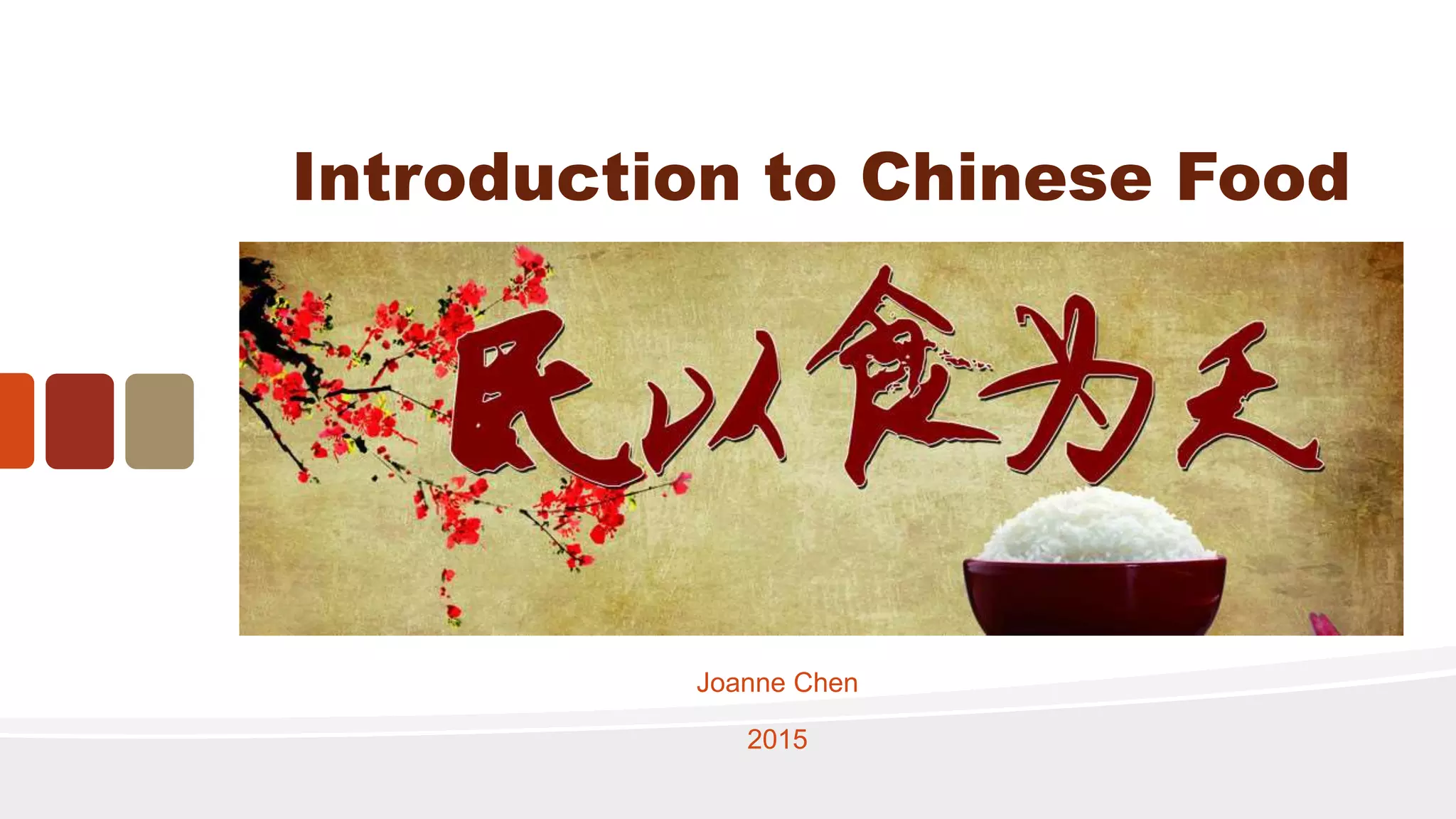
Introduction to Chinese Food
Joanne Chen
2015
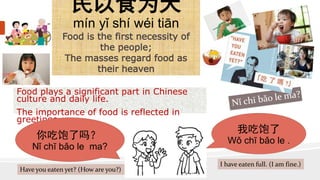
民以食为天
mín yǐ shí wéi tiān
Food is the first necessity of
the people;
The masses regard food as
their heaven
Food plays a significant part in Chinese
culture and daily life.
The importance of food is reflected in
greetings.
我吃饱了
Wǒ chī bǎo le .
你吃饱了吗?
Nǐ chī bǎo le ma?
Have you eaten yet? (How are you?)
I have eaten full. (I am fine.)
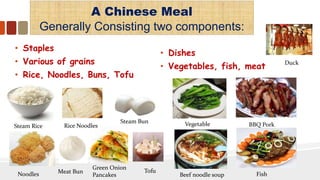
A Chinese Meal
Generally Consisting two components:
• Staples
• Various of grains
• Rice, Noodles, Buns, Tofu
• Dishes
• Vegetables, fish, meat
Steam Rice
Noodles
Rice Noodles
Steam Bun
Meat Bun
Green Onion
Pancakes
Vegetable
Beef noodle soup
BBQ Pork
Fish
Duck
Tofu
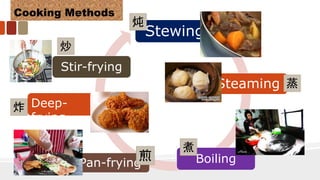
Cooking Methods
Stewing
Steaming
BoilingPan-frying
Stir-frying
Deep-
frying
炒
炖
蒸
煮
炸
煎
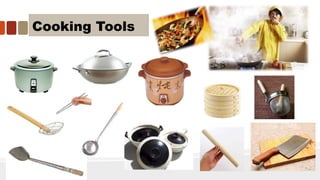
Cooking Tools
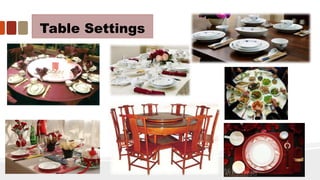
Table Settings
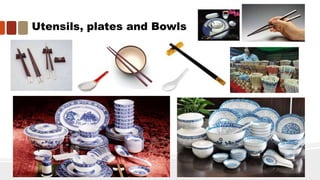
Utensils, plates and Bowls
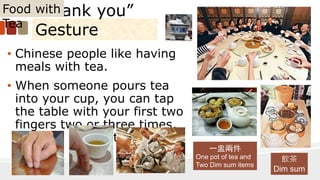
“Thank you”
Gesture
• Chinese people like having
meals with tea.
• When someone pours tea
into your cup, you can tap
the table with your first two
fingers two or three times,
showing thanks to the
person.
Food with
Tea
一盅兩件
One pot of tea and
Two Dim sum items
飲茶
Dim sum
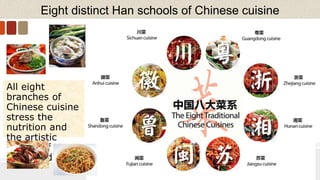
Eight distinct Han schools of Chinese cuisine
All eight
branches of
Chinese cuisine
stress the
nutrition and
the artistic
beauty of
Chinese dishes.
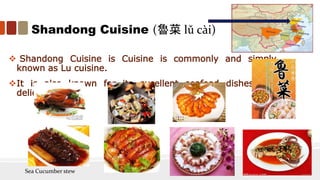
Shandong Cuisine (魯菜 lǔ cài)
 Shandong Cuisine is Cuisine is commonly and simply
known as Lu cuisine.
It is also known for its excellent seafood dishes and
delicious soup.
Sea Cucumber stew
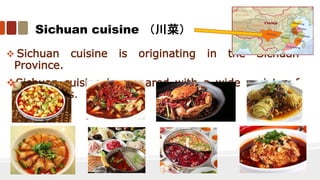
Sichuan cuisine (川菜)
 Sichuan cuisine is originating in the Sichuan
Province.
Sichuan cuisine is prepared with a wide variety of
ingredients.
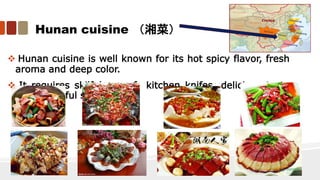
Hunan cuisine (湘菜)
 Hunan cuisine is well known for its hot spicy flavor, fresh
aroma and deep color.
 It requires skilful use of kitchen knifes, delicious taste
and beautiful shapes.
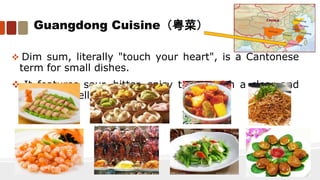
Guangdong Cuisine(粤菜)
 Dim sum, literally "touch your heart", is a Cantonese
term for small dishes.
 It features sour, bitter, spicy tastes with a clear and
fragrant smell.
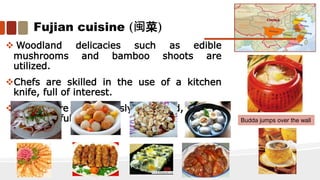
Fujian cuisine (闽菜)
 Woodland delicacies such as edible
mushrooms and bamboo shoots are
utilized.
Chefs are skilled in the use of a kitchen
knife, full of interest.
 Dishes are meticulously prepared, refined
and graceful. Budda jumps over the wall
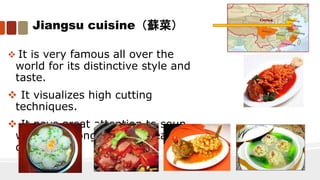
Jiangsu cuisine(蘇菜)
 It is very famous all over the
world for its distinctive style and
taste.
 It visualizes high cutting
techniques.
 It pays great attention to soup,
which is strong but not greasy, and
delicious.
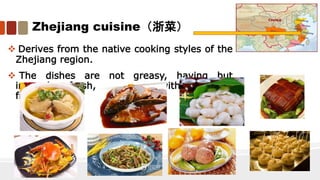
Zhejiang cuisine(浙菜)
 Derives from the native cooking styles of the
Zhejiang region.
 The dishes are not greasy, having but
instead a fresh, soft flavor with a mellow
fragrance.
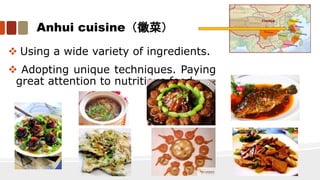
Anhui cuisine(徽菜)
 Using a wide variety of ingredients.
 Adopting unique techniques. Paying
great attention to nutritious food.
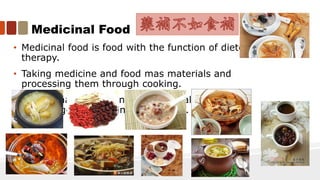
Medicinal Food
• Medicinal food is food with the function of dietetic
therapy.
• Taking medicine and food mas materials and
processing them through cooking.
• A combination of Chinese traditional medical
knowledge and cooking experience.
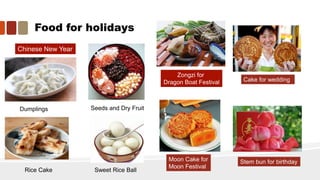
Food for holidays
Dumplings
Chinese New Year
Rice Cake
Seeds and Dry Fruit
Sweet Rice Ball
Zongzi for
Dragon Boat Festival
Moon Cake for
Moon Festival
Cake for wedding
Stem bun for birthday
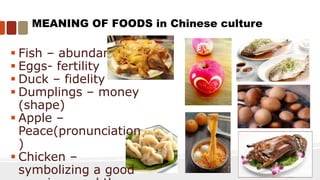
MEANING OF FOODS in Chinese culture
 Fish – abundance
 Eggs- fertility
 Duck – fidelity
 Dumplings – money
(shape)
 Apple –
Peace(pronunciation
)
 Chicken –
symbolizing a good
Chinese Believe:
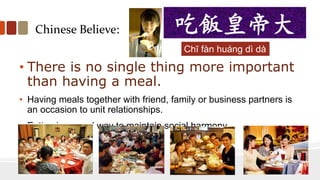
• There is no single thing more important
than having a meal.
• Having meals together with friend, family or business partners is
an occasion to unit relationships.
• Eating is a good way to maintain social harmony.
吃飯皇帝大
Chī fàn huáng dì dà

Chinese Food Introduction

  • 1.
    Introduction to ChineseFood Joanne Chen 2015
  • 2.
    民以食为天 mín yǐ shíwéi tiān Food is the first necessity of the people; The masses regard food as their heaven Food plays a significant part in Chinese culture and daily life. The importance of food is reflected in greetings. 我吃饱了 Wǒ chī bǎo le . 你吃饱了吗? Nǐ chī bǎo le ma? Have you eaten yet? (How are you?) I have eaten full. (I am fine.)
  • 3.
    A Chinese Meal GenerallyConsisting two components: • Staples • Various of grains • Rice, Noodles, Buns, Tofu • Dishes • Vegetables, fish, meat Steam Rice Noodles Rice Noodles Steam Bun Meat Bun Green Onion Pancakes Vegetable Beef noodle soup BBQ Pork Fish Duck Tofu
  • 4.
  • 5.
  • 6.
  • 7.
  • 8.
    “Thank you” Gesture • Chinesepeople like having meals with tea. • When someone pours tea into your cup, you can tap the table with your first two fingers two or three times, showing thanks to the person. Food with Tea 一盅兩件 One pot of tea and Two Dim sum items 飲茶 Dim sum
  • 9.
    Eight distinct Hanschools of Chinese cuisine All eight branches of Chinese cuisine stress the nutrition and the artistic beauty of Chinese dishes.
  • 10.
    Shandong Cuisine (魯菜lǔ cài)  Shandong Cuisine is Cuisine is commonly and simply known as Lu cuisine. It is also known for its excellent seafood dishes and delicious soup. Sea Cucumber stew
  • 11.
    Sichuan cuisine (川菜) Sichuan cuisine is originating in the Sichuan Province. Sichuan cuisine is prepared with a wide variety of ingredients.
  • 12.
    Hunan cuisine (湘菜) Hunan cuisine is well known for its hot spicy flavor, fresh aroma and deep color.  It requires skilful use of kitchen knifes, delicious taste and beautiful shapes.
  • 13.
    Guangdong Cuisine(粤菜)  Dimsum, literally "touch your heart", is a Cantonese term for small dishes.  It features sour, bitter, spicy tastes with a clear and fragrant smell.
  • 14.
    Fujian cuisine (闽菜) Woodland delicacies such as edible mushrooms and bamboo shoots are utilized. Chefs are skilled in the use of a kitchen knife, full of interest.  Dishes are meticulously prepared, refined and graceful. Budda jumps over the wall
  • 15.
    Jiangsu cuisine(蘇菜)  Itis very famous all over the world for its distinctive style and taste.  It visualizes high cutting techniques.  It pays great attention to soup, which is strong but not greasy, and delicious.
  • 16.
    Zhejiang cuisine(浙菜)  Derivesfrom the native cooking styles of the Zhejiang region.  The dishes are not greasy, having but instead a fresh, soft flavor with a mellow fragrance.
  • 17.
    Anhui cuisine(徽菜)  Usinga wide variety of ingredients.  Adopting unique techniques. Paying great attention to nutritious food.
  • 18.
    Medicinal Food • Medicinalfood is food with the function of dietetic therapy. • Taking medicine and food mas materials and processing them through cooking. • A combination of Chinese traditional medical knowledge and cooking experience.
  • 19.
    Food for holidays Dumplings ChineseNew Year Rice Cake Seeds and Dry Fruit Sweet Rice Ball Zongzi for Dragon Boat Festival Moon Cake for Moon Festival Cake for wedding Stem bun for birthday
  • 20.
    MEANING OF FOODSin Chinese culture  Fish – abundance  Eggs- fertility  Duck – fidelity  Dumplings – money (shape)  Apple – Peace(pronunciation )  Chicken – symbolizing a good
  • 21.
    Chinese Believe: • Thereis no single thing more important than having a meal. • Having meals together with friend, family or business partners is an occasion to unit relationships. • Eating is a good way to maintain social harmony. 吃飯皇帝大 Chī fàn huáng dì dà