COMENIUS PROJECT „HISTORY IN OUR KITCHEN”
SURVEY RESULTS
CREATED BY: DUBRAVKA ŠTIGLIĆ, PRIVATNA JEZIČNO-INFORMATIČKA GIMNAZIJA „SVIJET”, CROATIA
AIMS AND OBJECTIVES
Seek the opinion of the participants regarding:
 learning about history and tradition through research of traditional recipes
 using foreign languages
 developing new IT skills
 implementing project results into school’s curriculum
 ranking project implementation from the management and communication aspect
 presenting national cuisine in comparisson with the European market
 examining the value of the project results.
PARTICIPANTS/
METHOD OF RESEARCH
 10 countries, 11 schools
 25 teachers and other members of school staff
 an online survey created for the purpose of gathering the data with open and close type of questions
 data analysis provided by an Online survey creator tool freeonlinesurveys.com
RESULTS
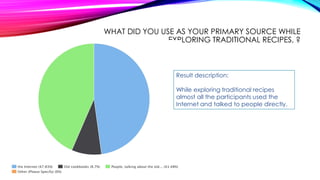
WHAT DID YOU USE AS YOUR PRIMARY SOURCE WHILE
EXPLORING TRADITIONAL RECIPES, ?
Result description:
While exploring traditional recipes
almost all the participants used the
Internet and talked to people directly.
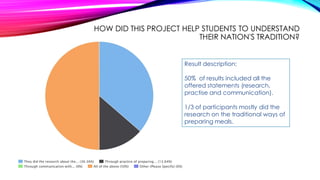
HOW DID THIS PROJECT HELP STUDENTS TO UNDERSTAND
THEIR NATION'S TRADITION?
Result description:
50% of results included all the
offered statements (research,
practise and communication).
1/3 of participants mostly did the
research on the traditional ways of
preparing meals.
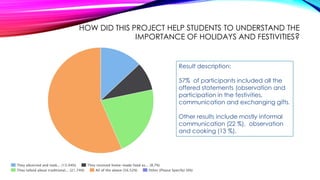
HOW DID THIS PROJECT HELP STUDENTS TO UNDERSTAND THE
IMPORTANCE OF HOLIDAYS AND FESTIVITIES?
Result description:
57% of participants included all the
offered statements (observation and
participation in the festivities,
communication and exchanging gifts.
Other results include mostly informal
communication (22 %), observation
and cooking (13 %).
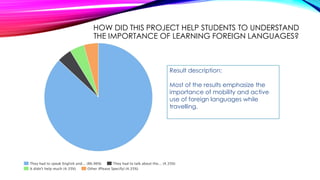
HOW DID THIS PROJECT HELP STUDENTS TO UNDERSTAND
THE IMPORTANCE OF LEARNING FOREIGN LANGUAGES?
Result description:
Most of the results emphasize the
importance of mobility and active
use of foreign languages while
travelling.
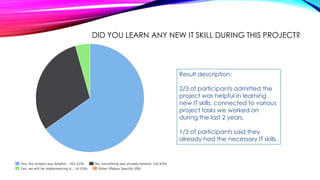
DID YOU LEARN ANY NEW IT SKILL DURING THIS PROJECT?
Result description:
2/3 of participants admitted the
project was helpful in learning
new IT skills, connected to various
project tasks we worked on
during the last 2 years.
1/3 of participants said they
already had the necessary IT skills.
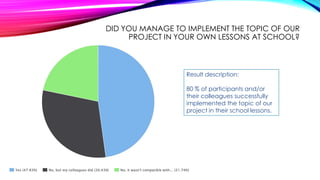
DID YOU MANAGE TO IMPLEMENT THE TOPIC OF OUR
PROJECT IN YOUR OWN LESSONS AT SCHOOL?
Result description:
80 % of participants and/or
their colleagues successfully
implemented the topic of our
project in their school lessons.
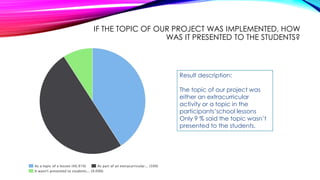
IF THE TOPIC OF OUR PROJECT WAS IMPLEMENTED, HOW
WAS IT PRESENTED TO THE STUDENTS?
Result description:
The topic of our project was
either an extracurricular
activity or a topic in the
participants’school lessons
Only 9 % said the topic wasn’t
presented to the students.
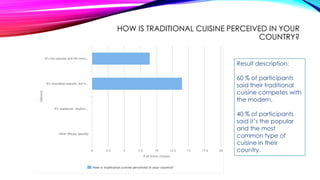
HOW IS TRADITIONAL CUISINE PERCEIVED IN YOUR
COUNTRY?
Result description:
60 % of participants
said their traditional
cuisine competes with
the modern.
40 % of participants
said it’s the popular
and the most
common type of
cuisine in their
country.
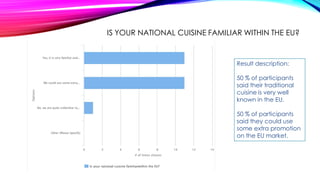
IS YOUR NATIONAL CUISINE FAMILIAR WITHIN THE EU?
Result description:
50 % of participants
said their traditional
cuisine is very well
known in the EU.
50 % of participants
said they could use
some extra promotion
on the EU market.
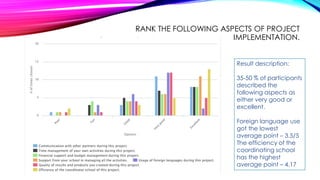
RANK THE FOLLOWING ASPECTS OF PROJECT
IMPLEMENTATION.
Result description:
35-50 % of participants
described the
following aspects as
either very good or
excellent.
Foreign language use
got the lowest
average point – 3.5/5
The efficiency of the
coordinating school
has the highest
average point – 4.17
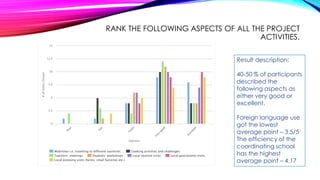
RANK THE FOLLOWING ASPECTS OF ALL THE PROJECT
ACTIVITIES.
Result description:
40-50 % of participants
described the
following aspects as
either very good or
excellent.
Foreign language use
got the lowest
average point – 3.5/5
The efficiency of the
coordinating school
has the highest
average point – 4.17
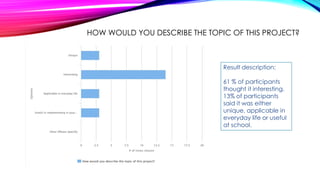
HOW WOULD YOU DESCRIBE THE TOPIC OF THIS PROJECT?
Result description:
61 % of participants
thought it interesting.
13% of participants
said it was either
unique, applicable in
everyday life or useful
at school.
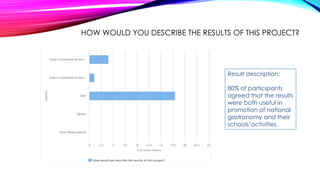
HOW WOULD YOU DESCRIBE THE RESULTS OF THIS PROJECT?
Result description:
80% of participants
agreed that the results
were both useful in
promotion of national
gastronomy and their
schools’activities.
FINAL CONCLUSION
This Comenius project has been successfully concluded.
All the participant countries carried our the neccessarry tasks, worked
together in creating all the anticipated project products and organized the
minimum number of mobilities.
We achieved every anticipated aim and successfully implemented the
project results into our schools’ curriculum.
THANK YOU

Survey results final

  • 1.
    COMENIUS PROJECT „HISTORYIN OUR KITCHEN” SURVEY RESULTS CREATED BY: DUBRAVKA ŠTIGLIĆ, PRIVATNA JEZIČNO-INFORMATIČKA GIMNAZIJA „SVIJET”, CROATIA
  • 2.
    AIMS AND OBJECTIVES Seekthe opinion of the participants regarding:  learning about history and tradition through research of traditional recipes  using foreign languages  developing new IT skills  implementing project results into school’s curriculum  ranking project implementation from the management and communication aspect  presenting national cuisine in comparisson with the European market  examining the value of the project results.
  • 3.
    PARTICIPANTS/ METHOD OF RESEARCH 10 countries, 11 schools  25 teachers and other members of school staff  an online survey created for the purpose of gathering the data with open and close type of questions  data analysis provided by an Online survey creator tool freeonlinesurveys.com
  • 4.
  • 5.
    WHAT DID YOUUSE AS YOUR PRIMARY SOURCE WHILE EXPLORING TRADITIONAL RECIPES, ? Result description: While exploring traditional recipes almost all the participants used the Internet and talked to people directly.
  • 6.
    HOW DID THISPROJECT HELP STUDENTS TO UNDERSTAND THEIR NATION'S TRADITION? Result description: 50% of results included all the offered statements (research, practise and communication). 1/3 of participants mostly did the research on the traditional ways of preparing meals.
  • 7.
    HOW DID THISPROJECT HELP STUDENTS TO UNDERSTAND THE IMPORTANCE OF HOLIDAYS AND FESTIVITIES? Result description: 57% of participants included all the offered statements (observation and participation in the festivities, communication and exchanging gifts. Other results include mostly informal communication (22 %), observation and cooking (13 %).
  • 8.
    HOW DID THISPROJECT HELP STUDENTS TO UNDERSTAND THE IMPORTANCE OF LEARNING FOREIGN LANGUAGES? Result description: Most of the results emphasize the importance of mobility and active use of foreign languages while travelling.
  • 9.
    DID YOU LEARNANY NEW IT SKILL DURING THIS PROJECT? Result description: 2/3 of participants admitted the project was helpful in learning new IT skills, connected to various project tasks we worked on during the last 2 years. 1/3 of participants said they already had the necessary IT skills.
  • 10.
    DID YOU MANAGETO IMPLEMENT THE TOPIC OF OUR PROJECT IN YOUR OWN LESSONS AT SCHOOL? Result description: 80 % of participants and/or their colleagues successfully implemented the topic of our project in their school lessons.
  • 11.
    IF THE TOPICOF OUR PROJECT WAS IMPLEMENTED, HOW WAS IT PRESENTED TO THE STUDENTS? Result description: The topic of our project was either an extracurricular activity or a topic in the participants’school lessons Only 9 % said the topic wasn’t presented to the students.
  • 12.
    HOW IS TRADITIONALCUISINE PERCEIVED IN YOUR COUNTRY? Result description: 60 % of participants said their traditional cuisine competes with the modern. 40 % of participants said it’s the popular and the most common type of cuisine in their country.
  • 13.
    IS YOUR NATIONALCUISINE FAMILIAR WITHIN THE EU? Result description: 50 % of participants said their traditional cuisine is very well known in the EU. 50 % of participants said they could use some extra promotion on the EU market.
  • 14.
    RANK THE FOLLOWINGASPECTS OF PROJECT IMPLEMENTATION. Result description: 35-50 % of participants described the following aspects as either very good or excellent. Foreign language use got the lowest average point – 3.5/5 The efficiency of the coordinating school has the highest average point – 4.17
  • 15.
    RANK THE FOLLOWINGASPECTS OF ALL THE PROJECT ACTIVITIES. Result description: 40-50 % of participants described the following aspects as either very good or excellent. Foreign language use got the lowest average point – 3.5/5 The efficiency of the coordinating school has the highest average point – 4.17
  • 16.
    HOW WOULD YOUDESCRIBE THE TOPIC OF THIS PROJECT? Result description: 61 % of participants thought it interesting. 13% of participants said it was either unique, applicable in everyday life or useful at school.
  • 17.
    HOW WOULD YOUDESCRIBE THE RESULTS OF THIS PROJECT? Result description: 80% of participants agreed that the results were both useful in promotion of national gastronomy and their schools’activities.
  • 18.
    FINAL CONCLUSION This Comeniusproject has been successfully concluded. All the participant countries carried our the neccessarry tasks, worked together in creating all the anticipated project products and organized the minimum number of mobilities. We achieved every anticipated aim and successfully implemented the project results into our schools’ curriculum.
  • 19.