TOPIC TITTLE: CODE OF CONDUCT OF BUYER
DEFENITION:
A "buyer code of conduct" is a set of values, guidelines, or requirements that spell out the appropriate
behavior and moral expectations for buyers within a certain industry or firm. It serves as a framework to
ensure that buyers conduct their purchasing activities in a responsible, ethical, and legal manner. Buyer
code of conduct working the following areas such as: Ethics and Integrity, compliance with laws and
regulation, respects of human rights, Environment Responsibility, supplier selection and relationships
quality and safety, social responsibility etc.
OBJECTIVES:
In general, buyers impose conditions to get the right products/ services that they want and need to
satisfy their customer needs. But at present, corporate social responsibility is the most important factor
for every business firm. Firm objective is not only to earn profit but also to ensure social welfare. To
ensure social welfare, buyers now a day imposes several conditions related to workers wellbeing and
safety. The general objective of the study is to analyze the buyers’ compliance role to improve the
workplace environment of garments factories
Why need buyer code of conduct in RMG sector:
Ethical Sourcing:
RMG sector involves complex global supply chains, requiring buyer code of conduct to uphold ethical
standards, ensuring fair wages, safe working conditions, and respect for human rights.
Worker Welfare:
RMG sector employs millions globally, often in developing countries, facing challenging conditions, low
wages, and rights violations. A buyer code of conduct ensures decent working conditions, fair wages, and
worker rights.
Supply Chain Transparency:
Adhering to a buyer code of conduct improves brand reputation, trust, and consumer loyalty by
promoting ethical sourcing practices, worker welfare, and responsible sourcing.
Brand Reputation:
Adhering to a buyer code of conduct improves brand reputation, trust, and consumer loyalty by
promoting ethical sourcing practices, worker welfare, and responsible sourcing.
Legal and Compliance Requirements:
A buyer code of conduct helps buyers comply with labor and environmental laws, reducing legal
repercussions, penalties, and reputational damage, ensuring they operate within legal boundaries.
Social Responsibility: RMG sector promotes social responsibility through buyer code of conduct,
encouraging responsible sourcing, sustainable production, and positive social impacts.
Labor standard:
The RMG code of conduct protects workers' rights, ensuring fair wages, reasonable working hours, safe
conditions, and prohibiting child and forced labor, empowering buyers to improve industry standards.
Reporting and accountability: The buyer code of conduct may outline reporting mechanisms for
potential violations or unethical behavior. Buyers may be required to report any suspected breaches,
comply with internal investigations, and face consequences for non-compliance.
How to work in code of conduct in RMG
.
1 Compliance with Laws and Regulations:
Buyers must comply with all applicable local, national, and international laws and regulations related to
labor, health, safety, and environmental standards.
2. Respect for Workers' Rights:
Buyers should respect and support the rights of workers, including freedom of association, collective
bargaining, and non-discrimination. They should ensure fair wages, reasonable working hours, and safe
working conditions.
3. No Forced Labor or Child Labor:
Buyers must not engage in or support any form of forced labor or child labor. They should ensure that
their suppliers do not employ workers below the legal working age or exploit vulnerable individuals.
4. Health and Safety:
Buyers should prioritize the health and safety of workers by ensuring that suppliers provide a safe and
healthy working environment. Regular inspections, training programs, and proper safety equipment
should be implemented.
5. Fair and Ethical Business Practices:
Buyers should conduct their business dealings with integrity, honesty, and transparency. They should not
engage in bribery, corruption, or any form of unethical behavior.
6. Environmental Sustainability:
Buyers should promote sustainable practices by encouraging suppliers to minimize waste, reduce energy
consumption, and use environmentally friendly materials and production methods.
7. Supply Chain Transparency:
Buyers should strive for transparency in their supply chains. They should maintain clear records of their
suppliers and ensure that their products are traceable back to their sources.
8. Continuous Improvement:
Buyers should work towards continuous improvement in their own practices and encourage their
suppliers to do the same. Regular monitoring, audits, and collaboration with stakeholders can help
identify areas for improvement.
9. Collaboration and Engagement:
Buyers should actively engage with stakeholders, including workers, suppliers, NGOs, and industry
associations, to address challenges and promote positive change in the industry.
10. Accountability and Remediation:
Buyers should take responsibility for any violations of the code of conduct and work towards
remediation. They should have mechanisms in place to address grievances and ensure that appropriate
ac
Importance of ( Buyer code of conduct):
sets clear guidelines for buyers to ensure fair and consistent treatment of suppliers.
The code establishes a framework for buyers to make responsible purchasing decisions based on
ethical considerations.
promotes transparency and accountability in the procurement process.
code helps protect against potential legal and reputational risks associated with unethical
purchasing practices.
fosters a culture of integrity and professionalism within the organization.
ensures compliance with industry standards and best practices.
helps prevent conflicts of interest and ensures buyers act in the best interest of the organization.
The code encourages sustainable and environmentally responsible purchasing decisions.
It promotes diversity and inclusion in supplier selection and contracting processes.
The code helps prevent bribery, corruption, and other unethical behaviors in procurement.
establishes a fair and competitive bidding process for suppliers.
code supports the organization's commitment to corporate social responsibility.
enhances the organization's reputation as a responsible and ethical business partner.
The code promotes cost-effectiveness and efficiency in procurement processes.
Helps build long-term relationships with reliable and trustworthy suppliers.
The code promotes fair payment terms and practices to suppliers.
Ensures compliance with labor and human rights standards in the supply chain.
The code helps identify and address potential conflicts or ethical dilemmas in purchasing
decisions.
Establishes a framework for continuous improvement and learning within the procurement
function.
The code aligns purchasing activities with the organization
EXPLAINATION:
The Code of Conduct aims to ensure suppliers operate in accordance with internationally recognized
minimum standards on human rights, including labor rights, the environment, and anti-corruption. It is a
condition of any agreement or contract between BUYER and its suppliers. Compliance with the Code is a
condition of any agreement or contract. BUYER is willing to work with suppliers to achieve compliance,
but will not conduct business with them if compliance is deemed impossible. BUYER will regularly assess
adverse impacts through its purchasing, compliance, and supply chain practices, ensuring that these
practices do not negatively impact suppliers' ability to meet the requirements set forth in the Code. The
Code is not intended to circumvent or undermine national laws or labor inspectorates, nor should it be
used as a substitute for free trade unions or collective bargaining.
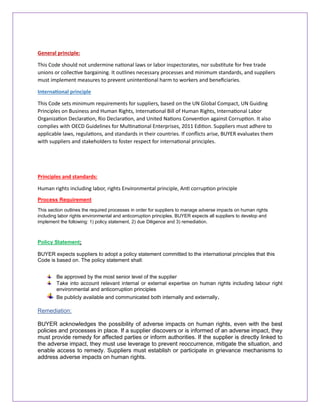
General principle:
This Code should not undermine national laws or labor inspectorates, nor substitute for free trade
unions or collective bargaining. It outlines necessary processes and minimum standards, and suppliers
must implement measures to prevent unintentional harm to workers and beneficiaries.
International principle
This Code sets minimum requirements for suppliers, based on the UN Global Compact, UN Guiding
Principles on Business and Human Rights, International Bill of Human Rights, International Labor
Organization Declaration, Rio Declaration, and United Nations Convention against Corruption. It also
complies with OECD Guidelines for Multinational Enterprises, 2011 Edition. Suppliers must adhere to
applicable laws, regulations, and standards in their countries. If conflicts arise, BUYER evaluates them
with suppliers and stakeholders to foster respect for international principles.
Principles and standards:
Human rights including labor, rights Environmental principle, Anti corruption principle
Process Requirement
This section outlines the required processes in order for suppliers to manage adverse impacts on human rights
including labor rights environmental and anticorruption principles. BUYER expects all suppliers to develop and
implement the following: 1) policy statement, 2) due Diligence and 3) remediation.
Policy Statement:
BUYER expects suppliers to adopt a policy statement committed to the international principles that this
Code is based on. The policy statement shall:
Be approved by the most senior level of the supplier
Take into account relevant internal or external expertise on human rights including labour right
environmental and anticorruption principles
Be publicly available and communicated both internally and externally.
Remediation:
BUYER acknowledges the possibility of adverse impacts on human rights, even with the best
policies and processes in place. If a supplier discovers or is informed of an adverse impact, they
must provide remedy for affected parties or inform authorities. If the supplier is directly linked to
the adverse impact, they must use leverage to prevent reoccurrence, mitigate the situation, and
enable access to remedy. Suppliers must establish or participate in grievance mechanisms to
address adverse impacts on human rights.
grievance mechanisms
(Transparent, )(rights-compatible,) (continuous learning,) and (engagement) (Legitimate) are
essential aspects of a mechanism. It should inform parties about progress, align with
internationally recognized human rights principles, provide lessons for improvement, and involve
dialogue to address and resolve adverse impacts.
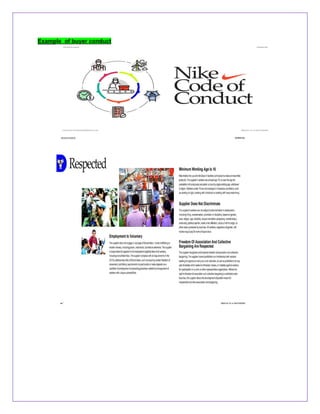
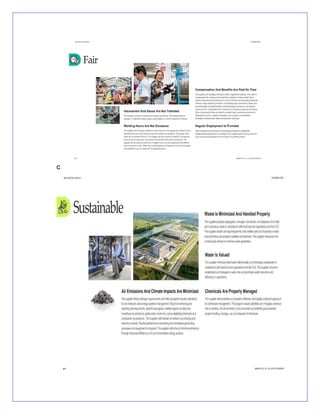
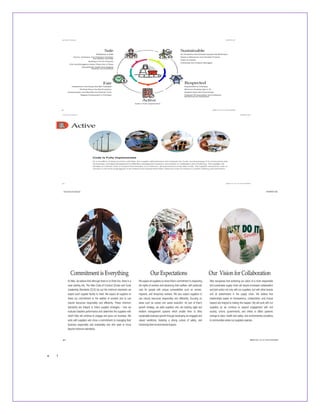
Example of buyer conduct
c
1
Conclusion:
Adhering to a code of conduct for buyers helps foster trust, integrity, and fairness in business transactions.
By following these ethical guidelines, buyers contribute to sustainable and responsible sourcing practices,
promote positive supplier relationships, and ensure the long-term success of their procurement activities.
One purpose for a code of conduct is to help protect the employer and the employees. Still, there are other
purposes as well, such as stating the company's values, encouraging teamwork, helping with decision-
making, and aiding in promoting a positive employee-client experience.
assignment of tqm

assignment of tqm

  • 1.
    TOPIC TITTLE: CODEOF CONDUCT OF BUYER DEFENITION: A "buyer code of conduct" is a set of values, guidelines, or requirements that spell out the appropriate behavior and moral expectations for buyers within a certain industry or firm. It serves as a framework to ensure that buyers conduct their purchasing activities in a responsible, ethical, and legal manner. Buyer code of conduct working the following areas such as: Ethics and Integrity, compliance with laws and regulation, respects of human rights, Environment Responsibility, supplier selection and relationships quality and safety, social responsibility etc. OBJECTIVES: In general, buyers impose conditions to get the right products/ services that they want and need to satisfy their customer needs. But at present, corporate social responsibility is the most important factor for every business firm. Firm objective is not only to earn profit but also to ensure social welfare. To ensure social welfare, buyers now a day imposes several conditions related to workers wellbeing and safety. The general objective of the study is to analyze the buyers’ compliance role to improve the workplace environment of garments factories Why need buyer code of conduct in RMG sector: Ethical Sourcing: RMG sector involves complex global supply chains, requiring buyer code of conduct to uphold ethical standards, ensuring fair wages, safe working conditions, and respect for human rights. Worker Welfare: RMG sector employs millions globally, often in developing countries, facing challenging conditions, low wages, and rights violations. A buyer code of conduct ensures decent working conditions, fair wages, and worker rights.
  • 2.
    Supply Chain Transparency: Adheringto a buyer code of conduct improves brand reputation, trust, and consumer loyalty by promoting ethical sourcing practices, worker welfare, and responsible sourcing. Brand Reputation: Adhering to a buyer code of conduct improves brand reputation, trust, and consumer loyalty by promoting ethical sourcing practices, worker welfare, and responsible sourcing. Legal and Compliance Requirements: A buyer code of conduct helps buyers comply with labor and environmental laws, reducing legal repercussions, penalties, and reputational damage, ensuring they operate within legal boundaries. Social Responsibility: RMG sector promotes social responsibility through buyer code of conduct, encouraging responsible sourcing, sustainable production, and positive social impacts. Labor standard: The RMG code of conduct protects workers' rights, ensuring fair wages, reasonable working hours, safe conditions, and prohibiting child and forced labor, empowering buyers to improve industry standards. Reporting and accountability: The buyer code of conduct may outline reporting mechanisms for potential violations or unethical behavior. Buyers may be required to report any suspected breaches, comply with internal investigations, and face consequences for non-compliance. How to work in code of conduct in RMG . 1 Compliance with Laws and Regulations: Buyers must comply with all applicable local, national, and international laws and regulations related to labor, health, safety, and environmental standards. 2. Respect for Workers' Rights: Buyers should respect and support the rights of workers, including freedom of association, collective bargaining, and non-discrimination. They should ensure fair wages, reasonable working hours, and safe working conditions. 3. No Forced Labor or Child Labor: Buyers must not engage in or support any form of forced labor or child labor. They should ensure that their suppliers do not employ workers below the legal working age or exploit vulnerable individuals.
  • 3.
    4. Health andSafety: Buyers should prioritize the health and safety of workers by ensuring that suppliers provide a safe and healthy working environment. Regular inspections, training programs, and proper safety equipment should be implemented. 5. Fair and Ethical Business Practices: Buyers should conduct their business dealings with integrity, honesty, and transparency. They should not engage in bribery, corruption, or any form of unethical behavior. 6. Environmental Sustainability: Buyers should promote sustainable practices by encouraging suppliers to minimize waste, reduce energy consumption, and use environmentally friendly materials and production methods. 7. Supply Chain Transparency: Buyers should strive for transparency in their supply chains. They should maintain clear records of their suppliers and ensure that their products are traceable back to their sources. 8. Continuous Improvement: Buyers should work towards continuous improvement in their own practices and encourage their suppliers to do the same. Regular monitoring, audits, and collaboration with stakeholders can help identify areas for improvement. 9. Collaboration and Engagement: Buyers should actively engage with stakeholders, including workers, suppliers, NGOs, and industry associations, to address challenges and promote positive change in the industry. 10. Accountability and Remediation: Buyers should take responsibility for any violations of the code of conduct and work towards remediation. They should have mechanisms in place to address grievances and ensure that appropriate ac
  • 4.
    Importance of (Buyer code of conduct): sets clear guidelines for buyers to ensure fair and consistent treatment of suppliers. The code establishes a framework for buyers to make responsible purchasing decisions based on ethical considerations. promotes transparency and accountability in the procurement process. code helps protect against potential legal and reputational risks associated with unethical purchasing practices. fosters a culture of integrity and professionalism within the organization. ensures compliance with industry standards and best practices. helps prevent conflicts of interest and ensures buyers act in the best interest of the organization. The code encourages sustainable and environmentally responsible purchasing decisions. It promotes diversity and inclusion in supplier selection and contracting processes. The code helps prevent bribery, corruption, and other unethical behaviors in procurement. establishes a fair and competitive bidding process for suppliers. code supports the organization's commitment to corporate social responsibility. enhances the organization's reputation as a responsible and ethical business partner. The code promotes cost-effectiveness and efficiency in procurement processes. Helps build long-term relationships with reliable and trustworthy suppliers. The code promotes fair payment terms and practices to suppliers. Ensures compliance with labor and human rights standards in the supply chain. The code helps identify and address potential conflicts or ethical dilemmas in purchasing decisions. Establishes a framework for continuous improvement and learning within the procurement function. The code aligns purchasing activities with the organization EXPLAINATION: The Code of Conduct aims to ensure suppliers operate in accordance with internationally recognized minimum standards on human rights, including labor rights, the environment, and anti-corruption. It is a condition of any agreement or contract between BUYER and its suppliers. Compliance with the Code is a condition of any agreement or contract. BUYER is willing to work with suppliers to achieve compliance, but will not conduct business with them if compliance is deemed impossible. BUYER will regularly assess adverse impacts through its purchasing, compliance, and supply chain practices, ensuring that these practices do not negatively impact suppliers' ability to meet the requirements set forth in the Code. The Code is not intended to circumvent or undermine national laws or labor inspectorates, nor should it be used as a substitute for free trade unions or collective bargaining.
  • 5.
    General principle: This Codeshould not undermine national laws or labor inspectorates, nor substitute for free trade unions or collective bargaining. It outlines necessary processes and minimum standards, and suppliers must implement measures to prevent unintentional harm to workers and beneficiaries. International principle This Code sets minimum requirements for suppliers, based on the UN Global Compact, UN Guiding Principles on Business and Human Rights, International Bill of Human Rights, International Labor Organization Declaration, Rio Declaration, and United Nations Convention against Corruption. It also complies with OECD Guidelines for Multinational Enterprises, 2011 Edition. Suppliers must adhere to applicable laws, regulations, and standards in their countries. If conflicts arise, BUYER evaluates them with suppliers and stakeholders to foster respect for international principles. Principles and standards: Human rights including labor, rights Environmental principle, Anti corruption principle Process Requirement This section outlines the required processes in order for suppliers to manage adverse impacts on human rights including labor rights environmental and anticorruption principles. BUYER expects all suppliers to develop and implement the following: 1) policy statement, 2) due Diligence and 3) remediation. Policy Statement: BUYER expects suppliers to adopt a policy statement committed to the international principles that this Code is based on. The policy statement shall: Be approved by the most senior level of the supplier Take into account relevant internal or external expertise on human rights including labour right environmental and anticorruption principles Be publicly available and communicated both internally and externally. Remediation: BUYER acknowledges the possibility of adverse impacts on human rights, even with the best policies and processes in place. If a supplier discovers or is informed of an adverse impact, they must provide remedy for affected parties or inform authorities. If the supplier is directly linked to the adverse impact, they must use leverage to prevent reoccurrence, mitigate the situation, and enable access to remedy. Suppliers must establish or participate in grievance mechanisms to address adverse impacts on human rights.
  • 6.
    grievance mechanisms (Transparent, )(rights-compatible,)(continuous learning,) and (engagement) (Legitimate) are essential aspects of a mechanism. It should inform parties about progress, align with internationally recognized human rights principles, provide lessons for improvement, and involve dialogue to address and resolve adverse impacts.
  • 7.
  • 8.
  • 9.
  • 10.
    Conclusion: Adhering to acode of conduct for buyers helps foster trust, integrity, and fairness in business transactions. By following these ethical guidelines, buyers contribute to sustainable and responsible sourcing practices, promote positive supplier relationships, and ensure the long-term success of their procurement activities. One purpose for a code of conduct is to help protect the employer and the employees. Still, there are other purposes as well, such as stating the company's values, encouraging teamwork, helping with decision- making, and aiding in promoting a positive employee-client experience.