Seminar
on
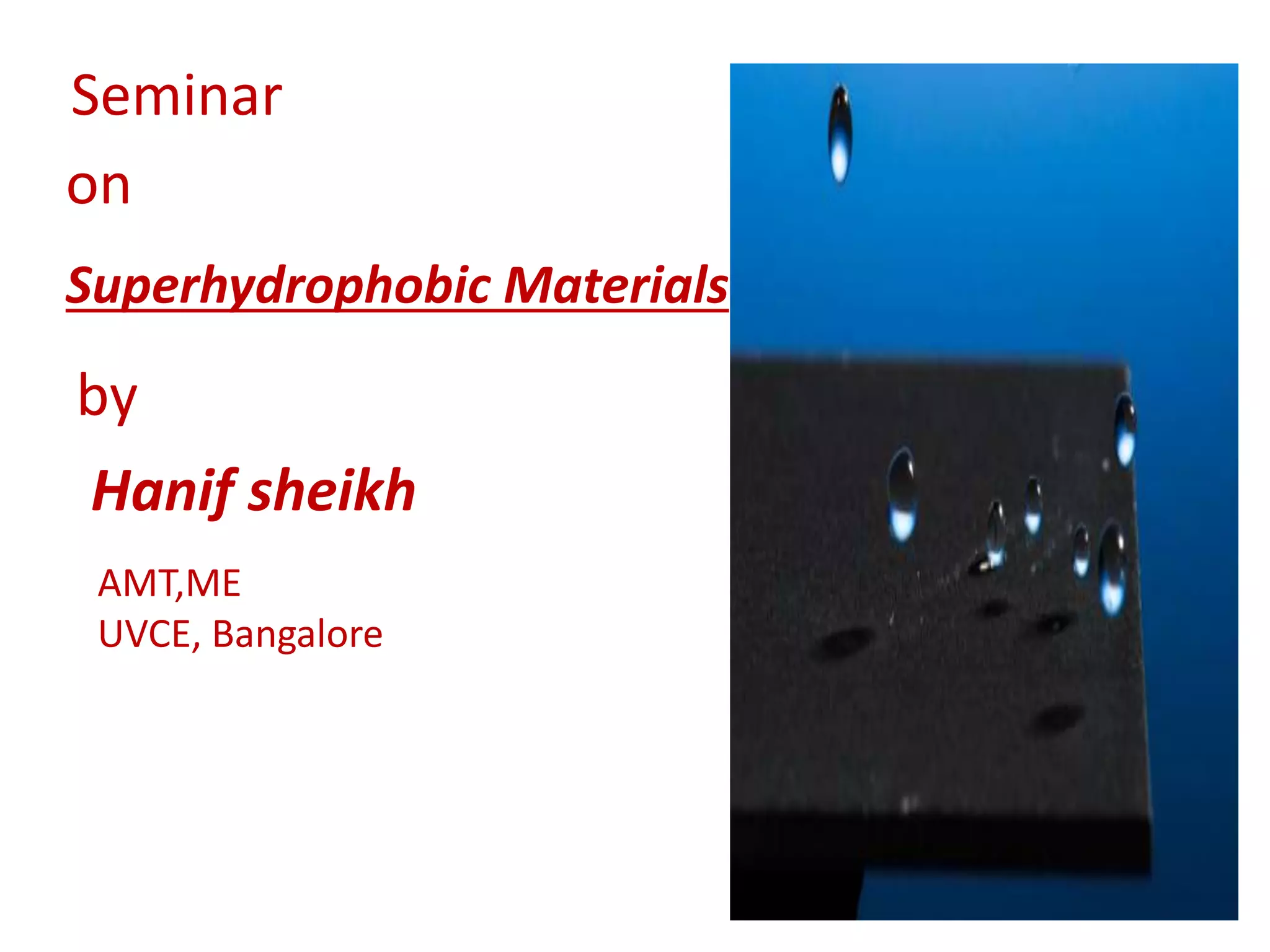
Superhydrophobic Materials
by
Hanif sheikh
AMT,ME
UVCE, Bangalore
Some of the common natural
Hydrophobic materials are waxes,
oil and fats.
Hydrophobicity comes also from the greek word Hydro(water)
and Phobicity (fear) it refers to the physical property of a
material that repels a mass of water.
WHAT IS MEANT HYDROPHOBICITY ?
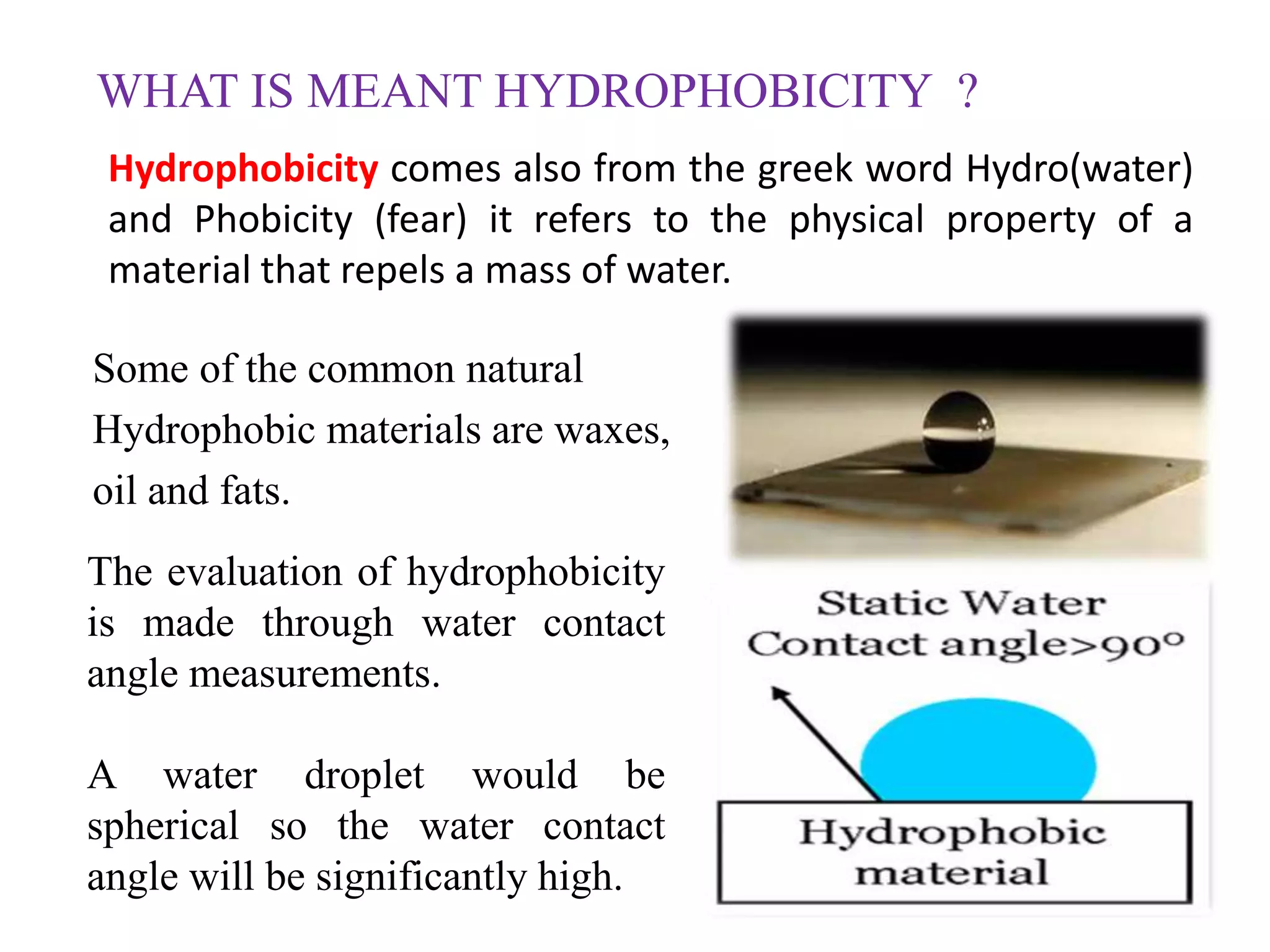
The evaluation of hydrophobicity
is made through water contact
angle measurements.
A water droplet would be
spherical so the water contact
angle will be significantly high.
Lotus Effect –
Superhydrophobicity
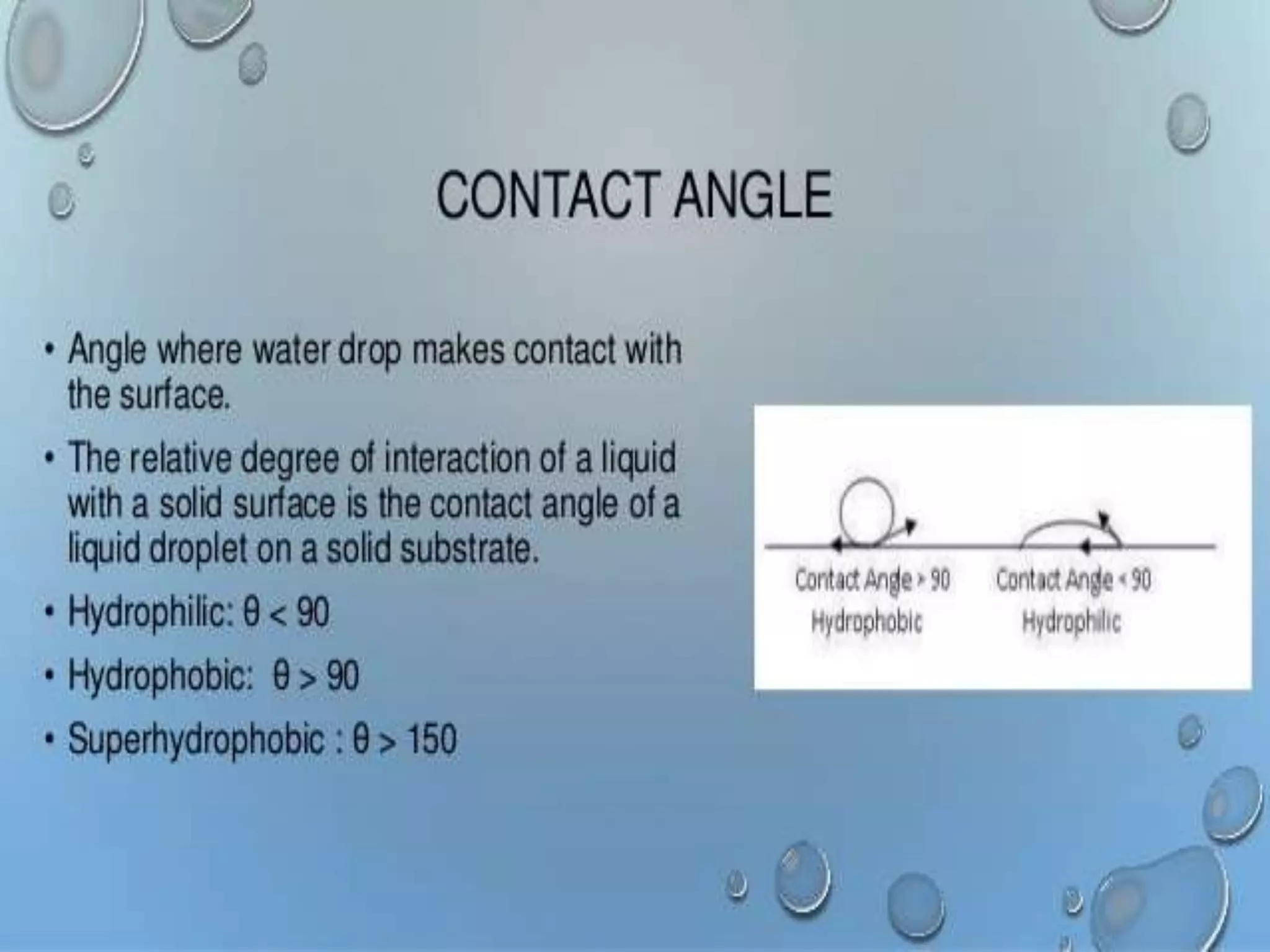
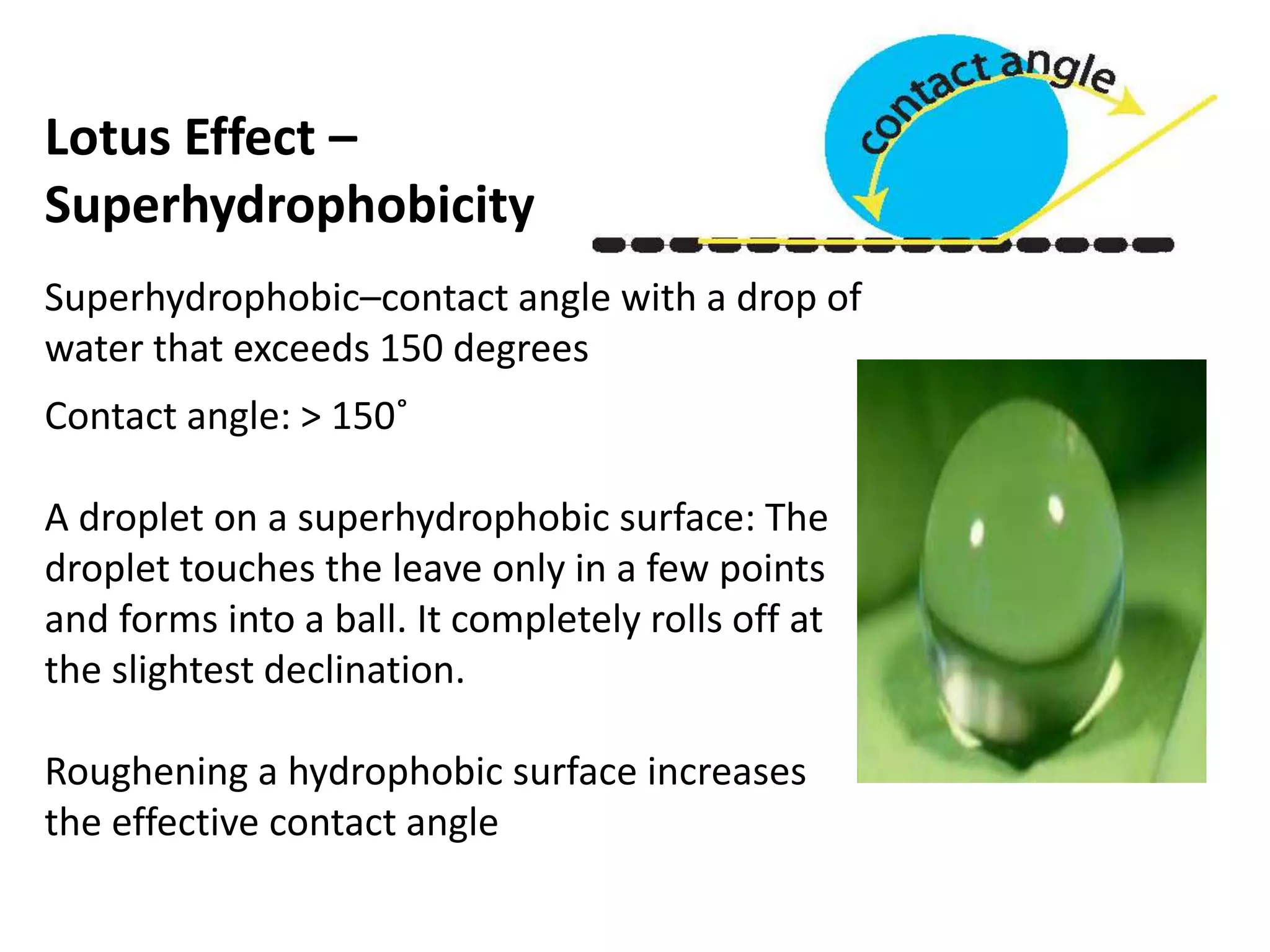
Contact angle: > 150˚
A droplet on a superhydrophobic surface: The
droplet touches the leave only in a few points
and forms into a ball. It completely rolls off at
the slightest declination.
Roughening a hydrophobic surface increases
the effective contact angle
Superhydrophobic–contact angle with a drop of
water that exceeds 150 degrees
SUPER HYDROPHOBIC COATING
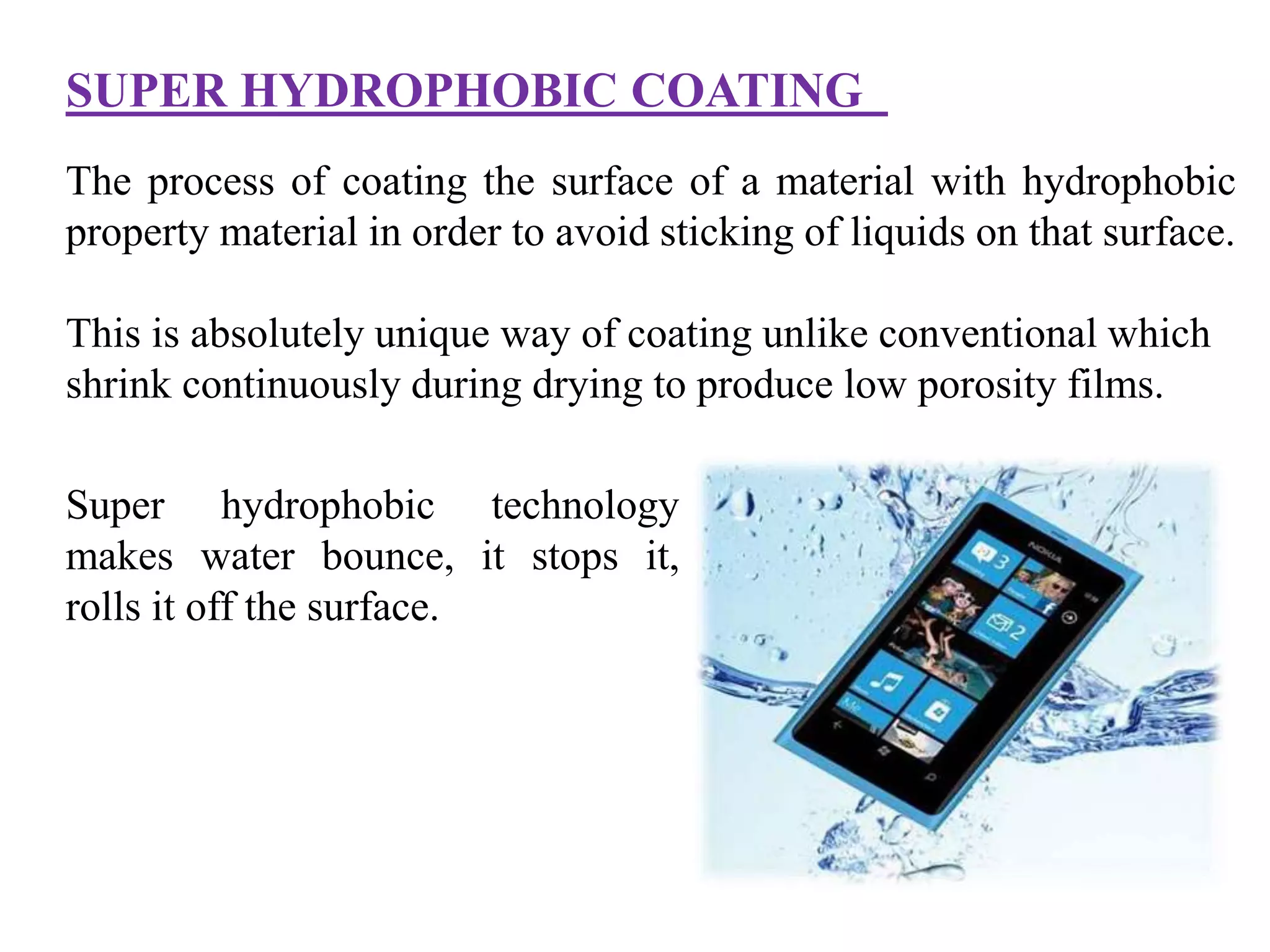
Super hydrophobic technology
makes water bounce, it stops it,
rolls it off the surface.
The process of coating the surface of a material with hydrophobic
property material in order to avoid sticking of liquids on that surface.
This is absolutely unique way of coating unlike conventional which
shrink continuously during drying to produce low porosity films.
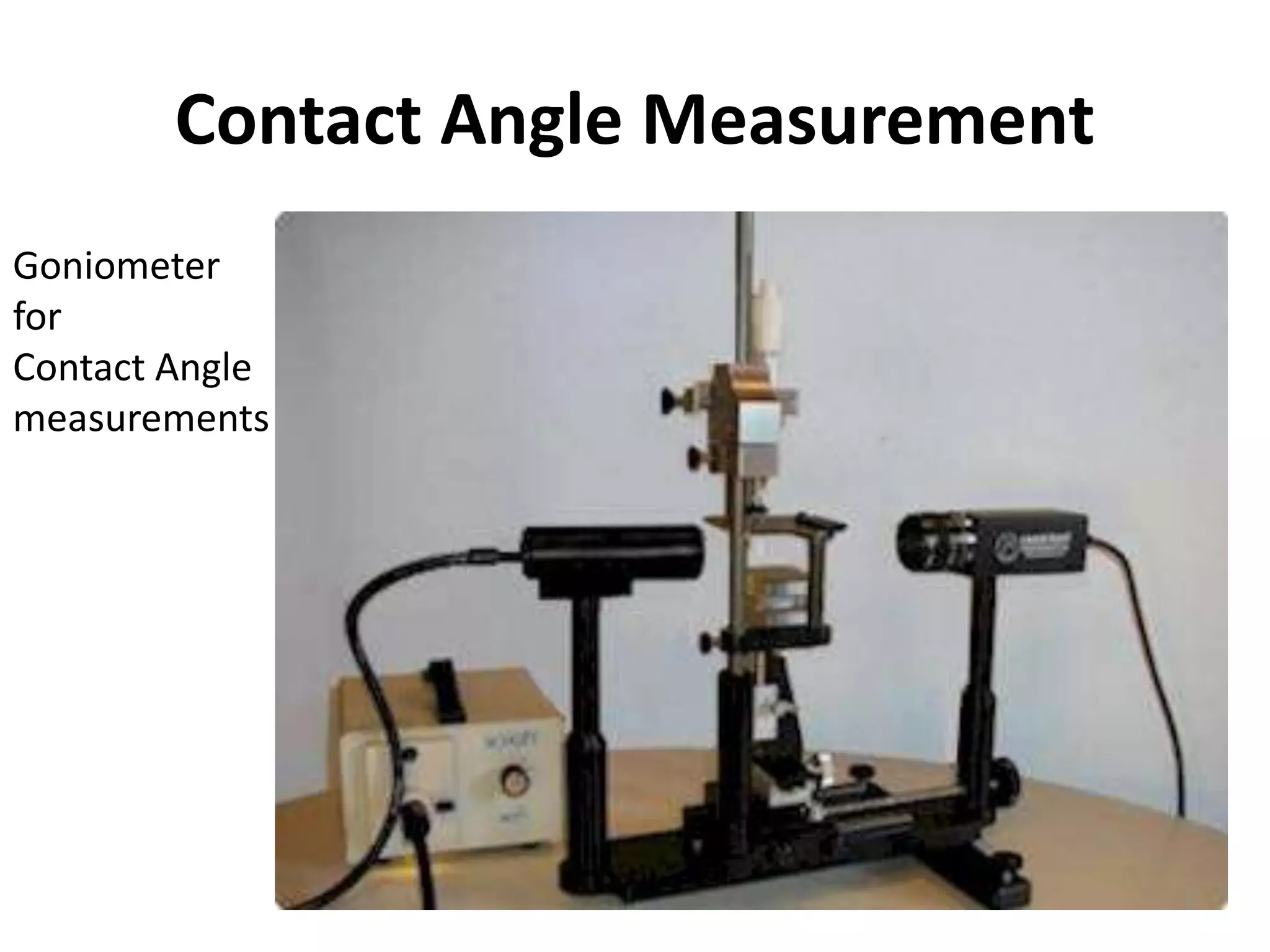
Contact Angle Measurement
Goniometer
for
Contact Angle
measurements
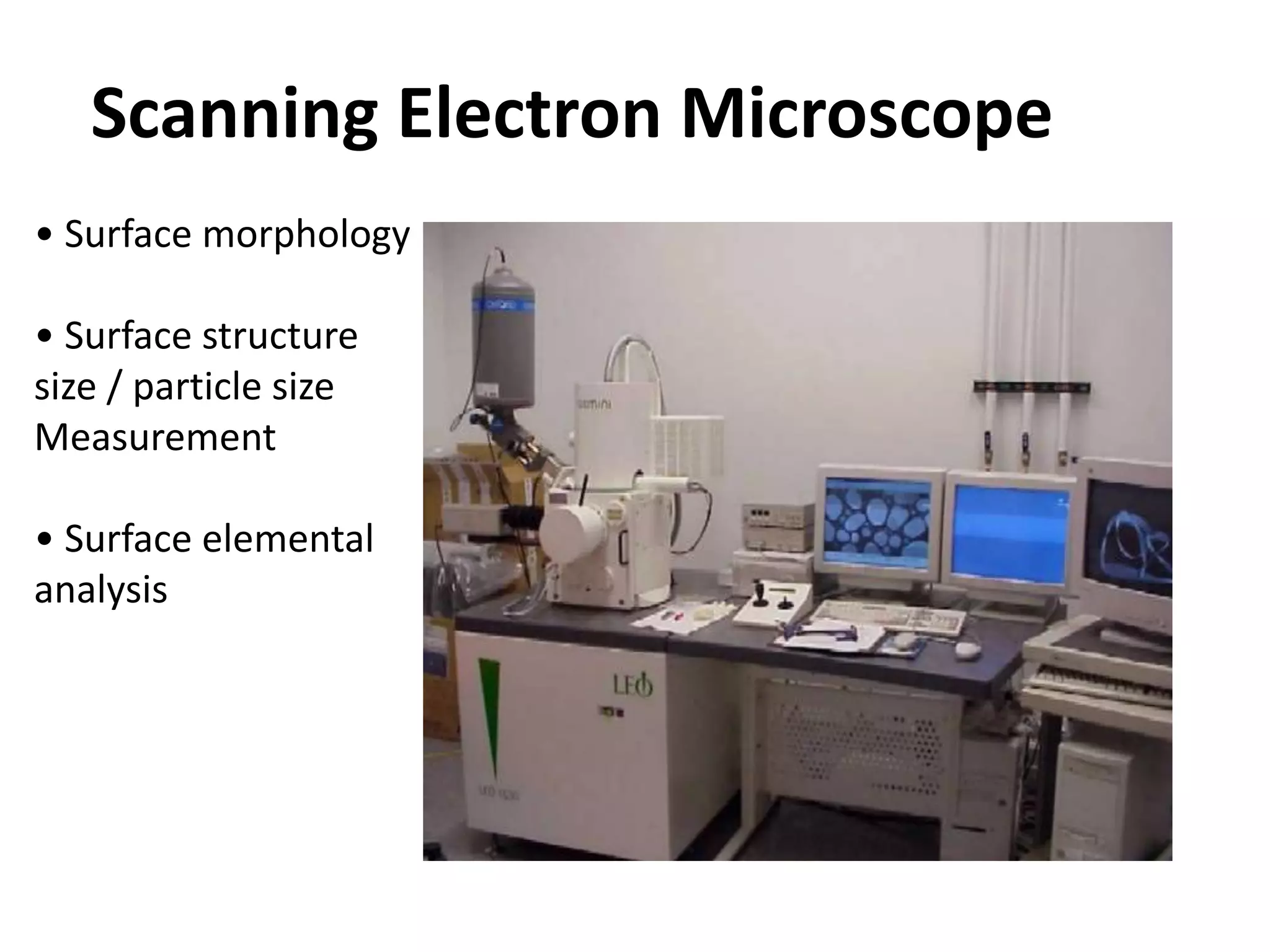
Scanning Electron Microscope
• Surface morphology
• Surface structure
size / particle size
Measurement
• Surface elemental
analysis
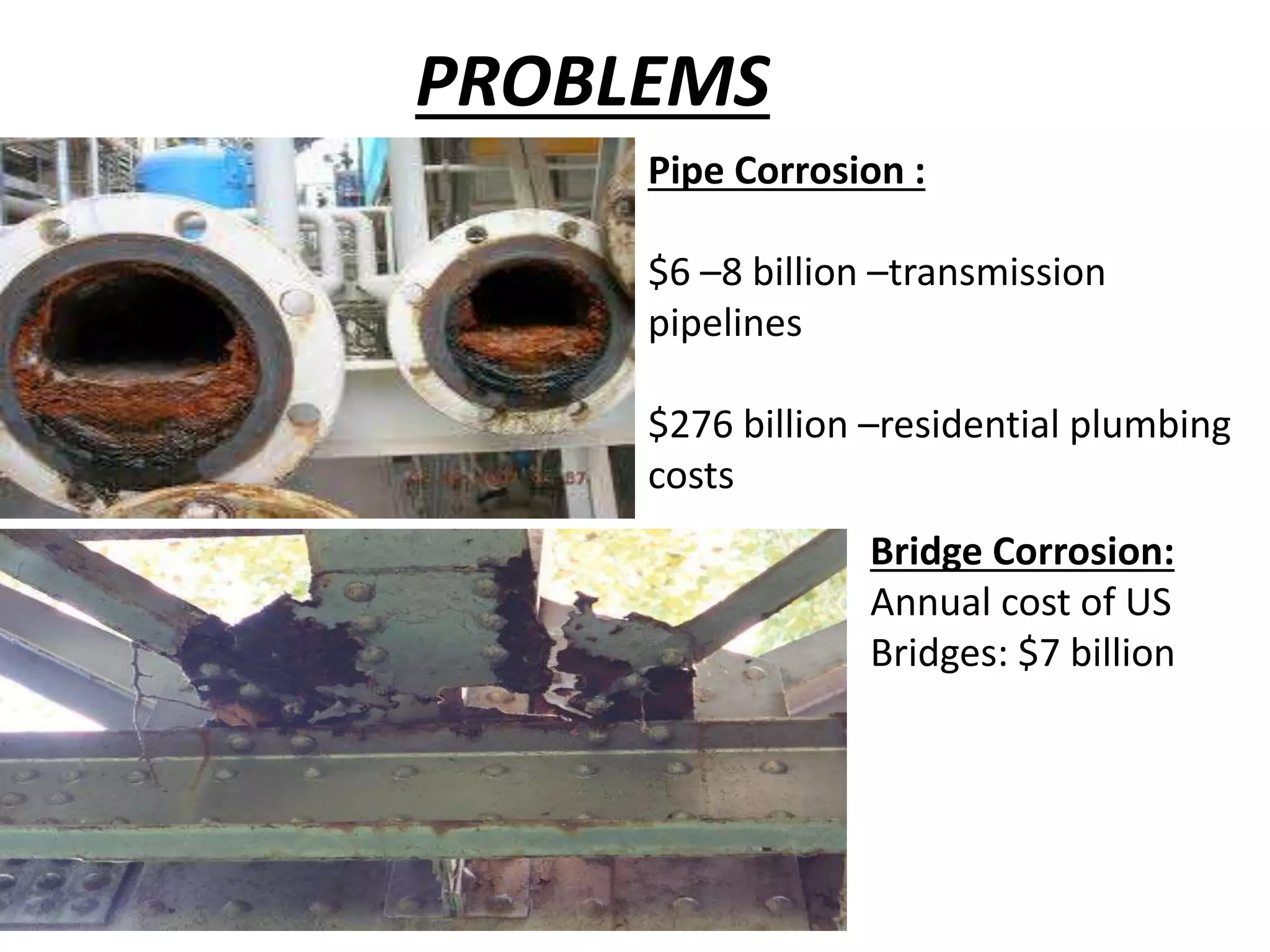
PROBLEMS
Pipe Corrosion :
$6 –8 billion –transmission
pipelines
$276 billion –residential plumbing
costs
Bridge Corrosion:
Annual cost of US
Bridges: $7 billion
Global marine coatings -$4.7
billion
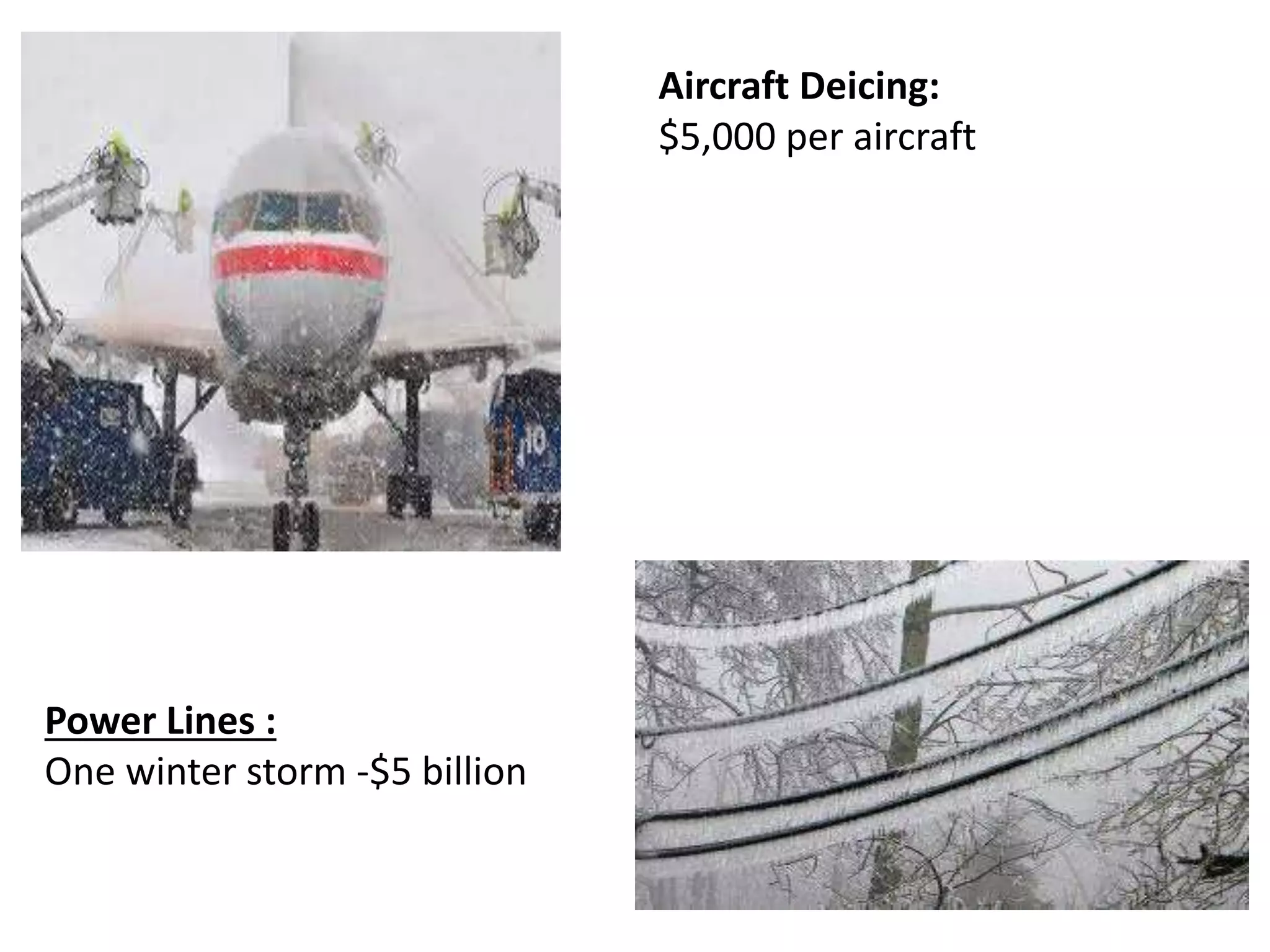
Aircraft Deicing:
$5,000 per aircraft
Power Lines :
One winter storm -$5 billion
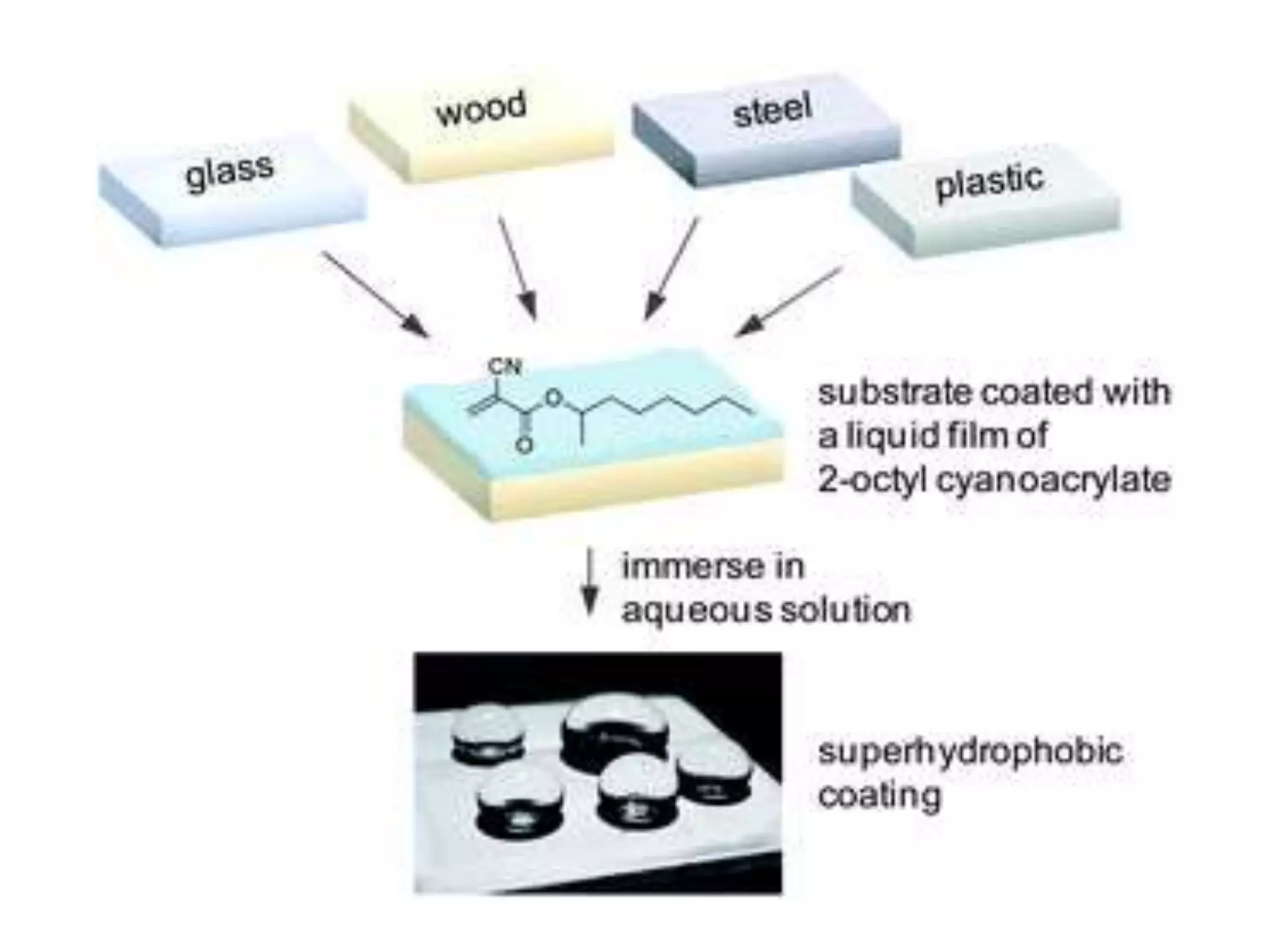
Superhydrophobic coating can be made from
many different materials.
 Manganese oxide polystyrene (MnO2/PS) nano-composite
 Zinc oxide polystyrene (ZnO/PS) nano-composite
 Precipitated calcium carbonate
 Carbon nano-tube structures
 Silica nano-coating
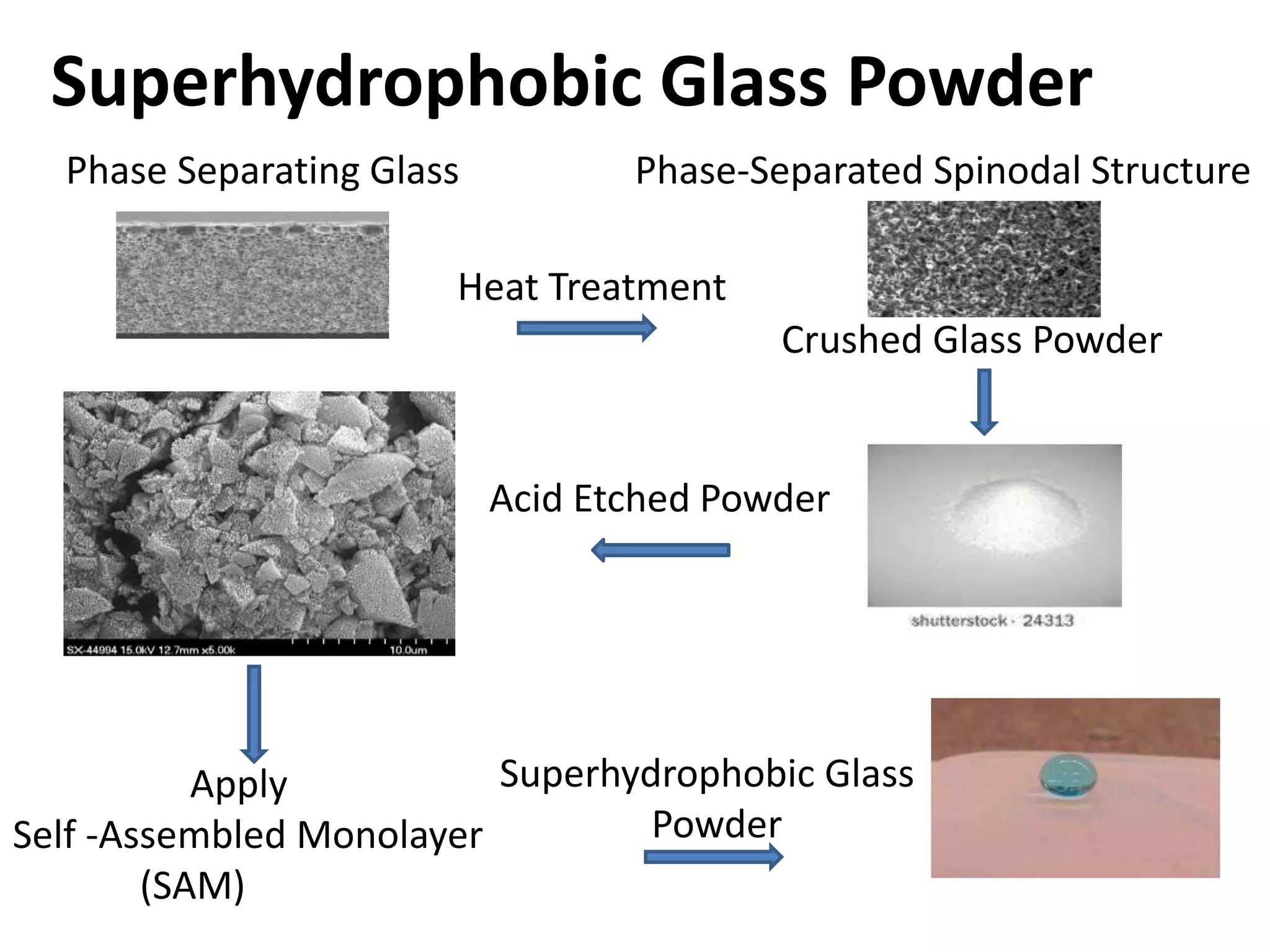
Superhydrophobic Glass Powder
Superhydrophobic Glass
Powder
Phase Separating Glass Phase-Separated Spinodal Structure
Heat Treatment
Crushed Glass Powder
Acid Etched Powder
Apply
Self -Assembled Monolayer
(SAM)
Product(s)
Coatings Applications
 Anti-fouling
 Anti-condensation
 Anti-friction
 Anti-ice
 Anti-clotting
 Anti-corrosion
Tested Applications
Coated Cables Uncoated Cables
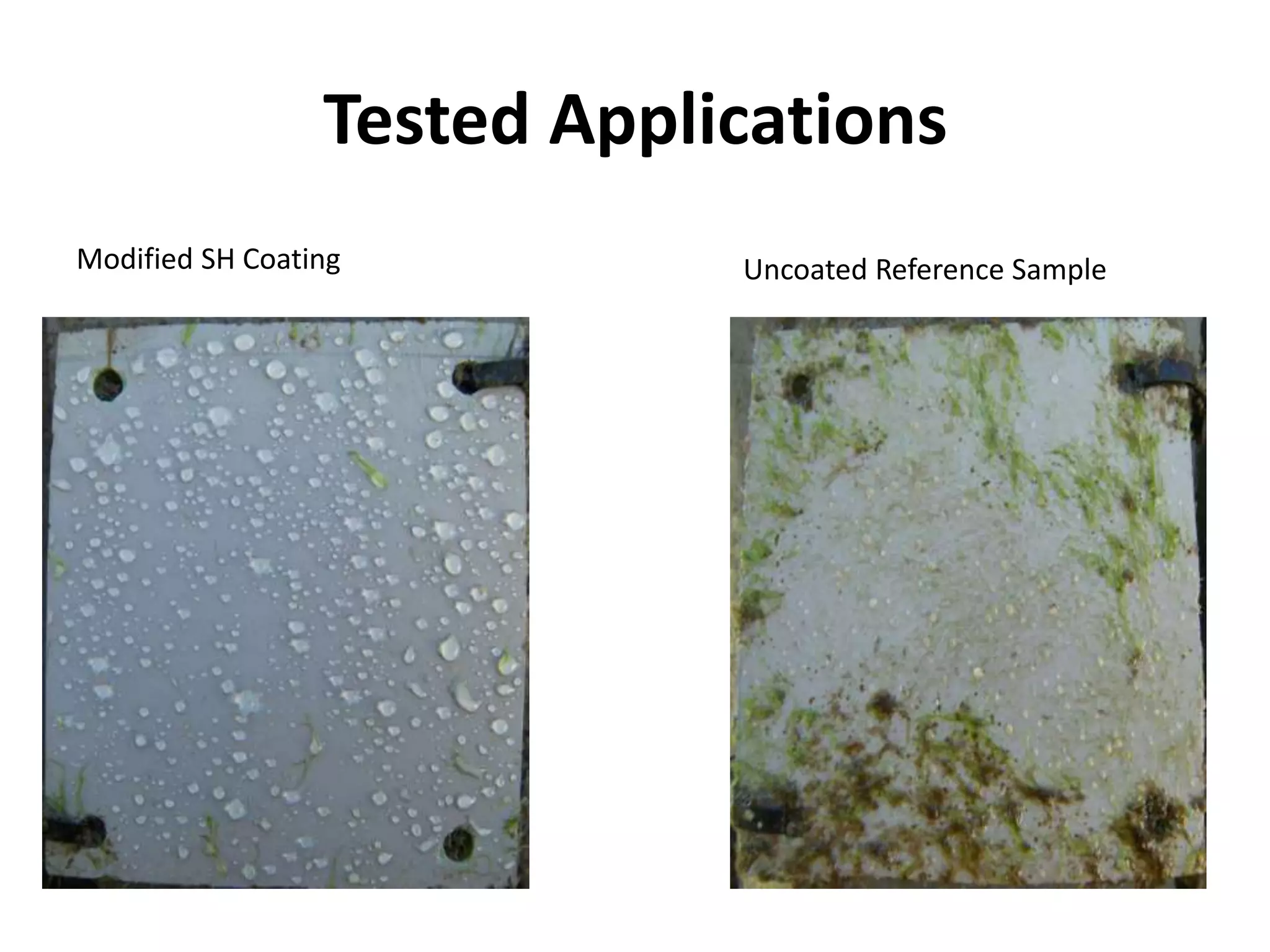
Tested Applications
Uncoated Reference SampleModified SH Coating
APPLICATIONS
• A primary purpose of hydrophobic coatings such as
polytetrafluoroethylene(PTFE) is to act as a barrier against
water commonly seen in automobiles.
• Used in fabrication on metallic nano rod to prevent icing.
• Its is widely used in aerospace industry for providing anti-icing
coating on the surface of the aeroplane .
• Hydrophobic self cleaning glasses are installed in traffic sensor
control unit.
• We induce hydrophobic recovery after plasma treatment, a
physical contact treatment (PCT) .
self-cleaning, low adhe- sion and drag reduction in nature.
The development of superhydrophobic and self-cleaning
surfaces is important for basic research as well as various
applications, such as anti-biofouling paints for boats, antisticking
of snow for antennas and windows, self-cleaning windshields for
automobiles, microfluidics, lab-on-a chip devices, metal refining,
stain resistant textiles, anti-soiling architectural coatings, dust-
free coatings on building glasses and so on.
It will be great challenge for the material scientists to fabricate
permanent or semi-permanent superhydropho- bic surfaces for
its use in commercial products.
Conclusions
Superhydrophobic materials

Superhydrophobic materials

  • 1.
  • 2.
    Some of thecommon natural Hydrophobic materials are waxes, oil and fats. Hydrophobicity comes also from the greek word Hydro(water) and Phobicity (fear) it refers to the physical property of a material that repels a mass of water. WHAT IS MEANT HYDROPHOBICITY ? The evaluation of hydrophobicity is made through water contact angle measurements. A water droplet would be spherical so the water contact angle will be significantly high.
  • 4.
    Lotus Effect – Superhydrophobicity Contactangle: > 150˚ A droplet on a superhydrophobic surface: The droplet touches the leave only in a few points and forms into a ball. It completely rolls off at the slightest declination. Roughening a hydrophobic surface increases the effective contact angle Superhydrophobic–contact angle with a drop of water that exceeds 150 degrees
  • 5.
    SUPER HYDROPHOBIC COATING Superhydrophobic technology makes water bounce, it stops it, rolls it off the surface. The process of coating the surface of a material with hydrophobic property material in order to avoid sticking of liquids on that surface. This is absolutely unique way of coating unlike conventional which shrink continuously during drying to produce low porosity films.
  • 6.
  • 7.
    Scanning Electron Microscope •Surface morphology • Surface structure size / particle size Measurement • Surface elemental analysis
  • 8.
    PROBLEMS Pipe Corrosion : $6–8 billion –transmission pipelines $276 billion –residential plumbing costs Bridge Corrosion: Annual cost of US Bridges: $7 billion
  • 9.
  • 10.
    Aircraft Deicing: $5,000 peraircraft Power Lines : One winter storm -$5 billion
  • 11.
    Superhydrophobic coating canbe made from many different materials.  Manganese oxide polystyrene (MnO2/PS) nano-composite  Zinc oxide polystyrene (ZnO/PS) nano-composite  Precipitated calcium carbonate  Carbon nano-tube structures  Silica nano-coating
  • 13.
    Superhydrophobic Glass Powder SuperhydrophobicGlass Powder Phase Separating Glass Phase-Separated Spinodal Structure Heat Treatment Crushed Glass Powder Acid Etched Powder Apply Self -Assembled Monolayer (SAM)
  • 14.
    Product(s) Coatings Applications  Anti-fouling Anti-condensation  Anti-friction  Anti-ice  Anti-clotting  Anti-corrosion
  • 15.
  • 16.
    Tested Applications Uncoated ReferenceSampleModified SH Coating
  • 17.
    APPLICATIONS • A primarypurpose of hydrophobic coatings such as polytetrafluoroethylene(PTFE) is to act as a barrier against water commonly seen in automobiles. • Used in fabrication on metallic nano rod to prevent icing. • Its is widely used in aerospace industry for providing anti-icing coating on the surface of the aeroplane . • Hydrophobic self cleaning glasses are installed in traffic sensor control unit. • We induce hydrophobic recovery after plasma treatment, a physical contact treatment (PCT) .
  • 18.
    self-cleaning, low adhe-sion and drag reduction in nature. The development of superhydrophobic and self-cleaning surfaces is important for basic research as well as various applications, such as anti-biofouling paints for boats, antisticking of snow for antennas and windows, self-cleaning windshields for automobiles, microfluidics, lab-on-a chip devices, metal refining, stain resistant textiles, anti-soiling architectural coatings, dust- free coatings on building glasses and so on. It will be great challenge for the material scientists to fabricate permanent or semi-permanent superhydropho- bic surfaces for its use in commercial products. Conclusions