S U B M I T T E D B Y :
S U M E E T K U M A R
V I S H W A K A R M A
M C A ( L E ) ,
4 T H S E M
R E G D . N O . - 1 4 2 5 2 6 6 0 4 6
CONTENTS
Introduction
Principle of Operation
 Working
Advantages and Disadvantages
Present Day Applications
Conclusion
INTRODUCTION
 An Automotive Night Vision System is a system to
increase a vehicle driver's perception and seeing
distance in darkness or poor weather beyond the
reach of the vehicle's headlights.
 The first car night vision system was implemented on
the Cadillac 2000 DeVille, which used infrared
technology to detect pedestrians.
PRINCIPLE OF OPERATION
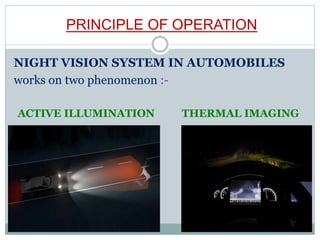
NIGHT VISION SYSTEM IN AUTOMOBILES
works on two phenomenon :-
ACTIVE ILLUMINATION THERMAL IMAGING
ACTIVE ILLUMINATION
This system can detect pedestrians up to three times
farther than the typical headlight range even in
penetrating dense smoke.
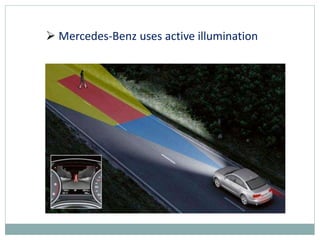
It actively detects people near the roadway, highlighting
potential hazards and allowing drivers to have more time
to react to them.
Its high beam illumination warns the pedestrians as well.
THERMAL IMAGING
Thermal imaging is a heat-sensing technology that can
see in complete darkness using temperature difference.
Electrical impulses are sent in the form of temperature
values to an image signal processor that turns them
into video data for presentation on a display.
WORKING
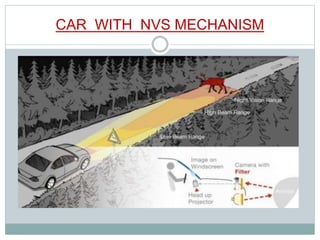
Systems use an LCD that's mounted on the dash, in
the instrument cluster, or integrated into the head
unit.
The front thermo graphic sensors detects the heat
and processes the thermo grams to display images on
LCD.
The Infrared sensor attached in vehicle's grille
illuminates very high beam.
CAR WITH NVS MECHANISM
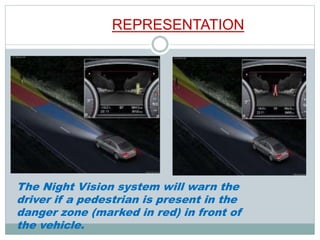
REPRESENTATION
The Night Vision system will warn the
driver if a pedestrian is present in the
danger zone (marked in red) in front of
the vehicle.
ADVANTAGES OF NVS
Reduce accidents.
Greater range of about 300 meters or 1,000 feet.
Can be switched on or off and doesn’t affect
driving style
Works in almost every weather conditions.
DISADVANTAGES OF NVS
 Higher cost of process
 Large quantity of costly and complex
equipments.
 Works poorly in warmer weather conditions
 Larger sensors are required
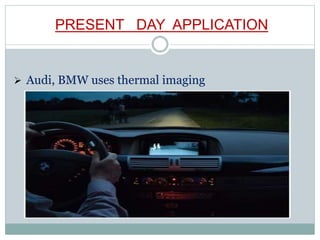
PRESENT DAY APPLICATION
 Audi, BMW uses thermal imaging
 Mercedes-Benz uses active illumination
CONCLUSION
“ The innovation and implementation of
night vision system has a great impact
on automotive session such as saving
many lives from death reducing
accidents at night…”
Night Vision System in Automobiles BY Sum!!T

Night Vision System in Automobiles BY Sum!!T

  • 1.
    S U BM I T T E D B Y : S U M E E T K U M A R V I S H W A K A R M A M C A ( L E ) , 4 T H S E M R E G D . N O . - 1 4 2 5 2 6 6 0 4 6
  • 2.
    CONTENTS Introduction Principle of Operation Working Advantages and Disadvantages Present Day Applications Conclusion
  • 3.
    INTRODUCTION  An AutomotiveNight Vision System is a system to increase a vehicle driver's perception and seeing distance in darkness or poor weather beyond the reach of the vehicle's headlights.  The first car night vision system was implemented on the Cadillac 2000 DeVille, which used infrared technology to detect pedestrians.
  • 4.
    PRINCIPLE OF OPERATION NIGHTVISION SYSTEM IN AUTOMOBILES works on two phenomenon :- ACTIVE ILLUMINATION THERMAL IMAGING
  • 5.
    ACTIVE ILLUMINATION This systemcan detect pedestrians up to three times farther than the typical headlight range even in penetrating dense smoke. It actively detects people near the roadway, highlighting potential hazards and allowing drivers to have more time to react to them. Its high beam illumination warns the pedestrians as well.
  • 6.
    THERMAL IMAGING Thermal imagingis a heat-sensing technology that can see in complete darkness using temperature difference. Electrical impulses are sent in the form of temperature values to an image signal processor that turns them into video data for presentation on a display.
  • 7.
    WORKING Systems use anLCD that's mounted on the dash, in the instrument cluster, or integrated into the head unit. The front thermo graphic sensors detects the heat and processes the thermo grams to display images on LCD. The Infrared sensor attached in vehicle's grille illuminates very high beam.
  • 8.
    CAR WITH NVSMECHANISM
  • 9.
    REPRESENTATION The Night Visionsystem will warn the driver if a pedestrian is present in the danger zone (marked in red) in front of the vehicle.
  • 10.
    ADVANTAGES OF NVS Reduceaccidents. Greater range of about 300 meters or 1,000 feet. Can be switched on or off and doesn’t affect driving style Works in almost every weather conditions.
  • 11.
    DISADVANTAGES OF NVS Higher cost of process  Large quantity of costly and complex equipments.  Works poorly in warmer weather conditions  Larger sensors are required
  • 12.
    PRESENT DAY APPLICATION Audi, BMW uses thermal imaging
  • 13.
     Mercedes-Benz usesactive illumination
  • 14.
    CONCLUSION “ The innovationand implementation of night vision system has a great impact on automotive session such as saving many lives from death reducing accidents at night…”