OVERVIEW
• Subway is an American restaurant franchise.
• It sells submarine sandwiches (subs), pizza (some locations)
and salads.
• It was founded on August 28, 1965 Bridgeport, Connecticut, U.S. by
Fred DeLuca and Peter Buck.
• Its headquarters in Milford, Connecticut, U.S
• It has 41,512 restaurants in more than 100 countries.
• It also is the largest single-brand restaurant chain, and the largest
restaurant operator, in the world.
BUSINESS MODEL
• Subway relies exclusively on franchising.
• Subway has more flexibility in terms of location
• As the food comes precooked so no real cooking is involved.
• It can be fit in smaller spaces as well.
• Manual operation is the unique advantage where customers can
choose bread, sauces, vegetable, etc all by themselves.
• Low initial franchise fee compared to other fast food chain.
• The restaurant is marketed as a health-conscious restaurant chain.
VALUE PROPOSITION
• Healthy Fast Food – Submarine Sandwiches, Wraps, Salad,
Paninis, Baked Goods, Cookies, Doughnuts And Muffins And
Pizzas.
• It introduced gluten free bread and brownies.
• It also cut the salt content of its sandwiches by 15%.
• It saves time and cost.
• Subway released a commitment to transition to a 100% cage-
free egg supply chain by 2025.
TARGET CUSTOMERS
• It serves the Age group 18 -19 years
• The low fat menu containing a range of subs with 6 Grams of
Fat or less for fitness freaks.
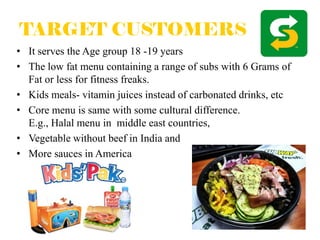
• Kids meals- vitamin juices instead of carbonated drinks, etc
• Core menu is same with some cultural difference.
E.g., Halal menu in middle east countries,
• Vegetable without beef in India and
• More sauces in America
CUSTOMER
RELATIONSHIPS
• Limited time only-promotions
• Subway reward cards allow customers to earn points for free
food and sandwiches
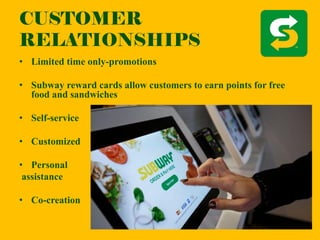
• Self-service
• Customized
• Personal
assistance
• Co-creation
REVENUE STREAMS
• Revenue from Franchisees
• Sale of food
• Corporate image
COST STRUCTURE
• It is the second largest fast food advertiser in U.S.
• Distribution cost
• Lease contracts
• Taxes
KEY ACTIVITIES
• Advertising
• Logistic network
• Training franchising management
• Contracts and deals
• Cooking
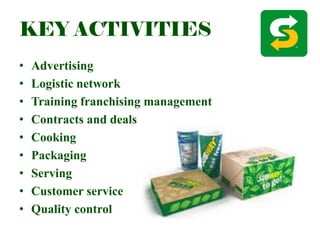
• Packaging
• Serving
• Customer service
• Quality control
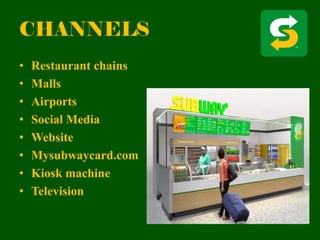
CHANNELS
• Restaurant chains
• Malls
• Airports
• Social Media
• Website
• Mysubwaycard.com
• Kiosk machine
• Television
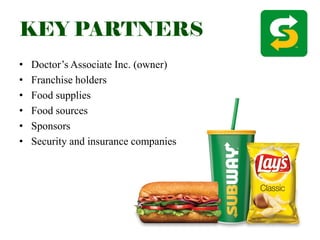
KEY PARTNERS
• Doctor’s Associate Inc. (owner)
• Franchise holders
• Food supplies
• Food sources
• Sponsors
• Security and insurance companies
KEY RESOURCES
• It is the fastest growing franchisee in the world with 44,000
restaurants in 110 countries and territories.
• US alone has 26,646 outlets
• Logistic network
• Secret recipes
• Its core product is submarine sandwich
• Best selling sandwich is B.M.T
• “Five dollar footlongs” quickly became the company’s
most successful promotion ever.
• Staff
• Regional variations
Subway-Business Model

Subway-Business Model

  • 2.
    OVERVIEW • Subway isan American restaurant franchise. • It sells submarine sandwiches (subs), pizza (some locations) and salads. • It was founded on August 28, 1965 Bridgeport, Connecticut, U.S. by Fred DeLuca and Peter Buck. • Its headquarters in Milford, Connecticut, U.S • It has 41,512 restaurants in more than 100 countries. • It also is the largest single-brand restaurant chain, and the largest restaurant operator, in the world.
  • 3.
    BUSINESS MODEL • Subwayrelies exclusively on franchising. • Subway has more flexibility in terms of location • As the food comes precooked so no real cooking is involved. • It can be fit in smaller spaces as well. • Manual operation is the unique advantage where customers can choose bread, sauces, vegetable, etc all by themselves. • Low initial franchise fee compared to other fast food chain. • The restaurant is marketed as a health-conscious restaurant chain.
  • 4.
    VALUE PROPOSITION • HealthyFast Food – Submarine Sandwiches, Wraps, Salad, Paninis, Baked Goods, Cookies, Doughnuts And Muffins And Pizzas. • It introduced gluten free bread and brownies. • It also cut the salt content of its sandwiches by 15%. • It saves time and cost. • Subway released a commitment to transition to a 100% cage- free egg supply chain by 2025.
  • 5.
    TARGET CUSTOMERS • Itserves the Age group 18 -19 years • The low fat menu containing a range of subs with 6 Grams of Fat or less for fitness freaks. • Kids meals- vitamin juices instead of carbonated drinks, etc • Core menu is same with some cultural difference. E.g., Halal menu in middle east countries, • Vegetable without beef in India and • More sauces in America
  • 6.
    CUSTOMER RELATIONSHIPS • Limited timeonly-promotions • Subway reward cards allow customers to earn points for free food and sandwiches • Self-service • Customized • Personal assistance • Co-creation
  • 7.
    REVENUE STREAMS • Revenuefrom Franchisees • Sale of food • Corporate image COST STRUCTURE • It is the second largest fast food advertiser in U.S. • Distribution cost • Lease contracts • Taxes
  • 8.
    KEY ACTIVITIES • Advertising •Logistic network • Training franchising management • Contracts and deals • Cooking • Packaging • Serving • Customer service • Quality control
  • 9.
    CHANNELS • Restaurant chains •Malls • Airports • Social Media • Website • Mysubwaycard.com • Kiosk machine • Television
  • 10.
    KEY PARTNERS • Doctor’sAssociate Inc. (owner) • Franchise holders • Food supplies • Food sources • Sponsors • Security and insurance companies
  • 11.
    KEY RESOURCES • Itis the fastest growing franchisee in the world with 44,000 restaurants in 110 countries and territories. • US alone has 26,646 outlets • Logistic network • Secret recipes • Its core product is submarine sandwich • Best selling sandwich is B.M.T • “Five dollar footlongs” quickly became the company’s most successful promotion ever. • Staff • Regional variations