International Journal of Science and Research (IJSR)
ISSN (Online): 2319-7064
Index Copernicus Value (2013): 6.14 | Impact Factor (2013): 4.438
Volume 4 Issue 1, January 2015
www.ijsr.net
Licensed Under Creative Commons Attribution CC BY
Histological Study of Effect of Pegnam Harmala
Eqeuos Extract on Spleen; Liver Enzymes and
Parameters of Blood in Albino Rats
Lina Adeeb
Lecturer, Faculity of Agriculturer/Kufa University, Iraq
Abstract: Four groups of male albino rats (Mus musculus) were subcutaneously administrated with normal saline(0.9 % NaCl2) or
peganum harmala alcoholic seed extract (1%,2%,3%) mg/ kg) at daily interval for one month period. Thereafter, animals were scarified
and specimens from the spleen were examined under light microscope for structural changes. Repeated treatment with peganum
harmala seeds equeos extract caused dose- related structural changes in the spleen treated groups. severe changes were observed
following 3% mg/ kg dose that were manifested by hemorrhage in interstitial connective tissue and blood vessels of the white and red
bulbe of spleen as well as degeneration and necrosis in the epithelial lining of spleen.Peganum harmala seeds Aqueous extract at 1%
and 2% mg/ kg caused slight to moderate histological changes in the white and red bulb of spleen manifested as degeneration and
hypertrophy of tubular epithelial lining with narrowing of germinal artery . In the spleen, repeated treatment of peganum harmala seeds
aqueous extract at 3% mg/ kg dose caused severe destruction of cells, by Histological study of the effect spleen,some liver enzymes and
blood parameters in Albino Rats knotic of splenic cell and vesiculation in the cytoplasm due to degeneration. In addition, a significant
effect(0.05) of p.harmala on total body weight compared with control ,the hight body weight was at second concentration 2%( 295)gm
while,the lowest body weight was( 222.5)gm. liver weight also,affect significantly (0.05) with p.harmala ,it was 9.75gm at dose 2%
compared with control( 3.30)gm .both kidney and spleen have no affect significantly by p.harmala treatment . The oral administration of
extractcauses maximum fall of blood glucose level to(138 and 35.5 ) at(p<0.01) respectively with the normal ratsCholesterol was
decreasedsignificantly ( 0.01 ) in treatedgroup compared with control . Lowestvalue was in second dose 2% (29.0 ) while the highest
value was in control group ( 148.5 ) .significant changes (0.05 ) in GPT and GOT enzymes were observed between treated and control
group. The highest values were in control groups while the lowest values were in treated group No significant changes were observed in
the values of WBC and RBC in treated rats compared to controls.
Keywords: histology ,pegnum harmala ,albino rats
1. Introduction
Medicinal plants have been used for centuries as remedies
for human and animal ailments (9) . They have many
pharmacologically active chemical compounds which may
act as anthelmintic (2), antibacterial (3) and antifungal (8)
agents. Therefore, medicinal herbs have been reported to
serve as safer alternative as growth promoter due to their
suitability and preference, lower cost of production,
reduced risk of toxicity, minimum health hazards and
environment friendliness. Peganum harmala (locally known
as harmal) belongs to the family of Zygophylaceae and
have been shown a diverse range of medicinal properties.
Numerous beta carboline alkaloids like harmaline, harmine,
harmol were present in P. harmala
extract exhibited great variety of pharmacological and
biological extract (5,4) reported that P. Harmalaactivities
such as antibacterial and antifungal agents as well as
monoamineoxidase (MAO) inhibition and hypothermia.
Similarly analgesic, anti-inflammatory( 6), disinfectant (7),
growth promoting (10), cholesterol lowering and
hepatoprotective effects (11) properties have also been
reported. There is dearth extract of P. harmala on serum
lipid profile and its economic benefits in broiler chicks
Present study was designed to examine the effect of
harmala extract in some parameters of blood and
histobathological changes in liver of albino rats .
2. Materials and Methods
2.1 Animals
The present study was carried out in the laboratory of
physiology in facility of agriculture, Albino Wister rats of
either sex, weighing 200-350 g were used throughout the
study Rat were housed in plastic cages (20 × 21 × 45 cm)with
wooden waste bedding. The cages were subjected to cleaning
and disinfectant three times weekly. Animals were kept at
constantconditions in regards to ventilation, light/ dark cycle
(14/ 10 hour)and temperature (22- 28) C°. The animals had
free access to water andstandard laboratory food (Najaf
poultry standard laboratory food (Najaf poultry given
andlibitum.The animals were divided into four groups
designated as A, B, C,D. Each group consists of 42 rats
divided to 6 subgroups of 7 rats ,group A (control
group)administrated normal saline ,group B administrated
orally with concentration 1% of harmala, group c
administrated orally with 2% from extract of harmala ,group
D administrated orally with 3% from extract of harmala .The
body weight was recorded throughout theexperiment prior to
dosing. Doses were adjusted to bodyweight prior to each
subcutaneously admin istrated .
2.2 Animals scarified and specimen’s evaluation
After the administrated period was complete, the animals
were anaesthetized by diethylether [(C2H4)2O]. The
abdominal cavities of animals were opened; spleen was
removed and put into formalin (10 %) for tissue fixation for
Paper ID: SUB14248 2296
International Journal of Science and Research (IJSR)
ISSN (Online): 2319-7064
Index Copernicus Value (2013): 6.14 | Impact Factor (2013): 4.438
Volume 4 Issue 1, January 2015
www.ijsr.net
Licensed Under Creative Commons Attribution CC BY
48 hours. Thereafter routine histological preparations were
carried out according to reported procedures (22) Briefly,
organs were washing by tap water, dehydration by series of
ascending concentrations of ethyl alcohol (70 %, 80 %, 90
%, and100 %) and clearing by xylole and infiltration and
embedding by paraffin wax and made up blocks, then
mounting by Canada- blasm and cover slides. The
histological slides were examined by light microscope
(type Olympus, Japan).
2- Extract preparation
The dry seeds of Iraqi Peganum harmala (100 g) were
grinded and then were extracted with purified water for 24
hours in continuous (Soxhelt) apparatus. The extract was
filtered, and water was removed by evaporation on a rotator
evaporator under vacuum at 60ºC to a small volume
provided.25 Briefly, the active ingredients were extracted
from 20 g dry seeds using soxholate apparatus. There after
the extract materials were concentrated by rotatory
evaporator at 40- 45 C°. There after the extract materials
was weighted in order to prepare the stock solution, then
from this solution three doses ( 1%,2% ,3% ) mg/ kg were
made up for the present study.
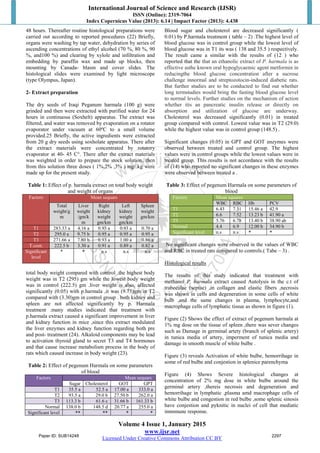
Table 1: Effect of p. harmala extract on total body weight
and weight of organs
Factors Mean sequars
Total
weight/g
m
Liver
weight
/gm/k
m
Right
kidney
weight
gm/km
Left
kidney
weight
gm/km
Spleen
weight
gm/km
T1 283.33 a 4.16 a 0.93 a 0.93 a 0.70 a
T2 295.0 a 9.75 b 0.95 a 0.95 a 0.95 a
T3 271.66 a 7.80 b 0.93 a 1.00 a 0.86 a
T.cont. 222.5 b 3.30 a 0.91 a 0.89 a 0.82 a
Significant
level
* * n.s n.s n.s
total body weight compared with control .the highest body
weight was in T2 (295) gm while the lowest body weight
was in control (222.5) gm .liver weight is also, affected
significantly (0.05) with p.harmala ,it was (9.75)gm in T2
compared with (3.30)gm in control group . both kidney and
spleen are not affected significantly by p. Harmala
treatment .many studies indicated that treatment with
p.harmala extract caused a significant improvement in liver
and kidney function in mice ,since this extract modulated
the liver enzymes and kidney function regarding both pre
and post- treatment (24). Alkaloid components may be lead
to activation thyroid gland to secret T3 and T4 hormones
and that cause increase metabolism process in the body of
rats which caused increase in body weight (23).
Table 2: Effect of pegenum Harmala on some parameters
of blood
Factors Mean sequars
Sugar Cholesterol GOT GPT
T1 35.5 a 52.5 a 17.00 a 333.0 a
T2 93.5 a 29.0 b 27.50 b 262.0 a
T3 113.3 b 61.6 c 31.66 b 161.33 b
Normal 138.0 b 148.5 d 20.77 a 255.0 a
Significant level ** ** * *
Blood sugar and cholesterol are decreased significantly (
0.01) by P.harmala treatment ( table – 2) .The highest level of
blood glucose was in control group while the lowest level of
blood glucose was in T1 its was ( 138 and 35.5 ) respectively.
The result came a similar with the results of (12 ) who
reported that the that an ethanolic extract of P. harmala is as
effective asthe known oral hypoglycaemic agent metformin in
reducingthe blood glucose concentration after a sucrose
challenge innormal and streptozotocin-induced diabetic rats.
But further studies are to be conducted to find out whether
long termstudies would bring the fasting blood glucose level
to normal levels. Further studies on the mechanism of action
whether itis an pancreatic insulin release or directly on
absorption and utilization of glucose are underway.
Cholesterol was decreased significantly (0.01) in treated
group compared with control. Lowest value was in T2 (29.0)
while the highest value was in control group (148.5) .
Significant changes (0.05) in GPT and GOT enzymes were
observed between treated and control group. The highest
values were in control groups while the lowest values were in
treated group. This results is not accordance with the results
of (14) who reported no significant changes in these enzymes
were observed between treated a .
Table 3: Effect of pegenum Harmala on some parameters of
blood
Factors Mean squares
WBC RBC Hb PCV
T1 6.43 7.31 15.46 a 42.9
T2 6.6 7.52 13.23 b 41.90 a
T3 5.76 6.78 13.40 b 38.90 ab
Normal 4.4 6.9 12.00 b 34.90 b
Significant level n.s n.s * *
No significant changes were observed in the values of WBC
and RBC in treated rats compared to controls.( Tabe – 3) .
Histological results
The results of this study indicated that treatment with
methanol P. harmala extract caused Autolysis in the c.t of
trabeculae (septae) ,in collagen and elastic fibers ,necrosis
was shown in cells and degeneration in some cells of white
bulb ,and the same changes in plasma, lymphocyte,and
macrophage cells of lymphatic tissue as shown in figure (1).
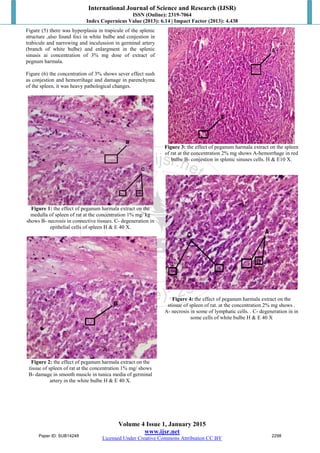
Figure (2) Shows the effect of extract of pegenum harmala at
1% mg dose on the tissue of spleen ,there was sever changes
such as Damage in germinal artety (branch of splenic artery)
in tunica media of artery, imperment of tunica media and
damage in smooth muscle of white bulbe .
Figure (3) reveals Activation of white bulbe, hemorrihage in
some of red bulbe and conjestion in splenice parenchyma
Figure (4) Shows Severe histological changes at
concentration of 2% mg dose in white bulbe around the
germinal artery ,thereis necrosis and degeneration and
hemorrihage in lymphatic ,plasma amd macrophage cells of
white bulbe and congestion in red bulbe ,some splenic sinosis
have conjestion and pyknitic in nuclei of cell that mediatic
immmune response.
Paper ID: SUB14248 2297
International Journal of Science and Research (IJSR)
ISSN (Online): 2319-7064
Index Copernicus Value (2013): 6.14 | Impact Factor (2013): 4.438
Volume 4 Issue 1, January 2015
www.ijsr.net
Licensed Under Creative Commons Attribution CC BY
Figure (5) there was hyperplasia in trapicule of the splenic
structure ,also found foci in white bulbe and conjestion in
trabicule and narrowing and inculussion in germinal artery
(branch of white bulbe) and enlargment in the splenic
sinusis ai concentration of 3% mg dose of extract of
pegnum harmala.
Figure (6) the concentration of 3% shows sever effect sush
as conjestion and hemorrihage and damage in parenchyma
of the spleen, it was heavy pathological changes.
Figure 1: the effect of peganum harmala extract on the
medulla of spleen of rat at the concentration 1% mg/ kg
shows B- necrosis in connective tissues. C- degeneration in
epithelial cells of spleen H & E 40 X.
Figure 2: the effect of peganum harmala extract on the
tissue of spleen of rat at the concentration 1% mg/ shows
B- damage in smooth muscle in tunica media of germinal
artery in the white bulbe H & E 40 X.
Figure 3: the effect of peganum harmala extract on the spleen
of rat at the concentration 2% mg shows A-hemorrhage in red
bulbe B- conjestion in splenic sinuses cells. H & E10 X.
Figure 4: the effect of peganum harmala extract on the
stissue of spleen of rat. at the concentration 2% mg shows .
A- necrosis in some of lymphatic cells. . C- degeneration in in
some cells of white bulbe H & E 40 X
Paper ID: SUB14248 2298
International Journal of Science and Research (IJSR)
ISSN (Online): 2319-7064
Index Copernicus Value (2013): 6.14 | Impact Factor (2013): 4.438
Volume 4 Issue 1, January 2015
www.ijsr.net
Licensed Under Creative Commons Attribution CC BY
Figure 5: The effect of peganum harmala extract on the
tissue of spleen at the concentration 3% mg shows A-foci
in white bulbe .B- narrowing in germinal Artery C-
Enlargement in the splenic of sinusoide H&E 40x.
Figure 6: the effect of peganum harmala extract on the
tissue at the conce of spleen of rat at concentration of 3%
mg shows severe effect A- hemorrhage in some of
epithelial cells B- conjestion in parenchyma . H & E 40X
3. Discussion
The present study demonstrated dose-related histological
changes in the pleen, there was sever effects in red and
white bulbe of spleen. because of long duration of
expermant (30) days leads to sever patiological changes of
the spleen especially in 2% and 3% concentration ,slight
changes in in spleen at concentration of 1% mg of pegnum
harmala extract .
Some recent studies in liver and kidney of mice indicated
that in low concentration of harmala caused slight effects in
mice (12). Peganum harmalaseed extract induced
hemorrhage in the interstitial connective tissue of spleen,
degeneration, necrosis in the red and white bulb of spleen.
In addition, our results revealed severe changes in the
spleen parenchyma following different doses of alcoholic
extract of harmala seeds, which were manifested by
hypertrophy of splenic cells, congestion and hemorrhage in
the blood vessels. These histopathological observations are in
agreement with previous studies (12, 7) However, our
observations were revealed histopathological changes
occurred in the livers and kidneys of mice, these changes
represented, fatty degeneration ,necrosis, fibrosis, congestion
of blood vessels, hemorrhage in the liver structures, from
other hand, numerous histological alterations were happened
in the cortex and medulla of mice kidneys, these were
glomerulonephritis, interstitial hemorrhage, degeneration and
necrosis in the kidney tubules have been ranged from
moderate to severe signs, these our results ensure that causes
signs of intoxication due to injection of harmala extract, the
present study was identical with previous other findings
suchas studies conducted on the large animals such as sheep
and horse(13) and cattle (14), in the cattle after postmortem
examination of animal, no distinctivelesions were observed,
rapid rigor mort has been observed, the renal and
gastrointestinal system were noticed to be congested and
hemorrhage in the spleen has been manifested. The harmala
has traditionally been inthe public medicineas abortifacient
and emmenagogue agents.(20) Human toxicity has been
occurred and reported in a patient with over dose of harmala
plant seeds who has taken 50 gram of seeds for treatment of
amenorrhea.(15)The signs of harmala over dose comprised of
hallucinations and neuro-sensorial syndromes, bradycardia
and gastrointestinal disturbances such as nausea and vomiting
para- clinical tests showed the function of spleen to be normal
and the patient had a normal hematological picture, she was
discharged from hospital few hours later after the signs of
intoxication had disappeared. A case report was recorded by(
21), they mentioned a 35 year old male patient, he took
around 150 gram of peganum harmala seeds, after that
vomited blood and gastrointestinaldistress, endoscopy
showed a 2.5 cmgastric ulcer at location of internal region.
The symptoms of peganum harmala toxicity experienced in
the patients were similar to what had been reported for animal
(16),and over dose of peganum harmala led to the damage
and ulceration ofthe organs tissues such as liver , spleen
especially in the epithelial cells that lined the spleen and the
blood vessels, and splenic cells in white bulbe , these our
observation scame to ensure the previous reports about
peganumharmala intoxication.(17, 16).
In conclusion, these results, suggest that peganum harmala
exerted a potent toxic effect on tissues of spleen at dose of
3% and above. In view of its toxicity, harmaline may not be
used in food of human and other animals .on the other hand
,low concentration of harmala extract perhabs due to increase
immunoglobin or cell mediated cell response (macrophage )
to produce immunoglobin (antibody levels) .
References
[1] Abdel-Fattah, A. F. M., Matsumoto, K. and Murakami Y.
1997. "Central Serotonin leveldependent changes in body
temperature following administration of tryptophan to
pargylineand harmaline-pretreated rats". Gen Pharmacol
28, pp. 405-409.
[2] Abbas RZ, Z Iqbal, A Khan, ZUD Sindhu, JA Khan, MN
Khan and A Raza, 2012. Options for integrated strategies
for the control of avian coccidiosis. Int J Agric Biol, 14:
1014-1020.
Paper ID: SUB14248 2299
International Journal of Science and Research (IJSR)
ISSN (Online): 2319-7064
Index Copernicus Value (2013): 6.14 | Impact Factor (2013): 4.438
Volume 4 Issue 1, January 2015
www.ijsr.net
Licensed Under Creative Commons Attribution CC BY
[3] Chaturvedi M, S Dwivedi, A Dwivedi, PK Barpete and
R Sachan, 2009. Formulation and evaluation of
polyherbal anthelmintic preparation. Ethnobotanical
Leaflets, 13: 329-331.
[4] Rosina K, B Islam, M Akram, S Shakil, A Ahmad, SM
Ali, M Siddiqui and AU Khan, 2009. Antimicrobial
activity of five herbal extracts against multi drug
resistant (MDR) strains of bacteria and fungus of
clinical origin. Molecules, 14: 586-597.
[5] Shahzad A, MS Mahmood, I Hussain, F Siddique and
RZ Abbas, 2012. Prevalence of salmonella species in
hen eggs and egg storing- trays collected from poultry
farms and marketing outlets of Faisalabad, Pakistan.
Pak J Agric Sci, 49: 565-568.
[6] Herraiz T, D González, C Ancín-Azpilicueta, VJ Arán
and H Guillén, 2010. Beta-Carboline alkaloids in
Pegannum harmala and Inhibition of human
monoamine oxidase (MAO). Food Chem Toxicol, 48:
839-845.
[7] Adams, S. M. “The antineoplastic effect of purnus
armeniaca and peganum harmala”. Dis. Abstr. Int. Sci.,
1983; 44: 1052- 1055.
[8] Jung WC, CN Cha, YE Lee, CY Yoo, EK Park, S Kim
and HJ Lee, 2011. Anti-diarrheal effects of a
combination of Korean traditional herbal extracts and
dioctahedral smectite on piglet diarrhea caused by
Escherichia coli and Salmonella typhimurium. Pak Vet
J, 31: 336-340.
[9] Raziq F, S Khan, N Chand, A Sultan, M Mushtaq,
Rafiullah, SM Suhail and A Zeb, 2012. Effect of water
based infusion of Aloe barbedensisPimpinella anisum,
Berberis lycium, Trigonella foenum-graecum, and
Allium sativum on the performance of broiler chicks.
Pak Vet J, 32: 593-596.
[10]Monsef HR, A Ghobadi, M Iranshahi and M
Abdollahi, 2004 Antinociceptive effects of Peganum
harmala L. alkaloid extract on mouse formalin test. J
Pharm Pharm Sci, 7: 65-69.
[11]Shahverdi AR, HR Monsef-Esfahani, B Nickavar, L
Bitarafan, S Khodaee and N Khoshakhlagh, 2005.
Antimicrobial activity and main chemical composition
of two smoke condensates from Peganum harmala
seeds. Z Naturforsch C, 60: 707-710.
[12]Qazan, W. S. The effect of low levels of dietary
peganum harmala L. and Ballota undulate or their
mixture on chicks. Anim. Vet. Adv., 2009; 8: 1535 –
1538.
[13]Bailey, M. E. (1979). Major Poisonous plant problems
in cattle. Bovine. Pract., 14: 169- 175.
[14]Bailey, M. E. Principal poisonous plants in the
southwestern united states. In : Hhoward, J. L. Current
veterinary therapy food animal practice. Philadelphia.
[15]Abdel- Fattah, A.; Matsumoto, K.; Murakami, Y.; El-
Hady, K.; Mohamed, M. and Watanabe, H. Inhibitory
effects of harmaline on the tryptophan induced 5-
hydroxyl syndrome and body temperature changes in
pargylin- pretreated rats. Jpn. J. Pharmacol., 1996; 27:
39- 47. Saunders. 1986; P: 413.
[16]Puzii, A.; Vecherkin, S.; Tribunskii , M. And
Romakhov, V. Toxicity of the combined alkaloids of
harmala1 (P. harmala, zygophyllaceae). Vet. Moscow.,
1980; 4: 57- 58.
[17]Bailey, and Damn, A. Bodouin plant utilization in sinai
and the Negev. Econ. Bot., 1981; 35: 145- 162.
[18]Dickson, R. A.; Houghton, P. J.; Hylands, P. J. And
Gibbons, S. Antimicrobial, resistance- modifying effects,
antioxidant and free radical scavenging activities of
Mezoneuron benthamianum Baill., Securinega
virosaRoxb. And Microglossa Pyrifolia Lam. Phytother.
Res.,2006; 20: 41- 45.
[19]Di Giorgio, C.; Delmas, F.; Ollivier, E.; Elias, R;
Balansard, G. and Timon- David, P. In vitro activity
ofthe beta- carboline alkaloids harmane, harmine,
andharmaline toward parasites of the species
Leishmaniainfantum. EXP. Parasitol., 2004; 106: 67- 74.
[20]Salah, N.; Amamou, M.; Jerbi, Z., Salah, F. And Yacob,
M. Reprot case of peganum harmala L. over dose.J.
toxical. Clin. Exp., 1986; 6: 319- 322.
[21]Mahmoudian, M.; Jalilpour, H. and Salehian, P.Toxicity
of peganum harmala: review and a case report.Iran. J.
Pharm. Ther., 2002; 1: 1- 4.
[22]Vaccay, L. Laboratory manual of histochemistry. 1st. ed.
Ravan press. New York. USA. 1985.
[23]S. Chitturi and G. C. Farrell, “Hepatotoxic slimming aids
and other herbal hepatotoxins,” Journal of
Gastroenterology and Hepatology, vol. 23, no. 3, pp.
366–373, 2008. View at Publisher · View at Google
Scholar · View at PubMed
[24]S.W.Dewan.effect of begenum harmala methanol extract
on liver and kidney of mice administrared MTX drug.
2013journal of Alnehrein Uuni.vol.16(4) pb.161-166
Paper ID: SUB14248 2300

Sub14248

  • 1.
    International Journal ofScience and Research (IJSR) ISSN (Online): 2319-7064 Index Copernicus Value (2013): 6.14 | Impact Factor (2013): 4.438 Volume 4 Issue 1, January 2015 www.ijsr.net Licensed Under Creative Commons Attribution CC BY Histological Study of Effect of Pegnam Harmala Eqeuos Extract on Spleen; Liver Enzymes and Parameters of Blood in Albino Rats Lina Adeeb Lecturer, Faculity of Agriculturer/Kufa University, Iraq Abstract: Four groups of male albino rats (Mus musculus) were subcutaneously administrated with normal saline(0.9 % NaCl2) or peganum harmala alcoholic seed extract (1%,2%,3%) mg/ kg) at daily interval for one month period. Thereafter, animals were scarified and specimens from the spleen were examined under light microscope for structural changes. Repeated treatment with peganum harmala seeds equeos extract caused dose- related structural changes in the spleen treated groups. severe changes were observed following 3% mg/ kg dose that were manifested by hemorrhage in interstitial connective tissue and blood vessels of the white and red bulbe of spleen as well as degeneration and necrosis in the epithelial lining of spleen.Peganum harmala seeds Aqueous extract at 1% and 2% mg/ kg caused slight to moderate histological changes in the white and red bulb of spleen manifested as degeneration and hypertrophy of tubular epithelial lining with narrowing of germinal artery . In the spleen, repeated treatment of peganum harmala seeds aqueous extract at 3% mg/ kg dose caused severe destruction of cells, by Histological study of the effect spleen,some liver enzymes and blood parameters in Albino Rats knotic of splenic cell and vesiculation in the cytoplasm due to degeneration. In addition, a significant effect(0.05) of p.harmala on total body weight compared with control ,the hight body weight was at second concentration 2%( 295)gm while,the lowest body weight was( 222.5)gm. liver weight also,affect significantly (0.05) with p.harmala ,it was 9.75gm at dose 2% compared with control( 3.30)gm .both kidney and spleen have no affect significantly by p.harmala treatment . The oral administration of extractcauses maximum fall of blood glucose level to(138 and 35.5 ) at(p<0.01) respectively with the normal ratsCholesterol was decreasedsignificantly ( 0.01 ) in treatedgroup compared with control . Lowestvalue was in second dose 2% (29.0 ) while the highest value was in control group ( 148.5 ) .significant changes (0.05 ) in GPT and GOT enzymes were observed between treated and control group. The highest values were in control groups while the lowest values were in treated group No significant changes were observed in the values of WBC and RBC in treated rats compared to controls. Keywords: histology ,pegnum harmala ,albino rats 1. Introduction Medicinal plants have been used for centuries as remedies for human and animal ailments (9) . They have many pharmacologically active chemical compounds which may act as anthelmintic (2), antibacterial (3) and antifungal (8) agents. Therefore, medicinal herbs have been reported to serve as safer alternative as growth promoter due to their suitability and preference, lower cost of production, reduced risk of toxicity, minimum health hazards and environment friendliness. Peganum harmala (locally known as harmal) belongs to the family of Zygophylaceae and have been shown a diverse range of medicinal properties. Numerous beta carboline alkaloids like harmaline, harmine, harmol were present in P. harmala extract exhibited great variety of pharmacological and biological extract (5,4) reported that P. Harmalaactivities such as antibacterial and antifungal agents as well as monoamineoxidase (MAO) inhibition and hypothermia. Similarly analgesic, anti-inflammatory( 6), disinfectant (7), growth promoting (10), cholesterol lowering and hepatoprotective effects (11) properties have also been reported. There is dearth extract of P. harmala on serum lipid profile and its economic benefits in broiler chicks Present study was designed to examine the effect of harmala extract in some parameters of blood and histobathological changes in liver of albino rats . 2. Materials and Methods 2.1 Animals The present study was carried out in the laboratory of physiology in facility of agriculture, Albino Wister rats of either sex, weighing 200-350 g were used throughout the study Rat were housed in plastic cages (20 × 21 × 45 cm)with wooden waste bedding. The cages were subjected to cleaning and disinfectant three times weekly. Animals were kept at constantconditions in regards to ventilation, light/ dark cycle (14/ 10 hour)and temperature (22- 28) C°. The animals had free access to water andstandard laboratory food (Najaf poultry standard laboratory food (Najaf poultry given andlibitum.The animals were divided into four groups designated as A, B, C,D. Each group consists of 42 rats divided to 6 subgroups of 7 rats ,group A (control group)administrated normal saline ,group B administrated orally with concentration 1% of harmala, group c administrated orally with 2% from extract of harmala ,group D administrated orally with 3% from extract of harmala .The body weight was recorded throughout theexperiment prior to dosing. Doses were adjusted to bodyweight prior to each subcutaneously admin istrated . 2.2 Animals scarified and specimen’s evaluation After the administrated period was complete, the animals were anaesthetized by diethylether [(C2H4)2O]. The abdominal cavities of animals were opened; spleen was removed and put into formalin (10 %) for tissue fixation for Paper ID: SUB14248 2296
  • 2.
    International Journal ofScience and Research (IJSR) ISSN (Online): 2319-7064 Index Copernicus Value (2013): 6.14 | Impact Factor (2013): 4.438 Volume 4 Issue 1, January 2015 www.ijsr.net Licensed Under Creative Commons Attribution CC BY 48 hours. Thereafter routine histological preparations were carried out according to reported procedures (22) Briefly, organs were washing by tap water, dehydration by series of ascending concentrations of ethyl alcohol (70 %, 80 %, 90 %, and100 %) and clearing by xylole and infiltration and embedding by paraffin wax and made up blocks, then mounting by Canada- blasm and cover slides. The histological slides were examined by light microscope (type Olympus, Japan). 2- Extract preparation The dry seeds of Iraqi Peganum harmala (100 g) were grinded and then were extracted with purified water for 24 hours in continuous (Soxhelt) apparatus. The extract was filtered, and water was removed by evaporation on a rotator evaporator under vacuum at 60ºC to a small volume provided.25 Briefly, the active ingredients were extracted from 20 g dry seeds using soxholate apparatus. There after the extract materials were concentrated by rotatory evaporator at 40- 45 C°. There after the extract materials was weighted in order to prepare the stock solution, then from this solution three doses ( 1%,2% ,3% ) mg/ kg were made up for the present study. Table 1: Effect of p. harmala extract on total body weight and weight of organs Factors Mean sequars Total weight/g m Liver weight /gm/k m Right kidney weight gm/km Left kidney weight gm/km Spleen weight gm/km T1 283.33 a 4.16 a 0.93 a 0.93 a 0.70 a T2 295.0 a 9.75 b 0.95 a 0.95 a 0.95 a T3 271.66 a 7.80 b 0.93 a 1.00 a 0.86 a T.cont. 222.5 b 3.30 a 0.91 a 0.89 a 0.82 a Significant level * * n.s n.s n.s total body weight compared with control .the highest body weight was in T2 (295) gm while the lowest body weight was in control (222.5) gm .liver weight is also, affected significantly (0.05) with p.harmala ,it was (9.75)gm in T2 compared with (3.30)gm in control group . both kidney and spleen are not affected significantly by p. Harmala treatment .many studies indicated that treatment with p.harmala extract caused a significant improvement in liver and kidney function in mice ,since this extract modulated the liver enzymes and kidney function regarding both pre and post- treatment (24). Alkaloid components may be lead to activation thyroid gland to secret T3 and T4 hormones and that cause increase metabolism process in the body of rats which caused increase in body weight (23). Table 2: Effect of pegenum Harmala on some parameters of blood Factors Mean sequars Sugar Cholesterol GOT GPT T1 35.5 a 52.5 a 17.00 a 333.0 a T2 93.5 a 29.0 b 27.50 b 262.0 a T3 113.3 b 61.6 c 31.66 b 161.33 b Normal 138.0 b 148.5 d 20.77 a 255.0 a Significant level ** ** * * Blood sugar and cholesterol are decreased significantly ( 0.01) by P.harmala treatment ( table – 2) .The highest level of blood glucose was in control group while the lowest level of blood glucose was in T1 its was ( 138 and 35.5 ) respectively. The result came a similar with the results of (12 ) who reported that the that an ethanolic extract of P. harmala is as effective asthe known oral hypoglycaemic agent metformin in reducingthe blood glucose concentration after a sucrose challenge innormal and streptozotocin-induced diabetic rats. But further studies are to be conducted to find out whether long termstudies would bring the fasting blood glucose level to normal levels. Further studies on the mechanism of action whether itis an pancreatic insulin release or directly on absorption and utilization of glucose are underway. Cholesterol was decreased significantly (0.01) in treated group compared with control. Lowest value was in T2 (29.0) while the highest value was in control group (148.5) . Significant changes (0.05) in GPT and GOT enzymes were observed between treated and control group. The highest values were in control groups while the lowest values were in treated group. This results is not accordance with the results of (14) who reported no significant changes in these enzymes were observed between treated a . Table 3: Effect of pegenum Harmala on some parameters of blood Factors Mean squares WBC RBC Hb PCV T1 6.43 7.31 15.46 a 42.9 T2 6.6 7.52 13.23 b 41.90 a T3 5.76 6.78 13.40 b 38.90 ab Normal 4.4 6.9 12.00 b 34.90 b Significant level n.s n.s * * No significant changes were observed in the values of WBC and RBC in treated rats compared to controls.( Tabe – 3) . Histological results The results of this study indicated that treatment with methanol P. harmala extract caused Autolysis in the c.t of trabeculae (septae) ,in collagen and elastic fibers ,necrosis was shown in cells and degeneration in some cells of white bulb ,and the same changes in plasma, lymphocyte,and macrophage cells of lymphatic tissue as shown in figure (1). Figure (2) Shows the effect of extract of pegenum harmala at 1% mg dose on the tissue of spleen ,there was sever changes such as Damage in germinal artety (branch of splenic artery) in tunica media of artery, imperment of tunica media and damage in smooth muscle of white bulbe . Figure (3) reveals Activation of white bulbe, hemorrihage in some of red bulbe and conjestion in splenice parenchyma Figure (4) Shows Severe histological changes at concentration of 2% mg dose in white bulbe around the germinal artery ,thereis necrosis and degeneration and hemorrihage in lymphatic ,plasma amd macrophage cells of white bulbe and congestion in red bulbe ,some splenic sinosis have conjestion and pyknitic in nuclei of cell that mediatic immmune response. Paper ID: SUB14248 2297
  • 3.
    International Journal ofScience and Research (IJSR) ISSN (Online): 2319-7064 Index Copernicus Value (2013): 6.14 | Impact Factor (2013): 4.438 Volume 4 Issue 1, January 2015 www.ijsr.net Licensed Under Creative Commons Attribution CC BY Figure (5) there was hyperplasia in trapicule of the splenic structure ,also found foci in white bulbe and conjestion in trabicule and narrowing and inculussion in germinal artery (branch of white bulbe) and enlargment in the splenic sinusis ai concentration of 3% mg dose of extract of pegnum harmala. Figure (6) the concentration of 3% shows sever effect sush as conjestion and hemorrihage and damage in parenchyma of the spleen, it was heavy pathological changes. Figure 1: the effect of peganum harmala extract on the medulla of spleen of rat at the concentration 1% mg/ kg shows B- necrosis in connective tissues. C- degeneration in epithelial cells of spleen H & E 40 X. Figure 2: the effect of peganum harmala extract on the tissue of spleen of rat at the concentration 1% mg/ shows B- damage in smooth muscle in tunica media of germinal artery in the white bulbe H & E 40 X. Figure 3: the effect of peganum harmala extract on the spleen of rat at the concentration 2% mg shows A-hemorrhage in red bulbe B- conjestion in splenic sinuses cells. H & E10 X. Figure 4: the effect of peganum harmala extract on the stissue of spleen of rat. at the concentration 2% mg shows . A- necrosis in some of lymphatic cells. . C- degeneration in in some cells of white bulbe H & E 40 X Paper ID: SUB14248 2298
  • 4.
    International Journal ofScience and Research (IJSR) ISSN (Online): 2319-7064 Index Copernicus Value (2013): 6.14 | Impact Factor (2013): 4.438 Volume 4 Issue 1, January 2015 www.ijsr.net Licensed Under Creative Commons Attribution CC BY Figure 5: The effect of peganum harmala extract on the tissue of spleen at the concentration 3% mg shows A-foci in white bulbe .B- narrowing in germinal Artery C- Enlargement in the splenic of sinusoide H&E 40x. Figure 6: the effect of peganum harmala extract on the tissue at the conce of spleen of rat at concentration of 3% mg shows severe effect A- hemorrhage in some of epithelial cells B- conjestion in parenchyma . H & E 40X 3. Discussion The present study demonstrated dose-related histological changes in the pleen, there was sever effects in red and white bulbe of spleen. because of long duration of expermant (30) days leads to sever patiological changes of the spleen especially in 2% and 3% concentration ,slight changes in in spleen at concentration of 1% mg of pegnum harmala extract . Some recent studies in liver and kidney of mice indicated that in low concentration of harmala caused slight effects in mice (12). Peganum harmalaseed extract induced hemorrhage in the interstitial connective tissue of spleen, degeneration, necrosis in the red and white bulb of spleen. In addition, our results revealed severe changes in the spleen parenchyma following different doses of alcoholic extract of harmala seeds, which were manifested by hypertrophy of splenic cells, congestion and hemorrhage in the blood vessels. These histopathological observations are in agreement with previous studies (12, 7) However, our observations were revealed histopathological changes occurred in the livers and kidneys of mice, these changes represented, fatty degeneration ,necrosis, fibrosis, congestion of blood vessels, hemorrhage in the liver structures, from other hand, numerous histological alterations were happened in the cortex and medulla of mice kidneys, these were glomerulonephritis, interstitial hemorrhage, degeneration and necrosis in the kidney tubules have been ranged from moderate to severe signs, these our results ensure that causes signs of intoxication due to injection of harmala extract, the present study was identical with previous other findings suchas studies conducted on the large animals such as sheep and horse(13) and cattle (14), in the cattle after postmortem examination of animal, no distinctivelesions were observed, rapid rigor mort has been observed, the renal and gastrointestinal system were noticed to be congested and hemorrhage in the spleen has been manifested. The harmala has traditionally been inthe public medicineas abortifacient and emmenagogue agents.(20) Human toxicity has been occurred and reported in a patient with over dose of harmala plant seeds who has taken 50 gram of seeds for treatment of amenorrhea.(15)The signs of harmala over dose comprised of hallucinations and neuro-sensorial syndromes, bradycardia and gastrointestinal disturbances such as nausea and vomiting para- clinical tests showed the function of spleen to be normal and the patient had a normal hematological picture, she was discharged from hospital few hours later after the signs of intoxication had disappeared. A case report was recorded by( 21), they mentioned a 35 year old male patient, he took around 150 gram of peganum harmala seeds, after that vomited blood and gastrointestinaldistress, endoscopy showed a 2.5 cmgastric ulcer at location of internal region. The symptoms of peganum harmala toxicity experienced in the patients were similar to what had been reported for animal (16),and over dose of peganum harmala led to the damage and ulceration ofthe organs tissues such as liver , spleen especially in the epithelial cells that lined the spleen and the blood vessels, and splenic cells in white bulbe , these our observation scame to ensure the previous reports about peganumharmala intoxication.(17, 16). In conclusion, these results, suggest that peganum harmala exerted a potent toxic effect on tissues of spleen at dose of 3% and above. In view of its toxicity, harmaline may not be used in food of human and other animals .on the other hand ,low concentration of harmala extract perhabs due to increase immunoglobin or cell mediated cell response (macrophage ) to produce immunoglobin (antibody levels) . References [1] Abdel-Fattah, A. F. M., Matsumoto, K. and Murakami Y. 1997. "Central Serotonin leveldependent changes in body temperature following administration of tryptophan to pargylineand harmaline-pretreated rats". Gen Pharmacol 28, pp. 405-409. [2] Abbas RZ, Z Iqbal, A Khan, ZUD Sindhu, JA Khan, MN Khan and A Raza, 2012. Options for integrated strategies for the control of avian coccidiosis. Int J Agric Biol, 14: 1014-1020. Paper ID: SUB14248 2299
  • 5.
    International Journal ofScience and Research (IJSR) ISSN (Online): 2319-7064 Index Copernicus Value (2013): 6.14 | Impact Factor (2013): 4.438 Volume 4 Issue 1, January 2015 www.ijsr.net Licensed Under Creative Commons Attribution CC BY [3] Chaturvedi M, S Dwivedi, A Dwivedi, PK Barpete and R Sachan, 2009. Formulation and evaluation of polyherbal anthelmintic preparation. Ethnobotanical Leaflets, 13: 329-331. [4] Rosina K, B Islam, M Akram, S Shakil, A Ahmad, SM Ali, M Siddiqui and AU Khan, 2009. Antimicrobial activity of five herbal extracts against multi drug resistant (MDR) strains of bacteria and fungus of clinical origin. Molecules, 14: 586-597. [5] Shahzad A, MS Mahmood, I Hussain, F Siddique and RZ Abbas, 2012. Prevalence of salmonella species in hen eggs and egg storing- trays collected from poultry farms and marketing outlets of Faisalabad, Pakistan. Pak J Agric Sci, 49: 565-568. [6] Herraiz T, D González, C Ancín-Azpilicueta, VJ Arán and H Guillén, 2010. Beta-Carboline alkaloids in Pegannum harmala and Inhibition of human monoamine oxidase (MAO). Food Chem Toxicol, 48: 839-845. [7] Adams, S. M. “The antineoplastic effect of purnus armeniaca and peganum harmala”. Dis. Abstr. Int. Sci., 1983; 44: 1052- 1055. [8] Jung WC, CN Cha, YE Lee, CY Yoo, EK Park, S Kim and HJ Lee, 2011. Anti-diarrheal effects of a combination of Korean traditional herbal extracts and dioctahedral smectite on piglet diarrhea caused by Escherichia coli and Salmonella typhimurium. Pak Vet J, 31: 336-340. [9] Raziq F, S Khan, N Chand, A Sultan, M Mushtaq, Rafiullah, SM Suhail and A Zeb, 2012. Effect of water based infusion of Aloe barbedensisPimpinella anisum, Berberis lycium, Trigonella foenum-graecum, and Allium sativum on the performance of broiler chicks. Pak Vet J, 32: 593-596. [10]Monsef HR, A Ghobadi, M Iranshahi and M Abdollahi, 2004 Antinociceptive effects of Peganum harmala L. alkaloid extract on mouse formalin test. J Pharm Pharm Sci, 7: 65-69. [11]Shahverdi AR, HR Monsef-Esfahani, B Nickavar, L Bitarafan, S Khodaee and N Khoshakhlagh, 2005. Antimicrobial activity and main chemical composition of two smoke condensates from Peganum harmala seeds. Z Naturforsch C, 60: 707-710. [12]Qazan, W. S. The effect of low levels of dietary peganum harmala L. and Ballota undulate or their mixture on chicks. Anim. Vet. Adv., 2009; 8: 1535 – 1538. [13]Bailey, M. E. (1979). Major Poisonous plant problems in cattle. Bovine. Pract., 14: 169- 175. [14]Bailey, M. E. Principal poisonous plants in the southwestern united states. In : Hhoward, J. L. Current veterinary therapy food animal practice. Philadelphia. [15]Abdel- Fattah, A.; Matsumoto, K.; Murakami, Y.; El- Hady, K.; Mohamed, M. and Watanabe, H. Inhibitory effects of harmaline on the tryptophan induced 5- hydroxyl syndrome and body temperature changes in pargylin- pretreated rats. Jpn. J. Pharmacol., 1996; 27: 39- 47. Saunders. 1986; P: 413. [16]Puzii, A.; Vecherkin, S.; Tribunskii , M. And Romakhov, V. Toxicity of the combined alkaloids of harmala1 (P. harmala, zygophyllaceae). Vet. Moscow., 1980; 4: 57- 58. [17]Bailey, and Damn, A. Bodouin plant utilization in sinai and the Negev. Econ. Bot., 1981; 35: 145- 162. [18]Dickson, R. A.; Houghton, P. J.; Hylands, P. J. And Gibbons, S. Antimicrobial, resistance- modifying effects, antioxidant and free radical scavenging activities of Mezoneuron benthamianum Baill., Securinega virosaRoxb. And Microglossa Pyrifolia Lam. Phytother. Res.,2006; 20: 41- 45. [19]Di Giorgio, C.; Delmas, F.; Ollivier, E.; Elias, R; Balansard, G. and Timon- David, P. In vitro activity ofthe beta- carboline alkaloids harmane, harmine, andharmaline toward parasites of the species Leishmaniainfantum. EXP. Parasitol., 2004; 106: 67- 74. [20]Salah, N.; Amamou, M.; Jerbi, Z., Salah, F. And Yacob, M. Reprot case of peganum harmala L. over dose.J. toxical. Clin. Exp., 1986; 6: 319- 322. [21]Mahmoudian, M.; Jalilpour, H. and Salehian, P.Toxicity of peganum harmala: review and a case report.Iran. J. Pharm. Ther., 2002; 1: 1- 4. [22]Vaccay, L. Laboratory manual of histochemistry. 1st. ed. Ravan press. New York. USA. 1985. [23]S. Chitturi and G. C. Farrell, “Hepatotoxic slimming aids and other herbal hepatotoxins,” Journal of Gastroenterology and Hepatology, vol. 23, no. 3, pp. 366–373, 2008. View at Publisher · View at Google Scholar · View at PubMed [24]S.W.Dewan.effect of begenum harmala methanol extract on liver and kidney of mice administrared MTX drug. 2013journal of Alnehrein Uuni.vol.16(4) pb.161-166 Paper ID: SUB14248 2300