Debate Skills:
It’s Pure Theatre
Goals:
 Review qualities of each role in the debate:
 Constructor
 Cross Examiner
 Rebutter
 Rejoinder
 Learn general debate skills.
 Collaborate with your team to assign roles.
 Clarify your understanding of your role.
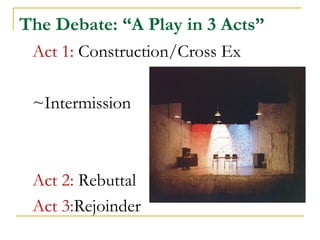
The Debate: “A Play in 3 Acts”
Act 1: Construction/Cross Ex
~Intermission
Act 2: Rebuttal
Act 3:Rejoinder
Act 1: The Construction (3 + 3 minutes)
 In this act, the performer sets the tone
for the argument and tells the “story” of
your team’s position.
 S/he makes a connection with the
audience with EYE CONTACT. There’s
a smile and confident, relaxed body
language.
 S/he owns the Grabber—uses
questions and surprising facts
effectively to open.
 The Construction makes sure the
THESIS is crystal clear!
Act 1: The Construction
Tips for Construction Success…
 Eye contact, confidence, and high energy are important!
 Practice for the CROSS-EXAMINATION!!
 Use “Practical Theatricals…(a.k.a. Rhetorical Devices)
 Repetition
 Rhetorical questions
 Emphasis with Alliteration
 Prompts: “This is Important”
 Cues: “This is our Thesis” and “Our arguments are…”
 Be sure to give Author credibility information and Sponsor.
 Make your position emotionally compelling and persuasive.
Act 1: Enter the Cross Ex (3 minutes)
 The drama builds as the Cross Examiner
challenges the opening remarks.
 Asks questions ONLY based on opening remarks.
 Avoids Yes/No questions.
 Has enough questions to fill….3 minutes!
 Ignores the audience: Eyes on his/her target.
 May use facts to lead into a question, but not
required.
Act 1: Enter the Cross Ex
Tips for Cross Examination Success…
 Before the debate, create a flow chart:
 Anticipate your opponents’ arguments.
 Formulate strong counter-arguments.
 Create questions that reveal these arguments
and/or expose the other team’s weaknesses.
 During the Construction, take notes on the other
team’s arguments so that you can address only
those points.
 During your Cross-Ex, maintain control; don’t let
your opponent steal your time.
Act 2: The Rebuttal (3 minutes)
 Curtain Opens on your most
Active Listener.
 S/he figures out the angle to counter
the opposition.
 Bam! The Rebutter is especially good
with using facts to cancel what the
other team has said.
 S/he earns points by using the better
information.
Eye Contact with Audience/Judges
is important!
Act 2: The Rebuttal
Tips for Rebuttal Success…
 Take Notes during the other team’s Construction and both Cross
Ex’s
 Number the opposing points as you hear them. This will help you be
complete and organized.
 Refute them in order of importance to your own side of the
argument.
 Use Quotes to support your counter-arguments.
 Be prepared with many Strong Quotes!
Avoid…
• Personal attacks
• like-like-like-like-like
• Using “I” instead of “We”
• Claims without support (quotes).
Act 3: The Rejoinder (3 minutes)
 Curtain rises on your most persuasive teammate.
 A successful debate tells a story, starting with the Constructor.
 The Rejoinder retells the story in a clear, easy-to-follow way.
 The Rejoinder makes sure that any remaining “holes in the
dam” are patched.
 The Rejoinder “completes” the argument.
Be Confident…Be Clear…Be Conclusive
Command Attention!
Act 3: The Rejoinder
Tips for Rejoinder Success…
 Articulate your arguments decisively.
 Evidence is key! Use quotes that prove your arguments.
(These should be different from the Constructor’s
quotes, but same arguments).
 Address at least two of the other team’s arguments.
Explain clearly, by calmly, why their arguments are not
valid and why your arguments are (with Quotes).
 Make a connection with the Construction’s message.
 End with a compelling closer!
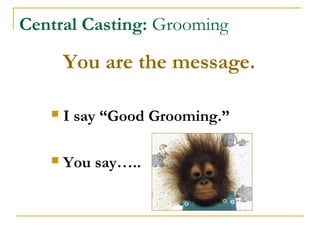
Central Casting: Grooming
You are the message.
 I say “Good Grooming.”
 You say…..
Central Casting: Vocal Coach
 Emphasize the last word of every sentence.
 Enunciate (speak slower than you think necessary).
 Short, direct sentences are memorable.
 “Have it your way!”
 “Got Milk?”
 “I have a dream.”
 Debate requires the use of Academic English.
No slang No like-like No rants/rambles
Central Casting: Demeanor Director
Body Language is Important

Always stand to talk.
 Pay quiet attention to teammates
when they talk.
 Avoid the slump/slouch.
 Avoid the fidget.
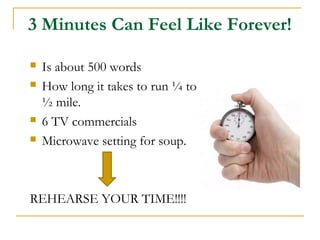
3 Minutes Can Feel Like Forever!
 Is about 500 words
 How long it takes to run ¼ to
½ mile.
 6 TV commercials
 Microwave setting for soup.
REHEARSE YOUR TIME!!!!
5 Easy Ways to Play to Poor Reviews
1. Poor eye contact
2. Not Prepared
3. Low Energy
4. Stiff or Nervous
5. Boring Message
Last Point: Rehearse!
Rehearse 3 times from start to finish.
There are no secrets to success.
It is the result of preparation, hard work, and
learning from failure.
Colin Powell
Finis

Structure of Debate

  • 1.
  • 2.
    Goals:  Review qualitiesof each role in the debate:  Constructor  Cross Examiner  Rebutter  Rejoinder  Learn general debate skills.  Collaborate with your team to assign roles.  Clarify your understanding of your role.
  • 3.
    The Debate: “APlay in 3 Acts” Act 1: Construction/Cross Ex ~Intermission Act 2: Rebuttal Act 3:Rejoinder
  • 4.
    Act 1: TheConstruction (3 + 3 minutes)  In this act, the performer sets the tone for the argument and tells the “story” of your team’s position.  S/he makes a connection with the audience with EYE CONTACT. There’s a smile and confident, relaxed body language.  S/he owns the Grabber—uses questions and surprising facts effectively to open.  The Construction makes sure the THESIS is crystal clear!
  • 5.
    Act 1: TheConstruction Tips for Construction Success…  Eye contact, confidence, and high energy are important!  Practice for the CROSS-EXAMINATION!!  Use “Practical Theatricals…(a.k.a. Rhetorical Devices)  Repetition  Rhetorical questions  Emphasis with Alliteration  Prompts: “This is Important”  Cues: “This is our Thesis” and “Our arguments are…”  Be sure to give Author credibility information and Sponsor.  Make your position emotionally compelling and persuasive.
  • 6.
    Act 1: Enterthe Cross Ex (3 minutes)  The drama builds as the Cross Examiner challenges the opening remarks.  Asks questions ONLY based on opening remarks.  Avoids Yes/No questions.  Has enough questions to fill….3 minutes!  Ignores the audience: Eyes on his/her target.  May use facts to lead into a question, but not required.
  • 7.
    Act 1: Enterthe Cross Ex Tips for Cross Examination Success…  Before the debate, create a flow chart:  Anticipate your opponents’ arguments.  Formulate strong counter-arguments.  Create questions that reveal these arguments and/or expose the other team’s weaknesses.  During the Construction, take notes on the other team’s arguments so that you can address only those points.  During your Cross-Ex, maintain control; don’t let your opponent steal your time.
  • 8.
    Act 2: TheRebuttal (3 minutes)  Curtain Opens on your most Active Listener.  S/he figures out the angle to counter the opposition.  Bam! The Rebutter is especially good with using facts to cancel what the other team has said.  S/he earns points by using the better information. Eye Contact with Audience/Judges is important!
  • 9.
    Act 2: TheRebuttal Tips for Rebuttal Success…  Take Notes during the other team’s Construction and both Cross Ex’s  Number the opposing points as you hear them. This will help you be complete and organized.  Refute them in order of importance to your own side of the argument.  Use Quotes to support your counter-arguments.  Be prepared with many Strong Quotes! Avoid… • Personal attacks • like-like-like-like-like • Using “I” instead of “We” • Claims without support (quotes).
  • 10.
    Act 3: TheRejoinder (3 minutes)  Curtain rises on your most persuasive teammate.  A successful debate tells a story, starting with the Constructor.  The Rejoinder retells the story in a clear, easy-to-follow way.  The Rejoinder makes sure that any remaining “holes in the dam” are patched.  The Rejoinder “completes” the argument. Be Confident…Be Clear…Be Conclusive Command Attention!
  • 11.
    Act 3: TheRejoinder Tips for Rejoinder Success…  Articulate your arguments decisively.  Evidence is key! Use quotes that prove your arguments. (These should be different from the Constructor’s quotes, but same arguments).  Address at least two of the other team’s arguments. Explain clearly, by calmly, why their arguments are not valid and why your arguments are (with Quotes).  Make a connection with the Construction’s message.  End with a compelling closer!
  • 12.
    Central Casting: Grooming Youare the message.  I say “Good Grooming.”  You say…..
  • 13.
    Central Casting: VocalCoach  Emphasize the last word of every sentence.  Enunciate (speak slower than you think necessary).  Short, direct sentences are memorable.  “Have it your way!”  “Got Milk?”  “I have a dream.”  Debate requires the use of Academic English. No slang No like-like No rants/rambles
  • 14.
    Central Casting: DemeanorDirector Body Language is Important  Always stand to talk.  Pay quiet attention to teammates when they talk.  Avoid the slump/slouch.  Avoid the fidget.
  • 15.
    3 Minutes CanFeel Like Forever!  Is about 500 words  How long it takes to run ¼ to ½ mile.  6 TV commercials  Microwave setting for soup. REHEARSE YOUR TIME!!!!
  • 16.
    5 Easy Waysto Play to Poor Reviews 1. Poor eye contact 2. Not Prepared 3. Low Energy 4. Stiff or Nervous 5. Boring Message
  • 17.
    Last Point: Rehearse! Rehearse3 times from start to finish. There are no secrets to success. It is the result of preparation, hard work, and learning from failure. Colin Powell
  • 18.