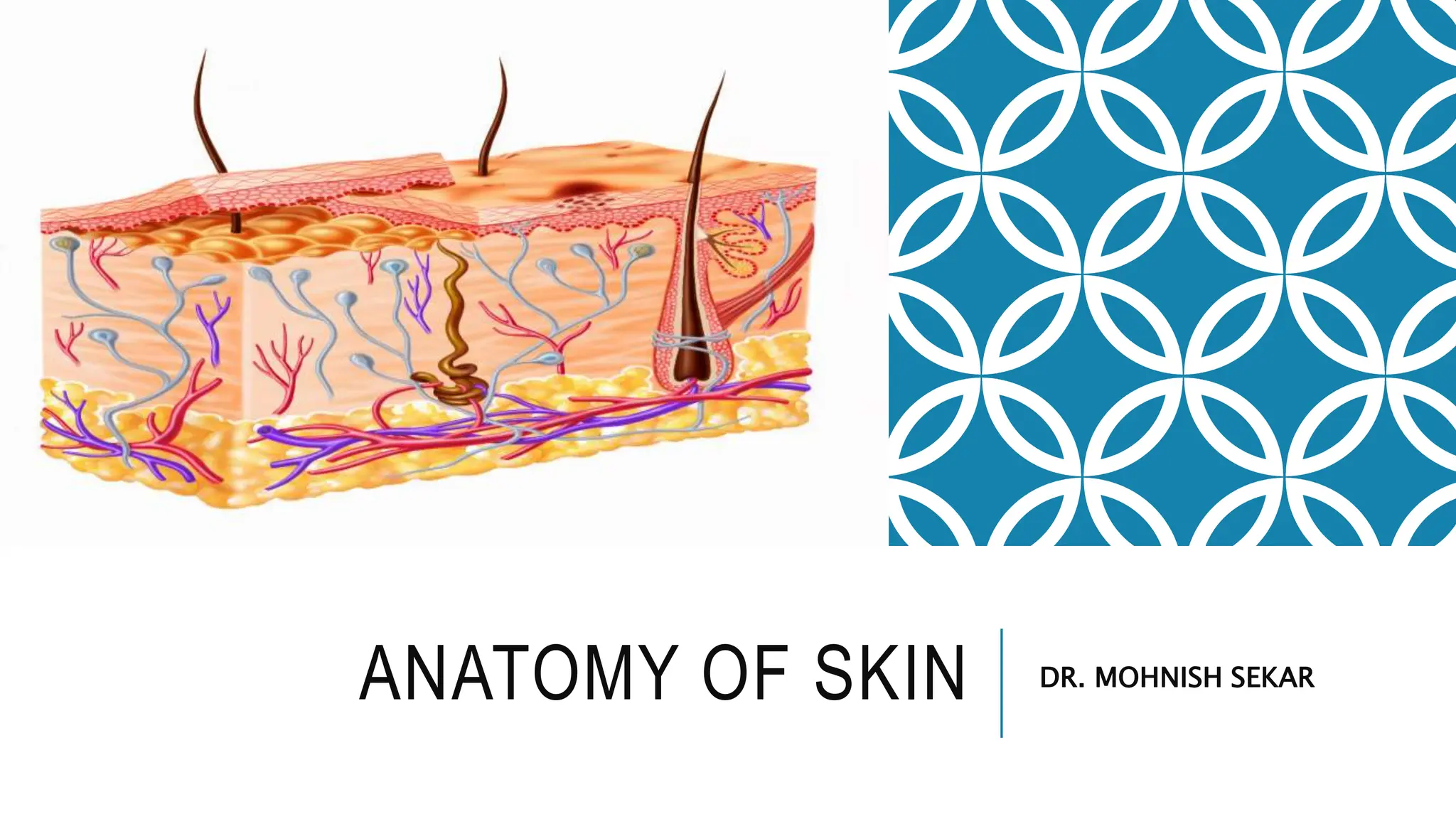
ANATOMY OF SKIN DR. MOHNISH SEKAR
INTRODUCTION
•Largest organ of the body.
•Covers a surface area of approximately 2 m2.
•Constitutes 14% of the body weight.
•Protection from moisture, cold and sunrays as well as germs
and toxic substances.
•Plays a major role in vital events like immunity, temperature
regulation and vitamin D synthesis.
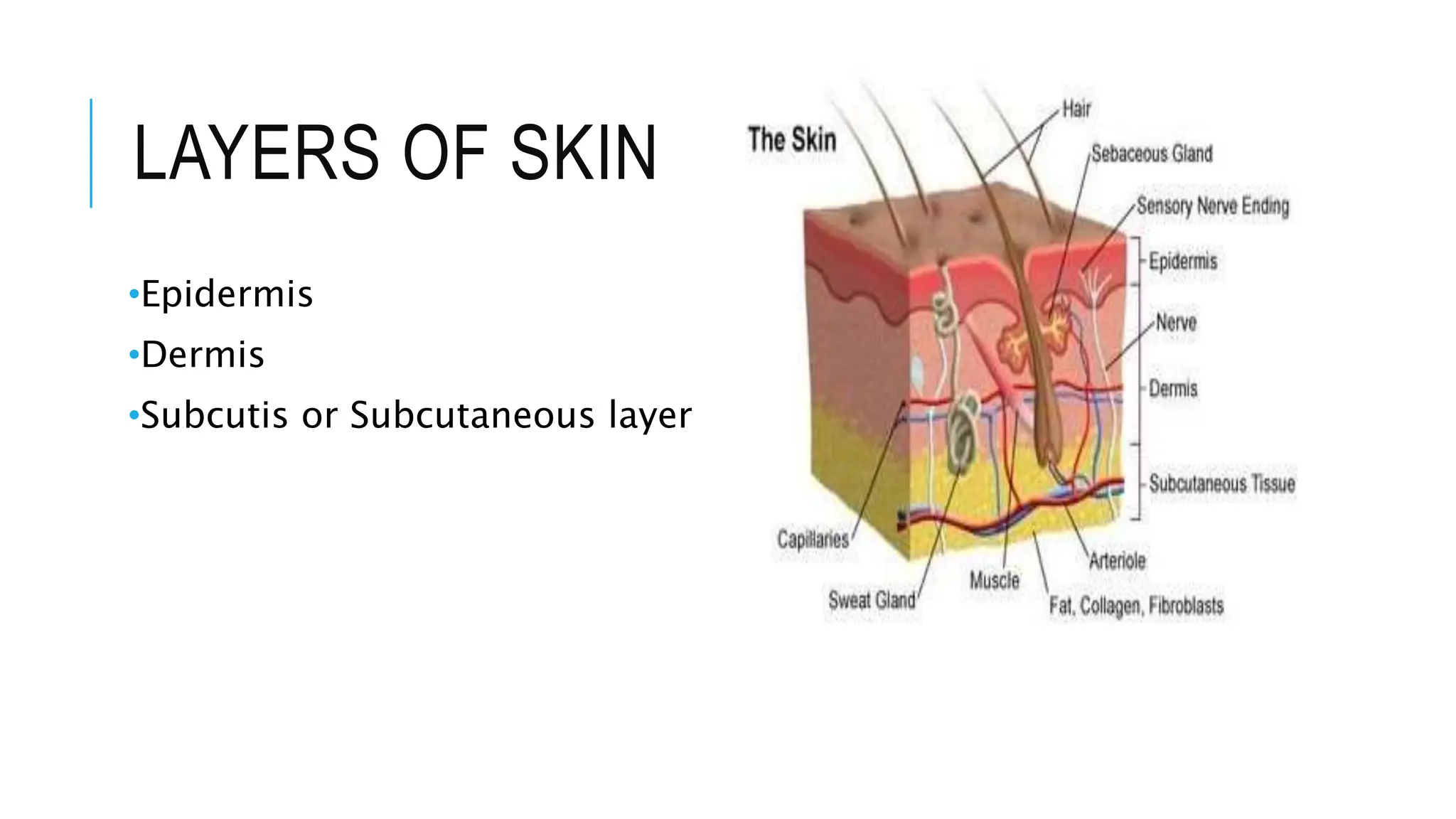
LAYERS OF SKIN
•Epidermis
•Dermis
•Subcutis or Subcutaneous layer
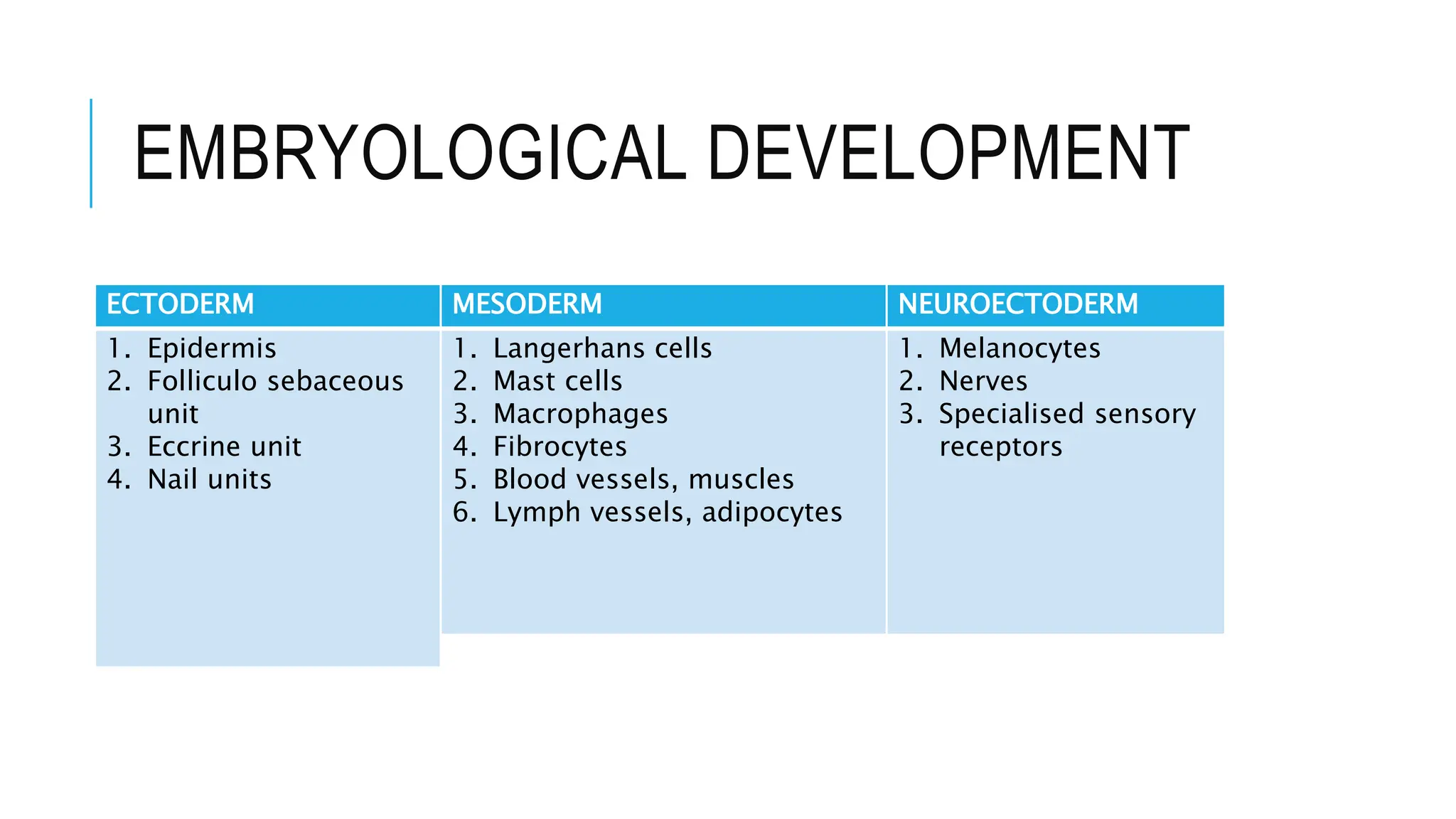
EMBRYOLOGICAL DEVELOPMENT
ECTODERM
1. Epidermis
2. Folliculo sebaceous
unit
3. Eccrine unit
4. Nail units
MESODERM
1. Langerhans cells
2. Mast cells
3. Macrophages
4. Fibrocytes
5. Blood vessels, muscles
6. Lymph vessels, adipocytes
NEUROECTODERM
1. Melanocytes
2. Nerves
3. Specialised sensory
receptors
EPIDERMIS
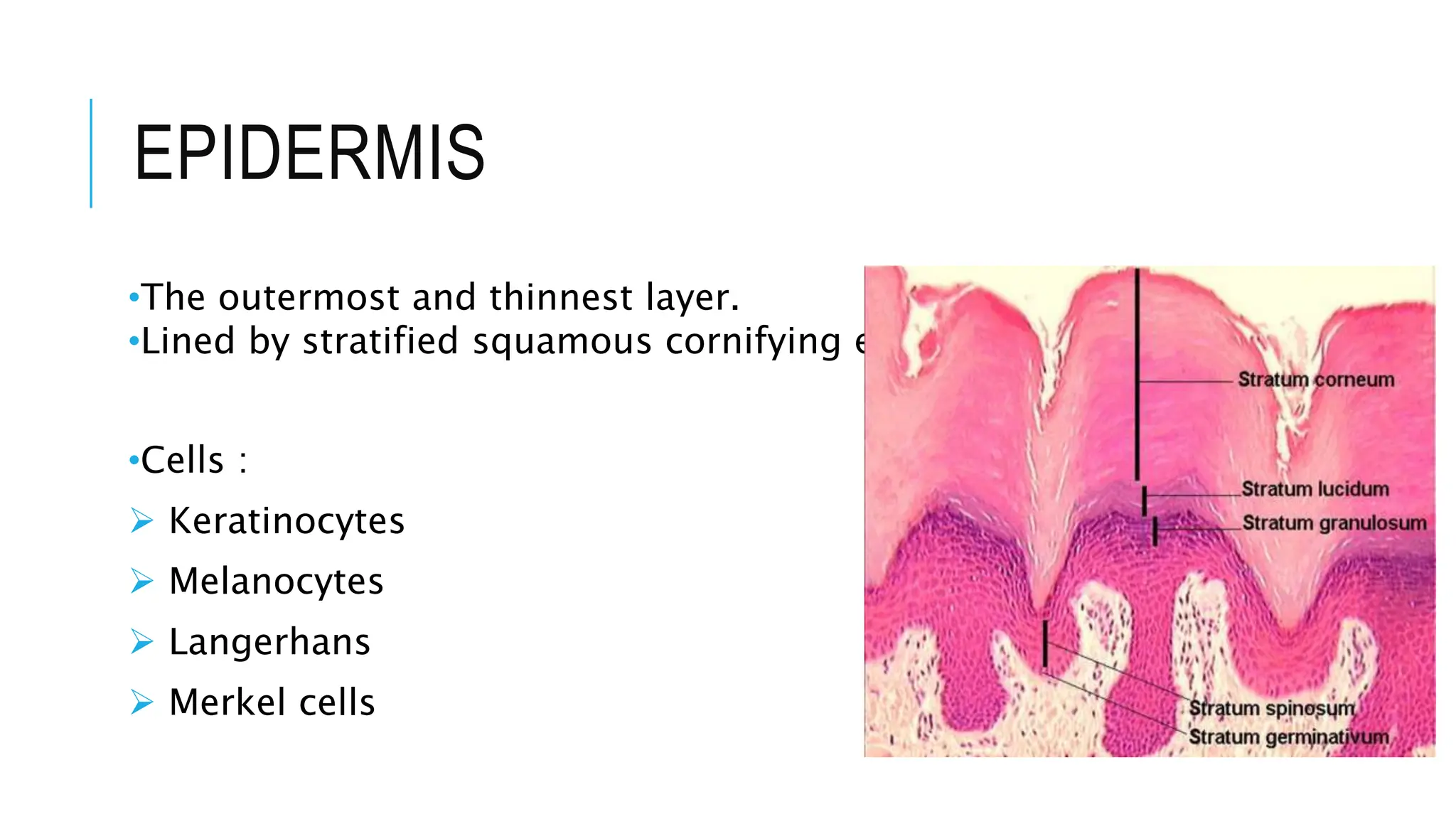
•The outermost and thinnest layer.
•Lined by stratified squamous cornifying epithelium.
•Cells :
 Keratinocytes
 Melanocytes
 Langerhans
 Merkel cells
STRATUM BASALE (germinativum)
•Single celled continuous layer of the skin, may be 2-3 layers in
glabrous skin.
•Large cuboidal cells with dark staining nuclei, dense cytoplasm
with many ribosomes and dense tonofilaments.
•Cells attached to each other and to the overlying stratum
spinosum  Desmosomes
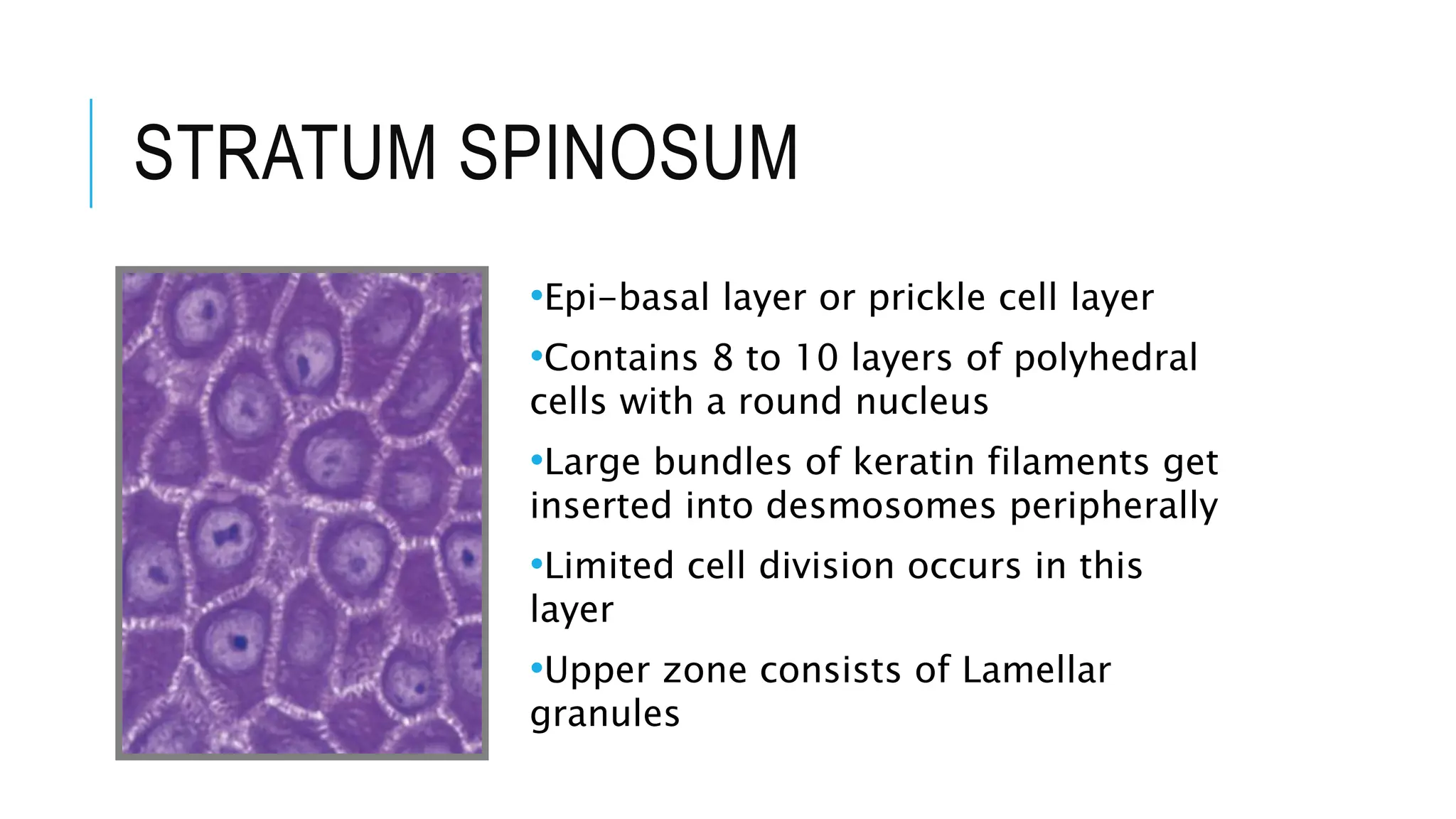
STRATUM SPINOSUM
•Epi-basal layer or prickle cell layer
•Contains 8 to 10 layers of polyhedral
cells with a round nucleus
•Large bundles of keratin filaments get
inserted into desmosomes peripherally
•Limited cell division occurs in this
layer
•Upper zone consists of Lamellar
granules
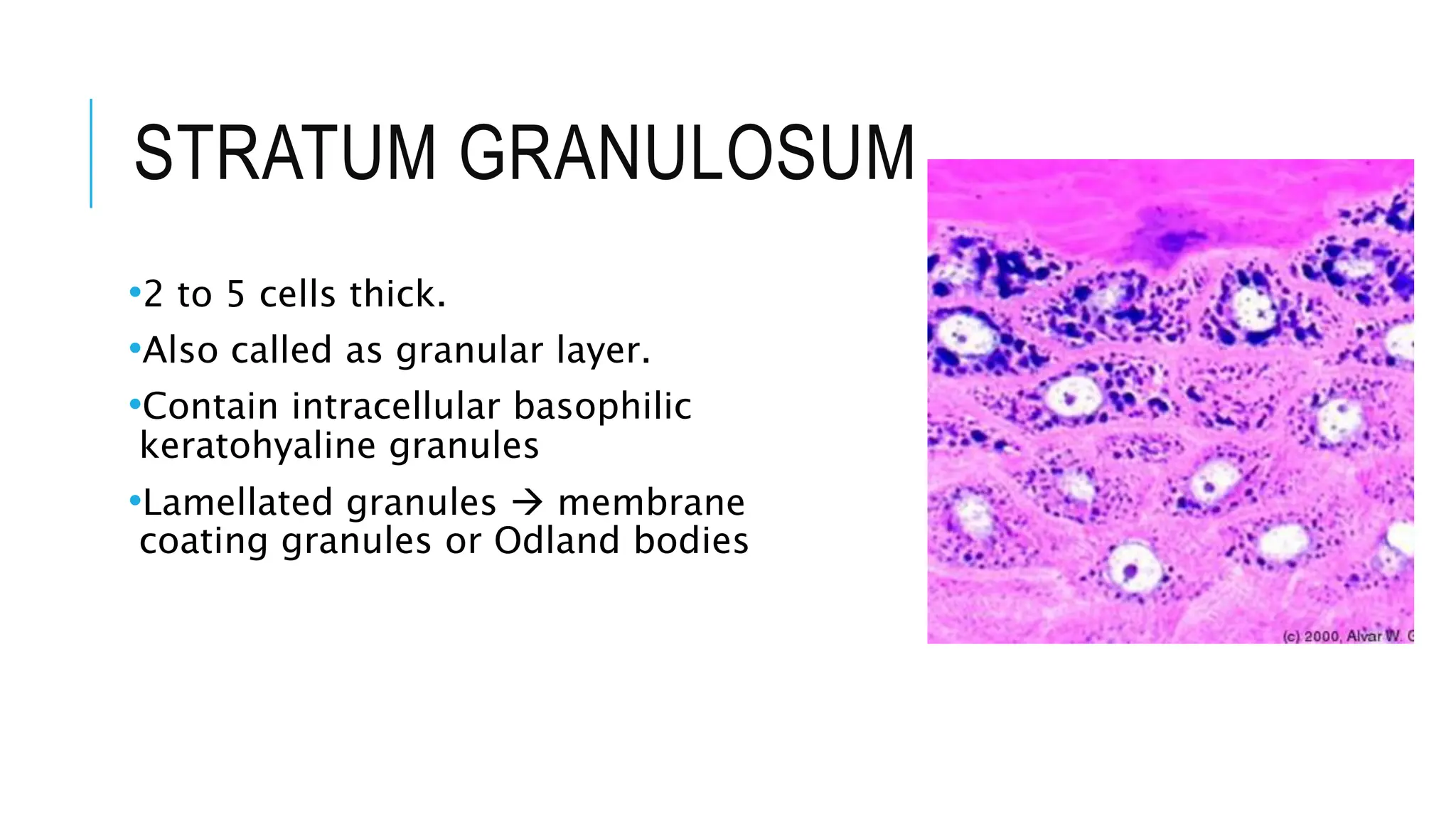
STRATUM GRANULOSUM
•2 to 5 cells thick.
•Also called as granular layer.
•Contain intracellular basophilic
keratohyaline granules
•Lamellated granules  membrane
coating granules or Odland bodies
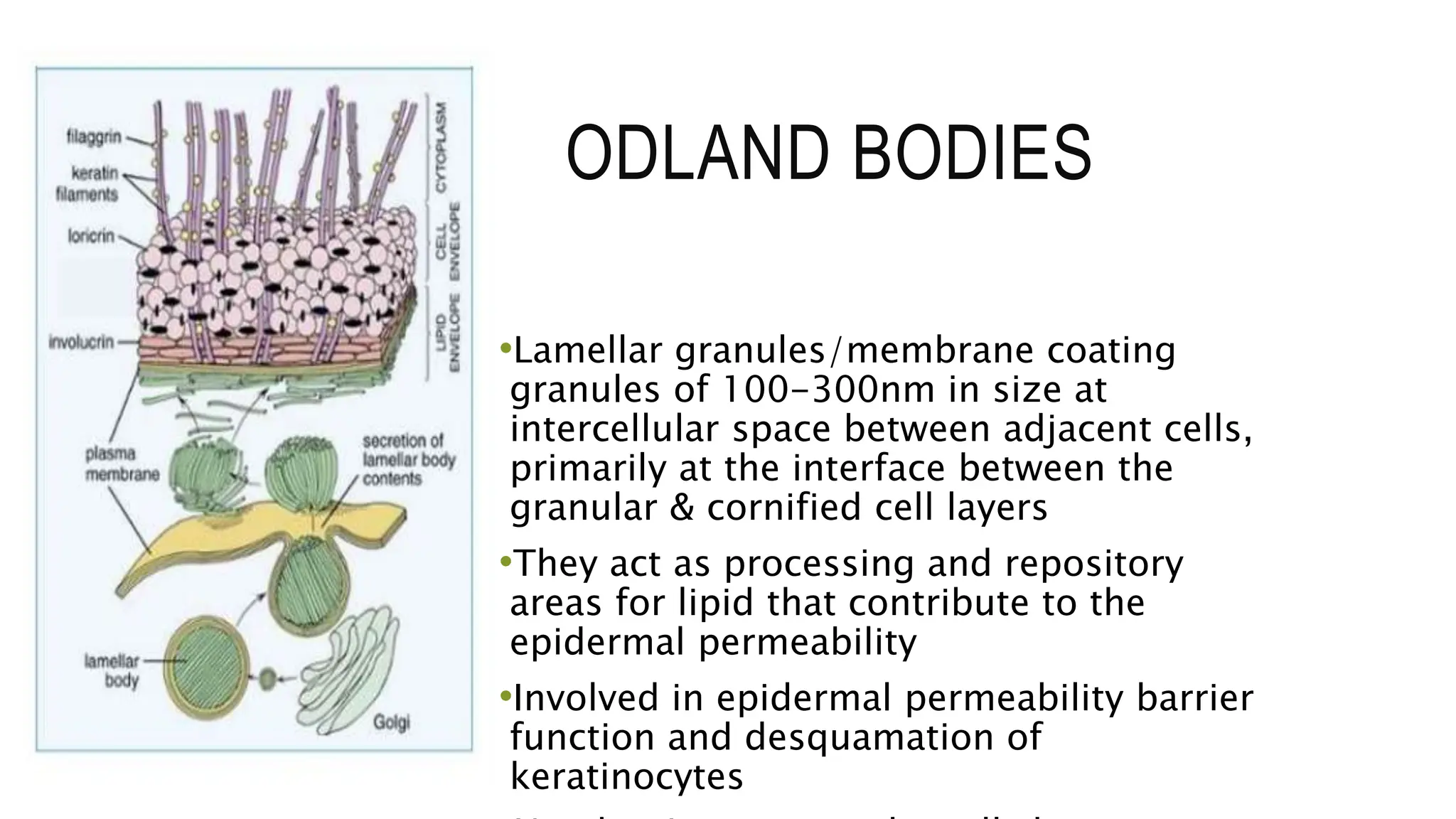
ODLAND BODIES
•Lamellar granules/membrane coating
granules of 100-300nm in size at
intercellular space between adjacent cells,
primarily at the interface between the
granular & cornified cell layers
•They act as processing and repository
areas for lipid that contribute to the
epidermal permeability
•Involved in epidermal permeability barrier
function and desquamation of
keratinocytes
STRATUM LUCIDUM
•Electron lucent layer seen in glabrous skin between stratum
granulosum and stratum corneum.
•Cells are nucleated and are referred as “transitional cells”
•Present in palms and soles.
•Contains granules of Elaiden
STRATUM CORNEUM
•20 to 25 layers of cornified cells, called Corneocytes.
•Corneocytes  Flattened keratinocytes, anucleated
•Joined by desmosomes, which eventually break apart and the
cells are shed.
•Lipids released from lamellar bodies surround these cells and
are responsible for the permeability of this layer.
CELLS OF EPIDERMIS
•Keratinocytes
•Non Keratinocytes
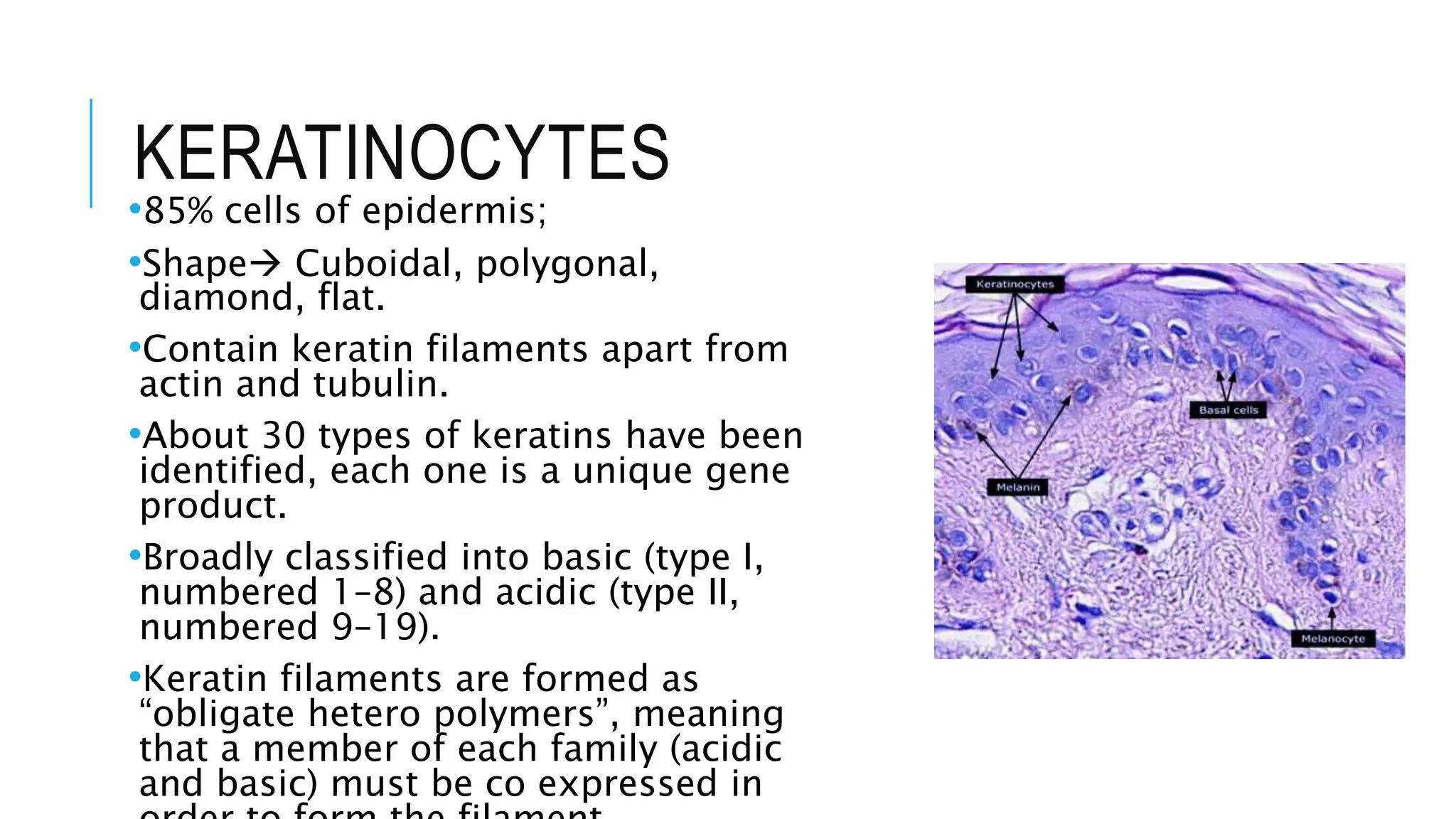
KERATINOCYTES
•85% cells of epidermis;
•Shape Cuboidal, polygonal,
diamond, flat.
•Contain keratin filaments apart from
actin and tubulin.
•About 30 types of keratins have been
identified, each one is a unique gene
product.
•Broadly classified into basic (type I,
numbered 1–8) and acidic (type II,
numbered 9–19).
•Keratin filaments are formed as
“obligate hetero polymers”, meaning
that a member of each family (acidic
and basic) must be co expressed in
NON KERATINOCYTES
•Melanocytes
•Langerhans Cells
•Merkel Cells
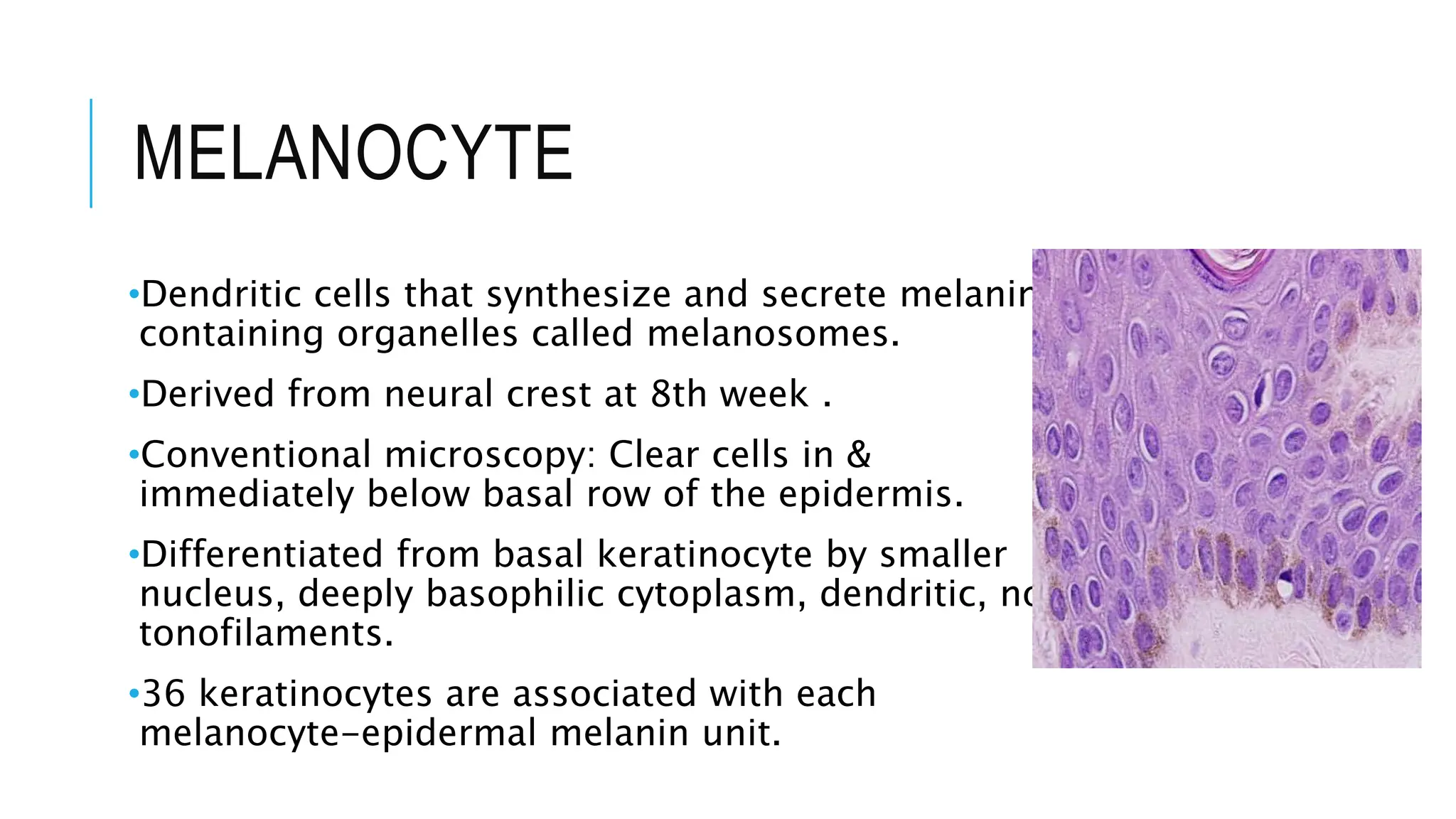
MELANOCYTE
•Dendritic cells that synthesize and secrete melanin-
containing organelles called melanosomes.
•Derived from neural crest at 8th week .
•Conventional microscopy: Clear cells in &
immediately below basal row of the epidermis.
•Differentiated from basal keratinocyte by smaller
nucleus, deeply basophilic cytoplasm, dendritic, no
tonofilaments.
•36 keratinocytes are associated with each
melanocyte-epidermal melanin unit.
TYPES OF MELANIN
I. Eumelanins –ellipsoidal-brown & black colour of skin &
hair.
II. Pheomelanins – spherical – lighter colour of hair.
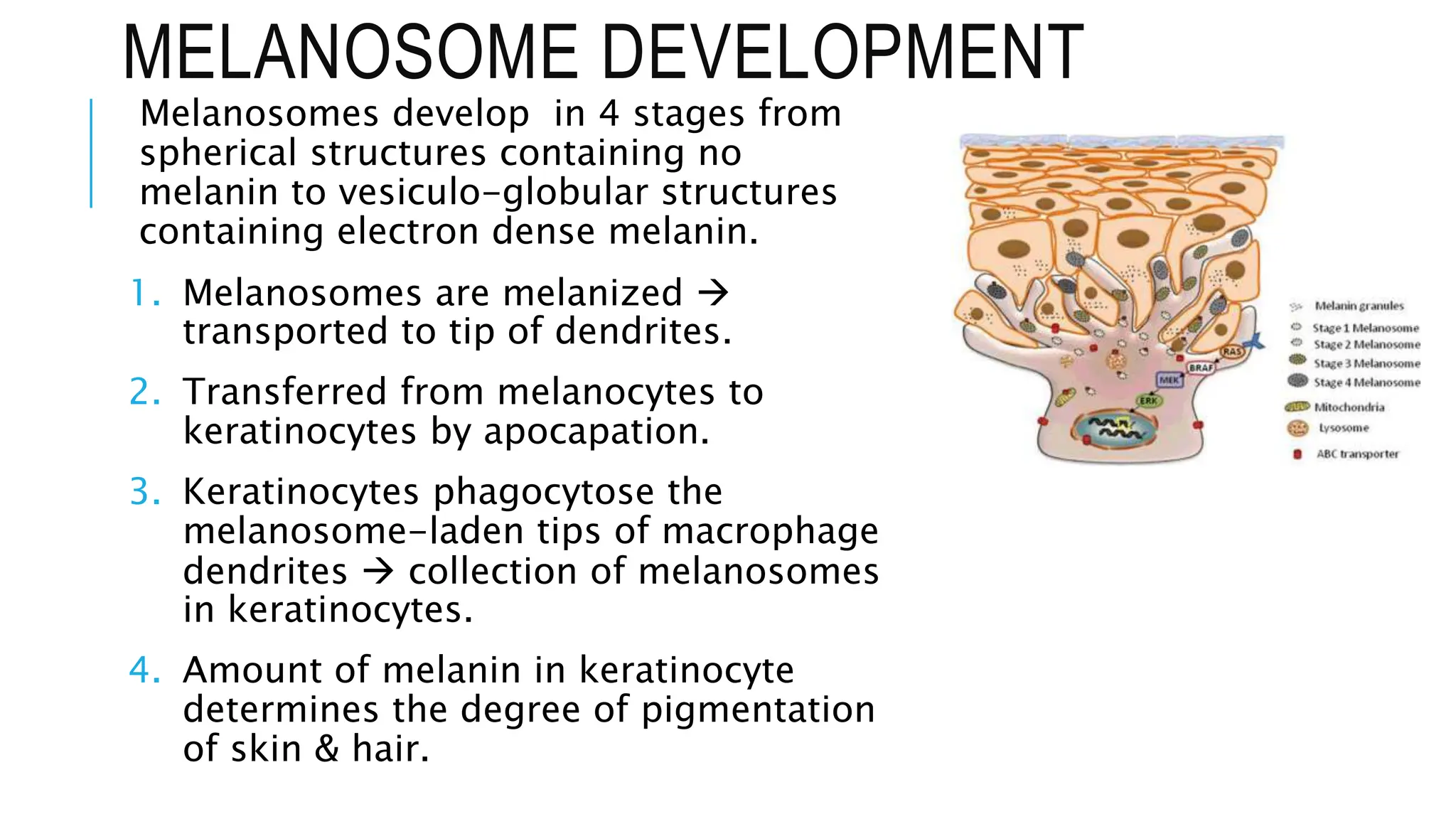
MELANOSOME DEVELOPMENT
Melanosomes develop in 4 stages from
spherical structures containing no
melanin to vesiculo-globular structures
containing electron dense melanin.
1. Melanosomes are melanized 
transported to tip of dendrites.
2. Transferred from melanocytes to
keratinocytes by apocapation.
3. Keratinocytes phagocytose the
melanosome-laden tips of macrophage
dendrites  collection of melanosomes
in keratinocytes.
4. Amount of melanin in keratinocyte
determines the degree of pigmentation
of skin & hair.
Aging Decline in number & activity of melanocytes Progressive graying of
hair.
Functions of melanin:
•Protects skin from harmful effects of sunlight
•Biochemical neutralizer
•Melanocytes situated in matrix of follicles impart various colors to hair.
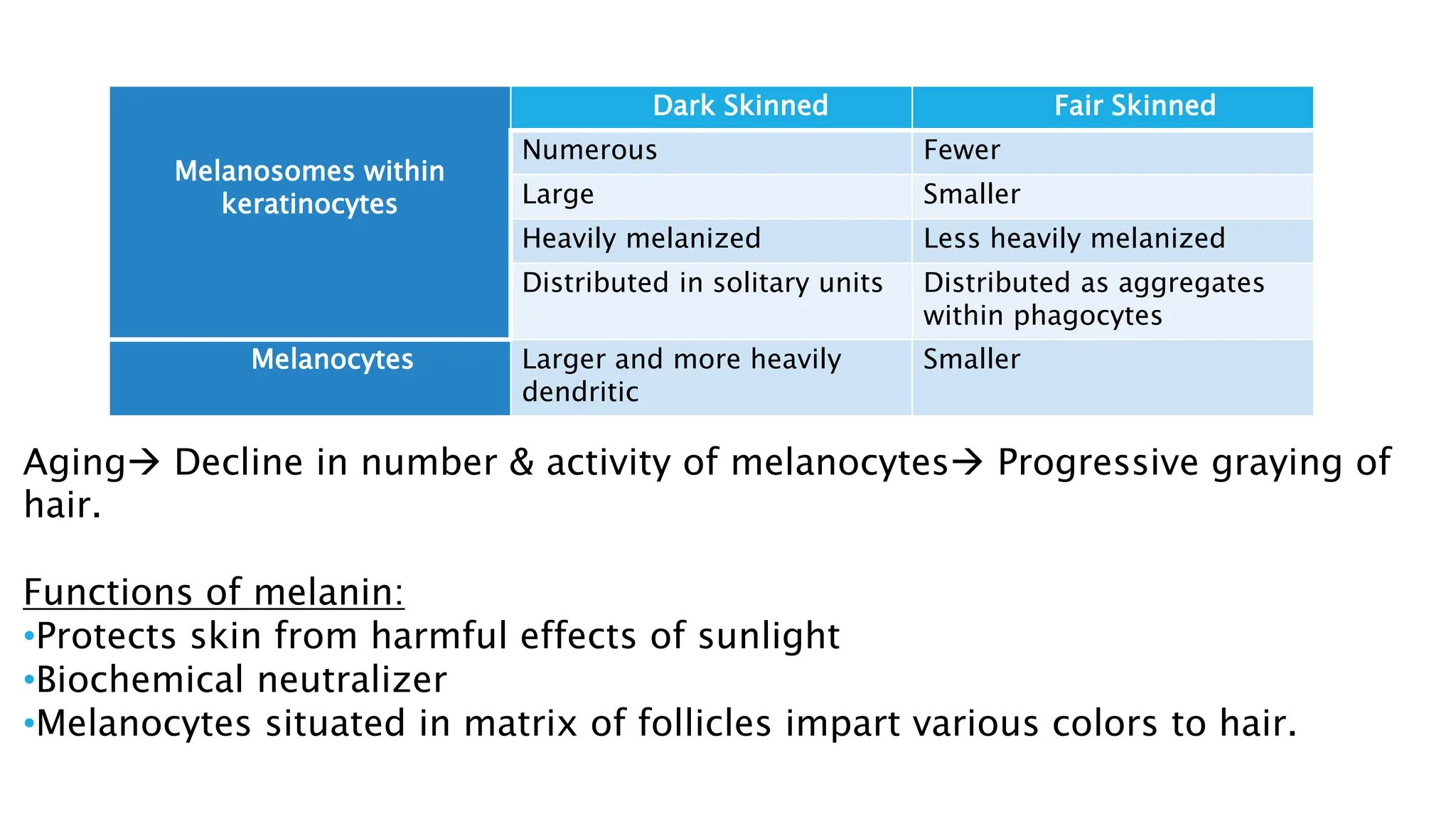
Melanosomes within
keratinocytes
Dark Skinned Fair Skinned
Numerous Fewer
Large Smaller
Heavily melanized Less heavily melanized
Distributed in solitary units Distributed as aggregates
within phagocytes
Melanocytes Larger and more heavily
dendritic
Smaller
LANGERHANS CELLS
•4% of cells in epidermis.
•Play a major role in mononuclear phagocyte system.
•Distributed in the basal, spinous and granular cell layers.
•Capable of phagocytosis, antigen processing, antigen
presentation and interactions with lymphocytes.
•Release cytokines, e.g. interleukin‐1, and promote lymphocyte
chemotaxis and activation.
•UV exposure impairs the functions of Langerhans cells.
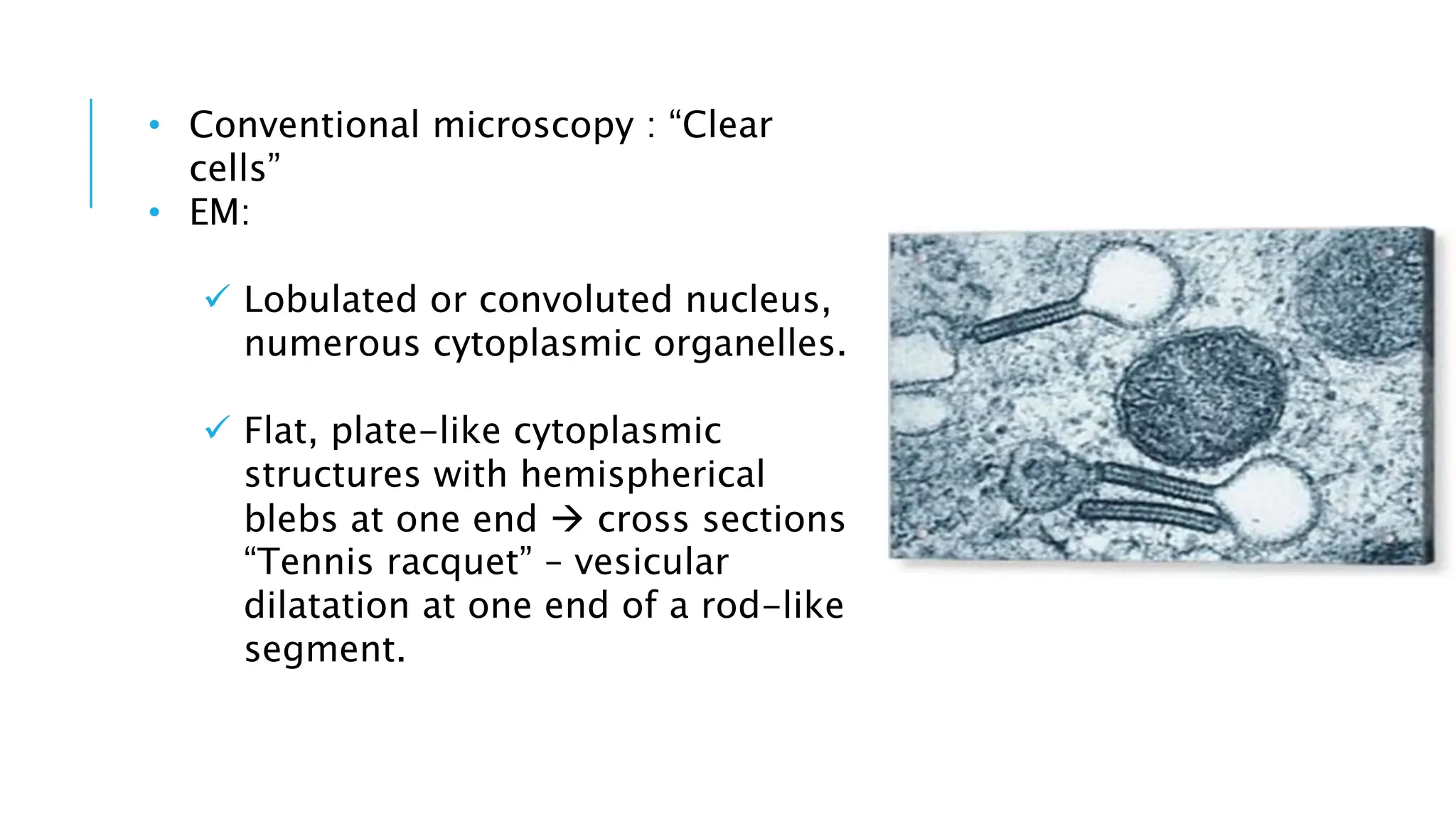
• Conventional microscopy : “Clear
cells”
• EM:
 Lobulated or convoluted nucleus,
numerous cytoplasmic organelles.
 Flat, plate-like cytoplasmic
structures with hemispherical
blebs at one end  cross sections
“Tennis racquet” – vesicular
dilatation at one end of a rod-like
segment.
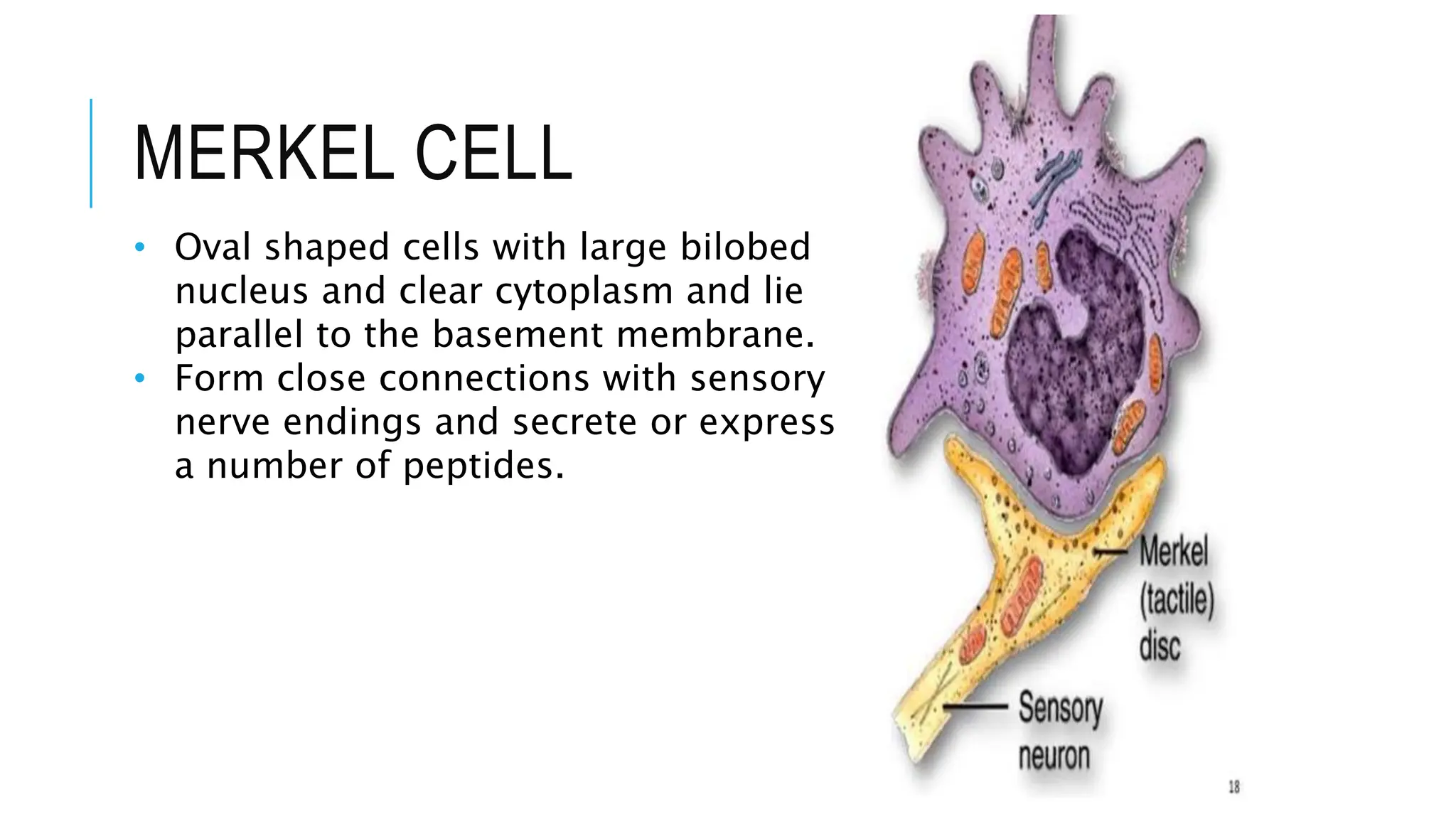
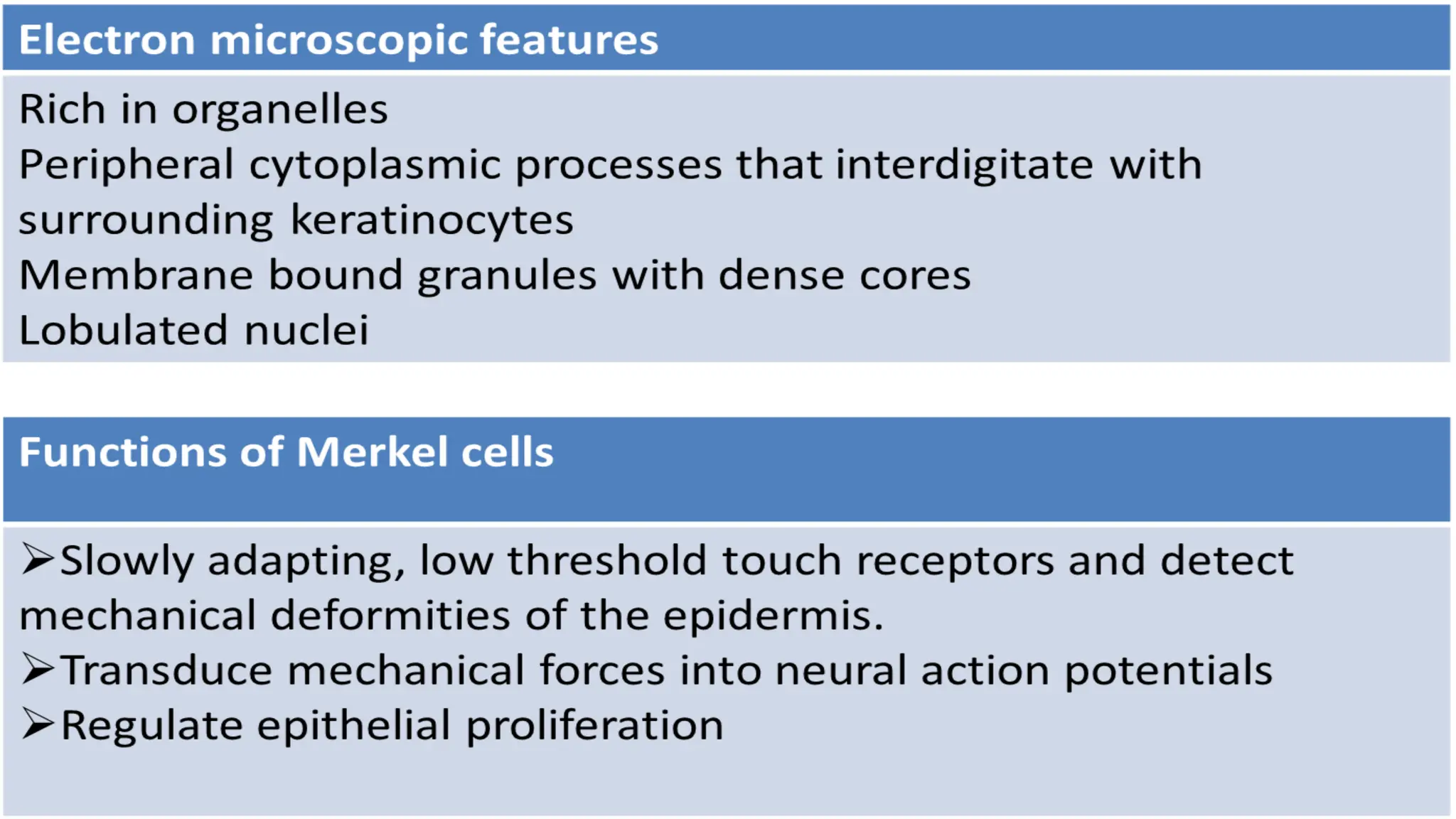
MERKEL CELL
• Oval shaped cells with large bilobed
nucleus and clear cytoplasm and lie
parallel to the basement membrane.
• Form close connections with sensory
nerve endings and secrete or express
a number of peptides.
DERMO-EPIDERMAL JUNCTION
•Highly specialized attachment between epidermis & papillary dermis.
•Mature by 12th week of gestation.
•3 cell types- keratinocytes, melanocytes & Merkel cells.
•Consists of 4 components Hemidesmosomes, Lamina lucida,
Lamina densa and the fibrous components associated with the basal
lamina including anchoring fibrils,dermal microfibrils and collagen
fibres
•The plasma membrane of the basal cells with specialized attachment
plates are hemidesmosomes
•The second layer, the lamina lucida, directly in contact with plasma
membranes of the basal keratinocytes.
•Below the lamina lucida is the lamina densa, at the lower part
interacts with the mesenchymal matrix of the upper dermis.
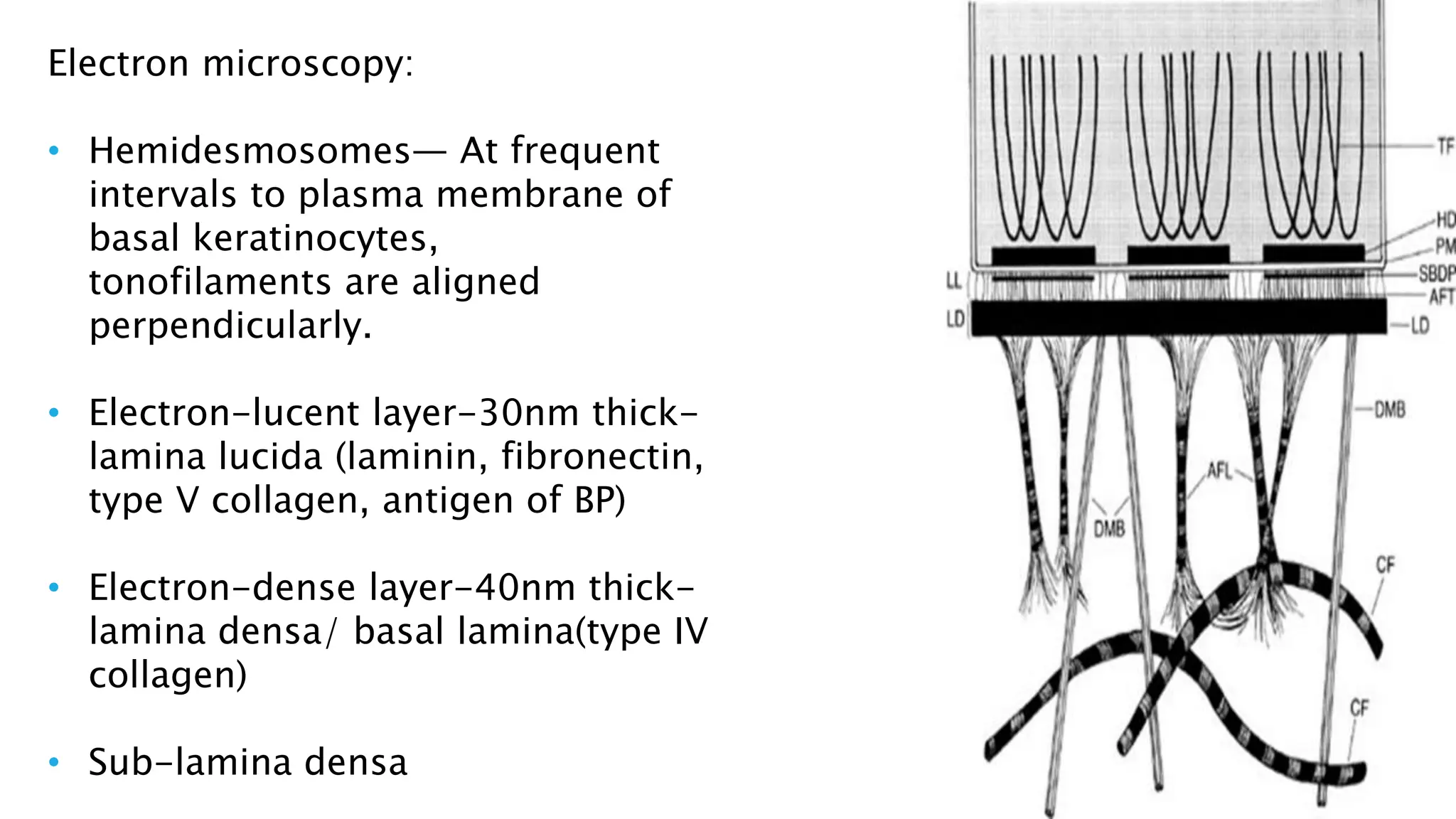
Electron microscopy:
• Hemidesmosomes— At frequent
intervals to plasma membrane of
basal keratinocytes,
tonofilaments are aligned
perpendicularly.
• Electron-lucent layer-30nm thick-
lamina lucida (laminin, fibronectin,
type V collagen, antigen of BP)
• Electron-dense layer-40nm thick-
lamina densa/ basal lamina(type IV
collagen)
• Sub-lamina densa
FUNCTIONS
•Attachment (anchoring fibrils & hemidesmosomes)
•Support  type IV collagen, type VII collagen
•Regulation of permeability across the dermo-epidermal
junction interface (charge-selective)
•Role in embryonal differentiation (type IV collagen, laminin &
fibronectin)
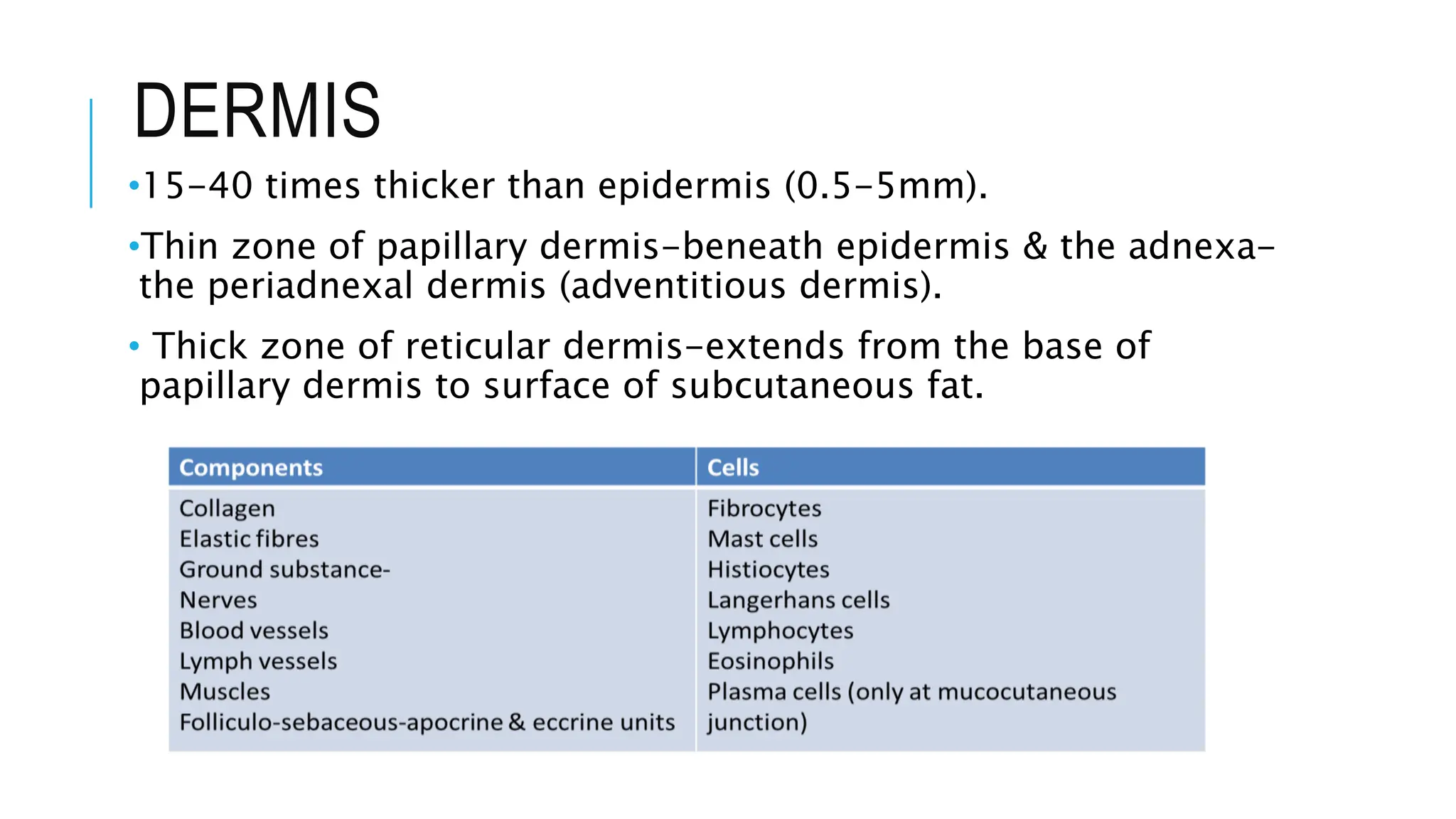
DERMIS
•15-40 times thicker than epidermis (0.5-5mm).
•Thin zone of papillary dermis-beneath epidermis & the adnexa-
the periadnexal dermis (adventitious dermis).
• Thick zone of reticular dermis-extends from the base of
papillary dermis to surface of subcutaneous fat.
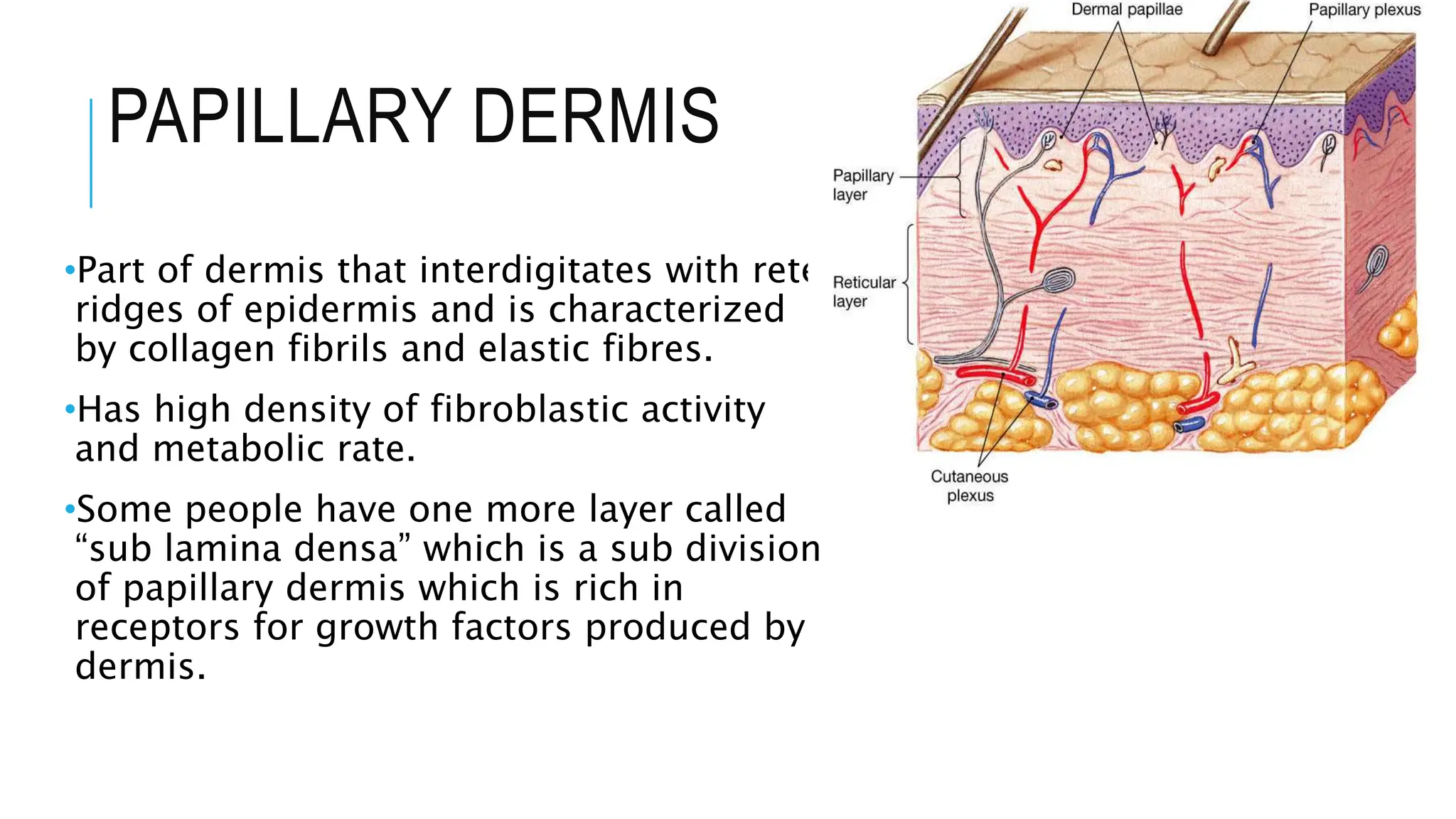
PAPILLARY DERMIS
•Part of dermis that interdigitates with rete
ridges of epidermis and is characterized
by collagen fibrils and elastic fibres.
•Has high density of fibroblastic activity
and metabolic rate.
•Some people have one more layer called
“sub lamina densa” which is a sub division
of papillary dermis which is rich in
receptors for growth factors produced by
dermis.
RETICULAR DERMIS
•Divided into upper and deeper zone
•Upper zone intermediate sized collagen fibres arranged
horizontally to form a network
•Elastic fibres usually align vertically from the upper zone of
collagen fibres into deeper dermis
•Mature elastic fibres and large collagen fibres are seen in the
deeper zone of dermis.
•Fibroblasts are predominant.
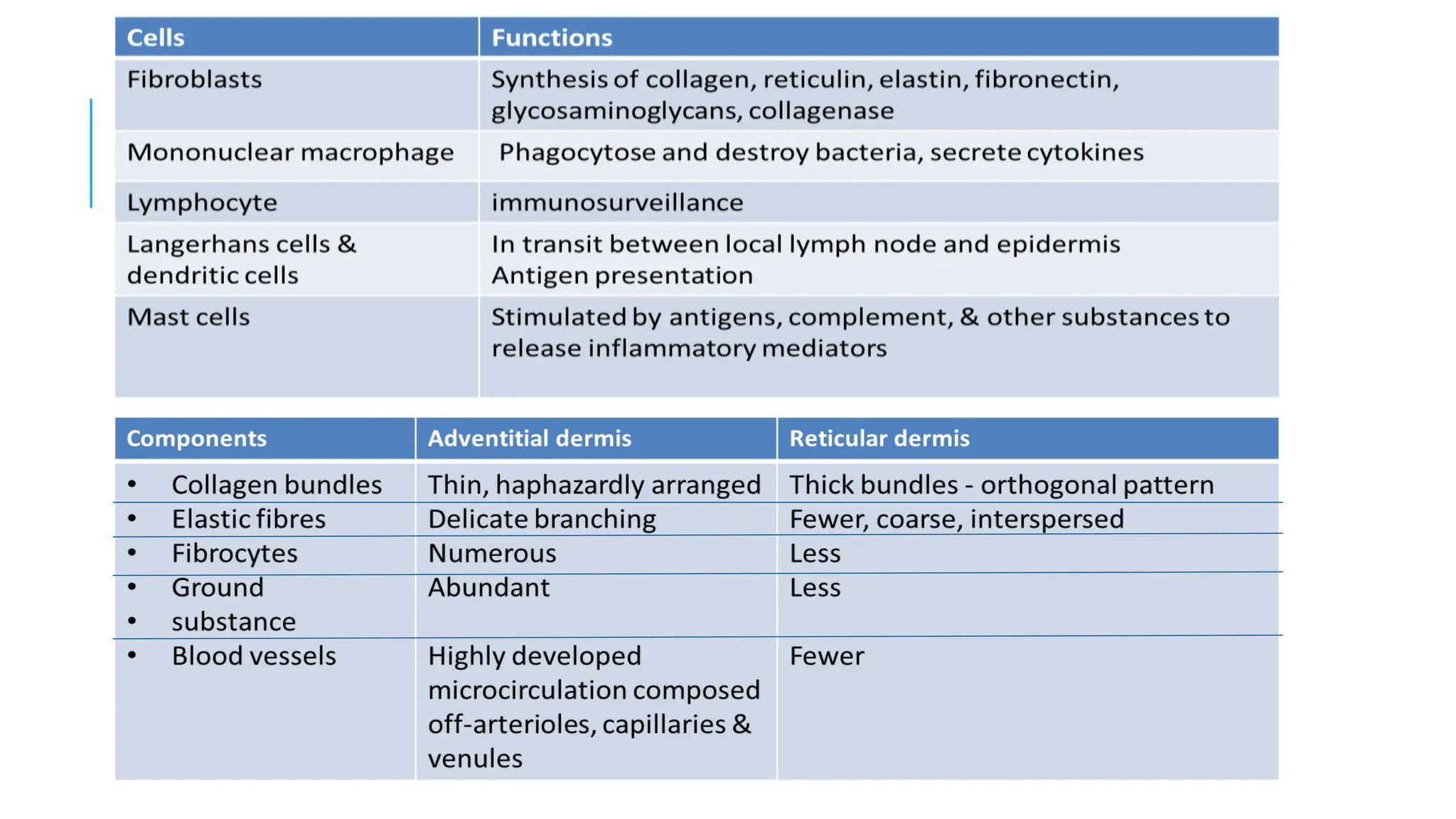
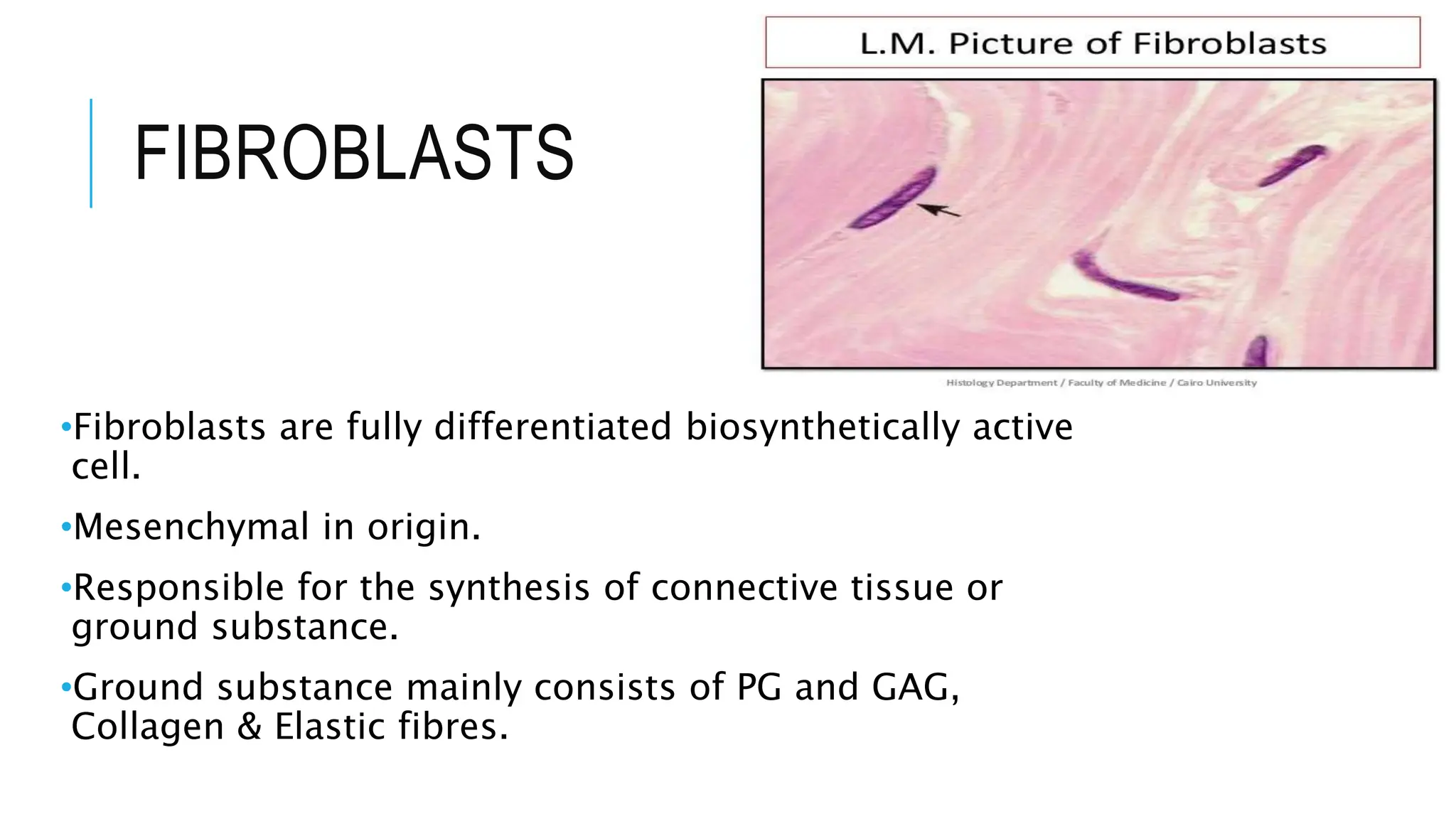
FIBROBLASTS
•Fibroblasts are fully differentiated biosynthetically active
cell.
•Mesenchymal in origin.
•Responsible for the synthesis of connective tissue or
ground substance.
•Ground substance mainly consists of PG and GAG,
Collagen & Elastic fibres.
PROTEOGLYCAN/GLYCOSAMINOGL
YCANS
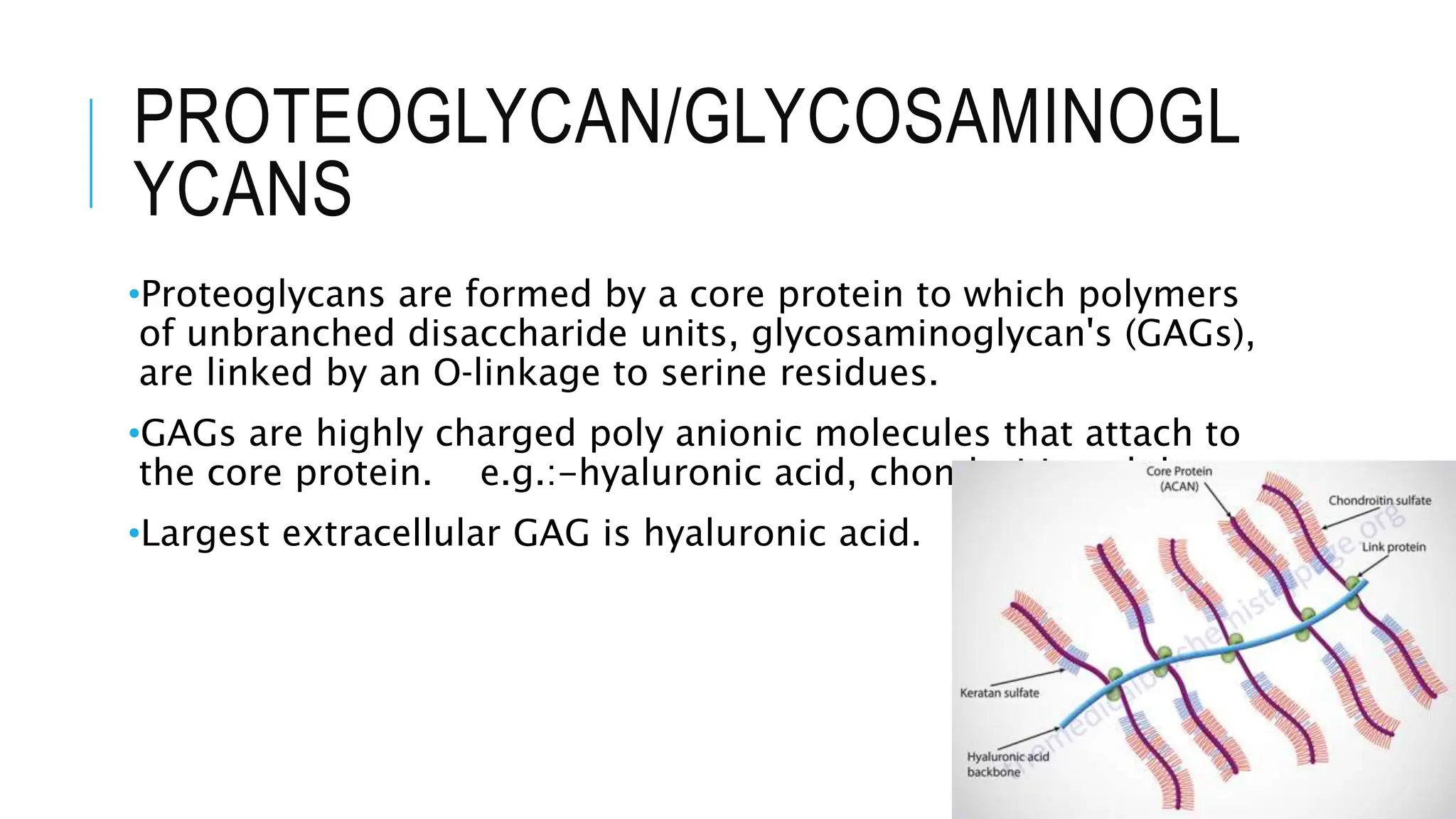
•Proteoglycans are formed by a core protein to which polymers
of unbranched disaccharide units, glycosaminoglycan's (GAGs),
are linked by an O‐linkage to serine residues.
•GAGs are highly charged poly anionic molecules that attach to
the core protein. e.g.:-hyaluronic acid, chondroitin sulphate.
•Largest extracellular GAG is hyaluronic acid.
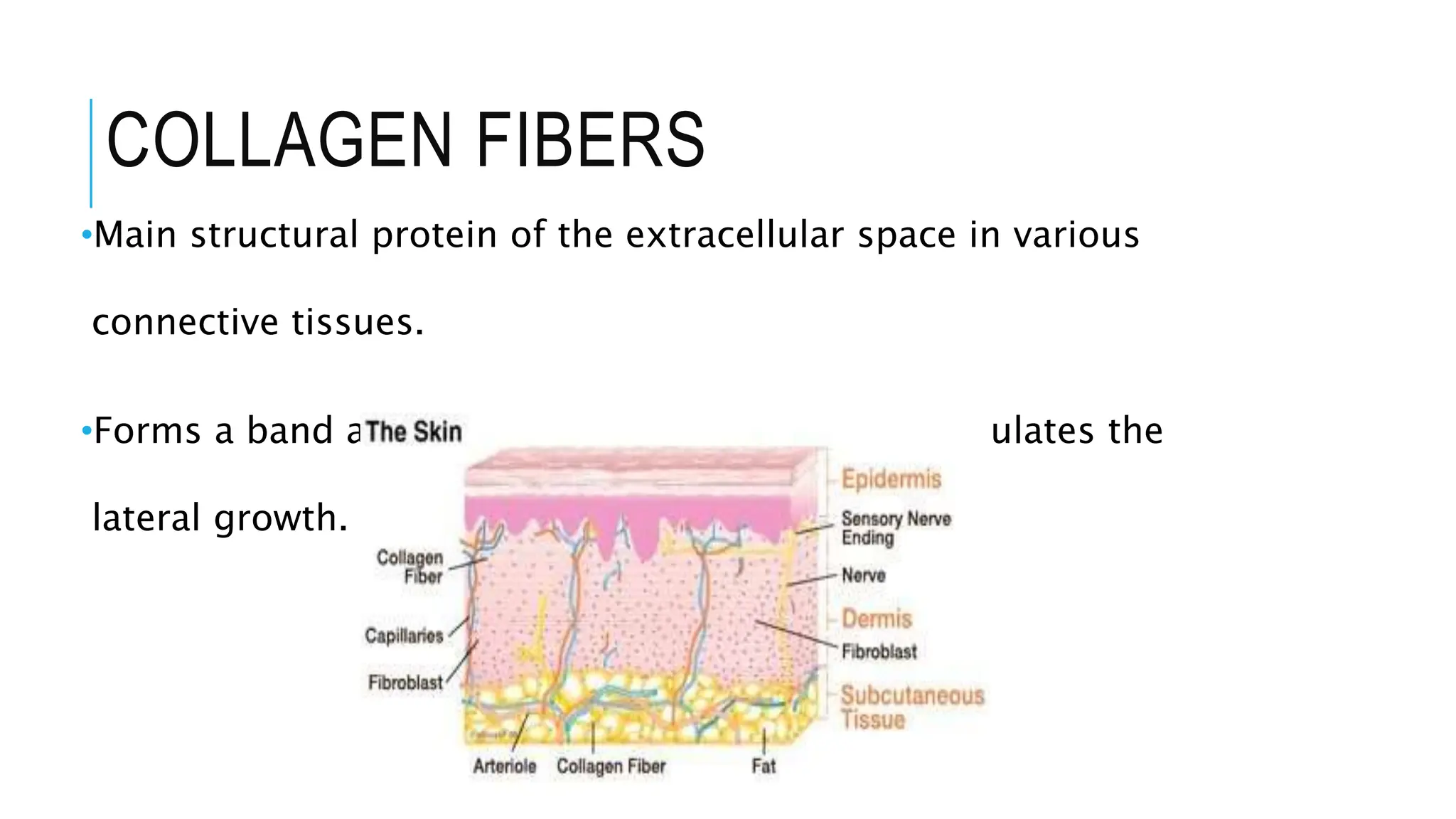
COLLAGEN FIBERS
•Main structural protein of the extracellular space in various
connective tissues.
•Forms a band around large collagen fibres and regulates the
lateral growth.
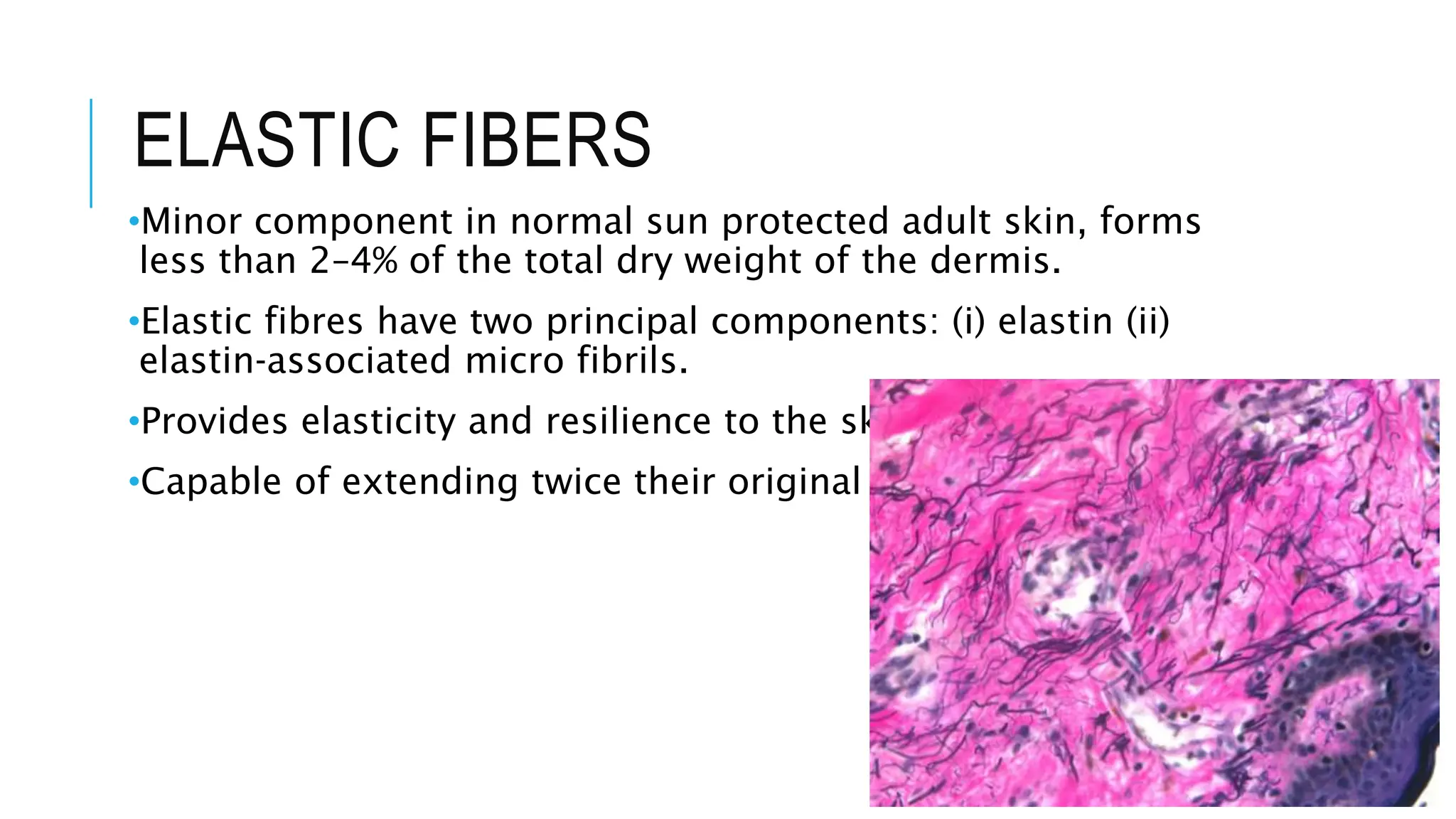
ELASTIC FIBERS
•Minor component in normal sun protected adult skin, forms
less than 2–4% of the total dry weight of the dermis.
•Elastic fibres have two principal components: (i) elastin (ii)
elastin‐associated micro fibrils.
•Provides elasticity and resilience to the skin.
•Capable of extending twice their original length.
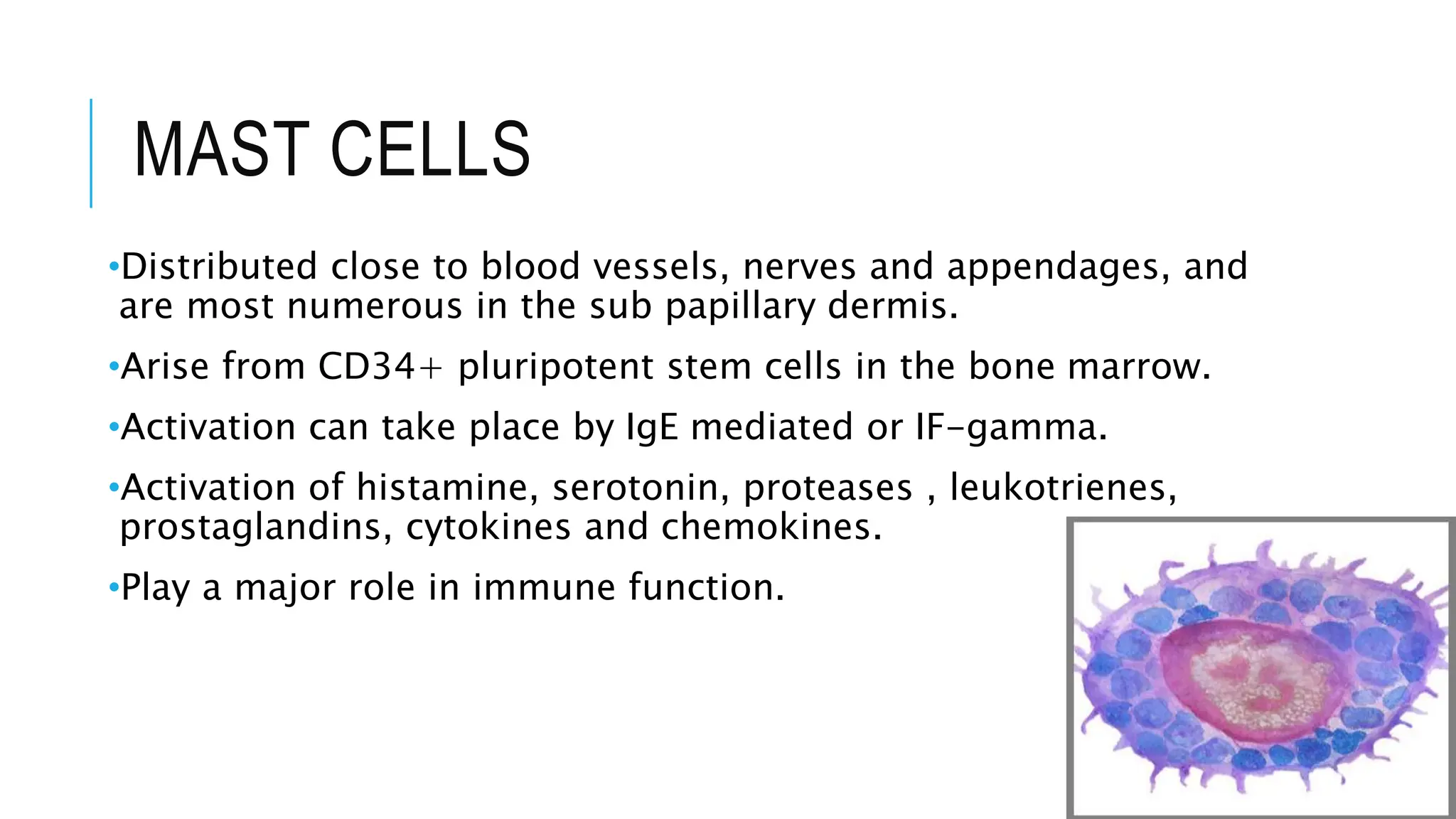
MAST CELLS
•Distributed close to blood vessels, nerves and appendages, and
are most numerous in the sub papillary dermis.
•Arise from CD34+ pluripotent stem cells in the bone marrow.
•Activation can take place by IgE mediated or IF-gamma.
•Activation of histamine, serotonin, proteases , leukotrienes,
prostaglandins, cytokines and chemokines.
•Play a major role in immune function.
GROUND SUBSTANCE
•Amorphous fibrillary component that enmeshes –fibrillar and
cellular components (including the dermis).
•Consists of water, electrolytes, plasma proteins &
mucopolysaccharides.
•Fibrocytes produces all components of ground substance.
•Stains: Alcian blue & colloidal iron.
FUNCTIONS
•Polyanionic macromolecules-osmotically active- homeostatic
maintenance in salt & water balance.
•High viscosity-support for components of dermis &
subcutaneous tissue.
•Regulate growth, migration & differentiation of cells.
•Tensile strength of wound.
ADNEXA
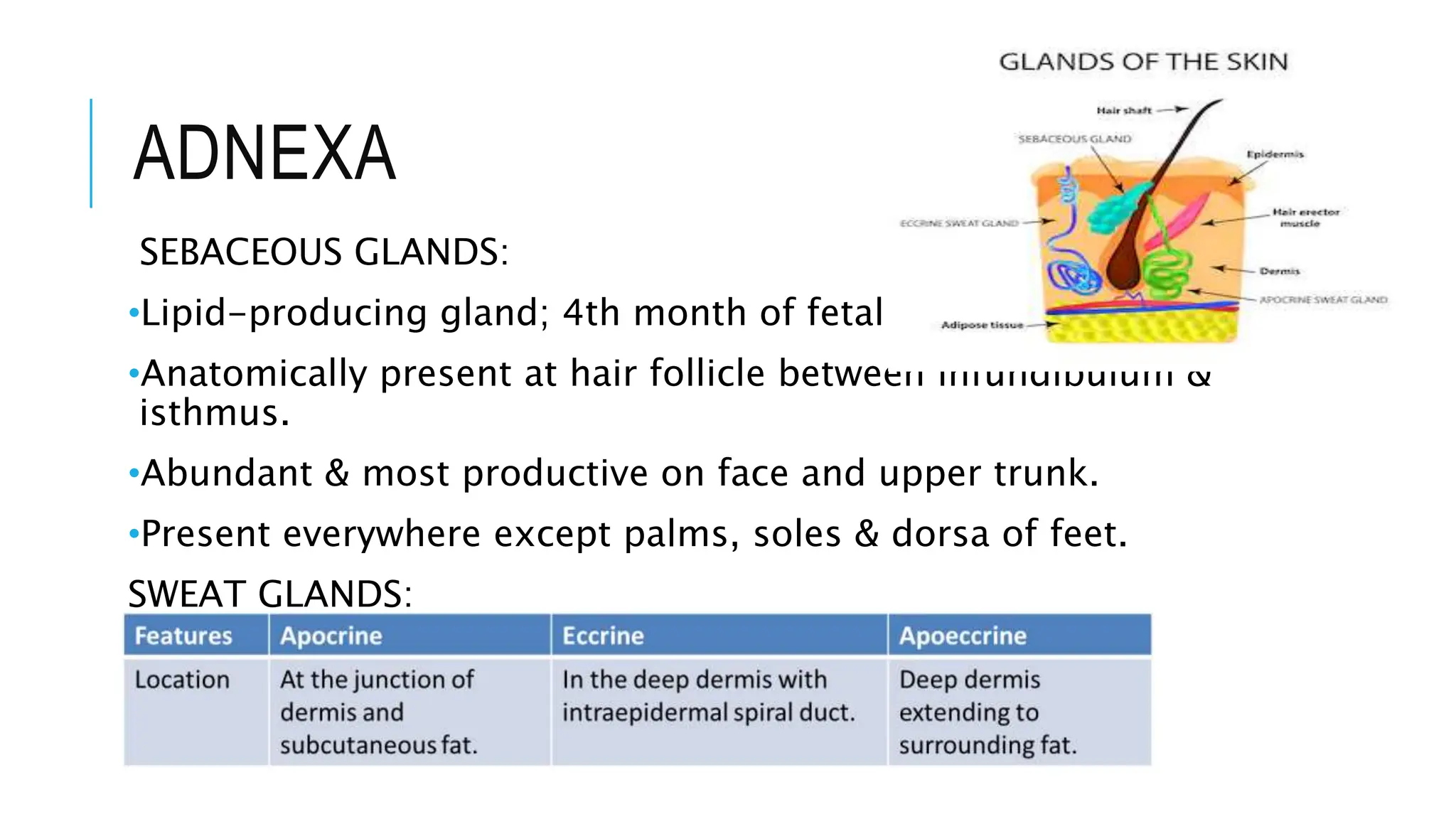
SEBACEOUS GLANDS:
•Lipid-producing gland; 4th month of fetal life.
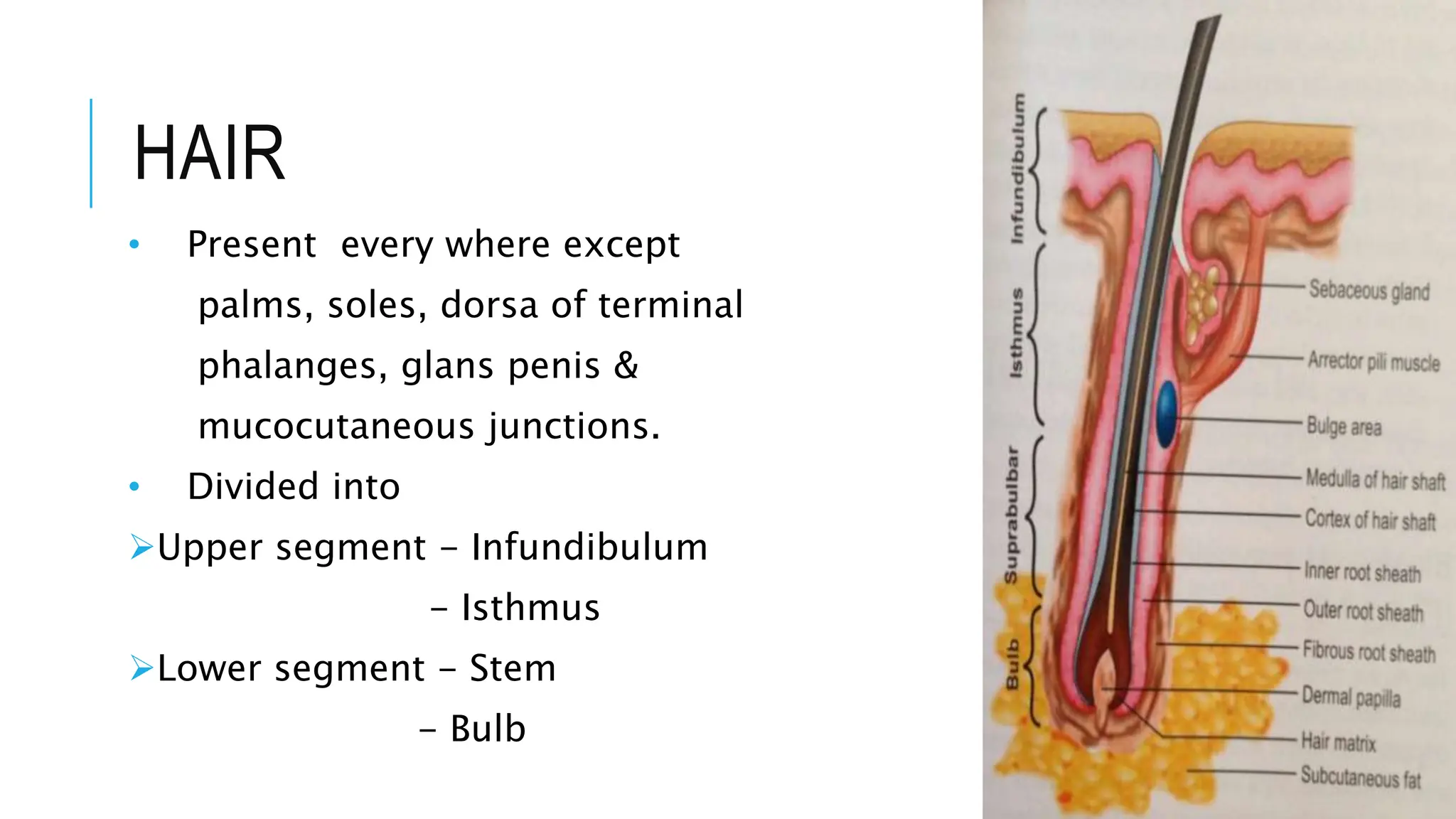
•Anatomically present at hair follicle between infundibulum &
isthmus.
•Abundant & most productive on face and upper trunk.
•Present everywhere except palms, soles & dorsa of feet.
SWEAT GLANDS:
HAIR
• Present every where except
palms, soles, dorsa of terminal
phalanges, glans penis &
mucocutaneous junctions.
• Divided into
Upper segment - Infundibulum
- Isthmus
Lower segment - Stem
- Bulb
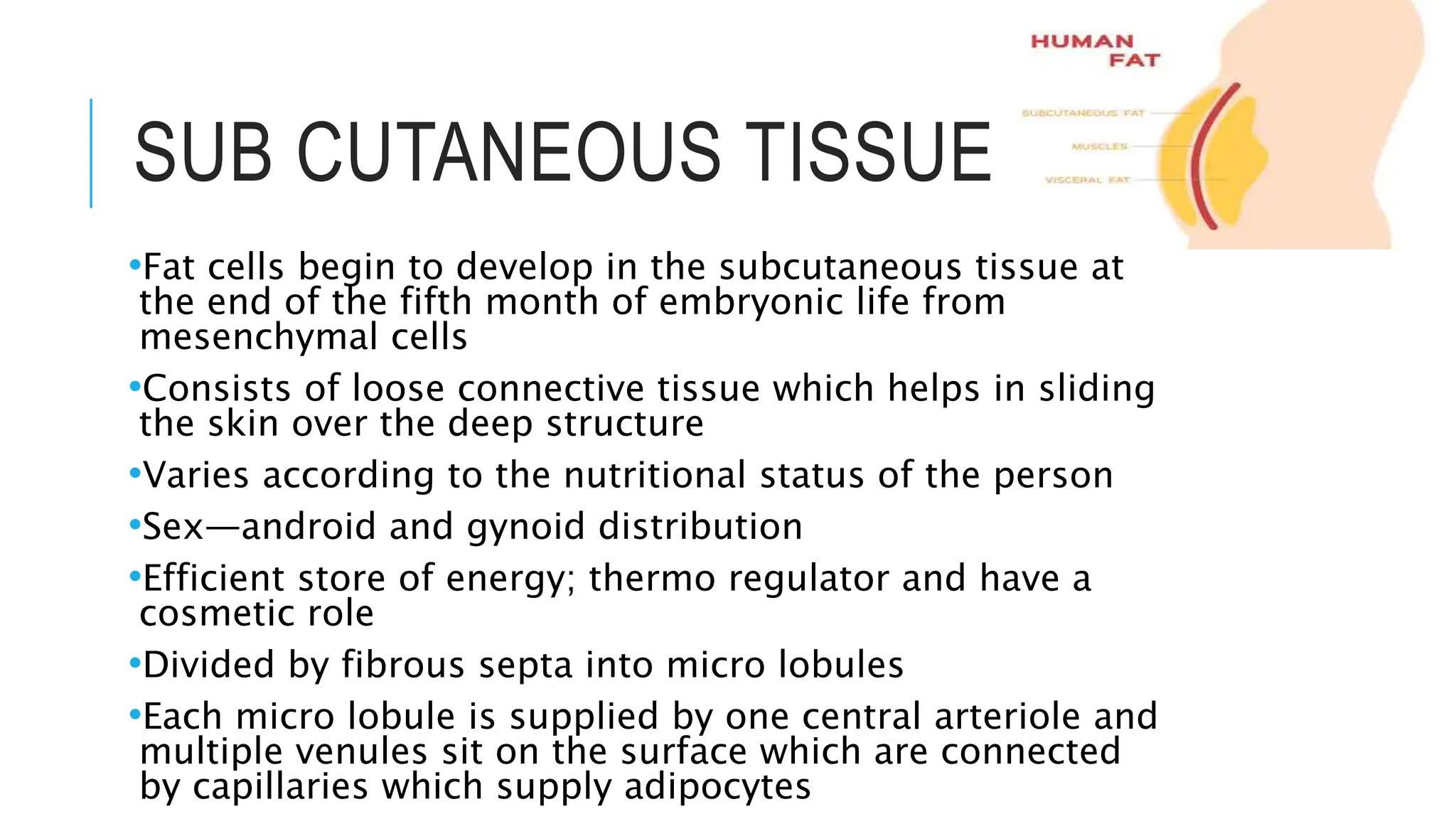
SUB CUTANEOUS TISSUE
•Fat cells begin to develop in the subcutaneous tissue at
the end of the fifth month of embryonic life from
mesenchymal cells
•Consists of loose connective tissue which helps in sliding
the skin over the deep structure
•Varies according to the nutritional status of the person
•Sex—android and gynoid distribution
•Efficient store of energy; thermo regulator and have a
cosmetic role
•Divided by fibrous septa into micro lobules
•Each micro lobule is supplied by one central arteriole and
multiple venules sit on the surface which are connected
by capillaries which supply adipocytes
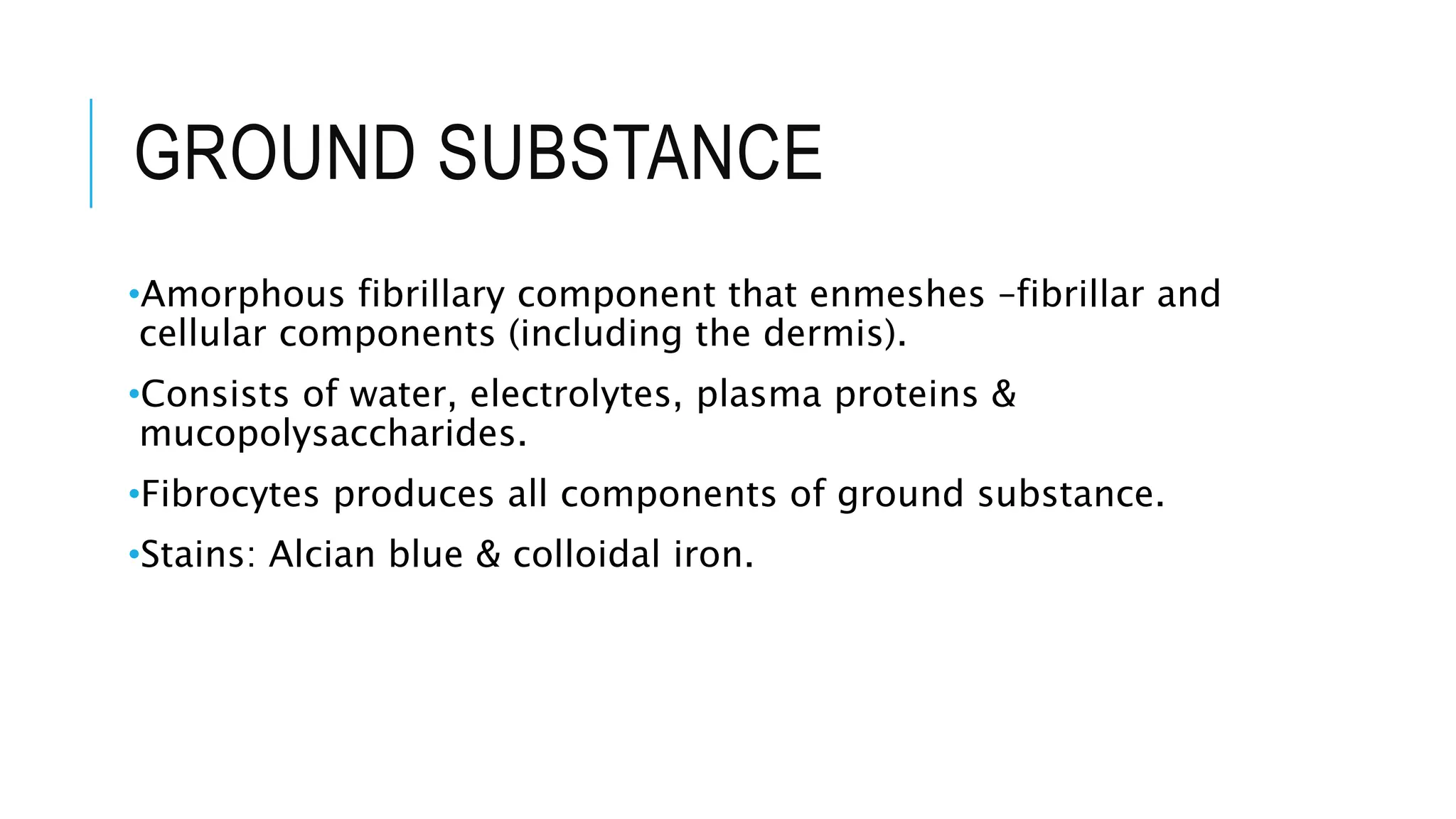
VASCULATURE
•Arteries form the 2 plexuses. One at the junction of
papillary and reticular layer(sub-papillary plexus) and
another at junction of dermis and hypodermis
(cutaneous plexus).
•Veins form the 2 plexuses – 2 in same position as for
arterial.
•Lymphatics lie along with veins in 2 plexuses but are
inter connected by oblique vessels.
•Both plexuses are connected by vertical vessels passing
through reticular dermis.
•Glomus bodies– temperature and blood pressure.
NERVES
• Superficial dermis nerve bundles found within neurovascular
bundles.
• Deep dermis, nerves travel parallel to the surface.
•Meissners corpuscles:- touch and pressure mediator present in
dermal papillae on digits, palms and soles.
•Vater-pacini corpuscles:- touch and pressure of weight bearing
areas and genitals.
•Mucocutaneous end organs are found in papillary dermis of
modified hairless skin at mucocutaneous junctions.
•Temperature, pain and itch are carried by unmyelinated nerve
fibres that terminate in the papillary dermis and around hair
follicles.
•Post ganglionic adrenergic fibres of ANS regulate
vasoconstriction, apocrine gland secretion and contraction of
REFERENCES
•Yousef H, Alhajj M, Sharma S. Anatomy, Skin (Integument),
Epidermis. [Updated 2020 Jul 27]. In: StatPearls [Internet].
Treasure Island (FL): StatPearls Publishing; 2020 Jan
•Agarwal S, Krishnamurthy K. Histology, Skin. [Updated 2020 Jul
3]. In: StatPearls [Internet]. Treasure Island (FL): StatPearls
Publishing; 2020 Jan
•Garza L. developmental biology of skin. In Kang S, Amagai M,
Bruckner AL, Enk AH, Margolis DJ, Orringer AS editors.
Fitzpatrick’s Dermatology in General medicine, 9th edn. Mc
Graw Hill Company, 2019;4,49-61.
•.
•McGranth J.A, Uitto J. Anatomy and organization of human skin.
In burns, Breathnach S, Cox N, Griffiths C, editor. Rook’s
textbook of dermatology.9th edn. Blackwell publishing Ltd ;
John Wiley and sotus ; 2016; 2.1-3.1
•Thappa D.M, Konda D.Structure and functions of the skin.
Sachhidanand S, editor. IADVL textbook of dermatology,4th edn.
Bhalani publishing house, Mumbai; 2015;27-69
•Jakuboric H.R, Ackerman A.B Structure and functions of the
skin: development, morphology and physiology. In: Moschella
S.C, Hurley H.J, editors. Dermatology, 3rd edn. Philadelphia:
W.B.Sanders company;1-51
THANK YOU

Structure and Anatomy of Skin ( Layer by Layer)

  • 1.
    ANATOMY OF SKINDR. MOHNISH SEKAR
  • 2.
    INTRODUCTION •Largest organ ofthe body. •Covers a surface area of approximately 2 m2. •Constitutes 14% of the body weight. •Protection from moisture, cold and sunrays as well as germs and toxic substances. •Plays a major role in vital events like immunity, temperature regulation and vitamin D synthesis.
  • 3.
  • 4.
    EMBRYOLOGICAL DEVELOPMENT ECTODERM 1. Epidermis 2.Folliculo sebaceous unit 3. Eccrine unit 4. Nail units MESODERM 1. Langerhans cells 2. Mast cells 3. Macrophages 4. Fibrocytes 5. Blood vessels, muscles 6. Lymph vessels, adipocytes NEUROECTODERM 1. Melanocytes 2. Nerves 3. Specialised sensory receptors
  • 6.
    EPIDERMIS •The outermost andthinnest layer. •Lined by stratified squamous cornifying epithelium. •Cells :  Keratinocytes  Melanocytes  Langerhans  Merkel cells
  • 7.
    STRATUM BASALE (germinativum) •Singlecelled continuous layer of the skin, may be 2-3 layers in glabrous skin. •Large cuboidal cells with dark staining nuclei, dense cytoplasm with many ribosomes and dense tonofilaments. •Cells attached to each other and to the overlying stratum spinosum  Desmosomes
  • 8.
    STRATUM SPINOSUM •Epi-basal layeror prickle cell layer •Contains 8 to 10 layers of polyhedral cells with a round nucleus •Large bundles of keratin filaments get inserted into desmosomes peripherally •Limited cell division occurs in this layer •Upper zone consists of Lamellar granules
  • 9.
    STRATUM GRANULOSUM •2 to5 cells thick. •Also called as granular layer. •Contain intracellular basophilic keratohyaline granules •Lamellated granules  membrane coating granules or Odland bodies
  • 10.
    ODLAND BODIES •Lamellar granules/membranecoating granules of 100-300nm in size at intercellular space between adjacent cells, primarily at the interface between the granular & cornified cell layers •They act as processing and repository areas for lipid that contribute to the epidermal permeability •Involved in epidermal permeability barrier function and desquamation of keratinocytes
  • 11.
    STRATUM LUCIDUM •Electron lucentlayer seen in glabrous skin between stratum granulosum and stratum corneum. •Cells are nucleated and are referred as “transitional cells” •Present in palms and soles. •Contains granules of Elaiden
  • 12.
    STRATUM CORNEUM •20 to25 layers of cornified cells, called Corneocytes. •Corneocytes  Flattened keratinocytes, anucleated •Joined by desmosomes, which eventually break apart and the cells are shed. •Lipids released from lamellar bodies surround these cells and are responsible for the permeability of this layer.
  • 13.
  • 14.
    KERATINOCYTES •85% cells ofepidermis; •Shape Cuboidal, polygonal, diamond, flat. •Contain keratin filaments apart from actin and tubulin. •About 30 types of keratins have been identified, each one is a unique gene product. •Broadly classified into basic (type I, numbered 1–8) and acidic (type II, numbered 9–19). •Keratin filaments are formed as “obligate hetero polymers”, meaning that a member of each family (acidic and basic) must be co expressed in
  • 15.
  • 16.
    MELANOCYTE •Dendritic cells thatsynthesize and secrete melanin- containing organelles called melanosomes. •Derived from neural crest at 8th week . •Conventional microscopy: Clear cells in & immediately below basal row of the epidermis. •Differentiated from basal keratinocyte by smaller nucleus, deeply basophilic cytoplasm, dendritic, no tonofilaments. •36 keratinocytes are associated with each melanocyte-epidermal melanin unit.
  • 17.
    TYPES OF MELANIN I.Eumelanins –ellipsoidal-brown & black colour of skin & hair. II. Pheomelanins – spherical – lighter colour of hair.
  • 18.
    MELANOSOME DEVELOPMENT Melanosomes developin 4 stages from spherical structures containing no melanin to vesiculo-globular structures containing electron dense melanin. 1. Melanosomes are melanized  transported to tip of dendrites. 2. Transferred from melanocytes to keratinocytes by apocapation. 3. Keratinocytes phagocytose the melanosome-laden tips of macrophage dendrites  collection of melanosomes in keratinocytes. 4. Amount of melanin in keratinocyte determines the degree of pigmentation of skin & hair.
  • 19.
    Aging Decline innumber & activity of melanocytes Progressive graying of hair. Functions of melanin: •Protects skin from harmful effects of sunlight •Biochemical neutralizer •Melanocytes situated in matrix of follicles impart various colors to hair. Melanosomes within keratinocytes Dark Skinned Fair Skinned Numerous Fewer Large Smaller Heavily melanized Less heavily melanized Distributed in solitary units Distributed as aggregates within phagocytes Melanocytes Larger and more heavily dendritic Smaller
  • 20.
    LANGERHANS CELLS •4% ofcells in epidermis. •Play a major role in mononuclear phagocyte system. •Distributed in the basal, spinous and granular cell layers. •Capable of phagocytosis, antigen processing, antigen presentation and interactions with lymphocytes. •Release cytokines, e.g. interleukin‐1, and promote lymphocyte chemotaxis and activation. •UV exposure impairs the functions of Langerhans cells.
  • 21.
    • Conventional microscopy: “Clear cells” • EM:  Lobulated or convoluted nucleus, numerous cytoplasmic organelles.  Flat, plate-like cytoplasmic structures with hemispherical blebs at one end  cross sections “Tennis racquet” – vesicular dilatation at one end of a rod-like segment.
  • 22.
    MERKEL CELL • Ovalshaped cells with large bilobed nucleus and clear cytoplasm and lie parallel to the basement membrane. • Form close connections with sensory nerve endings and secrete or express a number of peptides.
  • 24.
    DERMO-EPIDERMAL JUNCTION •Highly specializedattachment between epidermis & papillary dermis. •Mature by 12th week of gestation. •3 cell types- keratinocytes, melanocytes & Merkel cells. •Consists of 4 components Hemidesmosomes, Lamina lucida, Lamina densa and the fibrous components associated with the basal lamina including anchoring fibrils,dermal microfibrils and collagen fibres •The plasma membrane of the basal cells with specialized attachment plates are hemidesmosomes •The second layer, the lamina lucida, directly in contact with plasma membranes of the basal keratinocytes. •Below the lamina lucida is the lamina densa, at the lower part interacts with the mesenchymal matrix of the upper dermis.
  • 25.
    Electron microscopy: • Hemidesmosomes—At frequent intervals to plasma membrane of basal keratinocytes, tonofilaments are aligned perpendicularly. • Electron-lucent layer-30nm thick- lamina lucida (laminin, fibronectin, type V collagen, antigen of BP) • Electron-dense layer-40nm thick- lamina densa/ basal lamina(type IV collagen) • Sub-lamina densa
  • 26.
    FUNCTIONS •Attachment (anchoring fibrils& hemidesmosomes) •Support  type IV collagen, type VII collagen •Regulation of permeability across the dermo-epidermal junction interface (charge-selective) •Role in embryonal differentiation (type IV collagen, laminin & fibronectin)
  • 27.
    DERMIS •15-40 times thickerthan epidermis (0.5-5mm). •Thin zone of papillary dermis-beneath epidermis & the adnexa- the periadnexal dermis (adventitious dermis). • Thick zone of reticular dermis-extends from the base of papillary dermis to surface of subcutaneous fat.
  • 29.
    PAPILLARY DERMIS •Part ofdermis that interdigitates with rete ridges of epidermis and is characterized by collagen fibrils and elastic fibres. •Has high density of fibroblastic activity and metabolic rate. •Some people have one more layer called “sub lamina densa” which is a sub division of papillary dermis which is rich in receptors for growth factors produced by dermis.
  • 30.
    RETICULAR DERMIS •Divided intoupper and deeper zone •Upper zone intermediate sized collagen fibres arranged horizontally to form a network •Elastic fibres usually align vertically from the upper zone of collagen fibres into deeper dermis •Mature elastic fibres and large collagen fibres are seen in the deeper zone of dermis. •Fibroblasts are predominant.
  • 31.
    FIBROBLASTS •Fibroblasts are fullydifferentiated biosynthetically active cell. •Mesenchymal in origin. •Responsible for the synthesis of connective tissue or ground substance. •Ground substance mainly consists of PG and GAG, Collagen & Elastic fibres.
  • 32.
    PROTEOGLYCAN/GLYCOSAMINOGL YCANS •Proteoglycans are formedby a core protein to which polymers of unbranched disaccharide units, glycosaminoglycan's (GAGs), are linked by an O‐linkage to serine residues. •GAGs are highly charged poly anionic molecules that attach to the core protein. e.g.:-hyaluronic acid, chondroitin sulphate. •Largest extracellular GAG is hyaluronic acid.
  • 33.
    COLLAGEN FIBERS •Main structuralprotein of the extracellular space in various connective tissues. •Forms a band around large collagen fibres and regulates the lateral growth.
  • 34.
    ELASTIC FIBERS •Minor componentin normal sun protected adult skin, forms less than 2–4% of the total dry weight of the dermis. •Elastic fibres have two principal components: (i) elastin (ii) elastin‐associated micro fibrils. •Provides elasticity and resilience to the skin. •Capable of extending twice their original length.
  • 35.
    MAST CELLS •Distributed closeto blood vessels, nerves and appendages, and are most numerous in the sub papillary dermis. •Arise from CD34+ pluripotent stem cells in the bone marrow. •Activation can take place by IgE mediated or IF-gamma. •Activation of histamine, serotonin, proteases , leukotrienes, prostaglandins, cytokines and chemokines. •Play a major role in immune function.
  • 36.
    GROUND SUBSTANCE •Amorphous fibrillarycomponent that enmeshes –fibrillar and cellular components (including the dermis). •Consists of water, electrolytes, plasma proteins & mucopolysaccharides. •Fibrocytes produces all components of ground substance. •Stains: Alcian blue & colloidal iron.
  • 37.
    FUNCTIONS •Polyanionic macromolecules-osmotically active-homeostatic maintenance in salt & water balance. •High viscosity-support for components of dermis & subcutaneous tissue. •Regulate growth, migration & differentiation of cells. •Tensile strength of wound.
  • 38.
    ADNEXA SEBACEOUS GLANDS: •Lipid-producing gland;4th month of fetal life. •Anatomically present at hair follicle between infundibulum & isthmus. •Abundant & most productive on face and upper trunk. •Present everywhere except palms, soles & dorsa of feet. SWEAT GLANDS:
  • 39.
    HAIR • Present everywhere except palms, soles, dorsa of terminal phalanges, glans penis & mucocutaneous junctions. • Divided into Upper segment - Infundibulum - Isthmus Lower segment - Stem - Bulb
  • 40.
    SUB CUTANEOUS TISSUE •Fatcells begin to develop in the subcutaneous tissue at the end of the fifth month of embryonic life from mesenchymal cells •Consists of loose connective tissue which helps in sliding the skin over the deep structure •Varies according to the nutritional status of the person •Sex—android and gynoid distribution •Efficient store of energy; thermo regulator and have a cosmetic role •Divided by fibrous septa into micro lobules •Each micro lobule is supplied by one central arteriole and multiple venules sit on the surface which are connected by capillaries which supply adipocytes
  • 41.
    VASCULATURE •Arteries form the2 plexuses. One at the junction of papillary and reticular layer(sub-papillary plexus) and another at junction of dermis and hypodermis (cutaneous plexus). •Veins form the 2 plexuses – 2 in same position as for arterial. •Lymphatics lie along with veins in 2 plexuses but are inter connected by oblique vessels. •Both plexuses are connected by vertical vessels passing through reticular dermis. •Glomus bodies– temperature and blood pressure.
  • 42.
    NERVES • Superficial dermisnerve bundles found within neurovascular bundles. • Deep dermis, nerves travel parallel to the surface. •Meissners corpuscles:- touch and pressure mediator present in dermal papillae on digits, palms and soles. •Vater-pacini corpuscles:- touch and pressure of weight bearing areas and genitals. •Mucocutaneous end organs are found in papillary dermis of modified hairless skin at mucocutaneous junctions. •Temperature, pain and itch are carried by unmyelinated nerve fibres that terminate in the papillary dermis and around hair follicles. •Post ganglionic adrenergic fibres of ANS regulate vasoconstriction, apocrine gland secretion and contraction of
  • 43.
    REFERENCES •Yousef H, AlhajjM, Sharma S. Anatomy, Skin (Integument), Epidermis. [Updated 2020 Jul 27]. In: StatPearls [Internet]. Treasure Island (FL): StatPearls Publishing; 2020 Jan •Agarwal S, Krishnamurthy K. Histology, Skin. [Updated 2020 Jul 3]. In: StatPearls [Internet]. Treasure Island (FL): StatPearls Publishing; 2020 Jan •Garza L. developmental biology of skin. In Kang S, Amagai M, Bruckner AL, Enk AH, Margolis DJ, Orringer AS editors. Fitzpatrick’s Dermatology in General medicine, 9th edn. Mc Graw Hill Company, 2019;4,49-61.
  • 44.
    •. •McGranth J.A, UittoJ. Anatomy and organization of human skin. In burns, Breathnach S, Cox N, Griffiths C, editor. Rook’s textbook of dermatology.9th edn. Blackwell publishing Ltd ; John Wiley and sotus ; 2016; 2.1-3.1 •Thappa D.M, Konda D.Structure and functions of the skin. Sachhidanand S, editor. IADVL textbook of dermatology,4th edn. Bhalani publishing house, Mumbai; 2015;27-69 •Jakuboric H.R, Ackerman A.B Structure and functions of the skin: development, morphology and physiology. In: Moschella S.C, Hurley H.J, editors. Dermatology, 3rd edn. Philadelphia: W.B.Sanders company;1-51
  • 45.