STRUCTURAL HEALTH
   MONITORING

     M. Mayur
     S.I.E.T.K
       Puttur.
Contents:

   Definition…
   What is SHM?
   Pattern of SHM
   Importance of SHM
   Components
   Conclusion.
Structure:
Types:
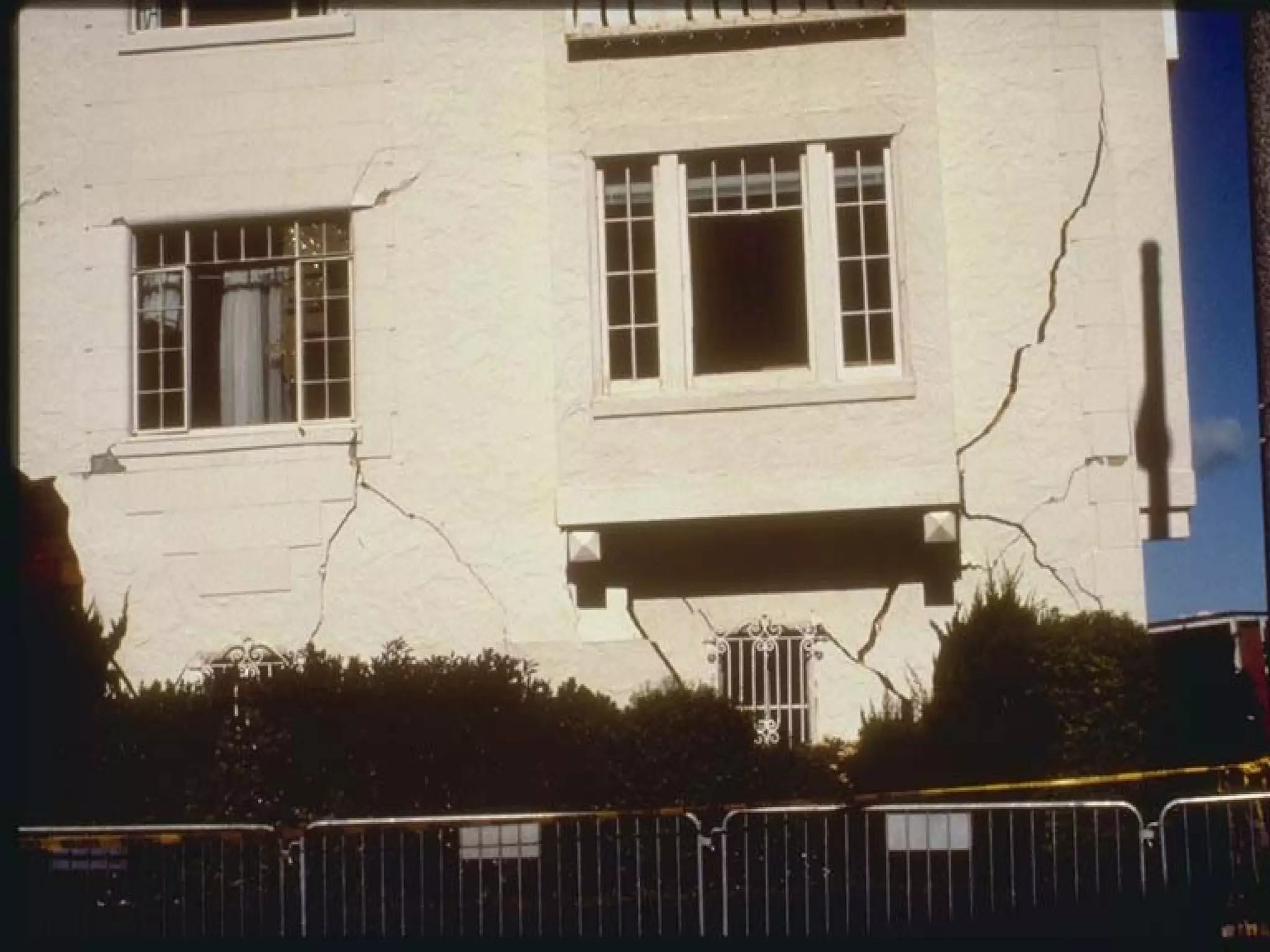
Damages Due to:
   mismanagement in construction,

   lack of quality in control,

   temperature conditions……

   Damages such as surface cracks, segregation,
    settlements etc…
Damage:
   Changes in:

           geometric properties ,
           boundary conditions ,
           system connectivity…

          which adversely affect the structure’s
           performance.
What should we do?
In 19th Century:


   rail road wheel tappers - used the sound of a
    hammer when striked against the wheel of
    train to detect the damage.

   In rotating machinery, vibration monitoring
    is used as performance evaluation technique.
   Then, these techniques are utilized to detect

    the damages in the structure, and then a new

    field emerged namely Structural Health

    Monitoring.
What is Structural Health
Monitoring?

   The process of implementing a damage

    detection and characterization strategy for

    engineering   structures   is     referred    as


    Structural Health Monitoring.
                                    (in short…)
Pattern of SHM:
   Operational Evaluation,

   Data Acquisition and Cleansing,

   Feature Extraction & Data Compression, and

   Statistical Model Development for Feature
    Discrimination
Operational Evaluation:
     Under which operations,       the   structure
      services and damage.

     Life safety and economic justification for
      performing SHM.

     Limitations of acquiring data in SHM.
Data Acquisition:
    This parts deals with:

         number of sensors,
         types of sensors,
         selecting their excitation methods &
         data storage techniques.
Data Normalization:

   separating changes in sensor readings from

    damage   to   those   caused   by   varying

    operational & environmental conditions.
Feature Extraction:

   Feature   extraction   gives   the   technical

    literature to distinguish between damaged and

    non damaged items of buildings.
Statistical Model
Development:

   Statistical Model Development is used for

    determining   damaged   and   undamaged

    structures.
Importance of SHM:
   SHM improves - safety & functionality of
    structures.

   Monitoring - develop innovative design
    methodologies - timely warning of impending
    failures.

   Structural condition monitoring and assessment
    are required for timely and cost-effective
    maintenance.
   Embedment of sensors during construction
    and measurement of structural responses
    during service will enable condition
    assessment and remaining life estimation
    easy and convenient

   Monitoring scheme helps to gather data on
    the realistic performance of the structures,
    which in turn will help to design better
    structures for the future.
Saptha Suthras:
   All materials have inherent laws or defects

   The assessment of damage requires a comparison
    between two system states

   Identifying the damage differs than the type and
    vulnerability of the damage, which requires skill.
   Sensors cannot measure damage. Feature extraction
    and statistical classification is required to convert
    sensor data to damage information.


   Damage information depends upon the intelligence of
    sensor’s feature extraction.
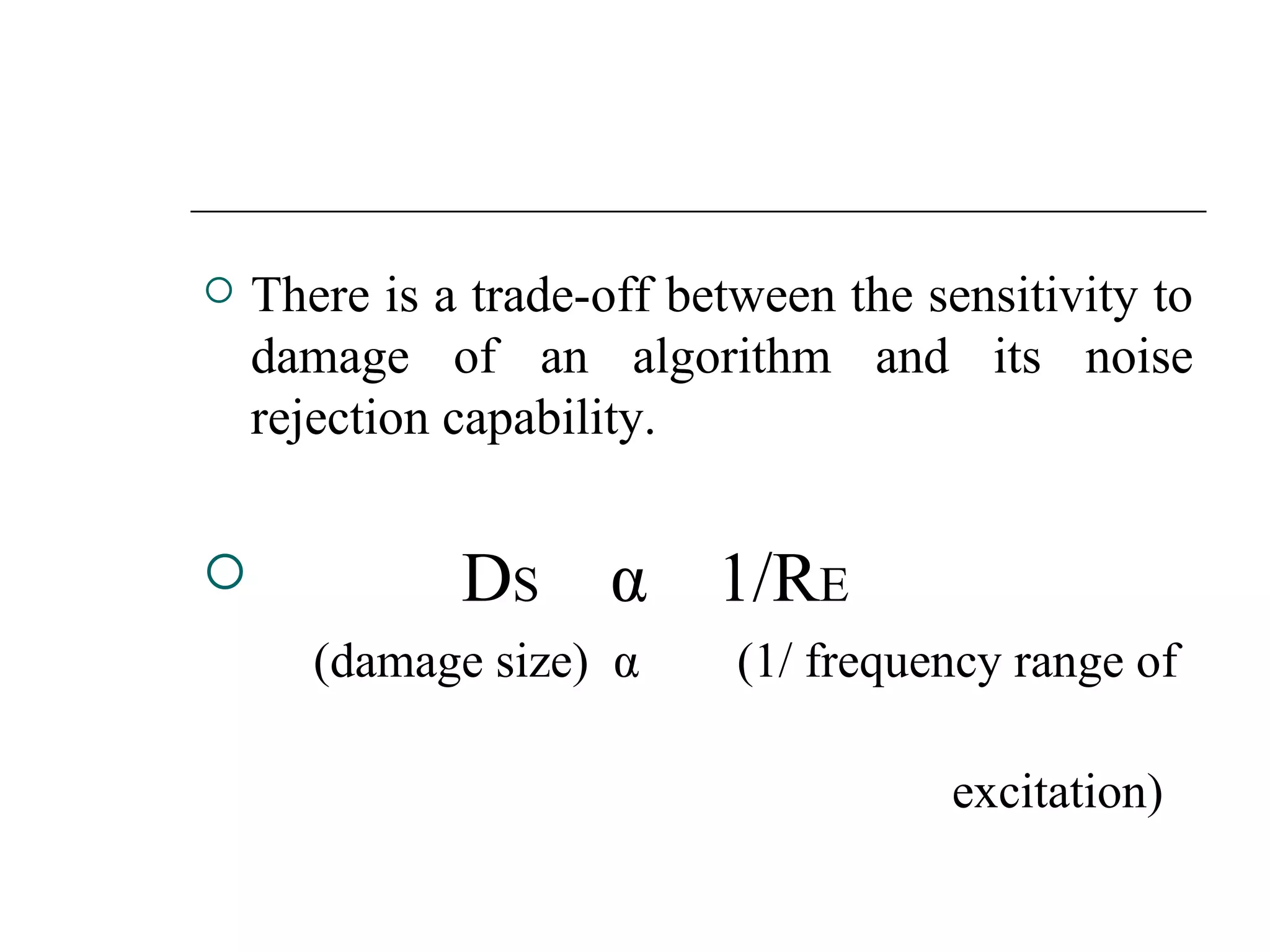
   There is a trade-off between the sensitivity to
    damage of an algorithm and its noise
    rejection capability.


             DS α 1/RE
       (damage size) α      (1/ frequency range of

                                      excitation)
Components:
   Structure
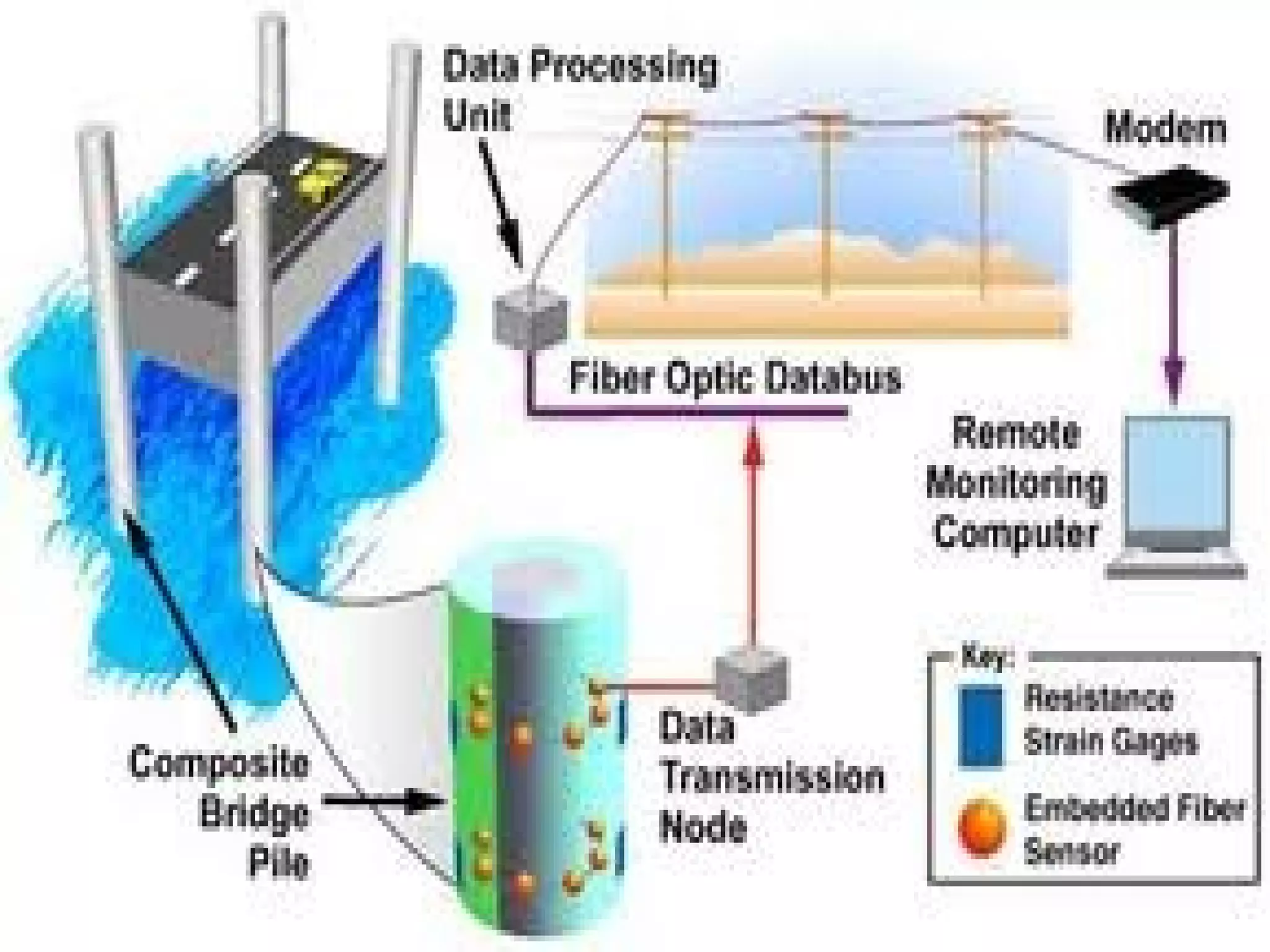
   Sensors
   Data acquisition systems
   Data management
   Data transfer
   Data interpretation and diagnosis
Why SHM?
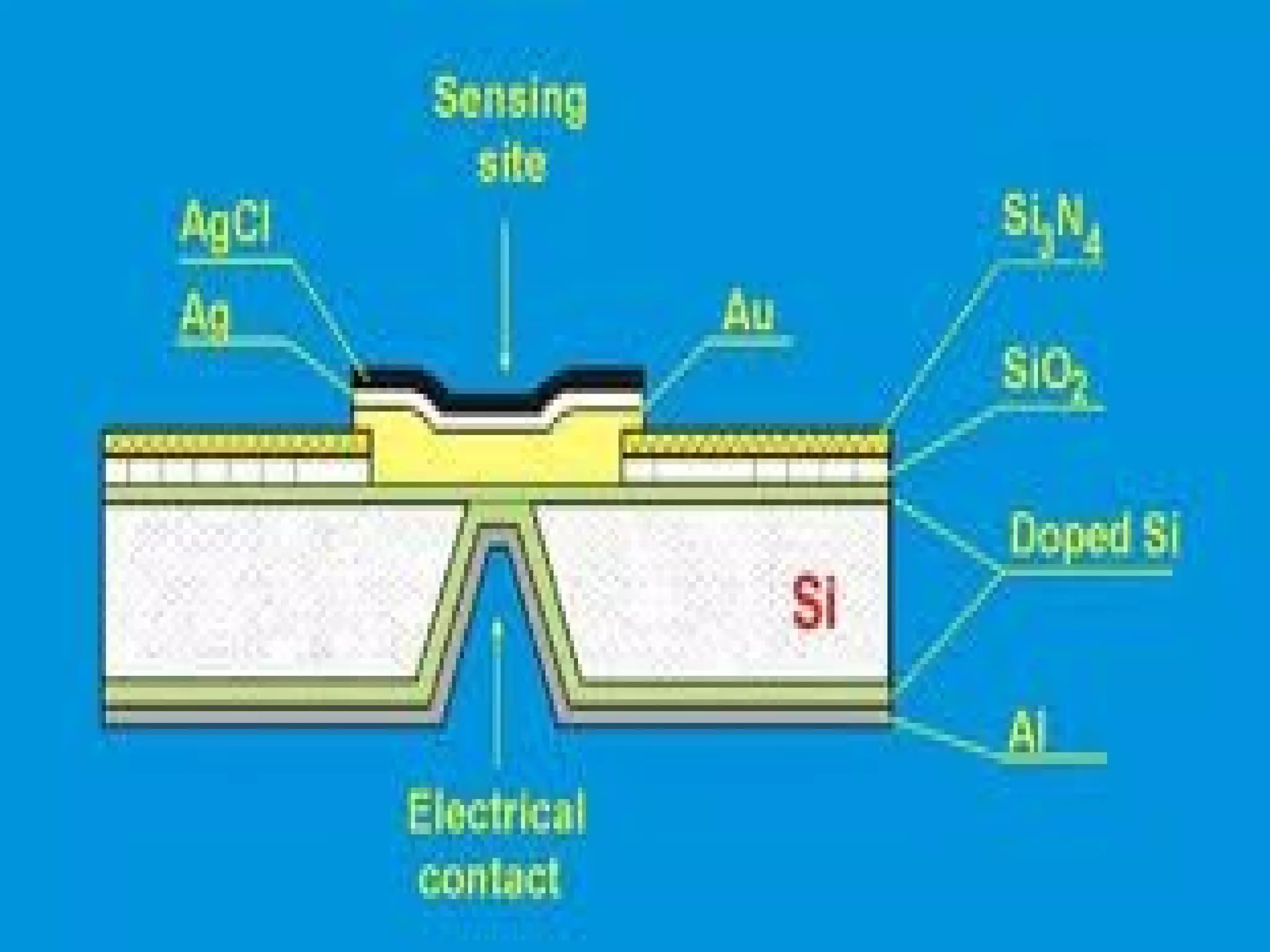
Sensors:
   Sensors measure the physical quantity of damage and
    sends it to computer.
       Good Sensor :
            Is sensitive to the measured property


           Isinsensitive to any other property likely to be
            encountered in its application

           Does   not influence the measured property.
DA systems:
   Data acquisition is the process of sampling signals
    that converts the resulting samples into digital
    numeric values.

           Sensors


           Signal   conditioning circuitry

           Analog-to-digital   converters
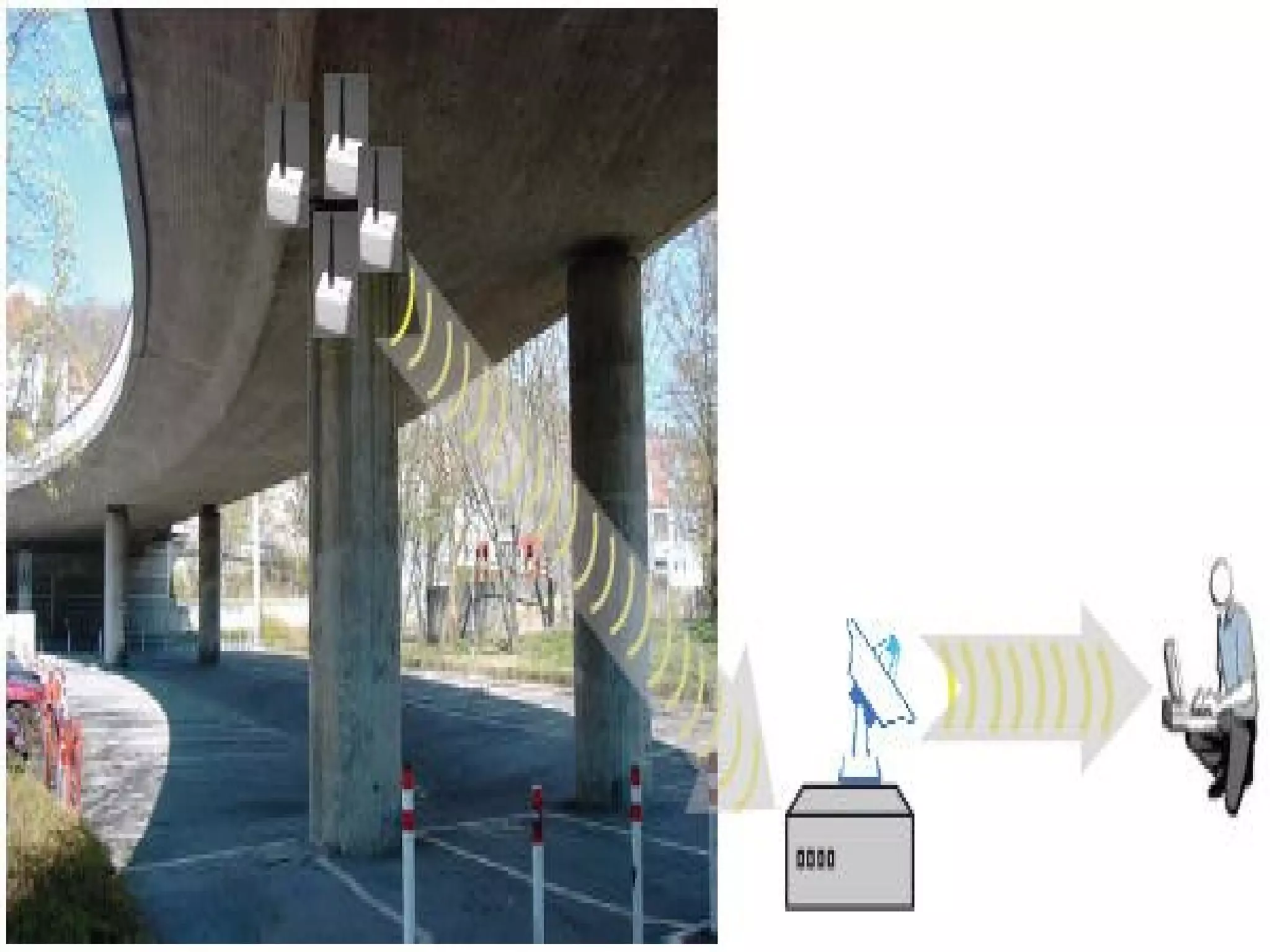
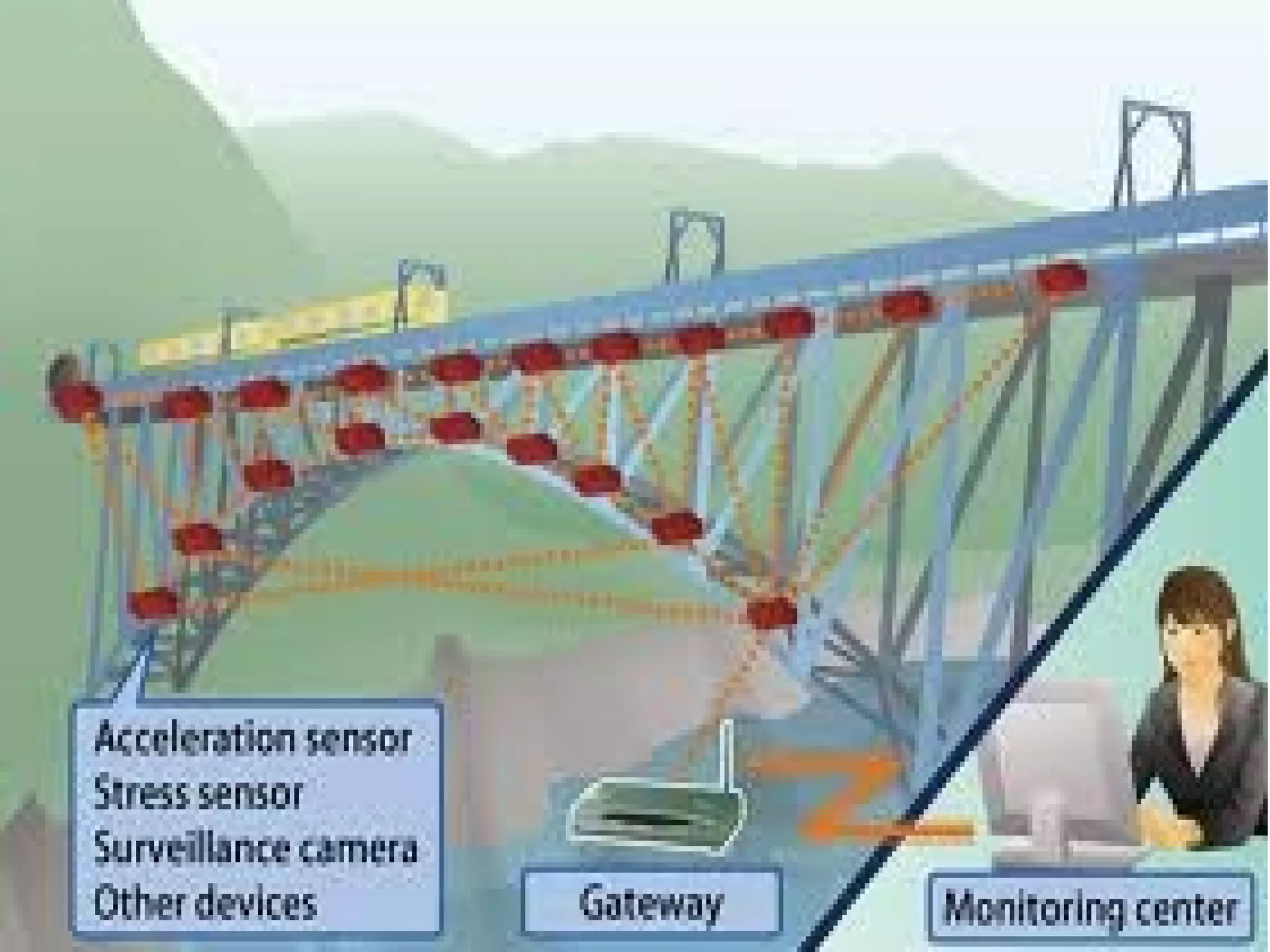
   Data management system manipulates the
    management of data obtained from sensors.

   Data transfer systems are used to transfer the
    data to systems which help in predicting the
    failures of structures.
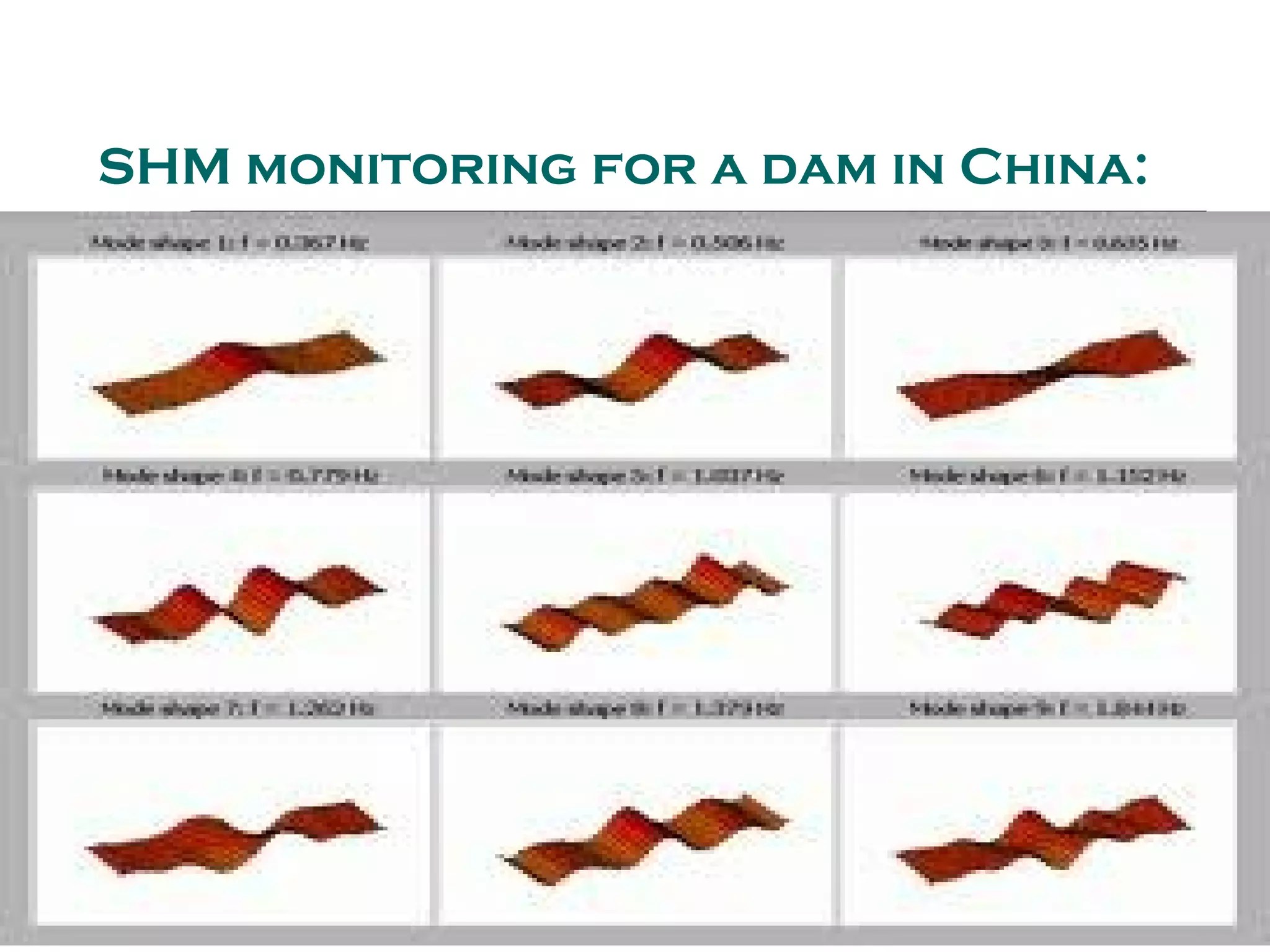
SHM monitoring for a dam in China:
Conclusion:
   There is always no particular
    conclusion for any technology
    related concept.

   But, this concept ends with
    conclusion with that even structures
    have life and we (civil engineers)
    are here to protect it from various
    diseases.
Thank
 you...

Structural Health Monitoring

  • 1.
    STRUCTURAL HEALTH MONITORING M. Mayur S.I.E.T.K Puttur.
  • 2.
    Contents:  Definition…  What is SHM?  Pattern of SHM  Importance of SHM  Components  Conclusion.
  • 3.
  • 5.
  • 6.
    Damages Due to:  mismanagement in construction,  lack of quality in control,  temperature conditions……  Damages such as surface cracks, segregation, settlements etc…
  • 8.
    Damage:  Changes in:  geometric properties ,  boundary conditions ,  system connectivity… which adversely affect the structure’s performance.
  • 9.
  • 10.
    In 19th Century:  rail road wheel tappers - used the sound of a hammer when striked against the wheel of train to detect the damage.  In rotating machinery, vibration monitoring is used as performance evaluation technique.
  • 11.
    Then, these techniques are utilized to detect the damages in the structure, and then a new field emerged namely Structural Health Monitoring.
  • 12.
    What is StructuralHealth Monitoring?  The process of implementing a damage detection and characterization strategy for engineering structures is referred as Structural Health Monitoring. (in short…)
  • 14.
    Pattern of SHM:  Operational Evaluation,  Data Acquisition and Cleansing,  Feature Extraction & Data Compression, and  Statistical Model Development for Feature Discrimination
  • 15.
    Operational Evaluation:  Under which operations, the structure services and damage.  Life safety and economic justification for performing SHM.  Limitations of acquiring data in SHM.
  • 16.
    Data Acquisition:  This parts deals with:  number of sensors,  types of sensors,  selecting their excitation methods &  data storage techniques.
  • 17.
    Data Normalization:  separating changes in sensor readings from damage to those caused by varying operational & environmental conditions.
  • 18.
    Feature Extraction:  Feature extraction gives the technical literature to distinguish between damaged and non damaged items of buildings.
  • 19.
    Statistical Model Development:  Statistical Model Development is used for determining damaged and undamaged structures.
  • 20.
    Importance of SHM:  SHM improves - safety & functionality of structures.  Monitoring - develop innovative design methodologies - timely warning of impending failures.  Structural condition monitoring and assessment are required for timely and cost-effective maintenance.
  • 21.
    Embedment of sensors during construction and measurement of structural responses during service will enable condition assessment and remaining life estimation easy and convenient  Monitoring scheme helps to gather data on the realistic performance of the structures, which in turn will help to design better structures for the future.
  • 22.
    Saptha Suthras:  All materials have inherent laws or defects  The assessment of damage requires a comparison between two system states  Identifying the damage differs than the type and vulnerability of the damage, which requires skill.
  • 23.
    Sensors cannot measure damage. Feature extraction and statistical classification is required to convert sensor data to damage information.  Damage information depends upon the intelligence of sensor’s feature extraction.
  • 24.
    There is a trade-off between the sensitivity to damage of an algorithm and its noise rejection capability.  DS α 1/RE (damage size) α (1/ frequency range of excitation)
  • 25.
    Components:  Structure  Sensors  Data acquisition systems  Data management  Data transfer  Data interpretation and diagnosis
  • 26.
  • 27.
    Sensors:  Sensors measure the physical quantity of damage and sends it to computer. Good Sensor :  Is sensitive to the measured property  Isinsensitive to any other property likely to be encountered in its application  Does not influence the measured property.
  • 28.
    DA systems:  Data acquisition is the process of sampling signals that converts the resulting samples into digital numeric values.  Sensors  Signal conditioning circuitry  Analog-to-digital converters
  • 29.
    Data management system manipulates the management of data obtained from sensors.  Data transfer systems are used to transfer the data to systems which help in predicting the failures of structures.
  • 35.
    SHM monitoring fora dam in China:
  • 36.
    Conclusion:  There is always no particular conclusion for any technology related concept.  But, this concept ends with conclusion with that even structures have life and we (civil engineers) are here to protect it from various diseases.
  • 37.